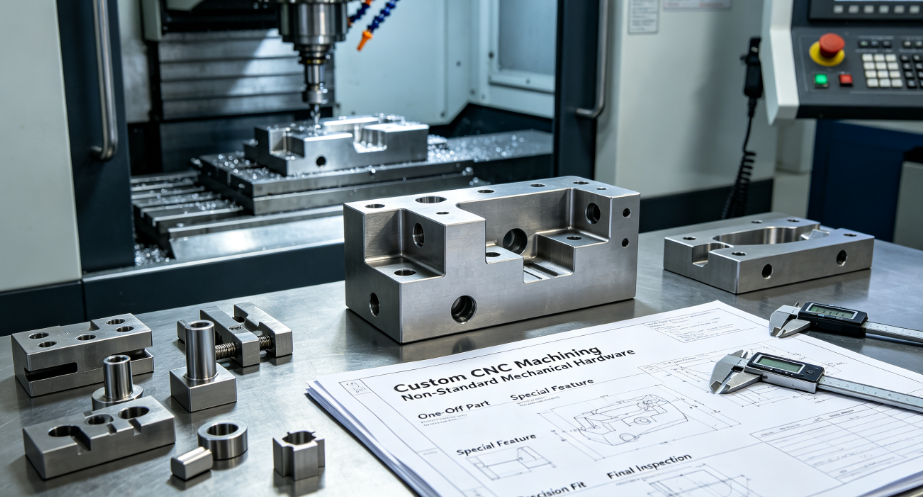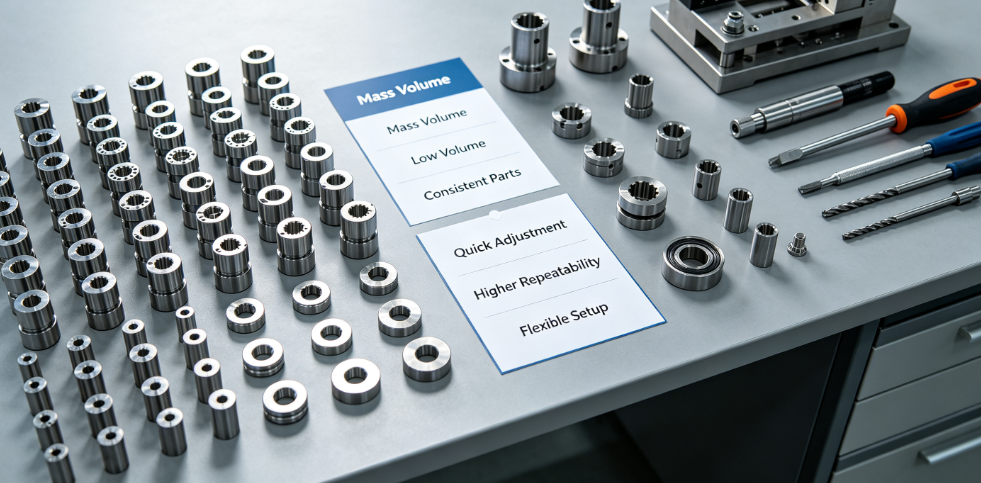
Published by Zorapid
Tired of inconsistent custom parts from overseas vendors? Zorapid covers ISO/ASTM standards, tiered QC, AQL sampling, CMM scanning and full traceability for CNC, sheet metal and molded parts, backed by real factory case data.
Sourcing custom CNC, sheet metal, molded parts or multi-piece assemblies? Every supply chain hits the same expensive headache: loose inspection standards cause inconsistent batches, excess scrap and delayed launches.
Many generic fabricators only run a quick visual check before shipping, ignoring global dimensional, surface, material and assembly testing rules. What’s worse, misalignment between your drawing specs and the supplier’s internal inspection checklist creates endless back-and-forth rework once parts arrive at your facility.
Zorapid’s 3,000㎡ integrated manufacturing facility supports EU, US and Australian medical, auto, EV and industrial OEMs with audit-ready standardized inspection systems built on ISO 9001, ASME and AQL guidelines. All custom parts, from one-off prototypes to 50k mass batches, pass five set inspection phases before delivery, with fully traceable quality documentation for compliance and ESG audits.
This blog skips complex academic lingo and uses plain shop-floor language to explain actionable global inspection standards you can add straight to RFQs and POs for all custom fabrication jobs. All rules work for CNC, sheet metal bend/weld, and injection molding alike.
Global Universal Inspection Standards OEMs Must Reference (ASME, AQL, ASTM)
Before covering on-site inspections, we’ll explain global standards to avoid cross-border spec errors—required for all Zorapid custom orders.
- Mandatory for all our production and inspection processes, outlining documentation, equipment calibration, traceability, corrective actions and continuous improvement standards demanded by most Western OEMs.
- ASME Y14.5 GD&T (Dimensional & Geometric Tolerance) ISO 2768 sets default linear/angular tolerance classes (fine/medium/coarse) for metal fabrication; ASME Y14.5 governs GD&T true position, flatness and datum rules for US-based clients. All drawing measurements align to one of these two agreed standards to eliminate tolerance misinterpretation.
- (AQL Acceptable Quality Level Sampling) The global standard for batch sampling inspection. We pre-agree AQL values (0.4 for critical safety features, 1.0 for functional dimensions, 2.5 for cosmetic surfaces) with every client before production, so sampling rules are locked in upfront.
- (Surface Roughness Ra/Rz) Unified surface finish measurement standards for machined, bent, coated and molded parts, eliminating disputes over matte, brushed, polished or as-cut surface specs.
- ASTM Material Test Standards Alloy verification, salt spray corrosion testing, tensile/hardness mechanical testing, plastic melt flow index checks all reference relevant ASTM standards for cross-border material compliance.
- IATF 16949 (Automotive Add-On)
- For EV and automotive OEM projects, we follow auto-grade inspection rules: PPAP, FMEA and full dimensional layout reports to satisfy strict automotive quality standards.
Critical client takeaway: Always list your required standards directly on drawings and POs. If you skip naming ISO 2768 or AQL levels, most fabricators will fall back on loose internal tolerance rules that cause fit failures later.
Incoming Raw Material Inspection Standards (Frontline Quality Gate)
Bad raw materials trigger most quality issues, so our mandatory first check verifies all metal sheets, plastic pellets, bar stock and coating chemicals before production starts. We follow standardized material acceptance criteria for all custom fabrication materials:
Mandatory Raw Material Inspection Checklist Standards
- Material Grade & Composition Verification Cross-check supplier material certificates (CoC) against drawing specs; use portable XRF spectrometers to scan aluminum, stainless, titanium and steel for alloy accuracy. For plastics, we test melt flow index to confirm virgin/regrind blend ratios match requirements.
- Dimension & Thickness Compliance Laser micrometers confirm sheet metal gauge, bar stock diameter and plastic slab thickness; reject stock outside ±0.03mm thickness tolerance to avoid bend springback and machining stock removal errors.
- Surface Condition Standard Raw stock must be free of deep scratches, rust, dents, oxidation and contamination; contaminated sheets cause permanent surface defects after laser cutting, bending or coating.
- Random mechanical property audits: Hardness tests for heat-treated metals, tensile tests for structural frames. Medical and aerospace materials need full batch mechanical reports before production.
- Batch Traceability Tagging Every material pallet receives a unique lot ID linked to heat numbers, supplier batch codes and incoming inspection pass/fail data for full downstream traceability.
Any raw material failing these standards is segregated, labeled non-conforming and returned to suppliers—we never process unvalidated stock for custom parts.
In-Process Mid-Production Inspection Rules For Machining, Bending, Molding
Waiting until full batch completion to catch defects wastes thousands of parts and production hours. Our standardized in-process inspection schedule inserts quality checks at every critical fabrication stage, with fixed pass/fail limits tied to global tolerance standards:
CNC Machining In-Process Standards
- Every 50 pieces: Calipers/micrometer spot-check critical diameters, hole depths and feature lengths
- Every 200 pieces: Automated machine probe auto-measures datum positions to compensate tool wear drift
- Surface roughness spot-test every shift with profilometer to lock consistent Ra values
Sheet Metal Bending & Welding Standards
- First bend validation per new program: Verify bend angle tolerance ±0.5° per ISO 2768 fine class
- Weld bead inspection: Visual + dye penetrant NDT for structural frames; no pinholes, cracks or incomplete fusion allowed
- Post-bend flatness check for large panels to eliminate warpage before assembly
Injection Molding In-Process Standards
- Every mold cycle batch start: Check wall thickness, draft angles and flash per ISO 8062 molding tolerance rules
- Color consistency testing for cosmetic molded parts; color deviation within Delta E ≤2.0 standard
- Cool cycle validation to prevent shrinkage, sink marks and dimensional drift
All in-process non-conforming parts are flagged immediately, machines recalibrated, and defective units segregated to avoid mixing good/bad custom components mid-run.
First Article Inspection (FAI) Mandatory Standards For All Custom Jobs
First Article Inspection (FAI) is the global standard to verify new custom part designs before mass production. We deliver complete formal FAI reports for every drawing revision, prototype and batch launch, complying with AS9100 and ISO formatting standards.
Standard Zorapid FAI Inspection Requirements
- 100% dimensional measurement of every feature on the first completed part against CAD drawing GD&T and tolerance callouts
- Full surface finish, burr, coating and cosmetic evaluation matching client visual standards
- Assembly fit test with mating reference parts if supplied by the OEM
- Material grade re-verification matching incoming raw material inspection records
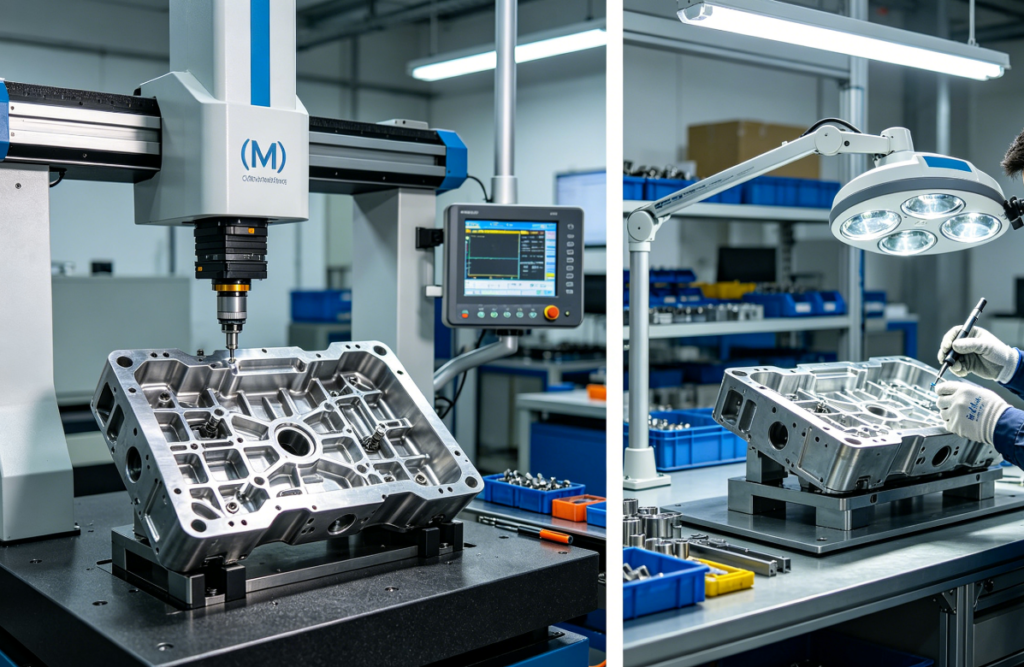
- Complete digital FAI report including CMM scan data, photos, measurement logs and pass/fail annotations
Mass production only starts once the client approves the FAI report.Any feature failing FAI triggers tweaks to toolpaths, bend programs or mold settings, with revised first articles supplied at no extra cost. This rule stops 70% of mass-production scrap early.
Final Full Batch Inspection & AQL Sampling Protocols
Once production finishes, we run two levels of final inspection aligned to ANSI Z1.4 AQL sampling standards, tailored to your custom part’s risk level:
1. Critical Safety/Medical/Aerospace Custom Parts (AQL 0.4 Critical, 1.0 Major)
100% full inspection of every single unit: CMM full 3D scan of all GD&T datums, full surface finish testing, NDT weld inspection, pressure/load functional testing, complete visual cosmetic review. No sampling—zero defective units allowed for high-risk applications.
2. Industrial/EV/General Equipment Custom Components (AQL 1.0 Critical, 2.5 Minor Cosmetic)
Statistical sampling based on batch size:
- Batches <50 units: 100% inspection
- Batches 50–500 units: Random sample of 80 pieces per AQL Level II standard
- Batches >500 units: Sample size 125 pieces with pre-agreed accept/reject numbers
All final inspection data is logged digitally and attached to the Certificate of Conformance (CoC) sent with every shipment.
Core Inspection Test Categories: Dimensional, Surface, Mechanical, NDT, Assembly Fit
Every custom fabrication inspection standard covers five mandatory test groups, with clear written pass/fail thresholds aligned to international norms:
- Dimensional & GD&T Inspection Standard Tools: Calipers, micrometers, height gauges, 3-axis CMM, laser 3D scanner Rules: All linear dimensions follow ISO 2768 matching drawing tolerance class; true position, flatness and parallelism validated via full CMM scan for critical mating features.
- Surface & Cosmetic Inspection
- Tools: Roughness profilometer, gloss comparison panels, light inspection booth
- Acceptance rules: Ra meets specs; no excessive scratches, dents, discoloration, flash, burrs or coating blisters outside agreed cosmetic tolerances
- Mechanical Performance Test Standards Hardness testers, tensile test benches, torque testing for threaded holes, pressure leak testing for fluid enclosures. All mechanical test results must meet ASTM material performance benchmarks.
- Non-Destructive Testing (NDT) Standards For Structural Custom Parts Dye penetrant inspection for micro weld cracks, ultrasonic testing for thick metal frames, X-ray NDT for high-load aerospace components; zero hidden structural defects permitted per ISO NDT standards.
- Assembly Fit Inspection Standard For Combined Multi-Part Fabrications Full dry-fit testing of all sub-assemblies; uniform gap tolerance control per drawing specs, no interference between mating panels, fastener hole alignment validated with floating bolt test.
Zorapid Real OEM Case Study: Automotive Custom Fabrication QC Standard Upgrade
Client Background
German EV equipment OEM mixed order: 3,200 full units including CNC aluminum power shafts, stainless steel sheet metal cabinets, GF-PA66 molded connector housings; IATF 16949 inspection mandatory for EU automotive certification.
Original Pre-Optimization QC Pain Points
- No AQL sampling agreement; 14% of shipped batches had misaligned mounting holes and uneven surface finish
- No raw material alloy verification; 1 batch received wrong grade stainless steel
- Minimal in-process checks; thousands of scrapped molded parts from unmonitored mold shrinkage
- No digital traceability or CoC documentation for automotive audit requirements
Zorapid Full Standard Inspection Implementation
- Locked all inspection frameworks to ISO 9001 + IATF 16949, documented AQL 0.4 critical / 1.0 major sampling rules into PO addendum
- Activated 5-layer inspection workflow: incoming material XRF scan → in-process stage checks → formal FAI approval → AQL final sampling → pre-shipment CoC validation
- Added mandatory CMM full dimensional layout for all critical GD&T features on machined and sheet metal assemblies
- Deployed moldflow in-process thickness monitoring for plastic components to eliminate shrinkage defects
- Built full digital traceability system linking every part lot to material batch, inspection operator and test data
Final Measurable Quality Results
- Batch non-conformance scrap rate dropped from 14% to 0.6%
- Zero material grade mix-ups after incoming spectrometer inspection standard rollout
- Full audit-ready PPAP, FAI and CoC documentation supplied with every shipment for automotive regulatory filing
- Client eliminated secondary third-party incoming inspection upon receipt, cutting internal quality labor costs by 28%
Zorapid Standard ISO 9001 Full Inspection SOP For Custom Fabrication
Every custom CNC, sheet metal and molded order follows this fixed 7-step standardized inspection workflow to guarantee consistent compliance with global quality standards:
- Pre-production DFM review: Map all critical dimensions, surface specs, AQL levels and required ISO/ASTM standards onto internal QC checklist
- Incoming raw material inspection & alloy verification with full lot traceability tagging
- Stage-by-stage in-process inspection at cutting, bending, machining, molding and welding
- Formal First Article Inspection (FAI) report submission for client sign-off before mass production
- AQL-aligned final batch sampling or 100% full inspection based on part risk classification
- NDT, mechanical, surface and assembly fit functional testing per drawing requirements
- Compile digital Certificate of Conformance (CoC), FAI data and test reports for shipment delivery
All inspection equipment (CMM, profilometers, spectrometers, calipers) undergoes monthly calibration traceable to national measurement standards, eliminating measurement system error per MSA measurement system analysis rules.
Quick Troubleshooting Table: Common QC Failures & Standard Compliance Fixes
| Visible Custom Part Defect | Root Inspection Standard Gap | Standardized Zorapid Correction |
|---|---|---|
| Hole misalignment across assemblies | Missing GD&T datum rules, no FAI CMM scan | Enforce ASME Y14.5 datums, full FAI dimensional layout pre-mass production |
| Uneven surface roughness drift mid-batch | No in-process Ra spot testing per shift | Mandatory hourly profilometer checks tied to ISO 21920-2 surface standards |
| Wrong metal/plastic material grade shipped | No incoming XRF alloy verification | Standardize spectrometer raw material inspection for all stock batches |
| Weld cracks on structural frames | No NDT dye penetrant inspection step | Add NDT testing as mandatory final inspection for load-bearing assemblies |
| High cosmetic reject rate on large batches | Undefined AQL minor cosmetic limits | Lock AQL 2.5 minor cosmetic sampling thresholds in pre-production agreement |
| Shrinkage/sink marks on molded parts | No in-process wall thickness monitoring | Moldflow in-process inspection + ISO 8062 molding tolerance enforcement |
FAQ
What’s the difference between ISO 2768 and ASME Y14.5 for custom part tolerances?
Is the global European standard for general linear/angular tolerances, while ASME Y14.5 is the US GD&T standard for geometric feature control. We align inspection tools and checklists to whichever standard your engineering team specifies on drawings to avoid measurement mismatches.
Do I need 100% full inspection for all custom fabrication batches?
Only critical safety, medical, aerospace and automotive components require 100% inspection. For standard industrial parts, agreed AQL sampling balances steady quality and lower costs—so long as in-process QC catches dimensional drift early.
Can I customize inspection standards for my unique custom part design?
Absolutely. We build fully custom QC checklists aligned to your drawing’s unique specs, custom AQL levels, special NDT or functional testing requirements, and industry regulatory rules (medical FDA, automotive IATF 16949).
What documentation comes with each shipment to prove inspection standard compliance?
Every order includes a formal Certificate of Conformance (CoC), full FAI report for new designs, material test certificates, CMM scan data logs, and AQL sampling inspection records—all digital and printable for internal and third-party audits.
How often does Zorapid calibrate inspection measuring equipment?
All precision tools (CMM, micrometers, profilometers, spectrometers) are calibrated monthly against certified reference gauges, with full calibration records stored for ISO 9001 audit review.
Final Wrap-Up
Unpredictable custom part quality almost always stems from missing, vague or unenforced global inspection standards—not unavoidable fabrication flaws. Many suppliers skip standardized layered QC, AQL sampling and FAI validation to cut production time, passing costly rework and scrap risks directly to OEM buyers.
At Zorapid, our entire custom fabrication operation revolves around locked, audit-ready inspection standards built on ISO, ASME and AQL global frameworks. We embed quality validation at every production stage from raw material intake to final shipment, delivering consistent, fully documented custom parts with minimal non-conformance across CNC machining, sheet metal fabrication and injection molding.
Launching a custom fabrication project and need a free QC checklist tailored to your drawings and industry compliance? Send your STEP/DXF CAD files to our quality team for a no-obligation quote and inspection roadmap.