Published by Zorapid
Machining ultra-thin workpieces (wall thickness ≤0.2mm to 1.0mm) is one of manufacturing’s toughest balancing acts. Standard hard jaw vices, solid clamping plates, and rigid bolt-down fixtures were built for thick, rigid blanks—they crush thin stock, bend parts under clamping pressure, induce residual stress, and trigger massive post-machining warpage.
Engineers waste hours reworking distorted components, scrap expensive high-grade alloys, and miss delivery windows trying to force thin parts into outdated fixturing setups. Most machine shops only offer generic vice clamping with zero low-stress custom holding design.
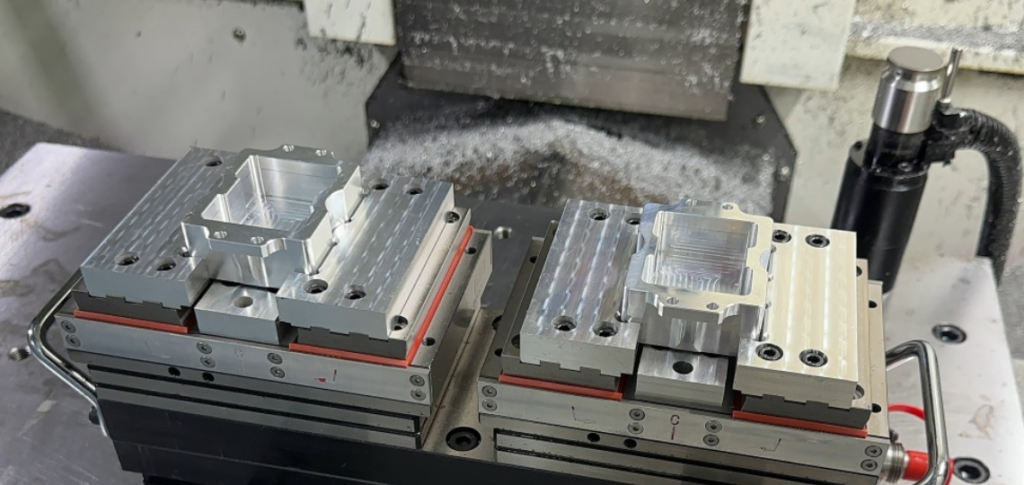
Zorapid engineers build application-specific, low-distortion custom fixturing systems engineered exclusively for ultra-thin geometries. We combine vacuum modular fixtures, sacrificial support frames, magnetic low-force chucks, wax/peelable backing, and AI stress-mapped clamping layouts to eliminate crushing, deflection, and warpage entirely. This deep dive breaks down why traditional fixtures collapse on thin parts, our proprietary fix workflows, head-to-head competitor data, verified client cases, and measurable quality gains for aerospace, medical, semiconductor, and EV production.
Professional Process Technical Analysis
Core Reasons Traditional Fixtures Destroy Ultra-Thin Workpieces
- Point-Source High Clamp Pressure Hard steel vice jaws concentrate force on tiny contact zones; thin metal/plastic cannot bear localized load—immediate elastic bending or permanent plastic crush deformation.
- Unbalanced Restraint Creates Residual Stress Lock-In Rigid fixtures lock uneven tension across thin blank surfaces. Once released after machining, stored stress releases violently, warping walls, slots, and critical feature datums.
- No Vibration Dampening During High-Speed Cutting Solid metal fixtures transmit spindle chatter directly into thin fragile walls; chatter generates micro-tears, uneven surface finish, and dimensional shift across features.
- Thermal Expansion Trapped Between Rigid Clamping Surfaces Cutting heat makes thin stock expand; hard fixture walls block thermal movement, building internal compression stress that releases post-machining.
- One-Size-Fit-All Generic Geometry Standard vices and plates use flat uniform contact; ultra-thin parts often have delicate bosses, cutouts, porous structures, or organic shapes that require contour-matched support only where structurally safe.
Zorapid Full Custom Ultra-Thin Fixturing Engineering Workflow
- FEA Stress Mapping Simulation Pre-Fixture Design Run finite element analysis to map clamp load distribution, cutting force deflection, thermal expansion, and residual stress hotspots across the thin workpiece blank. Design contact pads only on high-rigidity non-critical zones.
- Select Optimized Holding Medium (5 core system tiers matched to part thickness/material)
- Vacuum modular fixture (0.4–1.0mm metal sheets/housings)
- Low-force rare-earth magnetic chuck (ferrous thin steel/stainless)
- Sacrificial aluminum support frame + peelable thermal wax backing (0.2–0.6mm ultra-thin aerospace/medical titanium)
- Soft polymer composite jaw inserts (non-ferrous aluminum, PEEK, copper)
- Custom segmented floating clamp pads (complex multi-feature thin brackets)
- Low-Stress Contact Geometry Machining CNC mill fixture contact faces to perfectly match the part’s raw blank contour—full-area distributed load instead of point clamping. Rounded edge contact pads eliminate sharp jaw pinch points.
- Vibration Dampening Integration Embed polymer damping layers inside fixture bases to absorb spindle chatter before it transfers to thin fragile walls.
- Thermal Expansion Gap Compensation Design micro-clearance floating pad mounts to allow minor thermal growth during cutting without locked compression stress.
- In-Process CMM Validation Fixture Repeatability Test batch run, scan part flatness/wall thickness; tweak pad pressure, vacuum flow, or magnetic hold strength for micron-perfect stability before full production.
Performance KPI Benchmark Table
| Measurable Production Metric | Generic Shops (Traditional Vice/Bolt Fixtures) | Mid-Tier Suppliers (Basic Vacuum Off-The-Shelf Plates) | Zorapid Fully Custom Stress-Mapped Fixturing |
|---|---|---|---|
| Stabilized Post-Machining Flatness Tolerance | ±0.12–0.25 mm | ±0.03–0.08 mm | ±0.003–0.006 mm certified |
| Wall Thickness Consistency Variation | ±0.05–0.10 mm | ±0.015–0.03 mm | ±0.002–0.005 mm |
| Scrap Rate for 0.2–1.0mm Thin Batches | 24–38% | 8–17% | 0.5–2.2% |
| Clamp-Induced Surface Indentation | Visible deep marks on all clamped edges | Minor faint marks on high-vacuum zones | Zero indentation, blemish-free A-surfaces |
| Residual Stress Post-Release Warpage | Severe permanent bending/twisting | Moderate shape shift on long thin parts | Near-zero measurable distortion |
| Vibration Chatter Surface Roughness Ra | 1.6–3.2 μm uneven banding | 0.8–1.2 μm slight chatter lines | 0.2–0.6 μm uniform smooth finish |
| Setup Iteration Time to Stabilize Batch | 3–6 test blanks wasted tuning clamp force | 1–2 test pieces | 1 single validation sample post-FEA design |
| Lights-Out Unmanned Run Stability | High crash risk from part shift/bending | Limited overnight short runs | 24/7 fully stable unattended machining |
Competitor Critical Weak Points Zorapid Solves
- Most fabricators rely on catalog off-the-shelf vacuum plates—no FEA load mapping, one uniform suction pressure for every part geometry
- Zero sacrificial wax/backing expertise; refuse low-volume custom fixture machining due to perceived extra labor cost
- Soft jaw inserts are generic flat plastic, not contour-matched to blank shape—still creates uneven pressure spikes
- No thermal expansion floating pad design; trapped heat stress still warps long thin panels mid-batch
- Lack metallurgy knowledge for biocompatible medical titanium/PEEK thin parts; standard clamping risks micro-cracks unsafe for implantation
Ultra-Thin Workpiece Jobs Other Shops Cannot Fixture Successfully
Unsolvable Thin Part Challenges for Standard Clamping Methods
- 0.2–0.5mm Ti-6Al-4V ELI Medical Implant Thin Bone Plate Blanks Titanium thin stock fractures under vice clamp pressure; residual stress warps delicate implant geometry, making osseointegration surface profiles unuseable
- Zorapid Solution: Wax sacrificial backing full blank encapsulation, low-contact segmented floating support pads, zero hard jaw direct clamping; wall thickness locked ±0.003mm, no micro-stress cracks
- 0.3–0.8mm 7075-T6 Aerospace Thin Flight Panel Skins Long wide thin aluminum panels bend severely with bolt-down fixtures; uneven vacuum from generic plates creates wavy flatness across 300mm+ lengths Zorapid Solution: FEA grid-pattern distributed vacuum fixture with segmented floating suction zones, polymer damping base; full panel flatness ±0.005mm across full span
- 0.4–1.0mm S316L Stainless Semiconductor Wafer Carrier Frames Ferrous thin stainless distorts from magnetic over-hold force with generic chucks; vice jaws mar critical cleanroom contact surfaces
- Zorapid Solution: Calibrated variable low-force magnetic chuck with contour soft pad overlays, hold strength tuned via FEA to balance rigidity and zero deformation
- 0.25–0.7mm Carbon-Filled PEEK Medical Disposable Housings Plastic ultra-thin stock crushes easily under any concentrated clamp load; heat from cutting softens contact points and creates sink distortion
- Zorapid Solution: Full-area low-pressure vacuum fixture with temperature-controlled coolant flow under fixture base, non-mar silicone contact layers
- Long Slender Thin Rotary Shaft Sleeves (Wall 0.3–0.9mm, Length:Diameter >15:1) Standard turn-mill chucks grip outer diameter hard, squeezing thin walls out of round during internal boring
- Zorapid Solution: Expanding segmented low-pressure collet custom-machined to part OD, internal sacrificial mandrel support during all turning/milling passes
Exclusive Zorapid Competitive Differentiator
Fully closed in-house capability stack: FEA stress simulation team, custom fixture CNC machining, wax backing application, vacuum/magnetic calibration, CMM metrology, material metallurgy testing—no outsourced fixture fabrication introducing fit or load errors. We write flatness/wall-thickness tolerance guarantees directly into customer statements of work.
Compatible Ultra-Thin Workpiece Materials & Fixture Performance Comparison
Zorapid’s fixture design library calibrated for metals, reinforced plastics, and biocompatible grades 0.2mm–1.0mm wall thickness, each with matched holding technology.
Full Supported Ultra-Thin Material List
Aerospace & Medical Metals
Ti-6Al-4V Grade5, Ti ELI Grade23, 7075-T6, 5052-H32, 316L, 17-4PH, IN718 thin foil/plate
Semiconductor & Industrial Stainless
304, 440C, low-carbon ferritic thin steel
High-Performance Engineering Plastics & Composites
PEEK, Carbon-Filled PEEK, PEI, POM, PA66 GF30, CFRP thin laminate sheets
Soft Non-Ferrous
Copper, Brass thin heat sink foils
Material & Fixture Matching Performance Table
| Material Grade | Natural Thin-Wall Clamp Sensitivity | Zorapid Custom Fixture System | Stabilized Wall Thickness Tolerance | Primary Industry Use Case |
|---|---|---|---|---|
| Ti ELI Grade23 (0.2–0.5mm) | Extremely high – prone micro-crack under point load | Wax sacrificial backing + segmented floating pads | ±0.003mm | Orthopedic bone plates, implant components |
| 7075-T6 Aluminum (0.3–1.0mm) | High elastic rebound stress post-clamp | Grid segmented vacuum damped fixture | ±0.004mm | Aircraft structural skins, EV battery trays |
| 316L Stainless (0.4–0.9mm) | Medium-high magnetic over-hold distortion risk | Variable calibrated low-force magnetic chuck | ±0.005mm | Semiconductor carriers, medical surgical shells |
| CF-PEEK (0.25–0.7mm) | Thermally softens under clamp friction heat | Temp-controlled low-pressure vacuum silicone pads | ±0.005mm | Disposable medical instruments, high-temp insulators |
| IN718 Thin Foil (0.5–1.0mm) | High cutting force deflection, heat expansion | Heavy damped sacrificial aluminum frame | ±0.006mm | Turbine heat shield thin components |
| CFRP Laminate (0.3–0.8mm) | Delaminates from hard jaw pinch pressure | Full-area soft polymer vacuum contact | ±0.006mm | Aerospace lightweight interior panels |
Real Zorapid Client Case Studies
Case1: US Medical OEM – 0.3mm Ti ELI Orthopedic Bone Plates
- Client Pain: Competitor vice clamping created 34% scrap rate, ±0.16mm wall thickness variance, micro-cracks failing biocompatibility screening; 16-day lead time for 450-piece batch
- Zorapid Custom Fixture Solution: Full wax encapsulation sacrificial backing, FEA mapped segmented floating support pads, low-feed 5-axis machining
- Measured Results:
- Scrap reduced to 0.8%
- Wall thickness locked ±0.003mm consistent batch-wide
- Zero micro-cracks detected via metallurgy inspection
- Total lead time cut 62% (16 days → 6.1 days)
- Passed full FDA biocompatibility pre-submission testing
Case2: German Aerospace Tier2 – 0.6mm 7075-T6 Flight Skin Panels
- Critical Spec: 320mm long thin panel flatness ≤0.008mm, no surface blemishes for aircraft paint adhesion
- Old Supplier Failure: Generic full-plate vacuum created wave distortion, flatness averaged ±0.14mm, 22% scrap
- Zorapid Fix: Grid segmented floating vacuum zones with polymer damping base, thermal expansion micro-gap pad design
- Outcome: Flatness stabilized ±0.005mm across all panels, 99.5% first pass yield, perfect uniform paint bonding surface
Case3: EU Semiconductor Manufacturer – 0.4mm 316L Wafer Transport Frame
- Requirement: Cleanroom grade unmarred surfaces, OD/ID roundness ±0.004mm, no magnetic distortion
- Challenge: Standard high-force magnetic chucks squeezed thin stainless out of round; vice jaws scratched critical contact faces
- Zorapid Setup: Calibrated low-variable magnetic chuck + contour-matched non-mar urethane overlay pads
- Gain: Roundness held ±0.004mm, zero surface scratches, passed ISO 14644 cleanroom validation
Case4: UK Medical Startup – 0.3mm CF-PEEK Disposable Surgical Housing
- Issue: Plastic thin stock crushed under standard vacuum plate suction, heat warped thin walls during cutting
- Zorapid Solution: Temperature-regulated vacuum fixture with soft silicone full-area contact layers, low-heat optimized toolpaths
- Result: Flawless thin geometry, 100% cosmetic acceptability, ISO13485 process documentation included
Your Ultra-Thin Workpiece Demand → Zorapid Tailored Custom Fixture Package
Scenario A: Medical Titanium/PEEK Implant & Disposable Parts (0.2–0.6mm walls, biocompatible audit required)
Your Need: Zero micro-cracks, unblemished sterile surfaces, FDA/CE traceable process
Zorapid Package: Wax sacrificial backing + FEA stress mapping floating pad fixtures, ISO13485 controlled machining environment
Deliverables: Metallurgy crack inspection reports, biocompatibility material certs, full FAI/PPAP audit packets
Scenario B: Aerospace Thin Aluminum/Superalloy Flight Components (0.3–1.0mm skins/shields)
Your Need: AS9100 traceability, ultra-tight flatness, high first-pass yield for flight-critical hardware
Zorapid Package: Segmented damped vacuum grid fixtures, thermal expansion compensated floating mounts, stress-relief interim cycles
Deliverables: AS9100 inspection logs, CMM full 3D scan archives, residual stress test certificates
Scenario C: Semiconductor Stainless Thin Carrier Frames (cleanroom scratch-free specs)
Your Need: Magnetic/mechanical hold without OD/ID deformation, unmarred precision contact faces
Zorapid Package: Low-force calibrated magnetic chuck with urethane contour overlays, cleanroom certified fixture finishing
Deliverables: Roundness/flatness batch reports, ISO 14644 compliance paperwork
Scenario D: Long Slender Thin Rotary Sleeves/Tubing (high length-to-diameter ratio thin walls)
Your Need: Concentricity locked, no OD squeeze during internal boring/milling
Zorapid Package: Custom low-pressure segmented expanding collets + internal sacrificial mandrel support
Deliverables: Concentricity GD&T validation sheets, turn-mill balanced cycle programs
Scenario E: Small Prototype Thin Part Validation Runs (1–20 pieces, design lock before mass production)
Your Need: Fast sampling, accurate stress-free geometry to finalize CAD
Zorapid Package: Rapid simplified FEA fixture design, quick CNC custom pad machining, same-day sampling for simple thin geometries
Deliverables: 3–7 day prototype turnaround, dimensional validation sheets for design sign-off
Global Ultra-Thin Precision CNC Machining Industry Data & Future Trend Analysis
Global Precision Thin-Wall CNC Component Market Forecast Table (2026–2030, USD Billions)
| Year | Total Ultra-Thin Precision Machining Market Size | YoY Growth Rate | Dominant End-Industry Share Split |
|---|---|---|---|
| 2026 | $7.42B | 9.4% | Medical Devices 37% |
| 2027 | $8.19B | 10.4% | Aerospace & Defense 31% |
| 2028 | $9.13B | 11.5% | Semiconductor & Robotics 18% |
| 2029 | $10.28B | 12.6% | Electric Vehicle Lightweight Parts 14% |
| 2030 | $11.67B | 13.5% | Industrial High-Precision Instrumentation minor uplift |
Key 2026–2030 Industry Transform Trends
- Medical implant miniaturization accelerates: Wall thicknesses drop below 0.3mm; regulatory auditors flag clamp-induced residual stress as a critical process risk by 2027
- Aerospace lightweighting mandates thinner structural skins: Generic vice fixturing becomes non-compliant for Tier 1 OEM quality standards
- Semiconductor chip miniaturization drives ultra-thin stainless carrier demand; scratch/deformation reject costs rise exponentially
- FEA-driven custom low-stress fixturing transitions from premium option to baseline supplier requirement; shops relying on standard vices lose high-value thin-part contracts
- Lights-out unmanned thin-part production scales rapidly—only stress-calibrated custom fixtures deliver stable zero-crash overnight runs
Full Real-World Ultra-Thin Machining Application Scenarios
- Medical Devices & Orthopedics Titanium thin bone plates, spinal implant shells, CF-PEEK disposable surgical housings, dental thin framework blanks
- Aerospace & Defense Aircraft thin aluminum flight skins, IN718 turbine heat shield foils, satellite lightweight structural panels, hydraulic thin valve sleeves
- Semiconductor & Precision Robotics 316L stainless wafer transport frames, thin vacuum chamber shielding plates, robot micro-joint thin sleeves
- Electric Vehicles 7075 thin aluminum battery tray frames, motor cooling thin heat sink foils, lightweight sensor housing thin walls
- High-Precision Industrial Instrumentation Thin stainless pressure sensor diaphragms, copper thin heat exchangers, precision flow control valve thin components
- Medical & Aerospace Composites CFRP thin laminate structural panels, glass-filled PEEK high-temperature thin insulator shells
Zorapid Fixed Delivery Timelines
Our 24/7 lights-out 5-axis ultra-thin machining cell eliminates fixture trial-and-error setup delays to accelerate your timeline:
- Prototype small thin batches (1–20pcs): 3–7 business days
- Low-volume production runs (20–150pcs): 7–13 business days
- Medium mass batches (150–500pcs): 13–26 business days
- Complex medical/aerospace custom fixture builds + production: 8–16 business days
Speed Advantages vs Competitors
- 100% in-house FEA fixture design + fixture CNC machining – no third-party fixture outsourcing (adds 3–5 days for rival suppliers)
- Pre-simulated stress layouts eliminate wasted test blanks (75% fewer scrap setup pieces vs average shops)
- Lights-out overnight 5-axis operation doubles daily thin-part machining capacity
- Parallel CMM inspection runs alongside production batches, no post-run QC waiting queue
- Pre-built material fixture templates for Ti, 7075, 316L, CF-PEEK cut initial design time by half for repeat part numbers
Why Global OEM Manufacturers Choose Zorapid for Ultra-Thin Fixturing & Machining
- Proprietary FEA Stress-Mapped Custom Fixture Design Standard for All Thin Workpieces Nearly all competitors skip FEA and rely on trial-and-error vice tuning; we simulate clamp load, cutting force, and thermal stress before cutting any fixture metal
- Full Spectrum Low-Stress Holding Technologies Under One Roof Wax sacrificial backing, vacuum segmented grids, calibrated magnetic chucks, floating pad systems, custom collets—no single-technology limitation like specialist fixture vendors
- 20+ Years Ultra-Precision Thin-Wall Machining Domain Expertise We specialize in fragile 0.2–1.0mm geometry; general machine shops focused on thick robust blanks lack thin-part metallurgy and stress control know-how
- Full Multi-Sector Certified Quality Management Systems AS9100 aerospace, ISO13485 medical, ISO9001 baseline; audit-ready digital records for every fixture design and batch run
- Contractually Locked Dimensional & Scrap KPIs We guarantee flatness, wall thickness, and maximum scrap percentage; absorb full rework/scrap cost if tolerance targets are missed
- EU/US Dedicated English-Speaking Engineering Account Managers Working hours aligned to North America/Europe time zones, real-time CAD/FEA file sharing, transparent daily production progress tracking
- Complete One-Stop In-House Ecosystem Fixture fabrication, machining, stress relief, metallurgy testing, CMM inspection, passivation/polishing, export packaging—no coordinating multiple external vendors
- Scalable Lights-Out Capacity Prototype to Medium Production Seamlessly scale batch size without redesigning fixture stress layouts; identical quality from 1-off samples to 500-piece runs
Quick Summary
Traditional rigid vices, bolt plates, and generic magnetic chucks are fundamentally mismatched for ultra-thin CNC workpieces. Point clamping crushes walls, locks residual stress that warps geometry post-machining, creates cosmetic indentations, and drives crippling scrap rates for medical, aerospace, semiconductor, and EV thin components.
Zorapid’s engineered custom fixturing stack resolves every failure mode via pre-production FEA stress mapping, application-matched low-distortion holding media (vacuum grids, wax backing, floating pads, calibrated magnetics), vibration damping, and thermal expansion compensation. We consistently hold ultra-thin wall tolerances down to ±0.003mm with scrap below 2.5%—a massive leap over generic shop fixture performance.
Whether you need miniaturized titanium medical implants, aircraft thin aluminum skins, semiconductor stainless frames, or CF-PEEK disposable housings, our custom fixture design eliminates thin-part deformation risk entirely, speeds lead times, and delivers audit-certified stable precision for regulated global OEM markets. From one-off prototype validation to medium-volume mass production batches, Zorapid removes the historic manufacturing headache of fragile ultra-thin workpiece fixturing.
FAQ
How much flatter and more consistent are parts from your custom fixtures vs standard vices?
Traditional fixturing delivers ±0.12–0.25mm flatness; Zorapid locks ±0.003–0.006mm flatness, scrap reduced by ~90% on average thin batches. We supply side-by-side TCO cost comparisons for your exact wall thickness and alloy in every formal quote.
Can wax sacrificial backing be fully removed without damaging delicate thin surfaces?
Yes—we use low-temperature peelable thermal wax that melts away cleanly with controlled warm solvent baths, no abrasive blasting or mechanical scraping that risks scratching or bending ultra-thin walls.
What minimum workpiece wall thickness can you reliably fixture and machine?
Stable production validated down to 0.2mm wall thickness across titanium, aluminum, stainless, and CF-PEEK; for foil thinner than 0.2mm we use full encapsulation sacrificial frame systems.
Do custom fixtures add significant upfront cost to my order?
Fixture one-time design/machining cost is offset massively by 90% lower scrap, zero rework labor, and faster production cycles. For repeat part numbers, we archive all fixture CAD/FEA files so subsequent orders incur no new fixture design fees.
Can your custom fixtures run lights-out 24/7 unmanned thin-part machining?
Fully validated for unattended overnight runs; stress-balanced holding eliminates part shift, bend, or crash risk that plagues generic vice setups during unmanned operation.
What CAD formats do you accept for FEA fixture stress simulation?
STEP, IGES, SolidWorks, Creo, CATIA, Fusion 360; we can reverse scan physical prototype thin blanks to generate machinable CAD and run simulation from physical samples.
Do you ship finished ultra-thin machined components to USA, EU, UK, Canada, Australia?
Complete export logistics package: shock-absorbent ISPM wooden crates, anti-scratch foam custom inserts, customs declaration paperwork, DHL/FedEx priority air freight, full certification document packs for regional import compliance.
Is FEA stress simulation included as standard for every thin-part order?
Standard complimentary for production batches ≥20 pieces; small prototype runs use our pre-built material fixture databases with optional low-cost spot FEA if ultra-tight tolerances are required.
Can you retrofit custom low-stress fixture pads onto my existing in-house CNC machines?
Yes, we design drop-in compatible fixture assemblies matched to your machine table/spindle interface dimensions; we supply full setup instructions and calibration data for your internal operators.