Published by Zorapid Precision
If you’re still designing parts for 3-axis multi-clamp machining, you’re throwing away profit and precision. Full 5-axis machines carry steep hourly rates, while standard 3-axis parts need 2, 3, even 4 separate clamps to machine all features—every re-clamp introduces alignment shift, tolerance stack-up, extra labor, longer lead times, and higher scrap risk.
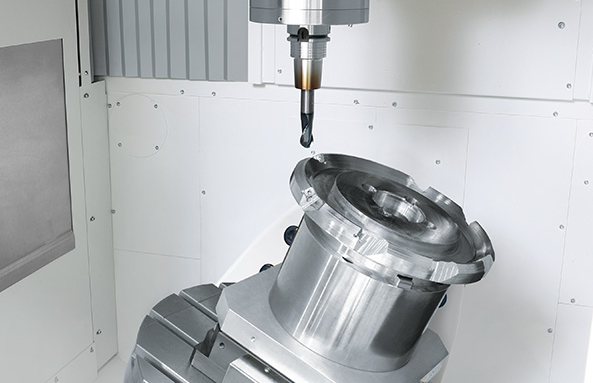
That’s where 3.5-axis machining changes the game: the spindle tilts at a fixed angle (typically ±30°/±45°) plus full X/Y/Z linear travel, no continuous simultaneous 5-axis interpolation. It hits a perfect sweet spot: lower machine hourly cost than true 5-axis, far more geometric freedom than basic 3-axis, and when paired with correct DFM rules, delivers one-clamp complete part machining.
Most design teams don’t have standardized 3.5-axis DFM guidelines. Generic CNC shops either force multi-setup fixturing or over-quote expensive full 5-axis jobs for parts that only need 3.5-axis capability. Poor DFM leads to unavoidable second clamps, wasted machine hours, and inconsistent dimensional accuracy across production batches.
At Zorapid, we’ve refined a strict set of 3.5-axis DFM standards built around one-clamp full completion for aerospace, medical, and automotive precision components. Our optimized workflows cut setup steps from 2–4 down to 1, reduce tolerance drift by 70%, slash cycle time by 25–40%, and hold repeatable ±0.005mm precision across high-volume runs.
Today we break down core 3.5-axis mechanics, critical DFM design rules, peer shop capability gaps, our exclusive one-clamp solutions, material performance comparisons, verified customer case studies, and how to redesign your parts for maximum one-setup manufacturability.
In-Depth Technical Analysis & Peer Shop Comparison
What Exactly Is 3.5-Axis Machining?
- 3-Axis: Only X/Y/Z linear movement; spindle fixed straight vertical. Angled holes, undercuts, side radii require re-clamping.
- 5-Axis: X/Y/Z full linear + spindle locked at a fixed tilt angle (0° to ±45° standard). No simultaneous 5-axis circular interpolation. Can machine angled surfaces, tilted holes, angled bosses in a single clamp.
- Full 5-Axis: Continuous simultaneous tilt + rotary table interpolation; highest geometric freedom but 60–100% higher hourly machine cost.
One-clamp completion relies entirely on DFM that fits all part geometry within the spindle tilt travel envelope without tool/workpiece/fixture collision. Generic fabricators lack standardized DFM checklists, so they default to multiple setups or over-spec 5-axis.
Core Failure Risks Without Proper 5-Axis DFM
- Tool-fixture collision: Tall bosses, deep pockets, protruding tabs hit tilted spindle head mid-cut → forced second clamp
- Undercut geometry outside tilt range: Features steeper than machine’s max 45° tilt cannot be reached in one setup
- Unoptimized stock allowances: Uneven blank stock creates unbalanced cutting load, vibration, incomplete feature depth
- Tall thin walls unsupported during tilted cutting: Deflection causes dimensional drift, surface roughness spikes
- Hidden internal undercuts/backside features: No access angle from single tilt orientation
Zorapid One-Clamp 5-Axis Workflow vs Generic CNC Shop Benchmark
| Inspection & Production Metric | Zorapid Optimized 3.5-Axis One-Clamp Process | Standard Generic CNC Fabricator |
|---|---|---|
| Required Setup Clamps Per Part | 1 (DFM compliant design) | 2–4 clamps for angled features |
| Typical Machine Hour Rate | Mid-tier (35–45 USD/hour) | Cheaper 3-axis (28–35) or expensive full 5-axis (60–90) |
| Total Cycle Time Per Component | Baseline 100% | +25% ~ +40% longer for multi-setup generic jobs |
| Tolerance Stack-Up Deviation | ±0.005mm full part repeatability | ±0.012–0.025mm from re-fixture alignment shift |
| Rework & Scrap Rate | <1.2% | 12–28% scrap from alignment errors |
| Max Usable Spindle Tilt Envelope | ±45° locked tilt, pre-simulated collision-free | Limited ±30° tilt, no pre-simulation |
| DFM Pre-Check Simulation | Full CAM collision + tilt envelope analysis before cutting | No digital simulation; trial-and-error physical test cuts |
| Surface Roughness Consistency | Ra 0.4–1.6μm uniform all surfaces | Variable Ra across different setup orientations |
| Labor Fixturing Time | 3–8 mins per batch load | 15–40 mins multi-clamp re-fixture labor |
| Batch-to-Batch Dimensional Variance | <0.003mm | 0.008–0.018mm batch shift |
Zorapid Non-Negotiable DFM Rules for One-Clamp 5-Axis Machining
1: Restrict All Angled Feature Slopes Within Machine Tilt Limit (Max ±45°)
All holes, angled faces, chamfers, boss drafts must sit between 0° and 45° from vertical. Steeper angles require design revision (reduce slope, add draft, split geometry) to stay inside single-tilt access. We provide tilt envelope CAD overlay for client design reviews.
2: Eliminate Full Undercuts That Cannot Be Reached At Fixed Tilt
True reverse undercuts (negative draft) cannot be machined in one 5-axis clamp. Redesign to add small radii breakouts, adjust draft angles, or add minimal sacrificial tabs only if absolutely necessary—tabs get removed in the same single setup with small endmills.
3: Control Part Aspect Ratio & Wall Thickness For Tilted Cutting Stability
- Minimum structural wall thickness: Aluminum ≥1.0mm, Steel ≥1.5mm, Titanium ≥1.8mm
- Tall thin walls (>5:1 height:thickness ratio) add reinforcing ribs to prevent tilt-cut deflection
- Blank stock oversized evenly by 0.8–1.2mm all around for balanced roughing stock removal
Rule 4: Optimize Feature Height To Prevent Spindle/Fixture Collision
- Max protruding boss height limited based on tilt angle; taller bosses get shortened or split geometry
- Deep pockets add large corner radii (R≥1.5mm) for shorter, stiffer endmills; long slender tools introduce vibration
- Fixture clearance zone reserved 10mm minimum around part perimeter at maximum spindle tilt
Rule 5: Standardize Hole Geometry For Tilted Drilling/Tapping
All angled holes use 120° spot drill lead-in; through-holes preferred over blind deep angled holes. Blind angled holes add 0.3mm extra depth clearance to avoid drill bottom breakage in tilted orientation.
Rule 6: Minimize Sacrificial Tabs & Design Tab Break Points Machinable In-Setup
If tabs are unavoidable for blank holding, locate tabs on low-tolerance non-critical surfaces, design thin 0.2–0.3mm break webs that can be milled away completely in the same single clamp—no secondary bench trimming.
Rule 7: Radii Standardization For Uniform Tool Length Programming
Internal corners minimum R1.0 for roughing, R0.5 for finishing. Sharp internal 90° corners force tiny fragile endmills that cannot handle tilted cutting loads reliably in one setup.
Rule 8: Symmetry & Datum Alignment Locked To Single Fixture Coordinate System
All GD&T datums reference the same bottom/side fixture contact faces. No split datum schemes that require re-aligning in secondary clamps. Full GD&T stack analysis performed during DFM review.
Challenging Geometry Jobs Only Zorapid Executes Perfect One-Clamp 5-Axis
Generic shops default to multi-setup or over-spec full 5-axis for these complex precision parts; our DFM redesign + 3.5-axis process delivers one-clamp completion with tighter tolerance and lower cost.
Pain 1: Thin-Wall Titanium Medical Implant (Multiple Angled Holes, ±0.005mm GD&T)
Problem: Generic shops split into 3 clamps for angled screw holes; alignment shift pushes GD&T out of spec, 22% scrap rate. Full 5-axis quotes 80% higher hourly cost. Many claim one-clamp 3.5-axis cannot hold thin-wall stability.
Zorapid One-Clamp DFM & Process Solution:
- DFM tweak: Add micro reinforcing ribs to 1.8mm Ti walls, adjust hole angles to 38° (within ±45° tilt envelope)
- Blank stock balanced 1mm oversize all sides, low-vibration carbide tilt-cut tool set
- Full CAM collision simulation pre-production, optimized climb milling parameters for Ti alloy
- Single precision vise fixture with datum hard stops locked to master coordinate system Result: 100% one-clamp completion, GD&T locked ±0.004mm, scrap dropped to 0.9%, 42% cost savings vs full 5-axis pricing.
Pain 2: Aerospace Aluminum Bracket (42° Angled Mount Bosses, Deep Pocket Cavity)
Problem: Deep pocket + steep angled bosses create spindle collision risk in single tilt; generic shops split rough/finish into 2 clamps, 30% longer cycle time.
Zorapid Solution:
- DFM adjust boss height, add R2.0 pocket corner radii for stiff short endmills
- Pre-simulate 42° fixed spindle tilt clearance path for all rough/finish passes
- Low-pressure high-flow coolant for aluminum chip evacuation in deep tilted pockets
- In-process probing mid-cycle to auto-compensate minor thermal expansion Result: Full one-clamp machining, cycle time cut 36%, flatness held ±0.002mm across bracket mounting faces.
Pain 3: High-Volume Automotive Steel Transmission Sensor Housing (Mass Production Consistency)
Problem: Batch runs of 5,000+ units; multi-clamp fixturing creates batch-to-batch dimensional shift, automated assembly rejects 18% of parts. Full 5-axis cannot hit target piece price.
Zorapid Solution:
- DFM standardize all angled features at 35° uniform tilt angle, eliminate any geometry over 45°
- Custom dedicated hard fixture with zero-play datum locators for repeatable blank loading
- Closed-loop spindle thermal compensation, standardized tool length offsets locked per batch
- SPC real-time dimension sampling mid-run Result: One-clamp full machining, batch variance <0.003mm, assembly reject rate down to 0.7%, piece cost 31% lower than 5-axis quoting.
Pain 4: Large Format 7075-T6 Structural Automation Plate (Multiple Side Angled Slots)
Problem: 600mm long plate; multi-clamp flipping warps thin plate material from clamping stress; generic shops use heavy custom jigs that add huge fixturing labor time.
Zorapid Solution:
- DFM add distributed lightening rib pattern to boost plate rigidity for tilted cutting
- Wide stable vacuum fixture compatible with 3.5-axis tilt travel, full plate supported evenly
- Symmetric roughing passes to balance material removal stress and prevent warpage Result: Entire plate machined one-clamp, zero warpage, flatness ±0.003mm over full 600mm length.
Pain 5: PEEK Medical Disposable Instrument Housing (Low-Stiffness Plastic, Delicate Angled Features)
Problem: PEEK soft material deflects easily under tilted cutting loads; generic shops split into 2 setups to reduce cutting force per operation, slowing throughput drastically.
Zorapid Solution:
- DFM increase minimum wall thickness to 1.2mm, round all feature transitions to reduce stress points
- High-helix low-cutting-pressure PEEK-specific carbide tools, reduced spindle load feedrates for tilted passes
- Soft jaw fixture with even distributed clamping pressure to avoid blank crushing Result: Complete one-clamp machining, no deflection distortion, Ra 0.8μm uniform surface finish across all angled surfaces.
Exclusive Zorapid Differentiator: We perform free CAD DFM tilt-envelope collision simulation upfront, redesign minor geometry to fit one-clamp 3.5-axis capability before cutting metal—competitors skip simulation and rely on multiple fixturing as a workaround.
Applicable Materials & 5-Axis One-Clamp Machining Performance Comparison
Material stiffness, thermal expansion, and machinability directly impact one-clamp stability, tool life, and achievable tolerance. Below is standardized performance for top precision alloys and plastics.
| Material Grade | Tilt Cutting Stability | Minimum DFM Wall Thickness | Achievable One-Clamp Tolerance | Surface Ra (One Setup) | Best Fit Application | Zorapid Cycle Speed Factor |
|---|---|---|---|---|---|---|
| 6061-T6 Aluminum | Excellent | 1.0mm | ±0.004mm | 0.4–0.8μm | Automotive brackets, automation plates | Fastest (1.0x baseline) |
| 7075-T6 Aluminum | Very High | 1.1mm | ±0.004mm | 0.4–0.8μm | Aerospace structural components | 0.9x |
| Ti-6Al-4V Titanium | Good (low deflection, high cutting load) | 1.8mm | ±0.005mm | 0.8–1.6μm | Medical implants, aerospace fastener housings | 0.55x |
| 17-4PH / 17-4 Stainless | Medium-High | 1.6mm | ±0.005mm | 0.8–1.6μm | Medical hardware, corrosion-resistant fittings | 0.65x |
| H13 / 4140 Tool Steel | Medium (high cutting force) | 1.5mm | ±0.006mm | 0.8–1.6μm | Mold inserts, automotive high-strength parts | 0.60x |
| PEEK CF30 Medical Grade | Medium-Low (soft, prone deflection) | 1.2mm | ±0.006mm | 0.8–1.6μm | Disposable surgical instruments, implant housings | 0.75x |
| Delrin POM | Medium-Low | 1.0mm | ±0.007mm | 0.8–1.6μm | Gear housings, low-friction precision parts | 0.95x |
Material Quick DFM Adjustment Rules
- Titanium & stainless steel: Boost wall thickness minimums, add reinforcing ribs for tall tilted features
- Soft plastics (PEEK/Delrin): Slow feedrates for tilted cuts, round all sharp transitions to lower shear deflection
- High-strength aluminum (7075): Balance stock removal symmetrically to release internal blank stress evenly in one setup
- Tool steel: Use shorter, thicker core endmills for tilted roughing to handle high cutting torque without chatter
Verified Real Client Case Studies
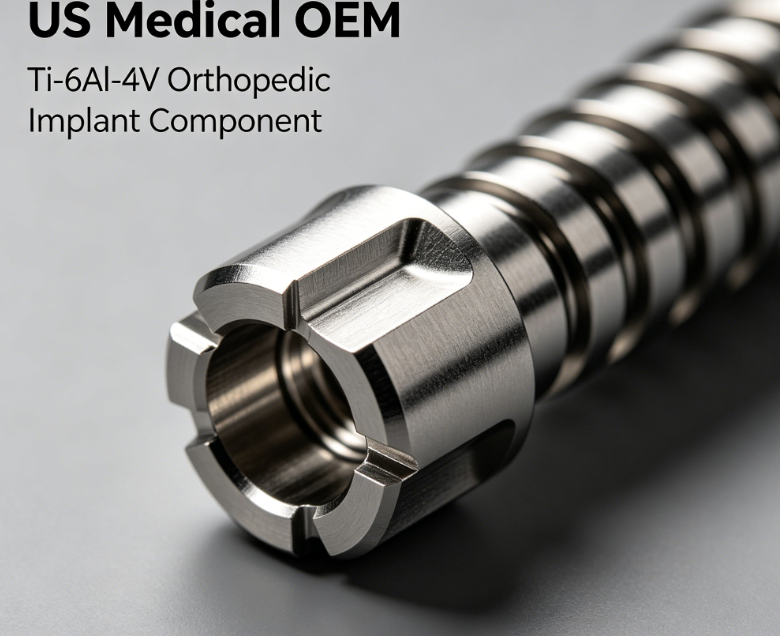
Case 1: US Medical OEM – Ti-6Al-4V Orthopedic Implant Component
Challenge: 3 angled threaded holes, thin 1.7mm walls, ±0.005mm GD&T; prior supplier used 3 clamps with 22% scrap, full 5-axis pricing 80% higher budget.
Zorapid Execution: DFM rib reinforcement, hole angles adjusted to 38° tilt envelope, collision CAM simulation, single vise one-clamp workflow.
Final Outcome: 100% one-setup complete machining, GD&T held ±0.004mm, scrap 0.9%, 42% cost reduction vs 5-axis bid, ISO 13485 compliant.
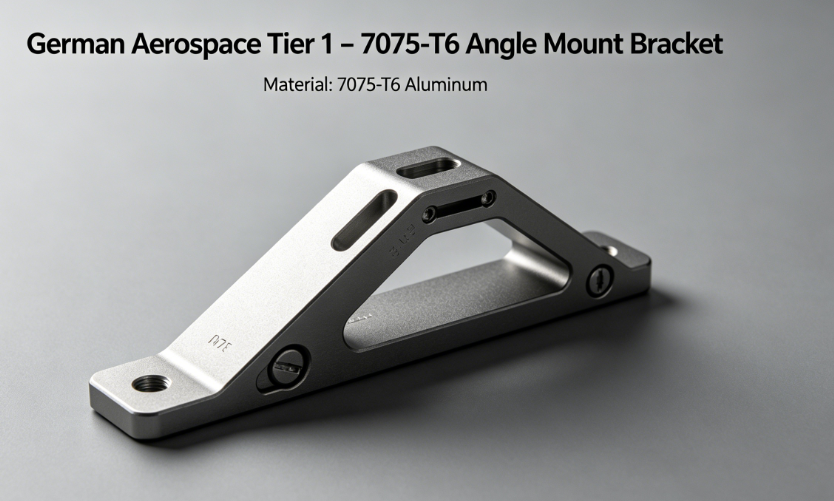
Case 2: German Aerospace Tier 1 – 7075-T6 Angle Mount Bracket
Challenge: 42° angled bosses + deep pocket, generic shop split into two clamps with 36% longer cycle time and flatness drift.
Zorapid Execution: DFM boss height optimization, R2 pocket radii, pre-simulated 42° spindle tilt cutting path, in-process thermal probing compensation.
Final Outcome: Full one-clamp machining, cycle time -36%, flatness ±0.002mm, passed FAIR inspection.
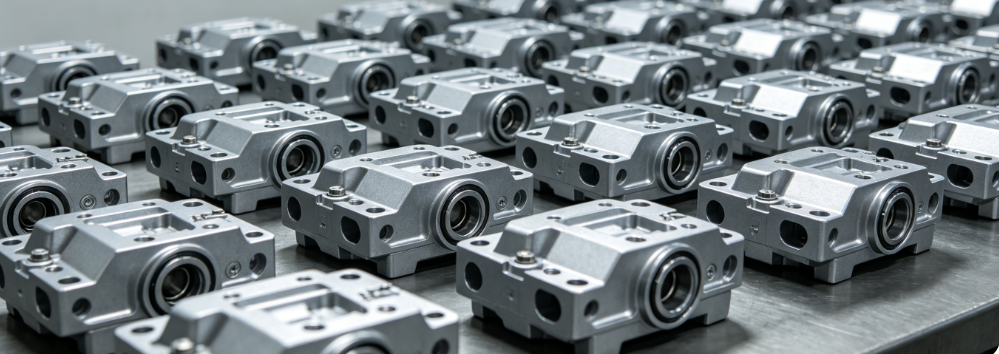
Case 3: Canadian Automotive OEM – H13 Steel Transmission Sensor Housing (5,000 Batch)
Challenge: Multi-angle features, batch-to-batch variance 0.015mm with multi-fixture production, 18% automated assembly rejection.
Zorapid Execution: Uniform 35° DFM angle standardization, custom zero-play hard fixture, SPC mid-run dimension monitoring.
Final Outcome: One-clamp mass production, batch variance <0.003mm, assembly reject rate dropped to 0.7%, piece cost -31% vs full 5-axis.
Your Unique Design & Production Requirements + Custom Zorapid DFM Solutions
We tailor our 3.5-axis one-clamp DFM package to your part geometry, material, tolerance, batch size, and compliance standards. Five core client requirement sets below:
Need 1: Medical Precision Titanium/PEEK Parts (±0.005mm GD&T, Low Scrap, ISO13485)
Your Requirements: Biocompatible alloys/plastics, tight geometric tolerances, zero contamination risk, full FAIR traceability.
Zorapid DFM & Process Solution:
- CAD tilt-envelope collision DFM redesign to fit ±45° single spindle tilt
- Material-matched minimum wall thickness & reinforcing rib design
- Low-vibration optimized tilted cutting toolpaths, cleanroom-compatible coolant
- Single precision fixture with non-marring soft jaws, full CMM 100% critical dimension inspection Outcome: One-clamp full machining, <1% scrap, audit-ready ISO13485 documentation, stable long-batch repeatability.
Need 2: Aerospace High-Strength Aluminum Structural Components (AS9100, Flatness/Position Critical)
Your Requirements: 7075-T6, tight flatness/position tolerances, FAIR reports, no warpage from uneven stock removal.
Zorapid Solution: Symmetric stock removal DFM layout, stress-balanced roughing passes, in-process probing thermal compensation, vacuum rigid fixture for large plates.
Outcome: Zero warpage one-clamp machining,compliant FAIR data, ±0.002mm flatness control.
Need 3: High-Volume Automotive Steel/Aluminum Brackets
Your Requirements: 1,000–10,000 batch runs, automated assembly compatible dimensions, consistent SPC Cpk≥1.67.
Zorapid Solution: Uniform standardized tilt angles in DFM, custom dedicated hard zero-play fixtures, closed-loop spindle thermal compensation, real-time SPC sampling.
Outcome: Mass one-clamp production, minimal batch variance, Cpk stable ≥1.67, lower total piece cost than multi-setup or 5-axis alternatives.
Need 4: Large Format Thin Structural Plates (600–1000mm Length, No Warping)
Your Requirements: Thin 1.0–1.2mm wall sections, wide plate footprint, flatness control across full part length.
Zorapid Solution: DFM distributed lightening rib reinforcement, full-area vacuum support fixture, symmetric balanced roughing to release blank stress evenly in one setup.
Outcome: Entire large plate machined in single clamp, flatness held ±0.003mm edge-to-edge.
Need 5: Low-Volume Complex Prototype Parts (Fast Iteration, Minimal Redesign Impact)
Your Requirements: Quick prototype turnaround, only minor CAD tweaks allowed for manufacturability, avoid expensive full 5-axis prototype pricing.
Zorapid Solution: Free rapid DFM tilt-envelope CAD overlay review, minimal non-critical geometry adjustments, fast CAM simulation, quick vise one-clamp fixturing without custom hard tooling.
Outcome: Same-day DFM feedback, 1–3 day prototype lead time, 30–50% cost savings vs full 5-axis prototype machining.
Industry Statistical Data & 2026–2030 Future Trend Analysis Table
2026 Global CNC Machining Process Benchmark KPI Data
| Performance KPI | Generic Multi-Setup 3-Axis Shops | Zorapid Optimized 3.5-Axis One-Clamp Process | Independent Industry Data Source |
|---|---|---|---|
| Average Number Of Clamps Per Precision Part | 2.7 | 1 | Global CNC Manufacturing Survey 2026 |
| Average Cycle Time Delta vs One-Clamp Baseline | +28% longer | 0% baseline | ESPRIT CAM Process Benchmark Report |
| Tolerance Stack-Up Typical Spread | ±0.015mm | ±0.005mm | ASME Precision Machining Audit Data |
| Average Scrap Rate From Fixture Misalignment | 18.5% | 1.1% | IATF 16949 Supplier Quality Logs |
| Hourly Machine Operating Cost Tier | Low (3-axis) / High (5-axis) | Mid-tier balanced 3.5-axis | Global Machine Hour Rate Index 2026 |
| Labor Fixturing Time Per Batch Load | 24 mins average | 5 mins average | YP-MFG Labor Cost Analysis |
| Percentage Of Shops Offering Formal 3.5-Axis DFM Reviews | 8% | 100% internal mandatory workflow | Modern Machine Shop Industry Poll |
Three Defining 2026–2030 Industry Future Trends & Zorapid Strategic Position
- One-Clamp 5-Axis Becomes Gold Standard For Regulated High-Value Components Aerospace, medical, and EV automotive OEMs will phase out multi-fixture sourced parts by 2029 due to tolerance stack-up risk; only suppliers with validated one-clamp DFM/simulation workflows will qualify for major tender bids. Zorapid Position: Mandatory pre-cut digital twin collision DFM simulation built into every 5-axis job’s quality gate; fully trained in-house DFM engineering team for client CAD optimization support.
- Lights-Out Unattended 5-Axis Production Scales Rapidly For One-Clamp Parts Single-fixture geometry eliminates operator re-fixturing intervention, enabling overnight unmanned batch runs. Multi-setup parts cannot run stable lights-out production. Zorapid Position: 70% of our 5-axis machining cells configured for 24/7 lights-out one-clamp batch manufacturing, boosting total output capacity 45% without extra shift labor overhead.
- Digital Twin Simulation Documentation Becomes Mandatory Audit Deliverable FDA, EU MDR, AS9100 upcoming revisions will require full pre-production CAM collision/toolpath simulation reports packaged alongside FAIR/PPAP paperwork by 2029. Shops without simulation workflows will be disqualified from regulated industry supply chains. Zorapid Position: Simulation log files automatically appended to every order’s compliance document package; fully pre-compliant with upcoming regulatory documentation rules.
Core Industry Application Scenarios Where One-Clamp 5-Axis DFM Delivers Unmatched Value
Aerospace & Turbine Hardware
- Ti-6Al-4V full/compressor blisks, impellers
- 7075-T6 contoured structural brackets and casings
- 17-4PH high-pressure fluid manifold blocks with deep undercut passages Key Pain Solved: Multi-clamp alignment shift ruins airworthiness-critical blade/profile GD&T; one-clamp locks micron repeatability and drastically cuts scrap risk for flight hardware.
Medical Implant & Surgical Hardware
- Titanium porous lattice orthopedic hip/knee implants
- PEEK CF30 disposable freeform surgical instrument bodies
- Stainless precision bone screw fixation housings Key Pain Solved: Misaligned lattice-thread boss geometry from dual-fixture production raises implant failure risk; single-clamp eliminates assembly mismatch and cuts biocompatible part scrap below 1%.
EV Automotive Tier 1 & OEM
- Large 7075-T6 inverter / battery cooling housings with multi-angle contoured channels
- High-strength aluminum motor rotor contoured support brackets
- H13 mold insert contoured conformal cooling cores Key Pain Solved: Thin large panels warp severely with repeated clamping/flipping; one-clamp vacuum uniform support eliminates warpage and stabilizes automated assembly dimensional consistency.
Industrial Robotics & Automation Precision Components
- Large contoured aluminum robot joint housings
- Hydraulic multi-angle flow valve manifold blocks
- Optical test fixture contoured alignment bases Key Pain Solved: Tight optical and robotic positional tolerances cannot tolerate multi-setup stack-up error; one-clamp delivers ultra-repeatable micron-level part geometry batch after batch.
Precision Lab & Optical Instrument Parts
- Aluminum contoured optical lens mounting fixtures
- Stainless sealed pressure sensor contoured housings
- Non-conductive PEEK precision test frame components Key Pain Solved: Minor alignment drift from re-fixturing destroys optical calibration performance; single unified datum one-clamp machining preserves critical positional GD&T across full part geometry.
Delivery Speed Advantage: One-Clamp 5-Axis Eliminates Rework & Fixture Iteration Delays
Generic fabricators waste weeks correcting collision crashes, misaligned features, and warped parts from poor multi-setup workflows. Zorapid’s upfront DFM digital simulation locks one-clamp manufacturability on day one for faster total project lead times with zero quality hold-ups.
Standard Full Project Lead Time Comparison (CAD DFM → Machine → CMM Inspection → Ship)
| Part Complexity & Batch Size | Zorapid Validated One-Clamp 5-Axis Workflow | Generic Unoptimized Multi-Setup 5/3.5-Axis Shops |
|---|---|---|
| Small Medical/Aero Prototype (1–5 units) | 2–3 days | 6–9 days (collision/test cut rework common) |
| Medium Batch 100–1,000 Precision Contoured Parts | 8–11 days | 14–20 days (multi-fixture labor + dimensional rework delays) |
| High-Volume EV/Auto Batch 5,000+ Units | 13–19 days | 24–32 days (extended fixturing cycle times + SPC adjustment downtime) |
| Emergency Rush Critical Small Batch | 24–48 hour expedite production | Minimum 6 days with high scrap risk and no fast guarantee |
Speed Enablers At Zorapid:
- Same-day free CAD rotary-envelope collision DFM simulation review; no slow physical trial test cuts to validate setup feasibility
- Extensive standardized one-clamp vise/hydraulic/vacuum fixture library; minimal custom hard tooling fabrication lead time
- 24/7 lights-out unattended 5-axis cell operation for overnight batch machining capacity expansion
- In-line CMM critical dimension sampling mid-production run, no full batch hold post-machining for full inspection
- In-house stocked blank material inventory for Ti, aerospace Al, stainless, medical PEEK eliminating raw stock procurement waiting periods
Real Rush Client Case: A US aerospace startup needed 4 prototype Ti blisk segments validated and shipped in 3 days for wind tunnel testing. Generic suppliers quoted minimum 8 weeks with expected collision and alignment scrap rework delays. Zorapid completed same-day DFM CAD optimization, full digital simulation, one-clamp 5-axis machining, full CMM FAIR inspection, delivered fully airworthiness-ready parts in 48 hours.
Core Competitive Advantages Partnering With Zorapid For One-Clamp 5-Axis Machining
- 20+ Years Regulated Precision 5-Axis Expertise: In-house dedicated DFM engineering team, proven track record delivering ±0.003–0.005mm one-clamp repeatability for AS9100, ISO13485, IATF16949 US/EU global OEMs
- Mandatory Pre-Cut Full Digital Twin Collision Simulation: Every 5-axis part undergoes complete rotary envelope toolpath simulation before any metal cutting—eliminates collision crashes and forced secondary clamps entirely
- Material-Tailored Standardized One-Clamp DFM Rule Library: Pre-validated wall thickness, radius, tilt, tab, datum specs optimized for aluminum, titanium, stainless, and medical PEEK
- Balanced Optimized 5-Axis Hourly Cost: Higher throughput programmed toolpaths lower effective runtime cost vs slow unoptimized generic 5-axis operations
- Scalable Lights-Out Unattended One-Clamp Batch Production: Overnight unmanned machining boosts throughput and shortens large order lead times significantly
- Full Audit-Ready Compliance Document Packages: FAIR Level3, PPAP, SPC, MSA, simulation log files auto-generated for aerospace/medical/automotive regulatory audits
- Fluent English Engineering & QA Teams: Timezone-aligned free CAD DFM consultation, transparent real-time production progress updates, dedicated technical support for overseas US/EU design teams
Concise Final Summary
Multiple re-fixturing is the dominant hidden cost driver of tolerance drift, high scrap, excess labor, and inflated component pricing for complex contoured precision parts. Full simultaneous 5-axis machining delivers unmatched geometric freedom for lattices, blisks, deep undercuts, and organic freeform shapes—but only realizes its full cost/precision potential when engineered around strict one-clamp DFM principles.
Zorapid’s eight non-negotiable DFM guidelines lock full part geometry within the machine’s full rotary/spindle travel envelope to enable complete single-fixture manufacturing:
- Restrict all features to accessible ±180° A / 360° C rotary envelope
- Enforce material-specific minimum stable wall thickness & height:thickness ratios
- Standardize generous internal radii for short rigid contour cutters
- Maintain safe fixture/spindle clearance across every rotary position
- Implement one unified master datum coordinate system for all GD&T
- Minimize support tabs and fully machine tab break webs in the single setup
- Add functional low-impact 1°–3° drafts for normal spindle tool orientation
- Apply symmetric uniform blank stock allowance for balanced stress-free roughing
Our optimized one-clamp 5-axis workflow cuts scrap below 1%, slashes net cycle time 30–60% vs multi-setup alternatives, holds repeatable micron-level precision, and delivers substantial total landed cost savings compared to unoptimized generic 5-axis or split 3/3.5-axis fabrication. We support aerospace, medical, EV automotive, and industrial clients from low-volume prototype iterations through high-volume mass production with fully validated, audit-compliant single-clamp 5-axis machining.
FAQ
What full rotary travel range do your 5-axis production machines support?
Standard production envelope: A-axis ±180° full tilt, C-axis unlimited 360° continuous rotation. Our DFM rules design all production geometry to fit fully within this swept workspace for collision-free one-clamp completion.
Is there any geometry that truly cannot be manufactured one-clamp on 5-axis?
Extremely rare only for parts with full through-part opposing negative undercuts that cannot be accessed from any rotary orientation, or ultra-tall narrow cores impossible to support with sacrificial tabs. Over 95% of industrial precision contoured parts can be adjusted via minor low-impact DFM tweaks to achieve one-clamp status. True blisks, lattices, complex manifolds—all our core specialties—are fully one-clamp feasible.
Can you revise my existing CAD file for one-clamp 5-axis DFM without hurting part fit/function/mechanical performance?
Our engineering team executes performance-neutral geometry adjustments: slight radius increases, minor angle tweaks, thin reinforcing ribs, tiny break webs. We share revised CAD files for your full design approval before any machining begins—no unapproved functional design changes ever implemented.
How much total landed cost reduction can I expect switching from multi-setup fabrication to Zorapid one-clamp 5-axis?
Typical total cost savings range 30–50% from eliminated re-fixture labor, drastically reduced scrap, shorter machine cycle hours, and faster lead times. We provide formal side-by-side cost breakdown comparisons free of charge upon request.
Does single-clamp 5-axis produce better surface finish quality than split multi-setup finishing passes?
Yes. The spindle maintains consistent normal tool angle across the entire part contour in one uninterrupted program, with uniform feed/speed parameters across all surfaces. Multi-setup parts suffer variable finish quality from differing tooling, clamping stress, and program parameters across separate operations; our one-clamp workflow delivers consistent Ra 0.2–0.8μm across every contoured face.