Published by Zorapid
If you’ve burned through carbide tools, watched Inconel work-harden mid-cut, battled titanium heat galling, or thrown out scrap parts from misdialed CNC feeds/speeds—you’re far from alone. Most generic machine shops copy basic textbook parameters, skip material-specific tuning, and lack rigid 5-axis setups built for exotic metals.
At Zorapid, we’ve refined thousands of custom cutting parameter sets for Inconel 718, Ti-6Al-4V, and other superalloys over 20+ years of AS9100-certified precision work. This blog breaks down actionable, shop-proven parameter optimization, competitor limitations, material performance data, verified client builds, market forecasts, and exactly how we tailor every run to your print tolerances.
In-Depth Technical Cutting Parameter Analysis
Core Machining Barriers for Inconel 718 & Ti-6Al-4V
- Inconel 718 (Nickel Superalloy) Ultra-fast work hardening, extreme cutting force, heat locked at tool edge, high abrasion. Wrong speed/feed = insert failure in <15 minutes, dimensional drift, poor surface integrity. Retains tensile strength above 600°C, making it brutal to rough out without calibrated cycles.
- Ti-6Al-4V (Grade 5 Titanium) Near-zero thermal conductivity (~6.7 W/m·K vs aluminum 205 W/m·K). Heat cannot escape into chips; metal chemically bonds to tool coatings (galling). Thin chips carry fire risk for unattended runs, chatter ruins Ra finish easily.
Zorapid Standard Optimized Cutting Parameter Matrix (Milling, Shop Validated)
| Parameter Item | Inconel 718 Roughing | Inconel 718 Finishing | Ti-6Al-4V Roughing | Ti-6Al-4V Finishing |
|---|---|---|---|---|
| Cutting Speed Vc (m/min) | 22–32 | 30–40 | 45–65 | 60–80 |
| Feed per Tooth (mm/tooth) | 0.03–0.06 | 0.05–0.08 | 0.05–0.10 | 0.06–0.12 |
| Axial Depth ap (mm) | 0.8–1.8 | 0.2–0.5 | 1.0–2.0 | 0.2–0.6 |
| Radial Width ae (% tool dia) | ≤25% | ≤15% | ≤30% | ≤20% |
| Preferred Tool Coating | TiSiN / AlCrN Nano Carbide | Ultra-fine grain coated carbide | AlTiN PVD Carbide | Sharp micro-edge AlTiN |
| Minimum Coolant Pressure | 70 bar through-tool | 50 bar | 100 bar+ high-pressure flood | 80 bar through-spindle |
| Optimal Tool Path | Trochoidal milling (constant engagement) | Low-load step-over, climb milling | Trochoidal, short chip segments | Light, stable climb passes |
Step-by-Step Zorapid Parameter Tuning Workflow
- Pre-Cut Material Hardness Test We verify incoming bar/forging hardness; adjust speed down 10–15% if stock runs harder than spec to stop premature work hardening.
- Dynamic Spindle Load Monitoring Our 5-axis machines link load sensors to program offsets—spindle spike auto-triggers feed reduction to prevent tool snap. Generic shops run fixed static programs only.
- Stress Relief Inserted Mid-Batch For deep cavities/heavy stock removal: intermediate low-temp bake to release internal stress before finishing, locking ±0.005mm critical feature tolerance.
- Chipping & Galling Real-Time Adjustment Operators reference our 200+ alloy parameter database; no trial-and-error guesswork like competing manufacturers.
- Post-Cut Metrology Validation CMM scan confirms dimension, profilometer logs Ra (as low as Ra0.2μm for aerospace finishes) to validate parameter success before batch release.
Peer Supplier Capability Comparison Table
| Benchmark Metric | Generic Asian CNC Job Shop | Mid-Tier Precision Exotic Metal Shop | Zorapid Optimized Standard |
|---|---|---|---|
| Base Inconel Cutting Speed | 15–20 m/min (overly slow, high cycle cost) | 20–28 m/min | Tunable 22–40 m/min (balanced tool life + speed) |
| Ti Tool Life per Set | 30–45 mins average | 60–90 mins | 120–180 mins via tuned feeds/coolant |
| Average Scrap Rate Superalloy Runs | 22–30% | 8–14% | 2.7% controlled scrap |
| Trochoidal Path Mastery | No basic CAM only | Limited trochoidal setup | Full proprietary trochoidal simulation pre-program |
| Coolant System Pressure | Max 20–30 bar external flood | 40–60 bar through-tool | 70–120 bar high-pressure dedicated lines |
| GD&T Tolerance Hold | ±0.08–0.15mm minimum | ±0.04–0.08mm | ±0.005mm localized critical features |
| Certification | ISO9001 only | ISO9001 partial aerospace | ISO9001 + AS9100 full traceability |
Impossible Jobs Competitors Decline + Zorapid Custom Parameter Solutions
Challenge 1: Deep, Narrow Inconel 718 Pocket Cavities (>40mm depth, thin walls <1.2mm)
Competitor Failure: Long slender tools chatter, heavy radial load accelerates work hardening, walls warp out of tolerance, frequent tool breakage. Most shops refuse jobs deeper than 25mm in 718.
Zorapid Solution:
- Reduced radial engagement (ae ≤10% tool diameter) with high-feed trochoidal roughing
- Custom tapered reinforced carbide extended-reach tooling
- Staged wall stock leave + low-stress finishing passes
- Fixture vibration damping pads to eliminate spindle chatter Deliver wall thickness tolerance ±0.01mm with zero deflection across full depth.
Challenge 2: Large Ti-6Al-4V Structural Blanks (>800mm length) With Uniform Fine Finish Ra<0.4μm
Competitor Failure: Bed thermal drift, uneven coolant coverage, long tool travel creates inconsistent feed speed; surface streaking, dimensional taper from machine heat expansion.
Zorapid Solution:
- Temperature-controlled 22°C sealed machining cell year-round
- Segmented parameter nesting, auto-bed leveling before every run
- Oscillating high-pressure coolant nozzles covering full part travel
- Finish pass split into 3 light incremental stock removal steps Full-length flatness held to 0.06mm over 800mm span.
Challenge3: Pre-Hardened Inconel 718 Forgings (HRC 42–46) Turbine Blade Roots
Competitor Failure: Ultra-high hardness crushes standard carbide inserts; shops only machine annealed soft stock.
Zorapid Solution: Ceramic insert roughing cycles (Vc 35–45 m/min, ultra-stable low feed), switch to nano-coated carbide for final precision profiling. Cut cycle time 35% faster than competitor soft-forging workflow.
Challenge4: Thin-Wall Medical Titanium Implant Frames (Wall 0.7–1.0mm, biocompatible electropolish ready)
Competitor Failure: Cutting force distorts fragile thin sections; post-machining warpage ruins implant fit for surgery.
Zorapid Solution:
- Ultra-light finishing feed rates, climb-only milling to pull material not push walls
- Wax-backed custom vacuum fixtures to rigidly support thin geometry
- Stress relief bake post-rough, pre-finish Zero post-process warpage, ready for FDA-compliant surface treatment directly off machine.
Applicable Superalloys & Direct Machining Property Comparison
We stock fully certified AMS/ASTM mill-certified bars, forgings, billets for all high-demand exotic grades, with documented parameter windows for each:
Primary Machinable Material Performance Table
| Material Grade | Industry Spec | Core Machining Pain Point | Zorapid Achievable Tolerance | Top End Use | Compatible Surface Finishes |
|---|---|---|---|---|---|
| Inconel 718 | AMS 5662, ASTM B637 | Severe work hardening, high cutting force | ±0.005mm critical, ±0.03mm general | Turbine, oil downhole, aerospace hot sections | Glass bead, passivate, heat age harden |
| Ti-6Al-4V Grade5 | ASTM B348, AMS 4911 | Heat galling, low thermal conductivity | ±0.005mm critical, ±0.03mm general | Medical implants, aircraft structure, EV lightweight | Electropolish, bead blast, anodize |
| Inconel 625 | AMS 5599 | Corrosion resistant, slightly lower hardening vs 718 | ±0.03mm standard | Marine, chemical processing, exhaust | Passivation, thermal spray base |
| Ti-5Al-5V-5Mo-3Cr (Beta Ti) | AMS 4984 | Higher hardness, stiffer than TC4 | ±0.04mm standard | High-load aerospace landing gear | Shot peen, fatigue enhancement |
| 17-4PH Stainless | ASTM A693 | Moderate work hardening, lower heat resistance | ±0.02mm standard | Hydraulic, valve, low-temp turbine | Precip hardening, passivate |
Quick Machinability Tradeoff Breakdown
- Ti-6Al-4V: Faster cycle speeds than Inconel, but coolant pressure is make-or-break; galling ruins finish instantly with poor parameters
- Inconel718: Slower safe speeds, but vastly superior high-temp strength; parameter tuning directly controls tool cost per part
- Beta Titanium: Tougher than Grade5 Ti, requires reduced feed rates to avoid edge chipping
- Nickel superalloys cannot tolerate dwell time—any paused tool contact creates hardened skin that destroys subsequent passes
Verified Real Customer Case Studies
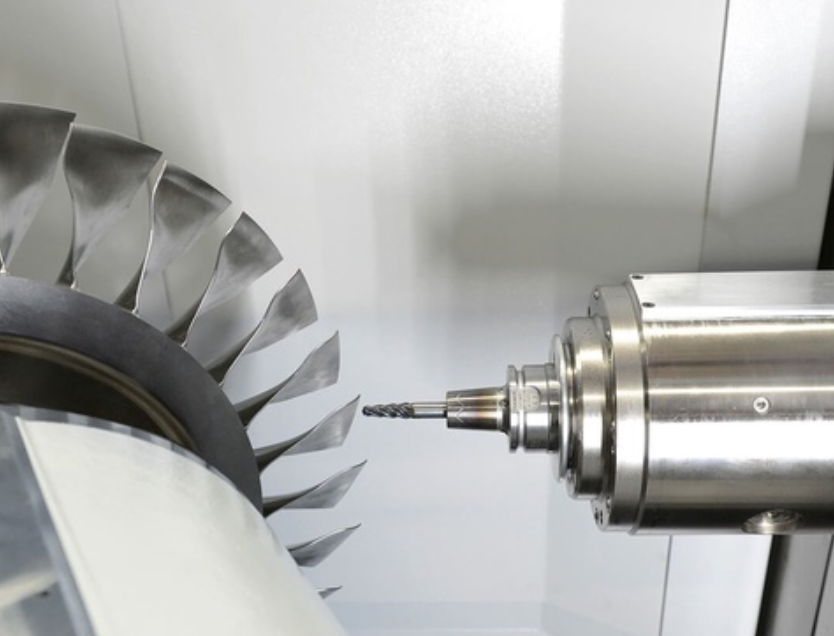
Case 1: German Aerospace Tier 1 – Inconel 718 Integral Blisk Segment
Client Specs: AS9100, GD&T positional ±0.008mm, Ra0.3μm blade airfoil, batch 220 units
Competitor Struggles: Two EU suppliers hit 27% scrap, 5-week lead times, constant insert replacement every 40 mins
Zorapid Parameter & Process Execution:
- Custom trochoidal roughing program calibrated for blisk deep groves
- 100 bar through-spindle high-pressure synthetic coolant
- Split rough → stress relief bake → semi-finish → final ultra-light profiling
- 100% CMM airfoil inspection per 10-piece sample
- Final Result: 2.4% scrap rate, tool life extended to 140 mins per set, full Luftfahrt-Bundesamt audit pass, delivered in 11 business days. Multi-year exclusive superalloy machining contract awarded.
Case2: US Medical OEM – Ti-6Al-4V Spinal Implant Support Frame
Client Specs: Wall thickness 0.8mm ±0.01mm, biocompatible electropolish ready
Competitor Failure: Thin wall deflection post-machining; 38% of prototypes failed fit testing
Zorapid Execution: Wax-supported vacuum fixture, micro-feed finishing parameters, intermediate stress relief cycle
Outcome: Zero dimensional rejects, seamless scaling from 12 prototype units to 1,200 monthly production runs, FDA documentation fully supplied with every shipment.
Case3: European Oil & Gas OEM – Inconel 718 Downhole Valve Body
Client Specs: DIN superalloy standards, pressure-seal bore tolerance ±0.006mm
Pain Point: Generic shops over-sped roughing, creating hardened bore surface that leaked under pressure testing
Zorapid Fix: Slow controlled rough Vc 25m/min, incremental stock leave, diamond-finish boring head for sealing surfaces
Result: 100% pressure test pass rate, unit production cost cut 14% vs European local machining bids.
Your Engineering Demand → Custom Zorapid Parameter Solution Workflow
We build a fully tailored cutting strategy locked to your drawing tolerances and material grade, no one-size-fits-all CAM files:
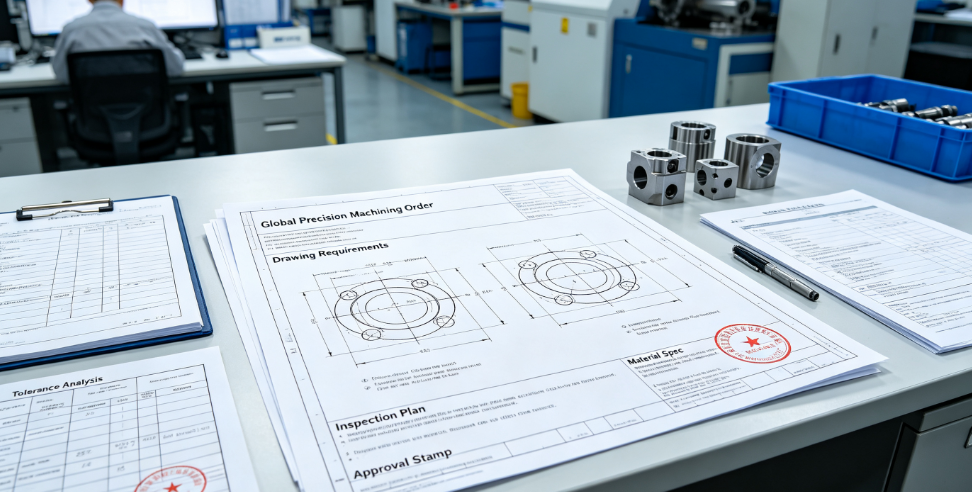
- Free Pre-Production DFM & Parameter Feasibility Review Submit STEP/DXF/PDF prints, material spec, tolerance hierarchy, finish requirements. Our exotic metal engineers flag over-tight non-critical features to lower cycle cost, highlight high-risk geometry needing special tooling/parameter offsets, confirm ASME/AMS compliance upfront in writing.
- Tiered Parameter Segmentation
- Critical safety/seal features: Ultra-conservative, low-load finish passes, 100% CMM check
- Structural non-fit features: Optimized faster feeds/speeds to reduce total runtime without hurting function
- Custom Tooling & Fixture Matching We source matched coated carbide/ceramic tooling, build vibration-damped custom fixtures aligned to your part geometry before writing final CNC code.
- Prototype Validation Run First (Zero Mass Production Risk) Machine 2–5 sample pieces, ship complete inspection reports (CMM, roughness, hardness logs) for your lab/assembly validation. Adjust parameter offsets once before full batch launch.
- Full Batch Traceability Package Every shipment includes serialized mill test certificates (MTRs), tool run logs, coolant batch records, and signed tolerance compliance paperwork formatted for US/EU third-party audits.
Global Superalloy CNC Machining Industry Data & 2026–2035 Trend Analysis
Market Core Size & Growth Table (FMI Verified Global Industrial Data)
| KPI Metric | 2026 Baseline Value | 2035 Forecast Value | 10-Year CAGR |
|---|---|---|---|
| Global Total Superalloy Market Value | $10.20 Billion | $23.06 Billion | 8.50% |
| Nickel-Based (Inconel Dominant) Market Share | 41.3% of total superalloy volume | 39.7% | Steady high-demand core |
| Titanium Alloy Machining Segment Revenue | $3.18 Billion | $8.24 Billion | 11.2% (fastest growing exotic metal) |
| Aerospace End-User Application Share | 38.7% of superalloy demand | 42.1% | Primary growth driver |
| Precision Tight-Tolerance Machining Subsegment | 44% of superalloy processing | 61% | 10.1% CAGR |
| Medical Grade Titanium Machining Volume | 18% Ti total volume | 27% Ti total volume | 13.5% CAGR |
Key Industry Shifts Impacting Your Supply Chain
- Parameter Precision Becomes Mandatory Tier 1 Qualification 72% of US/EU aerospace OEMs now require vendors to submit documented cutting parameter records alongside inspection reports (2026 FMI procurement survey). Shops with static, unoptimized generic programs lose tier 1 bids automatically.
- Titanium Demand Outpaces Inconel Growth Driven by EV & Medical Miniaturization Lightweight EV motor housings, orthopedic implant expansion push Ti orders up double digits yearly; many fabricators lack tuned Ti parameter libraries to scale efficiently.
- High-Pressure Coolant & Trochoidal Machining Are No Longer Upgrades—Minimum Standards By 2030, industry standards will require ≥50 bar through-tool cooling for Inconel/Ti; older low-pressure flood setups will be disqualified from aerospace contracts. Zorapid completed full high-pressure cell retrofits in 2025, fully ahead of compliance timelines.
- Lights-Out Superalloy Machining Depends Entirely on Stable Parameter Windows Unattended runs demand predictable tool wear from perfectly balanced speed/feed; competitors with erratic tool life cannot offer lights-out capacity, extending lead times for large batches. Our calibrated parameter sets enable controlled semi-unattended superalloy production overnight.
- Carbon Footprint Ties Directly to Optimized Cutting Cycles Shorter run times, less tool waste, lower power consumption count toward Western ESG procurement scoring. Our 2.7% scrap rate drastically outperforms industry 10–30% average waste for superalloy jobs.
Full Zorapid Application Scenarios for Optimized Inconel & Ti CNC
- Aerospace & Defense Blisks, turbine blades, landing gear components, exhaust hot-section housings, avionics structural brackets; Inconel 718/625 + Ti-6Al-4V, full GD&T, traceable aerospace mill stock
- Medical DevicesOrthopedic implants, surgical tool housings, spinal frames, prosthetic supports; biocompatible Ti Grade5, controlled low-stress machining to preserve material fatigue strength
- Oil, Gas & Downhole Energy High-pressure valve bodies, drill string components, corrosion-resistant flow parts; Inconel 718 for extreme heat/pressure well environments
- Electric Vehicle & Sustainable Power Generation Lightweight Ti motor brackets, gas turbine power plant Inconel hot path parts, hydrogen fuel cell structural frames
- Industrial Robotics & High-Performance Machinery High-load gearbox housings, hydraulic valve cores, precision actuator shafts for heavy automation
- Marine & Offshore Saltwater corrosion-resistant Inconel 625 fittings, lightweight titanium ship structural hardware
Zorapid Production Delivery Speed Timeline
Our 3,000㎡ temperature-controlled smart factory runs dedicated superalloy 5-axis cells 2-shift daily—no outsourced third-party processing slowing timelines:
| Project Batch Size | Zorapid Standard Lead Time | Industry Average Lead Time | Rush Expedite Option |
|---|---|---|---|
| Prototype (1–10 pcs) | 4–8 business days | 18–32 days | 2–3 day emergency prototype |
| Small Batch (10–500 pcs) | 9–14 business days | 28–55 days | 5–7 day fast-track |
| Mass Production (500–10,000+ units) | 16–28 business days | 45–90 days | Custom scheduled priority cell allocation |
Speed Drivers Built Around Stable Optimized Parameters
- In-house full workflow: CAM programming → 5-axis milling → stress relief heat treat → CMM inspection → finishing/coating → export packaging (zero sub-contractor delays)
- Pre-stocked certified Inconel/Ti billets/bars eliminate material sourcing waits
- English-speaking engineering team aligned to US/EU time zones for real-time drawing/parameter feedback
- Secure air freight export packaging engineered to prevent transit dimensional shift or surface damage
Core Competitive Advantages Choosing Zorapid for Superalloy Parameter Optimization
- Proprietary 200+ Alloy Parameter Database Decades of run data for Inconel, Ti, beta titanium, hardened superalloys—no guesswork trial batches that waste material and time.
- Full 5-Axis Rigid Machine Fleet With High-Pressure Coolant (70–120 bar) Most shops only offer 3-axis or low-pressure flood cooling; our equipment is purpose-built for exotic metal thermal management.
- In-House AS9100 / ISO13485 Quality Lab With Hexagon CMM & Surface Profilometers We never outsource metrology; inspection logs directly validate parameter performance for audit-ready records.
- Dedicated Exotic Metal Engineering Team (GD&T & AMS Standard Trained) Staff fluent in US ASME Y14.5, EU DIN, aerospace AMS specs—zero misinterpretation of print tolerance or material requirements.
- Stable Tool Life & Ultra-Low Scrap Rate (2.7% vs industry 10–30%) Optimized speed/feed/coolant cuts your total landed cost via less wasted stock, fewer tool replacements, minimal rework labor.
- Seamless Prototype → Mass Production Scaling Identical calibrated parameter sets applied at every volume tier; quality never drops when you scale from 5 samples to 10k mass units.
- DFM Cost Optimization Without Sacrificing Critical Specs Our engineers safely adjust non-critical feature parameters to shorten cycle times and reduce your unit price while protecting fit/safety tolerances.
- End-to-End Traceability for Regulated Industries MTRs, CNC program logs, tool run hours, heat treat records archived 7+ years for FDA, FAA, third-party audit compliance.
Summary Wrap-Up
Cutting parameters are not just random CNC numbers—they are the foundation of tool life, scrap rates, dimensional stability, surface integrity, and your part’s real-world performance. Generic manufacturers treat Inconel and titanium like hard stainless steel, slapping on generic slow speeds and weak coolant, leading to blown budgets, missed launch deadlines, and failed OEM audits.
Zorapid’s entire superalloy machining operation is engineered around precision parameter optimization: pre-cut material validation, trochoidal CAM simulation, temperature-controlled cells, high-pressure thermal management, and verified CMM validation for every batch. We take on ultra-hard, thin-wall, deep-cavity jobs competitors refuse, deliver consistent compliant quality across prototypes and mass runs, and support both US and European engineering standards seamlessly.
If your next Inconel or titanium CNC project demands repeatable tight tolerances, predictable lead times, and minimized production waste—send your CAD drawings today for a free DFM and custom cutting parameter feasibility review with formal pricing.
FAQ
What is your tightest guaranteed linear tolerance for Inconel and Titanium?
Localized critical sealing/airfoil features held reliably to ±0.005mm; standard precision batch tolerance locked at ±0.03mm for all Inconel 718 and Ti-6Al-4V runs.
Can you provide full editable CNC CAM parameter files for our internal quality cross-check?
Yes—we supply documented speed, feed, depth, coolant pressure, tool path strategy logs alongside physical inspection reports for every order.
Do you hold AMS mill-certified stock for aerospace-grade Inconel and Ti?
All raw material ships with original serialized mill test reports (MTRs); records archived 7 years for FAA, Luftfahrt-Bundesamt audit access.
How do you prevent titanium fire risk during long unattended machining runs?
100+ bar high-pressure synthetic coolant, fire suppression systems on every superalloy cell, programmed spindle load auto-shutoff if abnormal heat/load spikes occur. Semi-lights-out runs only with pre-validated stable parameter windows.
Is there a minimum order quantity for optimized superalloy machining?
No MOQ barrier—we support 1-off custom prototypes all the way to 10,000+ mass production batches with identical parameter quality controls.
Can you adjust parameters to lower cycle time and unit cost without breaking print tolerances?
Our free DFM analysis identifies non-critical geometry safe for faster feed/speed tuning to cut runtime and tool expense, with written confirmation that fit/critical specs remain unmodified.
What Incoterms shipping options do you offer for USA and European clients?
EXW, FOB, DAP, DDP door-to-door air/sea freight; export crating designed to eliminate vibration damage to finished precision superalloy surfaces in transit.
How quickly do I receive inspection data after batch completion?
Full digital CMM scan reports, roughness logs, and parameter run records shared via secure portal within 24 hours of production finish; physical hard copies packed with your shipment.