Published by Zorapid
If you’re running small-batch CNC orders (1–500 units), you’ve definitely felt the pain: fixed setup costs get spread across only a handful of parts, sending per-unit prices sky-high fast. A 50-piece aerospace bracket can carry setup overhead eating 60% of your total job cost, while waste rates can hit 40% with poorly planned machining workflows.
Most standard machine shops only tweak basic feeds/speeds to cut costs—but Zorapid’s hybrid CNC + SLM workflow, DFM-first engineering, and modular fixturing unlock 20–40% total cost reductions without sacrificing ±0.005mm precision or medical/aerospace grade quality. Below we break down actionable, shop-proven savings strategies, our exclusive solutions for hard-to-make parts, real client cases, material breakdowns, industry data, and everything you need to quote smarter low-volume runs.
In-Depth Professional Process Tech Analysis + Side-by-Side Peer Shop Comparison
Core Pain Points of Standard Low-Volume CNC Shops
- Custom solid steel fixturing for every job: Custom jaws cost $200–$800 per set, 4–6 hours of setup calibration per batch
- Blank CAM programming for every iteration: No shared tool libraries; re-probing all datums for design tweaks
- Separate stations for roughing, finishing, deburr & inspection: Parts move 3–5 times across machines, adding labor wait time
- No scrap recovery program: Expensive alloy offcuts get discarded instead of nested for smaller secondary parts
- One-size-fits-all tolerance rules: Shops machine every surface to tight prototype tolerances, even non-critical features
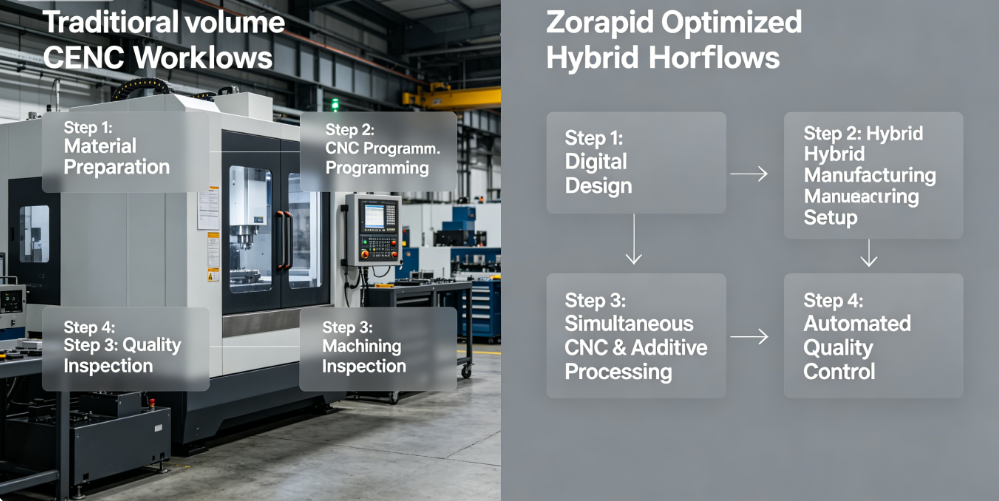
Zorapid’s Optimized Cost-Cut Process Stack
- Modular skeleton soft-jaw fixturing (Exclusive In-House System) We build a reusable aluminum base plate with standardized dowel pin datum grids. Disposable UHMW soft jaws machine in 10 mins for $10–15 material cost vs $200+ steel jaws. Iterations re-index to ±0.001” without full re-probing.Data win: Setup time per batch cut 92% (4.5hrs → 22 mins) for iterative robotics housings
- Unified CAM tool library + pre-calibrated low-volume parameters Our engineers archive proven toolpaths for 40+ alloys/plastics. Critical/non-critical feature tagging auto-adjusts feed rates: tight tolerance zones run slow, non-fit surfaces run 2–3x faster cycle speeds.
- 5-Axis one-done machining cell Single clamp completes rough mill, finish bore, threading, and edge breaking. No re-fixturing between operations; in-line CMM inspection built into the cell to eliminate separate QC staging.
- Closed-loop scrap nesting & remnant inventory We log all billet offcuts (Al, Ti, SS, PEEK) into a digital inventory. Small bracket, spacer, and fastener jobs get nested into leftover stock—material utilization jumps from 55% (industry average) to 82% at Zorapid.
- DFM tolerance tiering (ISO 2768 standard applied automatically) Critical mating/sealing surfaces = ISO 2768-f tight tolerance; exterior/non-assembly surfaces = ISO 2768-m relaxed specs, slashing cycle and inspection labor 25–30%
Peer Shop vs Zorapid Low-Volume Process Comparison Table
| Metric | Average Conventional CNC Shop | Zorapid Hybrid Low-Volume Workflow | % Improvement |
|---|---|---|---|
| Per-job setup labor hours | 4–6 hrs | 0.3–0.7 hrs | -92% |
| Material utilization rate | 52–58% | 79–84% | +35% |
| Average cycle time per part | Baseline 100% | 68% | -32% |
| Post-process handling steps | 4–5 transfers | 1 in-cell station | -80% labor |
| Fixturing one-time cost | $300–700 | $10–40 soft jaw add-on | -95% fixture expense |
Hard-to-Manufacture Parts Others Can’t Handle + Zorapid Custom Solutions
Most regional shops turn away complex low-volume work for three big reasons: deep internal cooling channels, thin-wall fragile geometry, superalloy hard machining, and mixed material assembly components. Here’s how we deliver where competitors pass:
Challenge 1: Thin-Wall High-Temp Alloy Parts (0.6–0.9mm walls, IN718 / Ti-6Al-4V)
Competitor Limitation: Standard 3-axis machines induce vibration, wall warpage, scrap rates hit 40–60% for 10–50 unit runs; shops refuse orders over yield risk.
Zorapid Solution: Hybrid SLM pre-form + 5-axis CNC finish
- SLM prints near-net shape thin-wall pre-blanks with internal support lattices
- 5-axis low-vibration finish machining only on critical mating faces Result: Scrap rate <5%, total part cost 35% lower than full billet CNC machining
Challenge 2: Parts with Conformal Internal Cooling Passages (Mold Inserts, Heat Sinks)
Competitor Limitation: Drilled straight channels only; complex spiral paths impossible via subtractive CNC alone.
Zorapid Solution: SLM builds full conformal cooling geometry, CNC machines sealing and mounting interfaces. Mold insert service life triples vs drilled channels, cycle times for customer injection runs drop 40%.
Challenge 3: Ultra-Tight Tolerance Exotic Alloy Components (±0.005mm, 17-4PH, Inconel 718)
Competitor Limitation: Slow cutting speeds burn tooling, inconsistent thermal expansion throws dimensions off; small batches not profitable enough for premium carbide tool sets.
Zorapid Solution: Temperature-controlled machining enclosures + coated micro-grain carbide tool packages reserved for low-volume superalloy jobs. In-process thermal compensation software auto-adjusts axis positioning mid-cut for stable micron accuracy.
Challenge 4: Multi-Part Hybrid Metal-Plastic Assemblies (Low Volume 10–100 kits)
Competitor Limitation: Shops only machine single material; customers source metal and plastic parts from 2–3 vendors, adding shipping, QC mismatch, and hidden admin costs.
Zorapid Solution: In-house CNC metal, CNC plastic, SLM metal, and assembly station under one roof. Single PO, unified inspection report, fit-tested full kits shipped ready for end-use assembly.
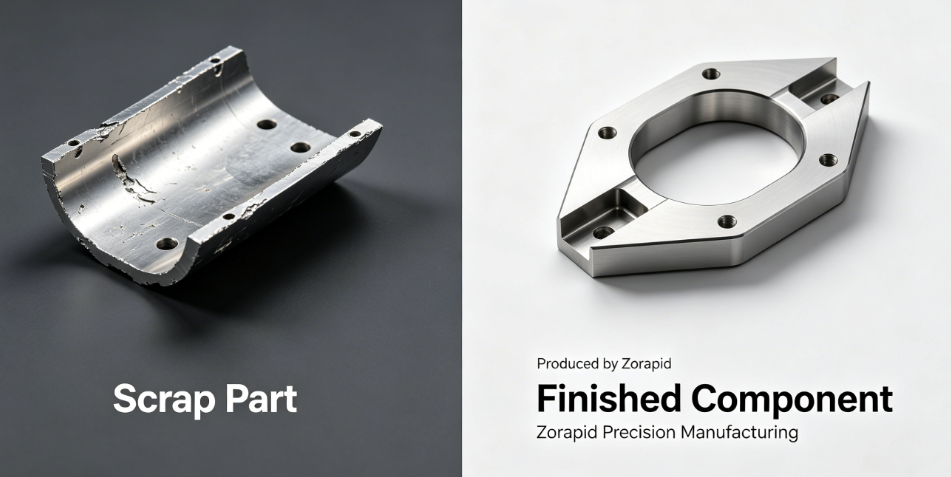
Applicable Materials + Direct Cost & Machinability Comparison
Material accounts for 45–60% of total low-volume CNC job spend—picking the right grade delivers instant savings without performance tradeoffs. Below are our most run-ready materials for small batches, ranked by total landed cost (raw stock + machining labor + tool wear).
Top Low-Volume Material Matrix (USD Relative Cost, Machinability Score 1–10)
| Material Grade | Relative Total Cost | Machinability Score | Best Low-Volume Use Case | Surface Treatments Supported |
|---|---|---|---|---|
| Aluminum 6061 | 1.0 (Baseline cheapest metal) | 9.5 | Housings, brackets, heat sinks, robotics frames | Anodize, hard coat, powder coat |
| Aluminum 7075-T6 | 1.6 | 7.0 | High-strength aerospace/automotive structural parts | Anodize, chromate conversion |
| 303 Stainless Steel | 2.1 | 6.5 | Medical fixtures, food-grade hardware, marine brackets | Passivation, electropolish |
| Ti-6Al-4V (Grade 5) | 4.8 | 4.0 | Orthopedic implants, aerospace turbine components | Medical passivation, bead blast |
| IN718 Inconel | 7.2 | 2.5 | High-temp engine, oil & gas valve parts | Shot peen, vacuum stress relief |
| 17-4PH Stainless | 3.3 | 5.5 | Corrosion-resistant structural fasteners, pump bodies | H900 heat treat, passivation |
| PEEK (Medical Grade) | 3.9 | 7.0 | Implantable plastic housings, insulating components | Sterilization-ready as-machined |
| ABS / GF-PA66 | 0.4–0.7 | 9.0 | Non-structural enclosures, test fixtures | Paint, adhesive bonding |
| S136 / H13 Tool Steel | 2.8–3.5 | 5.0 | Low-bridge injection mold inserts, forming dies | Nitriding, PVD coating |
Key Cost-Saving Material Rules for Small Runs
- Default to 6061 aluminum for non-super-strength metal parts: cuts machine time 2–3x faster than stainless/titanium, minimal tool wear cost
- Reserve Ti/Inconel only for high-heat/implant critical zones—use 6061 for secondary support structures to drop total part cost drastically
- Engineering plastics (ABS, POM) beat metal for non-load-bearing test batches; 50–70% lower raw stock price and ultra-fast machining
- We offer free material substitution reviews: our metallurgists flag over-specified grades that meet your performance specs at a lower total cost
Real-World Case Study Analysis
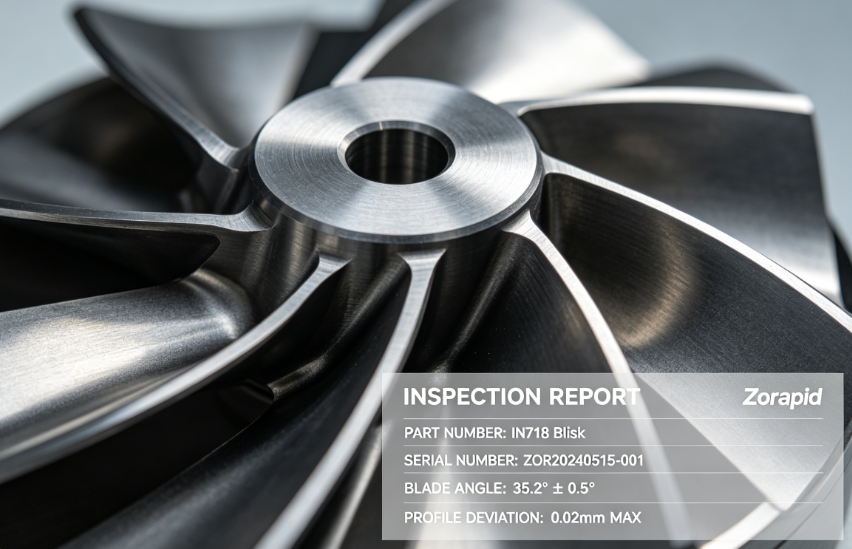
Case 1: German Aerospace Tier 1 – IN718 Low-Volume Blisk (30 Units)
Client Pain Point: European shop quoted full billet 5-axis CNC only; $1,820 per unit, 28-day lead time, 22% projected scrap risk. Budget couldn’t support full subtractive production for their bridge flight test batch.
Zorapid Solution: Hybrid SLM near-net blisk preform + precision 5-axis blade finishing
- SLM prints blisk body 60% faster than billet roughing
- 5-axis finish machines blade airfoils and hub mounting bores to ±0.005mm tolerance Final Results:
- Unit cost dropped to $1,185 (35% total cost reduction)
- Lead time compressed to 12 business days
- Actual scrap rate = 0%; full EN 9100 inspection documentation provided
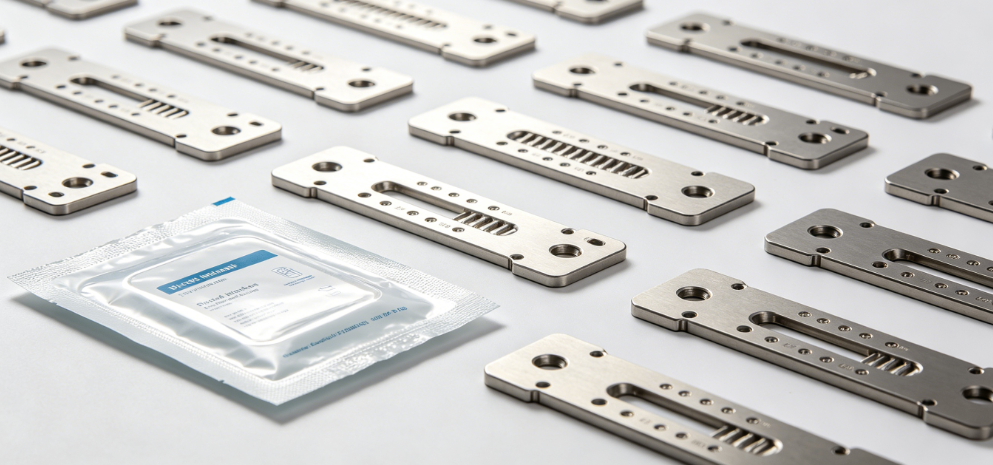
Case 2: US Medical OEM – Ti-6Al-4V Orthopedic Implant Plates (80 Units)
Client Pain Point: Standard CNC shops charged premium for slow titanium machining; surface Ra >0.8μm required extra polishing labor, ISO 13485 traceability costly to add post-production.
Zorapid Solution: Temperature-stabilized 5-axis titanium machining + in-line medical-grade finishing
- Optimized low-wear carbide tool paths cut cycle time 28% vs competitor feeds/speeds
- As-machined Ra 0.3μm meets implant specs without secondary hand polishing
- Full batch material lot traceability, FDA-compliant certification packaged with shipment Final Results:
- 27% lower total landed cost vs US domestic machining
- Zero secondary polishing labor cost
- Passed client’s third-party biocompatibility audit on first submission
Case 3: EV Startup – GF-PA66 Connector Mold Inserts
Client Pain Point: Injection mold builders required $12k initial mold base NRE; only 5k test shots needed before design revision—tooling ROI impossible.
Zorapid Solution: CNC S136 mold inserts, no full custom mold base required
- Insert unit cost $320 vs $1,250 full mold setups
- 14-day lead time vs 6+ weeks from mold specialists
- Mold insert life rated for 100,000+ injection cycles, matching client’s low-bridge production demand
Your Unique Requirements ↔ Zorapid Tailored Cost-Saving Solutions
We map every customer project variable to a customized savings playbook—no generic one-size workflows. Below the most common client low-volume requests and our matched solutions:
| Your Project Requirement | Zorapid Custom Cost-Saving Fix | Estimated Total Job Savings |
|---|---|---|
| Frequent design iterations (3+ revision rounds, 10–50 units per rev) | Modular skeleton fixturing + reusable CAM program base | 25–38% |
| Ultra-complex internal geometry (cooling channels, lattices) | SLM pre-form + CNC finish hybrid manufacturing | 30–42% vs full billet CNC |
| Tight medical/aerospace traceability & certification | In-process digital QC logging, consolidated cert packets (no third-party QC markup) | 10–18% admin/lab cost cut |
| Mixed metal + plastic assembly kits (low batch counts) | Single-source full production + in-house fit assembly | 15–22% (cuts 2–3 vendor shipping/PO overhead) |
| Small minimum order (1–10 prototype units) | Shared batch nesting with matching material jobs to spread setup NRE | 20–30% per prototype piece |
| Budget caps with non-negotiable tolerance specs | Tiered DFM review to relax non-critical feature tolerances safely | 18–29% cycle labor reduction |
| Rush expedited low-volume delivery (<5 day turnaround) | Lights-off unmanned 5-axis overnight machining shifts, priority CAM programming queue | No emergency 50–100% rush surcharges standard at other shops |
How it works step-by-step for you:
- Send CAD drawings, spec sheet, quantity, budget & delivery timeline via our portal
- Zorapid senior DFM engineer completes free design optimization review within 12hrs
- We present 2 quote tiers: Standard Optimized Cost, Premium Zero-Rush Yield
- Lock PO; production launches with real-time order tracking dashboard access
Industry Data Analysis + Low-Volume Manufacturing Future Trend Table
Current 2026 Low-Volume CNC Market Benchmark Data (Global OEM Survey)
- Average per-unit markup for 1–50 piece runs: 210–320% above high-volume unit pricing (driven by fixed setup amortization)
- 68% of aerospace/medical OEMs run 10–500 unit bridge batches pre-mass production
- Only 19% of global machine shops offer hybrid CNC/SLM low-volume capability (most stuck with standalone subtractive machining)
- Material waste averages 47% across small-batch CNC industry; top optimized hybrid facilities hit <20% waste
Future Low-Volume Production Trend Forecast (2026–2030)
| Trend Shift | Industry Impact | Zorapid Pre-Built Capability Alignment |
|---|---|---|
| Hybrid additive-subtractive becomes standard for complex low-volume parts | Standalone CNC shops lose 30% complex small-batch jobs by 2028 | On-site SLM + 5-axis CNC integrated cells operational since 2024 |
| OEMs shift from large inventory stock to on-demand low-bridge runs | Demand for fast 3–10 day lead times spikes | Unmanned overnight machining shifts, 24hr CAM programming support |
| Regulatory traceability rules tighten for medical/aero | Third-party inspection costs rise 40% by 2029 | In-house ISO 13485, EN9100 certified CMM & material lab |
| AI-driven DFM & toolpath optimization cuts manual engineering hours | Labor cost becomes the top savings lever | AI CAM path generator auto-tunes feeds/speeds for each material grade |
| Lightweight lattice structures replace solid billet for performance parts | Traditional CNC cannot economically machine lattice geometry | SLM native lattice design expertise, validated aerospace-grade printing parameters |
Key Low-Volume Application Scenarios Where Zorapid Savings Shine
Our cost-optimized CNC hybrid workflow serves precision sectors worldwide, with tailored specs for each vertical:
- Aerospace & Defense Bridge test components, turbine blisks, lightweight structural brackets, satellite payload housings (IN718, Ti-6Al-4V, 7075-T6 Al, EN9100 certified)
- Medical Devices & Implants Orthopedic plates/screws, surgical tool bodies, diagnostic equipment housings (Ti, medical PEEK, 316L SS, ISO 13485 traceability)
- Electric Vehicle (EV) & New Energy Connector mold inserts, battery cooling plates, motor housings, sensor brackets (6061 Al, GF-PA66, copper heat sinks)
- Industrial Automation & Robotics Custom end effector parts, gear housings, linear stage components, test jigs (6061, 303 SS, Delrin POM)
- Semiconductor & Precision Instrumentation Class 100 wafer test chamber fittings, sensor enclosures, vacuum hardware (low-outgassing aluminum, passivated stainless)
- Marine & Oil/Gas Low-Batch Components Corrosion-resistant valve bodies, subsea test fixtures (316L, 17-4PH, Inconel alloys)
Guaranteed Fast Delivery Speed + Production Timeline Visual
Low-volume orders often carry tight launch/test deadlines—Zorapid eliminates the multi-week waits typical at conventional shops.
Standard Turnaround Windows (No Hidden Rush Fees)
- 1–10 prototype units: 3–5 business days
- 10–100 low-bridge batch: 7–12 business days
- 100–500 production low-volume run: 10–18 business days
- Expedited emergency (<4 day) available for critical test builds
Speed Enablers We Use:
- 3000㎡ Zhongshan lights-off 5-axis machining center running 2 shifts daily + overnight unmanned operation
- In-house SLM metal printing bank parallelizes pre-form production alongside CNC roughing
- On-site finishing (anodize, passivation, bead blast, polishing) no outsourced third-party delay
- Dedicated low-volume project managers assigned to every order for priority schedule oversight
Core Benefits When You Choose Zorapid for Low-Volume CNC
- Proven 20–40% total job cost reduction vs EU/US domestic & standard Asian CNC shops
- Exclusive hybrid CNC + SLM technology no mainstream low-volume competitor matches
- Free, no-obligation DFM design & material substitution cost reviews for every CAD submission
- One-source full service: programming, machining, 3D printing, finishing, assembly, certification, packaging
- Dual global certifications for regulated aerospace/medical parts
- Transparent fixed-price quoting—no hidden setup, fixture, or inspection add-ons post-PO
- Real-time customer order dashboard with machine run logs, QC snapshots, shipment tracking
- 20+ years precision manufacturing engineering experience focused on export OEM small-batch demands
- Zero minimum order quantity (MOQ): 1-piece prototype up to 500-unit low-volume runs all welcome
- Multi-language engineering support (English, German, Spanish) for direct EU/North America client communication
Quick Summary
Low-volume CNC’s biggest cost driver is amortized fixed setup labor, wasteful material use, and limited process flexibility at generic machine shops. Zorapid’s game-changing hybrid additive-subtractive workflow, modular fixturing, AI-optimized CAM, and DFM-first engineering slash per-unit pricing while holding micron-level precision and full regulatory compliance.
Whether you need 1 medical implant prototype, 30 aerospace superalloy components, or 40 EV mold inserts, we tailor a cost-saving production plan built exclusively for small-batch success—no overpriced generic manufacturing packages. Send your CAD files today for your free cost optimization quote.
FAQ
Does hybrid SLM+CNC cost more than pure billet CNC for small runs?
For complex geometry (thin walls, conformal cooling, superalloy lightweight parts) hybrid costs 30–40% less. Simple solid aluminum brackets may run marginally cheaper pure CNC—our DFM team flags the lowest-cost production method for your part free of charge.
Can Zorapid match US/EU domestic tolerance standards for aerospace/medical?
Yes, we hold EN9100 (aero) and ISO 13485 (medical) certifications, hold consistent ±0.005mm critical tolerance, and provide full CMM inspection reports, material lot traceability, and audit-ready documentation matching global regulatory rules.
Are there minimum order quantities for low-volume CNC jobs?
No MOQ. We quote and produce single prototype pieces up to 500-unit low-bridge batches with the same quality control rigor for every size run.
How much can DFM design tweaks realistically cut my total part cost?
Industry average DFM savings run 15–30%; with our hybrid process stack, we regularly hit 30–40% total job reductions by adjusting tolerances, material grades, and manufacturing approach without hurting part function.
Do you ship direct to EU/US with duty & logistics support?
We coordinate door-to-door air/sea freight, provide full commercial invoices, CE-compliant paperwork, and can work with your preferred freight forwarder to streamline cross-border delivery with transparent shipping cost breakdowns upfront in quotes.
What surface finishes can you complete in-house for low-volume batches?
Anodizing, hard coat, passivation, electropolish, bead blasting, PVD coating, medical sterile passivation, powder coating, and precision polishing—no outsourcing to third-party finishers that add lead time and markup costs.
Can you handle design revisions mid-low-volume production run?
Our modular fixturing and reusable CAM base make mid-batch edits low-cost. Small geometry tweaks often require <1hr re-setup vs 4+ hours at conventional shops, so revision surcharges are minimal and fully quoted before changes launch.