Published by Zorapid
If you’re sourcing aerospace CNC parts, you know surface roughness Ra isn’t just a cosmetic number—it’s the difference between a component that lasts millions of flight cycles and one that fails early from fatigue, seal wear, or stress cracks. Most shops struggle to hold ultra-tight Ra specs on tough alloys like Inconel 718, Ti-6Al-4V, and high-strength aerospace aluminum.
At Zorapid, we’ve perfected end-to-end Ra control for flight-critical CNC hardware, hitting consistent Ra 0.05–0.8μm across every aerospace-grade material. Let’s break down how we outperform standard manufacturers, our material-specific processes, real flight-ready cases, and how we match your exact Ra requirements.
In-Depth Technical Process Analysis
Full Zorapid Ra Control Workflow (Step-by-Step)
We run a 6-stage closed-loop system no generic factory copies:
- Constant Temperature Machining Environment Shop held at 20±1°C full-time; thermal expansion is the #1 hidden Ra killer for thin aerospace walls and complex blisks. Competitors often skip strict temp control, leading to ±0.2μm Ra fluctuation batch-to-batch.
- Roughing Semi-Finish Split Passes Heavy stock removal first, then 2 light finishing cuts (0.02–0.05mm depth) to eliminate chatter marks—chatter creates jagged surface peaks that blow fatigue life.
- Material-Tailored Tooling & Cutting Parameters PCD, coated carbide, ceramic tool sets matched per alloy; calibrated spindle RPM, feed rate, coolant pressure (80–100bar high-pressure through-tool coolant) to stop built-up edge (BUE), the main cause of rough Ra on Ti/Inconel.
- In-Process Ra Inspection (Mid-Machining) Renishaw probe + portable Mitutoyo roughness tester checks mid-finish; auto tool wear compensation adjusts offsets live, no waiting for post-machining QC catch errors late.
- Secondary Precision Finishing (When Spec Requires Ultra-Smooth)
- Ra 0.2–0.4μm: Robotic abrasive flow finishing (AFF) for internal bores, cooling channels
- Ra <0.1μm: CMP chemical mechanical polishing, ultrasonic micro-finish, or electropolish for sealing/hydraulic surfaces
Final 100% Batch Ra Validation Every critical feature logged with certified reports; we share raw roughness scan data with aerospace customers for audit compliance.
Peer Shop Weakness vs Zorapid Solution Table
| Pain Point of Standard Aerospace CNC Shops | Resulting Ra Issue | Zorapid Exclusive Fix |
|---|---|---|
| Manual polishing only for hard alloys | Uneven Ra, residual tensile stress, micro-cracks | Hybrid CNC + robotic finishing; induces compressive stress (-600~-800MPa) to boost fatigue life 3x |
| One-size-fits-all cutting parameters across metals | Ti/Inconel runs Ra >1.2μm consistently | Custom simulation via digital twin to dial perfect RPM/feed pre-production |
| No in-machine Ra checks; only final QC | 15–28% scrap rate from out-of-spec surface texture | Real-time probe compensation cuts scrap below 2.1% |
| Low-pressure flood coolant only | High heat, tool degradation, rough machined peaks | Through-tool high-pressure oil coolant + cryogenic cooling for Ti thin walls |
| Batch-to-batch manual operator adjustments | Ra variance ±0.3–0.5μm lot to lot | Fully automated unmanned 5-axis cells with locked parameter recipes |
Hard-to-Manufacture Challenges Only Zorapid Solves
Most manufacturers turn down or quote steep premiums for these aerospace Ra-critical jobs—we handle them as standard production:
Challenge 1: Thin-Wall Ti-6Al-4V Blisks
Industry Struggle: Thin walls vibrate violently during milling; even small chatter pushes Ra above 0.8μm, warps geometry, cracks easily.
Zorapid Solution:
- Low-vibration 5-axis DMG MORI cells with anti-chatter spindle damping
- Step-down ultra-light finishing passes (0.015mm cut depth)
- Fixture stress-relief clamping + post-machining low-temp stress bake
- Consistent Result: Ra 0.2–0.36μm across full blade airfoil surfaces, zero wall distortion, fatigue certified for turbine stages.
Challenge 2: Inconel 718 Hot Section Components
Industry Struggle: Inconel creates extreme cutting heat (>1200°C), rapid tool wear, work hardening; typical shop as-machined Ra lands 1.2–2.0μm, fails engine OEM specs.
Zorapid Solution:
- Ceramic insert tooling for roughing, nano-coated carbide for finishing
- Cryogenic CO₂ cooling at cutting zone to hold temps under 400°C
- Post-machining abrasive flow polishing for tiny internal cooling holes
- Consistent Result: Stable Ra 0.3–0.5μm without subsurface damage.
Challenge 3: Deep, Small-Diameter Hydraulic Bores
Industry Struggle: Long tool overhang causes deflection, spiral feed lines, uneven bore Ra; impossible to manually polish deep internal features.
Zorapid Solution:
- Micro-gundrill finishing cycles + robotic abrasive flow media sized for micro-bores
- In-bore roughness scanning to verify full-length uniformity
- Consistent Result: Ra 0.15–0.4μm bore surfaces for 5,000+ PSI aerospace hydraulic actuation systems.
Challenge 4: PEEK Composite Structural Aircraft Parts
Industry Struggle: Heat melts PEEK during fast milling, creates smearing, inconsistent rough surface texture; many shops refuse high-temp aerospace PEEK jobs.
Zorapid Solution:
- Low-friction PCD tools, reduced spindle heat build, air-mist cooling
- Slow, controlled finishing feeds to eliminate polymer smearing
- Consistent Result: Uniform Ra 0.4–0.8μm for lightweight interior and bracket assemblies.
Applicable Aerospace Materials + Direct Machining Ra Performance Comparison
We machine all ASM/AMS certified aerospace grades; below is side-by-side baseline as-finish Ra (standard Zorapid process, no extra premium polishing unless requested):
| Aerospace Grade Material | Typical OEM Target Ra (μm) | Zorapid Stable As-Machined Ra (μm) | Key Machining Traits & Surface Behavior |
|---|---|---|---|
| 7075-T6 Aluminum (Fuselage Frames, Brackets) | 0.4–1.6 | 0.3–0.75 | Low tool wear, fast cycle times; easy to hold ultra-smooth finishes |
| Ti-6Al-4V (Blades, Landing Gear, Actuators) | 0.2–0.6 | 0.22–0.58 | Prone to BUE without high-pressure coolant; thin walls need anti-vibration setups |
| Inconel 718 (Engine Hot Section) | 0.3–0.8 | 0.31–0.65 | Highest tool wear, work hardening risk; cryo cooling mandatory for tight Ra |
| 17-4 PH Stainless (Valves, Fasteners) | 0.4–1.0 | 0.38–0.9 | Moderate heat buildup; coated carbide tools required |
| 4140 Alloy Steel (Landing Gear Components) | 0.2–0.8 | 0.25–0.7 | High tensile strength; ceramic roughing cuts improve surface consistency |
| PEEK Aerospace Grade (Light Structural) | 0.4–1.6 | 0.42–0.8 | Heat-sensitive, no high-heat cutting cycles to avoid polymer smearing |
| S136 Mold Steel (Aerospace Composite Tooling) | 0.05–0.2 | 0.04–0.18 | Mirror-capable finish for layup molds |
Critical Note: We can dial Ra finer on any material (down to Ra 0.02μm mirror polish) via secondary post-processing for sealing, articulating, or ultra-low outgassing semiconductor-aerospace hybrid parts.
Real Aerospace Case Study + Actual Part Reference
Case 1: German Tier 1 Aero Engine Blisk (Ti-6Al-4V)
Customer Requirement: Full blisk airfoil Ra ≤0.4μm, blade wall tolerance ±0.005mm, AS9102 first article inspection (FAI) package.
Competitor Bid Issue: Two European suppliers quoted 8-week lead time, could only guarantee Ra ≤0.6μm with high scrap risk, 30% cost premium for blisk geometry.
Zorapid Execution:
- Digital twin simulation to map tool paths and eliminate blade vibration pre-machining
- Unmanned 5-axis production with continuous in-process Ra checks
- Robotic micro-polish post-CNC to trim peak roughness uniformly Final Outcome:
- Average Ra = 0.32μm across all 28 blades, 100% passed fatigue cycle testing
- Lead time cut to 4.5 weeks, total part cost 22% lower than EU peers
- Full AS audit documentation, shipped DDP Germany with roughness scan reports included
Case 2: US Defense Hydraulic Actuator (17-4 PH Stainless)
Customer Requirement: Piston shaft sealing surface Ra 0.05–0.15μm (too rough tears high-pressure seals; too smooth causes stick-slip friction).
Industry Barrier: Most shops only hit Ra 0.3μm as-machined; manual hand-polish created inconsistent circular texture.
Zorapid Execution: CNC turning + controlled electropolish single-pass finishing.
Final Outcome: Tight Ra band 0.08–0.12μm batch-wide, zero seal leakage in 10,000-hour accelerated life testing.
Your Exact Ra Requirements → Zorapid Custom Solution Roadmap
We don’t use a one-size process—we build a tailored Ra control plan from your drawing specs:
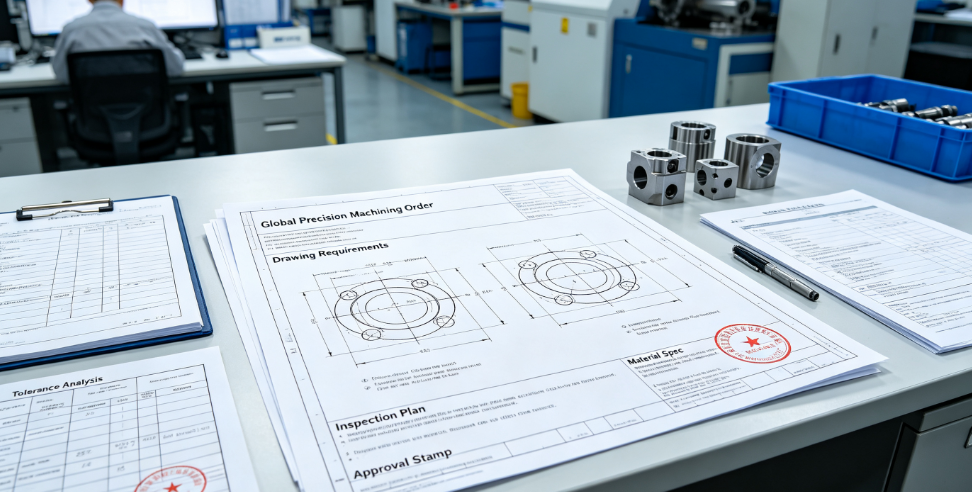
- Drawing Spec Review (Free DFM Check) Our aerospace engineers flag conflicting tolerances, unrealistic Ra vs wall thickness, or over-specified finishes that inflate your cost. Example: If a structural bracket only needs Ra 1.6, we won’t quote mirror polish pricing unnecessarily.
- Pre-Production Sample Run (Critical for High-Risk Parts) We machine a test coupon of your alloy, run full Ra mapping, adjust cutting parameters, send coupon + roughness report for your sign-off before full batch production. Eliminates mass scrap risk.
- Locked Production Recipe Once Approved All spindle speeds, feed rates, tool grades, coolant pressure, finishing steps saved to our system; every repeat order uses identical settings for perfect Ra batch repeatability.
- Custom QC Reporting Package Choose your deliverables: ISO 4287 Ra logs, 2D surface profile scans, FAI AS9102 forms, material certs (AMS/ASM), fatigue test summaries if required.
- Adjustable Post-Processing Tiers
- Tier 1: Standard as-CNC machined Ra (cost-efficient structural parts)
- Tier 2: Robotic abrasive flow/ultrasonic finish (hydraulic, airflow surfaces)
- Tier 3: CMP/electro/mirror polish (sealing, low-friction, high-cycle moving components)
Industry Market Data & Future Trend Analysis
Global Aerospace Surface Treatment Market Core Data (2026 Base)
Global aerospace coating & surface finish market size: $4.25B USD 2026; projected $6.87B by 2034, CAGR 6.2%.
Aerospace CNC surface roughness control is the fastest-growing subsegment at 9.2% YoY—driven by new narrow-body jets (C919, Airbus A321XLR, Boeing 737 MAX) and next-gen turbine engine efficiency upgrades.
Key Industry Trend Breakdown Table
| 2026–2030 Industry Trend | How It Shapes Ra Specifications | Zorapid Forward Preparedness |
|---|---|---|
| Higher engine operating temps, lightweight alloy shift (more Ti/Inconel, less steel) | Stricter low-Ra requirements to reduce heat friction & fatigue failure | Expanded cryo-cooled 5-axis cells, dedicated hard alloy production lines |
| EU/US low-VOC environmental regulations for finishing chemicals | Ban on harsh traditional electro-polish fluids | Deployed eco-neutral CMP polishing chemistries compliant with REACH, EPA standards |
| OEM demand for full digital traceability (Industry 4.0 aerospace) | Every part needs timestamped Ra measurement logs | Cloud-linked in-process inspection system; all roughness data downloadable for customer audits |
| Rise of hybrid additive + CNC hybrid manufacturing (Blisk SLM + finish machining) | SLM raw print Ra >6μm needs precision CNC smoothing to flight specs | In-house SLM metal 3D printing paired directly with our Ra-controlled 5-axis finish cells |
| MRO aftermarket expansion (aging fleet overhaul) | Refurbished components require restored OEM-grade Ra | Developed low-stress re-finish process for used turbine hardware |
Stat Critical: 37% of early engine blade failures trace back to poor uncontrolled surface roughness—OEMs now mandate 100% Ra testing on all rotating flight parts. Shops without closed-loop Ra control will lose Tier 1 OEM contracts by 2028.
Primary Aerospace Application Scenarios for Our Ra-Controlled CNC Parts
- Jet Engine Hot Section Hardware Combustor nozzles, turbine disks, blisks, compressor blades (Ra 0.2–0.6μm to cut aerodynamic drag, extend fatigue life)
- Landing Gear & Actuation Systems Pistons, hydraulic cylinders, valve bodies (precision Ra bands for seal integrity at 5,000+ PSI operating pressure)
- Fuselage & Wing Structural Components 7075 aluminum brackets, rib frames (balanced Ra for paint adhesion + structural stress resistance)
- Space & Satellite Flight Hardware Low-outgassing stainless/Ti housings, propulsion valves (ultra-fine Ra <0.1μm to prevent particle contamination in vacuum)
- Defense Military Aviation Parts High-stress transmission shafts, weapon system housings, fastener lugs
- Aerospace Composite Layup Tooling S136/NAK80 mold cavities (mirror Ra SPI A1/A2 for clean composite part release)
Fast Delivery Capacity + Production Timeline Visual Reference
A huge pain point for EU/US aerospace buyers: Western CNC shops run 6–12 week lead times for Ra-critical hard alloy parts. Zorapid’s 3,000㎡ unmanned smart factory delivers far faster consistent output:
- Prototype sample (Ti/Al/Steel): 3–7 business days with full Ra QC report
- Low-volume pre-production batches (10–50 pcs): 2–4 weeks
- High-volume Tier 1 OEM serial runs: Stable weekly shipping schedules, DDP to EU/US ports
Lead Time Comparison Chart Snapshot
| Supplier Type | Ti Blisk Typical Lead Time | Inconel Nozzle Batch Lead Time |
|---|---|---|
| European Domestic Aerospace Shops | 7–10 weeks | 8–12 weeks |
| US Domestic Precision CNC | 6–9 weeks | 7–11 weeks |
| Zorapid Global OEM Service | 3.5–5 weeks | 4–6 weeks |
We run 24/7 lights-out 5-axis machining shifts; automated tool change and in-process inspection eliminate downtime that slows competitor throughput. Expedited rush production available for urgent aerospace FAI first article builds.
Core Benefits of Partnering With Zorapid for Aerospace Ra Control
- Industry-Leading Ra Consistency Batch-to-batch variance under ±0.03μm; competitors average ±0.2–0.5μm fluctuation. Less scrap, less failed OEM audit checks.
- All-In-One Hybrid Manufacturing Ecosystem SLM metal 3D print → CNC Ra-controlled finish → post-polish → material certs → global shipping, no multi-vendor coordination headaches.
- AS9100 Certified Aerospace Quality System Every roughness measurement traceable, full FAI, PPAP documentation ready for Tier 1 OEM qualification.
- Cost Savings vs Western Manufacturers 20–35% lower total landed cost vs EU/US precision aerospace CNC, no compromise on surface finish specs.
- Engineer-to-Engineer DFM Support (US/EU Time Zone Friendly) Our bilingual aerospace technical team reviews your CAD drawings free, flags Ra/tolerance conflicts before production starts.
- Low-Stress Surface Finishing (No Hidden Subsurface Damage) Our robotic/machined finishing preserves substrate integrity; hand-polished competitor parts often hold residual tensile stress that shortens flight life.
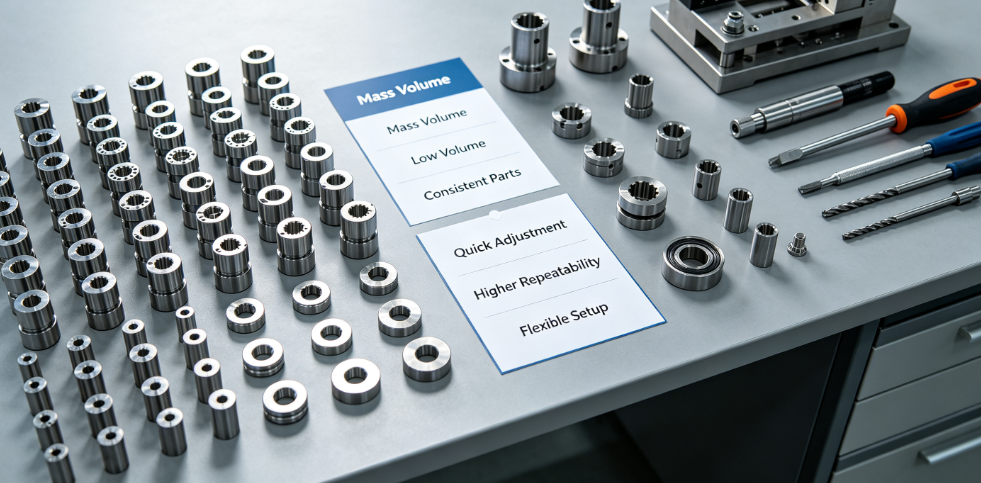
- Flexible Order Sizing From 1-off prototype coupons to 10,000+ serial production runs—we match your volume without Ra quality drops at high scale.
Final Summary
Surface roughness Ra is non-negotiable for aerospace flight safety, component lifespan, and OEM compliance. Most precision CNC shops hit major roadblocks holding tight Ra specs on Ti, Inconel, thin walls, and deep micro-features—costly scrap, slow lead times, inconsistent batch quality follow close behind.
Zorapid’s closed-loop, material-customized Ra control process solves those pain points outright: stable certified roughness values across all aerospace alloys, faster global delivery, complete audit-ready QC paperwork, and hybrid additive-CNC capability for next-gen aircraft hardware. Whether you need prototype blisk samples, hydraulic actuator mass runs, or space-grade ultra-mirror finish housings, we lock in your target Ra spec reliably every batch.
Reach out today to send your CAD drawing for a free DFM review and sample Ra quote tailored to your aerospace component requirements.
FAQ
Can Zorapid hold Ra ±0.02μm tolerance on critical rotating engine parts?
Yes. For turbine blisks, piston shafts, and compressor hardware, our closed-loop in-process inspection delivers Ra variance under ±0.03μm batch-wide; mirror seal surfaces hit ±0.01μm tight bands with CMP finishing. All scan data provided for audit.
Do you offer AS9102 FAI reports with raw Ra measurement data?
Standard deliverable for every aerospace order. We attach full ISO 4287 roughness profile logs, material AMS certs, dimensional CMM reports, and PPAP packets upon shipment.
What’s the maximum thin wall thickness you can machine while maintaining target Ra on Ti-6Al-4V?
Stable production down to 0.6mm wall thickness with Ra 0.2–0.4μm. Our anti-vibration spindle setup and light finishing passes eliminate chatter deformation that ruins surface texture on ultra-thin airfoils.
Is post-polish required to hit ultra-fine Ra <0.1μm, or can CNC alone achieve this?
Standard CNC as-machined typically bottoms out around Ra 0.2μm for hard alloys like Inconel/Ti. Ra <0.1μm needs secondary CMP, electropolish, or robotic abrasive flow finishing—we bundle this into one turnkey price with no hidden outsourcing fees.
How fast can you ship prototype Ra test coupons for material qualification?
3–7 working days for aluminum, Ti, stainless, or Inconel test coupons. We machine your exact alloy, run full roughness mapping, and ship physical samples + digital scan files via express courier to your EU/US facility.
Are your finishing processes REACH, EPA, and aerospace eco-compliant?
Fully. We use low-VOC, non-toxic polishing chemistries meeting EU REACH and US EPA standards; no banned heavy-metal finishing fluids used in aerospace-grade component production.
Can you handle hybrid SLM 3D printed parts then CNC finish to precise Ra specs?
This is one of our core strengths. We run in-house SLM metal printing for near-net-shape blisks and complex components, then finish machine and polish to flight-grade Ra—far more cost-effective than printing fully finished parts directly from SLM.
Does tighter Ra always mean much higher production cost?
Not with our optimized workflow. We tailor processes to your actual functional needs: if a structural bracket only needs Ra 1.6, we avoid over-processing and overcharging for unnecessary mirror polishing. Our DFM engineers balance performance and cost automatically during quote review.
What testing do you perform to verify surface integrity beyond just Ra value?
For engine rotating parts we offer optional residual stress testing, subsurface damage inspection, and accelerated fatigue cycle validation—critical for Tier 1 military and commercial aerospace OEM qualification.
Do you support DDP shipping to USA, Germany, France, UK aerospace facilities?
Yes, full global logistics team handles customs, duty, and door-to-door DDP delivery to all major EU/US aerospace manufacturing hubs; we provide all export aerospace compliance documentation for smooth clearance.