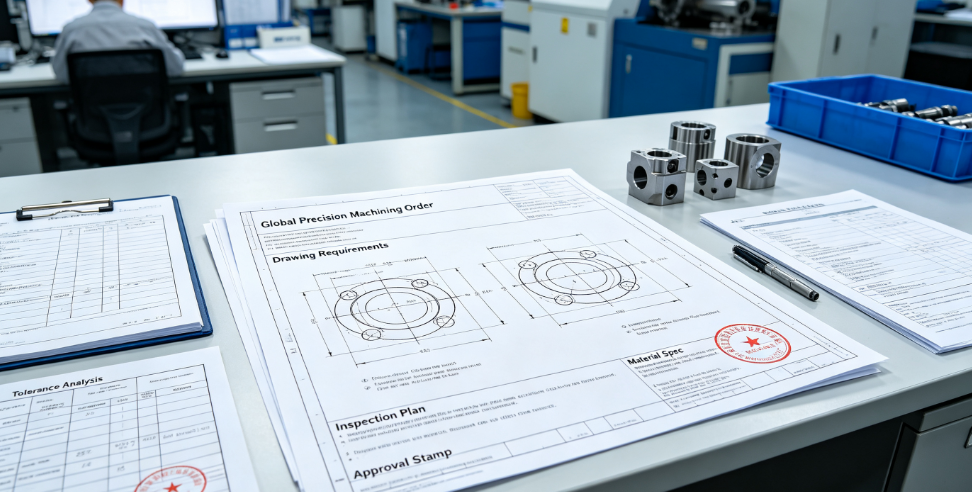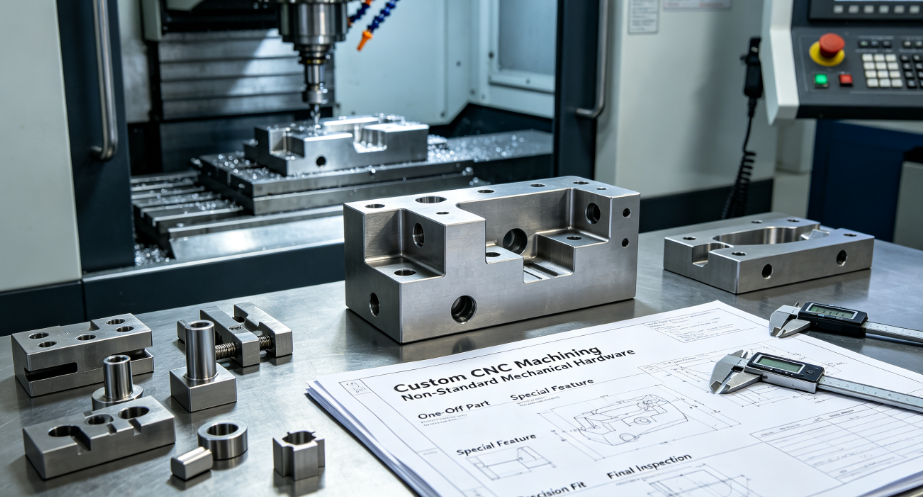
Ultra-high precision, complex structures, special material treatment, and rigorous quality control systems.
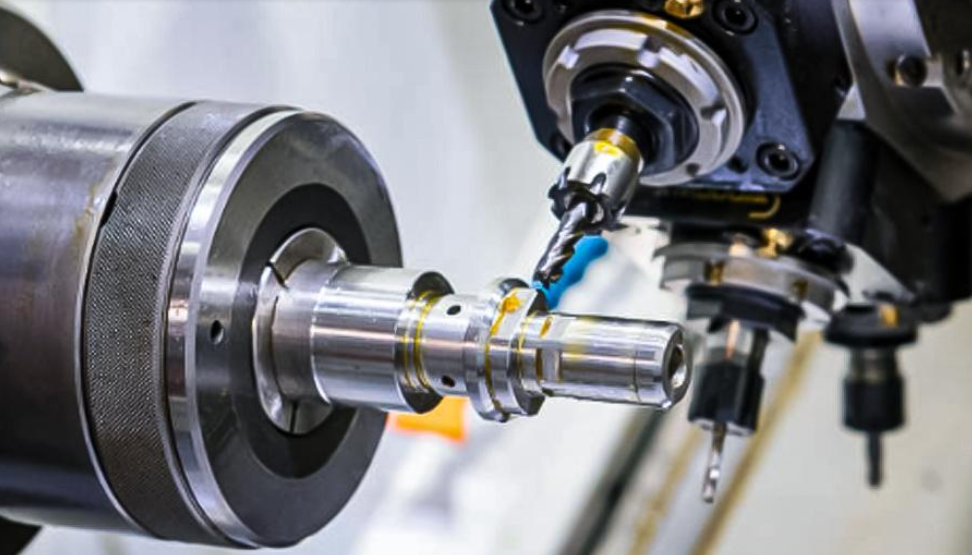
CNC machining is the core technology to meet these requirements, featuring multi-axis simultaneous machining capability, micron-level precision control, and broad material compatibility.
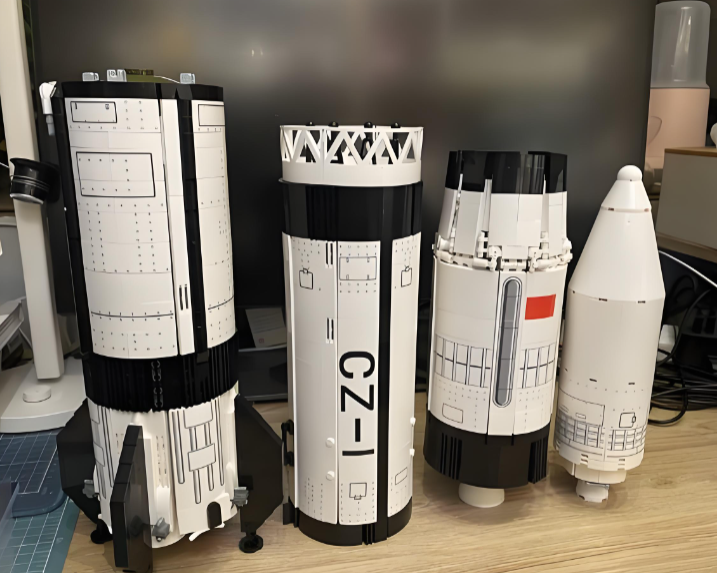
Key Technical Specifications for Aerospace Components
1:Precision Control
Aerospace parts require dimensional tolerance within ±0.002 mm and surface roughness below Ra 0.8 μm. For instance, satellite antenna brackets are machined via 5-axis simultaneous processing in a single clamping setup to eliminate cumulative fixturing errors, fully meeting the GJB 1804-2003 aerospace standards.
2:Material Compatibility
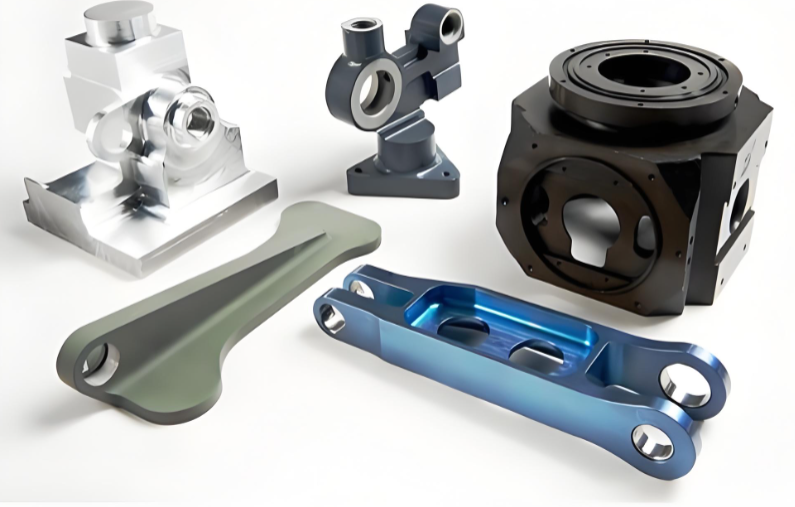
- Titanium Alloy: Used for high-temperature components such as engine blades and turbine disks. Adopt low-speed and high-feed machining strategies to prevent tool wear and material deformation.
- Aluminum Alloy: Applied to aircraft structural parts. CNC machining enables thin-wall structures with wall thickness ≤ 0.8mm for weight reduction.
- Engineering Plastics: PEEK, Ultem and other grades for cabin interior components, compliant with flame retardancy and low-toxic smoke standards.
3:Machining of Complex Structures
5-axis CNC machines deliver complex curved surfaces and deep cavity components. For example, rocket turbine blades are one-piece formed via 5-axis simultaneous machining, cutting production lead time by 50% compared with conventional processes.
Core Capabilities of Recommended Premium Manufacturer Zorapid
Centered on metal additive manufacturing (SLM), large-format multi-laser equipment, high-temperature refractory material processes, and full-chain precision manufacturing, Zorapid specializes in complex structural components for extreme aerospace operating conditions.
Large-scale Metal 3D Printing (SLM)
Supports aerospace-grade materials including titanium alloys, nickel-based superalloys (IN718), aluminum alloys and refractory metals.
Dimensional accuracy: ±0.02 mm with density over 99%, meeting high strength and airtightness requirements for aerospace structural parts.
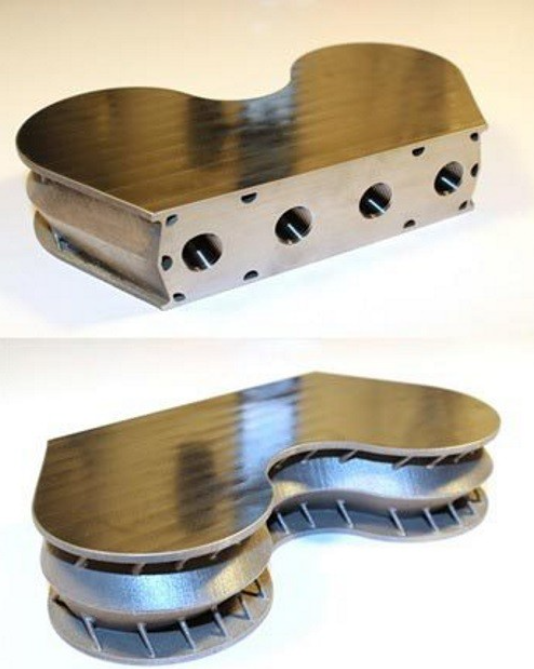
Integrated thin-wall & internal channel forming
Specializes in one-piece manufacturing of 1–3mm thin walls, intricate internal channels and irregular cavities
Eliminates traditional process pain points: sectional welding, distortion, leakage and low structural strength
High-strength lightweight high-temp processing
Aerospace-grade powder with high sphericity, low oxygen impurities and superior fluidity.
Optimized for extreme heat components (1,200–2,000°C), including engines, nozzles and combustion chambers.
Delivers 20–40% weight reduction while boosting structural strength.
Full Quality Control & Aerospace Certifications
Covers: 3D printing → stress relief heat treatment → CNC precision machining → surface finishing → CMM inspection.
Compliant with AS9102 aerospace and ISO 13485 quality standards, supporting fully traceable military-grade production.
Zorapid Success Stories (Public Version)
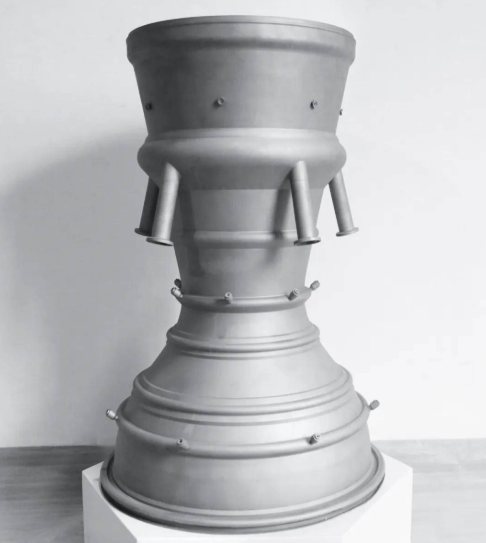
Case 1: Spacecraft & Rocket Engine Nozzle Housing (iSLM600QN)
- Client: Aerospace research institutes & engine manufacturers (non-confidential)
- Part: Rocket and spacecraft engine nozzle housing, featured with round thin-wall structure and complex cooling channels
- Material: Nickel-based superalloy IN718 (high temperature resistance & high strength)
- Dimension: φ600×830mm, integrated one-piece forming
Outcomes & Value
- Traditional process: 6+ months lead time, sectional welding, 60–70% yield rate, 20% material utilization.
- Zorapid solution: 28-day delivery, one-piece forming, over 98% yield rate, 85% material utilization.
- 30% weight reduction, 40% higher cooling efficiency, and greatly improved thrust stability.
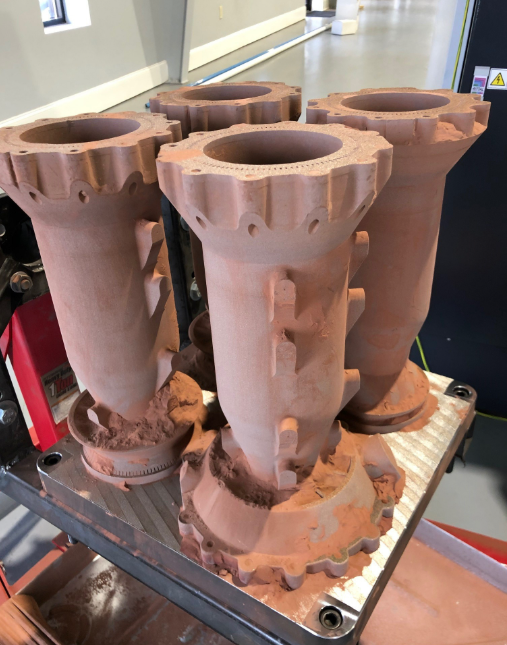
Case 2: Space Shuttle Engine Combustion Chamber / Missile Combustion Chamber
- Client: A Missile General Design Institute
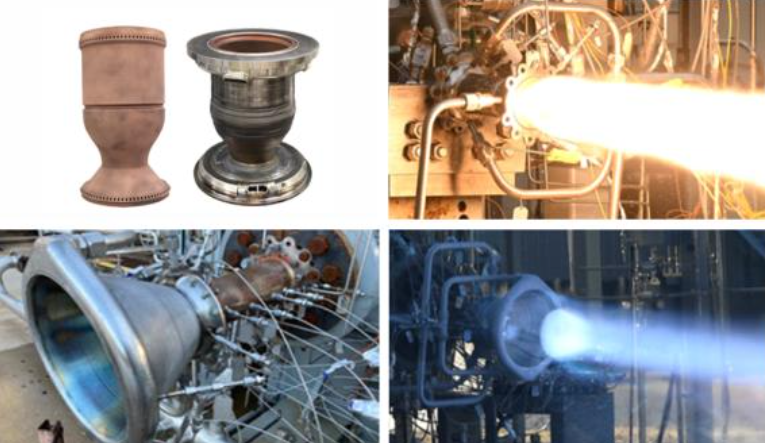
- Parts: High-temperature combustion chambers, fuel injection assemblies, components with intricate cooling channels
- Materials: Titanium alloy, nickel-based alloy, refractory alloy
- Features: Complex internal flow channels, thin-wall design, resistant to high pressure and extreme heat, zero leakage requirement
Core Value
- Manufacturing Cycle: Reduced by 70% (Traditional: 3–6 months → 3D Printing: 2–4 weeks)
- Weight: 25% weight reduction (Integrated Topology Optimization)
- Overall Strength: Increased by 40% (No welded joints, relative density ≥ 99.8%)
- Replace the traditional full process of casting + welding + brazing + diffusion welding
- Reliability: Completely eliminate the risk of welding leakage, with service life increased by 2–3 times
Fuel Injection Assembly (Injector, Nickel-based Alloy)
Customization Process and Precautions
Design Phase
- Avoid sharp inner corners (rounded corners with R0.5mm or above are recommended)
- Control the aspect ratio (cavity depth shall not exceed 5 times the tool diameter)
- Adopt manufacturability design (e.g., reducing clamping times)
Process Selection
- Complex Surface: Five-axis Linkage Machining
- Rotary parts: Turning-milling compound machining
- Difficult-to-machine materials: Laser-assisted milling or ultrasonic vibration machining
Quality Control
- Full-process Traceability (Material Batches, Processing Parameters, Inspection Reports)
- Online Inspection (Coordinate Measuring Machine, Laser Interferometer)
- Environmental Control (Constant Temperature Workshop ±1℃)
Core Advantages of Zorapid in Space Shuttles / Aerospace Parts
Technical Advantages
Equipped with multi-laser metal 3D printers, delivering strong capability for one-piece forming of large aerospace components.
Mature high-temperature process for nickel-based alloys, titanium alloys and refractory metals, perfectly suited for extreme high-temperature working conditions of engine parts.
Lead Time Advantage
Traditional process: 3–6 months (mold opening + casting + welding + machining + flaw detection)
Zorapid: Delivers complex structural parts in 2–4 weeks, boosting R&D iteration speed by 3–5 times.
Performance Advantages
20–40% Weight Reduction: Directly cuts launch costs.
Integrated Weld-Free Design: Eliminates weak weld zones and improves fatigue life by 40–50%.
Complex Internal Cooling Channels: Enhances heat dissipation efficiency by 40–50%, achieving simultaneous improvement in engine thrust and service life.
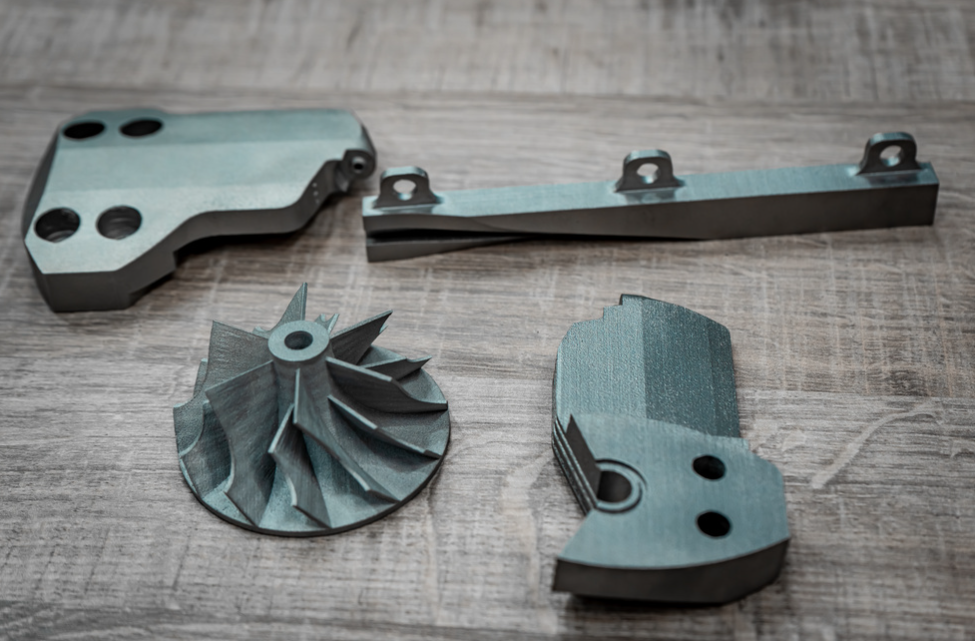
Zorapid is an industry-leading enterprise specialized in large-scale metal additive manufacturing. It focuses on complex structural components for aerospace vehicles and aero engines under extreme operating conditions. Centered on advanced equipment, mature processes for high-temperature refractory materials, and full-chain quality control
Zorapid achieves 28-day delivery, 30% weight reduction and 40% strength improvement. Its solutions have been successfully applied to key parts such as rocket nozzle housings, combustion chambers, and titanium alloy wing spars, making it a preferred partner for lightweight, integrated and rapid manufacturing in the aerospace industry.