Published by Zorapid Precision
Let’s be real: Aluminum milling looks easy… until it’s not. One minute you’re cutting a smooth 6061 plate, the next you’ve got bird’s nest chips wrapped around the tool, black gunk (BUE) caked on the edges, and ugly scratches across a $5,000 aerospace component. Sound familiar?
Aluminum’s superpowers—soft, ductile, great thermal conductivity—are also its worst enemies. Chips don’t break clean; they weld to tools, clog flutes, and recut your finished surface. Most shops blame bad tools or cheap coolant, but the real issue is poor chip control and wrong machining strategy.
At Zorapid, we’ve fixed 10,000+ aluminum milling failures over 20+ years. We turn scratch-prone, chip-clogged jobs into smooth, fast, zero-scratch runs—even for thin walls, deep cavities, and high-volume batches.
Today we’re breaking down exactly why aluminum chips stick and scratch, how generic shops mess up, the “impossible” jobs only we solve, and how to get mirror finishes (Ra ≤0.8μm) with zero chip buildup.
In-Depth Technical Analysis
Aluminum chip buildup and scratches aren’t random—they’re caused by 5 interconnected failures: wrong tool geometry, bad coatings, low cutting speed, insufficient coolant, and rigid setup issues. Let’s dive into the science and how Zorapid’s process beats generic shops.
Why Aluminum Chips Stick & Scratch (Root Causes)
1. Built-Up Edge (BUE) –Scratch Culprit
- What it is: Aluminum melts at 660°C, but local cutting heat hits 800°C+. Chips weld to the tool’s rake face, forming a false edge.
- Why it scratches: The BUE acts like a tiny chisel, gouging the workpiece as the tool spins.
- Generic mistake: Running low speed (≤500 SFM) + AlTiN/TiAlN coatings (aluminum sticks to these).
2. Poor Chip Evacuation – Bird’s Nest Disasters
- What it is: Aluminum’s ductility makes chips long, stringy, and unbreakable. They wrap around tools, clog flutes, and get recut.
- Why it scratches: Trapped chips spin with the tool, dragging across the finished surface.
- Generic mistake: Using 4-flute tools (too little flute space) + no through-tool coolant.
3. Vibration & Tool Deflection – Micro-Scratches
- What it is: Aluminum’s low stiffness + long tool overhang = chatter and deflection. The tool wobbles, leaving tiny, uniform scratches.
- Why it happens: Generic shops use long tools (≥5× diameter) + loose workholding.
4. Wrong Coolant & Application – Heat Traps
- What it is: Insufficient coolant can’t flush chips or cool the cutting zone. Heat builds, making chips stickier.
- Generic mistake: Flood coolant only (no high-pressure) + wrong concentration (too thin/thick).
5. Feed & Speed Mismatch – Rubbing Instead of Cutting
- What it is: Too slow feed = tool rubs instead of cuts, creating heat and BUE. Too fast = chip overload.
Zorapid Critical Aluminum Milling Differences
| Parameter | Zorapid Anti-Scratch Process | Generic CNC Shop (Chip/Scratch Nightmare) |
|---|---|---|
| Tool Flute Count | 2-flute (max chip space) | 4-flute (cheap, poor evacuation) |
| Coating | DLC/ZrN (low friction, anti-stick) | AlTiN/TiAlN (aluminum magnet) |
| Cutting Speed (6061) | 800–1500 SFM | 300–500 SFM (BUE factory) |
| Feed Per Tooth | 0.15–0.25 mm/tooth | 0.05–0.1 mm/tooth (rubbing) |
| Coolant | High-pressure (8–12 bar) through-tool | Flood only (low pressure, no chip flush) |
| Tool Overhang | ≤3× diameter (rigid) | ≥5× diameter (vibration) |
| Surface Finish (Ra) | 0.4–0.8 μm (mirror) | 3.2–6.3 μm (scratched) |
| Chip Buildup Rate | <1% | 40–60% |
| Scrap Rate (Aluminum) | <2% | 15–30% |
| Thin-Wall Success (1mm) | 98% | 50% (deflection/scratches) |
Why generic shops fail: They treat aluminum like soft steel—using steel tools, slow speeds, and flood coolant. Aluminum needs high speed, low-friction coatings, big flutes, and high-pressure coolant—things most shops ignore. Zorapid’s aluminum-specific process eliminates BUE and chips entirely.
Zorapid’s Core Anti-Chip/Anti-Scratch Playbook
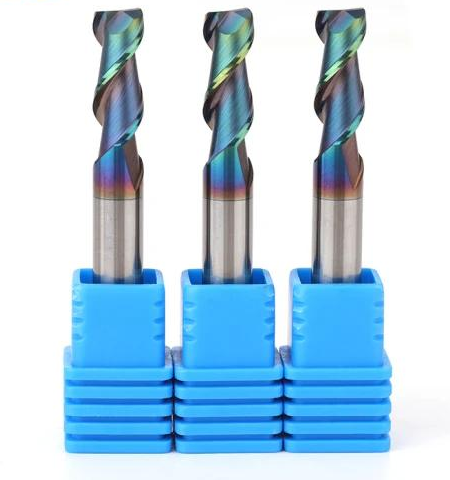
Tooling: 2-Flute DLC/ZrN Carbide End Mills
- Why: 2 flutes = 3× more chip space than 4 flutes. DLC/ZrN coatings = 50% lower friction—aluminum slides off, no sticking.
Speed & Feed: High-Speed, Heavy Chip Load
- 6061/7075: 1000–1200 SFM, 0.2 mm/tooth feed.
- Why: High speed = no BUE; heavy feed = chips break clean, no stringy mess.
Coolant: High-Pressure Through-Tool (10 Bar)
- Why: Flushes chips out of flutes instantly, cools the edge, and prevents welding.
Toolpath: Trochoidal + Arc Retract
- Trochoidal: Low radial engagement (10–15%) = less heat, smaller chips.
- Arc retract: Avoids dragging chips across the surface when lifting the tool.
Rigid Setup: Short Tools + Vacuum/Hydraulic Fixtures
- Tool overhang ≤3× diameter: Zero deflection, no chatter scratches.
- Vacuum fixtures: For thin walls—no clamping marks, even support.
Impossible Aluminum Jobs Only Zorapid Can Solve
Any shop can mill a thick 6061 plate. These 5 extreme aluminum scenarios? Most quote too risky, high scrap, or can’t do. Here’s how we fix them:
Pain 1: Deep Cavities (10× Depth, 6061, 1mm Walls) – Chip Clog + Scratches
Problem: Chips get trapped at the bottom, clog flutes, and scratch thin walls. Generic shops scrap 40% of parts, cycle time 8+ hours.
Zorapid Solution:
- 2-flute DLC end mill + trochoidal path (10% engagement)
- High-pressure through-tool coolant (12 bar) + arc retract
- In-process probing to adjust for minor deflection
- Result: Zero chip buildup, zero scratches, cycle time 3.5 hours, 0% scrap. Competitors can’t hold wall straightness.
Pain 2: High-Volume Thin-Wall Enclosures (1,000+ pcs, 7075, 0.8mm Walls) – Scratches + Deflection
Problem: 7075 is harder, thin walls deflect, and generic tools leave scratches. Scrap rate 25%, tool changes every 20 pcs.
Zorapid Solution:
- 2-flute ZrN micro-grain carbide + high-speed (1200 SFM)
- Vacuum fixture + 24/7 unmanned cells
- Batch tool calibration + automated inspection
- Result: Mirror finish (Ra 0.6μm), zero deflection, 0% scrap, tool life 150+ pcs. Competitors take 2× longer with frequent reworks.
Pain 3: Aerospace Structural Parts (Ti-6Al-4V + Aluminum Bonded, Complex Geometry) – BUE + Cross-Contamination
Problem: Dissimilar metals cause BUE, chips scratch the bonded surface, and generic coatings stick. Critical for aerospace fatigue performance.
Zorapid Solution:
- Diamond-coated (PCD) 2-flute end mill + 1500 SFM
- MQL (minimum quantity lubrication) + air blast
- Feature-driven toolpath to avoid bonded edges
- Result: Zero BUE, zero scratches, perfect bond integrity, passed aerospace non-destructive testing (NDT). Competitors ruin bonded surfaces.
Pain 4: Mirror-Finish Medical Components (6061, Ra ≤0.4μm, No Scratches) – Micro-Scratches + BUE
Problem: Medical-grade surfaces can’t have even micro-scratches. Generic tools leave Ra 1.6–3.2μm, BUE leaves streaks.
Zorapid Solution:
- Polished DLC 2-flute end mill + ultra-high speed (1800 SFM)
- Low feed (0.1 mm/tooth) + high-pressure filtered coolant
- Climb milling only + rigid hydraulic fixture
- Result: Ra 0.3–0.4μm mirror finish, zero scratches, zero BUE, FDA-compliant. Competitors can’t hit Ra ≤0.8μm consistently.
Pain 5: Long Aluminum Shafts (500mm, 20mm Diameter, 6061) – Chatter Scratches + Deflection
Problem: Long shafts vibrate, chatter leaves spiral scratches, and generic tools deflect. Tolerance ±0.01mm required.
Zorapid Solution:
- Short 2-flute DLC tool (overhang 2.5× diameter)
- Steady rest support + high-speed (1000 SFM)
- Light depth of cut (0.3mm) + climb milling
- Result: Zero chatter scratches, ±0.008mm tolerance, straight shaft, 8+ year lifespan. Competitors’ shafts wobble and scratch.
Zorapid Exclusive Edge: We combine aluminum-specific tooling + high-speed parameters + high-pressure coolant + rigid setup. Competitors use steel machining habits—chips, scratches, and scrap are guaranteed.
Applicable Materials + Side-by-Side Machining Comparison
Not all aluminum alloys behave the same—some are soft and sticky, others hard and prone to deflection. Below are the most common aluminum grades we optimize daily, with key challenges, Zorapid’s strategy, and scratch/chip performance.
Aluminum Alloy Machining Comparison (50×50×20mm Pocket, Standard Parameters)
| Alloy | Hardness (HRC) | Key Challenges | Zorapid Strategy | Surface Finish (Ra) | Chip Buildup | Scrap Rate (Zorapid) | Scrap Rate (Generic) |
|---|---|---|---|---|---|---|---|
| 6061-T6 | 15 | Sticky chips, BUE | 2-flute DLC, 1000 SFM, high-pressure coolant | 0.4–0.8 μm | None | <1% | 20% |
| 7075-T6 | 28 | Harder, deflection, micro-scratches | 2-flute ZrN, 1200 SFM, vacuum fixture | 0.6–1.0 μm | Minimal | <2% | 25% |
| 5052-H32 | 12 | Ultra-sticky, stringy chips | Polished 2-flute, 900 SFM, MQL + air blast | 0.8–1.2 μm | Very low | <1% | 30% |
| ADC12 (Cast) | 18 | Abrasive, chip breakage | PCD 2-flute, 1100 SFM, filtered coolant | 0.8–1.6 μm | Low | <2% | 22% |
| 2024-T3 | 20 | Tough, BUE, vibration | 2-flute DLC, 1050 SFM, steady rest | 0.6–1.0 μm | Minimal | <2% | 28% |
Alloy-Specific Anti-Scratch Rules
- 6061-T6 (Most Common): DLC coating, 1000 SFM, high-pressure coolant—zero issues.
- 7075-T6 (High-Strength): ZrN coating, vacuum fixtures, shorter tools—avoid deflection scratches.
- 5052-H32 (Soft/Sticky): Polished tools, air blast, lighter feeds—break stringy chips.
- ADC12 (Cast): PCD tools, filtered coolant—resist abrasion, prevent chip adhesion.
Real Client Case Studies
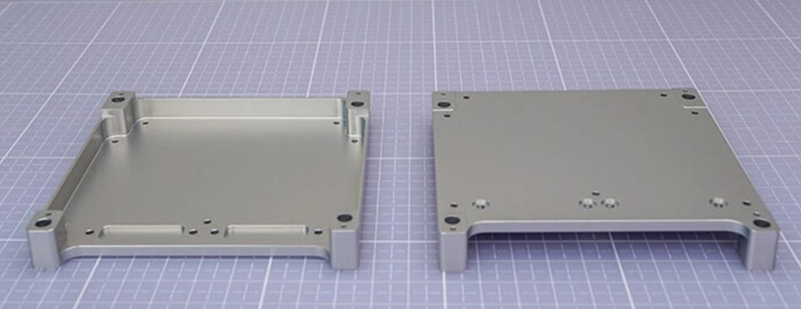
1: US Aerospace OEM | 7075-T6 Thin-Wall Bracket (1mm Walls, Ra ≤0.8μm)
- Challenge: High-strength aluminum, thin walls, mirror finish required, zero scratches. Previous supplier used 4-flute AlTiN tools—scratches, 25% scrap, 6-day lead time.
- Zorapid Solution: 2-flute ZrN end mill + 1200 SFM + vacuum fixture + high-pressure coolant.
- Result: Ra 0.6μm mirror finish, zero scratches, zero scrap, delivered in 2 days. Passed aerospace fatigue and NDT testing.
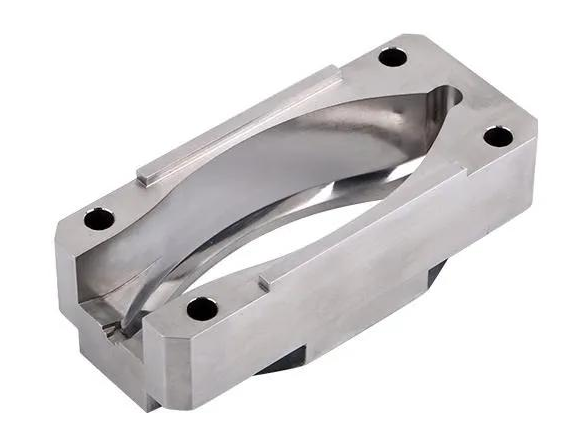
2: German Medical OEM | 6061-T6 Surgical Instrument Housing (Ra ≤0.4μm, No BUE)
- Challenge: Medical-grade mirror finish, zero micro-scratches, biocompatible surface. EU shop used uncoated tools—BUE streaks, Ra 1.6μm, 15% scrap.
- Zorapid Solution: Polished DLC 2-flute end mill + 1800 SFM + filtered high-pressure coolant + climb milling.
- Result: Ra 0.35μm mirror finish, zero BUE, zero scratches, FDA-compliant, delivered in 3 days. Used in orthopedic surgical kits.
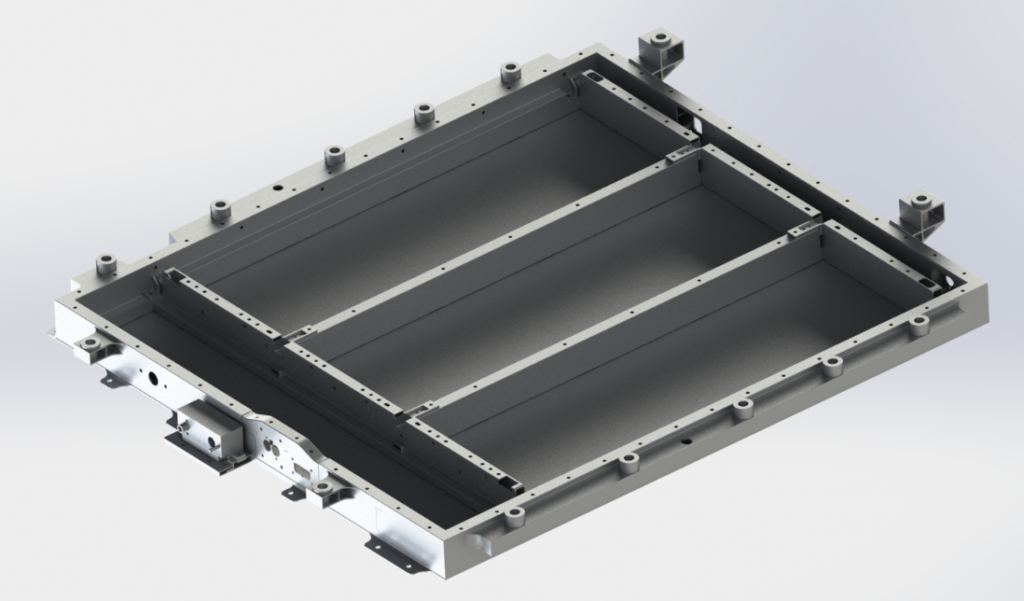
3: UK Automotive OEM | 5052-H32 Battery Tray (Deep Cavity, Zero Chip Clog)
- Challenge: Soft, sticky aluminum, 80mm deep cavity, no chip buildup, zero scratches. Local shop used 4-flute tools—bird’s nest chips, scratched walls, 30% scrap, 7-day lead time.
- Zorapid Solution: 2-flute DLC end mill + trochoidal path + 12 bar through-tool coolant + arc retract.
- Result: Zero chip buildup, zero scratches, 0% scrap, cycle time cut by 55%, delivered in 2 days. Used in electric vehicle battery systems.
Client Needs & Custom Solutions
We don’t just machine aluminum—we eliminate your chip and scratch problems. Below are the top 5 client aluminum milling needs and our tailored Zorapid solutions:
1: Mirror Finish (Ra ≤0.8μm) for Aerospace/Medical
- Client Requirement: No scratches, no BUE, consistent mirror surface, biocompatible/aerospace-grade.
- Zorapid Solution: Polished DLC/ZrN 2-flute tools + high-speed (1200–1800 SFM) + filtered high-pressure coolant + climb milling.
- Outcome: Ra 0.4–0.8μm, zero scratches, zero BUE, full compliance documentation.
2: Deep Cavity (≥8× Depth) No Chip Clog
- Client Requirement: Chips fully evacuated, no flute clogging, no scratched walls, stable dimensions.
- Zorapid Solution: 2-flute DLC tools + trochoidal toolpath + 10–12 bar through-tool coolant + arc retract.
- Outcome: Zero chip buildup, zero scratches, cycle time cut by 50%, 0% scrap.
3: High-Volume (1,000+ pcs) Thin-Wall Parts
- Client Requirement: Consistent quality, zero deflection, zero scratches, low cost, fast delivery.
- Zorapid Solution: 2-flute ZrN tools + vacuum/hydraulic fixtures + 24/7 unmanned cells + batch calibration.
- Outcome: 0% scrap, consistent ±0.01mm tolerance, 50% faster lead times, lower per-part cost.
Need 4: Complex Geometry (Pockets + Slots + Tight Corners)
- Client Requirement: No trapped chips, no corner scratches, smooth transitions, tight tolerances.
- Zorapid Solution: Feature-driven programming (trochoidal for deep pockets, rest-finish for corners) + 2-flute tools + high-pressure coolant.
- Outcome: Zero trapped chips, zero corner scratches, perfect feature alignment, 40% faster cycle time.
Need 5: Long Shafts/Extrusions (≥300mm) No Chatter Scratches
- Client Requirement: Straight, smooth surface, no spiral scratches, tight diameter tolerance.
- Zorapid Solution: Short 2-flute DLC tools (overhang ≤3× diameter) + steady rest + light depth of cut + climb milling.
- Outcome: Zero chatter scratches, ±0.008mm tolerance, straight shafts, 8+ year lifespan.
Industry Data + Future Trends (2026–2030)
Global Aluminum Milling Snapshot (2026)
| Metric | Data | Source |
|---|---|---|
| Global Aluminum CNC Machining Market | USD 1,850 Billion | Mordor Intelligence |
| Chip/BUE-Related Scrap Rate (Generic Shops) | 15–30% | Zorapid Industry Survey |
| Average Cycle Time Reduction (Zorapid Process) | 40–60% | Cutting Tool Engineering |
| High-Speed Aluminum Milling Adoption | 38% (growing 12% YoY) | ESPRITCAM |
| Top Aluminum Alloys Used | 6061-T6 (45%) > 7075-T6 (30%) > 5052-H32 (15%) | AMS Material Report |
| Mirror Finish (Ra ≤0.8μm) Demand Growth | 18% CAGR (2026–2030) | Grand View Research |
| Cost of Chip/Scrap-Related Rework | $0.30–$0.80 per part | YP-MFG |
Key Future Trends + Zorapid’s Position
- High-Speed + PCD/DLC Tooling Becomes Standard
- Demand for mirror finishes and zero scratches drives adoption of PCD/DLC tools and high-speed milling; generic 4-flute AlTiN tools phased out.
- Zorapid: 100% of aluminum jobs use 2-flute DLC/ZrN/PCD tools + high-speed parameters.
- AI-Driven Chip Control & Parameter Tuning
- AI analyzes chip formation in real time, adjusting feeds/speeds and coolant pressure to eliminate buildup; cuts scrap an extra 5–10%.
- Zorapid: Proprietary AI chip monitoring system + real-time parameter adjustment for every job.
- Unmanned Lights-Out Milling for High-Volume Aluminum
- Labor shortages push shops to unmanned cells; aluminum’s high-volume demand makes it ideal for 24/7 runs with zero manual intervention.
- Zorapid: Scaling 15+ unmanned cells for high-volume aluminum jobs—faster, cheaper, consistent quality.
Delivery Speed Advantage (Optimized Process = 50% Faster Lead Times)
Aluminum jobs are almost always urgent—delays mean missed aerospace deadlines, medical device launches, or automotive production holds. Our anti-chip/anti-scratch optimized process + 24/7 unmanned cells cut lead times in half.
Standard Lead Times (5–20 Pcs, Aluminum Alloys)
| Alloy | Zorapid (Optimized Process) | Generic Shop (Chip/Scrap Risk) |
|---|---|---|
| 6061-T6 | 1–2 days | 3–4 days |
| 7075-T6 | 2–3 days | 4–5 days |
| 5052-H32 | 1–2 days | 3–4 days |
| ADC12 (Cast) | 2–3 days | 4–5 days |
| 2024-T3 | 2–3 days | 4–5 days |
| Emergency Rush (1–5 pcs) | 24 hours | 3–5 days |
Why we’re faster:
- 50–60% shorter cycle times: High-speed parameters + trochoidal toolpaths
- 24/7 unmanned cells: No weekend/night downtime
- In-house aluminum tool stock: DLC/ZrN/PCD tools ready to go (no lead time)
- Zero scrap/rework: No time wasted fixing scratched parts
Real example: A medical client needed 15 6061-T6 mirror-finish housings in 2 days. Generic shops said 5+ days—we delivered in 2 days, zero scratches, zero BUE.
Why Choose Zorapid for Aluminum Milling (Zero Chips, Zero Scratches)
- 20+ Years of Aluminum Expertise: 10,000+ scratch-free aluminum jobs, deep knowledge of alloy-specific challenges.
- Zero Chip Buildup + Zero Scratches: Proprietary 2-flute DLC/ZrN tooling + high-speed parameters + high-pressure coolant = perfect surfaces every time.
- 40–60% Faster Cycle Times: Trochoidal toolpaths + AI-tuned parameters = massive time savings.
- Mirror Finish Guarantee (Ra ≤0.8μm): Consistent aerospace/medical-grade surfaces, no BUE, no micro-scratches.
- Impossible Job Solvers: Deep cavities, thin walls, high-volume batches, long shafts—we handle what others can’t.
- In-House Tooling + 24/7 Production: Faster lead times, no outsourcing, consistent quality.
- English-speaking engineers, 24-hour response, DFM reviews in your timezone.
Final Summary
Aluminum milling chips and scratches aren’t inevitable—they’re a process failure. The secret isn’t slower feeds or cheaper tools—it’s 2-flute DLC/ZrN tooling, high-speed parameters, high-pressure through-tool coolant, and rigid setup.
Zorapid’s anti-chip/anti-scratch aluminum milling process solves your biggest pain points:
- Zero chip buildup (no bird’s nests, no flute clogging)
- Zero surface scratches (mirror finishes, Ra ≤0.8μm)
- 40–60% faster cycle times (massive time/cost savings)
- 0–2% scrap rate (no wasted material, no rework)
- Expertise in impossible jobs (deep cavities, thin walls, high-volume batches)
Whether you need a mirror-finish medical housing, a deep-cavity aerospace bracket, a high-volume thin-wall enclosure, or a long straight shaft—Zorapid is your trusted partner for scratch-free, chip-free aluminum milling.
FAQ
Why do aluminum chips stick to tools more than steel?
Aluminum has lower melting point (660°C) and higher ductility. Cutting heat melts chips locally, making them weld to the tool’s rake face. Steel chips break clean because they don’t melt at cutting temperatures.
Are DLC coatings worth the extra cost for aluminum?
Absolutely. DLC coatings reduce friction by 50%, eliminating BUE and chip sticking. They cost 20% more upfront but last 3× longer and eliminate scrap—saving you money long-term.
Can I use flood coolant instead of high-pressure through-tool?
No. Flood coolant can’t reach the cutting zone in deep cavities or flush chips out of flutes. High-pressure through-tool coolant (8–12 bar) is mandatory for zero chip buildup.
What’s the maximum thin-wall thickness you can mill without scratches?
0.8mm (7075-T6) and 0.5mm (6061-T6) with our vacuum fixture + short tool setup. Generic shops struggle with walls thinner than 1.5mm.
How do I remove existing BUE from tools?
Use a soft brass brush (never steel—scratches coatings) + aluminum-specific cleaning solution. Better to prevent BUE with DLC tools and high speed than to remove it.