Published by Zorapid Precision Manufacturing
If you’re launching a new consumer device, medical accessory, EV component or home appliance, you know the biggest bottleneck to market testing: slow, expensive production tooling.
Your team finalizes CAD files, locks resin specs, and lines up retail buyers, beta testers, or trade show demos—only to find standard hardened steel molds take 8–12 weeks to build, with five-figure upfront costs. If you order hard tooling too early, you risk sinking massive budget into a design that fails real-world market feedback. Wait too long, and you miss your launch window entirely.
3D printed prototypes only get you so far. They use simulated plastic, can’t replicate real injection molding shrinkage, assembly fit, or cosmetic finish. Buyers and test groups won’t trust them to judge your product’s market appeal.
This is exactly where rapid tooling shines. At Zorapid, our mold engineering team delivers market-ready injection molds in 7–21 days for startups and established OEMs across North America and Europe. We’ve helped hundreds of brands run full market testing, beta sales, and regulatory sampling without the delay and risk of full production steel tooling.
Today we’ll break down everything you need to know: what rapid tooling is, why it’s perfect for market validation, material breakdowns, step-by-step workflows, real client case data, and how to pick between rapid soft molds and permanent hard tooling.
What Is Rapid Tooling, And Why It’s Built For Market Testing
Let’s cut the industry jargon down to plain language.
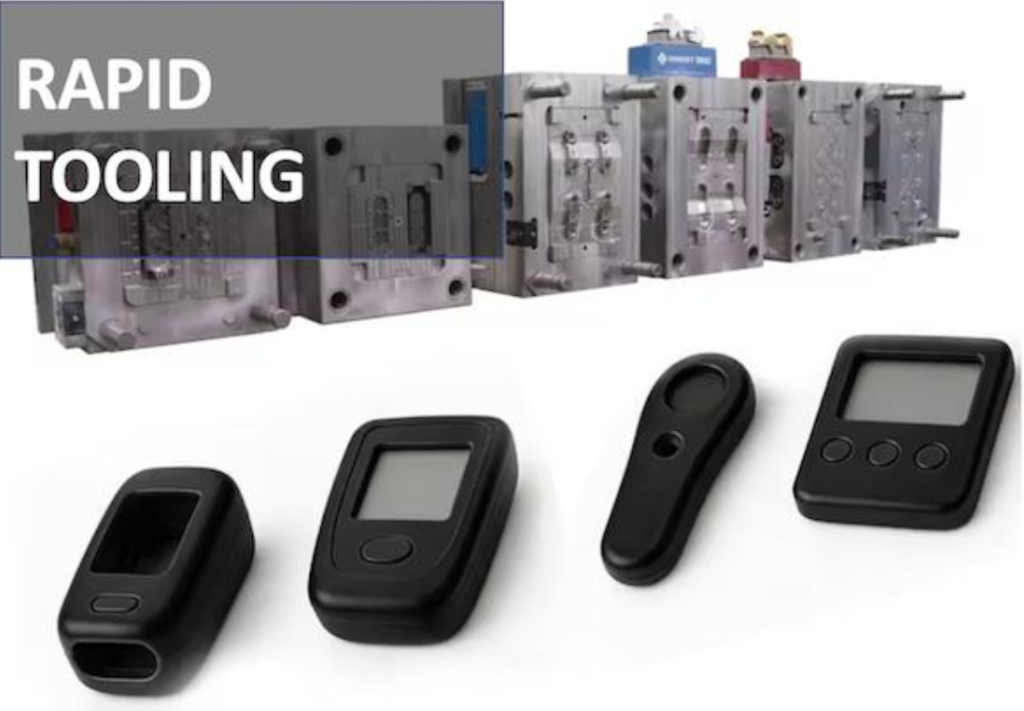
Rapid tooling (also called prototype mold or bridge tooling) is a simplified, fast-manufactured injection mold built from aluminum or pre-hardened soft steel, designed to churn out production-grade plastic parts in low to medium volumes.
Unlike full hardened steel molds built for millions of shots, rapid tooling is optimized for two core market testing goals:
- Generate hundreds to tens of thousands of real, end-material parts for beta customer trials, trade show displays, retail buyer samples, and focus group testing
- Validate every critical design variable (gate placement, shrinkage, warpage, surface texture, assembly tolerances) before you commit to costly permanent production tooling
Key difference from 3D printing: Rapid tooling uses your actual production resin (ABS, PC/ABS, GF-PA66, PP, medical-grade PEI, etc.), matching the exact look, feel, strength and molding behavior of mass-produced goods. Your market testers get the identical product customers will eventually buy.
Two Core Rapid Tool Categories For Different Market Test Scenarios
We split our rapid tool offering into two tiers based on your testing volume and timeline:
- Aluminum Prototype Rapid Tooling
- Lead time: 7–14 days
- Shot lifespan: 1,000–50,000 cycles
- Best for: Small-scale focus groups, trade show samples, EVT/DVT engineering validation, limited beta batches under 5,000 units
- Standout perk: Aluminum machines ultra-fast, delivers superior heat dissipation to cut cycle times, and modifications cost 60% less than steel rework if you tweak your design mid-test
- P20 Soft Steel Bridge Rapid Tooling
- Lead time: 14–21 days
- Shot lifespan: 50,000–100,000 cycles
- Best for: Full pre-production market launches, sustained beta sales, regulatory clinical samples, bridging production while your hard mold is manufactured
- Standout perk: Handles mildly abrasive glass-filled resins, supports light SPI-A polished cosmetic finishes, and can transition directly into short-term mass production
Critical Ways Rapid Tooling Solves Market Testing Pain Points
We’ve audited dozens of product teams and found four recurring headaches that rapid tooling eliminates entirely.
1. Slash Lead Times To Hit Strict Market Launch Deadlines
Standard hard steel molds require lengthy CNC, EDM, polishing, and heat treatment steps—8–12 weeks minimum. Our rapid tool workflow cuts that timeline by 70% by simplifying mold bases, skipping unnecessary heat treatment, and running parallel CNC machining and Moldflow simulation.
Real shop benchmark: A European consumer tech startup needed 2,000 test units for a global electronics expo. Hard tooling would have missed their show date; our aluminum rapid tool delivered T1 samples in 12 days, so they shipped finished test parts two weeks ahead of the event.
2. Cut Upfront Capital Risk Before Full Production Investment
Hardened steel molds often cost $20,000–$100,000+ upfront. Rapid tooling ranges from $1,800–$18,000 depending on part complexity—40–60% lower initial expenditure.
This is game-changing for market testing:
- Startups with limited seed funding avoid draining budgets on unproven designs
- Enterprise OEMs limit financial exposure if market feedback demands major part redesigns
- Any design flaws uncovered during testing only require low-cost rapid mold tweaks, not expensive full steel rework
3. Capture Real, Trustworthy Market Feedback With Production-Grade Parts
3D printed parts have obvious limitations for market trials:
- Layer lines ruin cosmetic surface quality
- Material strength, flexibility, and heat resistance don’t match final molded goods
- Shrinkage and dimensional behavior are completely different from injection molding
Rapid tool parts use your exact production resin, matching final weight, snap-fit assembly, texture, color and durability. Retail buyers, beta users, and regulatory inspectors can test the product exactly as it will ship to market, delivering honest, actionable feedback you can rely on to refine your design.
4. Bridge Production Gaps Between Testing And Full Mass Manufacturing
Many brands face a timing gap: their hard production mold is still being built, but they need to start selling small batches to capture early market demand. Rapid bridge tooling fills this gap perfectly.
You can run sustained beta sales, fulfill pre-orders, and lock in customer traction while your permanent high-volume mold finishes manufacturing—no lost sales window while you wait.
Rapid Tool vs Hard Production Mold Side-by-Side Comparison Table
All data pulled from Zorapid’s 2026 production standards for EU & US clients
| Metric | Rapid Aluminum / P20 Bridge Tooling (Market Testing) | Hardened Steel Production Mold (Mass Manufacturing) |
|---|---|---|
| Total Lead Time | 7–21 business days | 8–12 weeks |
| Upfront Tool Cost | 40–60% cheaper | High capital investment |
| Max Shot Lifespan | 1,000–100,000 shots | 1,000,000+ cycles |
| Design Modification Cost | Low, fast turnaround | Expensive, multi-week rework timeline |
| Supported Resins | All standard & most engineering plastics; limit heavy glass-filled for aluminum | All resins, including highly abrasive carbon/glass-filled grades |
| Ideal Use Case | Market testing, beta batches, trade show sampling, regulatory validation | Long-term high-volume mass production |
| Surface Finish Capability | SPI B–C standard; limited SPI A polish on P20 steel | Full SPI A optical mirror polish, deep custom textures |
Zorapid’s Streamlined Rapid Tool Workflow For Market Testing
We built this simplified process exclusively for product teams focused on fast market validation, cutting redundant steps from traditional mold making without sacrificing part accuracy.
- Free DFM & Moldflow Simulation Review (Day 1) Submit your CAD file, and our engineers flag shrinkage, sink marks, air traps, and draft angle issues same-day. We run flow simulation to lock gate and cooling layout before machining starts—no costly sampling delays later.
- Material & Tool Tier Selection (Day 2) We align mold material (aluminum vs P20 steel) to your test volume, resin type, and cosmetic requirements, and share a transparent quote with clear timeline milestones.
- Parallel Mold Design & CNC Machining (Days 3–10) Standardized off-the-shelf mold bases eliminate custom frame fabrication time. Our multi-axis CNC cells machine core/cavity inserts around the clock, with minimal EDM work for simple test geometries.
- Mold Trial & T1 Sample Delivery (Days 11–21) We run full injection sampling in-house, adjust process parameters to fix warpage or cosmetic defects, and ship finished test parts with full FAI dimensional reports for your market trials.
- Low-Cost Iteration Support (Post-Sampling) If your market feedback requires design tweaks, we machine revised inserts in 3–5 days, far faster than modifying hardened steel molds.
- Seamless Transition To Hard Production Tooling Once your design is fully validated via rapid tool testing, our team carries over all proven gate, cooling, and molding parameters directly into your permanent production mold to eliminate repeat sampling rounds.
Real-World Zorapid Case Study: Medical Device Market Validation Rapid Tool
A German medical startup needed 1,200 functional handheld monitor housings for clinical trial market testing and FDA preliminary submission.
Original Roadblock
- Hardened steel mold lead time: 9 weeks, would push clinical trials past their funding deadline
- Budget constraints prohibited a $22,000 permanent mold investment before test results confirmed market viability
- Material: Medical PC/ABS, requiring consistent cosmetic finish for patient-facing hardware
Zorapid Rapid Tool Solution
- Single-cavity 7075 aluminum rapid tool, 12-day total lead time
- Moldflow cooling optimization to eliminate surface sink marks on thin-wall cosmetic panels
- Full in-house sampling, dimensional inspection, and surface finishing matching production specs
Measurable Market Testing Outcomes
- Delivered 1,300 test parts 6 weeks earlier than hard tool timeline
- Identified a minor assembly snap-fit flaw during clinical testing; revised mold inserts shipped in 4 extra days
- Total rapid tool cost 52% lower than permanent steel, drastically reducing pre-clinical financial risk
- Clinical trial data validated strong market demand, and we seamlessly transferred all proven molding parameters to their final production P20 steel mold post-testing
Top 5 Common Mistakes Brands Make With Rapid Tooling For Market Testing
Avoid these costly missteps that delay your market launch or waste validation budget:
- Choosing aluminum rapid tooling for high-glass filled resins over 20% fiber loading Glass abrasion wears aluminum cavities rapidly, cutting tool life short. Opt for P20 soft steel bridge tooling for GF-PA66, carbon-filled PC or flame-retardant abrasive materials.
- Ordering rapid tooling after locking an untested design Skip DFM and Moldflow upfront, and you’ll uncover critical molding defects mid-market testing, forcing emergency mold rework that delays your trial schedule.
- Expecting rapid aluminum molds to match optical-grade SPI A mirror polish Aluminum cannot hold ultra-fine mirror polishing through repeated shots. Reserve Class A cosmetic requirements for P20 steel bridge tools or final hard molds.
- Over-ordering rapid tool parts past 100,000 shot capacity Once you exceed rapid tool lifespan, surface quality and dimensional consistency degrade fast. If market testing reveals demand above 100k units, immediately move to permanent hard tooling.
- Treating rapid tool parts as low-quality prototypes for market trials Many teams cut corners on resin, surface finish, or molding parameters to save cost. Your test data will be useless if parts don’t match your final production specification.
FAQ
How many parts can I produce from a rapid tool for market testing?
Aluminum tools reliably deliver 1,000–50,000 shots for standard unfilled plastics. P20 soft steel bridge tools handle up to 100,000 units, perfect for extended beta sales and large-scale consumer focus groups.
Is rapid tooling suitable for medical or EV regulated market testing?
Absolutely. Zorapid runs ISO 9001 and ISO 13485 compliant rapid mold manufacturing, producing traceable, dimensionally consistent parts with full FAI inspection reports for FDA, CE, and automotive OEM validation requirements.
What’s the biggest difference between rapid tooling and vacuum casting prototypes?
Vacuum casting uses two-part polyurethane simulant resins, not your production thermoplastic. Rapid injection tooling uses identical manufacturing materials and process parameters, delivering fully representative parts that buyers and regulators trust for market testing.
When should I skip rapid tooling and jump straight to hard production molds?
Only if your design is 100% locked with zero planned revisions, and you need over 100,000 finished units immediately after launch. For every other market validation scenario, rapid tooling drastically cuts schedule and financial risk.
Can rapid tooling handle complex parts with slides, undercuts and multiple side actions?
Yes. Our P20 bridge rapid tooling supports simple side slides, lifters and internal undercut mechanisms for complex enclosures and mechanical components, ideal for multi-part assembly market testing.
Final Wrap-Up
Market testing is make-or-break for new product success—yet too many teams sabotage their launch timeline by relying on slow, costly hard steel molds or unrealistic 3D printed prototypes.
Rapid tooling fills the perfect middle ground: fast lead times, low upfront risk, production-grade molded parts, and flexible design iteration while you gather critical market feedback. Whether you’re a startup running small beta focus groups or an established OEM bridging production ahead of mass manufacturing, aluminum and P20 bridge molds eliminate the biggest roadblock to getting your product in front of real customers fast.
At Zorapid, we integrate complimentary Moldflow simulation and DFM optimization into every rapid tool order built for market validation. Our team delivers fully sampled, inspection-verified test parts in under three weeks, with a seamless handoff to permanent production tooling once your design passes market trials.
If you’re gearing up for product market testing and need a fast, low-risk mold solution, reach out to our NPI engineering team for a free CAD review and rapid tool quote today.