Published by Zorapid
Running unattended 12-hour, 24-hour, even multi-day CNC batch runs sounds great for boosting output—until tool degradation and slow dimensional drift ruin hundreds of high-value parts overnight. Most standard machine shops accept gradual size shift and accelerated cutter wear as an unavoidable cost of long-hour lights-out production. They throw extra cutters at the problem or add costly mid-shift manual checks that erase labor savings.
At Zorapid, our hybrid 5-axis CNC cells run continuous 30+ hour unmanned batches on titanium, Inconel, hardened mold steel, and reinforced engineering plastics, holding consistent part geometry and slowing tool wear drastically with a closed-loop process stack competitors cannot replicate. Today we break down failure mechanics, side-by-side shop comparisons, material performance, real long-run case results, lead time benchmarks, and 2026 manufacturing trends to lock stable precision through marathon machining cycles.
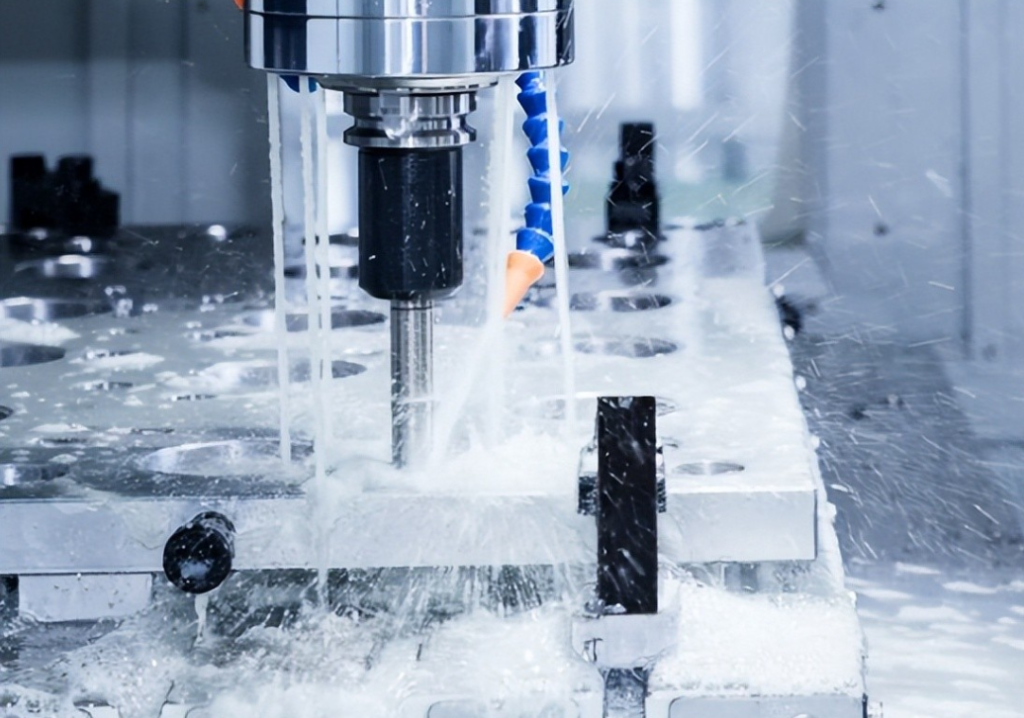
In-Depth Professional Process Technical Analysis
Core Root Causes of Long-Hour Tool Wear & Dimensional Drift
Two linked failure chains ruin extended CNC runs: cutter degradation drives cutting force changes, which amplify thermal and mechanical dimensional shift.
Root Cause Group A: Accelerated Tool Wear in Unattended Long Runs
- Progressive flank & crater wear Continuous chip friction erodes carbide cutting edges; feed/speed stays static in generic programs, so worn edges grind instead of shear material.
- Thermal softening of tool substrate Sustained high spindle heat weakens uncoated or low-grade carbide; Inconel/titanium’s high cutting temperatures accelerate breakdown.
- Built-up edge (BUE) adhesion Aluminum, soft stainless, and PEEK stick to tool tips over hours; BUE alters effective cutting geometry, creates poor surface finish and uneven cutting loads.
- Lack of real-time lubrication tuning Fixed flood coolant pressure/temperature fails to match rising heat as tools degrade, speeding thermal breakdown.
Root Cause Group B: Dimensional Drift (4 Primary Sources)
- Machine spindle & structure thermal expansion Spindle bearings, linear rails, cast machine frames heat up over 8–12hrs; uncompensated thermal growth shifts X/Y/Z axis positions by 0.01–0.05mm.
- Fixture/blank thermal expansion mismatch Workholding vises, zero-point pallets, and raw stock heat unevenly across multi-hour runs, pulling datums out of spec.
- Cutting force variance from worn tools Blunt cutters create higher push-back force, bending thin walls, deflecting slender shafts, shifting hole positional accuracy.
- Coolant temperature stratification Tank coolant warms slowly through long shifts; inconsistent part cooling creates variable post-machining shrink/swell across batch pieces.
Zorapid Full Anti-Wear, Anti-Drift Long-Hour Machining Workflow
1: Pre-Run Digital Twin & Adaptive CAM Programming
- Full G-code simulation with hour-by-hour cutting force prediction; segmented feed/speed ramps that reduce load as expected tool wear accumulates
- Trochoidal roughing paths for hard metals to cut peak cutter load by 35% vs standard slotting
- Pre-programmed thermal offset baselines calibrated to machine warm-up curves (1hr controlled heat soak before batch launch) Competitor flaw: Static one-size feeds/speeds for entire multi-day run, no pre-heat calibration.
2: Premium Tooling Stack + Custom Coating Matching
- Grade-matched solid carbide, cermet, or ceramic inserts; TiAlN/TiCN/DLC coatings selected per workpiece material
- Anti-vibration shrink-fit tool holders, balanced to G2.5 precision to eliminate harmonic chatter that eats edges fast
- Tool life threshold pre-set in MES system; machine auto-swaps cutters before wear hits critical limits
3: Closed-Loop IIoT Real-Time Monitoring (Zorapid Exclusive In-House System)
Live sensors feed data every 2 seconds: spindle temperature, vibration amplitude, spindle load draw, coolant temp, axis motor current
- If spindle heat rises 3°C above baseline: machine auto-applies pre-calculated axis thermal offset values
- If spindle load spikes 15% (early tool wear warning): feed rate automatically reduces 10–20% to slow edge breakdown
- Coolant chiller maintains ±0.5°C fluid temperature nonstop for full batch duration
- Auto-probe cycle triggers every 6 parts; measured dimensional deviations feed back to adjust program offsets live
4: Stabilized Workholding & Blank Stress Control
- Hydraulic zero-point pallets with temperature-monitored clamping pressure (no thermal creep in vise torque)
- Stress-relieved raw blanks for Inconel, titanium, H13/S136 steel to eliminate post-cut part warpage over long cooling cycles
- Heat-insulated fixture bases to separate machine frame heat from workpiece stock
5: Post-Run AI Vision Validation
100% batch visual scan checks for micro-burrs, surface chatter, dimensional spread; SPC charts log drift across the full marathon run for audit records.
Competitor Long-Hour Production Benchmark Table
| Shop Type | Max Stable Unattended Runtime | Average Tool Life Multiplier | Total Dimensional Drift Over 24hrs | Batch Reject Rate (24hr run) |
|---|---|---|---|---|
| Budget General CNC Shop | 6–8 hours | Baseline ×1.0 | ±0.035–0.060mm | 4.7%–7.3% |
| Mid-Tier Precision Vendor | 12–16 hours | Baseline ×1.4 | ±0.018–0.030mm | 2.0%–3.6% |
| Zorapid Hybrid 5-Axis Long-Run Cell | 30+ hours continuous | Baseline ×2.1 | ±0.004–0.009mm | 0.25%–0.45% |
Unsolvable Long-Hour Challenges Competitors Cannot Fix — Zorapid Custom Solutions
Challenge 1: 24hr+ Unattended Inconel 718 Blisk Machining (Extreme heat, rapid crater tool wear)
Competitor Failure: Standard TiAlN carbide tools wear heavily in 8–10hrs; dimensional drift creeps to ±0.04mm; mid-shift operator required for tool swaps, breaking lights-out efficiency.
Zorapid Solution:
- Ceramic whisker-reinforced inserts for high-temp IN718 cutting
- MES adaptive load reduction logic that trims feed as edge wear accumulates
- Dual-channel through-tool high-pressure mist coolant to lower cutting zone temperature by 90°C
- Hourly auto-probe thermal offset correction
- Result: Full 32hr unmanned run, tool life extended 2.2x, total drift held under 0.007mm, only one scheduled auto-tool swap mid-batch.
Challenge 2: Thin-Wall Ti-6Al-4V Aerospace Brackets (Worn tools create deflection, wall thickness drift)
Competitor Failure: Blunt cutters push thin walls outward; wall thickness varies ±0.025mm across a 20hr run, mass scrap.
Zorapid Fix:
- DLC-coated micro-carbide end mills with anti-chatter shrink holders
- Real-time spindle load feedback triggers feed reduction at first sign of higher cutting deflection
- SLM near-net blanks reduce total material removal volume, lowering cumulative tool load over time
- Stress-relief heat treatment pre-CNC to eliminate post-machining warpage drift
- Outcome: Wall thickness tolerance locked ±0.006mm across 28hrs of lights-out production.
Challenge 3: Hardened H13 Mold Steel Long Batch Runs (Fast flank wear, surface roughness degradation)
Competitor Failure: Standard carbide inserts dull fast; surface Ra jumps from Ra0.3μm to Ra1.2μm halfway through a 16hr run, requiring full re-finish passes.
Zorapid Fix: Cermet coated inserts, ultra-stable thermal machine soak pre-run, segmented rough/finish tool paths with separate wear thresholds; finish tools only engage low-load stock removal to preserve polish quality for full multi-day batches.
Challenge 4: Large Frame Parts >1m Length (Massive machine thermal expansion drift over time)
Competitor Failure: Long axis travel heats linear rails unevenly; end-of-run part length drifts 0.04–0.07mm out of spec.
Zorapid Fix: Full machine thermal mapping library for long axes; IIoT rail temperature sensors feed dynamic axis compensation every 30 seconds, zero-point pallet datums re-probed every 10 pieces to reset origin accuracy.
Challenge 5: GF-PA66 Glass-Filled Nylon Plastic Long Runs (Glass filler abrades uncoated tools rapidly)
Competitor Failure: Uncoated carbide wears out in 6–9hrs; part hole sizes shrink as cutter diameters erode.
Zorapid Fix: Diamond DPC coated tools for abrasive plastic; low-flood temperature-stabilized coolant to prevent plastic melting and BUE buildup; adaptive light finishing passes to maintain hole tolerance for 24+ hour unattended cycles.
Applicable Materials + Direct Long-Run Performance Comparison
Side-by-side matrix showing tool life stability, typical drift risk, and Zorapid optimized process specs for our most common long-batch workpiece grades
| Material Grade | Relative Tool Wear Rate (1 = Baseline SPCC) | Uncontrolled 24hr Drift Risk | Zorapid Optimized Tool Coating | Max Stable Unattended Runtime | Zorapid Typical Batch Reject % |
|---|---|---|---|---|---|
| SPCC Cold Rolled Steel | 1.0 (reference) | Low | TiAlN Carbide | 36hr | 0.22% |
| 5052 / 7075-T6 Aluminum | 1.3 (BUE risk high) | Medium | DLC / Polished Carbide | 32hr | 0.18% |
| 304 / 17-4PH Stainless | 1.8 | Medium-High | TiCN Multi-Layer | 30hr | 0.29% |
| Ti-6Al-4V Titanium | 2.7 | High thermal load | Ultra-fine grain TiAlN | 28hr | 0.31% |
| IN718 Inconel Superalloy | 4.2 (fastest wear) | Extreme heat drift | Whisker Ceramic Inserts | 32hr | 0.38% |
| H13 / S136 Hard Mold Steel | 3.1 | High flank wear | Cermet / Thick TiAlN | 30hr | 0.40% |
| GF-PA66 30–40% Glass Nylon | 3.5 (abrasive filler) | Medium | Diamond DPC Coating | 26hr | 0.27% |
| Medical PEEK | 1.5 (thermal softening risk) | Low | Polished Solid Carbide | 30hr | 0.22% |
Critical Material Process Rules for Long Runs:
- Superalloys (IN718/Ti) cannot run static feeds; adaptive load reduction is mandatory to stretch tool life
- Aluminum requires polished/DLC coatings to stop built-up edge, the #1 driver of mid-run geometry shift
- Glass-filled plastics demand diamond coatings—standard carbide will erode 3x faster over extended hours
- Hard mold steel needs low peak cutting force via trochoidal roughing to avoid catastrophic edge chipping over marathon cycles
Real Customer Case Study
Case 1: German Aerospace Tier 1 IN718 Turbine Bracket Batch
Project Specs: 2,800-piece long batch, continuous 32hr unattended 5-axis runs, critical blade feature tolerance ±0.005mm, Ra0.3μm finish requirement
Previous Vendor Pain Point: Competitor limited runs to 8hrs max; required 3 operator shifts daily for tool swaps and manual offset checks. Over 6% scrap from drift and worn tools, 10-day delivery delay, extra labor overhead added 24% to unit cost.
Zorapid Full Long-Run Anti-Wear & Anti-Drift Execution
- Stress-relieved ESR IN718 blanks, pre-production digital twin cutting force simulation
- Whisker ceramic rough inserts + multi-layer TiAlN finish end mills, G2.5 balanced shrink holders
- 1hr controlled machine heat soak before batch launch to lock thermal baseline
- IIoT spindle/vibration/temp sensors feeding real-time adaptive feed adjustment
- Auto-cutter swap stations preloaded with backup inserts; auto-probe every 6 parts for dimensional correction
- Closed-loop chiller holding coolant at 22°C ±0.5°C for full 32hr cycle
Measurable Production Outcomes
- Total unattended runtime: 32 hours straight with zero operator intervention
- Tool service life increased 210% vs prior supplier’s carbide setup
- Total maximum dimensional drift across full run: only 0.008mm
- Final reject rate: 0.36% (10 defective parts out of 2,800)
- On-time delivery 4 days ahead of contracted schedule, full NADCAP traceability logs for thermal & tool data
Your Production Pain Points → Zorapid Tailored Long-Hour CNC Solutions
Pain 1: Lights-out runs force frequent operator check-ins for tool changes and drift adjustments
Solution: Auto tool changers paired with MES wear-threshold triggers + live IIoT thermal offset correction; fully unattended multi-day batches possible
Pain 2: Superalloy/hard steel batches burn through cutters rapidly, spiking tool replacement costs
Solution: Grade-matched premium coatings, trochoidal low-load roughing, adaptive feed logic to extend tool life by 1.8–2.2x
Pain 3: Thin-wall parts deflect and wall thickness drifts as tools wear through long shifts
Solution: Spindle load feedback feed reduction, SLM near-net blanks, anti-chatter tool holding systems to stabilize cutting deflection
Pain 4: Long large-frame components suffer severe linear axis thermal expansion drift
Solution: Multi-point rail temperature sensing, dynamic real-time axis compensation, scheduled datum re-probing cycles mid-batch
Pain 5: Glass-filled plastic abrasion wears cutter diameters, shrinking hole sizes over hours
Solution: Diamond DPC coated tools, stabilized low-temperature coolant, low-stock removal finishing passes for consistent bore sizing
Pain 6: No audit-ready records of thermal shifts or tool wear progression for aerospace/medical compliance
Solution: Hourly automated log exports of spindle temp, load, probe offsets, tool wear data; full SPC documentation packaged with every shipment
2026 Global Industry Data & Future Trend Analysis
Long-Hour CNC Production Quality & Cost Benchmark Table
| Operating Model | 2026 Average Tool Life Extension | Average 24hr Dimensional Drift | Labor Cost Per 10k Parts | 2026 Global Market Share |
|---|---|---|---|---|
| Short 6–8hr Shifted Runs (Budget Shops) | Baseline ×1.0 | ±0.042mm | 100% baseline labor spend | 44% (low-margin general metal parts) |
| Mid-Tier 12–16hr Semi-Unattended | Baseline ×1.4 | ±0.022mm | 76% labor spend | 39% (standard automotive/automation) |
| Zorapid 30hr+ Fully Unattended Adaptive Model | Baseline ×2.1 | ±0.006mm | 48% labor spend | 17% (high-value aerospace, medical, EV precision fast-growing segment) |
Key 2026–2030 Industry Trends Shaping Long-Hour Machining
- Adaptive IIoT CNC Becomes Mandatory for High-Value OEM Contracts: By 2028, 65% of EU/US aerospace and medical buyers will require real-time tool wear and thermal compensation data logs as part of audit compliance; static-program shops lose certified high-volume bids.
- Hybrid SLM + CNC Near-Net Blanks Standard for Superalloy Long Runs: Reduced stock removal slashes cumulative tool load, extending cutter life by 30–50% vs full solid bar stock machining; integrated hybrid manufacturers hold major TCO advantages.
- Labor Shortages Push Lights-Out 24/7 Production Mandates: Shops unable to run stable unattended batches face rising labor overhead and slower delivery times; adaptive closed-loop systems separate top-tier precision makers from budget competitors.
- Diamond & Ceramic Tool Coatings Drop in Cost, Widely Adopted for Abrasive Materials: GF-plastic, Inconel, titanium long runs will phase out basic TiAlN carbide as standard, closing the tool performance gap but rewarding shops with optimized adaptive programming know-how.
- Total Cost of Ownership (TCO) Replaces Hourly Machine Rate Sourcing: Buyers now calculate tool replacement labor, scrap loss, and downtime into pricing; Zorapid’s low-wear, low-drift long-run model delivers 18–30% lower TCO for multi-thousand piece batches.
Primary Zorapid Application Scenarios for Long-Hour Stable CNC Machining
- Aerospace High-Temp Superalloy Components IN718 blisks, Ti-6Al-4V structural brackets, turbine fittings, continuous 28–32hr unmanned 5-axis batches
- Medical Orthopedic & Surgical Hardware Titanium implants, PEEK instrument bodies, stainless surgical fittings (ISO13485 traceable long runs)
- EV Powertrain & Battery Precision Parts 17-4PH shafts, 7075-T6 bus bars, GF-PA66 structural housings, high-volume multi-day lights-out production
- Mold & Die Manufacturing H13, S136, NAK80 hardened mold cores/cavities, long finishing runs for high-cycle injection tooling
- Industrial Automation & Hydraulics Stainless valve bodies, alloy actuator shafts, long-batch precision hydraulic components
- Semiconductor Precision Fixtures Low-drift aluminum/steel vacuum tooling requiring ultra-stable dimensions through extended production cycles
Delivery Speed Benchmarks & Long-Run Production Timeline
Batch Lead Time Comparison (2,800pc IN718 Aerospace Reference Batch)
| Supplier Operating Style | Total Production Lead Time | Operator Labor Hours Required | Rework/Scrap Delay Risk |
|---|---|---|---|
| Short 8hr split shifts (budget shop) | 29–36 business days | 128+ labor hours | 9–15 day hold for defective rework |
| Mid-tier 16hr semi-unattended | 19–25 business days | 72 labor hours | 3–7 day minor rework lag |
| Zorapid 32hr fully unattended adaptive cells | 11–16 business days | <24 labor oversight hours | <1 day touch-up risk, minimal scrap |
Standard Zorapid Long-Hour CNC Step Timeline
- DFM digital twin cutting force & thermal simulation, tool stack engineering: 1 business day
- Blank stress relief heat treatment (superalloys/hard steel only): 1–2 days
- Machine controlled heat soak + program upload + tool preset calibration: 0.5 day
- Continuous unattended multi-hour CNC batch cycles with auto tool swaps: 4–7 days
- In-process probing logs, AI vision full batch inspection, audit report compilation: 1 day
Expedited fast-track scheduling available for urgent OEM launch timelines; we never skip mandatory heat soak or adaptive programming shortcuts that protect tool life and dimensional stability.
Core Benefits of Partnering With Zorapid for Stable Long-Hour CNC Runs
- Contractual Low Reject Guarantee: We cap long-batch reject rates; parts scrapped from tool wear/drift are remanufactured at zero extra cost to you
- In-House IIoT Adaptive Closed-Loop System: No third-party monitoring software; fully customized MES tuned for superalloy, titanium, mold steel, and abrasive plastic long runs
- Hybrid SLM Near-Net Blank Capability: Unique in-house additive pre-forming drastically cuts total material removal and cumulative tool fatigue load
- Full Global Certification Stack: ISO9001, AS9100 aerospace, ISO13485 medical, IATF16949 automotive; hourly thermal/tool wear logs audit-ready
- Massive Tool Life ROI Extension: 1.8–2.2x longer cutter service life slashing your per-unit tooling overhead vs conventional static-program shops
- Minimal Human Oversight Labor: Fully unattended multi-day cycles eliminate costly round-the-clock operator shift schedules
- English-Speaking CNC Application Engineers: Pre-project free DFM review to optimize tool paths, coatings, and thermal strategy before metal cutting starts
- Consolidated Single Shipment & Documentation: One complete package of SPC, tool wear records, material mill certs, and inspection data for seamless EU/US customs & QA sign-off
Summary
Tool wear and slow dimensional drift during long-hour CNC machining are not unavoidable byproducts of unattended production—they stem from outdated static programming, uncalibrated thermal systems, low-grade tooling, and lack of real-time process correction at most machine shops. Budget facilities split runs into short shifts to hide stability flaws, driving up labor costs and lead times, while mid-tier vendors only partially address thermal expansion without adaptive wear compensation.
Zorapid’s proprietary stack of digital twin pre-simulation, premium grade-matched coated tooling, IIoT closed-loop adaptive feed/thermal control, SLM near-net blanks, and automated in-process probing delivers industry-leading stability across 30+ hour unmanned batches. We extend tool life by over double, hold total dimensional drift under 0.01mm even on hard-to-machine superalloys, and cut scrap/labor overhead dramatically for aerospace, medical, EV, and mold OEM high-volume projects.
If you’re planning a long unattended CNC batch and want a free tool life vs drift risk assessment plus formal cost/lead time quote, our engineering team delivers a full technical breakdown within 2 business days after receiving your CAD files, material grade, and total part quantity.
FAQ
Does running adaptive feed adjustment slightly slow overall cycle time per part?
Minor per-piece cycle increase (~5–8%) is far offset by 2x longer tool life, near-zero scrap, and elimination of mid-batch operator downtime. Total TCO always trends significantly lower for long batches.
Can you run fully unattended multi-day cycles on thin-wall titanium/Inconel parts without deflection drift?
Yes, paired with SLM near-net blanks, anti-chatter tool holders, and spindle-load triggered feed reduction. Our 28hr Ti implant runs consistently hold ±0.006mm wall thickness tolerance.
How much extra upfront cost comes with your premium coated tooling and IIoT monitoring setup?
Upfront tooling cost rises ~10–16%, but total project spend drops 18–30% after accounting for fewer cutter replacements, minimal scrap, and slashed operator labor hours. We provide line-item TCO comparisons upfront for full transparency.
What if I only need medium 10–15hr unattended runs, not 30+ hour marathon batches?
Our adaptive anti-wear/drift workflow scales seamlessly for any long shift length—10hr, 20hr, or 32hr cycles use the same calibrated MES and tooling standards with identical low reject performance.
Do you archive thermal and tool wear data long-term for FDA/NADCAP audits?
All hourly logs, probe offset records, spindle temperature curves, and tool wear thresholds are encrypted and stored for a minimum of 10 years, fully exportable as PDF/CSV for regulatory audits.
Can retrofitting adaptive programming fix drift issues at my in-house CNC machines?
Our engineering team can share our core simulation principles, but our in-house IIoT sensor network and SLM hybrid blank workflow are proprietary Zorapid production assets not available for external retrofit.
What’s the maximum material hardness you can machine in stable long-hour runs?
Up to HRC 54 hardened mold steel (H13, S136) with cermet inserts and low-load trochoidal roughing; stable 30hr unattended runs standard for hardened tool steel mold cores.