Published by Zorapid
If you’re an engineer, product manager, or procurement buyer sourcing custom CNC machined parts, one question always stops you cold: plastic or metal?
Pick the wrong material, and you’ll hit three painful headaches: tighter tolerances you can’t hit, blown budget quotes, or delayed shipments that stall your product launch.
We speak with hundreds of EU, US, and Australian OEMs every month at Zorapid’s 3,000㎡ precision CNC workshop. Most clients only compare strength or weight — almost nobody digs into how plastic and metal shift tolerance windows, hourly machining rates, and total lead times.
This blog cuts through generic industry fluff. We’re sharing factory-verified numbers, ISO standard tolerance specs, real cost math, and actual production lead times from our 3-axis & 5-axis CNC lines. No vague theory, just actionable comparisons you can drop straight into your RFQ planning.
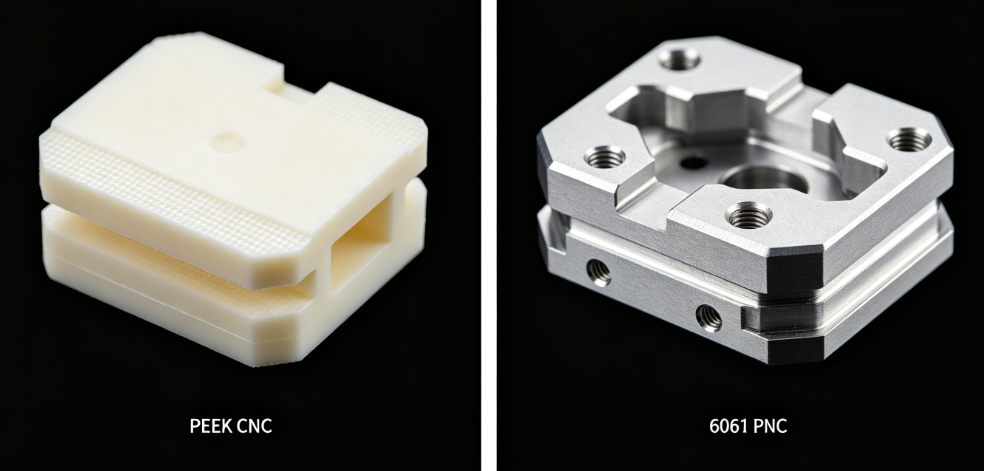
Core Side-by-Side Comparison Chart (Tolerance / Cost / Lead Time)
All data reflects Zorapid’s standard production parameters, aligned with ISO 2768 global machining standards for Western OEM customers.
| Comparison Category | CNC Plastic Machining (ABS/PC/POM/PEEK) | CNC Metal Machining (Aluminum/SS304/Ti6Al4V) |
|---|---|---|
| Default General Tolerance (ISO 2768-m) | ±0.2mm for dimensions 6–120mm | ±0.1mm for dimensions 6–120mm (ISO 2768-f fine) |
| Ultra-Tight Min Achievable Tolerance | ±0.01mm (Only POM/PEEK, climate-controlled shop) | ±0.005mm (All aluminum, stainless, titanium alloys) |
| Raw Material Price Per KG | $2–12 (ABS/PC/POM); $80–100 (Medical PEEK) | $5–10 (6061 Al); $8–18 (304 SS); $55–80 (Titanium) |
| Machining Cycle Time Per Part | 30–50% faster, low cutting resistance | Slower feeds, heavy tool load, longer cut paths |
| Tool Wear & Tool Replacement Cost | Minimal; cutting tools last 5–10x longer | High wear; stainless/titanium demands carbide tools |
| Average Machining Hourly Rate | $12–18/hour (3-axis); $70–85/hour (5-axis) | $15–22/hour (3-axis); $80–100/hour (5-axis) |
| Standard Prototype Lead Time (1–10 pcs) | 1–3 working days | 2–5 working days |
| Medium Batch Lead Time (50–500 pcs) | 4–7 days | 7–12 days |
| Extra Post-Processing Cost | Low (sanding, UV coat, tumble deburr) | High (anodizing, passivation, heat treatment, polishing) |
| Risk Of Dimensional Drift | High (thermal expansion, moisture absorption) | Very low (stable dimension under temp shifts) |
Deep Dive: CNC Tolerance Capabilities — Plastic vs Metal
Tolerance is where plastic and metal CNC split the hardest, and this single detail sinks more projects than any other factor.
Metal CNC Tolerance Advantages
Metals hold rigid, stable dimensions no matter minor workshop temperature swings. Our 5-axis lines reliably hit ±0.005mm critical feature tolerances for aerospace, medical, and semiconductor components.
- Aluminum 6061/7075: Consistent ±0.01mm without climate control
- Stainless steel / titanium: Maintains ultra-fine ±0.005mm for mating shafts, precision fixtures
- ISO 2768-f fine tolerance class is default for all metal jobs at Zorapid, no extra surcharge unless you go sub ±0.008mm
Plastic CNC Tolerance Limitations
All thermoplastics expand or shrink with heat and humidity — this creates built-in dimensional drift you can’t fully eliminate.
- Commodity plastics (ABS, PC, Nylon): Safe practical floor tolerance ±0.05mm; pushing tighter risks scrap from warpage
- Precision engineering plastics (POM/Delrin, PEEK): Best plastic stability, capable of ±0.01mm but requires constant 22°C temperature control in our dedicated plastic machining cell
- Critical note for buyers: If your drawing calls for ±0.01mm across long part lengths (>100mm), plastic will almost always fail functional fit testing — metal is non-negotiable here.
Common mistake we see daily: Engineers copy metal tolerance specs onto plastic CAD files without DFM review, which bumps quotes up 30–80% due to extra inspection and scrap risk. At Zorapid, our free pre-production DFM check flags mismatched tolerance-material combinations before we cut any stock.
Deep Dive: Full Cost Breakdown (Raw Stock, Machining Labor, Tooling, Post-Processing)
Total CNC cost stacks from four layers, and plastic undercuts metal across every tier for low-to-medium volume runs.
1. Raw Material Stock
- Budget plastics (ABS, acrylic): Cheaper than aluminum by 40–60% per kilogram
- Premium medical PEEK is the only plastic that rivals or exceeds titanium raw material cost
- Metals carry consistent bulk pricing surcharges: stainless steel costs double aluminum, titanium 8–10x aluminum stock price
2. Machining Runtime & Labor
Plastic machines faster because cutters slice through soft polymer without heavy load. A simple enclosure blank that takes 20 minutes in aluminum only needs 9–12 minutes in ABS.
Faster cycles mean fewer machine hours, lower labor overhead, and less total production cost per unit.
3. Tool Replacement Expense
Metal chips abrade cutting edges fast. Shops replace carbide tools every 1–3 production batches for stainless steel. Plastic barely wears cutters; we run weeks of plastic jobs without tool swaps, and we pass those tool savings directly to our clients in unit pricing.
4. Secondary Operations (Hidden Cost Gap)
Metal parts almost always require extra surface treatment to resist rust or boost aesthetics: anodizing, bead blasting, passivation, hard coating. Each step adds 1–3 days lead time and extra fees.
Plastic only needs simple sanding, painting, or UV clear coat — minimal secondary cost, no mandatory corrosion protection steps.
Real cost example from Zorapid’s 2026 OEM quote data:
Same 100x50x20mm housing, 100 unit batch
- ABS Plastic CNC: $12.80 per unit total cost
- 6061 Aluminum CNC: $21.40 per unit total cost (67% price increase)
Deep Dive: Lead Time Differences Across Prototypes & Batch Runs
Speed gaps come from two simple facts: plastic cuts faster, and metal needs longer setup + post-processing cycles.
Prototype Runs (1–10 pcs)
- Plastic: 1–3 day turnaround; we can schedule small plastic jobs on spare machine slots overnight
- Metal: Minimum 2 days, often 3–5 days; harder cutting materials require slower feed rates and multiple inspection checks mid-machining
Medium Batches (50–500 units)
Plastic batches finish 3–5 days earlier than equivalent metal orders. If you need expedited shipping for a trade show prototype, plastic CNC is your fastest low-cost option.
Large Volume Mass Runs (1,000+ pcs)
Lead time shrinkage narrows slightly at high quantities because setup costs amortize across thousands of parts. Even so, metal batches still run 20–30% longer due to consistent slow cutting speeds and mandatory finishing steps.
Urgent order add-on: Metal expedite surcharges hit 50–100% for rush delivery; plastic rush premiums only sit at 20–30% due to simpler production workflows.
Common Material Lineups We Run At Zorapid (Plastic + Metal)
Top CNC Plastics For OEM Projects
ABS, PC, POM (Delrin), Nylon PA6/PA66, PTFE, PEEK, GF-PA66, Acrylic, ULTEM
Best for: Consumer electronics housings, low-load gears, medical disposable fixtures, insulating brackets, lightweight prototypes
Top CNC Metals For OEM Projects
6061/7075 Aluminum, 304/316 Stainless Steel, Brass, Copper, 17-4PH, Ti-6Al-4V Titanium, Carbon Steel
Best for: High-temperature equipment, load-bearing structural frames, precision transmission parts, corrosion-resistant industrial hardware, aerospace components
Real Zorapid Client Case Study: Same Part, Two Materials, Full Data Contrast
A German industrial automation OEM sent us identical CAD for sensor mounting housings, requesting quotes in POM plastic and 6061 aluminum, batch size 300 units.
POM Plastic CNC Outcome
- Tolerance held: ±0.03mm (relaxed from original metal ±0.01mm spec via our DFM tweak)
- Raw material spend: $1,140 total
- Total machining hours: 28 hours
- Full batch lead time: 5 working days
- Final total project cost: $4,260
- Limitation: Could not operate above 80°C working temperature
6061 Aluminum CNC Outcome
- Tolerance held: Original drawing ±0.01mm critical bore tolerance
- Raw material spend: $1,920 total
- Total machining hours: 47 hours
- Full batch lead time: 9 working days
- Extra post-processing: Clear anodize (+$980 fee, +2 day delay)
- Final total project cost: $8,730
- Advantage: Stable performance up to 180°C continuous operation
Client takeaway: They ordered plastic housings for low-temperature indoor lines and aluminum variants for high-heat production stations, splitting the order to cut overall project cost by nearly 40%.
When To Pick Plastic CNC Machining (Best Use Cases)
Choose plastic CNC if your project hits any of these boxes:
- Early-stage prototyping with tight budget limits
- Lightweight, non-load-bearing enclosures and covers
- Electrical insulation requirements (no conductive metal risk)
- Low-friction internal gears, slide components (POM/PEEK)
- Low to medium working temperatures (<100°C)
- Fast turnaround deadlines for trade show samples
- Parts needing custom color matching via paint or dye
When To Pick Metal CNC Machining (Best Use Cases)
Metal CNC is mandatory for these applications:
- Critical tight tolerance mating parts (shafts, bearing housings, alignment fixtures)
- High-temperature operating environments (>120°C)
- Structural load-bearing frames, robotic arms, EV power components
- Long service life, high wear resistance (24/7 industrial equipment)
- Medical implant & aerospace parts requiring biocompatibility or high strength-to-weight ratio
- Outdoor units needing corrosion resistance (stainless steel, hard anodized aluminum)
- Parts that require threaded holes under heavy torque loads
Zorapid’s Material Selection Free DFM Support For OEMs
Unlike generic CNC shops that just cut whatever file you send, our engineering team provides complimentary material matching analysis with every RFQ:
- Tolerance feasibility check: Flag if your target tolerance is unachievable in plastic, with revised drawing recommendations
- Cost comparison breakdown: Side-by-side plastic/metal unit pricing before production
- Lead time projection table for your exact batch quantity
- Material performance notes (temperature limit, weight, chemical resistance)
- Surface finish & secondary process cost estimates for both material options
We operate separate dedicated machining zones for plastic and metal to eliminate cross-contamination and maintain consistent precision, with full ISO quality documentation for all exported OEM orders to Europe and North America.
FAQ
Can plastic CNC hit ±0.005mm tolerance like metal?
Only ultra-stable PEEK/POM inside a climate-controlled workshop, and the cost jumps 2–3x standard plastic pricing. For mass production, ±0.01mm is the realistic economic floor for plastic. Any critical fit feature tighter than that should switch to metal.
Is plastic CNC always cheaper than metal?
Standard engineering plastics (ABS, PC, POM) beat aluminum and stainless steel every time. Medical-grade PEEK is an exception — its raw material cost often exceeds titanium, making metal the budget pick for high-volume medical frames.
Will plastic CNC parts warp after machining?
Yes, moisture absorption and residual cutting heat create minor dimensional shift over 24–48 hours post-machining. Metal parts hold their dimensions permanently after cooling. We include a controlled rest period for all plastic CNC batches at Zorapid before final CMM inspection.
Can I swap plastic to metal mid-batch without redesign?
Usually not. Metal requires thicker wall sections, adjusted thread depths, and modified tolerance windows. Our DFM team can adjust your CAD geometry for free to fit metal machining specs if you plan a material switch later.
Does plastic CNC have shorter lead times for urgent prototype orders?
Absolutely. Our plastic cell runs overnight rapid jobs, delivering prototypes in 24–48 hours, while metal urgent orders need a minimum 48-hour window plus finishing delays.
Final Quick Decision Cheat Sheet
- Prioritize speed + low cost + lightweight → Plastic CNC
- Prioritize ultra-tight tolerance + heat resistance + structural strength → Metal CNC
- Prototyping, low temp enclosures, insulation components → Plastic
- Aerospace, automotive power parts, medical hardware, high-heat fixtures → Metal
- Tolerance above ±0.05mm budget projects → Plastic
- Tolerance below ±0.01mm critical mating features → Metal
Closing Wrap-Up
Plastic and metal CNC machining aren’t competitors — they’re complementary manufacturing tools that solve different project constraints around tolerance, cost, and lead time.
The biggest financial waste we see at Zorapid comes from OEMs locking into one material without comparing both options upfront. A quick DFM review can cut your total spend by 30–70% or eliminate costly scrap from unachievable tolerance specs.
If you’re ready to compare plastic vs metal CNC pricing, lead times, and tolerance feasibility for your custom parts, send your STEP/IGES CAD files to our engineering team for a no-obligation, fully detailed dual-material quote today.