If you’ve ever dealt with premature tool breakage, poor surface finish, or slow cycle times, chances are you picked the wrong tooling. In CNC milling and turning, your tools aren’t just “bits”—they’re the foundation of precision, speed, and profitability. Today, we’re breaking down tool selection with real-shop data, pro geometry hacks, and why Zorapid uses specialized tooling most shops don’t even stock.
Tooling Deep Dive: Materials, Geometry & Coatings
Let’s cut through the jargon—this is what actually makes or breaks your cut.
Tool Materials: Match Hardness to Workpiece
- HSS (High-Speed Steel): Cheap, tough, good for low-speed steel/aluminum. Bad for hard materials or high RPM.
- Solid Carbide: The CNC workhorse. Stiff, heat-resistant, handles 2–3× faster speeds than HSS. Ideal for 90% of milling/turning.
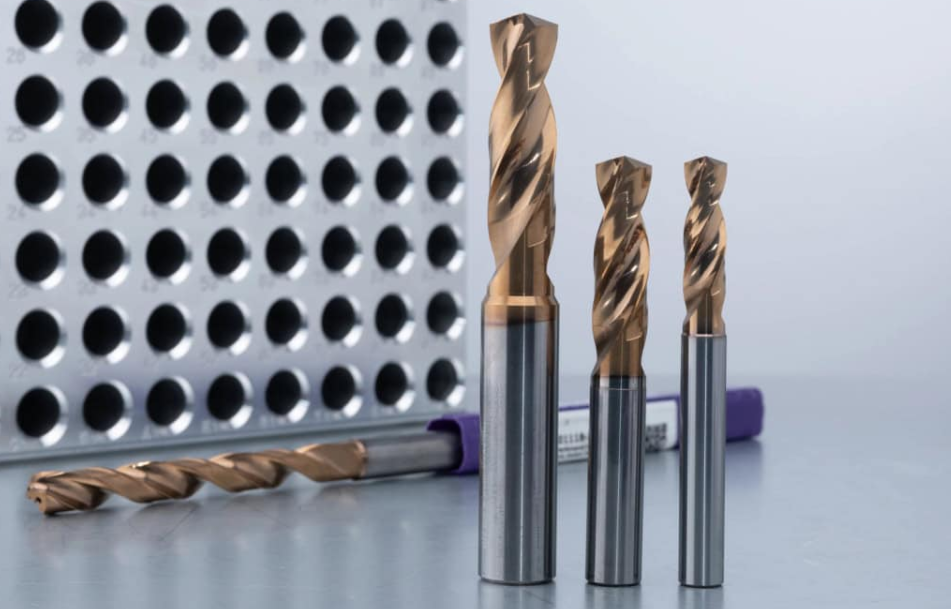
Micro-Grain Carbide: Ultra-fine grain, higher toughness, perfect for micro-tools (Ø0.5–2mm) and hard materials (HRC 50+).
CBN (Cubic Boron Nitride): For hardened steel (HRC 58–68). Outlasts carbide 10–20× in hard turning.
PCD (Polycrystalline Diamond): For aluminum, copper, CFRP. Unbeatable for high-speed, mirror finishes.
Geometry: Flutes, Helix & Radius
Milling Tools (End Mills)
- Flute Count:
- 2 flutes: Best for aluminum (max chip evacuation).
- 3–4 flutes: General-purpose steel/stainless (balance speed & strength).
- 5+ flutes: Finishing only (small chips, smooth surface).
Helix Angle
- 35°–45°: Aluminum (sharp, cuts fast).
- 30°–35°: Steel/stainless (stronger edge, less chatter).
Corner Radius
- Sharp (R0): Good for sharp corners but prone to chipping
- R0.5–R1: Standard (reduces stress, longer life).
- R2+: Heavy roughing (prevents breakage)
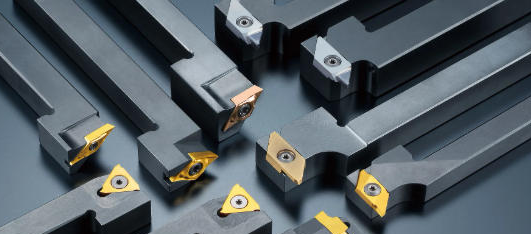
Turning Tools (Inserts)
- Insert Shape:
- Diamond (CNMG): General-purpose (turning, facing, boring).
- Square (SNMG): Heavy roughing (strong edges).
- Triangle (TNMG): Finishing (sharp, accessible)
Rake Angle
Positive: Soft materials (aluminum, brass) – sharper, less force.
Negative: Hard materials (steel, Inconel) – stronger edge, handles heat.
Coatings: The “Armor” That Boosts Speed & Life
- TiN (Gold): General-purpose (steel, cast iron). +20% tool life.
- TiCN (Blue-Gray): Wear-resistant (stainless, alloy steel). +30% life, lower friction.
- AlTiN/TiAlN (Black/Purple): High-temperature (hard steel, titanium). Handles 800°C+ heat, +50% life.
- DLC (Diamond-Like Carbon): Aluminum/copper. Prevents sticking, mirror finishes
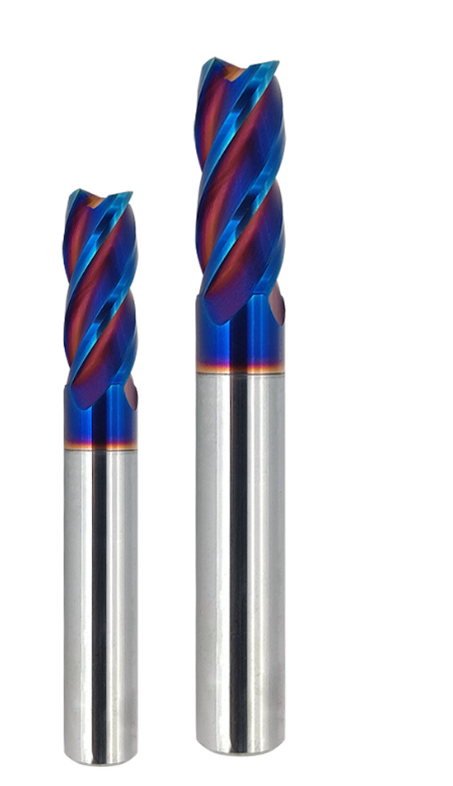
Pro Rule: Tool material → geometry → coating—in that order. Skip one, and you’ll fight tool failure all day.
We Do What Others Can’t: Specialized Tooling for “Impossible” Jobs
Most shops stock basic carbide end mills and generic inserts—good for simple parts, useless for tight tolerances, hard materials, or micro features. Zorapid uses custom, application-specific tooling others can’t source or run.
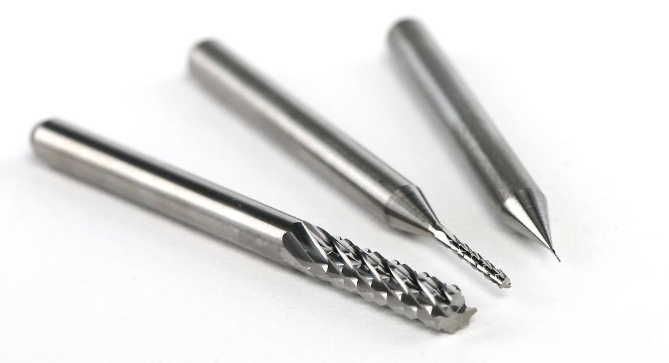
Micro-Tooling (Ø0.3–Ø2mm) for Tiny Precision Parts
- Other shops: “Too risky—breaks in 10 minutes.” Use HSS, slow speeds, ±0.05mm tolerance max.
- Zorapid: Micro-grain carbide, 20,000 RPM high-frequency spindles, anti-vibration holders. Result: ±0.005mm tolerance, Ra 0.2μm finish, 50+ parts per tool.
- Perfect for medical implants, electronics, and tiny robotics components
PCD Tooling for High-Speed Aluminum Machining
- Other shops: Stick to coated carbide. Max 12,000 RPM, frequent BUE (built-up edge), Ra 1.6μm finish.
- Zorapid: PCD end mills/inserts, 18,000–25,000 RPM, polished flutes. Result: 3× faster cuts, mirror finish (Ra 0.1–0.2μm), no post-polish needed.
- Ideal for aerospace 7075, EV battery trays, and consumer electronics enclosures
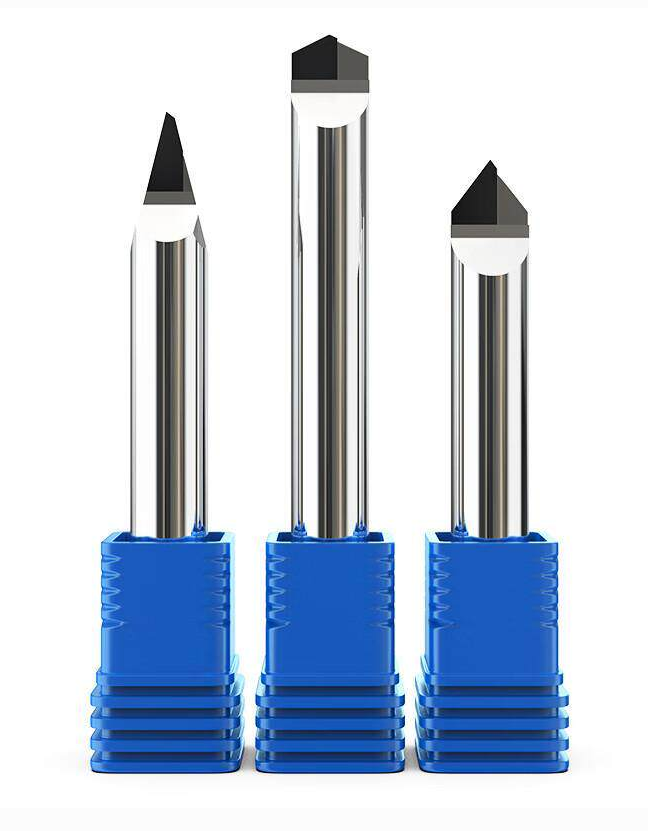
CBN Tooling for Hardened Steel (HRC 58–62)
Other shops: We can’t cut hard steel—we use EDM. Slow, expensive, ±0.02mm tolerance.
Zorapid: CBN inserts, 3,000 RPM, high-feed turning/milling. Result: Direct machining to final size, no EDM, ±0.008mm tolerance, 40% faster.
Perfect for mold bases, die components, and tool steel parts
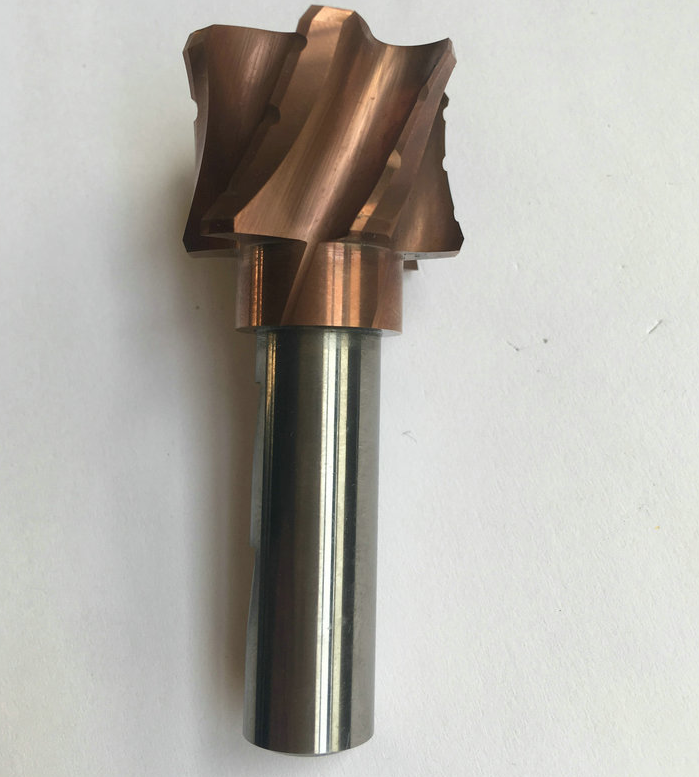
Custom Form Tools for Complex Profiles
Other shops: Use standard tools + multiple passes. Slow, inconsistent, high scrap.
Zorapid: Custom ground form tools (milling/turning). Single-pass cutting of complex radii, grooves, and contours. Result: 50% faster cycle time, perfect repeatability, 0 scrap.
Great for automotive shafts, aerospace fittings, and medical device components
Data Report: Tooling Showdown (Zorapid vs. Industry Standard)
Test Job: 6061-T6 aluminum bracket (milling) + 4140 steel shaft (turning).
Milling (6061-T6, Ø10mm Tool)
| Metric | Zorapid (PCD) | Industry Standard (Coated Carbide) | Difference |
|---|---|---|---|
| RPM | 22,000 | 10,000 | +120% |
| Feed Rate | 2,800 mm/min | 1,400 mm/min | +100% |
| Tool Life | 800 parts/tool | 250 parts/tool | +220% |
| Surface Finish | Ra 0.2 μm | Ra 1.4 μm | 7× smoother |
| Scrap Rate | 0.1% | 2.3% | -96% |
| Cycle Time | 12 min | 26 min | -54% |
Turning (4140 Steel, CNMG Insert)
| Metric | Zorapid (AlTiN Carbide) | Industry Standard (TiN Carbide) | Difference |
|---|---|---|---|
| Cutting Speed | 180 m/min | 100 m/min | +80% |
| Feed Rate | 0.3 mm/rev | 0.18 mm/rev | +67% |
| Tool Life | 450 parts/insert | 180 parts/insert | +150% |
| Surface Finish | Ra 0.8 μm | Ra 2.1 μm | 2.6× smoother |
| Scrap Rate | 0.2% | 2.5% | -92% |
| Cost Per Part | $2.90 | $5.40 | -46% |
Key Takeaway: Right tooling = faster, cheaper, better quality. No guesswork—just data-driven tool selection.
Why Choose Zorapid for Tooling Mastery?
Application-Specific Tooling Library
We stock 500+ specialized tools (PCD, CBN, micro-grain carbide, custom form tools) most shops don’t carry. No one-size-fits-all—we match tools to your material, geometry, and tolerance.
In-House Tooling Engineering
Our team designs custom tools for unique parts (complex profiles, deep cavities, micro features). No outsourcing—we control every step for precision and speed.
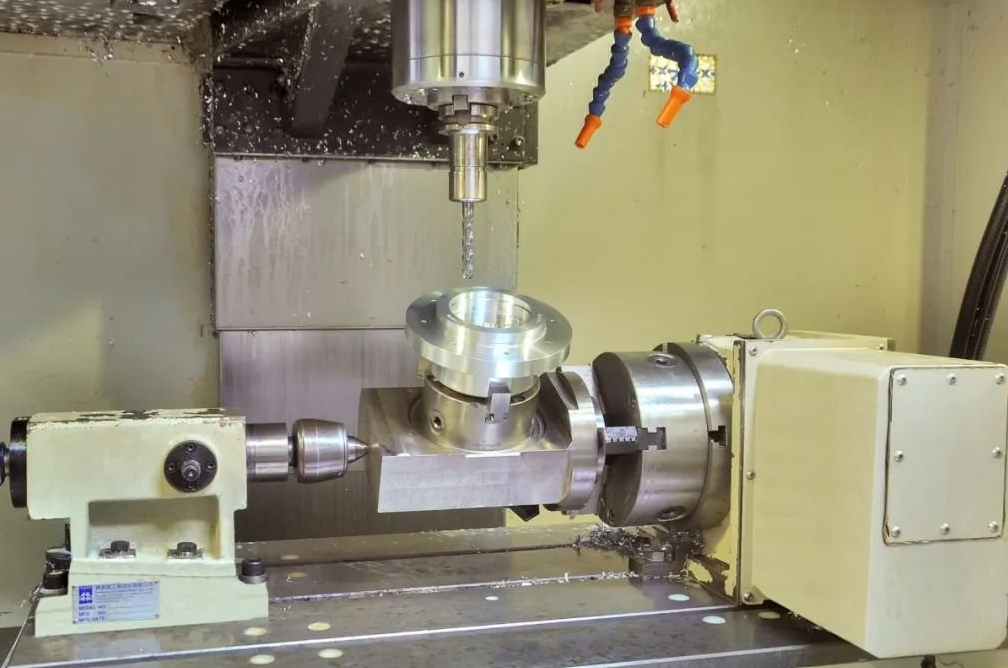
Rigid Machines + Premium Tool Holders
- 5-axis mills/CNC lathes: High torque, minimal runout (<0.002mm).
- Anti-vibration holders: Reduce chatter by 60%, extend tool life, improve finish.
- High-pressure coolant (30 bar): Flushes chips, cools tools, prevents wear.
Material Expertise = Perfect Tool Matches
We’ve refined tool sets for 50+ materials: aluminum (6061/7075), stainless (304/316), titanium, Inconel, hardened steel, PEEK, and more. Most shops only master 2–3 materials.
Cost-Effective High-Performance Tooling
We buy tools in bulk, pass savings to you. No premium for PCD/CBN/micro tools—you get aerospace-grade tooling at standard prices.
ISO-Certified Quality
ISO 9001, IATF 16949, ISO 13485 certified. Every tool is inspected for runout, geometry, and coating quality before use.
Ultimate Guide: Tool Selection Cheat Sheet (Milling & Turning)
Milling Tool Selection (End Mills)
| Material | Tool Material | Coating | Flutes | Helix | RPM Range |
|---|---|---|---|---|---|
| Aluminum (6061/7075) | Carbide/PCD | DLC/Uncoated | 2–3 | 35°–45° | 12,000–25,000 |
| Stainless (304/316) | Micro-Grain Carbide | AlTiN/TiCN | 4 | 30°–35° | 8,000–15,000 |
| Hardened Steel (HRC 50–62) | Micro-Grain Carbide | AlCrN | 4–5 | 25°–30° | 5,000–10,000 |
| Titanium (Ti-6Al-4V) | Micro-Grain Carbide | TiAlN | 4 | 30° | 6,000–12,000 |
| Plastics (PEEK/ABS) | Carbide | Uncoated | 2 | 40° | 10,000–18,000 |
Turning Tool Selection (Inserts)
| Material | Insert Material | Coating | Insert Shape | Rake Angle | Cutting Speed |
|---|---|---|---|---|---|
| Aluminum | Carbide/PCD | DLC | Diamond (CNMG) | Positive | 200–400 m/min |
| Steel (1045/4140) | Carbide | TiCN | Diamond (CNMG) | Neutral | 120–180 m/min |
| Stainless | Carbide | AlTiN | Triangle (TNMG) | Positive | 80–120 m/min |
| Hardened Steel | CBN | None | Square (SNMG) | Negative | 60–100 m/min |
| Inconel | Carbide | TiAlN | Diamond (CNMG) | Negative | 40–70 m/min |
Critical Mistakes to Avoid
Using HSS for high-speed CNC: Slow, wears fast, poor finish.
Wrong coating for aluminum: TiN/TiCN causes sticking—use DLC/uncoated.
Too many flutes for aluminum: Poor chip evacuation = BUE and breakage.
Ignoring tool holder runout: Even 0.01mm runout = poor finish and early wear.
Using negative rake for soft materials: Too much force, tears material.
Materials We Optimize Tooling For
We have proven tool sets for all industrial materials:
- Aerospace: Ti-6Al-4V, Inconel 718, 7075-T6, 2024-T4
- Medical: 316L, PEEK, Cobalt-Chrome, Titanium Grade 5
- Mold: P20, H13, D2, S7, 420SS (HRC 50–62)
- Industrial: 6061, 4140, 4340, 304, 316, Brass, Copper
- Composites: CFRP, GFRP, Carbon Fiber, Kevlar
Case Study: Aerospace Titanium Shaft (Real Parts, Real Results)
Client
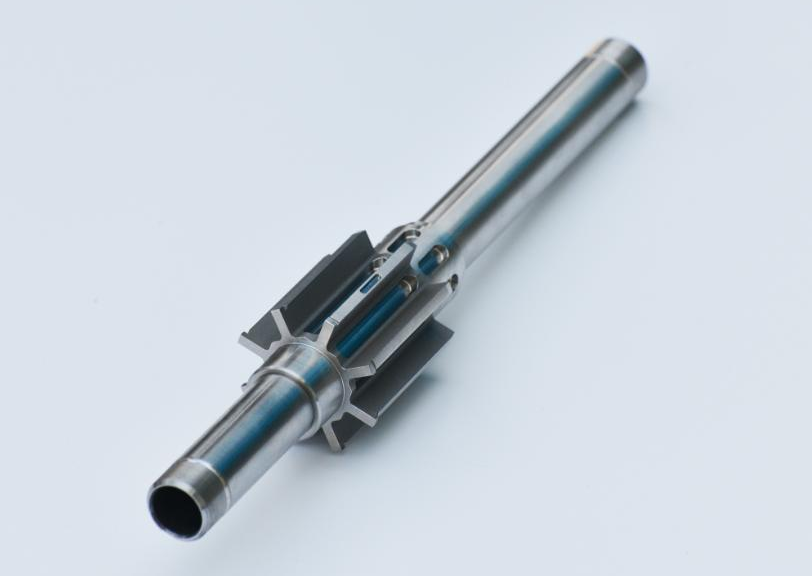
US aerospace OEM needing 15 Ti-6Al-4V shafts (±0.01mm tolerance, Ra < 0.8μm finish, complex O-ring grooves, 5-axis features).
Challenges
- Titanium’s poor heat conductivity (traps heat at tool tip)
- Tight tolerance on thin (1.2mm) grooves
- Other shops quoted 12–15 days, 8–12% scrap risk, Ra 1.6μm finish
- Most shops use standard carbide inserts—wear out in 10 parts
Zorapid’s Solution
- Tooling: Micro-grain carbide inserts (TiAlN coating), custom grooving tool, anti-vibration turning holder
- Parameters: Cutting speed 75 m/min, feed 0.25 mm/rev, 2,000 RPM, high-pressure coolant
- Strategy: Roughing → Grooving → Finishing (2 passes)
Results
- Delivery: 6 days (50% faster than quotes)
- Quality: 0 scrap, ±0.007mm tolerance, Ra 0.45μm
- Tool Life: 18 parts/insert (industry avg: 8–10)
- Client Feedback: “Zorapid’s titanium tooling setup is next-level. They used specialized inserts we couldn’t source, delivered perfect parts fast, and cut our tooling costs by 40%.” — Aerospace Manufacturing Engineer
. Applications for Precision Tooling
Aerospace & Defense
Titanium/Inconel structural parts, engine components, landing gear, satellite hardware (requires heat-resistant, high-precision tooling).
Medical Devices
Implants, surgical instruments, dental parts (tiny features, biocompatible materials, mirror finishes).
Mold & Die
Hardened steel molds, stamping dies, mold bases (CBN tooling for direct hard machining).
Automotive
Engine components, transmission parts, EV battery trays (high-speed aluminum/steel tooling).
Robotics & Automation
Lightweight frames, precision brackets, end-effectors (micro-tools, PCD for aluminum).
Electronics
Heat sinks, enclosures, internal components (high-speed PCD milling, tight tolerances).
9Delivery Speed: Fast Tooling = Fast Parts
- Standard Tooling Jobs (Aluminum/Steel): 3–5 days
- Exotic Alloys (Titanium/Inconel): 5–7 days
- Micro/Precision Parts: 4–6 days
- Hardened Steel (CBN Tooling): 5–8 days
- Rush Orders: 24–48 hours (priority tooling + dedicated machines)
Industry Whitepaper: The Definitive Guide to CNC Tooling (2026).
Inside, you’ll get:
- Material-specific tooling tables (50+ alloys)
- Milling/turning parameter cheat sheets
- Tool coating & holder selection guides
- 5 real-world case studies (aerospace, medical, mold)
- Common tooling problems & fixes (breakage, chatter, poor finish)
- Cost-saving strategies for high-performance tooling
Conclusion
Choosing the right tooling isn’t just about “picking a bit”—it’s about matching tool material, geometry, and coating to your workpiece and operation. Guesswork leads to broken tools, poor quality, and slow delivery. Data-driven, application-specific tooling leads to precision, speed, and profitability.
At Zorapid, we don’t just “use tools”—we engineer every tool setup. Our tooling experts, machinists, and quality team select or design the perfect tool for your exact job, whether it’s micro-milling aluminum, hard turning steel, or machining titanium. We use the specialized, high-performance tooling other shops avoid—delivering better parts, faster, at lower cost.
If you’re tired of premature tool wear, poor finishes, and slow lead times, partner with Zorapid. We turn your CNC tooling challenges into precision solutions—one perfect cut at a time.
Ready to optimize your tooling setup? Contact Zorapid today for a free quote and tooling consultation.
FAQ
What’s the biggest mistake in tool selection?
Using general-purpose tools for specialized materials (e.g., standard carbide for aluminum, HSS for hard steel).
Are expensive PCD/CBN tools worth it?
Absolutely—for high-volume or high-speed jobs. PCD/PCD tools last 5–20× longer than carbide, cutting total costs by 30–50%.
How often should I replace tools?
Monitor wear—replace when you see chipping, poor finish, or increased cutting force. For production, schedule changes based on tool life data.
Do tool holders affect quality?
Yes—runout >0.002mm causes poor finish and early wear. Use precision, anti-vibration holders for critical jobs.
Can I use the same tool for roughing and finishing?
Not recommended. Roughing tools are for material removal; finishing tools are for precision. Using one tool for both leads to poor finish and shorter life.
What’s the best tool for aluminum?
PCD (high-speed, mirror finish) or polished 2-flute carbide with DLC coating (general-purpose).
Does Zorapid offer tooling consulting?
Absolutely—we audit your current setup, recommend tooling upgrades, and optimize feeds/speeds for maximum efficiency.