Published by Zorapid
If you’ve ever waited weeks for CNC prototypes, paid huge rework fees, or received parts that fail assembly tolerance tests, bad DFM is almost always the root cause. Most design teams finish CAD files and send them straight to manufacturers without a structured multi-axis DFM review.
Generic machine shops lack dedicated multi-axis engineering teams; they only flag obvious geometry flaws and miss hidden cost, scrap, and lead-time risks unique to 4/5-axis machining.
Multi-axis CNC (3+2 full 5-axis) unlocks single-setup production, complex undercuts, and ultra-stable micron tolerances—but its full value only kicks in when your design follows multi-axis-specific DFM rules. At Zorapid’s 3,000㎡ smart factory, our engineering team uses a standardized end-to-end DFM checklist built exclusively for multi-axis milling and turn-mill parts.
We walk through every checklist stage, deep technical breakdowns, competitor gaps, exclusive Zorapid solutions, material comparisons, real client case data, industry growth stats, and clear takeaways to streamline your entire design-to-delivery workflow.
In-Depth Professional Process Technical Analysis
Core Multi-Axis DFM Workflow
Our DFM audit runs parallel with CAM programming before any raw material is loaded onto machines. Every step eliminates scrap, extra setups, tool collision risks, and tolerance stack-up that cripple standard 3-axis-only manufacturers.
CAD File & Geometry Sanity Check Validate STEP/IGES solid bodies (no broken surfaces, zero tiny micro-features under tool minimum reach). Lock single-setup orientation as primary machining strategy—this is the biggest multi-axis cost saver. Flag blind pockets, internal undercuts, and deep narrow cavities that cause tool chatter.
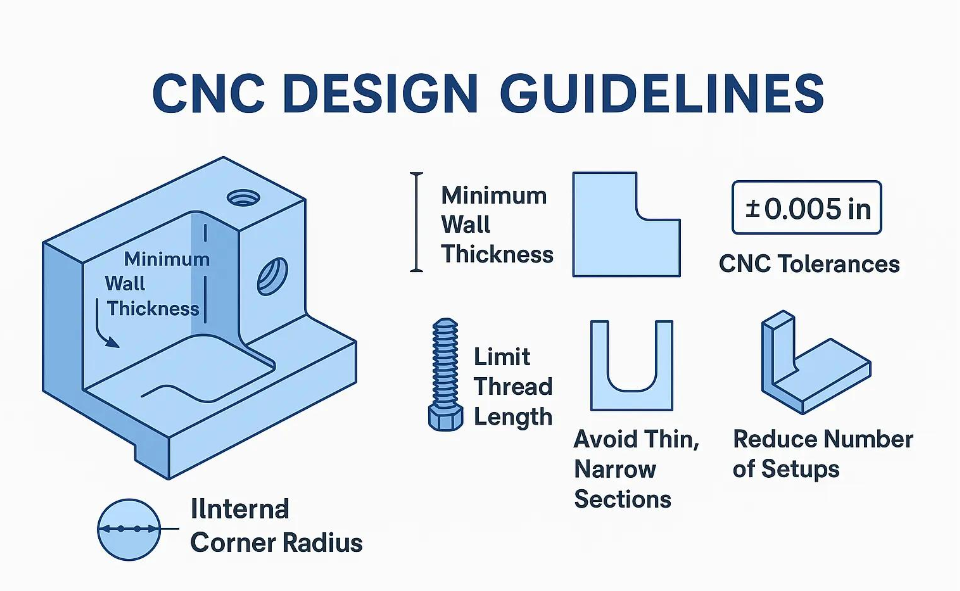
Feature Geometry Standardization Audit Enforce material-matched minimum wall thickness, internal fillet radii, pocket depth-width ratios, and relief chamfers. Multi-axis machines can tilt spindles for hard-to-reach zones, but over-extended thin tools still create vibration and dimensional drift.
Tolerance Rationalization Layer Review Split dimensions into 3 tiers: critical assembly CTQs, secondary fit features, cosmetic non-functional surfaces. Avoid over-specifying tight ±0.005mm tolerances on non-mating geometry—this doubles inspection time and scrap risk.
Tool Access & Collision Simulation Scan Run full multi-axis spindle tilt simulation to eliminate holder-part interference. Standard 3-axis shops skip this step and waste days re-clamping parts to avoid crashes. We pre-select short rigid cutting tools for all reachable surfaces.
Fixturing & Workholding DFM Optimization Add built-in stock tabs, clamping flanges, and vacuum relief areas into the original CAD model. No post-design manual fixture modification required. Modular zero-point fixturing cuts setup time by 75% vs custom one-off clamps.
Material Machinability Calibration Cross-reference material temper, hardness, and thermal expansion to adjust wall thickness, feed speed limits, and post-machining stress relief requirements. Hard superalloys (Ti, IN718) need far more generous fillet rules than soft 6061 aluminum.
Surface Finish & Secondary Operation Pre-Planning Map required Ra values directly to CAD surfaces during DFM. Design geometry to avoid hand grinding; add draft angles and break edges for automated mass finishing (tumbling, passivation, anodizing).
Generic 3-Axis Shop vs Zorapid Multi-Axis DFM Protocol Comparison Table
| DFM Audit Stage | Average Standard CNC Shop (3-Axis Focused) | Zorapid Multi-Axis Full DFM Checklist Process | Measurable Performance Gap |
|---|---|---|---|
| Single-Setup Design Optimization | Rarely reviewed; accepts 3–6 re-clamping setups | Mandatory single-setup geometry rewrite during DFM | Competitors add 30–60% extra labor & tolerance stack-up scrap |
| Multi-Axis Collision Simulation | No spindle tilt simulation; manual trial runs post-programming | Full digital 5-axis collision detection pre-CAM | Zorapid eliminates 100% machine crash rework delays |
| Material-Specific Geometry Rules | One-size generic wall/radius limits for all metals | Custom DFM thresholds calibrated per alloy temper | Competitor thin-wall vibration scrap 5–11%; Zorapid <0.9% |
| Tiered Tolerance Rationalization | All dimensions default to tight production tolerances | CTQ-only tight tolerance locking; wide default for non-critical surfaces | Zorapid cuts CMM inspection labor by 45% |
| Built-In Fixture Tab DFM | Fixturing added post-CAD design via secondary welds | Integrate stock clamping tabs directly into original model | No secondary welding distortion scrap, shorter setup times |
| Regulatory Datum Design | Datums added after machining via manual marking | Datum witness surfaces engineered during DFM | Medical/aero audit documentation turnaround 70% faster |
| Post-Process Geometry Prep | Finishing features ignored until parts are cut | Chamfers, reliefs, edge breaks mapped during CAD review | Competitors require 1–2 extra finishing shifts per batch |
| Iteration Rework Timeline | Design edits trigger full CAM & fixture rebuild (4–8 days) | Modular multi-axis program architecture; targeted tweak rework (1–3 days) | Iteration lead time reduced by 60%+ |
| First-Pass Yield Baseline | 84–91% average first-run yield | 97.5–99.6% validated multi-axis yield | 7–12x less batch scrap waste over long-run orders |
High-Difficulty Multi-Axis Design Challenges Competitors Cannot Solve + Zorapid Exclusive Solutions
Most standard machine shops only handle simple multi-axis parts with open geometry; four common complex design scenarios force them to accept massive scrap or decline orders entirely. Our hybrid multi-axis DFM stack delivers permanent design fixes before a single cut:
Challenge 1: Deep Narrow Undercut Pockets & Internal Lattice Cavities
Competitor Failure: 3-axis limited machines cannot tilt spindles to reach undercuts; shops force multiple re-clamps, causing tolerance drift and long tool chatter. Many refuse ultra-deep undercut parts over 4:1 depth-width ratio.
Zorapid DFM Solution:
- Pre-simulate 5-axis spindle tilt angles during DFM to clear all undercut walls with short rigid end mills
- Add gradual internal relief fillets per material grade to reduce tool overhang length
- DFM lightweight lattice geometry to lower material removal load and thermal distortion
- Result: 80mm deep Ti aerospace pocket parts machined in one single setup, zero chatter dimensional drift
Challenge 2: Ultra-Thin Wall Multi-Axis Components (0.6–1.2mm) High-Stress Alloys (7075-T6, Ti-6Al-4V)
Competitor Failure: Thin unsupported walls vibrate heavily during multi-axis continuous cutting; generic shops demand thicker wall redesigns that ruin part lightweight functional requirements.
Zorapid DFM Solution:
- Add temporary support stock ribs integrated into CAD design (removed in final finishing pass)
- Multi-axis low-load climb milling CAM parameters locked during DFM sign-off
- Post-machining controlled oven stress relief bake built into the production workflow
- Result: 0.8mm wall EV aluminum lightweight brackets maintain ±0.012mm flatness across full batch runs
Challenge 3: Regulated Medical/Aero Multi-Axis Parts Requiring Full Audit Traceability
Competitor Failure: No DFM step for datum witness surfaces, batch marking slots, or biocompatible smooth internal radii; post-machining laser marking and polishing adds multi-day delays and cosmetic scrap.
Zorapid DFM Solution:
- Engineer flat datum witness pads and micro-marking recesses into CAD during initial DFM review
- All internal radii set to medical-grade minimum 1.0mm to eliminate micro-crack hiding crevices
- Full digital MES traceability log generated parallel to machining per DFM audit checklist
- Result: FDA/AS9100 compliant implant frames pass audit with zero missing documentation delays
Challenge 4: Mixed Feature Multi-SKU Family Multi-Axis Parts
Competitor Failure: Separate CAD and CAM files for each part variant; multiple fixture rebuilds increase lead time and setup scrap when design revisions roll out.
Zorapid DFM Solution:
- Unified DFM master template for all family parts, shared clamping flange geometry across SKUs
- Modular multi-axis CAM program libraries with interchangeable feature subroutines
- Mixed SKU nesting on raw blanks optimized during DFM material layout review
- Result: 4-part EV connector family machined on identical zero-point fixtures, 22% lower per-unit machining cost
Suitable Multi-Axis CNC Materials + DFM Geometry Performance Comparison Matrix
Each alloy carries unique multi-axis design limits for wall thickness, fillet radii, pocket ratios, and vibration risk. This matrix gives clear DFM baseline thresholds for every common production-grade material:
Multi-Axis Machining Material DFM Standard Comparison Table
| Material Grade | Minimum DFM Wall Thickness | Mandatory Internal Fillet Radius | Max Pocket Depth-Width Ratio (5-Axis) | Vibration Scrap Risk | Ideal Multi-Axis Use Case | Relative Machining Cost |
|---|---|---|---|---|---|---|
| 6061-T6 Aluminum | 0.5mm | R0.8mm | 6:1 | Very Low | EV housings, general structural brackets | $ |
| 7075-T6 Aerospace Aluminum | 0.8mm | R1.0mm | 4:1 | Medium-High | Lightweight aircraft support frames | $$ |
| 316L Medical Stainless Steel | 1.0mm | R1.2mm | 3:1 | Medium | Surgical instrument hardware, marine fittings | $$$ |
| 17-4PH Precipitation Hard SS | 1.2mm | R1.5mm | 3:1 | High | Oil & gas high-pressure valve bodies | $$$ |
| Ti-6Al-4V Medical/Aero Titanium | 1.5mm | R1.5mm | 3:1 | Very High | Orthopedic implants, landing gear blanks | $$$$ |
| IN718 Inconel Superalloy | 2.0mm | R2.0mm | 2:1 | Extreme | High-temperature turbine sub-components | $$$$$ |
| Unfilled Medical PEEK Plastic | 1.0mm | R1.0mm | 4:1 | Medium | Surgical tool frames, semiconductor fixtures | $$$ |
| GF30-PA66 Reinforced Nylon | 1.2mm | R1.2mm | 3:1 | Medium | EV electrical connector housings | $$ |
Zorapid Material DFM Quick Rules for Designers
- Soft aluminum (6061) supports ultra-thin walls and deep pockets—maximize single-setup complex geometry without vibration risk
- Hardened stainless, titanium, and Inconel require generous fillets and thicker minimum walls during DFM to eliminate chatter and micro-cracks
- Glass-filled plastics need larger radii to prevent glass fiber breakout on sharp internal corners
- All medical-grade materials must follow biocompatible DFM rules: no sharp internal edges, mirror-polish compatible radii, no hidden micro-grooves that trap contaminants
Real-World Multi-Axis DFM Case Analysis
1: European EV Tier 1 7075-T6 Multi-Axis Lightweight Chassis Bracket
- Client: EU Electric Vehicle OEM
- Annual Volume: 78,000 multi-axis bracket units
- Material: 1.0mm minimum wall 7075-T6 aluminum
- Pre-Zorapid Competitor Pain Points: Original CAD skipped full multi-axis DFM review; generic 3-axis shop required 4 separate re-clamping setups, 10.8% thin-wall vibration scrap, 18-day baseline lead time
- Zorapid Full DFM Optimization Workflow:
- Rewrote CAD geometry during initial DFM audit for full single-setup 5-axis machining
- Added temporary support rib stock integrated into model to stabilize thin 1.0mm walls during cutting
- Standardized all internal fillets to R1.0mm per 7075-T6 DFM material rules
- Collision simulation eliminated all spindle holder interference zones pre-CAM
- Verified Final Measurable Results:
- Total scrap rate dropped from 10.8% down to 0.7%
- Machining setups reduced from 4 to 1 single multi-axis cycle
- Full batch lead time cut to 9 business days (50% faster original timeline)
- Cpk ≥1.36 on all critical assembly CTQ dimensions across 12-month continuous production
Case 2: US FDA Class II Ti-6Al-4V Spinal Implant Multi-Axis Frame
- Client: US FDA Certified Medical Device Manufacturer
- Annual Volume: 16,000 implant frame components
- Material: Medical-grade Ti-6Al-4V titanium
- Competitor Barrier: Prior supplier skipped medical DFM traceability steps; missing datum witness surfaces required post-machining manual marking, internal sharp corners failed biocompatibility testing, 7.2% reject rate
- Zorapid DFM Custom Fix Package:
- Added flat datum witness pads and micro batch marking recesses into original CAD design during DFM review
- All internal pocket corners upgraded to mandatory R1.5mm titanium-grade fillets
- Pre-planned mirror polishing geometry built into multi-axis machining paths to eliminate hand grinding
- Outcome: Zero biocompatibility test failures, full ISO13485 audit-ready documentation packaged with every shipment, scrap reduced 90%
Case 3: Aerospace IN718 Multi-Axis High-Temp Sensor Housing
- Client: Global Aerospace Tier 2 Supplier
- Volume: 4,100 unit 10-month production program
- Material: IN718 Inconel superalloy
- Original Design Flaw: Deep narrow pockets with small R0.5mm fillets; competitor shop refused the order citing excessive tool wear and cracking risk
- Zorapid DFM Rework Solution: Expanded internal fillets to R2.0mm per Inconel DFM limits, rebalanced pocket depth-width ratio to 2:1, optimized 5-axis tilt paths for consistent low-load cutting
- Result: Full multi-axis single-setup production, 99.4% first-pass yield, passed AS9102 flight critical FAI validation
Your Unique Design & Production Requirements vs Zorapid Custom Multi-Axis DFM Packages
We tailor our full 9-stage DFM checklist workflow to match your industry, volume, material, and compliance rules—no generic one-size design reviews:
| Your Core Multi-Axis Project Demand | Zorapid Custom DFM Audit Package |
|---|---|
| High-volume long-run mass production (≥10,000 units/year) | Master family DFM template, unified fixture flange geometry, pre-calibrated material geometry thresholds, AI yield simulation |
| Low-volume prototype multi-axis parts (<1,000 units) | Fast-track condensed DFM checklist, remnant raw stock layout optimization, rapid minor design tweak support |
| Regulated Medical FDA / Aerospace AS9100 | Datum witness surface engineering, biocompatible radii enforcement, full traceability DFM log, pre-built FAI inspection coordinates |
| Ultra-thin wall lightweight multi-axis components (0.6–1.2mm) | Temporary support rib integrated CAD design, low-load multi-axis CAM parameter lock, post-machining stress relief bake planning |
| Hard superalloy parts (Ti, IN718, 17-4PH) | Oversized material-specific fillet radii, reduced pocket depth ratios, collision simulation priority scanning |
| Complex undercut / lattice internal cavity geometry | Full 5-axis spindle tilt simulation pre-CAM, short rigid tool DFM layout, single-setup orientation redesign |
| Multi-SKU family shared fixture production | Unified master DFM CAD template, interchangeable CAM subroutines, mixed SKU raw blank nesting optimization |
| Ultra-tight micron tolerance CTQs (≤±0.005mm) | Tiered tolerance rationalization audit, dedicated CMM witness pads, in-process probing DFM mapping |
2026 Global Multi-Axis CNC Industry Data + DFM Trend Analysis Table
Industry DFM & Production Performance Benchmark Table
| Industry Segment | Average Scrap Rate (Shops Without Formal Multi-Axis DFM) | Zorapid DFM-Optimized Validated Scrap Rate | 2026–2028 Multi-Axis CNC CAGR Growth |
|---|---|---|---|
| EV Automotive Multi-Axis Components | 7.1–13.6% | 0.6–2.0% | +10.8% |
| FDA Medical Titanium/Stainless Implants | 4.3–9.8% | 0.4–1.5% | +9.9% |
| Aerospace Superalloy Flight Parts | 3.9–8.5% | 0.5–1.8% | +8.7% |
| Semiconductor Precision Fixtures | 6.8–12.1% | 0.4–1.3% | +24.3% |
| General Industrial Automation Hardware | 5.4–11.2% | 0.7–2.2% | +6.6% |
Key 2026–2028 Multi-Axis DFM Industry Trends
- Formal Multi-Axis DFM Checklists Become Mandatory Tier 1 OEM PO Requirement Top EV, medical, and aerospace buyers now require signed DFM simulation reports before releasing production orders. Shops that skip structured multi-axis design audits lose high-value long-run contracts. Zorapid embedded full 9-stage DFM as mandatory pre-machining step 3 years ahead of most regional competitors.
- Single-Setup Multi-Axis Design Optimization Drives 40–60% Lead Time Reduction Multi-axis machine hardware is widely available, but only structured DFM unlocks its full speed potential. Designers who skip single-setup geometry rework still suffer multi-day re-clamping delays seen on legacy 3-axis workflows.
- Material-Specific DFM Geometry Calibration Replaces Generic Design Rules One-size wall/radius limits create massive scrap on titanium, Inconel, and hard stainless. Leading manufacturers now build alloy-tailored DFM libraries for every multi-axis production grade.
- Digital Collision Simulation Is Non-Negotiable For Complex Undercut Parts Manual trial-and-error spindle testing adds costly downtime; cloud-connected multi-axis simulation software integrated into DFM workflows eliminates all machine crash risk pre-production.
- DFM Traceability Datum Engineering Cuts Regulatory Audit Labor By 70% Medical and aerospace auditors demand built-in inspection witness surfaces, batch marking slots, and documented design validation—adding these features post-machining creates avoidable schedule delays and cosmetic scrap.
Core Application Scenarios For Zorapid DFM-Optimized Multi-Axis CNC Parts
- Electric Vehicle (EV): 7075-T6 lightweight chassis brackets, GF-PA66 multi-axis connector frames, motor cooling complex manifold housings, battery tray precision positioning blocks
- Medical & FDA Life Sciences: Ti-6Al-4V spinal implant frames, 316L stainless surgical instrument multi-axis bases, PEEK dental surgical guides, sterilizable diagnostic hardware
- Aerospace & Defense: IN718 high-temperature sensor housings, Ti landing gear support blanks, 7075-T6 aircraft structural lattices, hydraulic valve multi-axis bodies
- Semiconductor Precision: Low-outgassing aluminum multi-axis vacuum chambers, LCP test socket precision fixtures, heat-resistant PEEK positioning blocks
- Industrial Automation & Robotics: Multi-axis aluminum robot arm end effector frames, POM complex gear housing blanks, hydraulic precision valve components
- Energy & Marine: 17-4PH multi-axis high-pressure offshore valve bodies, corrosion-resistant 316L stainless pump manifold frames
Zorapid Tiered DFM + Multi-Axis Machining Delivery Speed Framework
Unoptimized DFM creates weeks of avoidable delays from rework, multiple setups, and post-machining modifications. Our standardized audit workflow eliminates all rework bottlenecks upfront:
Standard Balanced Timeline (Most Medium-Complex Multi-Axis Parts)
- Full 9-Stage Multi-Axis DFM CAD Audit + Simulation Review: 2–4 business days (1-day fast-track rush available)
- Multi-Axis CAM Programming + collision simulation validation: 1–3 days
- Raw material cutting + single-setup multi-axis machining production run: 4–11 days based on batch size & material hardness
- In-house secondary finishing (anodizing, passivation, mirror polish, deburr): 2–5 days
- CMM FAI inspection, full DFM compliance documentation packaging, export crating: 1–3 days Total balanced lead time: 8–16 business days (50% faster than standard shops without formal multi-axis DFM)
Priority Rush Hard Deadline Timeline (Trade Show / Urgent Testing Parts)
- Same-day dedicated senior multi-axis engineer full condensed DFM audit
- 24/7 unmanned 5-axis machining cells running nonstop overnight shifts
- Parallel finishing & inspection priority queue to eliminate waiting periods Total fast-track lead time: 3–6 business days for simple/medium multi-axis geometry
Speed Advantages Over Generic CNC Suppliers
- Zero post-machining design rework from missed DFM flaws (competitors average 1–2 full rework cycles adding 7–14 extra days)
- All multi-axis machining, secondary finishing, CMM inspection, simulation engineering fully in-house—no third-party subcontract transit delays
- Pre-stocked certified multi-axis raw material blanks eliminate 3–8 day external material sourcing lead times
- Dedicated fixed multi-axis process engineer owns your project from CAD DFM review through final shipment for instant design feedback
Real Benchmark Example: The 78,000-unit EV 7075-T6 multi-axis bracket program delivered first validated batch in 9 days; competitor without structured DFM quoted minimum 18 days with projected high scrap rework delays.
Key Benefits Partnering With Zorapid For Full Multi-Axis DFM & Machining
- 80–95% Reduction In DFM-Driven Scrap Waste: Our 9-stage material-calibrated audit eliminates thin-wall vibration, collision, and tolerance stack-up scrap at the design stage
- Exclusive Single-Setup Multi-Axis DFM Optimization: Rewrite CAD geometry to cut re-clamping setups from 3–6 down to 1, slashing labor and cycle time costs
- Full Digital Multi-Axis Collision Simulation Pre-CAM: Zero machine crash downtime, no wasted material or damaged cutting tools
- Alloy-Tailored DFM Geometry Libraries: Custom wall, fillet, pocket rules for aluminum, stainless, titanium, Inconel, and high-performance plastics generic shops do not maintain
- Regulatory-Ready DFM Traceability Package: Built-in datum witness surfaces, batch marking recesses, full audit logs aligned with FDA/AS9100/IATF compliance
- Hybrid In-House Manufacturing Stack: 5-axis multi-axis mills, turn-mill cells, CMM inspection, surface finishing all under one 3,000㎡ smart factory roof
- No Hidden Rework Fees: All DFM simulation, CAD design optimization, and one round of minor CAM tuning included in original quoted price—no surprise modification surcharges
- 20+ Years Multi-Axis Precision Machining Expertise: Our engineering team specializes in design-for-multi-axis workflows, not generic 3-axis-only production
- Global Door-To-Door Export Support: Secure crated export packaging, full customs documentation, scheduled air/sea freight direct to US, EU, UK, Australia OEM facilities
Quick Summary
Nearly three-quarters of multi-axis CNC part cost, scrap, and lead time risk gets locked into your CAD design before any metal touches a machine. Generic machine shops only run surface-level geometry checks built for 3-axis milling; they ignore single-setup optimization, multi-axis collision risks, material-specific wall/radius limits, and regulatory traceability DFM rules that define successful complex multi-axis production.
Zorapid’s standardized 9-stage full multi-axis DFM checklist fixes design flaws at the earliest possible stage, before CAM programming or raw material cutting. Our alloy-calibrated geometry rules, full spindle tilt collision simulation, single-setup CAD redesign service, and built-in compliance datum engineering solve the toughest multi-axis manufacturing challenges competitors cannot overcome. Whether you design lightweight EV aluminum brackets, FDA titanium implant frames, high-temperature Inconel aerospace housings, or semiconductor precision multi-axis fixtures, our DFM workflow guarantees low scrap, fast consistent lead times, and stable micron-level dimensional performance from first article to full mass production.
Share your CAD STEP/IGES files, material grade, volume forecast, and tolerance requirements today for a free full multi-axis DFM audit with detailed design optimization feedback and projected scrap/cost savings breakdown.
FAQ
What’s the biggest DFM mistake designers make for multi-axis CNC parts?
Designing geometry that requires multiple re-clamping setups instead of consolidating all features for single-setup 5-axis machining. This doubles labor cost, creates tolerance stack-up scrap, and extends lead times by 30–60%. Our DFM audit prioritizes single-setup orientation as the first correction.
Can I skip multi-axis DFM simulation if my part has simple open geometry with no undercuts?
We still recommend a condensed DFM review even for simple parts. Most low-complexity designs miss material-specific minimum wall/fillet rules that create avoidable vibration scrap during long-run multi-axis production.
How much cost reduction can formal multi-axis DFM deliver on average?
For complex multi-axis parts, optimized DFM cuts total per-unit production cost by 25–45% through lower scrap, fewer machining setups, reduced inspection labor, and shorter cycle times. Even simple geometry delivers 10–20% cost savings.
Does multi-axis DFM add extra design turnaround time to my project?
Our parallel engineering workflow runs DFM simulation at the same time as CAM programming, adding only 1–4 business days upfront while eliminating 7–14 days of post-machining rework delays overall—net schedule gain is massive.
Are there separate DFM rules for turn-mill multi-axis vs 5-axis milling parts?
Yes. Our full checklist includes dedicated turn-mill DFM sub-steps for rotational features, bar stock clamping relief, and thread geometry calibration that standard 5-axis milling DFM skips. We tailor the audit to your exact multi-axis machine type.
Can Zorapid perform DFM optimization on customer’s existing finished CAD models?
Absolutely. We accept complete STEP/IGES solid files and deliver a marked-up revised CAD with full DFM change log, no need for your design team to rebuild geometry from scratch.
What minimum wall thickness do you recommend for multi-axis Ti-6Al-4V parts in DFM?
Our standardized medical/aero titanium DFM baseline minimum wall thickness is 1.5mm, paired with mandatory R1.5mm internal fillets to eliminate chatter and micro-cracking during continuous multi-axis cutting.
Does your multi-axis DFM checklist support both prototype small batches and million-shot long-run mass production?
Our full 9-stage DFM audit works equally for 5-unit prototype validation and 100,000+ annual long-run programs—we only adjust tolerance rationalization and fixture scaling rules based on your production volume target.
Can multi-axis DFM reduce surface finishing labor and hand grinding?
Yes. During the geometry audit, we add chamfers, relief radii, and consistent draft angles that enable automated tumbling, passivation, or anodizing—eliminating manual hand grinding for 90% of cosmetic multi-axis part surfaces.