Threading machines are essential manufacturing equipment used to machine threads on components. These threads play a vital role and facilitate the assembly of bolts and other fasteners. Threading machines are widely applied across various industries, ranging from furniture to aerospace. This covers the fundamentals of threading and its applications in different scenarios.
What is Thread Machining?
Introductory overview related to tapping machines:
Definition of Thread Machining in Manufacturing
Threading machines cut helical grooves on workpieces. These grooves resist tension and shear, letting screws fasten complex mechanical parts and are essential in manufacturing. Metal threading strictly follows industry standards.
What is the Metal Thread Machining Process, and Why Is Precision Critical?
Thread machining refers to threading on metal. Internal and external threads enable tight fastening and assembly. Poor thread precision causes loose joints and mechanical failure, so high-precision threading is essential.
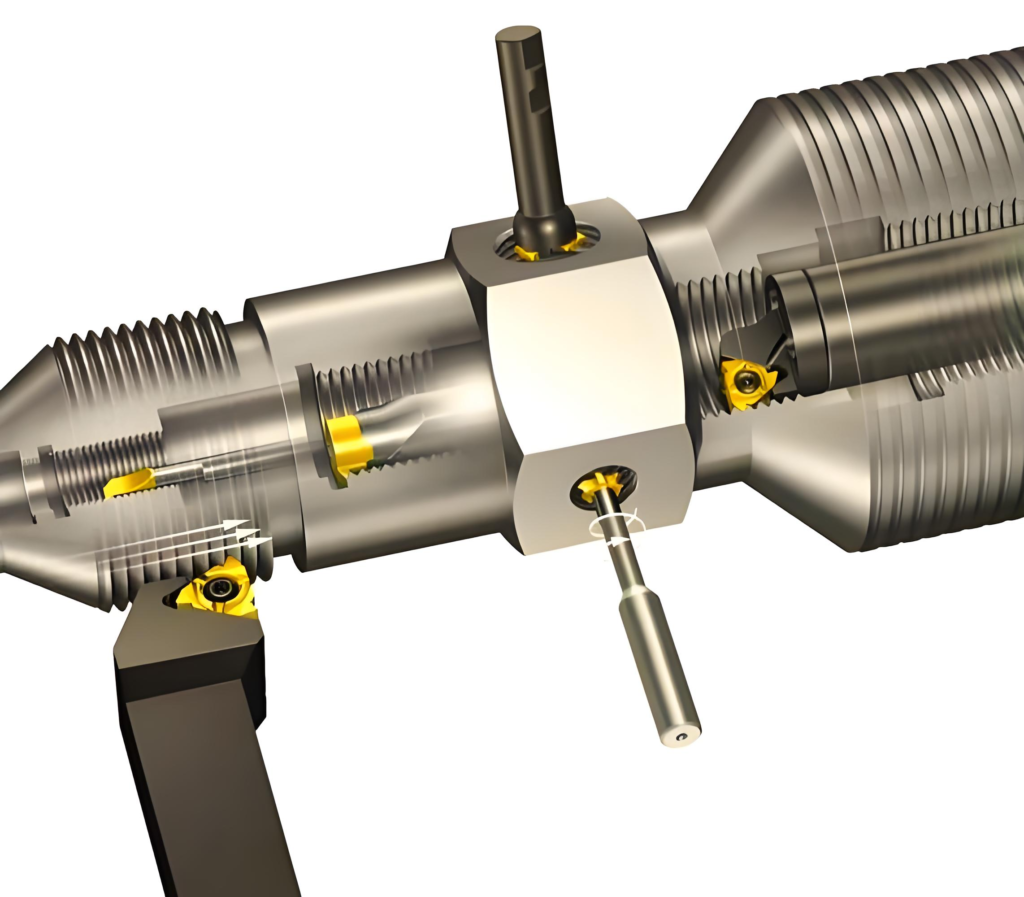
Making Threads: Traditional vs Modern Methods
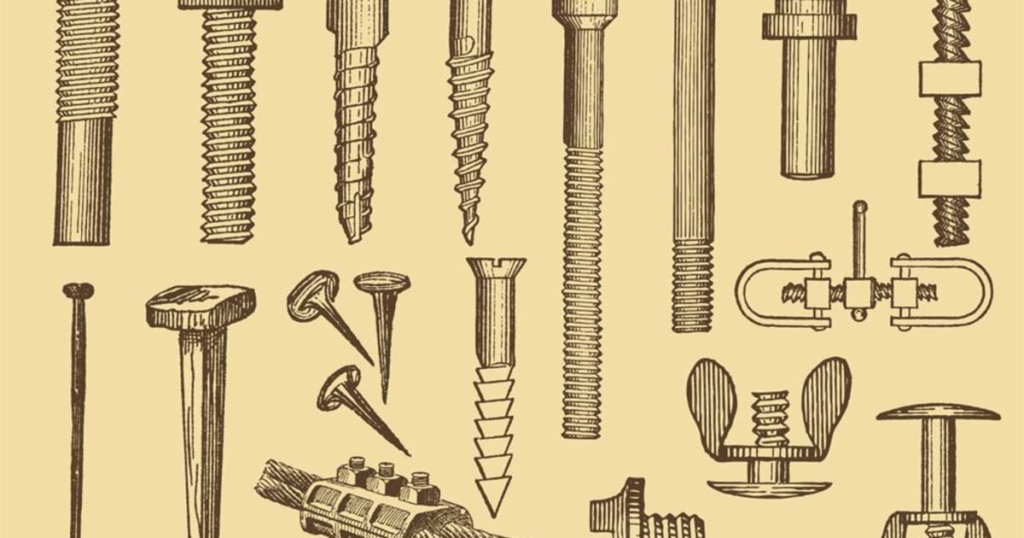
In ancient times, before industrialization, people used hand tools to cut grooves on or inside holes of parts. Manual work delivered low threading precision and also carried a high risk of personal injury.
Following the innovation of CNC machine tools, these tools can now operate automatically, greatly reducing the risk of errors and personal injury.
Thread Making Methods: From Manual Die Cutting to CNC Thread Cutting
As innovation advanced, people began developing new products and materials to make life easier. The transition from manual die cutting to CNC thread cutting has been critical for boosting high-precision productivity.
Thread Machining Design Considerations
Key factors include:
- Material properties
- Thread type
- Application scenario
Key Parameters of Thread Machining
Keep the following parameters in mind when performing thread machining:
Screw pitch
Thread size
Standard thread angle
These parameters affect the mechanical properties of parts.
Pitch, Thread Size and Standard Thread Angle
Pitch: The distance between adjacent threads.
Thread size: The diameter of the thread.
Thread angle: The flank angle of the thread.
There are established standards for these parameters. For example, the standard thread angle is 60°.
Relationship Between Thread Pitch and Thread Strength
Tighter thread pitches deliver higher tensile strength. Wider thread pitches provide better resistance to shear force.
Thread Machining Dimension Specification and How to Select the Right Size
Thread machining must follow specified dimensions strictly. Mismatched thread sizes lead to poor fastening and eventual mechanical failure.
Three Types of Threads in Machining
There are many types of threads for different applications. Here are three common thread types widely used in mechanical machining:
Machine Thread
The threads seen on bolts and screws are called machine threads. They enable firm assembly and fastening with nuts and other fasteners. Machine threads also help extend the service life of mechanical parts.
Internal Thread
Internal threads cut into nut inner surfaces secure bolt connections, and can also be found in pipes and mechanical parts. They mainly include tapered and straight threads.
What is the processing procedure for making internal threads?
- Drill holes with a drilling process
- Tap threads with threading tools
External Thread
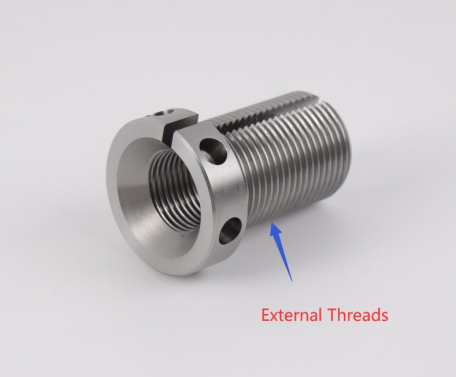
External threads are cut on workpiece outer surfaces, such as bolts and screws. Metric and unified threads are common types, widely used in automotive and machinery industries.
Thread Machining Process: How Does It Work?
Understanding how the thread machining process works is essential for its effective application. Factors such as machinery and materials all affect the practical use of threads.
What Are Threads in Machining and Their Main Applications
In mechanical machining, thread machining refers to cutting helical grooves on the outer or inner surface of a workpiece.
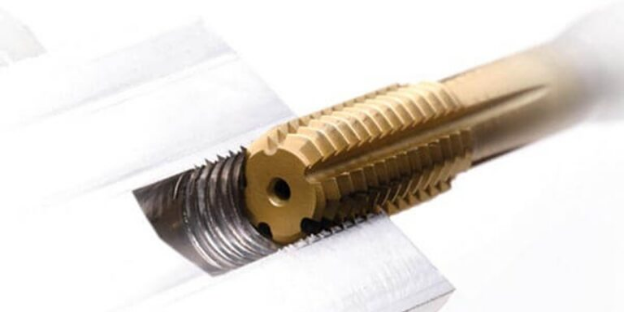
These applications include:
- Secure connections
- Firm component fastening
- Improved durability
- Enhanced structural integrity
Thread Machining in Lathes and CNC Machines
Lathes use single-point tools to directly cut threads; lower precision, for general use only.
CNC machines operate automatically via programming. They deliver higher precision and require less labor.
Difference Between Thread Cutting and Thread Forming
The difference between thread cutting and thread forming is straightforward.
Thread Cutting
- Drill a hole using a drilling process
- Select the appropriate tool
- Start cutting
Thread Rolling vs. Thread Machining
rolling forms threads by material displacement, cutting waste and boosting thread strength, though not fit for all materials. machining creates threads by chip removal, resulting in higher material waste.
Methods of Thread Cutting
These methods include tapping, turning, milling, tap drilling, and grinding.
Tapping
This process is used to machine helical grooves on materials. A tapping tool is applied for thread tapping, which serves to create secure connections.
Thread Turning
Suitable for machining threads on cylindrical workpieces. CNC machines are the optimal choice for high-precision turning in mass production.
Thread Milling
Thread milling forms threads by removing material with a milling cutter.
Excellent surface finish
Internal and external threads
Deep threads
Thread Grinding
Thread grinding is used when extremely high precision is required, such as in the aerospace industry with stringent safety standards. Grinding machines are employed to machine threads.
Comparison of Thread Machining Materials and Technical Difficulty
Thread machining depends on workpiece material and threading tool. Hard materials like high-carbon steel are difficult to machine, risking tool breakage and personal injury.
Thread Cutting Tools: Taps, Dies and More
As discussed earlier, threading tools are indispensable. It is critical to select the right tap or die for the corresponding workpiece material. Proper tool selection saves cost and time, while also improving productivity.
What Are Taps and Dies Used For?
Dies are used for external threads, while taps are used to machine internal threads.
What Is a Starter Tap?
A starter tap is used to begin the primary threading process, hence the name. It is commonly used when machining threads on hard materials or when precise alignment is required.
Common Threading Mistakes to Avoid
The following errors should be avoided in metal thread machining:
- Improper selection of threading tools
- Unsuitable threading equipment
- Inappropriate machining process
- Wrong material choice
What Is Cross-Threading?
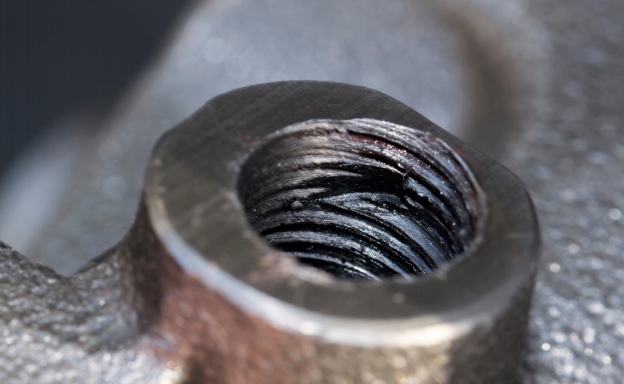
Cross-threading occurs when threads misalign or mesh incorrectly during metal threading. This misalignment results in weak joints and eventual mechanical failure.
How to Prevent Cross-Threading During Machining
Before starting thread machining on mechanical parts, it is necessary to understand key factors to avoid cross-threading. These include:
- Do not apply excessive force when screwing bolts into nuts or other threaded fittings.
- Practice the assembly procedure before working on critical connections.
- Maintain consistent operation throughout the process.
Thread Quality and Inspection
Quality and inspection are closely related. Proper inspection is essential to deliver high-quality products, and this also applies to thread machining. Quality control and inspection procedures must be implemented before, during, and after manufacturing. Before materials are used for thread machining, they should be inspected for defects to avoid problems in the production process.
How to Measure and Ensure Thread Precision
Professional laboratories and quality control engineers are responsible for inspecting thread quality. A variety of tools and techniques are available to evaluate and guarantee precision. The following key parameters need to be inspected:
- The distance between thread crests
- Thread diameter
- Thread angle
When these parameters are well controlled, the produced threads will be accurate and precise.
Tools and Techniques for Measuring Machined Threads
Manufacturing facilities are equipped with dedicated laboratories that contain professional tools for inspecting machined threads, including:
- Thread micrometers for measuring thread diameter
- Optical comparators for inspecting thread angles and other features
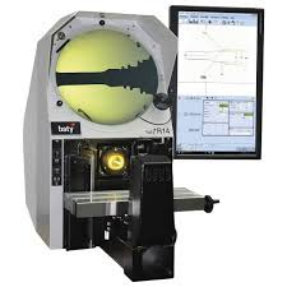
For 3D thread profiles, you can use a Coordinate Measuring Machine (CMM).
Common inspection techniques include:
Visual Inspection: Thread defects are usually visible since they are formed on the surface of the part.
Surface Roughness Measurement: It is used to check thread surface finish and the surface condition of gear teeth.
Applications of Thread Machining
Automotive thread machining makes fasteners for engine blocks, suspension and transmission parts. CNC threaded components offer strong load-bearing performance.
Metal threads are widely used in aerospace for turbine blades, gears and airframe fasteners. Titanium and aluminum alloys are threaded via CNC machining.
In the electronics industry, threaded components serve as connectors, screws, and housing parts for electronic devices such as smartphones.
Threads play a vital role by providing uniform stress distribution, improved structural strength, and reusability. All these threads are manufactured in accordance with established thread standards and specifications.
Mastering Thread Machining
Threading on workpieces and inner holes is essential. Threads boost structural strength for tight, secure component joints. Threads can be made by tapping, grinding and other methods; dedicated threading tools and inspection means ensure part accuracy and precision.
FAQ
Is Thread Machining Expensive?
It depends on many factors, such as the selected material and processing method. Hard materials like high-carbon steel are difficult to machine, making threaded parts more costly.
Key factors affecting thread machining cost include material type, tapping method, tapping equipment, as well as thread inspection tools and techniques.
What Is the Difference Between Dies and Taps in Thread Cutting?
Dies and taps are two distinct threading tools with different functions. Dies are used to cut threads on the outer surface of parts, while taps are used to machine internal threads inside holes of mechanical components.
How to Machine Threads on a CNC Machine?
Follow these steps:
- Select the appropriate threading tool according to the workpiece material
- Clamp and fix the workpiece
- Set feed parameters in the CNC software program
- Start the threading process
Thread Casting vs Thread Machining
Thread casting forms threads during molding; thread machining cuts threads on finished parts.