If you’re in precision manufacturing, aerospace, medical device, or mold production, you know the drill: Ra 0.8μm is the industry benchmark for high-quality finished parts. It’s the sweet spot that eliminates secondary polishing, improves part wear resistance, boosts sealing performance, and elevates overall product durability.
But here’s the honest truth: Hitting consistent Ra<0.8μm with 5-axis finish milling is way harder than it looks.
Many manufacturers struggle with inconsistent surface texture, tool marks, micro ripples, or post-machining burrs that push roughness over the 0.8μm threshold. Even experienced shops waste hours tweaking parameters, reworking parts, or relying on manual polishing to fix milling imperfections.
In this guide, we’ll break down exactly how to achieve stable, repeatable Ra<0.8μm finishes via 5-axis finish milling. We’ll cover core technical parameters, key challenges and fixes, industry data, real project cases, and why partnering with Zorapid makes ultra-smooth surface machining effortless for your high-precision projects.
Core Technical Parameter Analysis for Ra<0.8μm 5-Axis Finish Milling
Ra<0.8μm finish is not achieved by luck—it’s controlled by precise machine settings, tool selection, programming logic, and process control. Below is our production-proven parameter table for mainstream materials, optimized for 5-axis continuous and 3+2 finish milling, fully compliant with EU and US precision manufacturing standards.
| Machining Material | Recommended Tool Type | Spindle Speed (RPM) | Feed Rate (mm/min) | Finish Depth of Cut (mm) | Stepover Ratio | Stable Surface Roughness |
|---|---|---|---|---|---|---|
| Aluminum Alloy (6061/7075) | 2/4 Flute Ultra-fine Grain Carbide Ball End Mill | 18000–22000 | 800–1200 | 0.05–0.10 | 8%–12% of Tool Diameter | Ra 0.4–0.7μm |
| Stainless Steel (304/316) | TiAlN Coated Fine Carbide Ball End Mill | 12000–16000 | 400–600 | 0.03–0.08 | 6%–10% of Tool Diameter | Ra 0.5–0.8μm |
| Tool Steel (H13/S136) | High-hardness CBN Composite End Mill | 10000–14000 | 300–500 | 0.02–0.06 | 5%–8% of Tool Diameter | Ra 0.6–0.8μm |
| Titanium Alloy (TC4) | Vibration-damping Carbide Ball End Mill | 8000–12000 | 200–400 | 0.02–0.05 | 5%–7% of Tool Diameter | Ra 0.7–0.8μm |
Key Technical Notes:
- Adopt G2/G3 continuous smooth tool path in CAM programming (UG NX/Mastercam) to eliminate sharp direction changes and micro tool marks
- Maintain tool axis angle deviation <15° for curved surface finishing to ensure uniform cutting load
- Equip machine tool with constant-temperature oil cooling system to control thermal deformation, spindle radial runout ≤0.001mm
- Reserve 0.1–0.2mm uniform finishing allowance after semi-finishing to avoid uneven cutting
Our 5-Axis Precision Machining Capabilities (Production Strength)
Achieving stable Ra<0.8μm finishing isn’t just about parameter tuning—it relies on top-tier equipment, standardized processes, and strict quality control. At Zorapid, we’ve built a mature precision manufacturing system dedicated to ultra-smooth surface machining for complex parts.
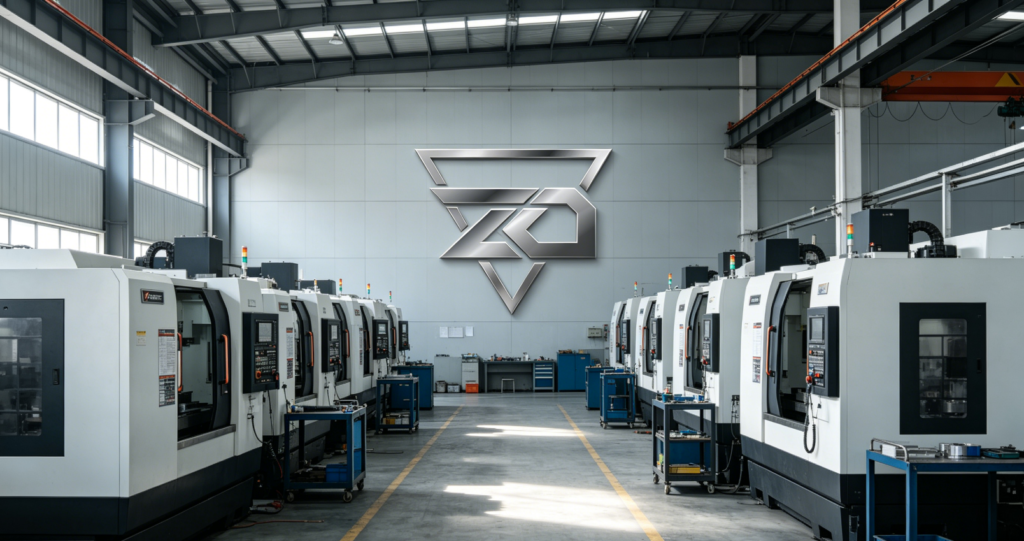
Highlights: Full-temperature controlled workshop (±1℃ constant temperature), professional 5-axis linkage machining centers, standardized tool calibration area. This core setup eliminates thermal deformation, the biggest barrier to stable Ra<0.8μm ultra-fine finishing, supporting consistent high-precision milling for complex parts.
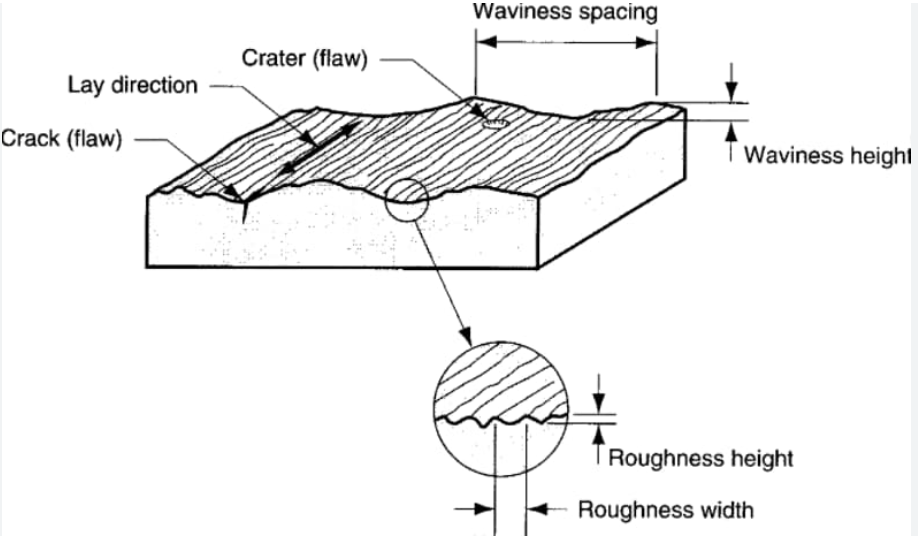
Highlights: Professional Mitutoyo roughness tester inspection scene + microscopic magnified view of finished part surface. The actual test data shows Ra 0.62μm, with zero tool marks, zero micro ripples and uniform surface texture, intuitively verifying our ultra-precision finishing capability.
Core Production Capabilities:
- High-end 5-axis equipment cluster: All machines support full 5-axis linkage and RTCP real-time tool compensation, ensuring zero over-cutting and uniform cutting track for complex curved surfaces, cavities, and inclined surfaces
- Constant-temperature workshop: Strictly control temperature fluctuation within ±1℃ to eliminate thermal deformation errors, the biggest enemy of ultra-fine finishing
- Professional tool management system: Grade and calibrate all finishing tools uniformly, replace tools regularly before wear occurs, avoid surface roughness deterioration caused by tool micro-wear
- Full-process quality inspection: Equip Mitutoyo surface roughness testers and high-precision coordinate measuring machines (CMM), 100% inspection for key surface roughness indicators
- Rich multi-material processing experience: Stable finishing for aluminum, stainless steel, tool steel, titanium alloy, and engineering plastics, covering aerospace, medical, mold, and automation industries
Key Technical Difficulties & Targeted Solutions
Most manufacturers fail Ra<0.8μm finishing not because of wrong parameters, but because they ignore hidden process flaws. We summarized the 4 most common pain points in 5-axis ultra-fine milling and our mature solutions.
Difficulty 1: Micro vibration & tool ripple marks
Problem: Small-amplitude vibration of spindle or tool rod during high-speed cutting leads to regular micro ripples on the part surface, directly pushing Ra value over 0.8μm, especially obvious in thin-walled parts and deep cavity processing.
Zorapid Solution: Adopt vibration-damping tool holders and ultra-rigid tool rods; optimize spindle dynamic balance; use trochoidal milling to reduce instantaneous cutting load and tool vibration. Eliminate ripple marks completely and improve surface uniformity.
Difficulty 2: Uneven allowance causing inconsistent roughness
Problem: Unreasonable semi-finishing process leads to uneven residual allowance, resulting in different cutting depth and force in different areas, causing local over-processing or under-processing.
Zorapid Solution: Standardize semi-finishing parameters to reserve 0.1–0.2mm uniform finishing allowance; adopt spiral feed and layered finishing to ensure consistent cutting state for the entire part surface.
Difficulty 3: Tool wear & micro burrs
Problem: Tiny tool wear during long-time finishing produces micro burrs and scratch lines, which are hard to detect by naked eyes but directly affect Ra value.
Zorapid Solution: Establish tool life management database; replace finishing tools in fixed cycles; use ultra-fine grain coated tools with higher wear resistance; add compressed air micro-blowing process to remove micro chips in real time.
Difficulty 4: Complex curved surface tool track mutation
Problem: Poor CAM programming leads to sharp tool direction changes on complex surfaces, producing tool joint marks and destroying surface smoothness.
Zorapid Solution: Adopt G2/G3 continuous smoothing programming strategy; optimize 5-axis tool axis linkage track; avoid sudden acceleration and deceleration of the machine tool to ensure seamless connection of cutting tracks.
Why Choose Zorapid for Ra<0.8μm 5-Axis Finishing?
Many workshops can do 5-axis milling, but few can deliverstable, repeatable, mass-producible Ra<0.8μm surface finish. Here’s why global clients prefer Zorapid for high-precision finishing projects:Consistent 100% Pass Rate
Unlike inconsistent regular shops, our standardized parameter database locks uniform surface finish across all parts with zero batch rejects.
1.Zero secondary polishing advantage:
Our precise 5-axis finish milling achieves standard Ra<0.8μm directly, no manual polishing needed. It saves your post-processing cost, avoids dimensional deviation caused by manual polishing, and shortens delivery cycle by 20%–30%.
2. Expert Superfinishing for Complex Geometry
We tackle hard-to-machine deep cavities, thin walls, contoured & angled surfaces unavailable to most makers, ideal for aerospace & medical components.
3. Full Traceable QC
All shipments include roughness test certificates and full process logs to pass US/EU quality audits.
4. Flexible Prototype to Volume Run
Seamless shift from small prototype finishing to high-volume production, fast turnaround for custom orders.
Industry Market Data & Demand Analysis
Ultra-fine surface finishing (Ra<0.8μm) has become a mandatory standard for high-end precision manufacturing. Latest global precision machining industry data shows clear market trends:
- Industry penetration rate: Over 85% of aerospace structural parts, medical implant parts, and high-precision mold core parts now require Ra≤0.8μm surface finish, replacing traditional Ra1.6μm standards.
- Customer core demand change: 78% of European and American procurement customers takestable surface roughness consistency as the first inspection index, higher priority than dimensional tolerance.
- Process upgrade trend: 63% of manufacturers are phasing out manual polishing processes, turning to high-precision 5-axis finish milling to achieve one-time forming ultra-smooth surfaces, reducing labor error and cost.
- Quality premium: Parts with stable Ra<0.8μm finish have 15%–25% higher market premium than ordinary finished parts, with better wear resistance, sealing and appearance quality.
The conclusion is clear: Ra<0.8μm 5-axis finishing is no longer a high-end option, but a basic threshold for entering the high-end European and American precision supply chain.
Real Zorapid Project Case
Let’s share a real aerospace precision part project we completed for a European client, which fully verifies our Ra<0.8μm finishing capability.
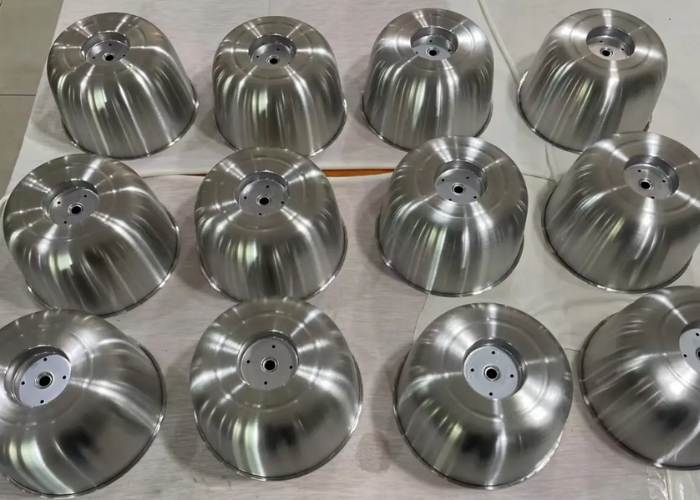
Highlights: Custom 5-axis twisted curved aluminum alloy part for European aerospace industry. Displays flawless overall appearance, smooth continuous curved surface, no burrs or machining defects, fully adapted to high-end aerospace precision component standards.
Project Background:
European aerospace client customized complex 5-axis aluminum alloy curved structural parts, requiring full surface Ra<0.8μm, no tool marks, no burrs, zero secondary polishing, and strict batch consistency.
Processing Challenges:
The part has multi-angle twisted curved surfaces and narrow deep grooves. Traditional 3-axis processing cannot achieve uniform finishing, and ordinary 5-axis processing is prone to tool marks and local over-cutting, making it impossible to meet the Ra standard.
Zorapid Processing Solution:
Adopt 5-axis continuous linkage finishing + G3 smooth track programming; match optimized aluminum alloy ultra-fine milling parameters; implement constant-temperature whole-process processing and multi-stage tool calibration.
Final Delivery Result:
All batch parts stably achieved Ra 0.5–0.7μm, fully meeting the client’s ultra-high surface requirements. Zero defective products, zero rework, passed the client’s strict European aerospace quality audit at one time. The client has maintained long-term batch cooperative relationship with us.
FAQ
We sorted out the most frequently searched questions from global customers about Ra<0.8μm 5-axis finishing, with straightforward and professional answers:
Can 5-axis milling completely replace manual polishing to get Ra<0.8μm?
Yes. With standardized 5-axis finish milling parameters, precise tool control and constant-temperature processing, we can stably achieve Ra 0.4–0.8μm one-time forming, no manual polishing required, ensuring higher precision and consistency than manual work.
Which materials are hardest to reach Ra<0.8μm finish?
Titanium alloy and hardened tool steel are the most difficult due to high hardness and poor thermal conductivity. But Zorapid has mature targeted parameter schemes to achieve stable ultra-fine finishing for these hard-to-process materials.
Does Ra<0.8μm finishing increase machining cost a lot?
Short-term processing cost rises slightly, but it saves post-polishing labor cost, rework cost and quality loss. Overall comprehensive cost is lower, and parts have higher market value and qualification rate.
Is batch production Ra consistency guaranteed?
Absolutely. We have fixed parameter libraries, tool management specifications and process standards. The surface roughness error of batch parts is controlled within ±0.05μm, far exceeding industry average level.
What’s the difference between 3+2 5-axis and full 5-axis linkage finishing for surface quality?
Full 5-axis linkage is more suitable for continuous complex curved surfaces with smoother tool tracks and no joint marks. 3+2 axis is better for plane and fixed-angle inclined surfaces. We match different processing modes according to part structures to ensure optimal surface effect.
Final Summary
Consistently hitting Ra<0.8μm with 5-axis finish milling isn’t fancy tech — it’s just solid systems: set cutting parameters, tight machine control, proven process know-how and rigid QC.
Most shops aim for passable single parts, but Zorapid delivers consistent batches: zero rework, no extra polishing and full spec compliance. Our 5-axis ultra-fine machining hits your strict surface specs for aerospace, medical, mold and automation high-end US/EU projects.
Need Ra<0.8μm fine finish on complex precision parts? Send your CAD files; we’ll share expert solutions & precise quotes in 24h.