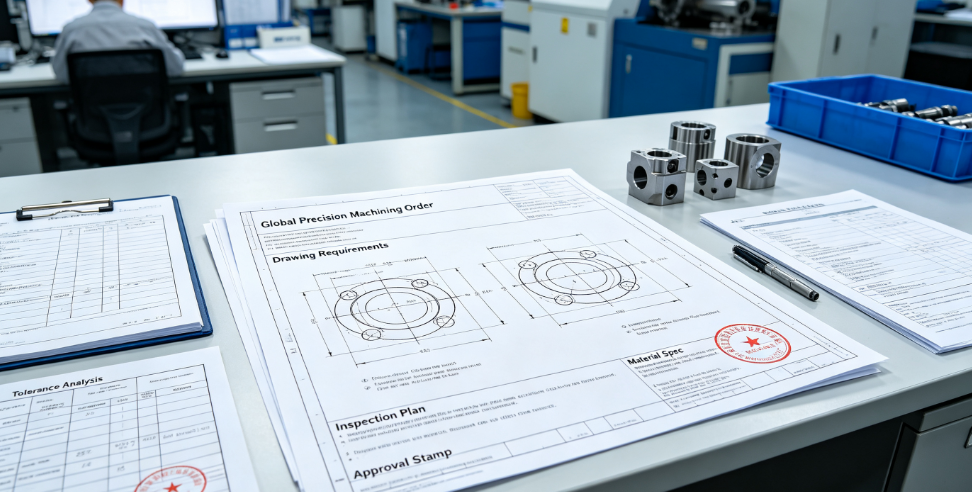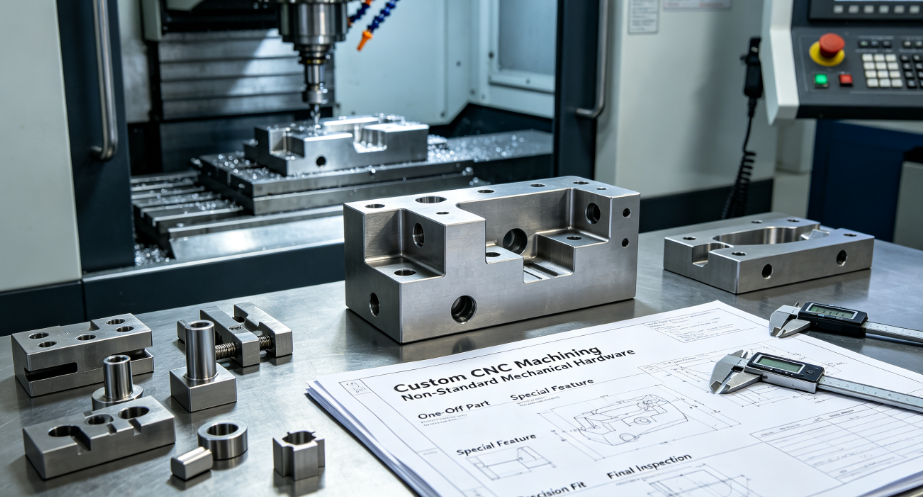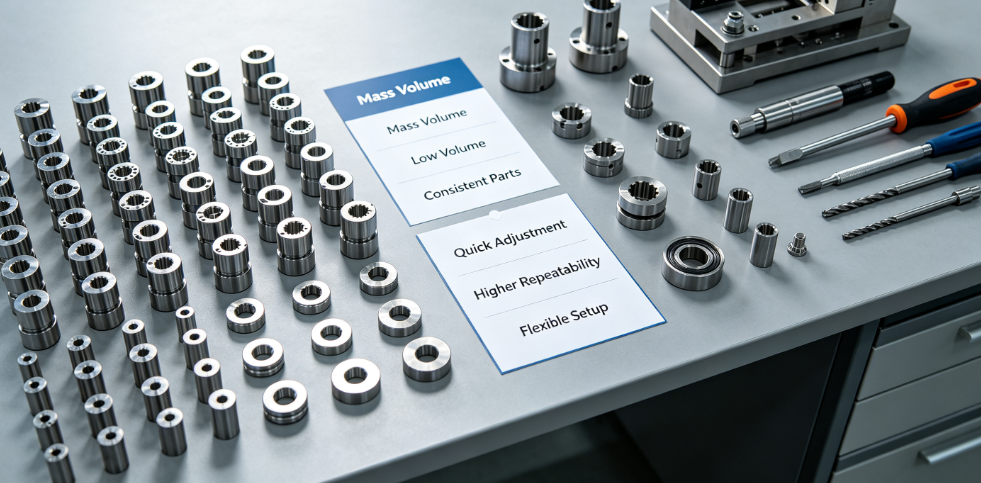
On-demand manufacturing is a rapid manufacturing method that supports small-batch production and shortens lead times. Parts are produced only when needed, with no waiting for molds or batch setup.
In traditional CNC machining, the production cycle is often prolonged due to limitations of cutting tools, mass production schedules and suppliers. It is usually constrained by the following factors:
- First, tools need to be designed and manufactured.
- Suppliers arrange work in batches, which increases waiting time.
- Minimum order quantities also delay small or urgent production projects.
on-demand workflow eliminates these limitations for the following reasons:
Parts are directly manufactured from CAD data via CNC machining or 3D printing, with instant quoting and programming available.
Machining can start in parallel, reducing idle time between process steps.
This approach is highly practical. For rapid prototyping, bridge production and low-volume parts, you can modify the design without scrapping molds. You can also produce only the required quantity, effectively reducing inventory pressure.
- How does on-demand manufacturing shorten the production cycle?
- What are the similarities and differences between CNC machining and 3D printing in terms of tolerance, cost, geometry and production volume?
- Help you select a reliable manufacturing partner for your custom parts projects.
What is on-demand manufacturing? When can it solve production bottlenecks?
On-demand manufacturing via CNC machining and 3D printing helps shorten lead times for small-batch production, eliminating tooling delays and batch restrictions.
- For rapid production needs.
- the efficiency of small-batch production matters more than unit cost reduction in mass production.
What is the difference from the traditional production model
From a production perspective, the main differences lie in project initiation and workflow:
- No mold preparation is required before machining or 3D printing starts.
- Not restricted by batch size or minimum order quantities.
- Digital workflows greatly reduce setup time.
- Parts are produced directly from CAD data.
- The cost structure shifts from mold investment to per-unit part cost.
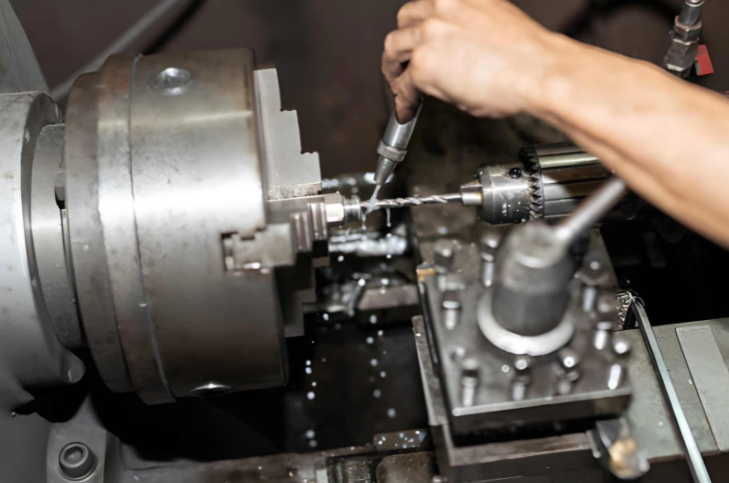
Positioning in Modern Supply Chain
- Prototyping at the design verification stage
- Bridge production prior to full-scale manufacturing
- Low-volume end-use components with unstable demand
- Spare parts for maintenance and repair operations
- Custom components with frequent design changes
Reduce the risks of inventory overstock and overproduction, while also speeding up responses to engineering changes.
Engineers shift to on-demand production.
Engineers typically switch workflows when traditional processes cause delays or cost issues:
- Mold manufacturing lead times delay project schedules.
- Design iterations are still ongoing.
- Production volume is too low to justify mold investment.
- Supply chain delays affect component availability.
- Parts are urgently needed for testing or assembly.
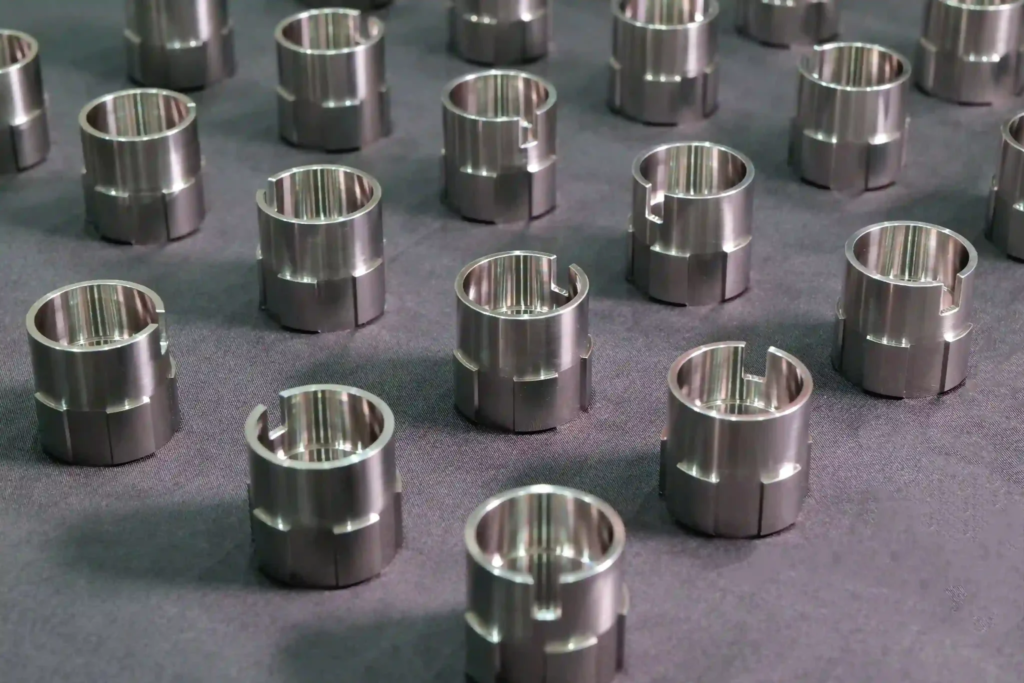
How does on-demand manufacturing shorten project delivery lead time?
On-demand manufacturing adopts CNC machining and digital workflows, helping shorten the lead time of actual production runs.
It allows engineers to move directly from CAD design to finished parts without high costs, as well as limitations from tooling and suppliers.
Eliminate Tooling and Setup Delays
In CNC machining and rapid manufacturing workflows, tooling and setup are usually the main causes of delays. In on-demand production:
- No need to develop molds, dies or fixtures.
- Machining or 3D printing directly from CAD data.
- Minimal setup limited only to cutting tools and workholding
- No external mold development lead time or approval procedures.
It eliminates one of the most time-consuming stages in traditional production. Production can start immediately once the design is finalized.
Digital workflow from CAD to production
The entire workflow remains digital from start to finish, reducing delays caused by data processing and communication.
- CAD files are directly used for CAM toolpath generation.
- A single data source is adopted for both design and machining stages.
- No manual drawing or blueprint interpretation is required.
- Design changes can be updated much faster.
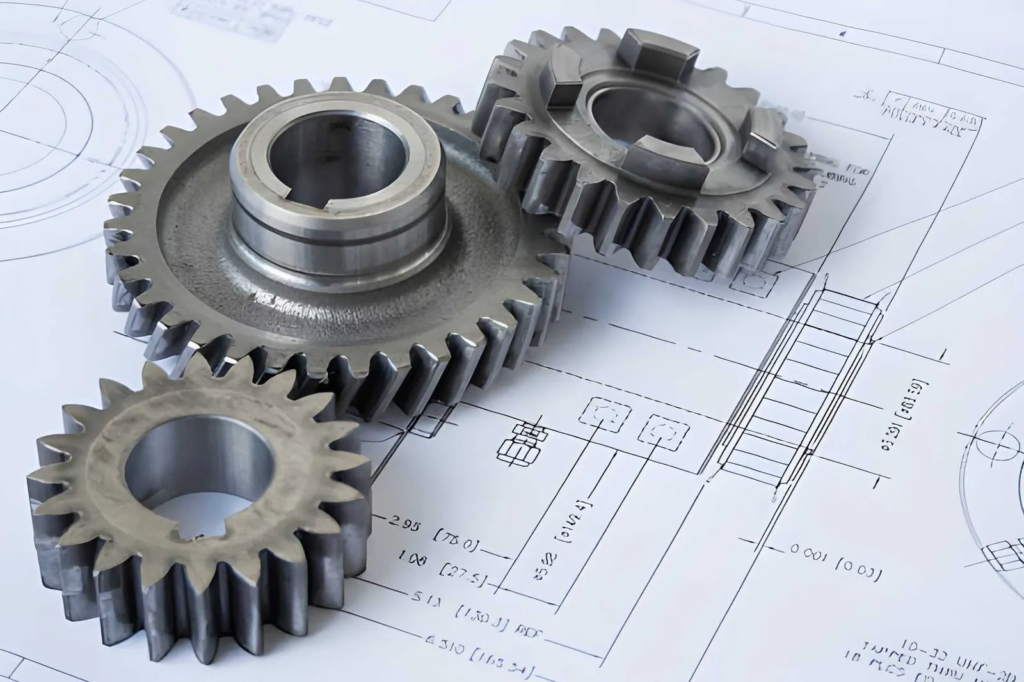
Parallel Processing & Rapid Iteration
Work phases do not proceed sequentially but overlap with one another, greatly shortening the overall project timeline.
Quotation, programming and material preparation proceed simultaneously.
Design modifications can be completed without interrupting the production workflow.
It shortens the waiting time between design approval and machining.
Enable faster verification cycles throughout the development process.
Reduce supplier communication links.
- Direct CAD file uploads replace cumbersome manual data exchange.
- Instant automated quoting shortens response time.
- Fewer clarification steps between teams.
- Accelerate approval speed before production kick-off.
Case Study: Shortening Lead Time for Small-Batch CNC Machining Projects
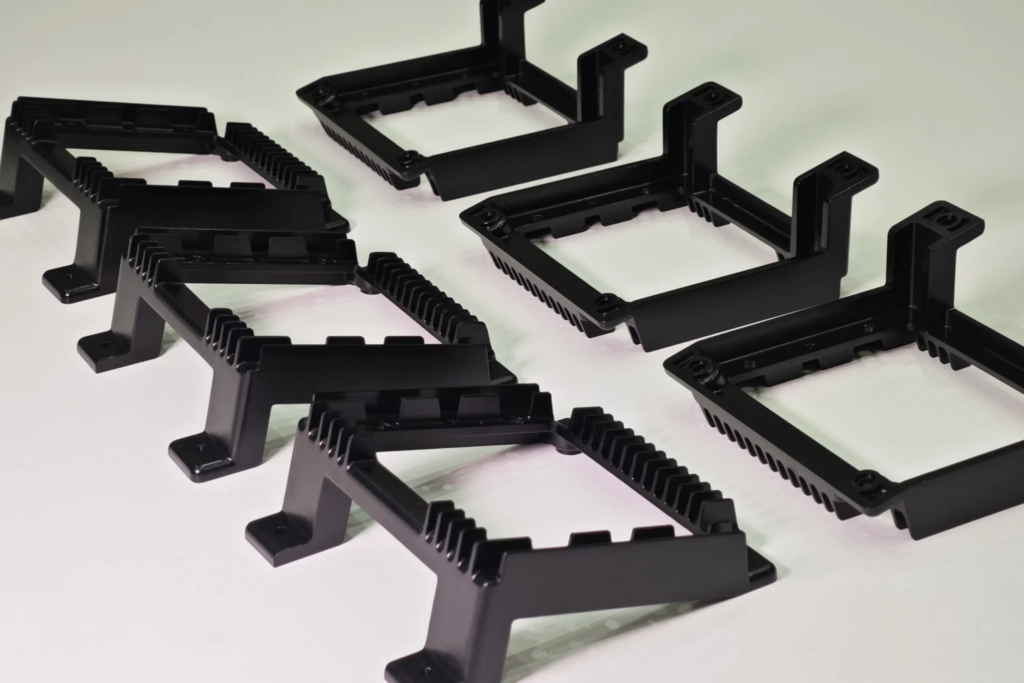
Problem: Complex parts with tight lead time
In a small-batch CNC machining project, a LiDAR customer required a complex mounting bracket made of 6063 aluminum alloy. The part demanded multiple clamping operations under strict delivery deadlines, which increased machining time and coordination workload.
Solution
Zorapid optimized the production workflow by operating multiple CNC machine tools in parallel. This shortens the total machining time while maintaining consistent process control across different procedures.
Result: Delivered Within 3 Days as Required
The parts were delivered in just three days, fully meeting expectations.Tolerance is ±0.1 mm with surface roughness Ra 3.2, featuring fine surface finish and uniform black anodized coating.The delivery lead time was reduced by approximately 40% to 50% via parallel CNC machining.
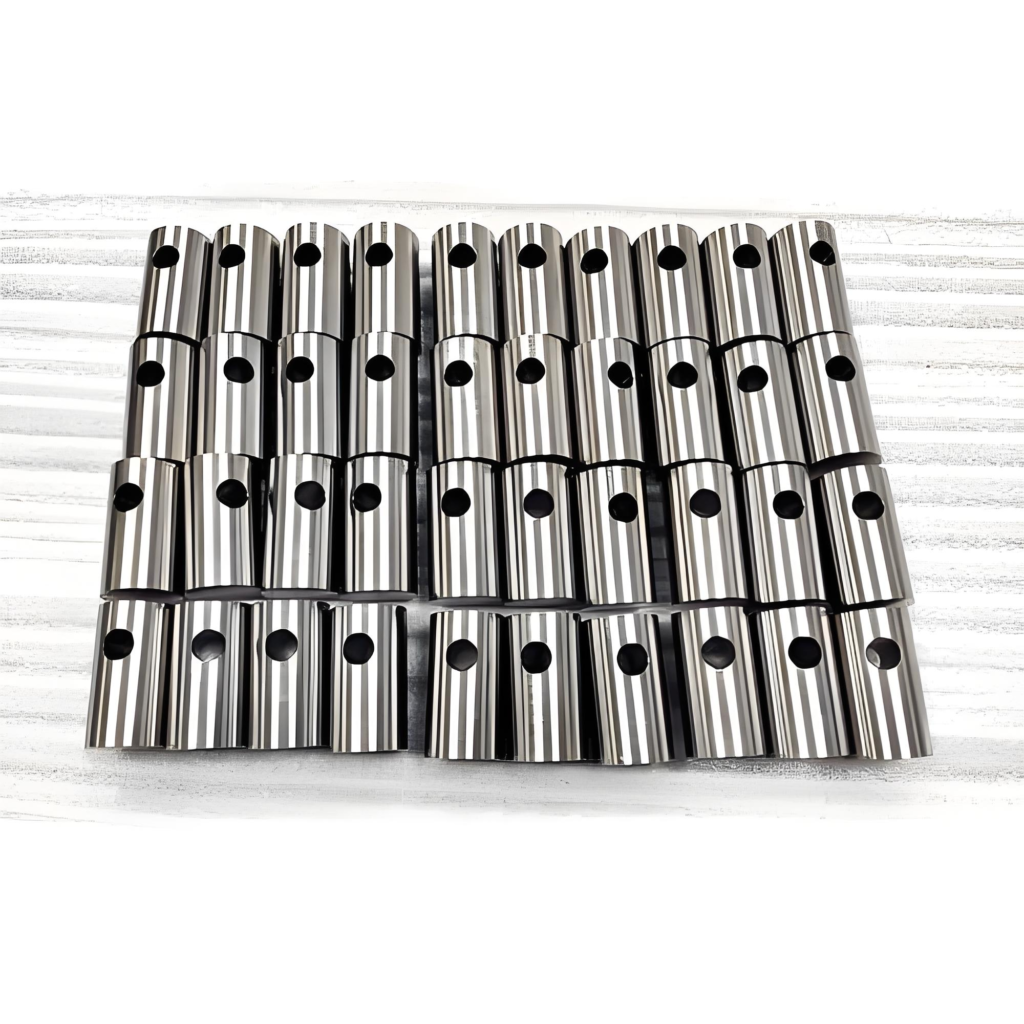
Zorapid’s solution met the customer’s schedule requirements without compromising functionality. It also satisfied all surface finish requirements, and our full-process comprehensive support ensured complete customer satisfaction.
Flexible Manufacturing Solves the Challenges of Small-Batch Production
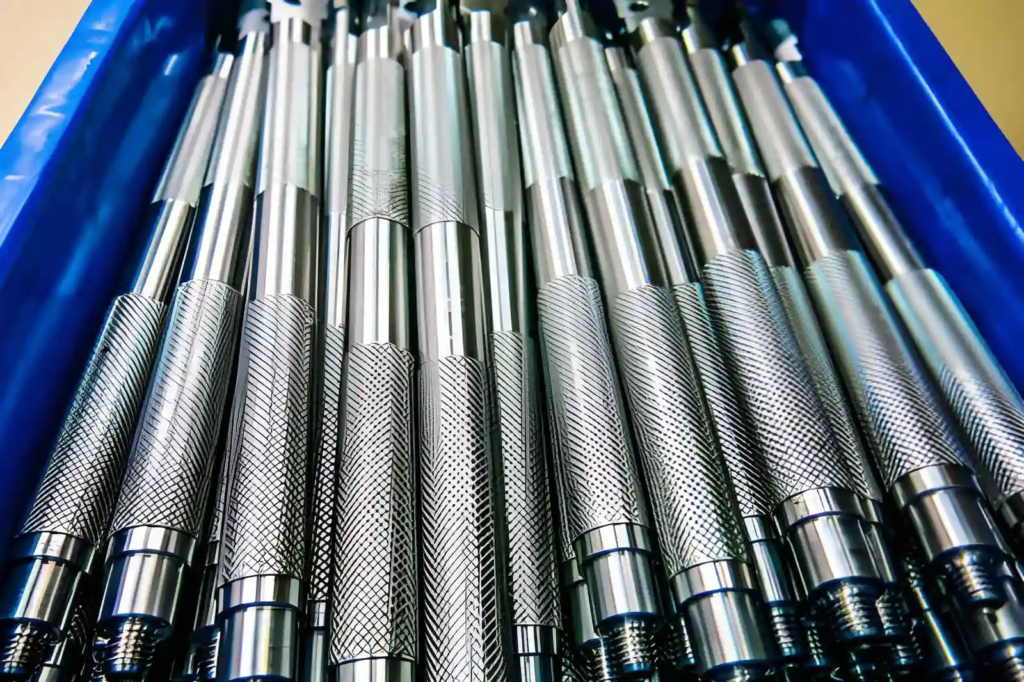
Small-batch CNC machining usually leads to higher costs and longer delivery lead times due to limitations in tooling and production volume.
- When production relies on molds, mass production and fixed setups, small-batch manufacturing becomes challenging.
- Flexible manufacturing breaks these limitations. Adopting a production-first approach enables effective control of costs and delivery lead times.
Why Low Volume Increases Actual Production Costs
- Low production volume raises unit costs due to higher mold amortization.
- Setup time (programming, fixturing, calibration) has to be repeated for every job.
- Inefficient low-batch production results in wasted machine hours and material waste.
- Supplier minimum order quantity requirements lead to overproduction beyond actual demand.
For example, in practice
- A CNC fixture valued at $2,000 typically adds $200 to the unit cost when produced in a batch of 10 pieces.
- If the order quantity increases to 100 pieces, the unit cost drops to only $20. This clearly shows that quantity directly affects pricing.
Control costs without molds or minimum order quantity restrictions.
- No upfront investment in molds, dies or dedicated fixtures.
- Part pricing is allocated based on machining time and material costs.
- Order exact quantities to avoid overstock inventory.
- Reduce capital tied up in idle inventory and tooling assets.
On-demand production eliminates the cost barrier of mold fabrication. You only pay for machining time, with no need to factor in production volume assumptions.
Prototype Verification Before Production Commitment
Functional prototype manufactured with final production processes
Dimensional inspection against actual tolerances before scaling up.
Early detection of machining, assembly or fitting issues.
Direct feedback loop between design and manufacturing.
| Verifying interference fit accuracy within ±0.05 mm before full production can avoid scrap parts. This reduces risks throughout the entire process from conceptual design to mass production. |
Selection of Functional Manufacturing Processes
CNC machining with a tolerance of ±0.01 to 0.05 mm, suitable for metal parts.
Additive manufacturing enables rapid iteration of complex internal geometries.
Precision casting should be avoided unless the production volume is sufficient to offset mold costs.
Select the manufacturing process based on tolerance requirements, geometric complexity and production quantity.
Selecting the Right Machining Process: CNC Machining vs 3D Printing
In rapid manufacturing, CNC machining and 3D printing are commonly used for small-batch production. The selection is usually based on tolerance, cost, lead time and application requirements.
When to Use CNC Machining for High-Precision Parts
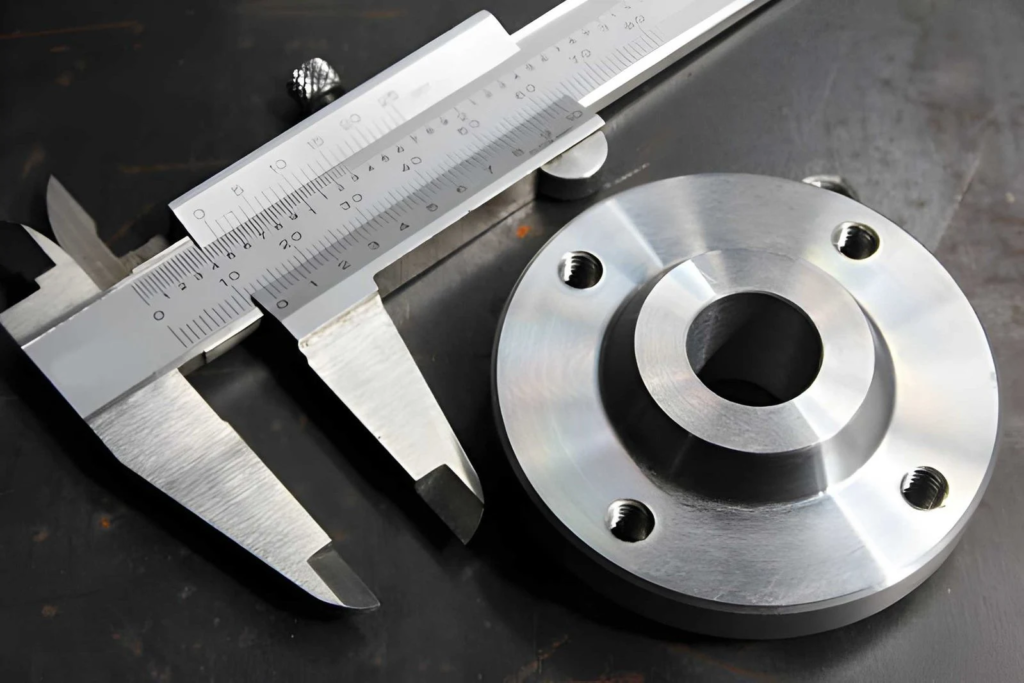
Accuracy can reach approximately ±0.01 to 0.05 mm.
Delivers precise results, ideal for shafts, bearings and assemblies.
Maintains dimensional stability of multiple components.
Achieves superior surface finish with minimal post-processing required.
When Is 3D Printing More Suitable for Complex Geometries
3D printing is highly useful when geometries are difficult to machine. It is best suited for prototyping as well as non-critical and simple features.
- It enables the formation of internal channels and lattice structures without molds.
- Reduces setup time for complex shapes.
- Supports rapid iteration in the early design stage.
- Requires no cutting tools or multiple setups.
Cost vs Accuracy Trade-off
Although CNC machining has a higher unit cost, it delivers superior precision.
3D printing reduces costs for small-batch production and prototyping.
CNC machining costs rise with increased setup complexity and longer machining time.
The cost of 3D printing depends on material consumption and printing duration.
Material & Mechanical Performance Considerations
CNC machined parts retain full material strength and isotropic properties.
3D printed parts may exhibit layer-based strength variations.
Metals such as aluminum, steel and titanium are well-suited for CNC machining.
Certain 3D printing materials require post-processing to enhance structural strength.
How to Choose the Right On-Demand Manufacturing Partner
Choosing the right CNC machining partner for small-batch production directly affects lead time, part precision and repeatability. A reliable partner should meet your design and tolerance requirements, deliver components on schedule, and maintain consistent results across different production batches.

Equipped with capabilities in CNC machining, 3D printing and rapid prototyping.
3-axis, 4-axis and 5-axis CNC machines for complex features.
Production uses actual production-grade materials, not just sample materials.
3D printing serves not only for demonstration but also for functional validation.
The factory supports both prototyping and small-batch production.
Has extensive experience in high-precision machining.
Maintains critical dimensional tolerances of ±0.01 to 0.05 mm.
Consistently preserves hole position and concentricity during assembly.
Delivers repeatable results across multiple components.
Provides inspection data as required.
| Deliver actual functional parts, not just promotional showcases on the website. Precision only matters when it can be consistently reproduced in production. |
Quotation Speed & Engineering Support
Slow quotation will hold up the entire project schedule. A reliable manufacturing partner helps resolve issues before machining starts.
- Get quotations on the same day.
- Provide clear feedback on machining risks in your design.
- Offer suggestions to reduce machining time or tool changes.
- Identify features that may increase costs or cause delays at an early stage.
Quality Control and Scalability
Inspect the first article before full production proceeds.
Perform in-process inspection on critical features.
Maintain consistent dimensions across all batches.
Enable production scaling without compromising process quality.
Detailed Summary
At Zorapid, on-demand CNC manufacturing helps you shorten production lead times and eliminate mold delays and lengthy setup cycles.
We support small-batch production with no minimum order quantity. This approach delivers high practicality for prototyping, custom parts and low-volume manufacturing.
It enables a faster transition from design to finished products, while keeping cost and quality fully under control.
Contact Zorapid for design guidelines and custom parts machining solutions.
If your project requires fast delivery, design support and reliable production with no minimum order quantity, feel free to partner with Zorapid.
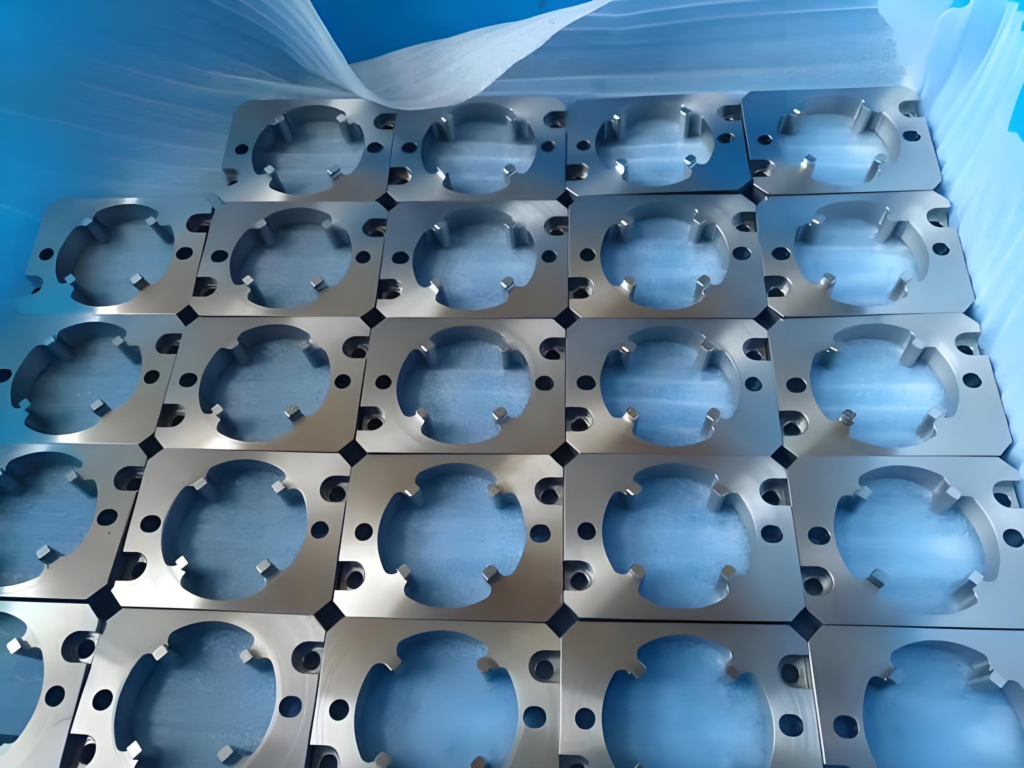
Zorapid handles small-batch production tailored to your requirements, fabricating prototypes and functional parts via CNC machining, 3D printing, and more than 20 finishing processes.
Upload your CAD files to receive manufacturability feedback, tolerance review and estimated lead time. Our engineering team will identify machining risks, propose design optimization suggestions if needed, and deliver production-ready solutions based on your part geometry and material specifications.
We conduct a technical review first, and you will get an instant free online quote based on your actual design data.
FAQ
When should I use on-demand manufacturing instead of traditional methods?
On-demand manufacturing is the ideal choice when lead time is critical and production volume is low. It is perfectly suited for prototyping, custom parts and small-batch production. Waiting for mold fabrication and mass production scheduling will delay project progress.
Can on-demand manufacturing meet strict tolerance requirements?
Yes, CNC-based on-demand manufacturing can achieve tight tolerances. In most cases, tolerances of approximately ±0.01 to ±0.05 mm are achievable, depending on machine setup, cutting tools and materials.
Is this method cost-effective for recurring small-batch orders?
Yes, it can be cost-effective under the following conditions:
- Low production quantity
- No mold tooling costs required
You only pay for the parts you produce, with no need to invest in molds, dies or mass production runs.