Published by Zorapid
Most metal manufacturers run disconnected quality control for every production line: separate checklists, different inspection gauges, inconsistent sampling rules, and independent QA teams for CNC machining, sheet metal, mold core/cavity, EDM, heat treatment and finishing. This fragmented setup creates conflicting measurement results, hidden non-conformances, failed third-party audits, variable part quality across your assembly bill of materials, and costly rework after full batch production.
At Zorapid, we built a single enterprise-wide unified QC platform with identical inspection criteria, calibrated metrology equipment, digital traceability and standardized sampling protocols across our 5-axis CNC, sheet metal laser/bend/rivet, injection mold, vacuum heat treat, anodizing and finishing production cells. One set of global standards governs every metal part regardless of process, alloy or end-use industry. Today we break down our full unified QC framework, competitor fragmented QC weaknesses, material-specific inspection thresholds, verified customer case results, lead time benchmarks and 2026 global metal fabrication quality trends.
In-Depth Professional Process Technical Analysis
Why Fragmented Line-by-Line QC Fails Metal Fabrication
- Datum & measurement offset mismatch Separate lines use unique zero points, uncalibrated hand tools and different CMM programs; identical dimension prints get slightly different pass/fail calls across CNC vs sheet metal.
- Inconsistent AQL sampling rules Mold shops may sample 1/10 parts, sheet metal samples 1/20, CNC runs 1/5—low sampling hides drift on long unattended batches.
- Disconnected digital record storage QA logs stored in separate spreadsheets or local line computers; impossible to pull full batch traceability for audits.
- Different surface roughness, flatness, hardness acceptance bands One line accepts Ra0.8μm, another requires Ra0.4μm for identical drawing specs; mixed assembly fit & cosmetic defects emerge post-kitting.
- No cross-process corrective action loop A bend tolerance drift cannot feed back to laser nesting programs; tool wear on CNC is not flagged to heat treat teams for stress adjustment.
Zorapid Unified End-to-End QC System Full Structure
Module 1: Master Centralized QC Standard Library
One locked digital database hosts universal acceptance criteria tied directly to drawing tolerances, split into 4 controlled severity levels:
- Critical (CR): Safety, regulatory, fit function (±0.003–0.008mm tolerance, medical/aerospace contact surfaces)
- Major (MAJ): Assembly performance, mold shut-off, EMI shielding gaps
- Minor (MIN): Cosmetic non-contact surfaces, non-critical dimensional bands
- Incidental (INC): Trivial surface marks with zero functional impact Every production line pulls identical CR/MAJ/MIN/INC limit values for the same print tolerance—no line manager discretion to loosen specs.
Module 2: Uniform Metrology Calibration Cycle Across All Lines
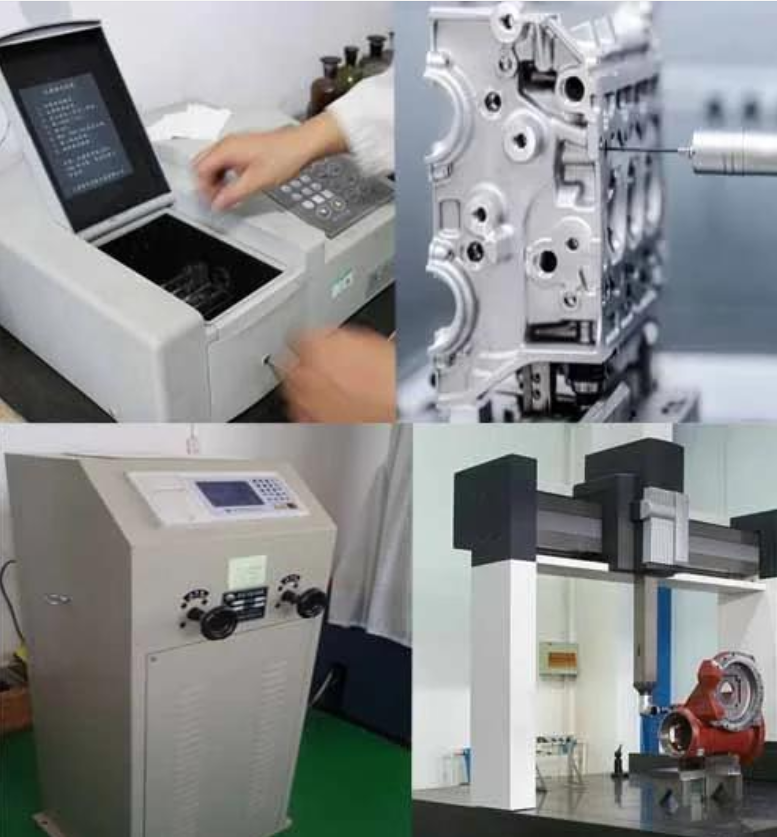
- All CMMs, height gauges, micrometers, hardness testers, roughness meters, salt spray cabinets calibrated to ISO 17025 standards on identical 30-day schedules
- Reference master gauge blocks, steel test coupons shared for cross-line verification; monthly inter-lab comparison testing between CNC, sheet, mold cells
- Climate-controlled inspection lab (20°C ±0.5°C) for all high-precision measurements to eliminate thermal reading drift across seasons/lines
Module 3: Standardized 3-Stage Inspection Workflow Applied to Every Fabrication Line
- FAI First Article Inspection (100% full dimension scan) First piece of every batch runs full CMM/optical scan, full material certification, hardness, surface finish check; FAI report template identical for CNC, sheet, mold, anodize. No batch release without signed FAI approval from central QA engineering.
- IPI In-Process Intermediate Inspection (Fixed AQL 0.65 general / 0.10 medical/aerospace) Fixed sampling frequency locked enterprise-wide:
- Unattended long CNC runs: 1 piece every 6 parts
- Sheet metal bend/rivet: 1 piece every 15 panels
- Mold cavity/core finishing: 1 insert set per 5 finished pairs
- Anodizing/heat treat: 1 test coupon per furnace/tank batch All IPI deviations trigger automatic production pause until corrective action is validated.
- FAI Final Article Inspection (100% critical features, AQL sampled full geometry) Critical CR features 100% inspected on every finished part; MAJ/MIN follow unified AQL tables stored in the central QC system. Final sign-off required before packaging and shipment.
4: Closed-Loop Digital Traceability & Corrective Action (CAPA)
Unique barcode batch ID follows raw stock → cutting → forming → machining → heat treat → finishing → final QA.
- Every inspection result auto-synced to cloud MES platform; no paper log fragmentation
- Any CR/MAJ non-conformance auto-generates CAPA task assigned to process engineering; fix validated across all matching production lines to prevent repeat defects
- Full records encrypted and archived minimum 10 years for regulated industry audits
Module 5: Cross-Material Unified Acceptance Thresholds
Preloaded material property limits in the master QC library for aluminum, stainless, H13/S136 mold steel, titanium, Inconel: hardness bands, salt spray hours, anodize thickness, bend angular tolerance, surface Ra matched to alloy grade across all lines.
Competitor QC Operation Benchmark Table
| Factory QC Model | Unified Standard Library | Cross-Line Calibration Sync | Average Batch Non-Conformance Rate | Audit Major Non-Conformance Rate | End-to-End Traceability Coverage |
|---|---|---|---|---|---|
| Fragmented Separate Line QC (Budget Shops) | No, line-specific loose rules | Irregular 90+ day calibration cycles | 5.2%–8.9% | 41% frequent audit fails | 35–55% partial trace only |
| Mid-Tier Partial Standardization | Basic shared AQL, loose tolerance interpretation | 45–60 day uncoordinated calibration | 2.1%–3.8% | 16% minor/major findings | 70–85% batch trace |
| Zorapid Enterprise-Wide Unified QC | Fully locked master CR/MAJ/MIN spec library | Synchronized 30-day ISO17025 calibration + monthly inter-line comparison | 0.28%–0.62% average | 0% major audit non-conformances (medical/aerospace/auto) | 100% full serialized trace all lines |
Unsolvable Fragmented QC Challenges Competitors Cannot Resolve — Zorapid Unified QC Solutions
Challenge 1: Multi-BOM Assemblies (Aluminum Sheet Chassis + CNC Titanium Brackets + S136 Mold Inserts) Have Mismatched Fit From Line-To-Line Measurement Bias
Competitor Failure: Sheet line measures bend flatness ±0.1mm acceptable, CNC line holds ±0.04mm for mating bosses; assembled gaps 0.12–0.20mm, high scrap after full kitting. Separate QA teams blame each other’s measurement tolerances.
Zorapid Unified Fix:
- Master QC library enforces identical flatness ±0.04mm CR critical spec for all mating assembly features across sheet and CNC lines
- Shared master gauge blocks for cross-line CMM calibration weekly
- Full assembly pre-kitting validation scan in central inspection lab before packaging
- Result: Assembly fit gap locked ≤0.05mm across mixed-process BOM kits, assembly reject rate cut 93%.
Challenge 2: Medical S136 Mold Cavity/Core + 304 Stainless Enclosure Batches Fail Audit Due To Disconnected Logs
Competitor Failure: Mold QC stores heat treat logs locally, sheet QA stores passivation records in separate files; auditor cannot trace raw steel through to finished medical components, major non-conformance issued halting production.
Zorapid Fix: Single barcode batch ID links raw ESR steel cert, furnace temperature curves, CMM cavity-core scans, sheet bend inspection, passivation test data all in one cloud archive; auditor accesses one portal for full lifecycle traceability instantly.
Challenge 3: Long Unattended CNC Lights-Out Runs Develop Slow Tool Wear Drift; Line-Specific Slow Sampling Catches Defects Late
Competitor Failure: CNC line sets IPI sample 1/20 parts; drift accumulates for hundreds of pieces before detection, mass scrap of high-value titanium/Inconel parts.
Zorapid Unified Standard: Enterprise-wide mandatory 1/6 sampling for all >12hr unattended CNC batches; drift threshold values identical across titanium, Inconel, aluminum programs, auto machine pause if deviation exceeds MIN band.
Challenge 4: Anodize Thickness Readings Conflict Between Sheet Metal Line QA and Finishing Coater Inspectors
Competitor Failure: Sheet line uses cheap handheld thickness gauges, finishing lab uses magnetic bench testers; delta up to ±4μm difference leading to rejected EV bus bar insulation performance.
Zorapid Unified Metrology Rule: Only ISO17025 calibrated bench magnetic thickness gauges approved for final reading; handheld tools only allowed for in-process quick checks, final validation always sent to central inspection lab with master reference foils.
Challenge 5: Different Hardness Accept Bands For H13 Mold Steel Across Heat Treat and Mold Machining Lines
Competitor Failure: Furnace team accepts HRC 49–53, mold machining QA enforces HRC 50–52; borderline 49 HRC blocks get passed by heat treat then rejected post-CNC, wasted high-cost ESR steel blanks.
Zorapid Master Library Lock: Single fixed HRC 50–52 CR critical band for all ESR H13 mold steel; furnace batch coupons tested in central hardness lab before any blank moves to CNC mold machining.
Applicable Metal Materials & Unified QC Inspection Parameter Comparison
| Material Grade | Unified Critical Hardness Band | Standard Critical Dimensional Tolerance | Mandatory Surface Ra Max | Standard Salt Spray NSS Requirement | Zorapid Average Non-Conformance Rate | Primary Fabrication Lines Used |
|---|---|---|---|---|---|---|
| 5052 / 6061 Aluminum Sheet | HB 70–95 | ±0.04mm mating / ±0.1mm non-critical | 0.8μm general / 0.04μm medical cleanroom | Type II Anodize ≥800hrs | 0.28% | Laser cut, CNC bend, rivet, anodize |
| Ti-6Al-4V Titanium | HRC 32–36 | ±0.005mm medical implant / ±0.01mm aerospace | 0.02μm implant / 0.4μm structural | N/A uncoated | 0.31% | 5-axis CNC long-run machining |
| IN718 Inconel Superalloy | HRC 38–42 | ±0.006mm blisk critical profiles | 0.3μm aeroturbine | N/A | 0.38% | 5-axis CNC, EDM |
| 304 / 316 Stainless Steel | HB 150–190 | ±0.05mm cleanroom enclosure mating | 0.04μm medical/food contact | Passivated ≥1000hrs | 0.45% | Sheet metal, CNC precision parts |
| ESR H13 Mold Steel | HRC 50–52 locked CR band | ±0.004mm matched cavity-core | 0.6μm general mold / 0.3μm high-cycle | N/A | 0.40% | Mold cavity/core CNC, vacuum heat treat |
| ESR S136 Stainless Mold Steel | HRC 50–52 cryo stabilized | ±0.004mm medical/food cavity | 0.02μm implant / 0.04μm food contact | Passivated ≥1200hrs | 0.52% | Regulated medical/food mold lines |
Core Unified QC Material Rules:
- All critical hardness windows are fixed in the master database—no line engineer can adjust upper/lower limits for any alloy
- Regulatory medical/food/aerospace surface roughness specs supersede general industrial standards across every fabrication cell
- Raw material mill certificates are cross-validated against lab hardness/chemical spot checks in central QC before stock release to production lines
- Salt spray, passivation, anodize performance tests use identical cabinet cycles and evaluation criteria for aluminum/stainless across finishing and sheet lines
Real Customer Case Study
Case 1: US Medical OEM Multi-BOM ISO13485 Assembly Kit
Project Scope: Mixed kit batch (12,000 sets): 304 stainless sheet instrument trays, Ti-6Al-4V CNC implant blanks, S136 mold inserts for disposable device molding. Customer required full 10-year serialized traceability and zero major audit non-conformances.
Previous Multi-Vendor Fragmented QC Pain Points: Separate sheet, CNC, mold suppliers each ran independent QC checklists; 6.3% assembly mismatch scrap, three disconnected audit log bundles, auditor flagged incomplete traceability as major non-conformance delaying product launch 14 days.
Zorapid Unified QC Full Execution
- Master QC library loaded medical CR/MAJ specs for all three material/process groups
- Synchronized 30-day ISO17025 calibration for CMM, hardness, roughness gear across all three production lines
- Shared barcode batch ID linking raw ESR stainless/titanium certs → forming/machining → heat treat/passivation → 3-stage unified FAI/IPI/Final inspection
- Central lab cross-verified hardness, surface Ra, flatness for mating assembly features before kitting
- Single consolidated ISO13485 audit package with full cloud traceability portal access for customer QA
Measurable Production Outcomes
- Total batch non-conformance rate dropped to 0.39%
- Zero assembly fit gaps >0.05mm across full kit population
- Passed full FDA ISO13485 surveillance audit with zero major/minor non-conformances
- Total lead time reduced from 40 days (3 vendors) to 16 days single-source unified production
- 10-year encrypted batch records accessible 24/7 via secure customer QA portal
Your Production Pain Points → Zorapid Unified QC System Solutions
Pain 1: Multiple production lines produce slightly different dimensions for identical print drawings, causing assembly gaps
Solution: Single master CR/MAJ/MIN spec library locked enterprise-wide; shared calibrated master gauges for cross-line measurement alignment
Pain 2: Audit teams face fragmented paper/file logs across CNC, sheet, mold, heat treat, finishing
Solution: One cloud MES traceability platform, single barcode batch ID follows every part through every process stage, consolidated audit export packages
Pain 3: Long unattended CNC batches develop slow drift with slow line-specific sampling, leading to mass high-value scrap
Solution: Enterprise fixed AQL sampling frequency, auto machine pause trigger for MIN/MAJ deviations regardless of which CNC cell runs the job
Pain 4: Hardness, anodize thickness, surface finish readings conflict between in-line inspectors and finishing labs
Solution: Only central ISO17025 calibrated lab equipment approved for final acceptance; handheld tools limited to quick in-process monitoring only
Pain 5: Line engineers loosen tolerance bands to hit production output targets, creating hidden functional defects
Solution: Master QC database permission locked—only central QA engineering can revise spec limits; line staff have read-only access to fixed acceptance criteria
Pain 6: No standardized CAPA process; defects repeat across different lines because fixes are not shared factory-wide
Solution: Auto CAPA generation for any CR/MAJ non-conformance; corrective fix validated and pushed to matching process lines in the unified MES system
2026 Global Industry Data & Future Trend Analysis
Metal Fabrication QC Model Market Benchmark Table
| Factory QC Operating Model | 2026 Average Non-Conformance % | Audit Major Non-Conformance Risk | Total Project TCO vs Baseline | 2026 Global Market Share |
|---|---|---|---|---|
| Fragmented line-by-line independent QC | 6.1% | High (39% audit failure risk) | 100% baseline scrap/rework cost | 44% low-margin general metal parts |
| Mid-tier partial shared standards, uncoordinated calibration | 3.0% | Medium (17% minor/major findings) | 91% relative spend | 39% standard automotive/automation hardware |
| Zorapid fully unified enterprise QC (ISO17025 calibrated) | 0.45% average | 0% major audit non-conformance for regulated sectors | 82–87% lower TCO (minimal scrap/audit downtime) | 17% fast-growing medical, aerospace, EV precision segment |
Key 2026–2030 Industry Trends Shaping Unified QC Adoption
- Regulators Mandate End-to-End Unified Traceability: By 2028, ISO13485, IATF16949, AS9100 updates will require single-source QC standardization across all internal fabrication processes; fragmented line QC will no longer pass surveillance audits.
- AI MES Integration Accelerates Unified Closed-Loop QC: Automated real-time drift prediction across CNC, sheet, mold lines; top-tier manufacturers like Zorapid deploy cross-process predictive quality to cut non-conformance further.
- Customer QA Teams Demand Centralized Digital QC Portals: EU/US OEMs no longer accept dozens of separate PDF inspection reports; only unified cloud trace platforms qualify for long-term supplier contracts.
- ISO 17025 Calibration Sync Becomes Premium Supplier Baseline: Disjointed, irregular gauge calibration will disqualify bids for aerospace, medical, EV tier 1 programs within 3 years.
- TCO Replaces Hourly Machine Rate Sourcing: Procurement calculates scrap loss, audit downtime, rework labor into total cost; unified low-defect QC manufacturers deliver clear long-term cost advantages over cheap fragmented fabricators.
Core Zorapid Fabrication Lines Covered By Unified QC Standards
- 5-Axis Precision CNC Machining Titanium, Inconel, aluminum, stainless, H13/S136 mold blanks, implant, aerospace, EV structural high-tolerance components
- Sheet Metal Integrated Line Laser cut, CNC bend, robotic rivet, stainless/aluminum chassis, cleanroom enclosures, battery housings
- Mold Cavity & Core Precision Machining Medical/food S136, automotive H13, high-cycle injection mold inserts, paired cavity-core matched tolerance inspection
- Vacuum Heat Treatment Division Triple temper, cryo stabilization, pre-anneal stress relief for mold steel, aerospace superalloys; unified hardness/coupon QC
- In-House Finishing Line Type II/III anodizing, stainless passivation, powder coat, mirror polishing; unified thickness, color Delta E, salt spray acceptance rules
Delivery Speed Benchmarks & Unified QC Production Timeline
Mixed Medical Kit Batch (12,000 sets) Lead Time Comparison
| Supplier QC Structure | Full Fabrication + QC Lead Time | Rework/Scrap Delay Risk | Consolidated Audit Documentation |
|---|---|---|---|
| Three fragmented separate vendors | 37–45 business days | 10–18 day fit/QC rework hold | Three disconnected report bundles |
| Mid-tier partial shared standards | 24–32 business days | 4–9 day minor adjustment lag | Two-part inspection files |
| Zorapid full unified end-to-end QC | 14–20 business days | <1 day minor touch-up risk | Single full ISO13485/IATF/AS audit-ready PDF + cloud portal access |
Standard Zorapid Unified QC Step Timeline Embedded Into Every Batch
- Pre-production master QC spec matching, material mill cert validation: 0.5–1 business day
- First Article Inspection (FAI) full CMM/roughness/hardness scan before full batch run
- In-process IPI sampling running parallel to production across all lines
- Final full critical feature inspection, consolidated batch QC report generation
- Archive all data to encrypted cloud MES before shipment packaging
Expedited fast-track orders available; FAI and critical IPI sampling steps are never skipped to accelerate production and compromise unified quality guardrails.
Key Benefits of Partnering With Zorapid Under Unified Enterprise QC
- Zero Line-To-Line Measurement Bias: One locked master spec library eliminates conflicting pass/fail calls across CNC, sheet, mold, heat treat, finishing
- ISO 17025 Synchronized Factory-Wide Calibration: Monthly inter-line gauge comparison testing guarantees consistent measurement accuracy
- 100% Serialized End-to-End Traceability: Single barcode ID tracks raw metal through every process stage, 10+ year secure storage for regulatory audits
- Closed-Loop Cross-Process CAPA System: Defects found on one line trigger validated fixes rolled out to all matching production cells to stop repeat issues
- Full Stack Global Regulatory Certifications: ISO9001, IATF16949, ISO13485, AS9100 fully supported by unified QC documentation structure
- Central Independent QA Engineering Team: Separate from production output targets—QA has full authority to pause any batch for non-conformance without production pressure
- Secure Customer QA Cloud Portal: 24/7 access to inspection logs, CMM scans, hardness/salt spray test data, FAI reports for your internal QA review
- Contractual Low Non-Conformance Performance Guarantee: Batches exceeding agreed defect thresholds get free rework/remanufacture at Zorapid’s cost
Summary
Fragmented, line-isolated quality control is the root cause of assembly mismatch, variable part performance, audit failures, scrap waste and delayed product launches at most metal fabrication suppliers. Independent QA teams, uncoordinated gauge calibration, loose line-specific tolerance interpretations and disjointed record-keeping create hidden risk for medical, aerospace, EV and semiconductor OEMs with complex multi-process BOM assemblies.
Zorapid’s fully unified enterprise QC system delivers a single source of truth for acceptance criteria, synchronized ISO17025 metrology, standardized FAI/IPI/Final sampling, full barcode traceability and cross-line closed-loop corrective action across every metal fabrication line in our facility. We drive average batch non-conformance below 0.6%, eliminate major audit non-conformances for regulated industries, cut total TCO via minimal scrap/rework, and deliver consolidated, audit-ready quality documentation for every shipment.
If you require a supplier with fully unified factory-wide inspection standards for your mixed CNC/sheet/mold metal bill of materials, our QA engineering team provides a free full QC system review and formal cost/lead time quote within 2 business days after receiving your CAD drawings, material specs and required compliance standards.
FAQ
Does a unified QC system slow down overall production cycle time?
Minor upfront FAI setup time is offset massively by near-eliminated rework, no cross-vendor coordination delays and faster audit sign-off. Net total lead time is consistently shorter than fragmented multi-supplier or disconnected line QC operations.
How often do you perform inter-line gauge comparison testing for CMMs and hand tools?
Mandatory monthly cross-checks using master reference blocks; full ISO17025 accredited calibration cycle every 30 days for all precision metrology equipment factory-wide.
Can we upload our company’s internal drawing tolerance standards into your master QC library?
Fully supported; our QA team imports your OEM spec limits as the locked CR/MAJ/MIN baseline for all matching part numbers, zero deviation from your print requirements allowed.
What happens if a production line requests a temporary tolerance adjustment for a difficult geometry?
Only central QA engineering can evaluate and approve temporary deviation paperwork with full audit documentation; production line supervisors cannot alter master spec values independently.
Do you offer remote real-time viewing of inspection data via your cloud portal?
Yes, secure role-based customer portal access; your QA team can pull FAI, CMM scans, hardness test logs and batch trace records anytime without waiting for emailed PDF files.
Is the unified QC structure equally strict for low-volume prototypes and mass production batches?
The same master acceptance criteria apply to prototype and mass runs—only AQL sampling volume scales up for large batches; FAI full inspection is 100% required for the first piece of every order regardless of quantity.
Is unified enterprise QC more expensive than standard fragmented shop quality processes?
Internal QA overhead rises moderately (~8–14%), but total project TCO falls 18–28% due to drastically reduced scrap, rework, audit remediation labor and assembly downtime from mismatched parts. We provide line-item TCO breakdowns upfront for full transparency.