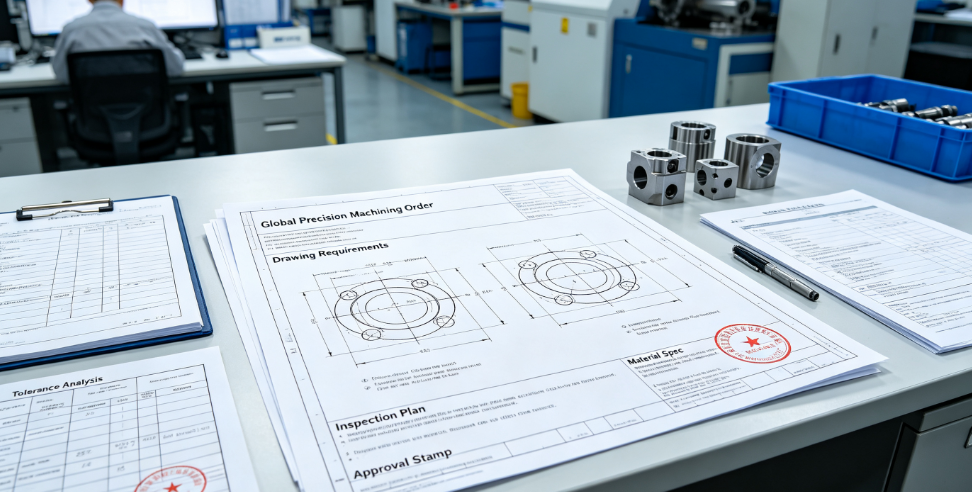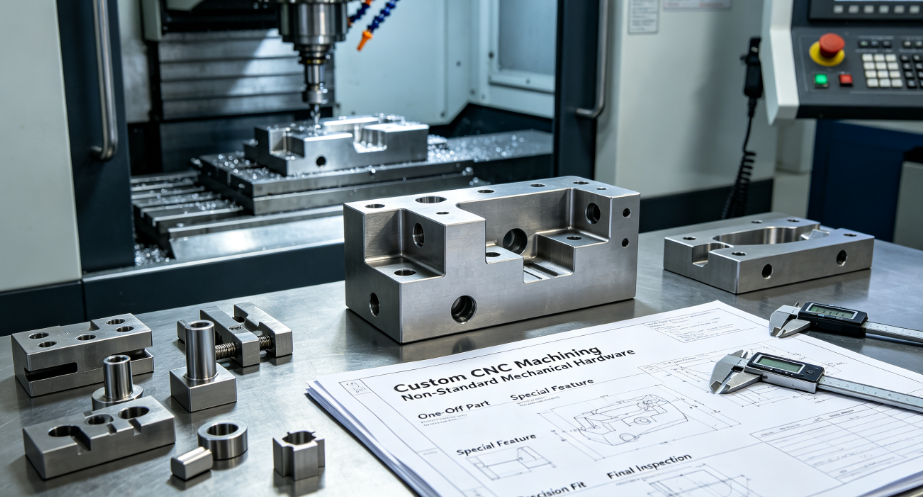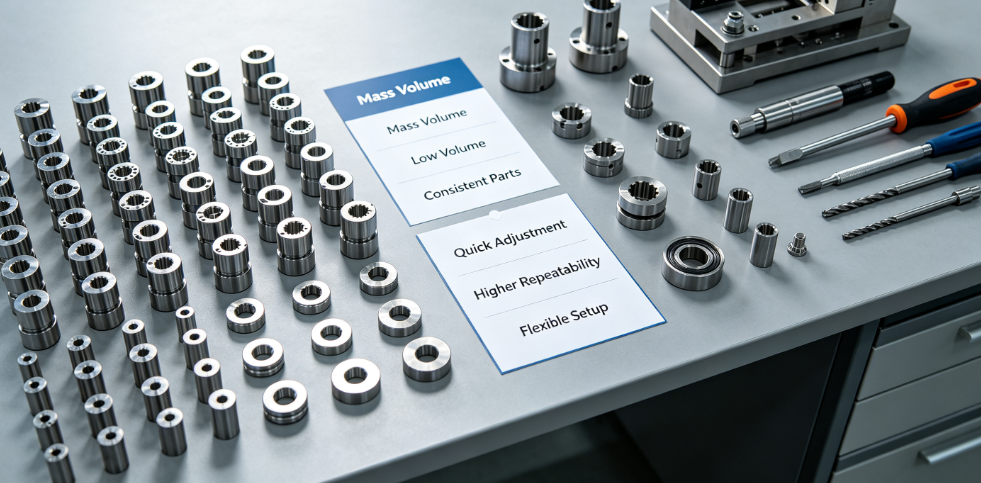
Titanium metal features high strength, light weight and excellent corrosion resistance, making it one of the most reliable metals for high-demand applications. It is an ideal material for aerospace, medical devices and high-performance engineering components.
However, titanium machining faces several challenges. Careful planning and proper machining techniques are essential to avoid material damage and costly errors.
Titanium CNC Machining:
This equipment can produce precision titanium alloy parts with consistent dimensions and is fully ready for mass production. Through multi-axis milling, turning and finishing machining, engineers can fabricate complex geometric shapes while maintaining tight tolerances. It is critical to understand the characteristics of titanium alloys during the cutting process, which helps avoid common problems such as tool wear, heat accumulation and surface scratches.
| Focus on practical insights into titanium CNC machining. |
You will learn about material selection, tool selection, process strategies and surface treatment solutions to make your parts not only precise, but also durable and high-efficiency.
Overview of Titanium Materials and Machining Performance
Titanium is a high-performance metal widely favored for its high strength, light weight and excellent corrosion resistance. It is commonly used in aerospace, medical equipment, automotive and industrial component sectors, where extreme durability and reliability are critically required. Notably, titanium stands out as the optimal material for manufacturing components that demand both stress-free performance and strict weight control.
Titanium has distinct machining characteristics compared with other metals such as aluminum alloy and steel. It is hard yet elastic, which means it tends to deform slightly under cutting force.
Titanium also has an extremely low thermal conductivity. Heat generated during machining cannot dissipate effectively and remains concentrated in the cutting zone. This adversely affects surface integrity, dimensional accuracy, and accelerates tool wear.
Another key factor is titanium’s high chemical reactivity at elevated temperatures. Under high heat, titanium tends to react with the surface of cutting tools, which may cause material adhesion and rapid tool abrasion. In addition, titanium possesses high elasticity, leading to slight springback deformation after cutting.
It is critical to understand these properties of titanium before planning machining processes, selecting cutting tools, and predicting the material’s behavior during manufacturing.
Why Is Titanium Machining So Challenging
Titanium is widely used for high-performance parts and is more difficult to machine than most metals. Its unique properties bring numerous challenges, and a full understanding of these challenges is essential to produce robust and durable components efficiently.
Low Thermal Conductivity
Titanium has much poorer thermal conductivity than steel. Heat generated during cutting accumulates around the tool and workpiece, causing rapid tool wear, surface discoloration and part deformation. A well-planned machining strategy is required to avoid heat buildup and ensure dimensional accuracy of parts.
High Strength and Elasticity
Titanium retains its strength even at high temperatures. Its elasticity causes springback during cutting and bending, making it difficult to achieve precise dimensions. To guarantee high accuracy, clamping and part machining must follow a strict and consistent sequence.
Chemical Reactivity
Titanium tends to react with cutting tools when heated. This reaction may cause the material to adhere to the tool surface, resulting in poor surface finish and accelerated tool wear. To eliminate these issues, selecting proper tool materials and coatings is critical.
Work Hardening Tendency
Titanium alloys are prone to work hardening in the cutting zone, especially when repeatedly machined by the same tool. Work hardening will increase cutting force and may cause tool damage. To avoid this problem, it is necessary to control the feed rate and adopt a proper tool path.
Low Elastic Modulus
Titanium is more ductile than steel and features a low elastic modulus, which may lead to vibration, chatter and part deformation during machining. These effects can be reduced by using stable setup, consistent cutting speed and rigid fixturing.
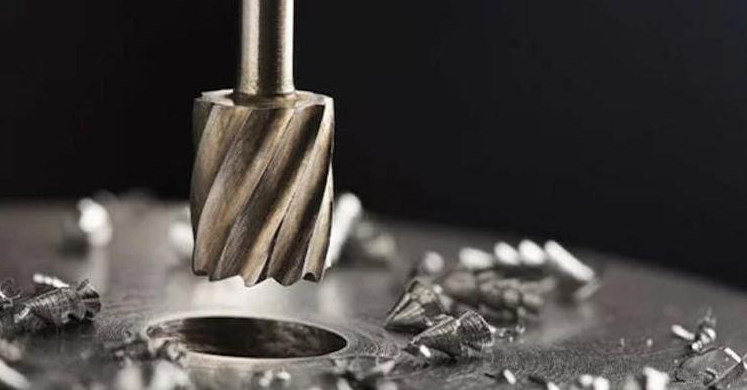
Common Titanium Alloy Grades for CNC Machining
Titanium alloys come in a variety of grades, each with unique strength, corrosion resistance and machinability. Selecting the right grade is critical for achieving precise CNC machining, maintaining tight tolerances, and manufacturing long-lasting, durable components.
Commercially Pure Titanium (Grade 1–4)
Grade 4 titanium is soft, highly ductile, with superior corrosion resistance. titanium offers maximum strength, perfect for chemical, medical and marine parts.
Grade 4 also offers relatively high strength with slightly lower ductility. These grades are comparatively easier to machine than other titanium alloys. Strict thermal control is still required to avoid surface damage and guarantee machining accuracy.
Grade 5 Titanium (Ti-6Al-4V)
Grade 5 titanium is the most widely used alloy for CNC machining. It features high strength, low weight and great corrosion resistance.
Ti-6Al-4V is harder to machine than commercially pure titanium and work-hardens rapidly. Proper cutting tools, machining speeds and cooling methods are required to guarantee dimensional stability and surface finish of parts.
Ti-5-5-5-3 High-Strength Alloy
Ti-5-5-5-3 serves for heavy-load and cyclic-stress components.
It delivers superior fatigue resistance, ideal for aerospace and critical engineering parts.
Precision cutting tools, optimized feed rates and strict thermal control are required to avoid deformation and maintain tight tolerances.
Ti-407 Machinability-Optimized Alloy
Ti-407 offers great strength and corrosion resistance with far better machinability.
It’s widely used in automotive, robotics and industrial applications where production efficiency and surface finish matter most.
It enables shorter lead times, tighter tolerances and premium surface quality.
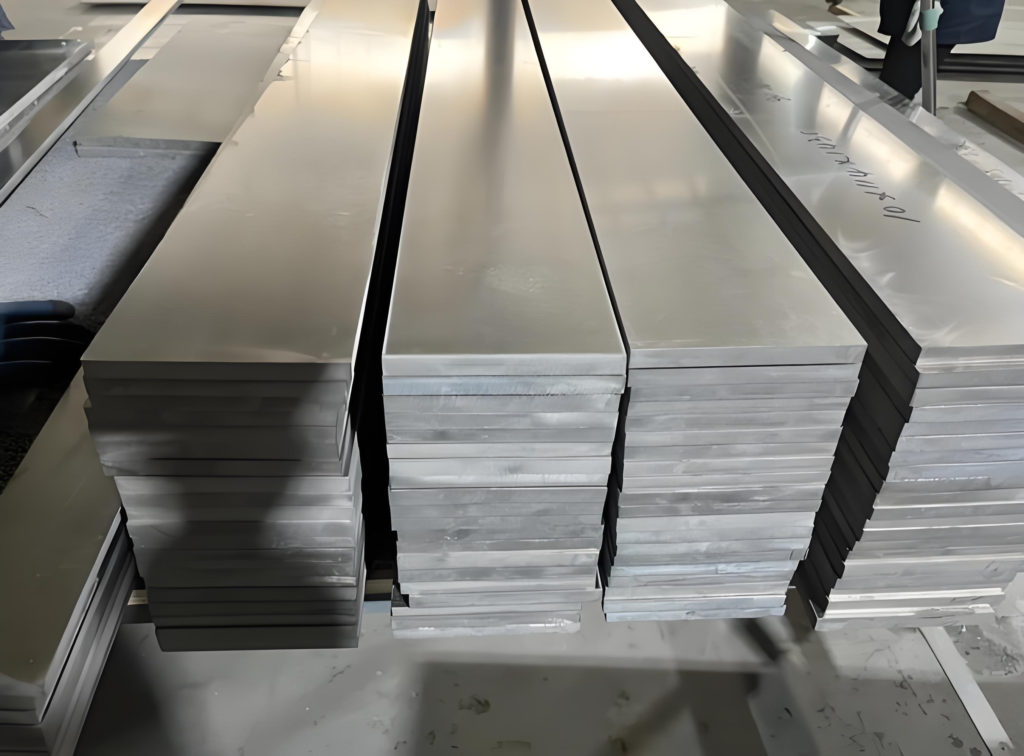
When Is CNC Machining the Right Choice for Titanium
Choose CNC machining for titanium when:
- You need tight tolerances and precise dimensional accuracy.
- Parts require complex geometries and fine detailed features.
- Low to medium batch runs, prototype development or one-off custom parts.
- Superior surface finish is needed with no secondary molding defects.
- Strict material integrity is required, without altering titanium’s strength and corrosion resistance.
- Aerospace, medical and high-end industrial components demand reliable repeatability.
Titanium CNC Machining Process
Titanium alloy CNC machining follows strict procedures to ensure consistent part quality. Improper tool selection can compromise part precision, surface finish and tool life. Machining efficiency and reliability of components for aerospace, medical, automotive, high-performance parts and other industries rely on standardized machining processes.
Selection of Cutting Tools for Titanium Alloy
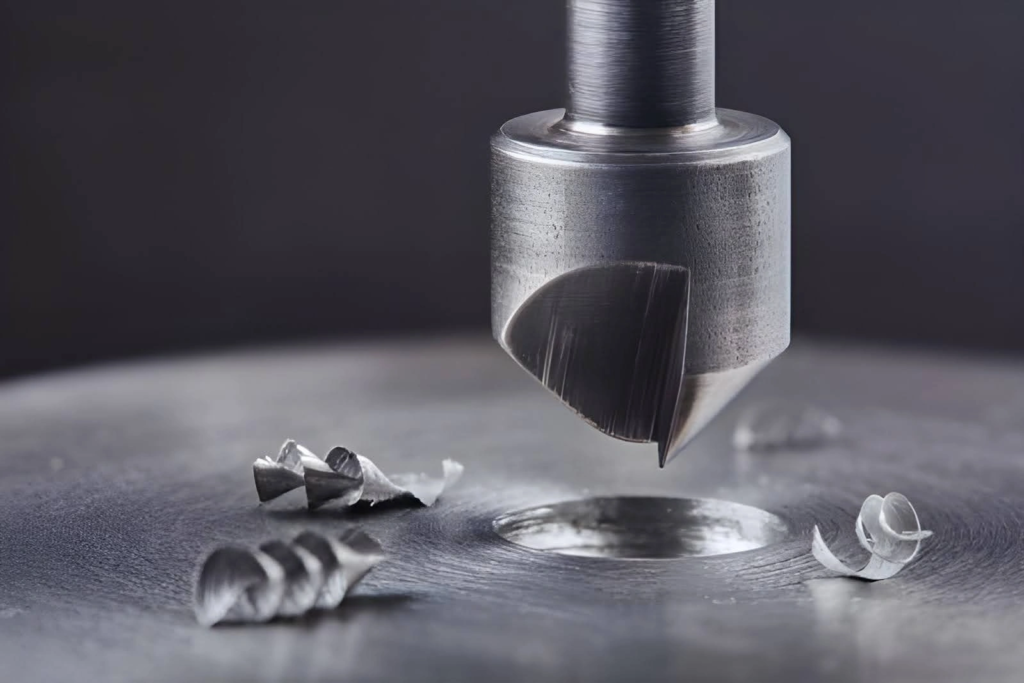
In machining, selecting the right cutting tool is critical.
Carbide tools are ideal for their high hardness and heat resistance.
For soft materials or light cutting, use HSS (high‑speed steel) tools.
Tool geometry is equally important. Sharp cutting edges, positive rake angles and rigid tool cores help minimize tool deflection and work hardening.
The optimal tool choice depends on material grade, part complexity and tolerance requirements.
Tool Coatings for Thermal Wear Control
Titanium has extremely low thermal conductivity, which generates excessive cutting heat.
Coatings such as TiAlN, AlTiN and CBN effectively reduce heat buildup and wear, extending tool service life.
Coated tools maintain sharper cutting edges and avoid material adhesion.
Coating selection depends on:
| Cutting speed |
| Feed rate |
| Titanium alloy grade |
Machine Setup & Rigidity Requirements
Titanium alloy demands rigid machining setup. Proper clamping eliminates vibration, chatter and springback.
The tool holder, machine tool and workpiece must all be securely fixed.
For deep cuts or complex geometry machining, optimize part positioning and tool overhang to avoid component deformation.
Speed & Spindle RPM Control
Feed rate and spindle speed must remain stable. Titanium CNC machining requires moderate spindle speed and higher feed per tooth. This reduces heat generation and avoids work hardening.
Peck drilling cycles assist deep hole machining, while incremental cutting prevents tool overload. Engineers typically adjust material parameters, tool geometry and tool type to ensure high precision and extend tool life.
CNC Machining Technology for Precision Titanium Components
CNC machining of titanium alloys requires strict control and standardized procedures to ensure dimensional accuracy, surface quality and material integrity.
The optimal machining process depends on part geometry, titanium alloy grade and tolerance requirements.
Effective process control minimizes tool wear, avoids thermal damage, and maintains repeatable machining results.
Precision Lapping & Grinding
Precision grinding delivers high accuracy and ultra-smooth surface finish. It is widely used for shafts, flat surfaces and critical fitting components. Engineers adjust grinding wheel speed, feed rate and coolant flow to prevent overheating and microcracks.
Creep feed and surface grinding processes can routinely remove almost any material without causing deformation.
CNC Drilling for Titanium Alloy
Drilling titanium alloy requires sharp carbide drills and controlled feed rates.For deep hole drilling, adopt the peck drilling method to prevent heat buildup and chip accumulation.Lubrication and coolant ensure smooth cutting and reduce work hardening.Drill geometry is carefully selected to guarantee hole diameter accuracy, roundness and surface finish.
Titanium Alloy CNC Milling
CNC milling is ideal for machining complex geometries, deep cavities and intricate profiles. High feed rates and stepped feeding help control heat and minimize tool wear. Engineers select proper cutting tools based on tool type, spindle speed and feed rate, to ensure flatness, dimensional accuracy and surface quality of machined parts.
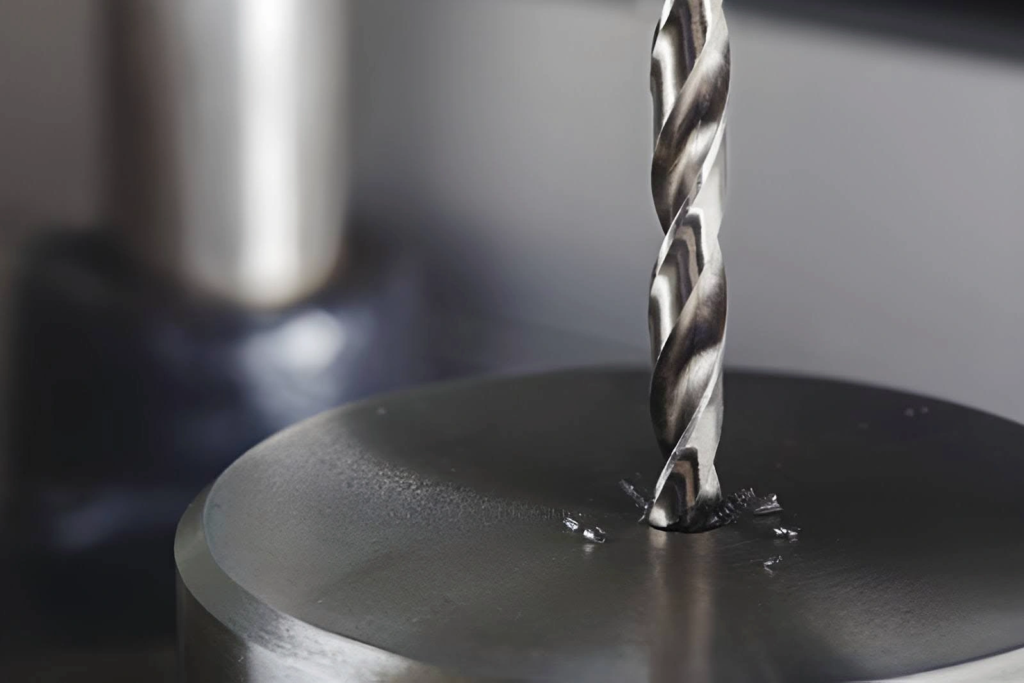
Titanium Alloy Thread Tapping
Improper threading of titanium alloy easily causes galling.Adequate lubrication during tapping prevents jamming.Controlling feed rate and spindle speed helps produce precise threads.Engineers ensure thread depth, pitch and alignment fully comply with assembly specifications.
Titanium Alloy Draw Forming
Titanium must be formed under controlled deformation to maintain its strength and structural integrity.Cold forming and hot forming processes are applied to tubes, sheets and complex profiles.
To guarantee consistent shaping, engineers take springback, grain structure and stress distribution into account, avoiding cracking and material degradation.
Turning Titanium
Turning is used to manufacture slender cylindrical components such as shafts, rods and fittings. Carbide inserts are adopted with optimized rake angles to minimize cutting forces. Spindle speed and feed rate are adjusted to control chip formation and heat generation. Engineers monitor surface finish, concentricity and roundness to meet tight tolerance requirements.
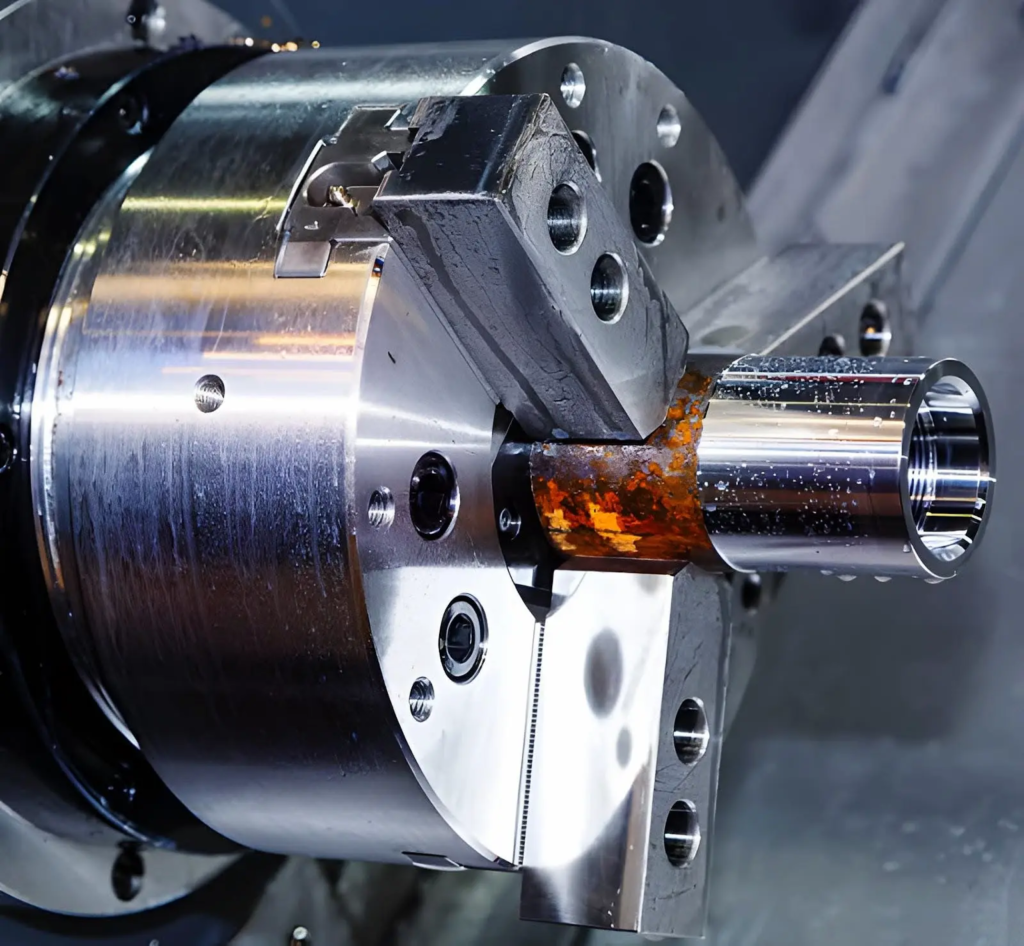
What Are the Challenges of Titanium Alloy CNC Machining?
Titanium is tough, lightweight and corrosion-resistant. However, these properties make it notoriously difficult to machine. Understanding these challenges helps you select the right tools, cutting speeds and machining processes.
Workpiece Clamping and Part Stability
Titanium alloy is prone to springback and vibration under high cutting forces.Rigid workholding devices, precision fixtures and supporting tooling must be adopted.This eliminates chatter, maintains tight tolerances and avoids surface damage.
Heat Management During Machining
Titanium features poor thermal conductivity, so heat concentrates heavily at the cutting edge.
It leads to accelerated tool wear, work hardening and uncontrollable part deformation.
Continuous coolant supply and optimized cutting parameters are essential for process control.
Prevent Wear and Built-up Edge
Titanium alloy tends to adhere to cutting tools and form built-up edge.This degrades surface finish and may cause tool breakage.Using sharp tools, proper tool coatings and controlled feed rates can effectively reduce adhesion.
What are the best practices for efficient titanium machining?
CNC machining of titanium alloys requires balancing cutting speed, tool life and surface finish. Adopting the correct approach can improve precision and reduce costs.
Reduce Cutting Temperature
Moderate spindle speed and relatively high feed rate avoid heat concentration. Adequate coolant keeps the tool and workpiece cooled during machining, delivering perfectly finished parts.
Smooth Tool Entry and Exit Strategy
Sudden tool entry and exit should be avoided during machining. Adopting a gradual entry and exit method can minimize impact, chatter and edge damage to parts.
Importance of Sharp Cutting Tools
Using sharp and wear-resistant cutting tools ensures consistent cutting performance. High-speed steel, carbide and coated tools can prevent galling and reduce surface roughness.
Allow Tool Cooling Time
As mentioned earlier, titanium generates heat rapidly during machining. Intermittent cutting or periodic pauses in processing prevent overheating of the tool, ensuring high dimensional accuracy.
Reduce Adhesion Effect
Material adhesion can be minimized by lubrication, coated tools and optimized cutting speeds. Chip breakers and proper cutting rake angles are also used to control the formation of built-up edge.
Control Edge Chipping
Titanium alloy is highly susceptible to fracture under high stress. It is essential to control the feed rate and adopt suitable tool angles to reduce cutting edge damage while maintaining tight tolerances.
Applications of Titanium Alloy CNC Machining
Titanium is a high-strength, lightweight and corrosion-resistant metal, widely used in modern industries such as aerospace, automotive, robotics and electronics. Common applications include:
CNC Machining of Automotive Titanium Alloy
Titanium alloys are widely used in engine components, exhaust systems and suspension parts. They help reduce the weight of these components without compromising structural strength. Precision CNC machining ensures tight tolerances and long-term durability.
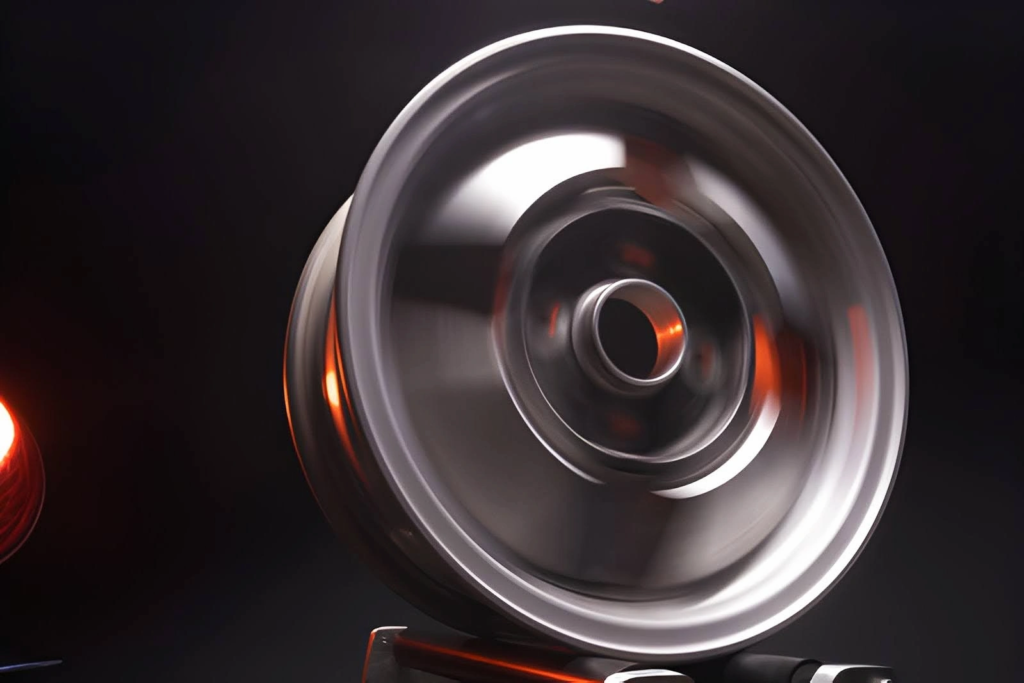
Aerospace Titanium Alloy CNC Machining
CNC machining is used to manufacture aerospace structural components, turbine blades and airframe fasteners. High precision is critical for safety, performance and fatigue resistance.
Medical Titanium Alloy CNC Machining
Titanium features excellent biocompatibility and corrosion resistance, making it ideal for implants, surgical instruments and prosthetics. CNC machining delivers uniform surface finish and precise dimensional accuracy.
Titanium in Electronics
Titanium is applied to electronic connectors, heat sinks and precision enclosures. CNC machining enables compact, high-performance designs and supports complex geometries.
Surface Finishing Technology for Titanium Machined Parts
Here are the common surface finishing processes suitable for titanium alloy machined parts.
Polishing: Polishing is used to achieve a smooth and glossy surface. It is widely applied to medical implants, consumer goods, decorative products and other fields with high appearance requirements.
Anodizing: Anodizing forms a protective titanium oxide film on the surface of titanium, improving its corrosion resistance and surface hardness. The color can be customized for functional or aesthetic needs.
Electroplating: A thin layer of metal such as nickel or chromium is deposited on the part to enhance wear resistance and improve appearance. It is best suited for components subject to friction and heavy wear.
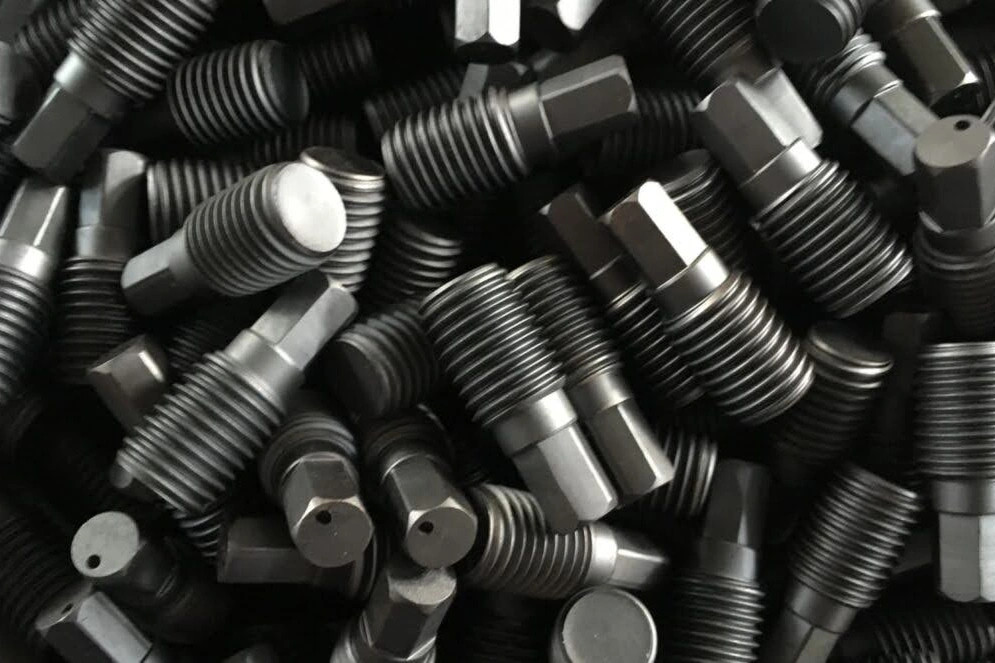
CNC Machining of Titanium Alloy vs Stainless Steel
Titanium and stainless steel are both commonly used materials for CNC machining, with distinct application fields.
The selection of the right material depends on the part’s function, weight, machining cost and expected performance.
Understanding the machining characteristics of each material helps avoid unnecessary costs and production issues.
Cutting Behavior and Material Response
Titanium alloy is tough and highly ductile. During machining, it exerts heavy pressure on cutting tools, resulting in increased cutting force and tool stress.
On the other hand, stainless steel features higher hardness and more stable cutting performance. It allows smoother tool movement and more controllable chip formation. For complex machining tasks, stainless steel delivers better process controllability.
Thermal Management in CNC Machining
In titanium machining, most heat accumulates near the cutting edge, which may damage tools and compromise surface quality. Proper coolant circulation and optimized cutting speeds are essential.
In contrast, stainless steel dissipates heat evenly and imposes lower thermal stress on cutting tools, allowing longer cutting runtime.
Tool Life and Machining Stability
Titanium reacts with cutting tools at high temperatures, accelerating tool wear; sharp, well-coated tools are essential. Stainless steel has low reactivity; stainless steel-cutting tools are durable with less frequent replacements.
Surface Finish and Dimensional Control
Titanium alloy is sensitive to machining conditions. Controlling feed rate is critical for a clean surface; improper feed may cause surface tearing or part scratching. Stainless steel allows easier surface finishing, requiring only minor process adjustments to meet stricter aesthetic requirements.
How to Find a Reliable Titanium Alloy CNC Machining Supplier
Be sure to look for manufacturers with extensive experience in titanium part machining and the design of your required components.
Ensure they can consistently maintain tight tolerances and understand the complexity of your parts.
Inquire about the cutting tools, tool coatings and coolant systems they adopt.
Check whether they provide free design and manufacturability feedback, as well as transparent quotations.
Look for certifications such as ISO 9001:2015, AS9100 or ISO 13485.
Confirm that they are capable of handling both prototype development and mass production batch orders.
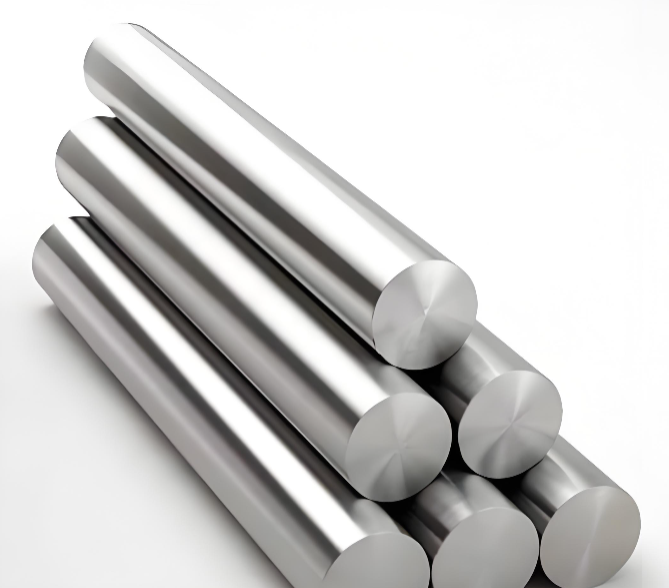
Zorapid Precision CNC Titanium Machining Services
Zorapid provides professional precision CNC machining services for titanium alloys, serving key industries including aerospace, automotive and robotics. We operate with rigorous quality philosophy, backed by certified quality management systems of ISO 9001 and ISO 13485. Our team deeply understands the material characteristics of titanium alloys, capable of machining parts with consistent precision and repeatability.
Zorapid maintains standard tolerances up to ±0.01 mm for most components to meet general application requirements. For critical features, strict process control enables tight tolerance down to ±0.005 mm. Available surface finish options include Ra 1.6 μm for functional parts and Ra 0.8 μm for high-precision applications.
You can consult Zorapid’s professional engineers for technical guidance and design for manufacturability feedback. Simply upload your CAD files to start the review process. We support prototyping, low-volume production and mass manufacturing, delivering parts with minimized lead time.
Summary
This overview covers CNC machining of titanium, including common titanium alloy grades, machining techniques and existing challenges. It also introduces best practices for efficient machining and typical applications of titanium alloys across aerospace, automotive, medical and electronics industries.
It is recommended to always select the correct titanium grade, use coated cutting tools to control cutting temperature, and ensure proper workpiece fixturing. Conduct thorough inspection on dimensional accuracy and surface finish to avoid errors and improve part quality. Following these guidelines helps produce precise, durable titanium alloy parts that fully meet production requirements.
FAQ
What are the typical tolerance levels for CNC titanium alloy parts?
Titanium alloy parts are routinely held to a tolerance of ±0.01 mm. For ultra-precision features, ±0.005 mm can be achieved. Precision fixturing and rigid machine setup ensure consistent tolerance accuracy.
Why does titanium alloy wear cutting tools faster than other metals?
Titanium machining traps intense heat at the cutting edge, which accelerates tool wear. Using coated carbide tools together with proper coolant application effectively extends tool life.
Is coolant mandatory when machining titanium alloys?
Yes. Coolant controls cutting temperature, reduces tool wear and improves surface finish. High-pressure coolant also flushes chips away from the cutting zone.
What causes titanium alloy to adhere to cutting tools?
High machining temperature causes titanium to weld onto the tool edge, known as galling or built-up edge. Proper tool coatings and optimized cutting speeds can greatly reduce this issue.
Do titanium alloy parts deform during CNC machining?
Yes. Titanium tends to deflect slightly under high cutting forces. Rigid clamping and sturdy fixturing prevent deformation and maintain dimensional accuracy.
Can titanium chips be disposed of safely?
Titanium chips retain high temperature and are chemically reactive. Always apply coolant and remove chips properly to avoid fire hazards.