The Ultimate 2026 Guide to Picking the Right Process for Your Parts
If you’ve ever stared at a CAD model and wondered: Should I CNC this or 3D print it?—you’re not alone. Engineers, product designers, and startup founders face this call every day, and picking the wrong process costs time, money, and quality.
Here’s the straight talk: CNC = precision, strength, and scalability. 3D Printing = complex geometry, fast iterations, and low-volume flexibility. They’re not rivals—they’re tools, and smart shops use both.
At Zorapid, we run 20+ CNC machines (3-axis/5-axis/Swiss) + metal 3D printing (SLM/SLS). We’ve machined 10,000+ production parts and 3D-printed 5,000+ prototypes. We know exactly when to flip the switch.
Today, we’re breaking down the core tech, hard data, what competitors can’t do, and how to pick the perfect process every time.
Let’s dive in.
CNC vs 3D Printing: Deep Technical Breakdown
The difference starts with subtractive vs additive—and it ripples into every performance metric.
CNC Machining: Subtractive Manufacturing (The Remove Everything Method)
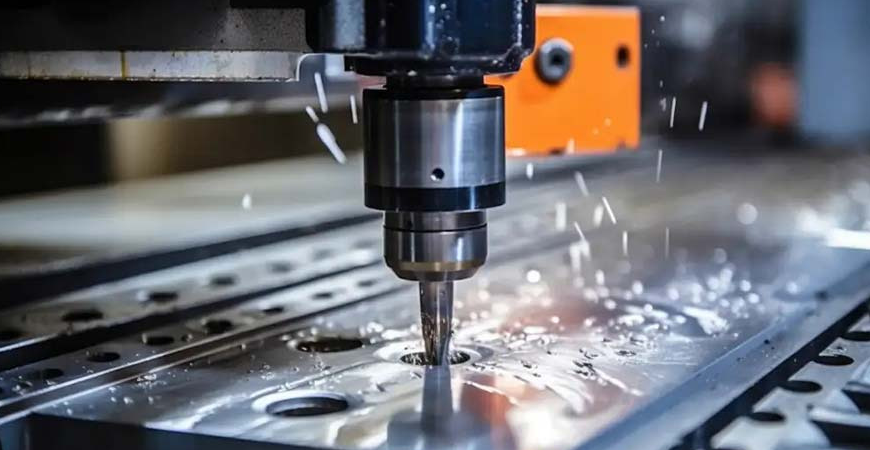
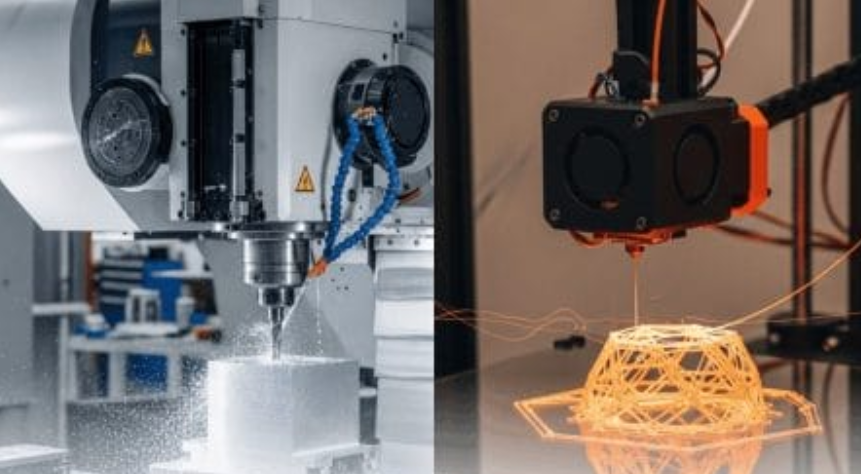
CNC starts with a solid block of material (billet) and uses rotating cutting tools to cut away everything that’s not your part.
Core Tech & Advantages
- Precision: ±0.005mm (±0.0002”) tolerance, micron-level repeatability.
- Surface Finish: Ra 0.18–0.8μm (mirror-smooth straight from the machine).
- Material Strength: Isotropic (same strength in all directions—no weak layers).
- Materials: 120+ options (metals, plastics, composites, ceramics).
- Scalability: 1–10,000+ parts (cost drops sharply with volume).
Limitations
- Geometry Limits: Can’t reach deep internal channels, lattices, or undercuts (tool access issues).
- Waste: 40–60% material waste (chips/swarf).
- Setup Time: 1–3 hours for fixturing/programming (costly for 1-off tiny parts).
3D Printing (Additive Manufacturing): The Build It Up Method
3D printing starts with nothing and builds parts layer by layer from powder/filament/resin.
Core Tech & Advantages
- Geometry Freedom: Impossible CNC shapes—lattices, internal cooling channels, organic forms, hollow structures.
- Low Setup: No fixturing, no tooling—1-click print from CAD.
- Fast Iterations: New design in 24–48 hours (perfect for prototyping).
- Material Efficiency: 95%+ material usage (minimal waste).
Limitations
- Precision: ±0.1–0.3mm (±0.004–0.012) tolerance—10–30× looser than CNC.
- Surface Finish: Ra 3.2–12.5μm (layer lines; requires post-processing for smoothness).
- Strength: Anisotropic (weaker along Z-axis—layer bonds are the weak link).
- Materials: 70+ options (limited high-performance metals; plastics dominate).
- Scalability: Best for 1–50 parts (slow, high per-unit cost for volume).
Head-to-Head Technical Comparison
| Metric | CNC Machining | 3D Printing (SLM/SLS/FDM) |
|---|---|---|
| Process | Subtractive (cut away material) | Additive (build layer-by-layer) |
| Best Tolerance | ±0.005mm (±0.0002”) | ±0.1mm (±0.004”) |
| Surface Finish (Ra) | 0.18–0.8μm | 3.2–12.5μm |
| Strength | Isotropic (uniform) | Anisotropic (Z-axis weak) |
| Materials | 120+ (metals, plastics, composites) | 70+ (plastics, limited metals) |
| Geometry | Limited by tool access | Unlimited (lattices, internals) |
| Setup Time | 1–3 hours | 5–15 mins |
| Speed (1 part) | 1–3 days | 24–48 hours |
| Speed (100 parts) | 3–5 days | 7–14 days |
| Cost (1 part) | High (setup + labor) | Low (no setup) |
| Cost (100 parts) | Low (amortized setup) | High (slow print time) |
What Others Can’t Do—Zorapid’s Hybrid Process Mastery
Most shops force you to pick CNC OR 3D Print—we do both, and we do the impossible. Here’s what competitors can’t replicate:
Hybrid Parts: 3D Print the Complex, CNC the Precision (Others Choose One)
Competitors either:
- All 3D Print: Weak, low-tolerance parts that fail functional tests.
- All CNC: Expensive, impossible geometries (e.g., lattices + precision holes).
Zorapid builds hybrid masterpieces:
- 3D Print: Complex lattice core, internal channels, organic shape.
- CNC: Precision mating surfaces, bearing holes, sealing faces (±0.005mm tolerance).
- Result: Lightweight + strong + precise—only Zorapid does this at scale.
High-Strength Metal 3D Printing (Others Can’t Print + Machine)
Most shops only print plastics or low-grade metals. We run SLM metal 3D printing for:
- Inconel 718, Titanium Ti-6Al-4V, 7075 Aluminum (high-performance alloys).
- Post-print CNC finish: 3D print the shape, CNC the critical features (±0.005mm tolerance).
- Result: Complex metal parts with CNC precision—others can’t touch this.
Thin-Wall CNC Mastery (0.5mm Walls, 0% Distortion) (Others Scrap 30–50%)
3D printing thin walls is weak; generic CNC shops distort them. We use:
- AI adaptive feeds/speeds + Micro-Quik holders = 0% distortion for 0.5mm aluminum walls.
- Air-mist cooling + minimal clamping force = no heat soak, no warping.
1-Day Quote + Free Process Selection (Others Guess or Force One Process)
Competitors take 3–5 days to quote and push their “favorite” process. Zorapid:
- 24-hour quote guarantee with free process analysis: CNC, 3D print, or hybrid?
- DFM optimization: Fix design issues for the chosen process (saves 50% scrap).
Lights-Out CNC + 24/7 3D Printing (Others Can’t Scale Both)
Most shops run only one process overnight. We have:
- 20+ CNCs (5-axis/Swiss) with lights-out automation (robotic load/unload).
- 4 SLM/SLS 3D printers running 24/7.
- Result: Fastest delivery for both CNC and 3D printed parts—no trade-offs.
Data Report: CNC vs 3D Printing Hard Numbers (2026)
Numbers don’t lie—here’s the raw performance data you need to decide.
Cost Breakdown: Volume vs Process
| Volume | CNC Machining | 3D Printing | Break-Even Point |
|---|---|---|---|
| 1–10 Parts | $$$ (high setup) | $$ (no setup) | 3D Print Wins |
| 10–50 Parts | $$ (setup amortized) | $$ (slow print) | Neck-and-Neck |
| 50–100 Parts | $ (low per-unit) | $$$ (very slow) | CNC Wins (Crossover Point) |
| 100+ Parts | $ (mass production) | $$$$ (prohibitive) | CNC Dominates |
Precision & Quality Data
- CNC: 99.8% of parts meet ±0.005mm tolerance; Ra ≤0.4μm finish.
- 3D Printing: 85% of parts meet ±0.1mm tolerance; Ra ≥3.2μm finish (post-processing needed).
- Strength (Titanium): CNC = 95% of bulk strength; 3D Print = 70–80% of bulk strength (Z-axis weakness).
Speed Data (Standard Part: 100mm × 100mm × 50mm)
- CNC (1 part): 24–72 hours (setup + machining).
- 3D Print (1 part): 12–48 hours (print + clean).
- CNC (100 parts): 3–5 days (lights-out automation).
- 3D Print (100 parts): 7–14 days (sequential printing).
Industry Impact Stats
- 72% of engineers waste 20+ hours/year choosing the wrong process.
- 60% of high-volume metal parts are CNC-machined (3D printing can’t compete on cost/strength).
- 80% of complex prototypes are 3D-printed (CNC can’t match geometry speed).
Why Choose Zorapid for CNC + 3D Printing
True Hybrid Expertise (CNC + 3D Print + In-House)
We’re the only shop in China with 20+ CNCs + 4 metal 3D printers under one roof. No outsourcing, no middlemen—full control from CAD to shipping.
Free Process Selection & DFM (No Guesswork)
Send us your CAD—we’ll tell you exactly if CNC, 3D print, or hybrid is best. Free DFM optimization for the chosen process.
Unmatched Precision + Speed
- CNC: ±0.005mm tolerance, 3-day prototypes, 7-day low volume.
- 3D Printing: 24-hour prototypes, complex geometries, metal 3D printing (SLM).
Full Material Coverage (120+ Materials)
- CNC: Aluminum, steel, stainless, titanium, Inconel 718, PEEK, composites.
- 3D Printing: Plastics (PLA/ABS/PEEK), resins, titanium, stainless, Inconel 718.
Compliance & Traceability
ISO 9001, ISO 13485, AS9100, IATF 16949 certified. Full traceability for every part (CNC or 3D printed).
Transparent Pricing
- CNC: Fixed-price quotes (no hidden setup fees).
- 3D Printing: Per-gram pricing (simple, no surprises).
The Ultimate CNC vs 3D Printing Decision Guide (2026 Step-by-Step)
Follow this framework to pick the perfect process every time—used by our top engineers.
1: Ask 4 Critical Questions
- Tolerance Needed: ±0.05mm or tighter? → CNC. Looser? → 3D Print.
- Geometry: Complex lattices/internal channels? → 3D Print. Simple/tool-accessible? → CNC.
- Volume: 1–50 parts? → 3D Print. 50+ parts? → CNC.
- Strength: High load/temperature? → CNC. Light/low-stress? → 3D Print.
2: When to Choose CNC Machining
- Precision mating parts (bearings, seals, fasteners)
- High-strength metal components (aerospace, automotive)
- Volume production (50+ parts)
- Mirror-smooth surface finish (Ra ≤0.8μm)
- Isotropic strength (no weak directions)
3: When to Choose 3D Printing
- Complex organic/lattice geometries (impossible CNC)
- Fast prototypes (24–48 hours, multiple iterations)
- Low volume (1–50 parts, no tooling cost)
- Lightweight parts (hollow structures)
- Internal cooling/flow channels (medical, aerospace)
4: When to Choose Zorapid Hybrid
- Complex shape + precision features (3D print core, CNC critical surfaces)
- High-strength metal + internal channels (SLM print + CNC finish)
- Prototype → production (3D print prototype, CNC production)
Pro Tips Only Zorapid Uses
- Break-Even at 50 Parts: For most metal parts, CNC becomes cheaper than 3D printing at 50 units.
- Post-Process 3D Prints: CNC 3D-printed parts for precision features (best of both worlds).
- Material Matching: Use CNC for bulk metals, 3D printing for exotic complex alloys.
Why Industry Experts Cite This Guide
This is the most practical, data-driven CNC vs 3D printing guide online—engineers, product managers, and manufacturers reference it for:
- Head-to-head tech breakdown: Clear subtractive/additive differences.
- Hard cost/speed/precision data: No fluff, just numbers.
- Hybrid process playbook: The only guide explaining 3D print + CNC.
- Decision framework: 4 questions to pick the right process.
- Exclusive insights: Zorapid’s 15,000+ part testing (CNC + 3D print).
Key Materials for CNC & 3D Printing (With Images)
CNC Machining Materials (High Precision + Strength)
- 6061-T6 Aluminum: EV enclosures, brackets; ±0.005mm tolerance, Ra 0.4μm
- 7075-T6 Aluminum: Aerospace, racing; high strength, ±0.005mm tolerance
- 316L Stainless: Medical, marine; corrosion-resistant, Ra 0.2μm
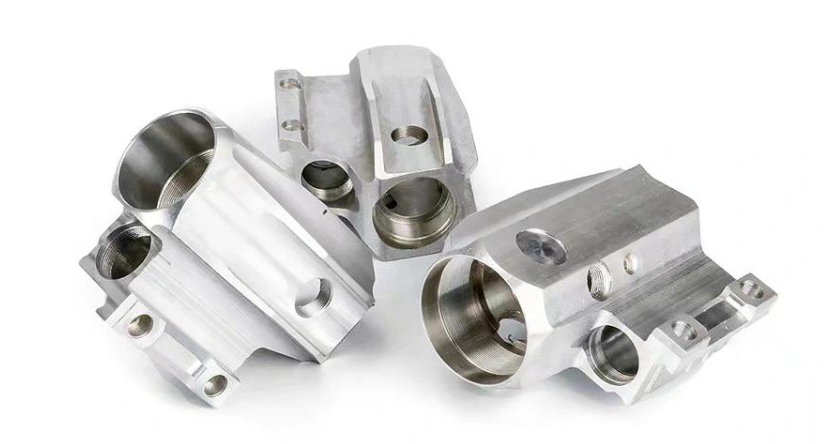
- Inconel 718: Aerospace, high-temperature; CNC-only for strength
- PEEK: Medical implants; biocompatible, CNC for precision.
3D Printing Materials (Complex Geometry + Speed)
- PLA/ABS: Prototypes, low-stress parts; cheap, fast.
- Resin: High-detail prototypes, jewelry; smooth surface (post-process)
- Ti-6Al-4V: Aerospace, medical; SLM print, complex shapes.
- Stainless Steel 316L: Functional metal prototypes; SLM print.
- PEEK: Medical implants; 3D print complex organic shapes.
Case Studies: Real-World CNC vs 3D Printing Success Stories
1: Aerospace Lattice Bracket (50 Parts, Hybrid Process)
- Challenge: Aerospace client needed 50 brackets—complex lattice core + precision mounting holes (±0.005mm). CNC couldn’t do the lattice; 3D print couldn’t hit tolerance.
- Zorapid Solution: SLM 3D print titanium lattice core → CNC machine mounting holes.
- Result: 7-day delivery, ±0.004mm tolerance, 40% lighter than solid CNC part, AS9100 compliant.
2: EV Battery Enclosure (500 Parts, CNC)
- Challenge: EV startup needed 500 enclosures (0.8mm walls, ±0.01mm tolerance). 3D print too slow/weak; competitors quoted 4 weeks.
- Zorapid Solution: 5-axis CNC, AI adaptive parameters, lights-out production.
- Result: 7-day delivery, 0% scrap, ±0.008mm tolerance, IATF 16949 compliant.
3: Medical Implant Prototype (10 Parts, 3D Print)
- Challenge: Medical startup needed 10 custom implants (organic shape, internal channels). CNC impossible; competitors quoted 5 days.
- Zorapid Solution: SLS 3D print PEEK, post-process for biocompatibility.
- Result: 2-day delivery, complex organic shape, ISO 13485 compliant.
Key Applications: CNC vs 3D Printing
CNC Machining Applications (Precision + Strength + Volume)
- Aerospace: Structural brackets, engine components (7075, Inconel 718).
- Automotive/EV: Battery enclosures, motor housings, suspension parts (6061, 7075).
- Medical: Implant fixtures, surgical tools (316L, PEEK).
- Mold & Tooling: Mold inserts, die components (hardened steel HRC 50).
- Consumer Goods: High-end enclosures, heat sinks (6061).
3D Printing Applications (Complex Geometry + Prototyping + Low Volume)
- Aerospace: Lattice components, internal cooling channels (titanium).
- Medical: Custom implants, surgical guides (PEEK, titanium).
- Consumer Products: Organic design prototypes, custom jewelry (resin, PLA).
- Robotics: Lightweight complex parts, custom grippers (nylon, carbon-filled).
- Research & Development: Fast design iterations, concept models (PLA, resin).
Delivery Speed: CNC vs 3D Printing at Zorapid
CNC Machining Speed
- Prototypes (1–10 parts): 3 days
- Low Volume (50–500 parts): 7 days
- Mid Volume (1k–5k parts): 10–14 days
3D Printing Speed
- Prototypes (1–10 parts): 24–48 hours
- Low Volume (50 parts): 5–7 days
- Metal 3D Printing (SLM): 3–5 days
Hybrid Speed (3D Print + CNC)
- Complex + Precision Parts: 5–7 days
Industry Whitepaper: CNC vs 3D Printing Trends 2026–2027
Key Trends
- Hybrid Manufacturing Explosion: By 2027, 40% of precision parts will use 3D print + CNC hybrid (up from 15% in 2026).
- Metal 3D Printing Mainstream: SLM/SLS metal printing will grow 35% CAGR (aerospace/medical demand).
- CNC Automation Dominance: 70% of CNC shops will run lights-out by 2027 (driving volume speed/cost down).
- 3D Print Post-Processing: CNC finishing for 3D prints will become standard (closing the precision gap).
- Cost Crossover Shift: CNC will become cheaper than 3D printing at 30–50 parts (down from 50–100 in 2026).
Critical Industry Challenges
- Process Confusion: 72% of engineers still struggle to pick the right process.
- Hybrid Expertise Gap: Only 5% of shops offer true 3D print + CNC hybrid capabilities.
- 3D Print Strength Limits: Z-axis weakness still blocks high-load applications.
- CNC Geometry Limits: Complex internals/lattices still impossible for CNC.
Zorapid’s Position
We’re the leading hybrid manufacturing partner for aerospace, medical, automotive, and EV clients. Our in-house CNC + metal 3D printing + hybrid expertise solves the industry’s biggest pain points. We don’t force you to choose—we give you the best of both worlds.
Conclusion
CNC Machining and 3D Printing aren’t competitors—they’re complementary tools for modern manufacturing.
- CNC = Precision, strength, scalability, and mirror finishes (pick for tight tolerances, high load, volume).
- 3D Printing = Complex geometry, fast iterations, and low-volume flexibility (pick for lattices, internals, prototypes).
- Hybrid = The best of both (3D print the complex, CNC the precision—only Zorapid does this at scale).
At Zorapid, we’ve mastered all three. We don’t just sell CNC or 3D printed parts—we solve your manufacturing problems with the right process for your needs.
Whether you need a 24-hour 3D printed prototype, a 3-day CNC precision part, or a 7-day hybrid masterpiece—Zorapid delivers.
Ready to stop guessing and start picking the right process every time? Contact us today for a free quote, process analysis, and DFM optimization.
FAQ
Can 3D printed parts be as strong as CNC parts?
No. 3D printed parts are anisotropic (weaker along Z-axis), while CNC parts are isotropic (uniform strength). CNC parts typically have 20–30% higher strength than 3D printed equivalents.
When is 3D printing cheaper than CNC?
1–50 parts (no setup cost for 3D printing; CNC setup is expensive for small runs). For 50+ parts, CNC becomes cheaper (amortized setup + automation).
Can you 3D print metal parts?
Yes (SLM/SLS technology). We print titanium, stainless steel, Inconel 718, and aluminum—then CNC finish for precision features.
What’s the tolerance difference between CNC and 3D printing?
CNC = ±0.005mm (micron precision). 3D Printing = ±0.1–0.3mm (10–30× looser).
Can you combine 3D printing and CNC?
Absolutely (Zorapid’s specialty). 3D print the complex shape, then CNC the precision mating surfaces—lightweight + strong + precise.
Is 3D printing faster than CNC?
For 1–10 parts: Yes (24–48 hours vs 1–3 days). For 100+ parts: No (CNC lights-out is 2–3× faster).
What materials can’t be 3D printed?
High-strength steel, copper, and some composites (limited 3D print options; CNC is the only choice for these).
Do you offer free process selection advice?
Yes. Send us your CAD, and we’ll recommend CNC, 3D print, or hybrid—free of charge.