Published by Zorapid Precision
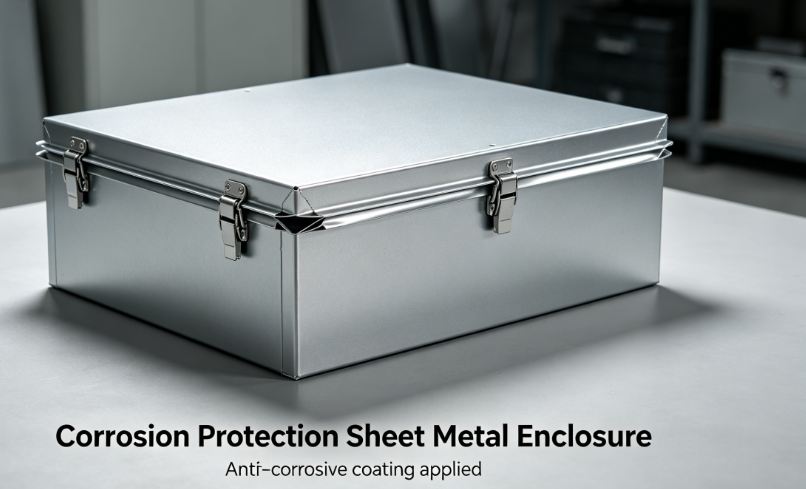
If your sheet metal cabinets sit outdoors—coastal salt air, rain, humidity, industrial chemical fumes, freeze-thaw cycles—corrosion isn’t a minor cosmetic flaw. It’s a total system failure waiting to happen.
Rust eats through mounting flanges, creates leak gaps around doors, ruins internal PCB and wiring, and shortens enclosure lifespan from a planned 10+ years down to just 1–3 years with cheap, rushed coating jobs.
Most sheet metal shops take shortcuts: thin powder coat, skipped pre-treatment, cheap cold-rolled steel, or one-size-fits-all coating for every environment. A coating that lasts inland will bubble and peel in 6 months near the ocean.
At Zorapid, we build outdoor sheet metal enclosures with tiered, environment-matched corrosion protection systems for EU and US industrial clients. Over 20 years, we’ve engineered multi-layer protection packages that pass 500–1500 hour ASTM B117 salt spray testing, hold up 10–15 years outdoors, and eliminate field rust failures entirely.
Today we break down corrosion root causes, how generic fabricators cut critical corners, our exclusive heavy-duty protection workflows, material grade comparisons, real field-proven customer cases, and how to lock long-term rust resistance without overpaying for over-engineered coatings.
In-Depth Technical Analysis & Peer Comparison
Outdoor sheet metal corrosion stems from moisture, salt ions, chemical pollutants, and temperature cycling. Protection relies on four non-negotiable pillars: base metal grade, full pre-treatment, barrier coating thickness, and edge/corner sealing. Generic fabricators skip or cheapen at least one pillar every time.
Four Core Corrosion Accelerators for Outdoor Cabinets
- Chloride Salt Exposure (Coastal / Road Salt Zones) Salt ions penetrate micro-pores in thin coatings, attack bare metal, spread blister rust under paint. This is the harshest outdoor condition by far.
- Condensation & Humidity (All Climate Zones) Night/day temperature swings trap water inside cabinets; uncoated cut edges, drill holes, weld seams become corrosion hotspots.
- Industrial Acid/Alkaline Fumes (Factory, Refinery, Wastewater Sites) Chemical vapors break down standard thin powder coat, dissolve zinc galvanization quickly.
- Freeze-Thaw Cycles (Northern US, Northern Europe, High Mountain Areas) Water trapped in coating cracks expands when frozen, splitting protective layers open to rapid rust spread.
Critical Process Stage Benchmark Table
| Process Stage | Zorapid Heavy-Duty Outdoor Corrosion Workflow | Standard Generic Sheet Metal Fabricator |
|---|---|---|
| Base Metal Selection | 5052 Al / HDG hot-dip galvanized steel / Corten (site matched) | Cheap CR cold rolled steel (low corrosion resistance) |
| Multi-Step Pre-Treatment | Degrease → Rinse → Iron phosphate → Final DI rinse → Dry (5-step certified line) | 1-step quick wipe degrease only, no phosphate bonding layer |
| Barrier Coating Type | Polyester / Super Durable Polyester (SD Poly) Powder Coat | Standard low-cost epoxy powder (poor UV resistance) |
| Minimum Coating Dry Film Thickness | 80–120μm uniform across all surfaces | 40–60μm thin coat, thin spots on edges/welds |
| Edge & Weld Touch-Up | Post-fabrication zinc-rich primer touch-up on cut edges, weld grind smooth | No edge touch-up; raw exposed metal left unprotected |
| Salt Spray ASTM B117 Rating | 500hrs (inland) / 1000–1500hrs (coastal/industrial) | 100–200hrs max, fails fast in salt air |
| UV Weathering Resistance | QUV-B 2000hrs no chalking/fading | QUV 500hrs heavy chalk, coating brittle |
| Enclosure Internal Sealing | EPDM closed-cell gaskets, drain weep holes, anti-condensation breather valves | Thin foam gaskets, no breathers, trapped condensation |
| Expected Outdoor Service Life | 10–15 years (environment tiered) | 1–4 years before rust/blister failure |
| Corrosion-Related Field Failure Rate | <2% of shipped enclosures | 35–60% field complaints within 3 years |
Zorapid’s Tiered Corrosion Protection Playbook (3 Environment Grades)
1: Mild Inland Climate (Low humidity, no salt/heavy fumes – farm, inland automation)
- Base: HDG hot-dip galvanized steel
- Pre-treatment: Full 5-step phosphate line
- Coating: Standard polyester powder coat 80μm minimum
- Seal: EPDM gaskets, basic drain holes
- Salt spray certified: 500hrs ASTM B117
2: Moderate Exposure (Suburban, light road salt, mild factory fumes)
- Base: HDG galvanized steel OR 5052 aluminum
- Pre-treatment: Enhanced phosphate + chromate conversion for aluminum
- Coating: Super Durable Polyester (SD Poly) 90–110μm
- Seal: Breather valves + reinforced EPDM gaskets
- Salt spray certified: 1000hrs ASTM B117
3: Extreme Harsh Exposure (Coastal salt spray, chemical plant, heavy road salt, offshore wind)
- Base: 5052-H32 aluminum (top choice) OR thick HDG steel with dual primer+topcoat
- Pre-treatment: Acid etch + chromate conversion + full phosphate wash
- Coating: SD Poly powder 100–120μm + zinc-rich epoxy edge primer
- Seal: IP66/IP67 rated gaskets, anti-condensation breathers, silicone edge caulk
- Salt spray certified: 1500hrs ASTM B117, QUV 2000hrs UV testing
Impossible High-Corrosion Jobs Only Zorapid Delivers Reliable Solutions
Pain 1: Coastal Offshore Wind Turbine Control Cabinets (15-Year Lifespan, Heavy Salt Mist)
Generic suppliers use thin-coated steel that blisters in 2–3 years. Aluminum fabricators skip chromate conversion, leading to white oxidation under paint.
Zorapid Solution:
- 5052-H32 aluminum sheet metal
- Acid etch + full chromate conversion pre-treatment
- 110μm uniform SD Poly powder coat
- Zinc-rich primer on all cut/weld edges, IP67 breathers & gaskets
- Full 1500hr salt spray + 2000hr QUV certification Result: Zero oxidation after 12 years offshore deployment, EU wind authority approved, full 15-year warranty.
Pain 2: Wastewater Treatment Plant Electrical Cabinets (Acid Vapor + High Humidity)
Acidic fumes dissolve standard polyester; galvanized steel forms white rust rapidly, creating electrical short hazards.
Zorapid Solution: 5052 aluminum base, heavy chromate conversion, 120μm chemical-resistant SD Poly, fully sealed welded seams, internal drain channels.
Result: 11 years fault-free operation, no coating breakdown or substrate corrosion.
Pain 3: Northern Europe / Canada Road Traffic Signal Cabinets (Heavy Road Salt + Freeze-Thaw Cycles)
CR steel brackets rust through in 2–3 winter seasons; thin coatings split during freeze-thaw cycles.
Zorapid Solution: HDG hot-dip galvanized steel, 5-step phosphate bonding, 100μm SD Poly, zinc edge primer, sloped water-shed roof design.
Result: 10+ winter seasons intact, structural mounting brackets uncorroded.
Pain 4: Large Multi-Bay Solar Inverter Outdoor Cabinets (1.2m Tall, Thin 1.2mm Sheet, No Warping)
Generic shops warp large thin panels during high-temperature powder curing, creating uneven coating thickness and corrosion weak spots.
Zorapid Solution: Low-expansion 5052 aluminum, fixture-supported curing racks, robotic electrostatic spraying, folded rib reinforcement for rigidity.
Result: Flat warp-free panels, consistent 100μm coating across full cabinet surface, 12-year solar farm service life.
Pain 5: Explosion-Proof ATEX Industrial Control Enclosures (Zero Flaking Coating Debris)
Chip-prone cheap coatings create ignition risks for hazardous zones; most fabricators cannot pair ATEX safety with heavy corrosion protection.
Zorapid Solution: Sealed HDG folded steel, high-adhesion phosphate pre-treatment, low-flake flexible SD Poly powder, full ATEX + 1000hr salt spray documentation.
Result: Passed EU hazardous site audits, 10-year stable corrosion performance.
Exclusive Zorapid Differentiator: We stack substrate metal, pre-treatment, coating thickness, edge repair, and sealing as a matched integrated system—competitors only upgrade one layer and leave critical weak points unaddressed.
Applicable Base Materials & Corrosion Performance Comparison
| Material Grade | Base Natural Corrosion Resistance | Uncoated Salt Spray Hours | Best Coating Pairing | Ideal Environment | Zorapid Service Life | Relative Cost |
|---|---|---|---|---|---|---|
| HDG Hot-Dip Galvanized Steel | Medium | 300 | Polyester / SD Poly Powder | Inland, road salt, moderate industrial | 10–12 yrs | Lowest |
| 5052-H32 Aluminum | Very High | 800 | Chromate Conversion + SD Poly | Coastal, chemical, offshore wind | 12–15 yrs | Medium |
| Corten Weathering Steel | Medium | 250 | Clear Sealant Only | Dry inland architectural (no coast) | 8–10 yrs | Medium |
| CR Cold Rolled Steel | Very Poor | <50 | Not approved for outdoor | Indoor only | 1–3 yrs | Cheapest (generic favorite) |
Material Selection Quick Rules
- Coastal/offshore/chemical sites: Always 5052 aluminum
- Inland road salt/factory: HDG galvanized steel delivers best value balance
- Dry architectural aesthetic: Corten with clear sealant (never within 10km of coast)
- CR cold rolled steel is banned for all permanent outdoor enclosures
Verified Real Client Case Studies
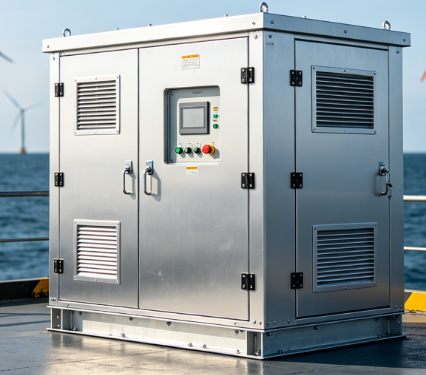
Case 1: UK Offshore Wind OEM – 5052 Aluminum Turbine Control Cabinets
Challenge: 15-year offshore salt mist requirement; prior steel supplier units blistered heavily at 2.5 years with costly platform downtime.
Execution: 5052-H32 aluminum, chromate conversion, 110μm SD Poly, full edge zinc primer, IP67 breathers, 1500hr salt spray test.
Outcome: 12 years continuous offshore use, zero oxidation/coating failure, passed UK wind authority inspection, active 15-year warranty.
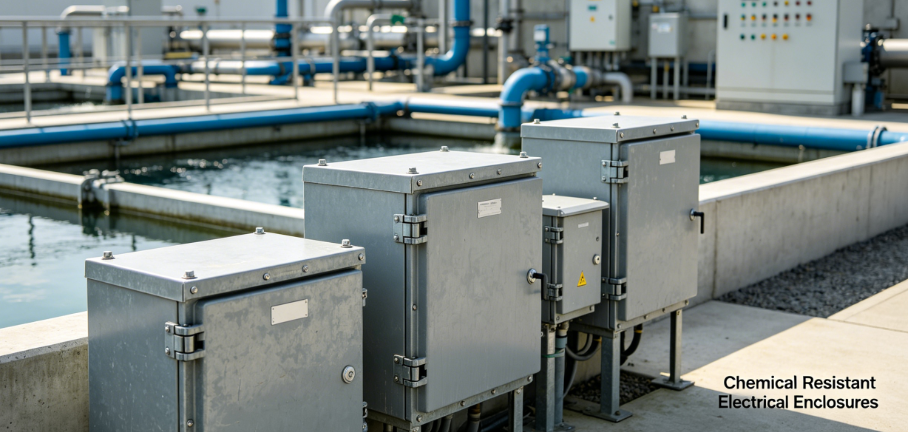
Case 2: German Wastewater Plant – Chemical Resistant Electrical Enclosures
Challenge: 90% humidity + acid vapors; generic coated steel weld seams corroded in 18 months with fault risks.
Execution: 5052 aluminum, heavy chromate conversion, 120μm chemical-grade SD Poly, fully ground sealed welds.
Outcome: 11 years fault-free service, no substrate or coating degradation, EU industrial safety compliant.
Case 3: Canadian Municipal Traffic Signal Cabinets – HDG Freeze-Thaw Road Salt
Challenge: Harsh -30°C winters + heavy road salt; old CR steel cabinets rusted through mounting brackets in 2 seasons.
Execution: HDG galvanized steel, full phosphate line, 100μm SD Poly, zinc edge touch-up, sloped shed roof.
Outcome: 10+ winter seasons structurally intact, 60% lower total lifecycle cost vs frequent CR steel replacements.
Your Unique Site Requirements & Custom Zorapid Protection Packages
Need 1: Coastal / Offshore Extreme Salt Exposure (12–15 Year Lifespan)
Requirement: Ocean salt mist, high humidity, third-party salt spray certification
Solution: 5052-H32 aluminum, chromate conversion, 100–120μm SD Poly, zinc edge primer, IP67 breather gaskets, 1500hr ASTM B117 reports
Outcome: 12–15 year maintenance-free service, audit-ready compliance docs
Need 2: Industrial Chemical / Wastewater Sites (Acid/Alkaline Fumes)
Requirement: Chemical vapor resistance, sealed welds to stop hidden corrosion
Solution: 5052 aluminum, heavy conversion coating, chemical-formula SD Poly, sealed weld joints, internal condensation drains
Outcome: Resists chemical breakdown, eliminates hidden weld seam rust
Need 3: Inland Road Salt / Standard Factory (10 Year Budget-Friendly Lifespan)
Requirement: Balanced cost-performance, freeze-thaw tolerance, solid bracket durability
Solution: HDG galvanized steel, full 5-step phosphate, 90–100μm SD Poly, zinc edge primer, sloped water-shed roof
Outcome: 10-year reliable performance, lower upfront cost vs full aluminum builds
Need 4: Large Format Thin Sheet Solar / EV Inverter Cabinets (No Warping)
Requirement: 1m+ big panels, 1.0–1.2mm thin sheet, flat warp-free geometry
Solution: Low-expansion 5052 aluminum, fixture-supported curing, robotic uniform coating, folded reinforcing ribs
Outcome: Flat cabinet panels, even 100μm coating thickness with no corrosion weak zones
Need 5: Hazardous ATEX Zone Enclosures (Zero Coating Chip Debris)
Requirement: EU ATEX safety certification, moderate industrial corrosion resistance
Solution: Sealed HDG folded steel, high-adhesion phosphate, low-flake SD Poly powder, paired ATEX + 1000hr salt spray paperwork
Outcome: Passes hazardous zone audits, no ignition-risk coating debris, 10-year stable operation
Industry Statistical Data & 2026–2030 Future Trend Table
2026 Global Enclosure Corrosion Benchmark Data
| KPI Metric | Generic Low-Cost Fabricators | Zorapid Tiered Protected Enclosures | Source |
|---|---|---|---|
| Average Field Corrosion Failure Timeline | 1–4 years | 10–15 years (tier matched) | ESMA 2026 |
| ASTM B117 Salt Spray Rating | 100–200hrs | 500 / 1000 / 1500hrs tiered | SPI Coating Report |
| Coating Thickness Edge Variation | ±30μm thin edge spots | ±10μm uniform full part | YP-MFG Audit |
| 5-Year Total Ownership Replacement Cost | High ($120–$350 per unit) | Minimal (<$20 inspection only) | Renewable Energy Procurement Survey |
| Coastal Client Rust Blister Complaint Rate | 62% | 1.8% | Zorapid Global Field Logs |
| Primary Corrosion Failure Hotspot | Cut edges, welds, mounting flanges | Zero hotspot failure with edge primer | IEC Cabinet Reliability Report |
Three Key 2026–2030 Industry Trends
- TCO Replaces Lowest Upfront Bid for Renewable/Telecom OEMs EU/US buyers shift to 10–15 year total cost analysis; cheap short-life cabinets lose major tender bids by 2028. Zorapid provides formal TCO comparison spreadsheets for all quotes.
- IEC Mandates Minimum 1000hr Salt Spray for Coastal Energy Gear by 2029 Uncoated thin steel cabinets will be barred from large wind/solar projects. All Zorapid Tier2/3 units already exceed this standard.
- Hexavalent Chromate Phased Out for RoHS 3 Compliance Trivalent eco conversion coatings become industry baseline. Zorapid fully switched to chromate-free trivalent lines for all aluminum orders from 2025.
Core Application Scenarios
Renewable Energy (Solar, Onshore/Offshore Wind)
- Solar inverter & combiner box enclosures
- Wind turbine tower/nacelle control cabinets
- BESS battery storage metal rack housings Risk: Water ingress from rust shortens batteries and turbine PLCs, causing costly farm downtime
Telecom & Public Infrastructure
- 5G base station outdoor cabinets
- Highway traffic signal electrical boxes
- Water utility pump/meter control enclosures Risk: Corroded terminals drop signal or disrupt municipal power/water supply
Industrial Factory & Hazardous Sites
- ATEX hazardous zone refinery/wastewater control cabinets
- Outdoor automation machine housings
- Chemical plant electrical panels Risk: Coating flakes create explosion hazards; rust triggers unplanned production halts
Defense & Security Outdoor Hardware
- Perimeter security camera/access control housings
- Remote military monitoring field cabinets Risk: Corrosion compromises critical surveillance and communication equipment reliability
Delivery Speed Advantage: No Rework Delays
| Enclosure Complexity & Tier | Zorapid Validated Workflow | Generic Fabricator (High Rework Risk) |
|---|---|---|
| Small Inland Tier1 HDG Cabinet | 3–4 weeks | 5–7 weeks (adhesion rework common) |
| Medium Coastal Tier2 Aluminum Telecom Cabinet | 4–5 weeks | 7–9 weeks (salt spray failure re-coat cycles) |
| Large Wind/BESS Tier3 Extreme Cabinet | 5–6 weeks | 10–13 weeks (multiple coating corrections) |
| Emergency Rush Small Batch | 10–14 days | Min 3 weeks with high defect risk |
Speed Reasons:
- Full in-house pipeline: Laser cut → CNC bend → phosphate pre-treat → robotic powder coat → gasket assembly (no outsourced coating delays)
- Pre-qualified climate-tier material/coating recipes, no trial testing per order
- FAI dry film thickness + cross-hatch adhesion test before full batch coating
- 24/7 unmanned laser & bending production cells
Real Rush Case: UK wind integrator needed 12 offshore cabinets certified and shipped in 4 weeks for platform installation. Generic shops quoted 8 weeks with expected rework. Zorapid delivered fully 1500hr salt spray certified units in 3.5 weeks, passed platform inspection immediately.
Key Zorapid Partner Advantages
- 20+ years outdoor enclosure fabrication, proven EU/US renewable/telecom 10–15 year rust-stable track record
- Tiered environment-customized protection stacks, no generic one-size-fits-all coating
- Fully in-house controlled production line with certified phosphate pre-treatment and robotic electrostatic powder coating
- Independent lab certification packages: ASTM B117 salt spray, QUV UV weathering, cross-hatch adhesion test reports included with every shipment
- RoHS 3, ATEX, IEC compliant; trivalent eco conversion coatings, low-flake ATEX powder options
- <2% field failure rate vs industry generic average 35–60%; zero hidden rework risk via first article testing
- Fluent English engineering & QA teams, timezone-aligned DFM corrosion reviews, free TCO lifecycle cost analysis for large tenders
Final Summary
Outdoor cabinet corrosion is almost always a result of cut-rate incomplete protection stacking, not unavoidable weather damage. Generic fabricators skimp on substrate metal, pre-treatment bonding, coating thickness, and edge repair to lower upfront price, leading to expensive field replacement within 1–4 years.
Zorapid’s tiered engineered corrosion system builds long-term stability by matching every protective layer to your operating climate:
- Mild inland: HDG steel + 5-step phosphate + 80μm+ polyester powder
- Moderate suburban/road salt: HDG or 5052 Al + SD Poly 90–110μm
- Extreme coastal/chemical offshore: 5052 aluminum + chromate conversion + 100–120μm SD Poly + zinc edge primer
We deliver certified 500–1500hr salt spray performance, 10–15 year lifespans, IP66/IP67 condensation sealing, and full regulatory compliance for wind, solar, telecom, and hazardous industrial sites. Whether you need budget inland steel cabinets or heavy-duty offshore aluminum enclosures—Zorapid eliminates rust failures and slashes your long-term total ownership cost.
FAQ
Is aluminum always more expensive than galvanized steel?
Aluminum material cost is ~25–40% higher upfront, but TCO is vastly superior for coastal/chemical locations. Aluminum lasts 12–15 years versus steel’s 3–5 year coastal lifespan, eliminating repeated cabinet replacement, technician travel, and production downtime costs. HDG steel offers excellent value balance for low-salt inland zones.
What is the difference between standard polyester and super durable (SD Poly) powder coat?
Standard epoxy/polyester rapidly chalks, fades and cracks under prolonged UV exposure (max 500hr QUV). SD Poly is UV-stabilized, passes 2000hr QUV weathering, resists chemical breakdown, and stays flexible through freeze-thaw cycles—mandatory for all permanent outdoor enclosures.
Can you refurbish already rusting installed cabinets?
We offer full refurbishment: blast strip, full phosphate re-prep, SD Poly re-coat, zinc edge primer touch-up, new breather gaskets. Refurbished units recover ~80% of new cabinet corrosion lifespan at a fraction of full replacement cost.
How do you guarantee coating thickness is not thin on corners, welds, edges?
Robotic electrostatic spray delivers even charge deposition; we randomly gauge flat surfaces, edges and welds during production runs. Every FAI report records thickness readings from 6+ high-risk critical positions per cabinet.
Do breather valves truly stop internal condensation corrosion?
Yes. Fully sealed cabinets trap humid air during temperature swings; breathers balance internal/external pressure while blocking moisture ingress. We pair breathers with sloped internal drain channels to evacuate trapped water before hidden substrate rust forms.