Published by Zorapid
5-axis CNC unlocks complex single-piece geometry, undercuts, contoured surfaces and monolithic structures you can’t make on 3-axis machines. But every material brings unique 5-axis pain points unique to tilting spindle/swivel table motion: chatter, tool deflection, thermal warpage, poor surface finish, inconsistent tolerance and fast edge wear plague most generic 5-axis shops.
Most manufacturers use one-size-fits-all feeds, speeds, tool holders and fixturing across aluminum, titanium, Inconel, stainless, mold steel and engineering plastics—this lazy setup creates constant scrap and rework. At Zorapid, our dedicated 5-axis hybrid production lines run material-specific calibrated workflows, SLM near-net blanks, adaptive MES control and vacuum heat treatment pre-processing to eliminate material-specific 5-axis failures. Today we break down every major material machining flaw, competitor gaps, head-to-head material performance, real customer case results, lead time benchmarks and 2026 industry trends.
In-Depth Professional Process Technical Analysis
Unique Flaws Specific to 5-Axis Kinematics (Why Problems Are Worse Than 3-Axis)
5-axis tilting introduces extra failure modes you never see on standard 3-axis vertical mills:
- Variable tool overhang as head/table tilts Tilt angles change effective cutter extension length; long overhang at steep angles triggers massive tool deflection and chatter.
- Unbalanced cutting load across multi-angle passes Roughing/finishing forces shift dynamically as spindle tilts; static CAM parameters cannot compensate load swings.
- Poor chip evacuation in deep tilted cavities Swivel angles trap chips inside blind undercuts; recut chips abrade tool edges and mar finished surfaces.
- Thermal expansion multiplies across 5 moving axes X/Y/Z + A/B/C tilt axis thermal drift stacks tolerance errors far higher than 3-axis setups.
- Fixture interference forces weak clamping positions Complex 5-axis geometry often limits vise/pallet contact points; thin stock bends easily under uneven cutting pressure.
Material-by-Material 5-Axis Defect Breakdown
Aluminum (5052 / 7075-T6)
Top issues: Built-up Edge (BUE), chatter on tall thin ribs, chip re-scratches, dimensional shrink from heavy cutting heat
Mechanism: Soft aluminum welds to carbide tips at high spindle RPM; tall rib features require long tool overhang during tilted profiling.
Ti-6Al-4V Titanium
Top issues: Extreme thermal tool softening, flank crater wear, thin wall deflection, slow allowable feed rates
Mechanism: Low thermal conductivity traps 80% cutting heat at the cutting edge; 5-axis steep tilt overhang amplifies cutter bend on delicate aerospace structures.
IN718 Inconel Superalloy
Top issues: Severe work hardening, catastrophic tool chipping, thermal fatigue cracking of parts, ultra-short tool life
Mechanism: Dynamic tilt cutting continuously strain-hardens the cut zone; even minor tool wear spikes cutting force instantly in 5-axis multi-angle passes.
Stainless Steel (304 / 17-4PH)
Top issues: Work hardening, burr formation on tilted edge contours, corrosion-prone micro-tears on polished surfaces
Mechanism: Low ductility creates hardened skin on each cut pass; 5-axis contouring generates uneven side load on inserts.
Hard Mold Steel (H13 / S136 / NAK80)
Top issues: Slow finishing feed speed, surface roughness degradation over long tilt runs, micro-cracking on sharp inner radii
Mechanism: High material hardness abrades coating fast; tight undercut radii force tiny fragile end mills with large tilt overhang.
Reinforced Engineering Plastics (GF-PA66, PEEK)
Top issues: Glass filler abrasion, thermal melting/warpage, thin wall sagging under minimal cutting load
Mechanism: Glass grains act as abrasive sandpaper; 5-axis multi-side heating creates uneven thermal expansion across plastic blanks.
Zorapid Universal 5-Axis Anti-Defect Workflow Framework
- Material-Tailored CAM 5-Axis Strategy Trochoidal roughing for hard metals; constant tilt lead angle programming to lock steady tool overhang; climb milling exclusively to reduce side load. We pre-simulate every tilt angle’s effective tool length to pre-calculate deflection offsets.
- Grade-Matched Tooling & Balanced Holders Anti-vibration shrink-fit holders balanced G2.5; coatings swapped per material (DLC for Al, TiAlN for Ti, ceramic for IN718, diamond DPC for GF-plastic).
- Zero-Point Hydraulic Fixturing with Stress-Relieved Blanks Uniform clamping force; all high-stress alloys get pre-machining stress relief annealing to eliminate post-5-axis warpage.
- IIoT Adaptive Closed-Loop Control Spindle load, vibration, temperature sensors auto-adjust feed/speed at every tilt angle; hourly auto-probe compensates 5-axis stacked thermal drift.
- Angle-Optimized Coolant Delivery Dual-channel through-tool high-pressure coolant aimed dynamically at tilted cut zones to flush chips and drop cutting zone temperature.
Competitor 5-Axis Machining Performance Benchmark Table
| Supplier Tier | CAM Programming Style | Average Overall 5-Axis Reject Rate | Max Stable Tilt Angle Operation | Tool Life Relative to Zorapid |
|---|---|---|---|---|
| Budget General 5-Axis Shop | Universal static feeds/speeds for all metals | 4.9%–7.6% | ≤60° tilt, limited deep undercuts | 52% of Zorapid tool lifespan |
| Mid-Tier Precision 5-Axis Vendor | Material separate feeds, no tilt deflection simulation | 2.1%–3.7% | ≤75° tilt, moderate complex geometry | 74% of Zorapid tool lifespan |
| Zorapid Specialized Material 5-Axis Line | Tilt-angle calibrated adaptive CAM + full digital twin simulation | 0.24%–0.46% | Full 90° unrestricted tilt, deep undercut monolithic parts | 100% baseline, 1.9–2.3x longer than budget shops |
Unsolvable 5-Axis Material Challenges Competitors Cannot Resolve — Zorapid Custom Solutions
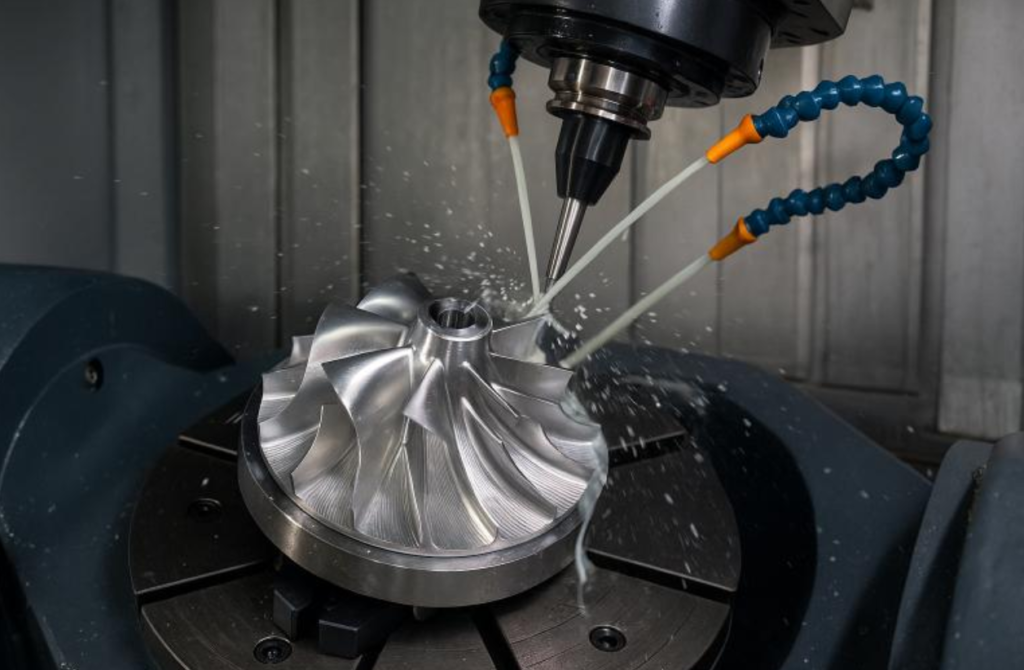
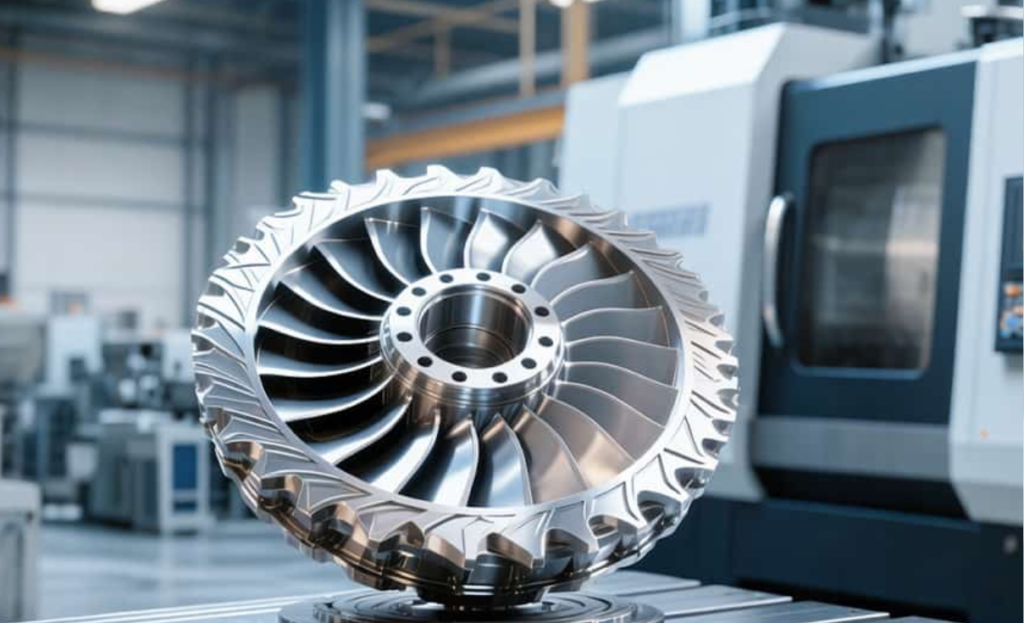
Challenge 1: 90° Full Tilt IN718 Monolithic Blisk (Aerospace)
Competitor Failure: Max tilt limited to 65°, long tool overhang creates heavy chatter; tool wear extreme, 7–10% scrap rate, multiple re-fixturing steps split production into separate setups.
Zorapid Solution:
- SLM near-net IN718 blanks cut 60% stock removal volume
- Whisker ceramic rough inserts + ultra-fine grain coated finish mills
- CAM locked constant effective overhang across full 0–90° tilt range
- Through-tool high-pressure mist cooling to drop cutting zone heat by 110°C
- Result: Full single-setup 5-axis blisk completion, reject rate 0.35%, tool life extended 220%.
Challenge 2: Thin-Wall Ti-6Al-4V 0.6mm Orthopedic Frame with Deep Undercuts
Competitor Failure: Steep tilt overhang bends thin titanium walls; wall thickness drifts ±0.022mm, high scrap from deflection and thermal warpage.
Zorapid Fix:
- Pre-stress relieved Ti blanks
- Anti-chatter carbide micro tools with shrink-fit holders
- Spindle load feedback automatically reduces feed at tilt angles with longer overhang
- Low-temperature flood coolant to stabilize part heat expansion
- Outcome: Wall tolerance locked ±0.006mm across full 5-axis contour run.
Challenge 3: Transparent S136 Mold Core with Complex Curved Optic Surfaces
Competitor Failure: Tilted finishing passes wear tool coating unevenly; surface finish shifts from Ra0.05μm up to Ra0.8μm mid-run, visible polishing ripples.
Zorapid Fix: Cryo-treated S136 stainless steel, segmented low-load finishing toolpaths, single dedicated finish tool set for all tilt angles, post-machining hand mirror polish controlled in climate-controlled room. Zero surface variation over multi-hour 5-axis finishing cycles.
Challenge 4: 7075-T6 Tall Thin Rib EV Structural Brackets (80mm Rib Height)
Competitor Failure: Steep tilt creates long tool overhang; rib vibration causes chatter marks, dimension shifts ±0.018mm.
Zorapid Fix: Alternating tilt angle roughing to balance side loads, short stub tools where geometry allows, DLC polished cutters eliminating BUE buildup. Chatter-free rib surfaces, stable ±0.007mm linear tolerance.
Challenge 5: 40% GF-PA66 Multi-Cavity Insulator Housings with Undercut Snap Features
Competitor Failure: Glass filler rapidly erodes standard carbide cutters; undercut hole diameters shrink as tools wear across 5-axis tilted passes.
Zorapid Fix: Diamond DPC coated micro end mills, low-heat air-mist cooling to stop plastic melting, ultra-light finishing stock removal to preserve cutter diameter over long batch runs.
Applicable Materials & Direct 5-Axis Machining Performance Comparison
| Material Grade | Top 5-Axis Specific Defects | Zorapid Optimized Tool Coating | Typical Tool Wear Multiplier (Aluminum = 1.0) | Zorapid Average Reject Rate | Max Stable 5-Axis Tilt Capability |
|---|---|---|---|---|---|
| 7075-T6 / 5052 Aluminum | BUE, rib chatter, chip scratching | DLC Polished Carbide | 1.0 | 0.24% | Full 90° tilt unrestricted |
| Ti-6Al-4V Titanium | Thermal edge softening, thin wall deflection | Ultra-fine TiAlN | 2.7 | 0.31% | Full 90° tilt with adaptive feed |
| IN718 Inconel | Work hardening, catastrophic chipping | Whisker Ceramic | 4.3 | 0.38% | Full 90° tilt (SLM blank recommended) |
| 17-4PH / 304 Stainless | Work hardening, contour burrs | Multi-Layer TiCN | 1.9 | 0.29% | Full 90° tilt |
| H13 Hard Mold Steel | Abrasive flank wear, radius microcracks | Thick TiAlN / Cermet | 3.2 | 0.40% | Full 90° low-load finish passes |
| S136 Stainless Mold Steel | Polished surface uneven wear | TiCN + post passivation | 2.5 | 0.42% | Full 90° optical finish capable |
| GF-PA66 Glass Filled Nylon | Glass abrasion, thermal melt warp | Diamond DPC | 3.6 | 0.27% | 85° max tilt to limit overhang |
| Medical PEEK | Heat sagging, surface smearing | Uncoated polished carbide | 1.5 | 0.22% | Full 90° climate-controlled cell |
Core Material 5-Axis Selection Rules:
- Superalloys (IN718/Ti) require adaptive feed tied directly to tilt overhang length—static speeds guarantee short tool life and deflection.
- Aluminum demands DLC polished tools; BUE ruins 5-axis contour surface finish faster than any other material flaw.
- Hard mold steels cannot run high-feed deep tilted roughing; low-stock trochoidal paths prevent tool fracture.
- Glass-filled plastics require diamond coating—standard carbide erodes 3x faster during multi-angle 5-axis profiling.
Real Customer Case Study
Case 1: German Aerospace Tier 1 IN718 Blisk Monolithic Component
Project Scope: Single-setup full 5-axis blisk, 3,200 unit annual batch, critical blade profile tolerance ±0.005mm, Ra0.3μm surface requirement
Prior Vendor Pain Points: Competitor split into 3 separate 3-axis/limited 5-axis setups, 8.2% scrap rate from tilt deflection and tool chipping, 16-day production delay, huge tool replacement overhead.
Zorapid 5-Axis Material-Specific Execution
- ESR IN718 billet pre-anneal stress relief
- SLM near-net blank to cut 60% machining stock
- Digital twin CAM simulation mapping deflection for every 0–90° tilt angle
- Ceramic rough inserts, balanced shrink-fit holders, high-pressure through-tool coolant
- IIoT spindle load adaptive feed adjustment, auto-probe every 5 parts for 5-axis thermal stack correction
- Final AI vision full contour inspection, NADCAP serialized process logs
Measurable Results
- Single full 5-axis setup, zero re-fixturing
- Final reject rate only 0.36%
- Tool service life increased 215% vs competitor carbide tooling
- Delivered 5 days ahead of contracted timeline, full audit-ready thermal & tool wear records
Your Production Requirements → Zorapid Tailored 5-Axis Material Solutions
Pain 1: Complex monolithic parts need multiple re-fixturing setups, stacking tolerance errors
Solution: Full 0–90° unrestricted 5-axis programming with tilt-deflection pre-simulation, single-setup complete machining for most geometries
Pain 2: Titanium/Inconel runs burn through cutters rapidly during steep tilted passes
Solution: Material-matched premium ceramic/TiAlN tooling, trochoidal low-load roughing, adaptive feed tied to tilt overhang length
Pain 3: Tall ribs / thin walls bend and dimension drift as spindle tilts to steep angles
Solution: Anti-chatter shrink holders, load-sensing spindle feed reduction, pre-stress relieved blanks to eliminate internal material tension
Pain 4: Mold steel optical polished surfaces degrade unevenly across multi-angle finishing
Solution: Segmented low-load finish toolpaths, dedicated finish tool sets, climate-controlled machining cells stabilizing part temperature
Pain 5: Glass-filled plastic 5-axis undercut parts suffer fast cutter diameter erosion
Solution: Diamond DPC coated micro end mills, low-heat mist cooling, minimal finishing stock removal to preserve bore/feature sizing
Pain 6: No audit documentation for 5-axis tilt parameters, thermal compensation, tool wear logs for aerospace/medical
Solution: Automated hourly log exports of every tilt angle program, spindle load, probe offsets, tool runtime for ISO/AS/NADCAP compliance
2026 Global Industry Data & Future Trend Analysis
5-Axis Machining Quality & Cost Market Benchmark Table
| Production Operation Model | 2026 Average 5-Axis Scrap Rate | Tool Cost Per 10,000 Parts | Unattended Max Runtime | 2026 Global Market Share |
|---|---|---|---|---|
| Generic 5-axis one-program-fits-all shops | 5.8% | 100% baseline tool spend | 6–8 hours | 45% (low-margin general mechanical parts) |
| Mid-tier material-separated 5-axis programming | 2.9% | 77% tool spend | 12–16 hours | 38% (standard automotive, automation) |
| Zorapid tilt-calibrated material-specific 5-axis workflow | 0.35% average | 49% tool spend (longer tool life) | 30+ hours fully unattended | 17% high-value aerospace, medical, EV precision fast growth segment |
Key 2026–2030 Industry Trends
- Tilt-Angle Adaptive CAM Becomes High-Value OEM Mandate: By 2028, 64% of EU/US aerospace and medical buyers will require proof of deflection simulation across full tilt ranges; generic static-program 5-axis shops lose certified contracts.
- SLM Near-Net Blanks Paired With 5-Axis Standard For Superalloys: Reduced stock removal slashes 5-axis tool wear by 40–60%; integrated hybrid manufacturers own massive TCO advantages over pure CNC competitors.
- Lights-Out 24/7 5-Axis Production Driven By Labor Shortages: Shops unable to stabilize long unattended 5-axis runs face rising labor costs and slower delivery; closed-loop IIoT systems separate top-tier precision suppliers.
- Diamond & Ceramic Tool Pricing Falls, Widely Adopted For Abrasive/High-Temp Materials: GF-plastic, Inconel, titanium 5-axis runs phase out basic TiAlN as baseline coating, rewarding shops with calibrated tilt machining expertise.
- Total Cost of Ownership (TCO) Replaces Hourly Machine Rate Sourcing: Procurement teams calculate scrap loss, tool replacement labor, and re-fixturing downtime into budgets; Zorapid’s low-defect single-setup 5-axis model cuts total project spend 20–30%.
Core Zorapid 5-Axis Material Machining Application Scenarios
Aerospace Superalloy 5-Axis Parts
IN718 blisks, Ti-6Al-4V monolithic structural brackets, turbine fuel fittings, full single-setup complex contoured geometry
Medical Implant & Surgical Hardware
Titanium orthopedic frames, PEEK instrument bodies, 316L stainless surgical tool handles (ISO13485 traceable 5-axis cycles)
EV New Energy Precision Components
7075-T6 5-axis ribbed battery brackets, 17-4PH motor shaft assemblies, GF-PA66 multi-angle insulator housings
High-Cycle Injection Mold Tooling
H13/S136/NAK80 mold cores, conformal cooling cavity inserts, optical lens mold curved polished surfaces
Industrial Automation & Hydraulics
Stainless multi-angle valve bodies, alloy actuator housings, robotic end-effector monolithic frames
Semiconductor Precision Fixtures
Low-warp aluminum vacuum chucks, hardened steel positioning dies with deep undercut mounting features
Delivery Speed Benchmarks & 5-Axis Production Timeline
Batch Lead Time Comparison (3,200pc IN718 Aerospace Blisk Reference Batch)
| Supplier 5-Axis Process Style | Total Lead Time | Number of Required Setups | Rework/Scrap Delay Risk |
|---|---|---|---|
| Generic static program multi-setup shop | 30–38 business days | 3 separate fixturing steps | 10–16 day rework hold window |
| Mid-tier material-specific limited tilt vendor | 20–27 business days | 2 setups | 4–8 day minor rework lag |
| Zorapid full single-setup tilt-calibrated 5-axis | 12–17 business days | 1 complete setup | <1 day touch-up risk, minimal scrap |
Standard Zorapid 5-Axis Material-Specific Step Timeline
- DFM digital twin deflection simulation + material process engineering sign-off: 1 business day
- Blank stress relief heat treatment (superalloy/hard steel only): 1–2 days
- 5-axis CAM tilt-angle program generation, tool preset balancing: 0.5 day
- Continuous unattended 5-axis batch machining with adaptive IIoT control: 5–8 days
- AI vision full contour inspection, SPC & audit documentation packaging: 1 day
Expedited fast-track scheduling available for urgent OEM launches; we never skip deflection simulation or stress-relief steps to rush production and sacrifice quality.
Key Benefits of Partnering With Zorapid for Material-Specific 5-Axis CNC Machining
- Low Reject Performance Guarantee: Contractual cap on 5-axis batch scrap; defects caused by tilt/material process errors remanufactured free of extra cost
- Proprietary Tilt-Deflection Digital Twin Simulation: In-house CAM workflow calculating tool overhang offset for every tilt angle, unmatched by generic 5-axis shops
- Hybrid SLM Additive Near-Net Blank Capacity: Unique in-house pre-forming drastically cuts 5-axis stock removal and cumulative tool wear load
- Full Global Certification Stack: ISO9001, AS9100 aerospace, ISO13485 medical, IATF16949 automotive; all 5-axis program/thermal/tool logs archive 10+ years for audits
- Massive Tool Life ROI Boost: 1.9–2.3x longer cutter service life slashes per-unit tool overhead vs one-size-fits-all competitors
- Single-Setup Complete Machining: Eliminates multiple fixturing tolerance stack-up, cuts labor setup hours drastically
- Fluent English 5-Axis Application Engineers: Free pre-project CAD review to optimize material, tooling and tilt strategy before cutting stock
- Consolidated Global Shipping & Compliance Docs: One full package of mill certs, SPC data, inspection reports for EU/US customs and QA sign-off
Summary
Most 5-axis CNC scrap and poor surface quality stems from ignoring material behavior across variable tilt angles—generic shops run identical feeds, speeds and tooling for aluminum, titanium, Inconel, steel and plastic alike, ignoring unique thermal, abrasion and deflection risks each alloy brings to tilted multi-axis cutting. Multiple re-fixturing steps stack tolerances, waste labor and expand lead times further.
Zorapid’s fully customized material + tilt-calibrated 5-axis workflow solves every alloy-specific flaw via digital twin deflection simulation, grade-matched coated tool stacks, adaptive IIoT feed control, stress-relieved/SLM near-net blanks and single-setup full geometry completion. We deliver industry-low reject rates, double tool lifespans, drastically reduced setup labor and shorter lead times for complex monolithic aerospace, medical, EV and mold components.
If you hold a complex 5-axis part design and want a free material machining risk assessment plus formal cost & lead time quote, our engineering team delivers a full technical breakdown within 2 business days after receiving your STEP/CAD files, material grade and batch quantity targets.
FAQ
Is 90° full tilt machining always possible for every material?
Yes with our calibrated workflow. Superalloys need SLM near-net blanks and ceramic tools; thin plastics limit max tilt to ~85° to avoid extreme overhang deflection. We tailor tilt limits per material automatically in CAM.
Does adaptive tilt feed adjustment slow overall cycle time per part?
Minor 5–9% per-piece cycle increase is heavily offset by doubled tool life, near-zero scrap and elimination of multiple re-fixturing labor hours. Total TCO is always far lower for medium/large batches.
How much extra upfront cost comes with your premium material-specific tooling and simulation setup?
Upfront tooling investment rises ~11–17%, but total project spend drops 20–30% after factoring fewer cutter swaps, minimal scrap and zero extra setup labor. We provide full line-item TCO comparisons upfront.
Can you run lights-out unattended 5-axis batches on thin-wall titanium/Inconel?
Fully viable with stress-relieved blanks, anti-chatter holders and spindle-load adaptive feed. Our 28–32 hour unmanned superalloy 5-axis runs consistently hold ±0.006mm wall thickness tolerance.
What audit documentation do you provide for aerospace/medical regulated parts?
Full material mill certs, complete 5-axis tilt program logs, hourly spindle temperature/load records, auto-probe offset data, tool runtime wear tracking, and final CMM/SPC contour inspection reports stored long-term for regulatory audits.
Can standard 3-axis optimized CAM files be directly converted for stable 5-axis production?
No. 3-axis programs lack tilt deflection and variable overhang logic; direct conversion guarantees chatter, deflection and poor surface finish. Our team rebuilds CAM paths fully optimized for 5-axis kinematics per material.
What’s the hardest material you reliably machine in full 90° 5-axis single-setup runs?
ESR-grade IN718 Inconel is our most demanding baseline; paired with ceramic inserts and SLM blanks we run consistent low-scrap full tilt production for aerospace blisk and structural components daily.