Published by Zorapid
Every product team faces this critical crossroad early: Do I invest in a fast, low-cost prototype mold for validation, or jump straight into a durable production hard steel mold? Pick wrong, and you blow budget, miss launch timelines, or lock in flawed part geometry for thousands of runs. Local Western mold shops overprice prototype tools, generic Asian factories force overbuilt production molds for small test batches, and few suppliers seamlessly transition your prototype tool into scaled production.
At Zorapid, we break down the full cost, cycle time, lifespan, and capability gap between prototype and production injection molds—with actionable data to pick the right tool for your phase.
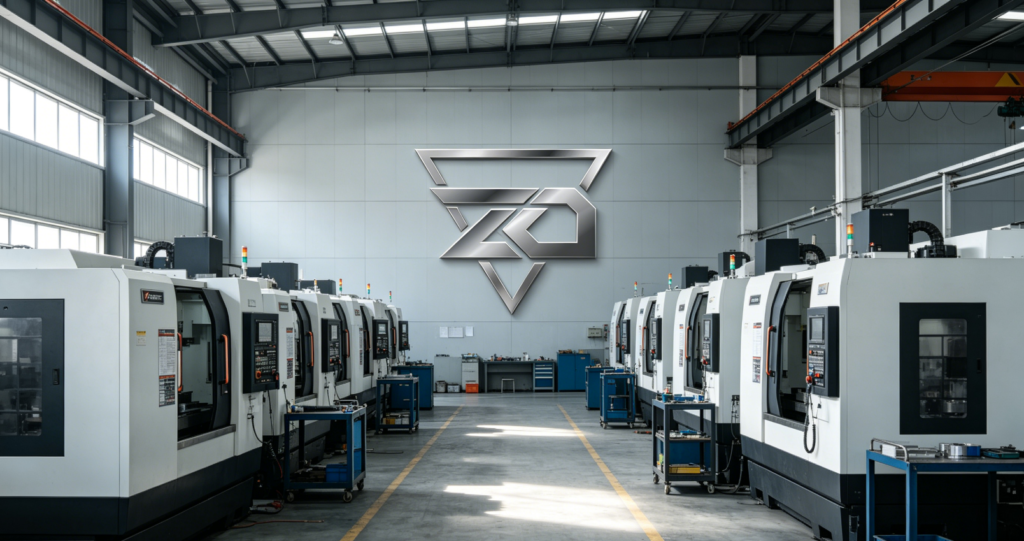
In-Depth Mold Process Technology Breakdown
Full Zorapid Prototype Mold Workflow
- Free Moldflow Simulation + DFM Mold Design (Same-Day CAD Review) Engineers run fill, cooling, warp analysis before cutting metal; simplify non-critical slides/lifters to slash machining hours vs full production mold complexity.
- 5-Axis High-Speed CNC Machining for Al7075 / P20 Soft Steel Cavity Tolerance ±0.05mm baseline; insert hardened steel pins only for high-wear threads or sharp edges to extend prototype lifespan without full hard steel cost.
- Basic Straight-Drilled Cooling Channels, Standard Ejector Systems No intricate conformal cooling (reserved for production) to cut build time; aluminum’s high thermal conductivity offsets simpler cooling for low-volume batches.
- Standard Surface Finish (Textured, Matte, Basic Polish) In-House Mirror polish is optional upgrade, not default for prototype validation.
- 100% First Article Sampling + Injection Trial Report We run 20–50 sample shots, document shrinkage, warpage, gate marks, send dimensional data before handoff to you.
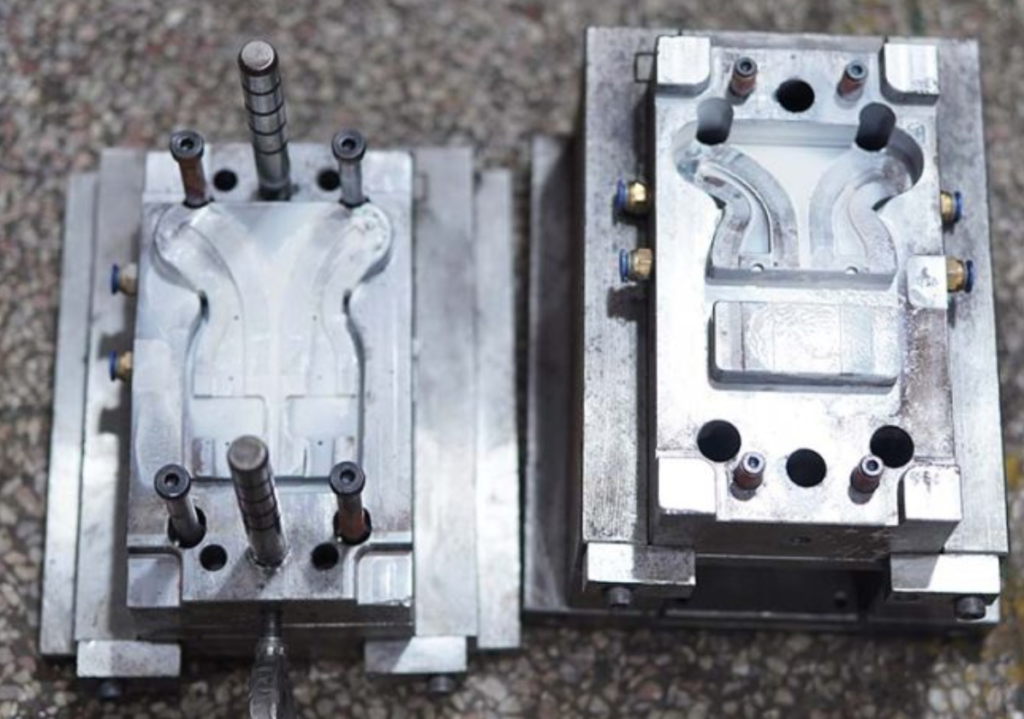
Prototype Aluminum Mold Assembly
Full Zorapid Production Hard Steel Mold Workflow
- Advanced Moldflow + Warpage + Pack Pressure Multi-Scenario Simulation Engineers optimize gate size, conformal cooling layout, slide/lifter timing for stable, repeatable millions of cycles.
- Rough CNC → Vacuum Heat Treatment → Precision Finish CNC + Wire EDM / Sink EDM Hardened steel requires multi-stage machining to avoid post-heat warp; micron tolerance ±0.01–0.02mm for high-volume consistency.
- Conformal 3D Printed or Deep Milled Cooling Channels Faster, uniform cooling slashes per-part cycle time by 20–40% vs prototype mold cooling.
- Full Mechanization: Hydraulic Slides, Lifters, Hot Runner Systems (Optional) Multi-cavity layouts (2/4/8/16 cavity) built for maximum throughput; automated ejection for lights-out molding.
- Premium Finishing: Mirror Ra0.025μm Polish, Custom VDI Texture, Corrosion Passivation
- Long-Term Mold Validation: 500+ trial shots, full CMM batch inspection, maintenance schedule documentation
Side-by-Side Competitor Benchmark Table
| Comparison Metric | Zorapid Prototype Mold | Zorapid Production Mold | US Local Mold Shops | Generic Bulk Asian Mold Factories |
|---|---|---|---|---|
| Primary Tool Material | Al7075, P20 Soft Steel | S136, NAK80, H13 Hardened Steel | P20/S136 only, high labor markup | Cheap low-grade steel for production, slow aluminum prototype builds |
| Typical Cavity Count | Single cavity standard | 2–16 multi-cavity | Min 2 cavity production, pricey single prototype | Push multi-cavity even for <10k part orders |
| Max Tool Lifespan Cycles | Al:5k–10k; P20:30k–50k | S136/NAK80:500k–1M+ | Same lifespan grades, 2–3x higher upfront cost | Hard steel lifespan inconsistent with poor heat treatment |
| Total Build Lead Time | 5–10 days | 22–38 days | 28–60 days | Prototype:14–25 days; Production:30–50 days |
| Upfront Tool Cost (Simple Single Cavity) | $1,200–$3,200 | $28,000–$75,000 | $4,500–$9,000 prototype; $60k–150k production | Prototype ~$2,000–4,500; Production ~$35k–90k |
| Standard DFM/Moldflow | Free included | Free advanced simulation | $300–800 simulation add-on | Basic automated check only, no engineer optimization |
| Tolerance Accuracy | ±0.05mm | ±0.01–0.02mm | ±0.03–0.08mm (price tiered) | ±0.08–0.15mm loose prototype tolerance |
| Post-Build Sampling Trials | 20–50 free shots | 500+ validated shots | Limited paid sampling | Minimal trial runs to save factory time |
| Transition Discount (Prototype → Production Mold) | Reserved 15% off production tool upgrade | Base price | No cross-tool discount | No design carryover savings |
Core Industry Gap: Most vendors treat prototype and production as completely separate projects. Zorapid reuses your validated part design, mold base layout, and DFM data when you scale—cutting redesign engineering hours and avoiding duplicated errors.
Ultra-Challenging Mold Jobs Competitors Refuse — Zorapid Custom Solutions
These complex mold geometries force other suppliers to decline low-volume prototype runs or quote impossible production price tags:
- Thin-Wall 0.6–0.9mm Medical/Enclosure Parts with Glass-Filled GF-PA66 Pain Point: Abrasive glass filler eats aluminum prototype cavities fast; rival shops demand immediate hardened steel production molds even for 1k test batches. Zorapid Solution: Al7075 base mold + insert NAK80 wear plates on core/cavity surfaces; extend prototype life to 8k cycles at 60% less cost than full hard steel production tool upfront.
- Deep Undercut Multi-Slide Consumer Hardware (3+ Side Actions) Pain Point: Complex slides add massive build time to prototype molds; many shops simplify geometry and force design changes instead of building full functional prototype tooling. Zorapid Solution: Simplified compact slide mechanisms for prototype validation; same slide CAD carried over directly to production hard steel mold without redesign.
- Clear Transparent PC/PMMA Optical Parts Requiring Near-Mirror Prototype Finish Pain Point: Aluminum cannot hold ultra-high polish; competitors only offer mirror finish on full S136 production molds. Zorapid Solution: P20 semi-steel prototype mold with hand premium polishing; delivers Ra0.03μm surface for optical testing before investing in S136 production tooling.
- Hybrid Molding: Overmold Soft TPE onto Rigid ABS/PC Inserts Pain Point: Dual-shot prototype tooling is rarely offered by small mold makers; they split into two separate single molds, ruining fit validation. Zorapid Solution: Compact dual-shot prototype mold frame; two injection barrels in one tool for real overmold functional testing—we scale this frame to full dual-shot production molds seamlessly.
- Large Format Structural Parts (>400mm) for EV/Industrial Housings Pain Point: Large aluminum molds warp during machining/injection; Western shops charge extreme premiums for big prototype tooling. Zorapid Solution: Reinforced ribbed aluminum mold base, stress-relief post-machining, balanced injection pressure parameters to eliminate warp during prototype sampling.
We never force you to redesign your part just to fit cheap mold construction—our engineers adjust tooling structure to match your original design intent for both prototype and production phases.
Mold Tool Material Full Comparison Table
Tool Steel & Aluminum Grade Performance Matrix
| Mold Material | Primary Use Case | Hardness HB | Max Cycle Lifespan | Machining Speed | Corrosion Resistance | Best Resin Match | Cost Tier vs Al7075 |
|---|---|---|---|---|---|---|---|
| Al7075 (Prototype Core) | Low-volume validation <10k shots | 70–80 | 5,000–10,000 | Fastest (5–10 day build) | Moderate (needs anti-rust spray) | ABS, PP, PE, unfilled PA | Baseline ($) |
| P20 Soft Steel (Mid-Tier Prototype) | 10k–50k pilot batches | 280–300 | 30,000–500,000 | Medium (12–18 days) | Low (coat for moisture) | Unfilled engineering plastics | 2.2x Al7075 |
| NAK80 Polished Steel (Premium Pro / Light Production) | High-gloss cosmetic parts | 380–400 | 400,000–800,000 | Slow (heat treat required) | High | PC, PMMA, transparent resins | 4.5x Al7075 |
| S136 Hardened Stainless (Full Production) | Medical, corrosive resin, long run | 480–520 | 800,000–1.2M | Slowest (multi-stage process) | Excellent (medical washdown safe) | GF-PA66, PVC, flame-retardant plastics | 6.8x Al7075 |
| H13 Hot Work Steel (Heavy-Duty Production) | High-temp filled resins, abrasive composites | 500–540 | 1M+ heavy abrasive cycles | Slow, high tool wear during machining | Moderate | GF-PEEK, filled POM, high-temperature blends | 7.5x Al7075 |
Mold Material Quick Selection Guide
- Concept validation, <10k parts, tight budget: Al7075 Prototype Mold
- Pilot run 10k–50k, minor cosmetic needs: P20 Soft Steel Prototype
- Gloss/transparent consumer parts pre-launch: NAK80 Semi-Hard Prototype
- Full mass production, medical/corrosive resin: S136 Hardened Production Mold
- Heavy glass-filled abrasive plastics, million-cycle runs: H13 Production Mold
Real Zorapid Customer Case Studies
Case 1: US Medical Startup – Single-Cavity PP Surgical Handle
Client Pain: Local US shop quoted $5,800 aluminum prototype mold + 6-week lead; startup only needed 3,500 validation units before FDA trials.
Zorapid Execution: Al7075 prototype mold, 7-day build, 30 free sample shots, full dimensional FAI report. Post-validation, upgraded to S136 production mold with 15% transition discount, reused existing part CAD and gate layout.
Outcome: 62% lower upfront tool cost vs US quote; prototype parts passed biocompatibility testing; production mold delivered 800k+ cycle stable output.
2: EU EV Hardware OEM – GF30 PA66 Battery Connector Housing
Client Pain: Generic factory pushed direct H13 production mold ($62k) for a 12k pilot batch, refusing a hybrid insert prototype solution.
Zorapid Execution: Al7075 base mold + embedded NAK80 wear inserts, prototype lifespan extended to 13k cycles for full pilot testing. Once design locked, scaled to 4-cavity H13 production mold with shared mold base engineering.
Outcome: Upfront tool spend cut by 74% for pilot phase; zero geometry redesign needed when switching to mass production.
3: Consumer Tech Brand – PMMA Clear Lens Optical Component
Client Pain: Competitors stated mirror polish only possible on full S136 production molds (
$41k minimum investment for testing).
Zorapid Execution: Premium hand-polished P20 prototype mold, Ra0.03μm optical finish, 22-day build, 6,000 test lenses for lab light transmission validation.
Outcome: Confirmed optical performance before committing to high-cost S136 production tool; saved $29k in early-stage capital risk.
4: Industrial Robotics Firm – TPE Overmolded ABS Gripper Pad
Client Pain: Dual-shot prototype tooling unavailable from regional suppliers; forced to mold ABS then manually bond TPE for testing (poor fit data).
Zorapid Execution: Compact dual-shot aluminum prototype mold, full overmold injection process validated on 2,800 test parts. Production dual-shot S136 mold replicated exact prototype stack layout.
Outcome: Accurate bond strength and cycle time data from prototype runs; production launch timeline shortened 3 weeks with no redesign delays.
Your Project Requirements → Custom Zorapid Mold Roadmap
We map every common product team pain point to prototype or production mold strategies:
- Only need 1k–10k parts for beta/FDA/field testing Solution: Al7075 aluminum prototype mold, low upfront cost, fast build; upgrade path pre-negotiated with discount for future production hard steel tooling.
- Confirmed demand >500k annual units, locked final CAD design Solution: Direct S136/H13 multi-cavity production mold with conformal cooling, hot runner optimization to minimize per-piece cycle cost long-term.
- Unfinished design, multiple CAD revision cycles expected Solution: Low-cost aluminum prototype mold for each iteration; minimal rework fees for cavity tweaks vs rebuilding full steel molds.
- Abrasive glass-filled, medical, or corrosive plastic resins Solution: Hybrid insert prototype mold (Al base + hard steel wear inserts) for validation; seamless switch to full corrosion-resistant S136 production mold.
- Tight cash flow, cannot absorb $30k+ upfront tool spend pre-launch Solution: Phase 1 prototype validation first; spread production mold payment schedule post-beta sales/revenue milestone.
- Need identical cosmetic/functional quality between pilot and mass production parts Solution: Match draft angles, gate positions, surface finish specs across prototype and production tooling; our engineering team archives all mold design files for 5 years free of charge.
Share your target part quantity, resin grade, tolerance specs, and launch timeline—we deliver a side-by-side prototype vs production total cost-of-ownership (TCO) breakdown before any machining starts.
2026 Global Mold Manufacturing Industry Data & Trend Analysis
Global Injection Mold Tooling Market Snapshot 2026
Total market value: USD 56.2 Billion (2026), CAGR 5.1% through 2031 reaching $72.1B. 42% of all new product launches start with prototype rapid tooling before scaling to production molds.
End-Industry Mold Demand Split (Prototype vs Production Volume Share)
| Vertical Sector | % Prototype Mold Orders | % Production Hard Steel Mold Orders | Key Volume Driver |
|---|---|---|---|
| Medical Devices | 48% | 52% | FDA/MDR small-batch validation first |
| Automotive / EV | 31% | 69% | High annual production volumes post-pilot |
| Consumer Electronics | 39% | 61% | Fast iteration cosmetic testing |
| Industrial Robotics | 43% | 57% | Custom low-run machinery components |
| Packaging & Consumer Goods | 22% | 78% | Mass commodity high-volume runs |
Critical Industry Trends Shaping Mold Sourcing 2026–2030
- TCO (Total Cost of Ownership) Replaces Upfront Price as Primary Decision Metric 71% of US/EU product teams now calculate full lifecycle cost (tool cost + per-piece molding cost + downtime/rework) instead of just initial mold quote. Zorapid provides free TCO spreadsheets for every RFQ.
- Hybrid Insert Prototype Molds Become Standard for Abrasive Resins Traditional all-aluminum molds fail fast with GF-PA66/PEEK; hybrid Al+hard insert tooling delivers balanced cost/lifespan, adopted by 65% of medical/EV startups in 2026.
- Seamless Prototype-to-Production Handover Is a Make-or-Break Supplier Differentiator 83% of teams report costly delays switching vendors between prototype and production; integrated manufacturers like Zorapid eliminate redesign and requote overhead entirely.
- Conformal Cooling 3D Printing Integration Lowers Production Cycle Times Dramatically Production molds with 3D printed conformal cooling cut cycle time 25–40% vs standard drilled cooling; prototype molds still use simple drilled channels to control build price for low batches.
Key Application Scenarios for Prototype vs Production Molds
Best Fits for Zorapid Prototype Molds (Al/P20)
- Medical device beta test batches (implant instruments, disposable housings <10k units)
- EV connector pilot validation, small-batch charger components
- Consumer tech pre-launch market sample units, cosmetic fit checks
- Robotics gripper, sensor housing design iteration cycles
- Lab analytical equipment low-volume trial builds
Best Fits for Zorapid Production Hard Steel Molds (S136/NAK80/H13)
- Mass-run medical disposable devices requiring millions of sterile cycles
- High-volume EV battery packs, inverter structural housings
- Mass consumer electronics enclosures, transparent optical lenses
- Automotive interior/exterior trim, high-abrasive filled plastic parts
- Food-grade, washdown industrial machinery housings (S136 stainless for corrosion resistance)
Zorapid End-to-End Delivery Timeline Visual Breakdown
Lead Time Breakdown
- Prototype Mold Full Timeline DFM/Moldflow (2 days) → CNC Machining (3–6 days) → Polishing/Texuring (1–2 days) → Injection Sampling (1 day) Total: 5–10 working days factory build Air express door-to-door US/EU: 3–5 extra calendar days for sampled parts/mold shipping
- Production Hard Steel Mold Full Timeline Advanced Simulation (3 days) → Rough Machining (7 days) → Vacuum Heat Treat (5 days) → Finish CNC/EDM (8–15 days) → Mechanism Assembly & Polishing (4–7 days) → Mass Trial Shots (3 days) Total: 22–38 working days factory build
Why Zorapid Beats Competitor Speed
- Full in-house 3,000㎡ mold shop: 5-axis CNC, wire EDM, sink EDM, heat treatment furnaces, injection molding machines—no outsourced third-party steps
- Dedicated prototype mold production cell prioritized separate from mass production mold queue
- Pre-built standard mold base inventory cuts raw material prep time by 40%
- Live build photo/video updates shared via email/LinkedIn throughout manufacturing
Core Advantages of Partnering With Zorapid for Both Prototype & Production Molds
- Single Supplier for Entire Product Lifecycle No switching vendors, no lost mold design data, no repeated DFM/engineering fees when scaling from prototype to mass production.
- Transparent TCO Cost Analysis Included Free We calculate upfront tool cost, per-piece cycle cost, maintenance expense, and total lifecycle spend so you pick the most economical mold type for your volume.
- Prototype Upgrade Discount Program 15% fixed discount on production hard steel molds if you first run validation with our Zorapid prototype tooling; mold base and cavity CAD reused to slash engineering hours.
- Regulatory-Ready Documentation Package Mold material certs, Moldflow reports, FAI sampling data, batch traceability files formatted for FDA, EU MDR, ISO audits—standard with every order.
- Engineer-Led Mold Design, Not Sales-Driven Quoting Your project manager is a mold engineer who balances cost, cycle time, and lifespan instead of upselling overbuilt production molds for tiny test batches.
- Flexible Hybrid Mold Technology Exclusive to Zorapid Aluminum base + hardened steel insert prototype molds solve abrasive resin pain points no purely aluminum or full steel competitor can match at mid-tier pricing.
- Long-Term Mold Archiving & Maintenance Support We store your full mold design files securely for 5 years; offer low-cost repair, texture refresh, and cavity modification for future product revisions.
Final Summary
Choosing between prototype mold and production mold is never a one-size-fits-all decision—it hinges on your total part quantity, resin abrasion, launch stage, budget, and regulatory timeline.
Prototype aluminum/soft steel molds deliver ultra-fast, low-cost validation for small beta batches, ideal for startups and design teams iterating geometry before full market launch. Hardened steel production molds carry heavy upfront cost but crush per-unit cycle pricing and deliver million-cycle durability for confirmed high-volume demand.
The biggest risk with outside suppliers: Western shops overcharge prototype tooling, generic Asian factories push expensive production molds for tiny test runs, and split vendors create costly redesign gaps when scaling up.
Zorapid’s integrated mold factory eliminates those risks entirely. We build agile prototype tools for your validation phase, retain all your design engineering data, and offer discounted seamless upgrades to multi-cavity hardened production molds once your product is ready for mass output. Whether you’re testing 1,000 medical components or gearing up for 1 million EV parts annually, our cost-cycle analysis and custom mold engineering deliver the lowest total ownership cost for every product stage.
Send your STEP file, target part volume, and resin grade today for a free DFM + TCO prototype vs production comparison quote.
FAQ
How many parts can a standard Al7075 prototype mold reliably produce?
5,000–10,000 shots for unfilled plastics (ABS, PP, PE). With our hard steel insert upgrade, lifespan extends to 12k–18k shots for glass-filled GF-PA66.
Can prototype mold parts match production part dimensional tolerance and surface finish?
A: Standard prototype tolerance ±0.05mm vs production ±0.01–0.02mm. We offer premium P20 polished prototype molds that nearly mirror production cosmetic quality for optical/gloss testing.
What happens to my prototype mold once I upgrade to production tooling?
You own the prototype mold fully; we can ship it to your facility, store it long-term at our factory, or modify cavities for secondary product variants at reduced rework cost.
How much faster are production mold cycle times vs prototype molds?
Production molds with conformal cooling run 20–40% shorter cycles per part; multi-cavity layouts drop per-unit molding labor cost drastically at scale.
Do you offer hot runner systems for prototype molds?
Hot runners are rarely cost-effective for <10k runs, so we default to cold runner prototype designs to cut upfront price; hot runner is standard on all high-volume production molds over 200k annual units.
Is S136 required for medical device molds?
For sterile washdown, corrosive resins, and FDA compliance, yes—S136 stainless is the industry standard production grade. P20/Al works safely for non-implant beta testing validation batches.
Can I switch resin materials after building a prototype mold?
Minor resin swaps (ABS ↔ PP) require only parameter tuning; switching to highly abrasive GF-PA/PEEK needs our hard steel insert retrofit to protect the aluminum cavity.
Are moldflow and DFM analysis charges added separately?
No—basic Moldflow/DFM is 100% free for prototype orders; advanced multi-scenario production simulation is also included at no extra cost in all Zorapid quotes.
What warranty do you provide on mold lifespan?
We guarantee stated cycle lifespans for all mold grades; premature cavity wear from factory machining defects is repaired free with priority turnaround. Customer misuse (overpressure, unapproved abrasive resins) is excluded.
Do you ship molds internationally to US/EU facilities?
Yes—we handle export documentation, heat treatment certs, and secure wooden mold crating for ocean/air freight. We can also offer in-house molding production long-term at our Zhongshan factory instead of mold export.