Published by Zorapid
If you’re an industrial engineer, procurement manager or product designer in Europe or North America, you’ve already noticed a massive shift in 2026 manufacturing.
For years, teams debated: CNC subtractive machining OR additive 3D printing? Pick one.
This year, that debate is dead.
Neither technology can handle modern production demands alone. The industry is racing toward integrated, intelligent, low-waste hybrid workflows—and six clear trends are reshaping every factory floor from Stuttgart to Texas.
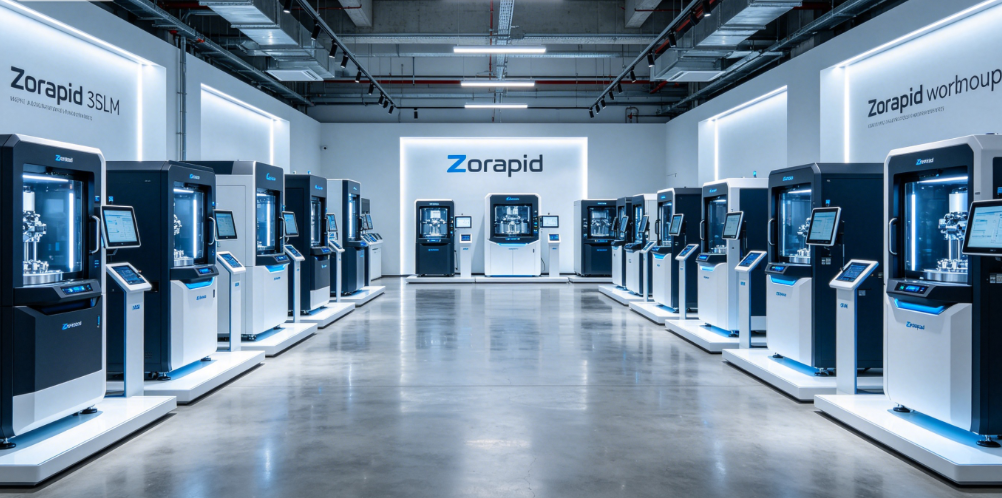
At Zorapid, we run a full 3,000㎡ precision hybrid manufacturing center with industrial SLM metal printers, 5-axis CNC mills and in-house post-processing lines. We serve aerospace, medical, automotive and semiconductor OEMs across the EU, UK and USA every day. Today we’ll break down exactly what these 2026 shifts mean for your product development, lead times and part costs.
Hybrid Manufacturing Becomes Standard Production (Not Just Prototyping)
Let’s start with the biggest industry shift of 2026: hybrid additive + CNC workflows are no longer a niche lab experiment. They’re mainstream mass production technology.
Two mature hybrid models dominate factory floors right now:
- Sequential Hybrid (Most Cost-Effective for Small & Mid-Size OEMs) Print near-net shape parts via SLM/DED additive first, then send to 4/5-axis CNC for tight-tolerance critical surfaces: bearing seats, threaded holes, sealing flanges and precision mating faces. Cuts material waste by up to 40% vs full CNC billet machining, while locking in Ra ≤0.4μm surface finish only CNC can deliver.
- Integrated Single-Machine Hybrid (For High-Value Aerospace & Medical Parts) One machine alternates metal deposition and CNC milling mid-print. Engineers can machine internal channels, conformal cooling paths and hidden threads before layers enclose features—something impossible with separate standalone equipment.
Market Data Backing This Trend
Global hybrid manufacturing market value hits $2.8B in 2026, projected to hit $5.45B by 2030 with 18.1% annual growth (CAGR). Every top-tier aerospace and medical OEM we partner with at Zorapid has shifted 30%+ of complex component orders to hybrid workflows this year.
Real Zorapid Example
A US medical device client needed titanium alloy implant fixtures with internal weight-saving lattices + ±0.005mm mounting hole tolerances.
- Pure CNC: Wasted 72% Ti-6Al-4V billet material, 11-day lead time, 4 separate fixture setups
- Zorapid sequential hybrid: SLM print lattice base, 5-axis CNC finish critical holes. 28% material waste reduction, 4-day turnaround, single fixturing cycle.

AI Takes Over CNC Programming & Additive DFM Simulation
In 2025, AI was a nice add-on tool for CAM software. In 2026, it’s mandatory to hit first-time-right production.
Two AI use cases directly cutting your project costs:
AI Auto CAM for Multi-Axis CNC
Traditional CNC programming requires skilled engineers to manually map tool paths, avoid chatter ripples and adjust fixturing. Modern AI CAM platforms auto-generate optimized 5-axis paths, predict tool wear and eliminate collision risks in minutes. Programming time drops by 60% for complex parts.
AI-Powered DFM & Warpage Simulation for Additive
The biggest pain point of metal 3D printing used to be unpredictable warpage, sink marks and uneven layer shrinkage.
2026 simulation tools feed CAD data into machine learning models to automatically adjust laser scan speed, powder bed temperature and support structures before printing a single layer. At Zorapid, we run AI Moldflow & SLM stress simulation on every metal order—our first-print success rate jumped from 76% to 94% in early 2026.
For EU medical and aerospace clients with strict validation rules, AI simulation also generates full traceable process reports that pass ISO 13485 and AS9100 audits without extra paperwork.
Sustainability Moves From Marketing Buzz to Hard Production KPIs
European carbon border taxes and US EPA manufacturing rules have completely changed client requirements in 2026. Buyers no longer just ask for low prices—they demand verifiable carbon footprint data per component.
Sustainability upgrades hitting CNC & additive lines globally:
- CNC shops adopt MQL minimal lubrication, dry cutting and closed-loop coolant recycling to slash energy and chemical waste
- Additive facilities standardize full metal powder recycling (titanium, Inconel 718, 17-4PH stainless) with less than 2% material contamination risk
- Machine builders roll out low-idle-power CNC and SLM equipment that cuts standby energy draw by 35%
Hybrid workflows naturally lead sustainability goals: additive near-net shaping eliminates tons of metal scrap compared to carving solid billets with CNC alone. We regularly provide full carbon footprint breakdowns to our German, French and UK clients as part of every quotation package—this is now a non-negotiable procurement requirement in 2026.
Expanded High-Performance Material Library for Combined CNC + AM Processing
Just two years ago, material options for hybrid manufacturing were limited to basic aluminum and stainless steel. 2026 unlocks industrial-grade specialty alloys compatible with both additive printing and precision CNC finishing:
- Medical grade: Ti-6Al-4V ELI, cobalt chrome, biocompatible PEEK polymer
- Aerospace high-temp: IN718, Hastelloy X, titanium aluminide
- Semiconductor & energy: copper alloys, beryllium copper, high thermal conductivity aluminum composites
- Engineering plastics: GF-PA66, fire-retardant ABS, medical-grade PEKK
The key upgrade? These alloys are formulated to balance printability for SLM and stable machining performance on 5-axis CNC, no brittle heat-affected zones ruining post-print surface quality. Zorapid stocks all above materials in-house, so clients don’t face long lead times for custom alloy sourcing.
Small-Batch & On-Demand Hybrid Production Replaces Massive Tooling Runs
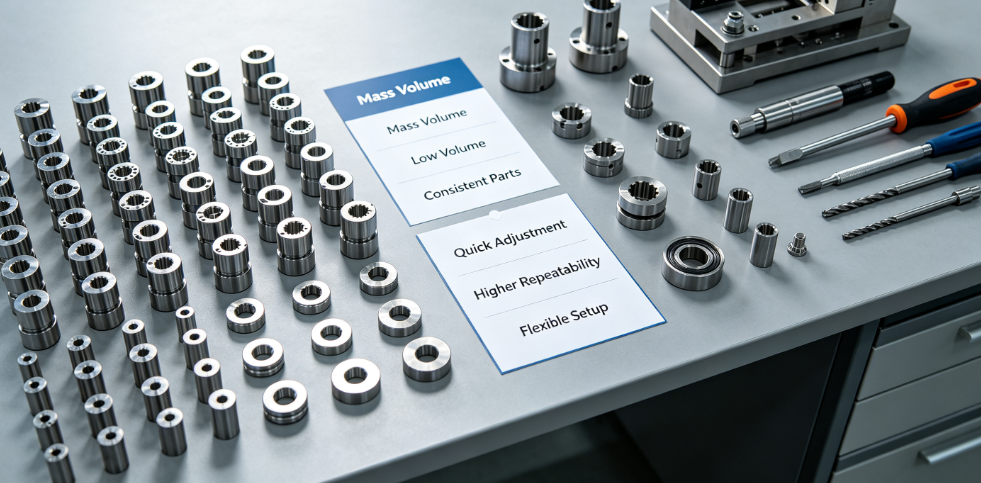
OEMs across Europe and the US are moving away from high-volume rigid production lines in 2026. Consumer electronics, EV automotive and medical equipment demand frequent design iterations and batch sizes from 1 to 5,000 units.
Traditional mass manufacturing forces clients to pay expensive injection molds or custom CNC fixtures for low-volume test runs. Hybrid CNC + additive eliminates that cost barrier:
- No hard tooling required for complex geometry prototypes
- Iterate CAD designs and reprint/re-machine revised batches within 24–72 hours
- Scale seamlessly: 1-off prototype → small batch pilot → medium production runs without switching factories
Our US EV connector client tested 12 lattice cooling housing iterations with Zorapid hybrid service in one month—something that would have taken 3+ months with conventional CNC mold-based production.
End-to-End Digital Twin Workflows Unify Design to Finished Part
2026 is the year disconnected CAD, CAM, printing and QC systems get fully linked via digital twin platforms.
Here’s how the streamlined process works at modern manufacturers like Zorapid:
- Client uploads CAD file
- AI DFM simulation runs additive print & CNC machining feasibility check
- Digital twin generates full process plan: laser parameters, CNC tool paths, post-anodizing polishing steps
- Real-time sensor data from SLM printers and 5-axis CNC feeds back into the twin during production
- Automated optical QC scans log dimensional data, auto-generate inspection certificates
No more manual file transfers, lost revision versions or inconsistent quality between prototyping and production. For EU clients requiring full digital traceability for aerospace and medical compliance, this end-to-end digital workflow cuts audit prep time drastically.
Where Traditional CNC & Standalone Additive Still Have Their Place (2026 Buyer Guide)
We don’t want to paint hybrid manufacturing as a one-size-fits-all fix. Each process still has clear winning use cases, which we outline for every client during DFM reviews:
Pure CNC Machining Best For
- High-volume simple symmetrical parts (10,000+ identical units)
- Ultra-large structural frames where SLM build plate size limits production
- Ultra-smooth mirror surface finishes with zero porosity risk
Standalone Additive Manufacturing Best For
- Single-use lightweight prototypes with no tight tolerance mating surfaces
- Large organic lattice parts with no critical machined features
- Low-cost polymer visual mockups
Hybrid CNC + Additive Best For (80% of 2026 High-Value Orders)
- Aerospace turbine components, rocket heat exchangers
- Orthopedic & dental medical implants
- EV battery conformal cooling molds
- Semiconductor test chambers with internal fluid channels
Zorapid’s 2026 Hybrid Manufacturing Capabilities
We built our entire production facility around these six 2026 industry trends, to support EU and US OEMs end-to-end:
- Full in-house equipment lineup: Industrial SLM metal printers, 3/4/5-axis CNC machining centers, wire EDM, Swiss turning, anodizing & precision polishing
- AI DFM + digital twin simulation pre-production review on all orders
- Material inventory covering all medical, aerospace, automotive specialty alloys
- Sequential & integrated hybrid manufacturing workflows available for custom component needs
- ISO 9001, AS9100 equivalent quality control, full carbon footprint reporting upon request
- Fast turnaround: 1–4 day prototype lead times for hybrid parts, small batch production in 7–14 days
- No minimum order quantity (MOQ) for R&D and pilot iteration projects
Closing Takeaway For 2026 Manufacturing Decision-Makers
The split between CNC subtractive and additive manufacturing is officially over. Success in 2026 depends on leveraging both technologies together via intelligent hybrid workflows, supported by AI simulation, sustainable material recycling and full digital traceability.
OEMs that lock into outdated single-process production lines will face higher material costs, slower iteration cycles and failure to meet EU/US carbon and compliance standards. Partnering with a supplier that already operates fully optimized hybrid manufacturing systems lets you skip costly internal equipment investment and cut product launch timelines in half.
If you’re designing complex precision parts for aerospace, medical, EV or semiconductor markets, our Zorapid engineering team can run a free DFM review to map out the most cost-effective CNC + additive hybrid workflow for your CAD files.
FAQ
Is hybrid manufacturing more expensive than pure CNC in 2026?
It depends on part complexity. For complex lattice, internal channel or lightweight components, hybrid cuts total production cost by 15–40% via massive scrap reduction. For simple solid blocks, pure CNC remains cheaper at high volumes. Our engineers calculate full cost comparisons during free DFM checks.
Can hybrid manufacturing meet medical ISO 13485 tolerance requirements?
Yes. Zorapid’s sequential hybrid workflow hits ±0.005mm critical tolerances with biocompatible titanium and cobalt chrome, with full traceable process documentation passing all EU medical device audits.
Does AI simulation eliminate additive warpage issues in 2026?
It drastically reduces risk. Our ML-powered stress simulation predicts shrinkage and warpage before printing, adjusting laser paths and support structures automatically, pushing first-time-right production rates above 90%.
What lead times can I expect for hybrid CNC-additive parts at Zorapid?
Small prototype batches (1–20 units): 1–4 working days. Medium pilot runs (20–5,000 units): 7–14 days, depending on alloy and post-processing requirements like precision polishing or anodizing.