Published by Zorapid
If you’re a product engineer, startup founder or hardware designer, you’ve faced this exact headache:
Should I send my CAD file to CNC machining, or go straight to 3D printing for my rapid prototype?
Both methods build physical test parts, but they solve totally different problems. CNC subtracts material from a solid blank; 3D printing adds material layer by layer. For years, many teams defaulted to CNC for every prototype—only to burn cash, wait extra weeks, and hit hard design limits they didn’t anticipate.
At Zorapid, our engineers review hundreds of prototype orders weekly. We’ve mapped out clear, real-world cases where 3D printing is the smarter, faster, cheaper pick over CNC. This guide skips confusing textbook theory and sticks to actionable rules you can use for your next project.
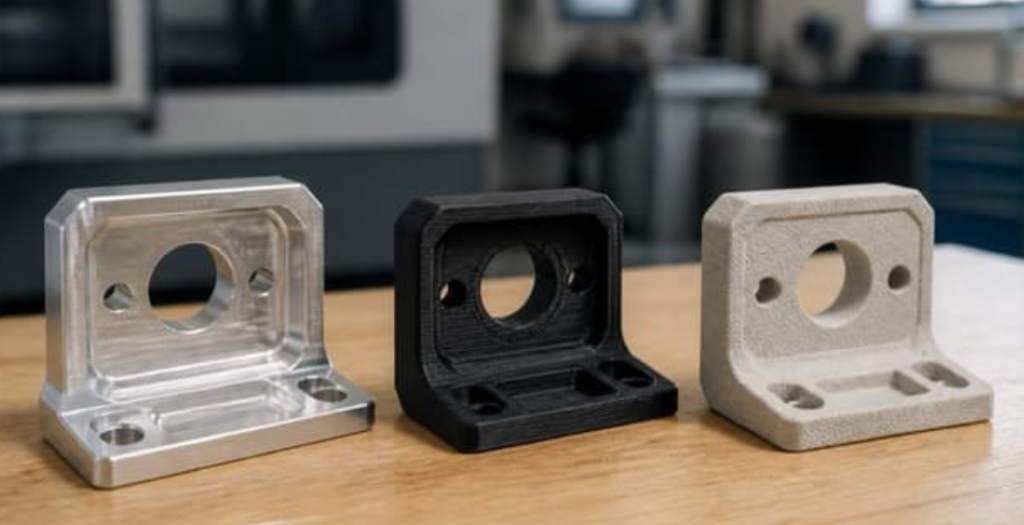
Quick Core Difference Between CNC & 3D Printing Prototyping
Before diving into use cases, let’s nail the basics in plain words—no engineering degree required.
- CNC Machining (Subtractive): Start with a full solid block of plastic, aluminum or steel. Cut away extra material with rotating cutting tools. Needs CAD programming, part fixturing, multiple machine setups, and operator oversight. Great for simple, high-tolerance solid parts.
- 3D Printing (Additive): Build your part one thin layer at a time directly from your CAD. Zero custom fixturing, zero complex tool setup. The printer runs unattended overnight. Perfect for shapes that cutters can’t reach, fast iteration and ultra-low batch sizes.
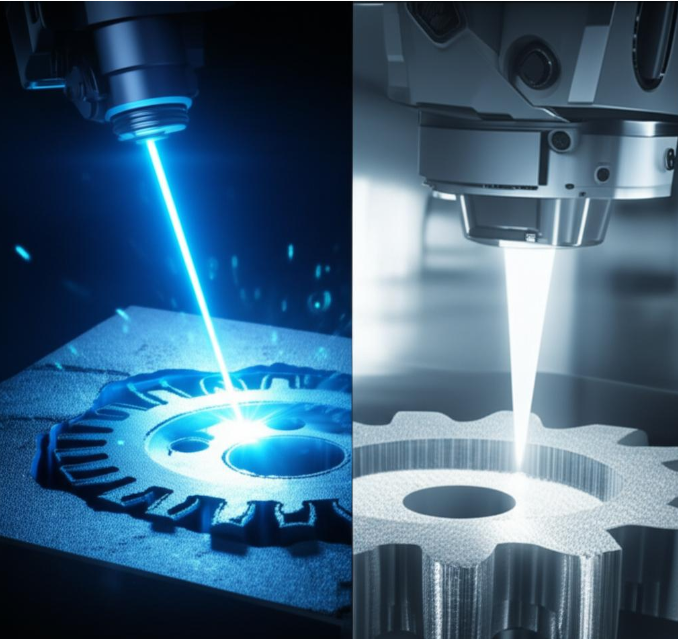
Clear Scenarios Where 3D Printing Beats CNC for Rapid Prototyping
This is the core decision framework our Zorapid team shares with every client. If your project hits any of these boxes, 3D printing will deliver better results faster.
Your Part Has Complex Internal Geometry, Lattices or Hidden Channels
CNC tools are round cutting bits. They can’t reach deep narrow cavities, twisted conformal cooling channels, organic lattice weight-saving structures, or enclosed hollow spaces without splitting your part into multiple pieces. Splitting means assembly seams, extra labor, longer lead times and higher costs.
3D printing builds internal and external features in one single piece with zero assembly work.
Common prototype projects we handle at Zorapid in this category:
- Medical device fluid manifolds with winding internal flow paths
- Aerospace lightweight topology-optimized brackets
- Heat sink prototypes with dense lattice cooling grids
- Consumer earbud/headphone hollow internal housings
A real client example: A medical startup brought a fluid valve design to us. CNC required 4 separate machined parts plus gaskets, costing $780 and a 6-day lead time. SLS nylon 3D printing made the full single-piece prototype for $210 in 36 hours, with all internal channels intact for flow testing.
You Need Multiple Design Iterations Fast (Rapid Concept Validation)
Product development moves fast—you can’t wait 3–7 days for every small CAD tweak with CNC.
CNC workflow delays for each revision:
- Rewrite G-code tool paths
- Re-fixture raw material stock
- Re-run full machining cycle
- Manual deburr and cleanup
Each small shape change adds 2–4 full business days.
3D printing’s workflow for revised designs:
Upload updated STL file → slice → start print. Most plastic prototypes ship in 24–48 hours, metal prints within 3–5 days.
Startups building consumer electronics rely on this speed heavily. One Zorapid client ran 9 ergonomic grip iterations in 10 days with SLA resin printing. If they’d used CNC, the same testing cycle would have stretched over 6 weeks and doubled their prototyping budget.
You Only Need 1–10 Prototype Units (Ultra-Low Volume)
CNC pricing scales well above 100 identical parts, but single pieces carry heavy fixed labor costs: programming, setup, fixturing, machine time, finishing. For 1–10 pieces, those setup fees inflate unit prices drastically.
3D printing has almost no fixed setup overhead. Each extra copy on the same print job adds minimal cost. Our internal Zorapid cost benchmark data:
- Single small plastic housing: CNC = $120–$200 | SLA 3D Print = $35–$65
- Single aluminum complex bracket: CNC = $650+ | SLM metal print = $280–$420
If your batch sits under 15 units, additive manufacturing nearly always delivers lower total project cost.
You’re Building Visual, Ergonomic or Usability Test Prototypes
Not every prototype needs industrial tight tolerances or full production mechanical strength. Many early-stage builds only need to check:
- Hand feel & ergonomics
- UI component fitting
- Customer focus group visual feedback
- Packaging fit checks
For these validation stages, 3D printed resin (SLA) creates ultra-smooth, high-detail parts matching final product aesthetics. CNC overdelivers precision you don’t need and wastes budget on unnecessary tight tolerance machining.
Your Design Has Undercuts, Angled Holes & Hard-to-Machine Features
Any feature sitting on a non-flat, hidden side of your part forces CNC shops to re-clamp, rotate or switch to expensive 5-axis machines. Every extra setup step raises lead time and cost.
3D printing builds every surface, angled hole and undercut in one single print cycle, no repositioning required. We regularly print consumer product enclosures with full wrap-around snap fits and side undercuts that would require 3+ separate CNC setups.
You Want Minimal Material Waste & Lightweight Test Parts
CNC is subtractive—often 60–80% of your raw material block gets cut into scrap chips that can’t be reused. Large solid blanks also create heavy prototypes that don’t match your final lightweight production vision.
3D printing only uses the exact material your part requires. You can design hollow walls, cutouts and lattice infill to match your target finished weight without extra machining steps. For sustainable hardware brands, this also slashes raw material waste costs across all prototype rounds.
You Need Flexible, Silicone-Like or Custom Specialty Material Prototypes
Standard CNC stock material options are limited to rigid engineering plastics, aluminum, steel and brass. If you need soft-touch, rubber-like prototypes (TPU, flexible resin) for grip, gaskets or wearable device testing, CNC cannot replicate that texture or flexibility at all.
Our Zorapid 3D print material library includes flexible TPU, biocompatible medical resin, transparent clear resin, flame-retardant nylon and high-temperature PEEK—all accessible for one-off prototypes without expensive custom raw stock sourcing.
Quick Cheat Sheet: 3D Print vs CNC Prototype Decision Table
| Project Factor | Pick 3D Printing | Pick CNC Machining |
|---|---|---|
| Part Geometry | Complex lattices, internal channels, undercuts, organic shapes | Simple solid blocks, flat surfaces, straight holes |
| Batch Size | 1–15 units | 100+ identical parts |
| Lead Time Target | 24–72hr rush prototype | 3–7 day standard turnaround |
| Tolerance Needs | ±0.10mm or looser (concept/ergonomics) | Tight tolerance <±0.05mm functional fit parts |
| Material Goal | Flexible TPU, clear resin, lightweight lattice, biocompatible plastic | Solid metal blanks, production-grade rigid stock |
| Iteration Count | 3+ CAD revisions planned | Final fixed design with zero upcoming changes |
When Should You Skip 3D Printing & Stick With CNC Instead?
We want full transparency—3D printing isn’t the universal fix. CNC stays the better choice for these specific prototype needs:
- You need ultra-tight dimensional tolerances (< ±0.005mm) for mating precision parts
- Your prototype requires identical mechanical strength as mass-produced metal components
- The final mass production process will be CNC machined aluminum/steel
- You need fully machined real threads, sealing grooves and polished industrial surface finishes
- Your batch hits 100+ identical identical solid parts
At Zorapid, we offer both services. Our engineering team will flag if your project fits CNC better during your free DFM review—no pushy upsells for 3D printing when machining makes more sense.
Real Zorapid Client Case Study: 3D Printing Saved 60% Cost & 70% Lead Time
A UK industrial sensor brand came to us with a complex internal flow housing prototype request. Their initial plan was 3 CNC machined aluminum pieces assembled with O-rings.
Original CNC Plan Stats
- Total cost: $920
- Lead time: 7 business days
- Limitation: Assembly seams risked flow leak test failure
Zorapid Recommended SLM Metal 3D Printing Single-Part Solution
- Total cost: $368 (60% cost cut)
- Lead time: 2 business days (70% faster delivery)
- Advantage: Monolithic single piece, zero assembly leak risks, full internal channel geometry preserved
The client passed all fluid testing on the first prototype and shifted all early-stage validation builds to our metal additive line afterward.
Zorapid’s All-In-One Hybrid Manufacturing Advantage
Many prototyping shops only offer CNC or only sell 3D printing. At Zorapid, we run both processes in our 3,000 sqm smart manufacturing center, plus in-house DFM analysis to match your project to the right tech automatically.
What our rapid prototyping service includes for every order:
- Free CAD DFM review to flag geometry issues
- Side-by-side cost & lead time quotes for CNC and 3D printing
- In-house post-processing: polishing, sanding, painting, plating, assembly
- Rush 24–48hr prototype shipping for urgent development cycles
- ISO-certified plastic & metal 3D printing and 5-axis CNC machining
FAQ
Is 3D printed prototype strong enough for functional testing?
Yes—SLS nylon, PEEK and SLM metal 3D prints deliver enough mechanical performance for most functional prototype tests. If your project requires extreme load-bearing tight-tolerance mating parts, CNC machining will be our recommendation during the quote review.
Can I get metal prototypes with 3D printing instead of CNC?
Absolutely. Zorapid offers SLM metal 3D printing for titanium, aluminum, stainless steel and Inconel alloys for complex metal prototype geometries that cannot be economically machined.
How much faster is 3D printing than CNC for one-off parts?
Standard plastic 3D prints ship in 1–3 days, while single-piece CNC prototypes take 3–7 days minimum. Rush additive orders can finish within 24 hours for urgent concept validation.
Will 3D printing replace CNC machining entirely for prototyping?
No—each process fills separate needs. 3D printing dominates early-stage complex, low-volume iterative builds. CNC remains king for tight-tolerance, simple high-volume production prototypes and final fit metal hardware. Many clients combine both: 3D print early concepts, CNC machine final pre-production test units.
Can Zorapid mix 3D printed and CNC machined parts in one assembly prototype?
Yes, hybrid assembly is one of our core strengths. We can fabricate complex printed housings and precision machined metal inserts in parallel, then fully assemble and finish your complete prototype set in-house.
Conclusion
Choosing between 3D printing and CNC for rapid prototyping boils down to three simple questions: How complex is your design? How many units do you need? How many design changes are still coming?
When your part carries tricky internal geometry, you only need a handful of samples, or you plan multiple fast design tweaks—3D printing will cut your timeline, slash your budget and remove manufacturing limits CNC machining can’t overcome.
If you’re unsure which process fits your next prototype project, send your CAD file to Zorapid today for a free, no-obligation DFM breakdown with dual CNC and 3D printing quotes tailored to your development timeline.