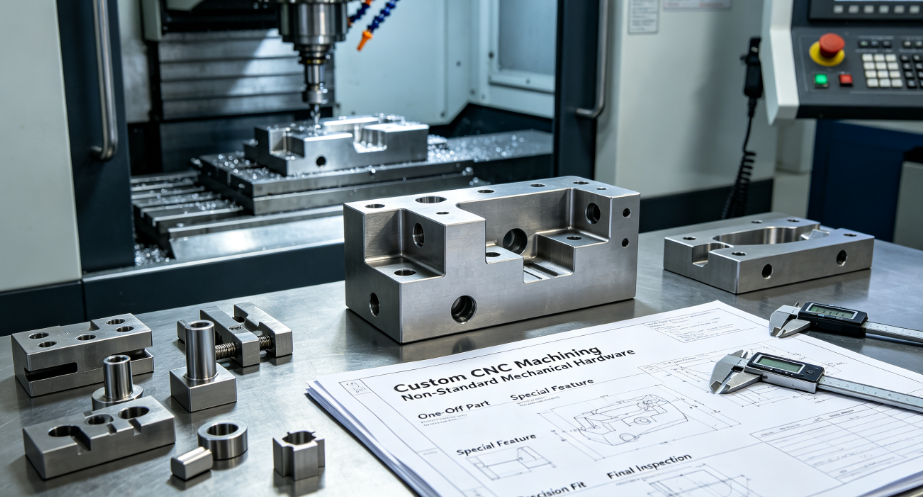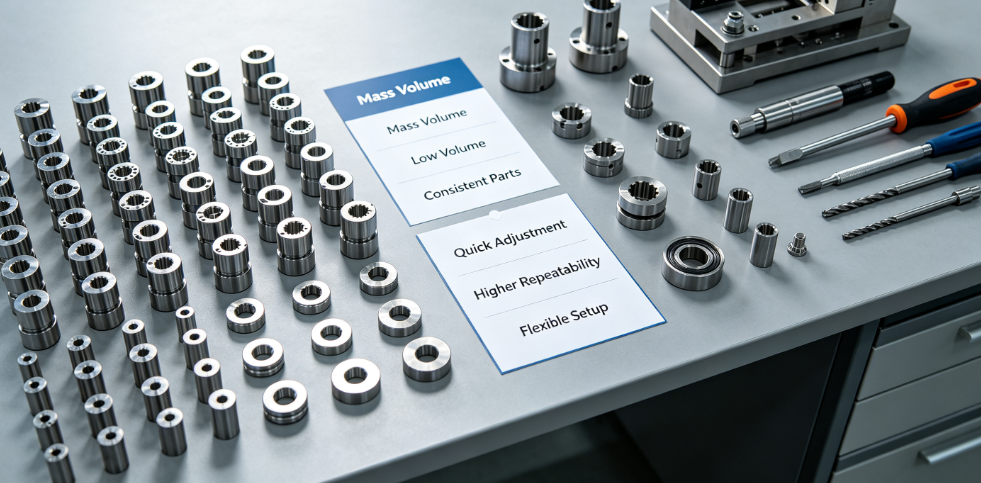
Published by Zorapid
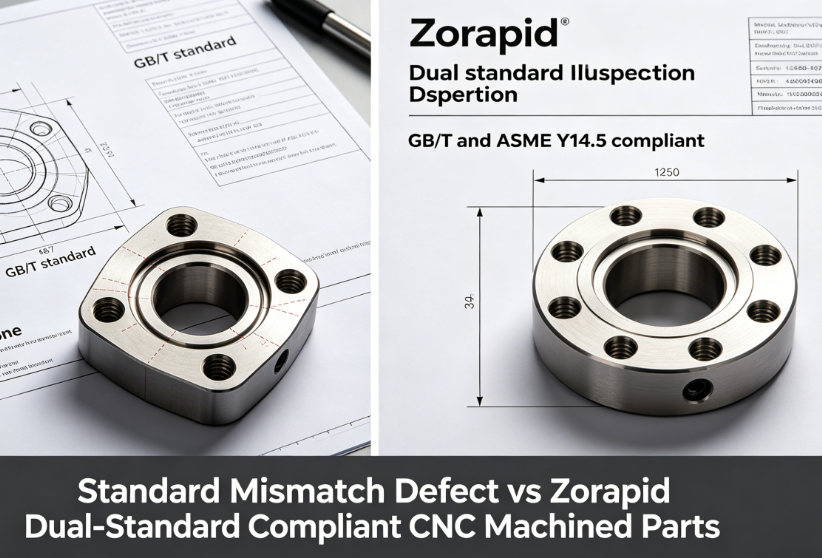
If you source CNC precision parts from both local overseas factories and domestic Chinese manufacturers, you’ve definitely hit costly standard mismatches.
Two factories machine the same drawing, yet one batch fails dimensional inspection, surface finish or audit documentation completely.
The root cause is simple: domestic GB/T standards, European ISO/DIN and North American ASME systems follow separate rules for tolerancing, GD&T, material specs, quality audit and traceability. Small misinterpretations on drawings often lead to scrap, delayed shipments and failed regulatory audits for aerospace, medical and EV projects.
At Zorapid, we serve global OEMs daily by fully aligning production to international ISO, ASME, DIN, IATF 16949, standards, while fully understanding domestic GB/T manufacturing logic. We’ve resolved hundreds of standard conflict issues for cross-border clients, eliminated drawing misreading risks, and built a one-stop system that bridges domestic and overseas CNC specification gaps.
This guide skips dense textbook metallurgy. We break down 6 core standard difference categories with clear comparison tables, real sourcing failure cases, and Zorapid’s proven compliance solution to avoid scrap and audit rejection. All data comes from thousands of cross-border CNC batch production validation.
Core Background: Three Major Global CNC Standard Systems Overview
Before diving into specific gaps, clarify the three mainstream standard frameworks most sourcing teams encounter every day:
- Domestic Chinese Standards (GB/T Series) Equivalent translated version of ISO core content, mandatory for local domestic mass production. Covers drawing dimensioning GB/T 4458.4, general tolerance GB/T 1804, geometric tolerance GB/T 1182. Most small domestic shops only train engineers on GB/T, lack systematic ASME/DIN training.
- European Overseas Standards (ISO + DIN EN) ISO 1101 global geometric tolerance baseline, DIN tightens process and machine precision rules (VDI 3441 machine accuracy grading). Widely adopted across EU, UK, Southeast Asia precision factories.
- North American Overseas Standards (ASME Y14.5 Series) Unique GD&T logic with envelope principle, independent position/symmetry definition, widely enforced by US aerospace, medical and automotive OEMs. 80% cross-border drawing disputes stem from ISO vs ASME GD&T rule conflicts.
Key baseline fact: GB/T is equivalent to ISO text, but domestic factory inspection habits differ sharply from overseas certified workshops; ASME has fundamental logical differences that cannot be directly substituted with GB/T/ISO without drawing notes.
Drawing GD&T & General Tolerance Interpretation (Biggest Scrap Trigger)
This is the pain point for cross-border sourcing. The core split lies in ISO/GB vs ASME tolerance zone judgment rules, directly changing qualified dimensional ranges.
1. Envelope Principle Core Gap
- Domestic GB/T + ISO 1101: Size tolerance and geometric form tolerance are independent by default. Form errors do not eat into dimensional tolerance unless explicitly marked “E” envelope symbol.
- Overseas ASME Y14.5: Envelope principle applies to all regular features by default. Any form deviation (roundness, straightness) reduces the allowable size range automatically. Practical loss example: A Ø10±0.02 shaft with 0.01 roundness error passes GB/ISO inspection but fails ASME batch audit.
2. Symmetry & Position Tolerance Definition
- GB/T / ISO: Independent symmetry tolerance symbol is valid and widely used in domestic inspection reports.
- ASME Y14.5 (2009+): Symmetry tolerance is deprecated; all centering control must use position tolerance with datum reference frames. Domestic shops often mark symmetry instead of position, causing full batch rejection by US clients.
3. General Tolerance Benchmark Table (Direct Comparison)
| Standard System | General Tolerance Rule | Default Grade Without Drawing Note | Typical Factory Habit |
|---|---|---|---|
| Domestic GB/T 1804 | Matches ISO 2768 f/m/c/v grades | Domestic mass production uses coarse “c” grade by default | Loose unmarked non-critical dimensions |
| European ISO 2768 | Same grade system as GB/T | Precision overseas shops lock medium “m” grade as baseline | Strict control for all secondary features |
| North American ASME Y14.5 | No universal general tolerance table; every feature needs clear tolerance callout | Zero default tolerance assumption | All dimensions carry explicit ±X tolerance |
Zorapid Quick Sourcing Hack
Add a mandatory title block note: Dimensioning and tolerancing per ASME Y14.5-2018 / ISO 2768-m to eliminate 90% of tolerance misjudgment. Domestic-only factories ignore this critical line without professional international engineering support.
Raw Material Standard Matching & Traceability Rules
Domestic and overseas material coding systems are completely independent; equivalent grade does not guarantee identical mechanical performance, heat treatment or biocompatibility.
Regional Material Code Systems
- Domestic GB: 6061, 0Cr18Ni9, 40Cr, Inconel 718 domestic brand melt
- European DIN EN: EN AW-6061, 1.4301, 41Cr4
- North American ASTM/AISI: 6061-T6, 316L, 4140, ASTM B637 IN718, ASTM F136 medical titanium
Common sourcing failure: Domestic 40Cr steel cannot fully replace overseas 4140 DIN steel for high-load axles; domestic 0Cr18Ni9 lacks strict low-carbon control required for medical implant 316L ASTM specs.
Traceability Documentation Gap (Critical for Aerospace & Medical)
- Domestic general CNC shops
- MTR material certificates only record batch numbers, no full heat lot mill traceability; simplified inspection logs without full process traveler records.
- No mandatory retention of raw material test data for over 3 years.
- Certified overseas precision factories.
- Full EN 10204 3.1 / 3.2 material certification tracing back to smelter heat lots.
- Every single part links to machining, heat treatment, surface treatment process records, archived 10+ years for FDA/NADCAP audits.
Key regulatory split: US FDA 21 CFR Part 820 and EU MDR medical rules ban simplified domestic material certification without full heat lot traceability.
Machine Accuracy & Machining Equipment Calibration Standards
Machine positioning and repeatability grading rules separate domestic and overseas production stability, especially for micron-level precision parts.
- Domestic GB/T machine standard Accuracy calculated based on travel length formula; split into standard/precision/ultra-precision three grades. Most general domestic 5-axis mills only reach precision grade (±8μm positioning for 1m travel).
- European overseas VDI/VDE 3441 standard Q0–Q9 fixed accuracy grading, strict periodic spindle balance, backlash and linear guide calibration every month. Premium overseas CNC equipment hits Q2 ultra-precision level (≤±3μm full travel positioning).
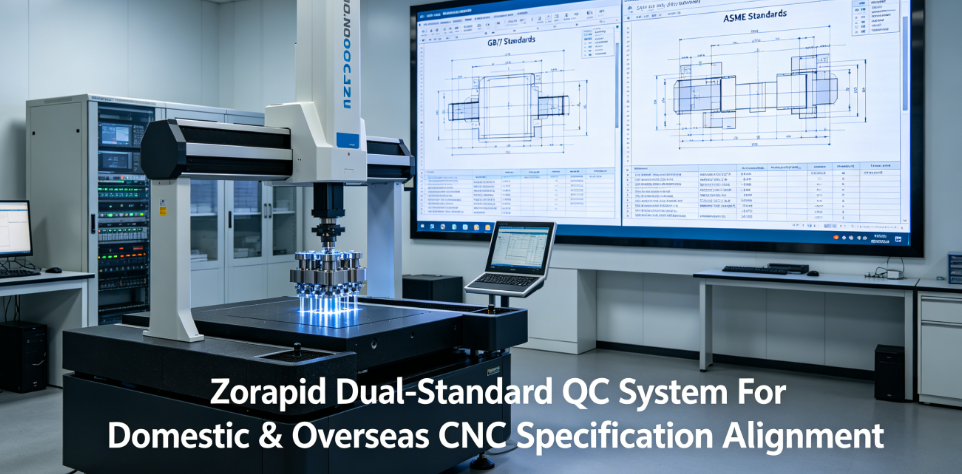
- Zorapid unified calibration rule All machining centers follow VDI 3441 monthly calibration + GB/T annual full inspection, dual-standard equipment validation to satisfy both domestic and overseas audit requirements.
Hidden impact: Domestic uncalibrated long-stroke mills create cumulative positional error over large EV battery trays, failing ASME flatness GD&T specs.
Quality Control System & Mandatory Industrial Certifications
The biggest systematic gap lies in standardized QMS frameworks required by global overseas OEMs, while most domestic small CNC shops only follow basic internal inspection rules without third-party certified systems.
Mandatory Overseas Industry Certifications (Global OEM Non-Negotiable)
- General precision: ISO 9001:2015 full QMS
- Automotive Tier 1: IATF 16949 (APQP, FMEA, SPC, MSA, PPAP full process control)
- Aerospace: AS9100D + NADCAP special process certification (heat treat, anodizing)
- Medical implant: ISO 13485 + FDA 21 CFR Part 820 compliance, cleanroom segregation
Domestic General Factory QMS Status
Most domestic mass-production workshops only hold basic ISO 9001 without industry extended certifications. They lack standardized SPC real-time process monitoring, FMEA risk analysis and full PPAP first article submission workflows required by EU/US automotive/aerospace buyers.
QC Inspection Logic Split
- Domestic routine inspection: Spot sampling after full batch production; minimal in-process mid-cut dimensional checks.
- Overseas certified factory QC: 100% critical feature in-process sampling, real-time SPC data recording, full FAI first article inspection before mass production launch.
Surface Finish, Deburr & Post-Processing Standards
Surface roughness Ra definition is consistent globally, but acceptance thresholds, deburr requirements and surface treatment compliance rules differ drastically.
- Surface finish acceptance baseline
- Domestic GB/T 1031: Allow minor tool marks on non-sealing surfaces, Ra tolerance band ±0.4μm loose acceptance.
- ISO / ASME overseas standard: Strict single-sided Ra upper limit; sealing/implant surfaces demand ±0.1μm tight band, no visible micro tool lines allowed.
- Deburr mandatory rules
- Domestic general machining: Manual random deburr only for obvious large burrs; micro cross-hole feather burrs deemed acceptable.
- Medical/aerospace overseas specs: Zero residual burr regulation, automated ultrasonic deburr + optical microscope 100% visual scan for micro features.
- Surface treatment compliance Domestic anodizing/passivation often lacks RoHS, REACH and medical biocompatibility test reports required for EU/US shipment; overseas certified surface lines generate full batch compliance certificates alongside finished parts.
Audit Documentation & Record Retention Standards
Overseas regulatory bodies demand complete, retrievable digital audit trails, while most domestic factories rely on paper-only simplified logs that fail cross-border audits instantly.
- Document scope gap
- Overseas certified shops: FAI reports, CMM full dimensional scan data, SPC trend charts, tool wear logs, coolant replacement records, material heat lot MTRs, surface treatment batch test reports – all digitized and searchable.
- General domestic CNC shops: Only final inspection pass/fail sheets; no in-process parameter tracking or full dimensional scan archives.
- Record retention term
- EU/US aerospace/medical: Mandatory 10+ years digital archive of all production batch records.
- Domestic GB standard general manufacturing: Minimum 3–5 years paper storage only.
Real client case: A US aerospace OEM rejected a full 5,000-piece domestic batch because the factory could not retrieve 2-year-old heat treatment traveler records for NADCAP audit.
Common Standard Conflict Failures + Instant Resolution Cheat Sheet
Print this table for cross-border sourcing review to avoid scrap and shipment delay:
| Sourcing Defect Symptom | Root Standard Conflict | Zorapid Proven Fix |
|---|---|---|
| US client rejects batch over symmetry tolerance marking | Domestic GB uses deprecated symmetry symbol vs ASME position rule | Redraw GD&T per ASME Y14.5, add full datum reference frame for all centering features |
| Medical implant fails FDA material audit | Domestic steel/titanium lacks full heat lot MTR traceability | Source ASTM-certified biocompatible raw stock, generate EN 10204 3.2 full trace certificates |
| EV tray flatness out of ASME spec after machining | Domestic mill loose monthly calibration per GB only | Dual VDI + GB machine calibration, SPC real-time flatness monitoring during roughing |
| Aerospace audit rejects incomplete production logs | Domestic factory paper-only simplified inspection records | Full digital batch traveler system, archive all process data minimum 10 years |
| Sealing surface leaks IP67 test from micro burrs | Domestic manual partial deburr vs ISO zero-burr rule | Automated ultrasonic deburr + optical microscope 100% micro feature inspection |
| 4140 high-load shaft fails fatigue test | Domestic GB 40Cr substitute without matching heat treat specs | Match DIN/AISI grade one-to-one, follow overseas Q&T temperature cycles fully |
Zorapid Real-World Cross-Border OEM Case Study – Standard Alignment Overhaul
A European Tier 1 automotive client previously sourced 4140 transmission shafts from two separate suppliers: one domestic Chinese workshop and one local EU factory, suffering two critical standard conflict losses:
- 31% scrap rate from GD&T tolerance misinterpretation (GB independent form tolerance vs ASME envelope principle)
- Full PPAP submission rejected twice due to missing IATF 16949 SPC/MSA records and incomplete material traceability documents
Original dual-supplier standard chaos:
- Domestic factory followed only GB/T drawing rules, no ASME translation engineering review
- No unified dual-standard inspection checklist; separate QC teams used different tolerance acceptance thresholds
- Simplified paper inspection logs without real-time cutting parameter SPC tracking
Zorapid full standard alignment solution deployed:
- Built dual-standard engineering review workflow: every drawing cross-validated by engineers trained in both GB/T and ASME/ISO before programming
- Switched raw material to certified AISI 4140 ASTM stock with full 3.2 MTR heat lot traceability matching EU specs
- Upgraded full QMS to IATF 16949 certified system, standardized PPAP, SPC, FMEA, MSA full automotive process documentation
- Unified dual tolerance acceptance checklist (simultaneously meet GB/T 1804-m and ASME Y14.5 baseline rules)
- Monthly machine calibration per VDI 3441 European precision grading, dual CMM inspection reports issued for every batch (GB compliant + ASME compliant two versions)
Measurable Final Production Results After Standard Unification
- GD&T-related scrap rate dropped from 31% to 1.1%
- Passed EU Tier 1 automotive PPAP audit on first submission, zero document rejection
- Full batch digital traceability archives ready for EU regulatory audit anytime
- Per-part rework cost cut by 68%, cross-border shipment delay risks eliminated entirely
Why Zorapid Eliminates Domestic/Overseas CNC Standard Conflicts For Global OEMs
Our 3,000㎡ precision manufacturing center integrates fully aligned domestic GB and international ISO/ASME/DIN production systems, solving cross-border standard gaps in one single facility for aerospace, medical, EV and heavy machinery clients across North America, EU and Asia:
- Dual-certified QMS system: ISO 9001, IATF 16949, AS9100, ISO 13485 simultaneously certified, fully compliant with both domestic GB/T and global overseas regulatory requirements
- In-house cross-standard engineering team: Engineers trained on GB/T, ASME Y14.5, ISO 1101, DIN VDI standards, free pre-production drawing DFM & standard translation review for all orders
- One-to-one certified raw material library: ASTM/DIN medical, aerospace, automotive grade stock with full EN 10204 3.1/3.2 trace certificates, no unapproved domestic grade substitutes
- Dual-standard QC inspection workflow: Every batch outputs two independent inspection reports – one per domestic GB standard, one per overseas client’s specified ISO/ASME/DIN rule
- Monthly dual machine calibration: Follow European VDI 3441 precision grading + annual GB/T machine accuracy re-verification to lock micron-level consistent precision
- Full digital 10-year batch record archive: All machining, heat treatment, surface processing, dimensional test data retrievable instantly for FDA, NADCAP, EU MDR cross-border audits
- Flexible lead times: Standard dual-standard CNC prototypes delivered in 3–6 business days; medium/high-volume compliant batch production shipped in 7–14 business days
Final Key Takeaways To Avoid Domestic/Overseas CNC Standard Scrap & Audit Failure
- The core conflict root is not standard text difference, but factory training gaps: most domestic-only shops lack ASME/ISO international specification training, leading to drawing misjudgment.
- GD&T tolerance rules are the highest-risk mismatch point – always explicitly mark your drawing’s governing standard (ASME Y14.5 / ISO 2768) in the title block to eliminate batch scrap.
- Never substitute domestic GB material grades as “equivalent” without cross-verifying ASTM/DIN chemical composition and heat treatment specs; material traceability is mandatory for medical/aerospace cross-border shipments.
- Global overseas OEM projects require industry-specific extended certifications (IATF 16949 / AS9100 / ISO13485) – basic domestic ISO 9001 alone cannot pass EU/US regulatory audits.
- Choose a supplier with dual-standard engineering and QC systems like Zorapid to avoid splitting orders between separate domestic and overseas factories, cutting standard conflict rework cost drastically.
- Complete digitized long-term batch record retention is non-negotiable for US/EU medical and aerospace components; simplified paper domestic logs will trigger full batch rejection during third-party audits.
FAQ
Is GB/T 1804 completely identical to ISO 2768 for general tolerances?
The tolerance numerical grades match, but domestic factories use looser acceptance sampling rules by default. Always specify ISO 2768-m explicitly on drawings for overseas export batches.
Can domestic CNC factories produce parts fully compliant with ASME Y14.5 aerospace standards?
Only workshops with dedicated ASME GD&T engineering training and dual-standard QC systems like Zorapid. Most general domestic shops misinterpret envelope principle and deprecated symmetry tolerance rules.
What certification do I need for medical implant CNC parts exported to the US?
QMS certification + full ASTM biocompatible material trace MTRs, fully aligned with FDA 21 CFR Part 820 documentation retention rules.
Why do overseas buyers reject domestic material certificates frequently?
Domestic general MTRs lack full smelter heat lot traceability and EN 10204 3.2 test data required by EU and US regulators; Zorapid provides fully compliant international material certificates alongside GB domestic versions.
Can one batch of parts satisfy both domestic GB and overseas ASME standards at the same time?
Yes with dual-standard machining and two separate inspection reports issued per batch, which Zorapid delivers for all cross-border OEM orders without extra rework cost.