Ruggling with warpage, chatter & dimensional shift on thin-wall 7075-T6 aluminum parts? Grab Zorapid’s field-proven distortion control playbook for aerospace, medical & EV OEMs—zero scrap, tight GD&T tolerances, consistent repeatability.
If you machine thin-wall 7075-T6 aluminum daily, you know the nightmare all too well.
You finish a run, unclamp the part, and watch it warp like a potato chip. Flatness drifts, walls taper, tight GD&T specs fail, and you toss expensive stock straight to scrap.
7075-T6 is the go-to high-strength alloy for aerospace brackets, EV sensor housings, and medical lightweight frames. But its locked-in residual stress, low thin-wall rigidity, and heat sensitivity turn every precision cut into a gamble.
Most shops patch the problem with random tool tweaks or looser tolerances. That cuts profit margins and delays customer shipments.
At Zorapid, we’ve refined a full-stack deformation control workflow for walls as thin as 0.4mm. We deliver consistent ±0.005mm dimensional stability without sacrificing throughput.
In this guide, we break down every actionable fix—raw material prep, DFM tweaks, staged machining, workholding, tool selection, thermal management, and post-process stress stabilization. No fluff, only shop-tested solutions our aerospace and medical OEM clients rely on daily.
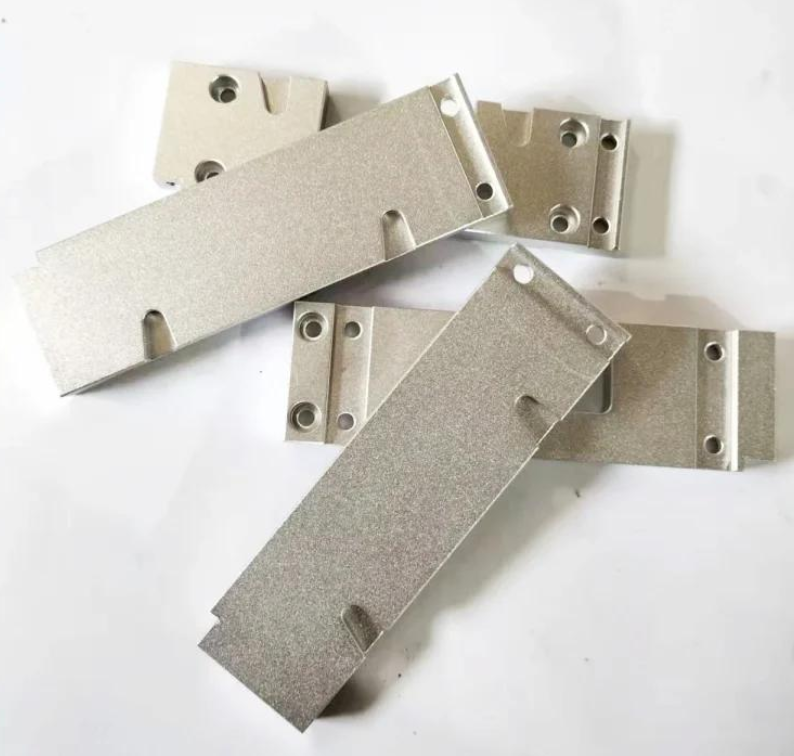
Why 7075-T6 Thin Walls Deform So Badly
Before fixing warpage, let’s nail the three core enemies of your thin aluminum parts. Each issue amplifies the others—ignore one, and your whole process fails.
1. Locked Residual Stress in T6 Temper Stock
7075-T6 plates and extrusions carry massive internal stress from quenching and aging. The stress sits balanced while the block is solid.
When you mill deep pockets or shave ultra-thin walls, you strip away supporting material. The stress field rebalances instantly, bending or twisting the part mid-cut or after unclamping.
Standard T6 stock is far less stable than T651 pre-stretched plate. This single material choice causes 60% of thin-wall distortion complaints we see at Zorapid.
2. Cutting Heat & Mechanical Deflection
Thin walls (≤1.5mm) have almost no structural stiffness. Even light side cutting force pushes the wall sideways during milling.
Friction between tool and workpiece spikes localized heat. Aluminum expands fast, creating temporary dimensional drift that locks into permanent warpage once cooled.
Chatter marks, tapered vertical walls, and uneven floor flatness are direct side effects.
Poor Workholding & Uneven Clamp Stress
Hard vise jaws squeeze thin blanks unevenly. Over-clamping adds artificial stress that releases the second you open the vise.
Long, unsupported thin ribs or cantilevered walls vibrate nonstop during high-speed cuts, worsening deflection and surface defects.
Zorapid’s Complete 7075-T6 Thin Wall Deformation Control System
We split our distortion fix workflow into six interconnected stages—follow all six for near-zero warpage on sub-1mm walls. Every step is optimized for OEM small-batch and mass production runs.
Raw Material Selection & Pre-Machining Stress Relief
Start here—bad stock ruins every downstream process tweak.
- Specify 7075-T651 stretched plate over standard T6. The mechanical stretch neutralizes 85% of as-received residual stress before any cutting.
- Pre-relieve unprocessed blanks for critical aerospace/medical parts: Heat stock to 150°C (300°F), hold 1–1.5 hours, slow air cool. This releases quenching stress without dropping 7075-T6 tensile strength.
- Avoid thin extruded bar stock for long thin frames—extrusion grain creates directional stress that triggers consistent one-way bending.
DFM Design Tweaks To Cut Deformation Risk Upfront
We share free DFM feedback with every Zorapid client before machining starts. Tiny CAD changes eliminate 40% of thin-wall warpage risk:
- Keep wall thickness uniform across the entire part; mix 0.5mm and 2mm walls creates uneven stress pull
- Add small reinforcing ribs on long unsupported thin spans instead of single bare walls
- Increase internal pocket radii to ≥R1.5mm; tight corners force tiny, flexible tools that cause deflection
- Avoid full-depth thin cantilever walls—add temporary support tabs removed in the final light finish pass
- Separate ultra-thin functional walls from large material removal zones to stop sudden stress release spikes
Staged Symmetrical Machining Strategy
One-shot rough-to-finish cutting is the rookie mistake for 7075 thin walls. Zorapid uses a 3-stage stress-controlled cycle for all high-precision jobs:
1: Roughing (Remove 85–90% Stock, Leave Uniform 0.6–1mm Allowance)
- Use trochoidal/adaptive clearing toolpaths, not deep full-width pocket passes
- Alternate milling opposite sides of symmetric parts to balance stress release evenly
- Shallow step-down cuts (0.1–0.3mm per pass) to avoid sudden unbalancing of internal stress fields
2: Stress Stabilization Hold Period (Non-Negotiable for Tight Tolerances)
After roughing, unclamp the blank fully and rest it for 4–24 hours at ambient temperature. This lets residual cutting stress redistribute naturally before semi-finishing.
For ultra-precision medical components, we add a cryogenic deep cold cycle (-185°C for 60 mins) to lock stable geometry permanently.
3: Semi-Finish + Micro Finish (Minimize Force & Heat Input)
- Semi-finish removes 70% of rough allowance, leaving only 0.05–0.1mm for the final light finish pass
- Micro finish uses ultra-light radial engagement (5–10% tool diameter) with full axial wall depth cuts. This spreads cutting force evenly along the wall instead of concentrating pressure on one narrow band
- Avoid sharp toolpath direction changes; smooth flowing arcs eliminate force spikes that bend thin ribs
Optimized Workholding To Avoid Clamp-Induced Distortion
Our fixture engineers match clamping methods to each thin-wall geometry:
- Vacuum chuck full-surface support for flat thin panels—zero localized jaw pressure
- Soft aluminum or polyurethane vise jaws to spread clamp force evenly; never hard steel jaws on thin blanks
- Progressive low-torque clamping: Tighten vises gradually instead of one hard squeeze
- Add sacrificial support tabs for long cantilever thin walls; trim tabs in the last finishing operation
- Zero-point fixture systems for repeatable re-clamping after stress rest periods
Aluminum-Specific Tooling & Cutting Parameters
Wrong tools amplify deflection and heat distortion exponentially. Zorapid’s standard thin-wall 7075-T6 tooling rules:
- Tool Geometry
- 3-flute high helix (40–45°) polished carbide end mills for aluminum; high positive rake slices material instead of plowing it
- Small nose radius (0.2mm max) for finishing walls—larger radii create heavy radial side force
- Diamond coated cutters for long production runs to reduce friction heat and built-up edge (BUE)
- Short stub-length tools only; tool deflection rises exponentially with overhang length
- Tuned Cutting Data for 7075-T6 Thin Walls (<1.2mm)
- Surface Speed (SFM): 420–550 (lower than solid block 7075 cuts to limit heat)
- Chip Load Per Tooth: 0.001–0.0025” to minimize wall pushing force
- High-pressure flood coolant directed straight at thin wall cutting zones to stabilize temperature
- Dry machining banned for sub-1mm walls—thermal expansion distortion becomes unmanageable
Post-Machining Stabilization & Precision Inspection
Machining doesn’t end with the last cut—final stabilization locks your dimensional results:
- Let parts cool fully to room temperature before any CMM inspection (heat skew invalidates all tolerance readings)
- Batch critical aerospace thin housings through low-temperature post stress relief (120°C, 30 mins) to eliminate micro-cutting stress
- Full GD&T CMM scan after 12-hour rest period to verify zero post-process warpage
- Light deburring only with non-contact abrasive media; hand files add uneven surface stress that bends thin walls
Real Zorapid Case Study: 0.5mm Wall 7075-T6 Aerospace Sensor Housing
One aerospace OEM client came to us with 38% scrap rate on their thin-wall 7075-T6 sensor housings (0.5mm minimum wall, ±0.008mm flatness spec). Their old process used standard T6 stock, single-setup rough-finish cuts, and steel vise jaws.
We deployed our full deformation control workflow:
- Switched raw material to T651 pre-stretched plate with pre-machining stress bake
- Added minor DFM rib reinforcements to long thin side walls
- Implemented rough → 12hr rest → semi-finish → micro finish staged machining
- Vacuum full-support fixture + high-helix polished aluminum end mills
- High-pressure targeted coolant + post-machining low-temp stabilization
Final client results after process switch:
- Scrap rate dropped from 38% to <1.2%
- Consistent flatness held within ±0.004mm across all batches
- No chatter marks or tapered thin wall profiles
- 20% faster overall cycle time vs their original unstable process
Quick Troubleshooting Cheat Sheet For Common Thin Wall 7075-T6 Deformation Defects
Skim this section to instantly diagnose warpage issues mid-production run:
- Part bends uniformly in one direction Root Cause: Non-T651 stock, unbalanced one-sided material removal Fix: Switch to T651 plate + symmetrical alternating roughing passes
- Wavy chatter lines on vertical thin walls Root Cause: Long tool overhang, high radial engagement, worn unpolished cutters Fix: Stub short tools, 5–10% radial stepover, fresh high-helix aluminum end mills
- Floor surface oil-can bulging after unclamping Root Cause: Insufficient stress rest time, aggressive deep roughing passes Fix: Lengthen ambient rest period, shallow trochoidal roughing steps
- Thin walls taper wider at the top, narrow at base Root Cause: Excessive side cutting force, insufficient coolant cooling Fix: Full axial depth finish passes, flood coolant aimed at wall contact zone
- Parts shift tolerance after anodizing Root Cause: Unrelieved micro cutting stress trapped inside thin walls Fix: Add post-machining low-temperature stress stabilization before surface finishing
Why Zorapid Delivers Stable Thin-Wall 7075-T6 Machining Competitors Can’t Match
Most precision shops only fix one piece of the deformation puzzle—tooling or fixturing alone. Zorapid’s advantage is our integrated full-process system built for high-strength aluminum thin sections:
- In-house metallurgy review for all 7075 stock batches to filter high-stress plates before machining
- Free DFM engineering feedback at quote stage to eliminate deformation risks before cutting begins
- 5-axis high-rigidity CNC mills with high-pressure coolant systems purpose-built for thin-wall low-deflection cuts
- Custom vacuum, zero-point, and sacrificial tab fixtures engineered per part geometry
- Cryogenic & low-temperature stress relief in-house, no third-party outsourced heat treatment delays
- Full CMM GD&T validation after stabilization to guarantee consistent dimensional repeatability
- 20+ years manufacturing aerospace, EV, and medical 7075-T6 thin-wall precision components with ISO & AS quality certifications
FAQ
What’s the minimum stable wall thickness we can machine on 7075-T6 with zero warpage?
Zorapid consistently holds stable geometry on walls down to 0.4mm with our full deformation control workflow. Walls thinner than 0.4mm require design support ribs or sacrificial tabs to eliminate deflection.
Is T651 plate worth the extra material cost over standard 7075-T6?
Absolutely. T651 cuts scrap loss by 60–70% on thin-wall parts. The small upcharge on stock is offset entirely by eliminated wasted machining hours and rejected batches.
Can we skip the rest period between rough and finish to speed production?
Only for non-critical low-tolerance parts with walls thicker than 2mm. For aerospace, medical, or EV components requiring ±0.01mm or tighter tolerances, skipping the stabilization hold guarantees post-cut warpage and failed inspections.
Does anodizing worsen thin-wall 7075 deformation?
Yes, if residual cutting stress remains trapped inside the part before surface treatment. Our post-machining stress stabilization step eliminates this risk so anodizing does not shift dimensions.
Conclusion
Controlling thin-wall deformation on 7075-T6 aluminum isn’t about one single trick—it’s a coordinated system of stable raw material, DFM optimization, staged stress-controlled machining, rigid workholding, aluminum-specific tooling, and post-process stabilization.
If your current thin-wall manufacturing workflow struggles with warpage, chatter, high scrap rates, or missed tolerance targets, Zorapid’s proven distortion control solution eliminates those headaches permanently.
We offer free CAD DFM reviews for all OEM thin-wall 7075-T6 projects, plus instant quotes for prototype and volume precision CNC machining.
Upload your CAD file today to get engineering feedback tailored to eliminate thin wall deformation on your next 7075-T6 aluminum parts.