Published:Zorapid.Ltd
Standard off-the-shelf hardware (standard bolts, regular bushings, generic brackets, common flanges) only fits universal equipment layouts. Modern industrial equipment including automation lines, mining machinery, packaging devices, medical instruments and semiconductor equipment often requires unique sizes, special contours, customized mounting holes and tailored material grades. These non-standard mechanical hardware pieces cannot be purchased from general hardware suppliers.
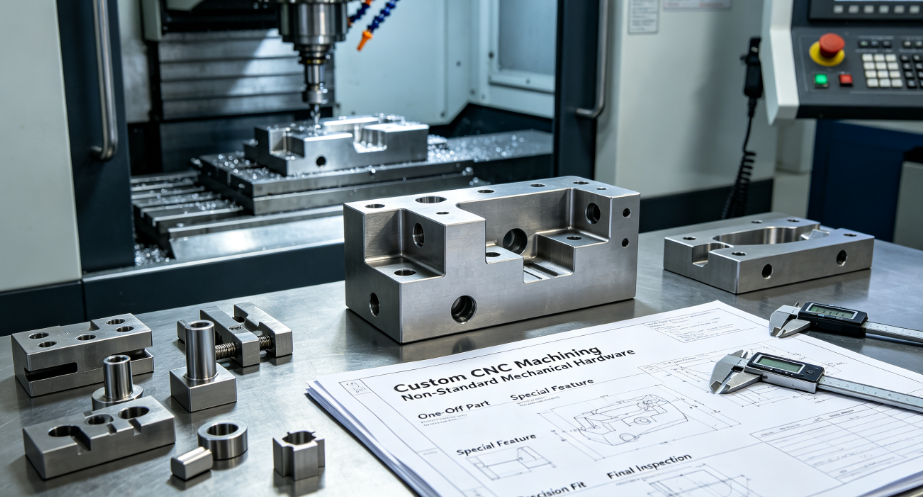
Custom CNC machining serves as the dominant manufacturing method for all non-standard mechanical hardware. Relying on 3/4/5-axis CNC milling, CNC turning, CNC grinding, it fabricates fully customized hardware according to customer 2D drawings, 3D models or physical samples. This guide covers applicable hardware categories, material options, complete CNC production workflow, key customization advantages, DFM design tips, mass/low-volume adaption, typical application cases and common customer.
Common Types of Non-Standard CNC Machined Mechanical Hardware
Classified by function, covering most custom hardware used across industrial sectors:
Non-Standard Fastening Hardware
Beyond metric/imperial standard screws and nuts
- Custom shoulder bolts, stepped pins, eccentric locating pins, long irregular studs
- Non-standard thread pitch, left-hand threads, multi-section threaded shafts
- Special flange nuts, customized knurled adjustment nuts, hollow threaded fasteners
Custom Bushing & Sleeve Hardware
- Eccentric sleeves, stepped wear bushings, split custom liners
- Thin-wall precision sleeves, tapered adapter sleeves, coolant-channeled custom bushings
- Hard alloy wear sleeves for high-friction equipment
Custom Mount Brackets & Support Hardware
- Irregular bent mounting brackets, multi-angle fixture supports, cantilever connection frames
- Custom gussets, equipment foot pads, tilted mounting bases for automation frames
- Lightweight hollow structural brackets customized for space-limited equipment
Non-Standard Flanges, Joint & Connection Hardware
- Asymmetric hole pattern flanges, non-standard thickness pipe flanges
- Special transition adapters (square-to-round, large-small diameter conversion joints)
- Custom hinge pins, offset connecting shafts, multi-way joint blocks
Adjustment, Limit & Wear Custom Hardware
- Custom limit stops, positioning blocks, adjustable sliding gibs
- Profiled wear strips, customized scraper blades, grooved guide rails
- Spring positioning seats, custom cam followers with unique outer diameters
Miniature & Ultra-Large Special Hardware
Micro precision hardware for semiconductor/medical; oversized thick hardware for construction/mining machinery, both unavailable as stocked standard parts
Widely Used Materials for Custom Non-Standard Hardware
Material selection matches working load, friction, temperature, corrosion and weight needs; all materials support CNC customization:
| Material Grade | Core Benefits | Suitable Custom Hardware Scenarios |
|---|---|---|
| 6061 / 7075 Aluminum | Light weight, easy CNC cutting, good corrosion resistance, low cost | Automation brackets, lightweight connecting blocks, adjustment hardware |
| C45 / 1045 Carbon Steel | High tensile strength, affordable, easy heat treatment | Structural support hardware, custom pins, general load-bearing sleeves |
| 304 / 316 Stainless Steel | Rust-proof, acid resistance, food-grade compliant | Food machinery hardware, chemical equipment fittings, outdoor customized fasteners |
| D2, SKD11 Hardened Tool Steel | Excellent wear resistance, high hardness | Custom wear sleeves, cutting fixtures, long-service limit hardware |
| 440C Stainless Steel | Wear + corrosion dual performance | Sliding seawater hardware, pump custom trim, medical positioning pins |
| Brass H59 / H62 | Low friction, good machinability, anti-rust | Threaded custom adjustment nuts, valve small hardware, conductive fittings |
| PEEK, Delrin Plastic | Self-lubricating, lightweight, insulation | Non-conductive custom hardware, low-noise sliding bushings |
| Cemented Tungsten Carbide (YG6/YG8) | Extreme abrasion resistance | Heavy mining wear hardware, high-cycle friction custom inserts |
Full Standard Workflow of Custom CNC Hardware Manufacturing
Clear step-by-step process for one-off prototype, small batch and mass customized orders:
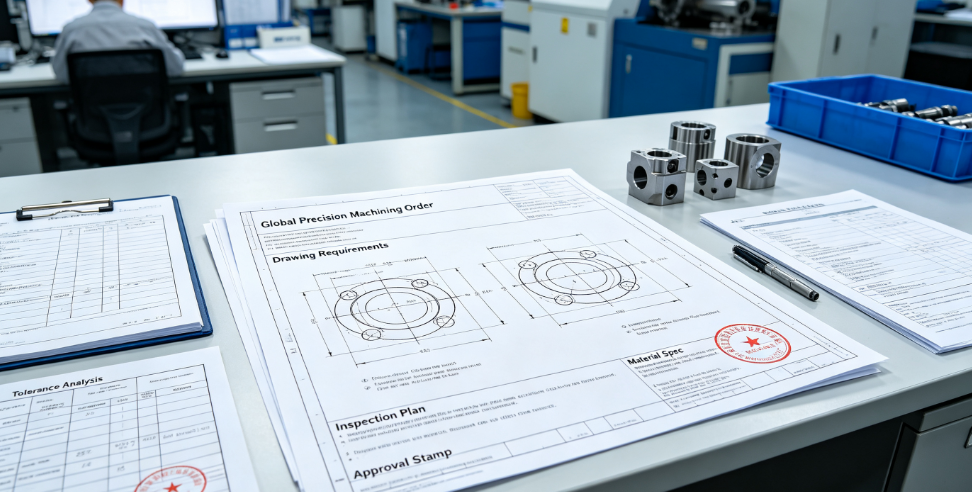
- Data Confirmation & Drawing Review Customers submit 3D STEP/IGS models, 2D dimension drawings, or old physical samples. Engineers verify tolerances, GD&T requirements, thread specs, surface Ra demands and assembly interference. If drawings are incomplete, reverse engineering scans physical parts to build digital files.
- DFM Design Optimization (Critical Step for Custom Parts) Machining team optimizes designs to cut cost, reduce machining difficulty and avoid defects: adjust sharp internal corners to radii, modify ultra-thin walls, simplify hard-to-machine undercuts, recommend alternative materials if original selection is impractical. All changes get customer written approval.
- Raw Material Cutting & Blank Preparation Cut metal/plastic bars, plates into near-net-size blanks; anneal hard steels for easier rough CNC cutting.
- CNC Multi-Axis Machining
- CNC turning: Round hardware (shafts, sleeves, stepped bolts, cylindrical pins)
- 3/4/5-axis CNC milling: Irregular brackets, asymmetric flanges, multi-angle positioning blocks Process order: rough removal of excess material → semi-finish machining → precision finish cutting to lock final dimensions.
- Secondary Machining Operations Tapping, drilling, counterboring, slotting, deburring, chamfering, precision grinding for tight-tolerance features.
- Surface Finishing Treatment (Custom Optional) Anodizing, hard anodize, zinc plating, nickel plating, passivation, black oxide, DLC coating, hand polishing, blasting to meet anti-corrosion, wear and appearance requirements.
- Strict QC Inspection & Dimension Validation Use calipers, micrometers, coordinate measuring machines (CMM), roughness testers to check all dimensions, tolerance, thread accuracy and Ra. Provide inspection reports for critical customized hardware.
- Packaging & Delivery Anti-rust oil, plastic wrapping, separate packaging to prevent collision deformation; batch labeling with drawing numbers for easy customer inventory management.
Core Advantages of CNC Custom Hardware vs Standard Stock Hardware
- 100% Fit for Special Installation Space Standard hardware follows fixed industry dimensions. CNC customization matches exact equipment cavity size, tilted angles, unique hole spacing, solving assembly interference caused by off-the-shelf parts.
- Customized Material & Performance Matching Buyers freely select materials for high temperature, seawater corrosion, heavy impact or extreme wear. Standard hardware only uses fixed common materials.
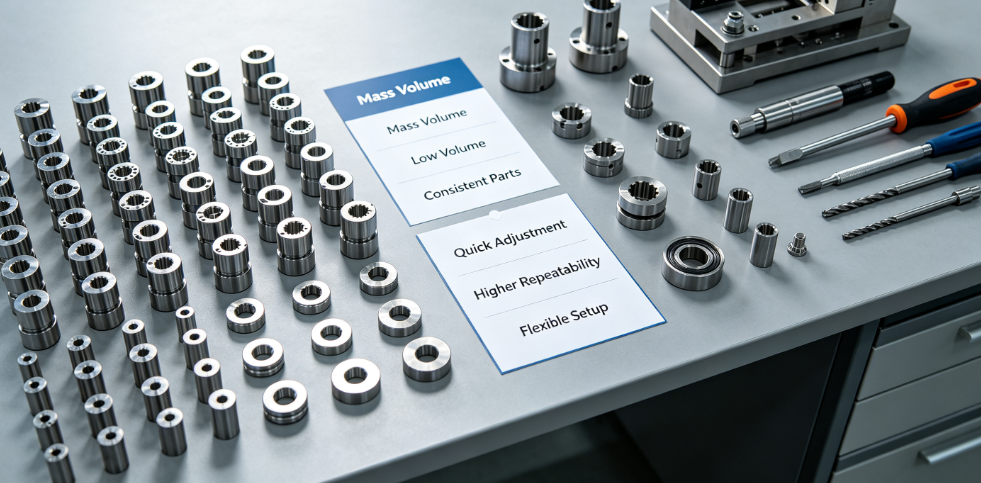
- Flexible Batch Compatibility Supports 1 piece urgent custom repair hardware, 20–100 small-batch automation parts, and thousands-piece mass custom orders. Standard parts cannot support low-quantity tailored specs.
- Custom Functional Features Integrated Add built-in cooling grooves, locating serrations, oil grooves, anti-rotation flat surfaces on hardware in one CNC process. Standard parts lack these tailored functional structures.
- Unified drawing traceability Each custom hardware has exclusive drawing numbers, easy for equipment maintenance reordering. Factories can reproduce identical spare parts years later.
DFM Design Guidelines to Lower Custom CNC Cost & Avoid Machining Failures
Rules for designers to simplify custom hardware production without sacrificing performance:
- Avoid sharp 90° internal corners; reserve minimum R0.8mm radius for milled hardware to prevent tool breakage and part cracking.
- Control minimum wall thickness: aluminum ≥0.8mm, regular steel ≥1mm, carbide ≥1.2mm. Ultra-thin walls vibrate during CNC cutting, causing dimensional errors.
- Standardize thread sizes as much as possible. Custom non-standard threads raise tapping cost; use standard thread pitches unless functional needs force customization.
- Add 0.2×45° small chamfers on all hole entrances and part edges to eliminate burrs and edge chipping.
- Limit deep narrow slots; slot depth should not exceed 6 times slot width, otherwise chip evacuation becomes difficult.
- Mark tolerance reasonably: use general tolerance (±0.1mm) for non-mating surfaces; reserve tight tolerance only for assembly contact positions to cut CNC processing time.
Real-World Custom CNC Hardware Application Cases
Automation Packaging Line Custom Hardware
Demand: 80 sets of asymmetric mounting brackets + eccentric positioning pins for packaging conveyor; need 6061 aluminum with hard anodizing, Ra 1.6μm. CNC Solution: 3-axis milling + CNC turning; DFM added corner radii; batch consistency controlled; delivery within 7 working days. Result: Perfect assembly fit, zero installation adjustment needed, stable long-term high-speed operation.
Mining Equipment Wear Custom Hardware
Demand: YG8 tungsten carbide custom wear liners and stepped locating sleeves for sand crusher; anti-abrasion, impact resistant. CNC Solution: PCD tool CNC milling; low-depth repeated finishing passes; high-pressure coolant to prevent carbide edge chipping. Result: Service life 4 times longer than ordinary steel custom hardware, reducing equipment downtime.
Medical Lab Non-Standard Connection Hardware
Demand: 10 pieces 316L stainless miniature custom joint blocks with irregular hole layout; biocompatible, tolerance ±0.01mm. CNC Solution: 5-axis precision CNC, low-vibration rigid fixture, electrolytic polishing post-treatment. Result: Meets medical cleanliness standards, precise assembly for testing instruments.
Equipment Maintenance Emergency Custom Spare Hardware
Demand: 1 off broken non-standard stepped shaft for injection molding machine; no stock available nationwide. CNC Solution: Reverse scan original sample → CNC turning + grinding; 24-hour rapid customization. Result: Machine restarted immediately, avoiding long production shutdown.
Common Challenges & Solutions for Custom CNC Hardware
| Common Problem | Root Cause | Practical Solution |
|---|---|---|
| Long lead time for complex custom hardware | Multiple complex features require repeated setup | Use 4/5-axis CNC to reduce re-clamping; complete all sides in one fixture setup |
| High cost for one-off custom pieces | CNC programming and fixture setup fees cannot be shared | Simplify non-key structures; adopt general reusable fixtures to cut setup expense |
| Inconsistent dimension in small custom batches | Fixture looseness, tool wear | Regular tool replacement; rigid zero-point clamping; full inspection of first article |
| Custom threads easy to tear during machining | Non-standard odd threads, hard materials | Use thread milling instead of tapping for hard alloy custom hardware |
| Surface finish fails Ra requirements | Vibration, improper feeds/speeds | Shorten tool overhang; switch to climb milling; adjust coolant parameters |
FAQ
What files do I need to provide to order custom CNC non-standard hardware?
2D engineering drawings with full dimensions/tolerances, 3D STEP/IGS solid models are preferred. If no digital files are available, physical samples can be sent for 3D scanning reverse engineering. Hand-drawn sketches with detailed sizes are also acceptable for simple hardware.
Is custom CNC hardware more expensive than standard hardware?
For mass orders over 500 pieces, unit cost gap shrinks greatly as setup fees amortize. For one-off emergency spares, custom parts cost more than standard hardware, but they are the only feasible option when standard sizes cannot fit. Design optimization via DFM effectively cuts custom costs.
Can custom CNC hardware replicate old broken non-standard parts perfectly?
Yes. Professional workshops use 3D scanners to capture full geometry of original samples, reproduce identical dimensions, material and surface treatment. Dimensional errors can be controlled within ±0.005mm for precision hardware.
Which batch sizes suit custom CNC mechanical hardware best?
CNC fits all volumes:
- 1–10 pcs: equipment repair prototypes, trial-test custom fittings
- 10–500 pcs: small-batch automation, medical, lab equipment customized hardware
- 500+ pcs: mass customized non-standard fittings for OEM machinery
Can custom CNC make hardware with special anti-corrosion or wear functions?
Absolutely. Match corrosion-resistant stainless steel or brass for chemical/wet environments; adopt hardened steel or cemented carbide for heavy wear. Post-process plating, anodizing and DLC coating further upgrade anti-corrosion and abrasion performance.
What if I only know the assembly effect but have no complete dimensions?
Our engineering team offers design assistance. Provide installation photos, assembly spacing limits and load requirements; designers finalize drawings and confirm details before formal CNC machining.
Final Conclusion
Non-standard mechanical hardware solves the fit limitations of universal standard parts, and custom CNC machining remains the most flexible, reliable manufacturing route. Three core controls guarantee qualified customized hardware:
- Material selection aligns with working conditions (wear, corrosion, temperature, load); choose aluminum for lightweight needs, stainless steel for rust resistance, hardened alloys for abrasion.
- Adopt DFM optimization during design to balance manufacturability, cost and performance; avoid hard-to-machine geometry blindly.
- Match CNC equipment according to part shape: turning for round hardware, multi-axis milling for irregular brackets and asymmetric fittings, paired with strict QC to ensure repeatability across batches.
Custom CNC hardware enables personalized equipment design, convenient after-sales maintenance, and stable operation of special machinery across automation, medical, mining, food, chemical and semiconductor industries.