Published by:Zorapid.Ltd
If you’ve been following modern CNC manufacturing over the last five years, you’ve seen a huge shift.
Not long ago, 5-axis machining was a luxury only big aerospace factories could afford. Shops reserved multi-axis machines strictly for turbine blades, custom medical implants, and ultra-complex mold cavities. Everyone else stuck with 3-axis mills and endless re-fixturing.
Today, that line is gone.
Five-axis machining has stopped being a premium upgrade. It has become the new industry baseline for any complex part with curved surfaces, compound angles, multi-sided features, or thin monolithic walls.
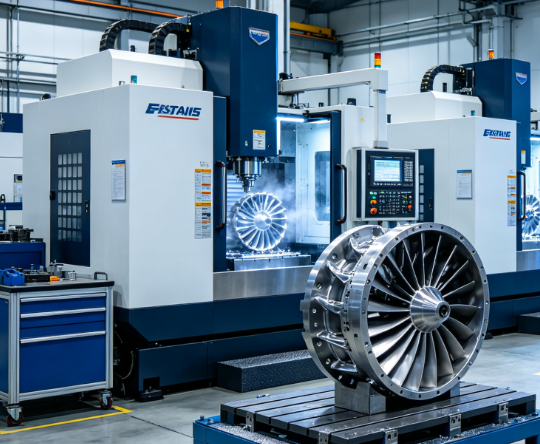
At Zorapid, we run trunnion 5-axis vertical machining centers alongside our 3-axis equipment every day. We watch OEM engineers send more and more NPI prototypes and low-volume batches straight to multi-axis machines instead of 3-axis mills. The reason is simple: fewer setups, tighter GD&T tolerances, faster lead times, and far fewer scrapped parts.
This practical shop guide breaks down exactly why 5-axis has turned mainstream. We cover real productivity gains, quality improvements, cost shifts, and industry adoption trends, with zero textbook fluff.
The Big Industry Shift: From Luxury to Standard Practice
Let’s set the record straight on how fast this change happened.
Back in 2015
- 5-axis machines had sky-high price tags
- CAM software was clunky, collision simulation was unreliable
- Only aerospace and defense jobs justified multi-axis programming costs
- Complex freeform parts needed 4 to 6 separate setups on 3-axis equipment
Current Manufacturing Reality in 2026
- Compact 5-axis trunnion VMCs fit into small job shops, equipment costs have dropped sharply
- Mastercam, SolidWorks CAM, and VERICUT make collision checking and toolpath programming far simpler
- Medical, semiconductor, automotive, and energy OEMs now write 5-axis capability directly into RFQ requirements
- Engineers design monolithic, organic-shaped parts that cannot be machined efficiently with repeated re-clamping
Zorapid Shop Observation:
Over 70% of complex prototype jobs we receive no longer fit the old 3-axis multi-setup workflow. Clients automatically expect single-clamp 5-sided machining, not multiple fixtures and repeated part repositioning. Five-axis is no longer an add-on service. It is the starting point for complex geometry.
Number One Advantage: One Single Setup Eliminates Cumulative Errors
The biggest pain point with 3-axis machining on complex components is repeated re-fixturing.
Every time you unclamp, rotate, re-align, and re-tighten a workpiece, you stack up tiny positioning errors.
- A contoured aerospace bracket might need 4 separate setups on a 3-axis mill
- Each re-clamp adds 0.01 mm to 0.03 mm of positional drift
- Critical angular holes and blended curved surfaces fail GD&T checks due to accumulated misalignment
How 5-axis fixes this permanently
Three linear X/Y/Z axes plus two rotary tilt/rotate axes let the spindle reach nearly every surface of the part in one clamping.
- No unbolting, no re-indicating, no custom secondary fixtures
- All OD surfaces, angled holes, undercut radii, and 3D freeform profiles are cut in one continuous operation
- Positional error drops by more than 90% without extra labor
| Key Metric | 3-Axis Multiple Setups | 5-Axis Single Setup |
|---|---|---|
| Typical re-clamp count | 3–6 times | 1 time only |
| Cumulative positional deviation | ±0.02 ~ ±0.04 mm | ±0.005 mm consistent |
| Custom fixture cost | High (one jig per orientation) | Minimal, standard 5-axis workholding |
| Scrap rate on complex geometry | 12–18% | Below 3% |
For orthopedic implants, turbine blisks, and semiconductor cavity parts, this single-setup accuracy alone makes 5-axis non-negotiable.
Cut Cycle Time by 35–60% With Better Tool Access
Most machinists only calculate cutting time, ignoring all the wasted auxiliary time between operations.
On 3-axis machines:
- Stop production to reposition stock
- Re-zero work offsets after every re-clamp
- Run long, extended tool sticks to reach deep cavities, leading to vibration and slow feed rates
Five-axis machining solves both problems at once:
- Use shorter, stiffer cutting tools Tilt the spindle to approach deep cavities from an angle. You no longer need extra-long tool extensions. Less overhang means less chatter, higher spindle RPM, and higher material removal rates for titanium, Inconel, and hardened steel mold material.
- Eliminate all non-cutting setup downtime No pausing the machine to rework fixturing. Once the program launches, the machine runs continuously through roughing and finishing.
Real Runtime Data From Zorapid Production:
A Ti-6Al-4V monolithic aerospace bracket:
- 3-axis multi-setup total runtime: 6 hours 22 minutes
- 5-axis single-setup total runtime: 2 hours 45 minutes That is a 56% reduction in total lead time, with no extra operator labor.
4. Smoother Surface Finish & Longer Carbide Tool Life
3-axis milling forces the cutter straight down along the Z-axis. When you mill complex curved geometry, the tool bounces in and out of material, creating uneven chip load, chatter marks, and surface striae. You end up spending hours hand polishing to hit Ra ≤ 0.4 μm.
With 5-axis simultaneous machining:
- You hold a consistent tangential angle between tool tip and part surface the entire cut
- Chip thickness stays stable, no sudden spikes in cutting force
- Vibration is minimized across the entire freeform contour
- Surface finish improves drastically without extra finishing passes
We regularly machine mold cores and turbine airfoils down to Ra 0.2 μm directly off the machine, eliminating secondary bench work entirely. Steady cutting load also extends endmill life by 30–40% on high-temperature alloys.
Two 5-Axis Workflows: 3+2 Positioning vs Full Simultaneous Machining
Not every complex part needs full 5-axis motion. We split our multi-axis jobs into two standard workflows, which is why 5-axis has become accessible for small-batch production:
1. 3+2 Axis (Positional 5-Axis – Most Common Standard Work)
- Tilt the spindle to a fixed angular position, then run standard 3-axis toolpaths
- Perfect for angled holes, slanted pockets, multi-sided prismatic parts
- Programming difficulty stays low; no complex continuous multi-axis toolpaths
- This is the entry-level 5-axis work that most modern job shops now run as standard
2. Full Simultaneous 5-Axis (Continuous Motion)
- Spindle tilts and rotates smoothly while cutting freeform surfaces
- Built for blisks, impellers, twisted turbine blades, patient-specific implant contours
- Requires Mastercam multi-axis toolpaths plus VERICUT anti-collision simulation
The 3+2 positional method has lowered the barrier drastically. Today, most complex multi-feature parts only need 3+2 5-axis positioning, making multi-axis machining affordable for NPI and small batches.
Design Freedom: Engineers No Longer Compromise on Geometry
The shift to 5-axis directly changes how parts are engineered.
Ten years ago, designers had to split single monolithic components into 3–4 assembled pieces just to fit 3-axis machining limits. They avoided deep undercuts, twisted curved surfaces, and narrow flow channels because 3-axis mills could not reach them.
Now that 5-axis is standard:
- OEMs machine one-piece monolithic structures instead of bolted assemblies
- Thin-wall aerodynamic profiles, deep cavity molds, and organic implant shapes go straight from CAD to CNC without DFM simplification
- Weight reduction targets for aerospace and electric vehicle parts become far easier to achieve without sacrificing structural strength
At Zorapid, we see this trend weekly. Clients send solid monolithic STEP files with zero design concessions, fully expecting 5-axis single-setup manufacturing.
Industry-Wide Adoption: Which Sectors Now Treat 5-Axis as Standard
The transition started in aerospace, then spread fast into other precision manufacturing markets.
- Aerospace & Turbine Manufacturing Blisks, impellers, monolithic structural brackets, engine housings. Five-axis is already mandatory for all complex airfoil components. Multiple re-fixturing is no longer accepted in quality audits.
- Medical Device & Orthopedic Implants Patient-matched titanium knee cups, spinal fusion devices, surgical instrument heads. Freeform organic surfaces can only be finished accurately in a single 5-axis clamp.
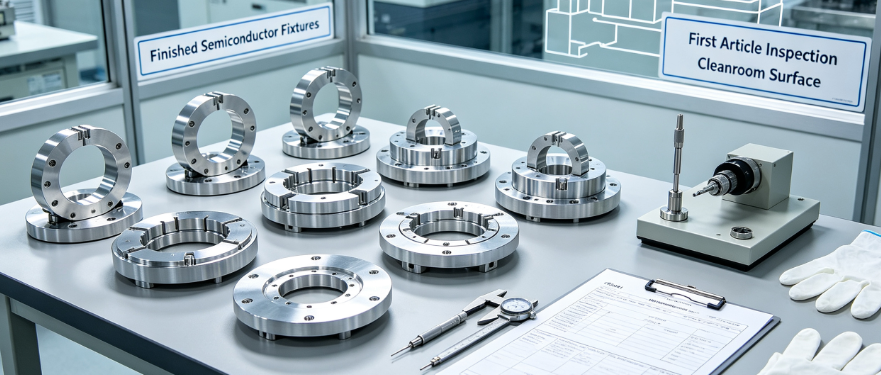
- Semiconductor & Precision Automation Wafer test cavities, vacuum manifold blocks, multi-angle port features. Tight positional GD&T cannot survive repeated 3-axis re-clamping.
- Automotive EV & Energy Molds Complex plastic mold cores, deep-groove die cast molds with curved parting lines. 5-axis tilt eliminates long tool overhang and wall deflection during high-speed milling.
- Marine & Hydro Energy Propeller blades, pump impellers with twisted 3D flow surfaces. Simultaneous 5-axis machining delivers consistent hydraulic performance across every blade profile.
For all these industries, 5-axis is no longer an optional upgrade. It is the baseline manufacturing method for complex geometry.
Real Zorapid Case Study: 3-Axis vs 5-Axis Complex Part Production
Part Specs
Component: Titanium Ti-6Al-4V aerospace monolithic bracket
Features: 5 contoured faces, 8 angled threaded holes, thin 0.7 mm walls, blended freeform radii
Tolerance: GD&T position ±0.006 mm, surface finish Ra ≤ 0.4 μm
Batch size: 35 prototype pieces
Original 3-Axis Multi-Setup Process
- Total setups required: 5 separate fixtures
- Total cycle time per piece: 6 hours 15 minutes
- 7 out of 35 parts failed CMM inspection due to re-clamp drift
- Extra deburring and bench polishing added 1.5 hours per part
- High tool wear from long overhang endmills
Optimized 5-Axis Single-Setup Process
- One clamping only, 3+2 positional 5-axis toolpath
- Total cycle time per piece: 2 hours 38 minutes
- 100% pass rate on all GD&T and surface checks
- Zero secondary hand finishing
- Carbide tool life improved by 36%
Final Outcome:
Total project lead time cut nearly in half, scrap eliminated, and no secondary operations needed. This is the measurable result that pushes more shops to adopt 5-axis as their standard for complex jobs.
Why Some Shops Still Hold Off
We still hear two common objections from small job shop owners:
- 5-axis programming is too hard. Modern Mastercam multi-axis modules have automated tilt planes, auto-collision checking, and pre-built 3+2 toolpath templates. With simulation software, programming risk is far lower than it was just three years ago. NPI programming turnaround keeps getting faster.
- 5-axis machine hourly rates cost too much.The hourly machine rate is higher, but you eliminate fixturing labor, rework, scrap, and hours of setup downtime. For any part requiring more than three re-clamps on 3-axis equipment, 5-axis lowers the total cost per finished component.
As trunnion 5-axis VMCs become more affordable and CAM toolpaths become more automated, the cost gap continues to shrink. The economic math now favors multi-axis machining for nearly all complex prototypes and small batches.
Conclusion: 5-Axis Has Become the New Baseline
The era of treating five-axis machining as a high-end specialty service is over.
Driven by tighter GD&T specs, organic monolithic part designs, shorter lead time demands, and falling equipment costs, multi-axis single-setup production has become the industry standard for complex contoured components.
The core benefits all boil down to three key wins:
One clamping removes cumulative positioning error
Angled spindle access delivers faster cuts, stiffer tools, and better surface finish
Less fixturing, less rework, fewer scrapped parts lower total production cost
At Zorapid, we run both 3-axis mills for simple 2.5D work and full 5-axis trunnion machining centers for complex freeform parts, including blisks, medical implants, mold cores, and aerospace monolithic components. We combine DFM analysis, Mastercam multi-axis toolpath optimization, and full machine simulation to deliver dimensionally consistent parts with fast turnaround for global OEM clients.
Send us your complex 3D STEP file, and we will deliver a side-by-side quote comparing 3-axis multi-setup cost versus 5-axis single-setup pricing and lead time.
FAQ
What is the difference between 3+2 5-axis and full simultaneous 5-axis?
3+2 locks the spindle at a fixed tilt angle then runs regular 3-axis milling; it works for angled holes and multi-sided prismatic parts with simpler programming. Full simultaneous 5-axis keeps the spindle moving continuously while cutting twisted freeform surfaces like impeller blades.
Can 5-axis machining eliminate all re-fixturing entirely?
Yes, for 5-sided components. Most complex parts fit fully into a single 5-axis workholding setup, with no need to flip or reposition the workpiece mid-job.
Does 5-axis work for thin-wall parts prone to deflection?
Absolutely. The angled tool approach uses lighter radial engagement and shorter cutters, reducing side pressure on thin walls far better than straight Z-axis 3-axis milling. We regularly machine 0.6 mm thin titanium walls with zero bending.
Is 5-axis only for high-volume mass production?
No. It delivers the biggest cost savings on low-volume NPI prototypes, where repeated fixturing and rework eat up most of the project budget. One-off complex prototypes are now the fastest-growing segment for 5-axis service work.