Publisher: Zorapid.Ltd
Modern aircraft structural parts keep getting lighter and more complex.
Monolithic ribs, deep contoured pockets, staggered angled holes and thin reinforced walls are standard for airframe components.
If you run these jobs on traditional 3-axis mills, you face three unavoidable headaches.
You need 4 to 6 separate fixture setups. Every re-clamp adds small positioning drift, stacking errors across mating surfaces.
Long tool extensions create severe chatter on thin titanium walls, ruining surface finish and aerodynamic quality.
Setup labor, custom fixture cost and repeated rework blow up your budget and stretch lead times for flight-critical parts.
At Zorapid, we run simultaneous 5-axis CNC cells for complex aerospace structural components made from Ti-6Al-4V, 7075 aluminum and Inconel alloy for EU and North American aviation OEMs.
We cut setup count from 6 runs down to just one, slash cumulative tolerance error, and eliminate thin-wall chatter completely.
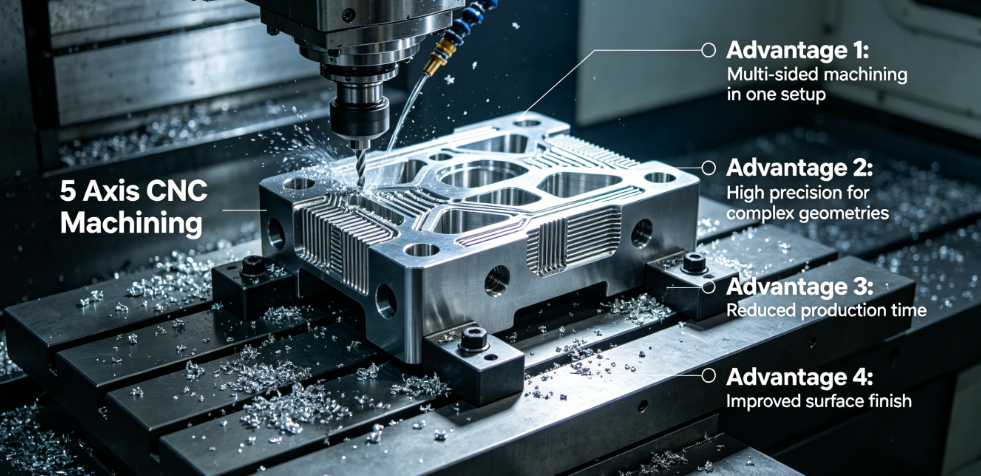
One Single Setup Eliminates Cumulative Positioning Error
Aerospace structural assemblies demand strict GD&T geometric tolerances.
Every time you unbolt, re-align and re-clamp a part on a 3-axis machine, small offset errors build up across multiple features.
- 3-axis process: 5~6 re-fixturing cycles → total positioning drift easily hits 0.02~0.04mm
- 5-axis process: One single zero-point clamp → machine all 5 faces, angled pockets and cross holes without removing the blank
No repeated edge finding, no dial indicator alignment, no zero-point shifting between operations.
Mating shut-off faces, locating holes and contoured ribs stay perfectly aligned.
We cut tolerance stack-up error by more than 70% on monolithic airframe parts, and scrap from misaligned features drops sharply.
For aerospace structural components, this one-setup stability directly prevents assembly gaps and early structural fatigue during flight cycles.
Tilt Spindle To Use Short Rigid Tools, Stop Thin-Wall Chatter & Tool Deflection
Deep pockets and long thin reinforced walls are common on lightweight aircraft ribs.
On a 3-axis mill, the spindle stays vertical. You have to use extra-long tool extensions to reach deep cavity bottoms.
Long tools bend and vibrate violently under cutting load. You end up with wave-shaped chatter marks and tapered wall surfaces on titanium alloy stock.
The 5-axis tilting spindle completely solves this problem:
- Tilt the workpiece or spindle at a proper angle
- Use short, stubby carbide end mills with minimal overhang
- Tool rigidity rises drastically, bending deflection falls to near zero
Two direct production gains:
- Thin titanium walls stay straight without vibration damage
- Tool life increases by 35~50% because cutting load stays stable with no side deflection
We can machine 0.7mm thin reinforced aluminum structural webs without wall tapering, something impossible to hold steady with long 3-axis tooling.
Reach Compound Angled Holes & Undercut Pockets Without Custom Fixtures
Modern aerospace structural parts are full of staggered angled lightening holes, inclined mounting bores and undercut contoured pockets.
With 3-axis equipment, you have to build expensive custom angle jigs just to tilt the blank for every inclined feature.
Custom fixtures cost money, add long lead time and introduce extra clamping distortion on thin blanks.
5-axis rotational axes let you point the cutting tool at any compound angle instantly, no special tooling required.
- Machine angled cross holes, inclined pockets and curved undercut surfaces in the same program
- Eliminate the whole cost of custom angle fixtures
- Avoid clamping deformation caused by rigid tilted jigs on thin aluminum plate
For low-volume prototype airframe brackets, this cuts non-recurring fixture cost by more than 60% right away.
Better Surface Finish, Less Secondary Hand Finishing
Aerospace structural parts require smooth machined surfaces to prevent stress cracking under repeated flight vibration.
3-axis ball end mills only cut with the tool tip. You need tiny step-over passes, long cycle time and heavy manual polishing to clean up contour lines.
On 5-axis machines, you tilt the tool so the side flute does most of the cutting instead of just the tip.
You can run wider step-overs at higher feed rates while achieving Ra 0.2~0.4μm directly off the CNC spindle.
Visible tool lines disappear entirely.
We cut secondary bench polishing work by nearly 80% on contoured rib surfaces, and keep consistent aerodynamic surface quality across the whole batch.
Cut Total Cycle Time & Slash Aerospace Part Lead Times
Complex monolithic airframe ribs used to take multiple days on 3-axis machines, split across dozens of setup stops.
The biggest waste is spindle downtime spent on fixture teardown and re-alignment, not actual metal cutting.
5-axis streamlines the whole production sequence:
- Offline fixture prep on zero-point pallets while the machine runs the previous batch
- One clamping to complete roughing, pocketing, hole drilling and contour finishing
- No pause between multi-face operations
Real production data from our workshop:
- Traditional 3-axis multi-setup lead time: 12~16 working days
- 5-axis single-setup lead time: 5~7 working days Total machining cycle time drops by 55~65% for complex structural components.
- For aerospace prototype and small-batch airframe orders, this speed directly helps OEMs hit strict flight-test deadlines.
Reduce Material Waste & Stabilize Machining Distortion For High-Strength Alloys
Most aerospace structural blanks are thick Ti-6Al-4V and 7075 monolithic plate.
3-axis repeated clamping squeezes thin sections unevenly, locking residual stress inside the part. After machining, the blank slowly bends out of flatness.
With 5-axis one-setup processing:
- The blank stays restrained in one fixed datum from raw stock to finished part
- Uneven clamping stress is minimized
- Symmetrical multi-angle cutting balances material removal, so alloy blanks do not warp after release
We also program 5-axis toolpaths to optimize roughing stock removal evenly across all features, reducing post-machining warpage on large monolithic plates below 0.008mm flatness error.
Lower Long-Term Production Cost Across The Whole Batch
Many buyers only see 5-axis machine hardware cost, but overlook the total cost savings on complex aerospace jobs:
- Eliminate dozens of custom angle fixtures → cut fixture investment drastically
- Cut setup labor by 75% with zero repeated re-clamping and alignment
- Reduce scrap caused by positioning error and chatter deformation
- Cut polishing and secondary manual processing hours
- Speed up throughput without adding extra CNC machines
For mid-volume structural part batches, the total part cost drops by 35~42% after switching from 3-axis multi-fixture work to 5-axis single-setup machining.
| Production Factor | 3-Axis Multi-Setup | 5-Axis Single-Setup |
|---|---|---|
| Number of clamping cycles | 5~6 times | 1 time |
| Cumulative positioning error | 0.02~0.04mm | ≤ ±0.005mm |
| Thin-wall chatter risk | Very high | Almost eliminated |
| Custom fixture requirement | Multiple jigs | No special fixtures |
| Total lead time | 12~16 days | 5~7 days |
| Secondary polishing work | Heavy manual finishing | Minimal touch-up |
Zorapid 5-Axis Standard Workflow For Aerospace Structural Parts
We follow this SOP strictly for monolithic airframe ribs and brackets:
- Zero-point fixture mounted on trunnion table; datum locked permanently
- Offline blank prep and fixturing without stopping spindle runtime
- Simultaneous 5-axis roughing with balanced material removal to control alloy stress
- Tilt spindle to use short rigid tools for deep pocket thin-wall finishing
- Machine angled holes and undercut contours without re-clamping
- Complete all 5-sided features in one continuous CNC program
- In-cycle probing check + full CMM FAI geometric inspection
Measurable Outcome:
Scrap rate from clamping error & vibration reduced from 14% down below 1.5%, with consistent GD&T compliance for aviation certification requirements.
Real EU Aerospace Client Case Study
A German aviation OEM sent us Ti-6Al-4V monolithic structural ribs with deep contoured pockets and staggered inclined lightening holes.
Their 3-axis process had two major bottlenecks:
- Six separate fixture setups created cumulative offset error, causing hole misalignment
- Long tool extensions left heavy chatter marks on thin reinforced walls, requiring hours of hand polishing
We rebuilt the job around our 5-axis trunnion cell:
- Consolidate all operations into one zero-point clamping
- Tilt spindle to run short rigid carbide tools and eliminate vibration
- Machine all angled holes and curved pockets without custom jigs
Final results:
All geometric tolerances held within ±0.005mm with zero feature misalignment
Chatter marks completely gone; surface finish hit Ra 0.35μm straight from CNC
Lead time cut from 14 days down to 6 days
Total part cost reduced by 38% with no secondary bench work
The parts passed first-article inspection smoothly and moved directly into prototype airframe assembly.
Conclusion
For complex aerospace structural parts — monolithic ribs, thin reinforced webs, angled-hole brackets and contoured airframe components — 5-axis machining is no longer just an upgrade. It becomes the only reliable way to hit aviation-level precision, control thin-wall chatter and avoid cumulative setup error.
The core gains boil down to seven key wins:
- One clamping removes all repeated positioning drift
- Short tilted tools eliminate thin-wall vibration and tool deflection
- No custom angle jigs for compound angled features
- Better as-machined surface finish with far less hand polishing
- Massively shortened lead time by cutting non-value-added setup downtime
- Less residual stress and warpage on titanium & aluminum alloy blanks
- Lower total production cost across the whole batch
At Zorapid, our full 5-axis CNC production cell specializes in complex aerospace structural components for commercial and defense aviation clients across Europe and North America. We deliver FAI-certified parts with tight GD&T tolerances, stable thin-wall geometry and on-time delivery.
If you keep fighting multi-setup error, chatter deformation and long lead times on airframe monolithic parts, send your STEP files and GD&T drawings. Our aerospace machining engineers will build an optimized one-setup 5-axis toolpath to cut scrap and shorten your production schedule.
FAQ
What is the difference between 3+2 positional 5-axis and full simultaneous 5-axis for aerospace ribs?
3+2 locks rotation angles then cuts linearly, great for prismatic pockets. Full simultaneous 5-axis keeps tilting continuously for curved contoured ribs and blended surfaces, delivering smoother as-machined surfaces for aerodynamic structural parts. We combine both strategies on airframe components.
Can 5-axis machining eliminate warpage on large 7075 monolithic aluminum plates?
Yes. One fixed clamping avoids repeated squeezing and stress build-up. We program symmetrical stock removal and split roughing cycles with intermediate cooling to stabilize large thin plates and keep flatness within micron limits.
Do we still need multiple fixtures after switching to 5-axis?
Almost never. Zero-point quick-change pallets cover most aerospace structural part sizes. Only ultra-large airframe panels need secondary support plates, no complex angle jigs required.
How does 5-axis improve fatigue performance of machined aerospace parts?
No chatter vibration, fewer tool lines and minimal manual hand finishing eliminate surface micro-cracks. Smooth CNC-machined surfaces drastically reduce early structural fatigue under repeated flight loading.