Published:Zorapid.Ltd
If you’re sourcing custom complex 5-axis components for R&D validation, clinical trials, automotive NPI or semiconductor lab testing, you’ve likely run into these frustrating roadblocks:
- Mass-production factories reject tiny batches (1–50 pcs) due to high 5-axis setup overhead
- Generic job shops label indexed 3+2 axis as 5-axis, creating stacked tolerance errors from multi-setup clamping
- Suppliers outsource deburring, plating or CMM inspection, blowing out lead times and quality consistency
- Opaque quoting hides massive fixed setup fees that dominate small-batch pricing
- No pre-production DFM review leads to post-machining scrap, wasting your limited test parts budget
Low-volume 5-axis sourcing is nothing like ordering high-volume CNC parts. The biggest cost driver isn’t material or cutting time — it’s programming, fixture setup and first-article validation labor that gets spread across very few units.
What Defines Low-Volume 5-Axis Custom Components (1–100 Units)
We define low-volume 5-axis runs as batches of 1 up to 100 identical custom parts, typical use cases:
- 1–10 pcs: R&D proof-of-concept prototypes, single lab test fixtures
- 10–50 pcs: Clinical trial hardware, automotive NPI validation batches, semiconductor probe station samples
- 50–100 pcs: Small pilot production, low-run specialty equipment spare parts
These parts universally require 5-axis machining to avoid 3-axis multi-clamping defects:
- Multi-angle undercuts, curved aerodynamic contours
- Angled deep drill holes, conformal cooling channels
- Thin lightweight EV/medical alloy walls prone to deflection from repeated re-fixturing
- A-class cosmetic surfaces requiring chatter-free single-setup cutting
7 Core Challenges When Sourcing Small-Batch 5-Axis Machining
Before sending out RFQs, understand the 7 biggest sourcing risks unique to low-volume 5-axis work:
- Disproportionate fixed setup overhead Programming, fixture design, toolpath simulation and first-piece inspection take 2–6 hours of skilled engineer time, regardless of batch size. For a 5-part order, this fixed labor inflates per-unit cost drastically.
- Fake “5-axis” vendors (3+2 indexed positioning only) Many shops market indexed 3+2 machines as full 5-axis. These still require multiple re-clamps, eliminating the core precision benefit of simultaneous 5-axis single-setup production.
- Outsourced secondary processes create delays & contamination If deburring, electropolishing, anodizing or CMM scanning is sent to third parties, each handoff adds 1–3 business days and introduces inconsistent surface finish or tolerance drift.
- Limited specialty material stock for small orders Most large factories require bulk bar stock minimums for titanium, PEEK, ULTEM or medical stainless steel, forcing you to pay for unused raw material waste on tiny batches.
- Lack of batch traceability & compliance docs Medical, aerospace and automotive low-volume runs demand FAIR, MTR and full inspection logs. General job shops skip formal documentation for small orders, failing audit requirements.
- Slow changeover priority for small orders Mass production workshops prioritize 500+ piece runs; low-volume prototypes get pushed to off-hours shifts with unpredictable lead times.
- Poor DFM support for complex multi-axis geometry Without dedicated 5-axis DFM engineers, vendors cut flawed parts that fail fit testing, with no pre-production design feedback to catch risks early.
Step-by-Step Supplier Screening Checklist (Must-Have Capabilities)
Run every potential vendor through this 7-point checklist before awarding your low-volume 5-axis project — eliminate unqualified shops immediately.
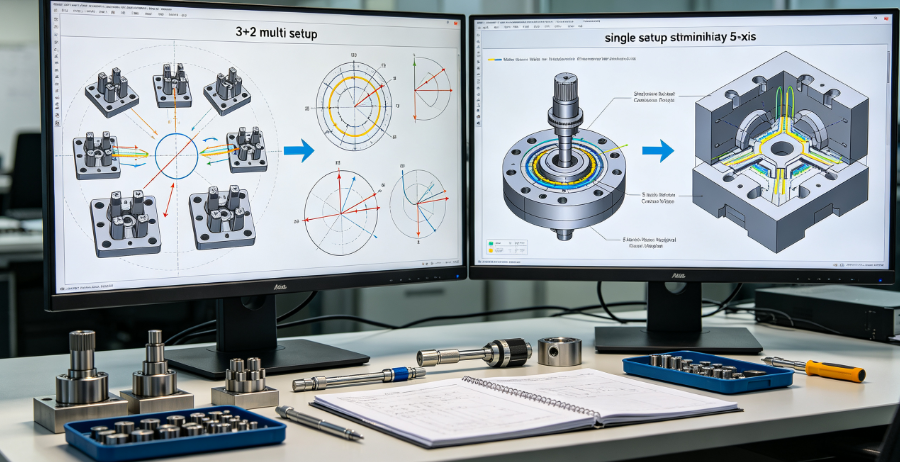
Verify True Simultaneous 5-Axis Equipment
Ask these direct questions to filter fake 5-axis providers:
- Do your machines support full continuous 5-axis simultaneous motion (X/Y/Z/A/B/C), or only indexed 3+2 positioning?
- Request machine spec sheets showing granite rigid bases, thermal compensation and closed-loop micron feedback scales
- Ask for sample photos of complex single-setup undercut parts machined in one clamping
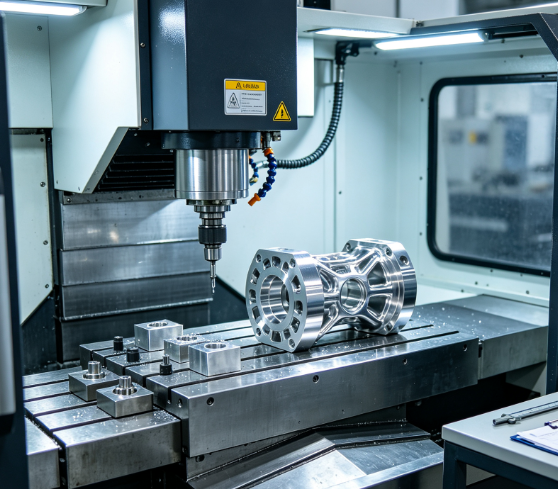
Zorapid standard: Enclosed temperature-controlled full 5-axis centers with 80,000 RPM low-runout spindles for precision low-volume batches.
Evaluate Low-Volume Workflow & Changeover Efficiency
Only partner with vendors built for high-mix, low-volume (HMLV) production:
- Confirm they accept 1-off prototype orders with no excessive minimum batch surcharges
- Ask average setup time for complex custom geometry (target: under 4 hours with modular zero-point fixturing)
- Check if they schedule dedicated small-batch production shifts to avoid queue delays behind mass orders
Red flag: Shops that quote 10+ day lead times for 5–20 piece simple 5-axis components.
In-House Secondary Operations (No Outsourcing Gaps)
All post-processing must be completed under one roof to control timeline and quality:
- Precision micro deburring & ultrasonic media finishing
- All surface coatings: anodizing, passivation, electropolishing, powder coat, laser engraving
- Full CMM/optical vision dimensional inspection
- Ultrasonic solvent cleaning for cleanroom/biocompatible parts
Vendors outsourcing finishing will never guarantee consistent surface roughness or coating thickness across small test batches.
Material Stock & Specialty Alloy Support
A qualified low-volume 5-axis supplier maintains inventory of small-diameter bar stock for rare engineering materials to avoid bulk material waste fees:
- Medical grades: Ti-6Al-4V ELI, 316L stainless, PEEK, ULTEM
- EV/automotive lightweight alloys: 6061-T6, 7075 aluminum, magnesium
- Semiconductor cleanroom metals: non-magnetic stainless, brass, copper
Avoid suppliers that force you to purchase full 3m bar stock for a 5-piece titanium order.
Full QA & Compliance Documentation Capacity
For regulated industries (medical, automotive, aerospace), confirm they provide standard compliance paperwork with every low-volume shipment:
- First Article Inspection Report (FAIR) with full GD&T dimensional scans
- Material Test Reports (MTR / COA) for all raw stock
- Surface roughness, coating thickness and batch traceability logs
- ISO 13485 / ISO 9001 certification audit records on request
English-Speaking Technical Engineering Support
Sales-only communication creates costly design misinterpretation. Confirm assigned project managers hold mechanical engineering backgrounds, capable of:
- Walking through annotated DFM CAD revisions in English
- Explaining tolerance tradeoffs to cut small-batch setup cost
- Resolving fit-test defects without language translation delays
Scalability From Prototypes to Mid-Volume Batches
Your low-volume run may scale to 200–1,000 pilot parts later. Confirm the supplier can:
- Reuse validated 5-axis CAM toolpaths for follow-up batches with zero re-qualification
- Offer tiered volume pricing discounts as your order size grows
- Maintain identical tolerance and finishing standards across prototype and pilot production
How to Control Low-Volume 5-Axis Costs
Low-volume 5-axis pricing splits into two core buckets: fixed setup cost + variable per-unit machining cost. Use these proven hacks to reduce total spend by 20–40% on small batches:
- Consolidate multiple similar parts into one single order Combine related test fixtures or bracket designs in one RFQ to split fixed programming/setup labor across multiple components, cutting average setup overhead per part.
- Rationalize non-critical tight tolerances in your CAD Only hold micron-level tolerances on mating assembly surfaces. Relax cosmetic/non-contact zones to standard ±0.05mm specs — this slashes 5-axis finish cycle time drastically.
- Skip specialty finishing for early proof-of-concept prototypes Order raw as-machined parts for initial fit testing; add anodizing/passivation only for final design validation batches to eliminate coating lead time and material cost.
- Adopt standardized internal radii & hole sizes Custom micro cutters add extra setup fees. Use universal 0.5mm+ internal radii and standard drill sizes to avoid custom tool purchase surcharges.
- Request tiered small-batch pricing upfront Reputable low-volume specialists offer graduated discounts: 1–10 pcs base rate, 11–50 pcs 10% off, 51–100 pcs 15–20% off per-unit cost.
- Lock in free DFM analysis before order confirmation Suppliers charging separate DFM review fees inflate small-batch costs. Zorapid includes full manufacturability CAD optimization at zero extra cost for all low-volume 5-axis projects.
DFM Design Rules to Slash Small-Batch Lead Time & Scrap
DFM optimization delivers the biggest sourcing ROI for low-volume 5-axis components — fewer design revisions mean no wasted setup labor on flawed geometry. Apply these rules before submitting your RFQ:
- Design all features accessible from 1–2 rotational 5-axis orientations Minimize extreme deep undercuts requiring specialized long-reach micro tools that extend cycle time and risk chatter.
- Add minimum 0.4mm internal radii on all pocket corners Sharp zero-radius internal edges force tiny slow-cutting end mills, doubling 5-axis machining runtime for small batches.
- Compensate CAD dimensions for coating thickness upfront Nickel/gold plating, hard anodizing or electropolishing removes 2–6μm of material; pre-adjust critical OD/ID tolerances to avoid post-finish dimension failure.
- Balance thin-wall geometry to prevent deflection during light 5-axis cutting Asymmetrical ultra-thin ribs create uneven cutting force deflection; symmetric wall layouts stabilize single-setup machining and reduce scrap risk.
- Avoid blind ultra-deep micro holes without chip evacuation clearance Trapped chips require extra manual cleaning labor, adding hidden finishing costs to every small-batch part.
- Group all angled holes, flats and undercuts on one primary machinable face Maximize single-setup feature coverage to eliminate secondary re-fixturing entirely.
Complete Sourcing Workflow: RFQ → DFM Review → Production → FAIR Delivery
Follow this standardized step-by-step process to eliminate sourcing delays and quality surprises for low-volume 5-axis orders:
Step 1: Package Clear RFQ Documentation
Include all critical files upfront to avoid back-and-forth engineering clarification:
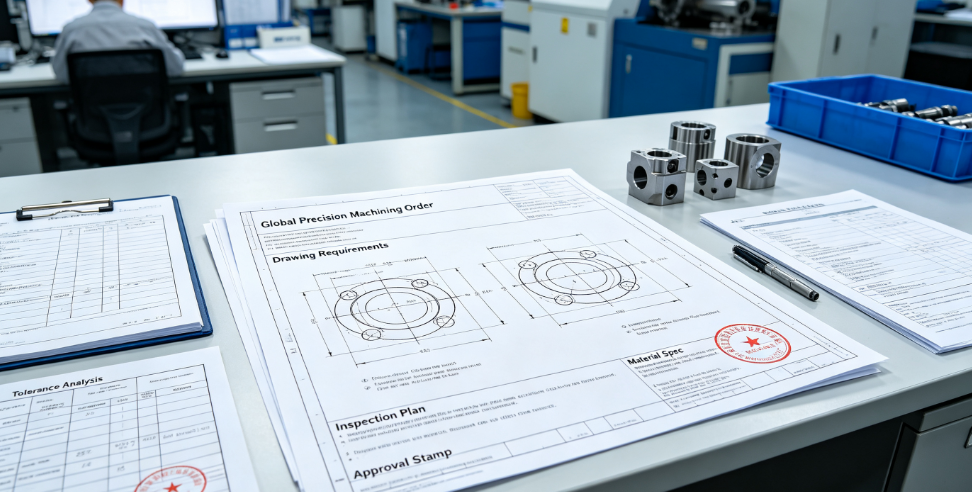
- STEP/IGES/SolidWorks CAD + 2D GD&T engineering drawings
- Material grade, surface finish Ra target and coating specs
- Exact batch quantity, tolerance critical zones, audit documentation requirements
- Hard deadline for lab testing/NPI gate submission
Step 2: Receive Free DFM Feedback & Itemized Quote
Qualified vendors return two deliverables within 24 hours:
- Annotated CAD DFM report highlighting cost/scrap risks with optimized design edits
- Line-item transparent quote separating setup labor, material, machining, finishing and inspection fees (no hidden lump-sum pricing)
Step 3: Approve DFM Revisions & Confirm Order
Sign off on adjusted geometry to lock manufacturability; confirm batch quantity and delivery timeline in writing to eliminate schedule misalignment.
Step 4: Low-Volume 5-Axis Single-Setup Machining
Modular zero-point fixturing + full 5-axis simultaneous cutting completes all part geometry in one clamping, no stacked alignment errors.
Step 5: In-House Deburring, Finishing & Full QA Inspection
100% optical/CMM scanning for every component in the small batch; generate full FAIR/MTR compliance documents.
Step 6: Vacuum Packaging & Express Shipment
Cleanroom-grade sealed packaging prevents surface scratches during transit; forward full inspection reports alongside physical parts for immediate lab validation.
Real Client Sourcing Case: 12-Piece EV 5-Axis Test Component Batch
A Tier 1 EV hardware engineer sourced 12 lightweight aluminum inverter bracket prototypes for thermal NPI testing, original sourcing pain points:
- Local US job shop quoted $1,800 high setup fee, outsourced anodizing adding 3 extra days lead time
- Vendor only offered indexed 3+2 positioning, requiring 4 separate re-clamps with high tolerance drift risk
- No free DFM review; thin uneven ribs would have warped during machining, creating 100% scrap risk
Zorapid Low-Volume 5-Axis Sourcing Solution
- Free same-day DFM redesign balanced rib thickness and added standard internal radii to eliminate warpage
- Full simultaneous 5-axis single-setup cutting removed all multi-clamp alignment error
- In-house hard anodizing eliminated third-party coating queue delays
- Consolidated fixed setup labor across the 12-piece batch to cut per-unit cost by 38% vs the US shop quote
- Full CMM flatness and positional tolerance FAIR report included with shipment
Final Sourcing Outcome
All 12 brackets shipped 4 business days after CAD approval, passed thermal lab testing on first submission, zero dimensional scrap. The OEM now routes all low-volume EV 5-axis NPI batches exclusively to Zorapid.
Low-Volume 5-Axis vs 3-Axis vs Additive Sourcing Comparison
Use this table to quickly decide which manufacturing process fits your low-volume sourcing goals:
| Sourcing Metric | Low-Volume Simultaneous 5-Axis CNC | Standard 3-Axis CNC | Metal Additive Printing |
|---|---|---|---|
| Single-Setup Complex Geometry | Yes, no stacked tolerances | 3–6 re-clamps, alignment drift risk | Unlimited complex undercuts |
| Surface Finish Quality | Ra ≤0.4μm as-machined | Visible chatter lines, heavy polishing needed | Layer lines require post-finish machining |
| Batch Repeatability For Testing | Digitally locked identical parts | Operator-dependent dimensional variation | Layer density inconsistency across small batches |
| Material Range | Full metals + high-performance plastics | Full metals/plastics | Limited specialty alloy/resin selection |
| Low-Volume Total Cost (1–50 pcs) | Balanced for multi-angle complex parts | Cheapest simple flat geometry | High per-unit cost for metal components |
| Regulatory Compliance Docs (FAIR/MTR) | Full standardized audit records | Limited documentation for small orders | Material traceability gaps for medical/aerospace |
| Best Sourcing Fit | Medical implants, EV NPI brackets, semiconductor wafer fixtures | Simple flat brackets, low-tolerance single-plane parts | Ultra-complex lattices, one-off impossible-to-machine geometries |
Common Sourcing Mistakes & How to Avoid Them
- Mistake: Award RFQs to mass-production factories that treat low-volume orders as low priority Fix: Only shortlist vendors explicitly marketing high-mix low-volume 5-axis specialization.
- Mistake: Accept 5-axis quotes without verifying simultaneous full 5-axis capability Fix: Request machine spec sheets and single-setup complex part samples before placing orders.
- Mistake: Skip pre-production DFM analysis to rush order placement Fix: Mandate free DFM review as a non-negotiable sourcing requirement to eliminate post-machining scrap.
- Mistake: Outsource machining and finishing to separate vendors Fix: Prioritize full in-house workflow suppliers to eliminate cross-vendor lead time and quality inconsistency.
- Mistake: Fail to specify compliance documentation requirements upfront Fix: List FAIR, MTR and CMM scan reports as mandatory deliverables in your initial RFQ package.
- Mistake: Over-spec every tolerance across the entire CAD model Fix: Work with vendor DFM engineers to rationalize non-critical tolerances and cut small-batch setup cost.
FAQ
What is the minimum order quantity Zorapid accepts for custom 5-axis components?
Zero mandatory MOQ — we support 1-off single prototype parts all the way through 100-piece low-volume pilot batches, with dedicated small-batch production shifts to avoid queue delays.
How long is standard lead time for a low-volume 5-axis batch (1–100 pcs)?
Standard turnaround: 4–7 business days including DFM, machining, in-house finishing and full CMM inspection. Rush expedited production cuts lead time to 2–3 days for critical NPI gate deadlines.
Can I split my low-volume order into raw machined blanks first, then finish later?
Yes. We can ship uncoated raw 5-axis parts in 2–4 days for early fit testing, holding finishing operations until you lock final cosmetic specs to accelerate lab validation timelines.
Do you provide full English-language compliance documentation for medical/automotive audits?
Every low-volume shipment includes complete English FAIR dimensional scan reports, material COA/MTR logs, surface roughness test records and batch traceability certificates, fully aligned with ISO 13485, ISO 9001 and OEM automotive audit standards.
If I scale from 20 prototype parts to 500 pilot units later, will part dimensions shift?
We archive all validated 5-axis CAM toolpaths and DFM design files for every customer project. Follow-up batches reuse identical machining parameters to guarantee zero dimensional variation between low-volume prototypes and mid-volume pilot runs.
Wrap-Up
Sourcing low-volume custom 5-axis components fails when you partner with vendors built for mass production, or generic shops lacking true simultaneous multi-axis equipment and end-to-end in-house workflows. The biggest sourcing losses come from unaddressed DFM risks, outsourced secondary processes and hidden setup fees that inflate small-batch budgets.
Zorapid’s entire precision machining division is engineered for high-mix, low-volume 5-axis projects serving medical, automotive EV, semiconductor and robotics R&D teams worldwide. We deliver free specialized 5-axis DFM analysis, temperature-controlled full simultaneous 5-axis machining, all in-house finishing and 100% traceable QA documentation under one roof — no third-party outsourcing, no minimum order surcharges, no hidden sourcing surprises.
Whether you need a single complex prototype fixture or a 100-piece NPI validation batch, our English-speaking mechanical engineering team streamlines your entire sourcing workflow to hit tight testing deadlines while controlling small-batch costs.
Request Your Free Low-Volume 5-Axis DFM Review & Transparent RFQ Quote
Submit your CAD files, GD&T drawings, material/finishing specs and target batch quantity. Our precision sourcing engineering team will complete a full manufacturability risk assessment, share tiered small-batch pricing breakdowns, and outline a clear guaranteed lead time for your custom 5-axis components.