Aluminum ranks second only to steel in usage, widely applied from construction to aerospace.
Aluminum stamping is a manufacturing process used to form aluminum metal into desired shapes.
Many aluminum alloys exist; 6063, 2024 and 5083 are the most common for aluminum stamping.
This article covers how aluminum stamping works, which alloys are suitable for stamping, and the cost of these processes.
What is Aluminum Stamping?
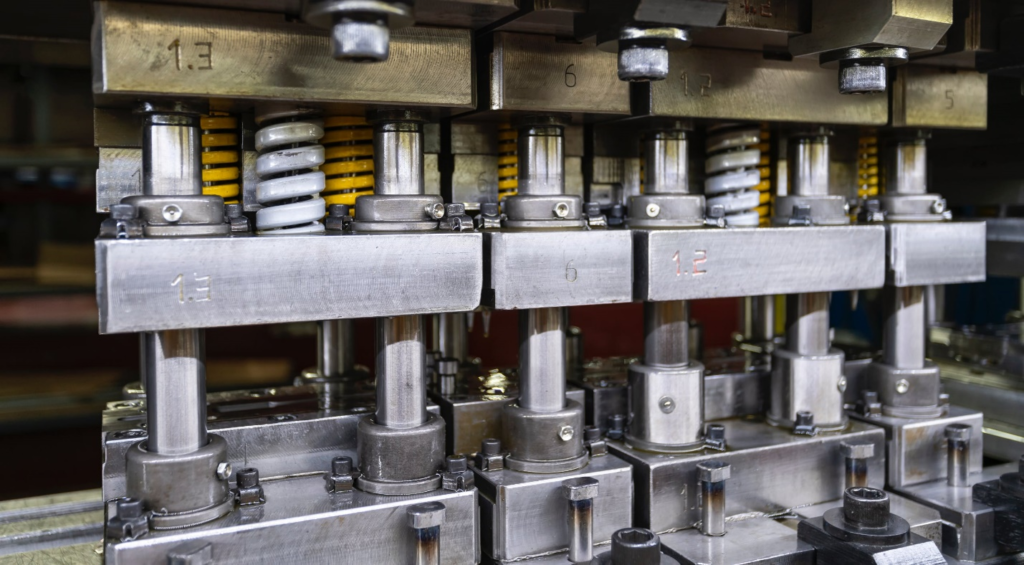
Aluminum stamping resembles forging. An aluminum sheet sits between two profiled dies; one fixed, the other moving vertically. Closing dies shapes the sheet into the desired form.
Detailed Introduction to Precision Aluminum Stamping Process
Aluminum stamping makes high-precision industrial parts. It forms metal sheets into complex shapes hard to machine conventionally and trims excess material. Grinding and polishing deliver tighter tolerances and better accuracy.
Why Choose Aluminum for Stamping?
Aluminum features excellent formability and will not burn during heating. It has a low melting point, allowing the stamping process to be completed at relatively low temperatures and in a short cycle time. After cooling, the aluminum workpiece gains higher structural strength.
Advantages of Stamped Aluminum
There are many benefits of using aluminum for the stamping process.
Aluminum is a lightweight yet high-strength metal, widely used in the production of various aircraft components. It is easy to process and does not require heavy load or high temperature for deformation.
Aluminum offers excellent corrosion resistance, making it ideal for critical applications such as aerospace and automotive industries.
Aluminum is a commonly available metal. Its excellent workability and manufacturability are the main reasons it is widely adopted for stamping. These properties make aluminum a cost-effective material, delivering significant advantages in both cost and time savings.
Aluminum features excellent mechanical properties with high ductility and decent strength. Its ductility lets sheets be easily shaped into complex structures for automotive and aerospace parts.
Common Challenges in Aluminum Stamping
Below are some typical challenges encountered during the aluminum stamping process:
Galling and Wear Issues
This is one of the most common problems in stamping. Aluminum material tends to adhere to the die surface, resulting in a rough workpiece finish. Such surface defects shorten the service life of tools and parts, and cause material and economic losses. Lubrication and preheating the dies can help alleviate this issue.
Springback of Aluminum Parts
Aluminum is lightweight, so it is common for stamped aluminum components to rebound back toward their original shape after forming. Springback may lead to serious dimensional errors and should be controlled through precise tool adjustment and process optimization.
Wrinkling and Tearing
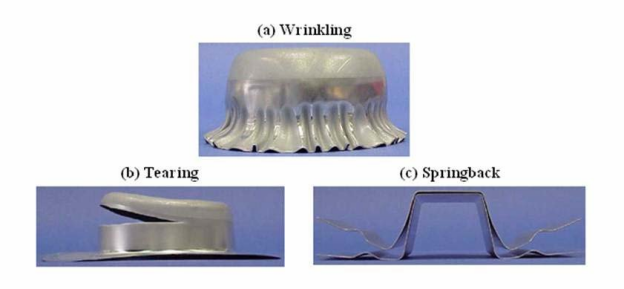
There are two main causes of these issues:
High compressive stress
Excessively high blank holder force (the force pressing material into the die)
To avoid such problems, you should optimize die design and stamping speed.
Tool Wear and Maintenance
Tool wear inevitably occurs during stamping, where the tools refer to the stamping dies.
When the die is cold, feeding material at 400–500°C into the mold will cause die cracking.
This problem can be solved by preheating the dies and implementing routine maintenance.
How to Calculate Aluminum Stamping Costs
When preparing a batch of aluminum parts via stamping, you can calculate the cost yourself based on the following criteria.
Material Cost
Material type is a key factor affecting the total cost. There are more than 500 aluminum alloy grades in total; some are easy to process, while others are difficult to machine. Another factor is sheet thickness. Both extremely thin and extra-thick aluminum sheets are hard to form into the required shape.
Die Cost
Tools and dies may become damaged during processing and production. Worn tools and dies require proper maintenance. This is why you should calculate tooling costs in advance before selecting any manufacturing method.
Production Cost
Production costs cover electricity expenses, production volume, and supplier type.
Some workpieces require higher press tonnage — the force needed to cut and form aluminum during stamping — which directly affects total cost. Higher tonnage means greater energy consumption and higher overall expenses.
Cycle time refers to the time required to complete one production run. Shorter cycle time brings higher productivity and lower production costs.
Higher production volume reduces the unit total cost. If the press tonnage is unstable throughout production, tool maintenance costs will rise.
Labor Cost
Aluminum stamping production can be done either manually or automatically.
Manual stamping requires more labor, resulting in higher costs even with a higher daily stamping output. It also comes with a higher risk of human error, slower production speed, and lower efficiency. Labor skill level has limited impact in manual operations.
Automatic stamping cuts labor needs and costs despite fewer daily cycles. Its downsides are high initial setup costs and a need for highly skilled operators.
Surface Finishing Cost
Stamping alone cannot deliver ultra-smooth surfaces, leaving burrs and residue that must be removed. Polishing, anodizing or coating improves surface finish but adds production costs.
Overhead and Maintenance
Overhead refers to indirect expenses spent on keeping equipment in good working condition. Maintenance costs include routine tool upkeep and repair fees. Other overheads cover power consumption and equipment depreciation from normal wear and tear.
Shipping and Logistics
Shipping and logistics costs are the expenses of transporting raw materials, finished parts, and equipment. These costs depend on material quantity, fuel prices, the weight of aluminum components, and the transportation distance between locations.
Methods to Reduce Costs
We have covered the key factors that drive up stamping costs. The following methods can help you control overall expenses:
- Design optimization
- Increase production batch size
- Adopt cost-effective aluminum materials
Applications of Aluminum Stamping in Various Industries
Explore the uses of aluminum stamping across key industries:
Aerospace Industry
- Wing panels
- Fuselage componentsAluminum is a lightweight, low-cost, and corrosion-resistant metal, which is why it is widely used in the aerospace industry.
Automotive Industry
Aluminum stamping is used to manufacture the following parts:
https://zorapid.com/automotive-industry
- Various components
- Body panels
- Engine parts
Electronics & Consumer Products
- Casings
- Connectors
- Brackets for electronic devices
Medical Device Manufacturing
- Surgical equipment
- Diagnostic equipment
- Components for various medical devices
Construction & Architecture
- Photo frames
- Panels
- Structural supports
Common Aluminum Alloys for Stamped Sheet Metal Parts
Each series of aluminum alloys features distinct performance properties:
1100 Aluminum Alloy
The 1100 aluminum alloy series is well suited for stamping:
- Excellent corrosion resistance
- Good workability
3003 Aluminum Alloy
This grade is widely used in stamping applications for its balanced strength and corrosion resistance.
5052 Aluminum Alloy
Ideal for critical applications such as automotive and aerospace industries:
- High strength-to-weight ratio
- Great durability
6061 Aluminum Alloy
This alloy achieves higher strength after heat treatment, making it suitable for high-performance scenarios.
6063 Aluminum Alloy
It is suitable for stamping due to the following properties:
- Lightweight design capability
- Good formability
- Superior corrosion resistance
- Excellent weldability
2024 Aluminum Alloy
Its properties make it a preferred choice for stamping processes:
- Good formability
- High strength and durability
- Reliable weldability
- Superior fatigue resistance
7075 Aluminum Alloy
This grade is widely adopted in aerospace and automotive fields thanks to:
- Good machinability
- Great fatigue resistance
- High strength-to-weight ratio
5083 Aluminum Alloy
5083 aluminum alloy parts are extensively used in marine, aerospace, and automotive industries:
- Excellent weldability and formability
- Outstanding fatigue resistance and corrosion resistance
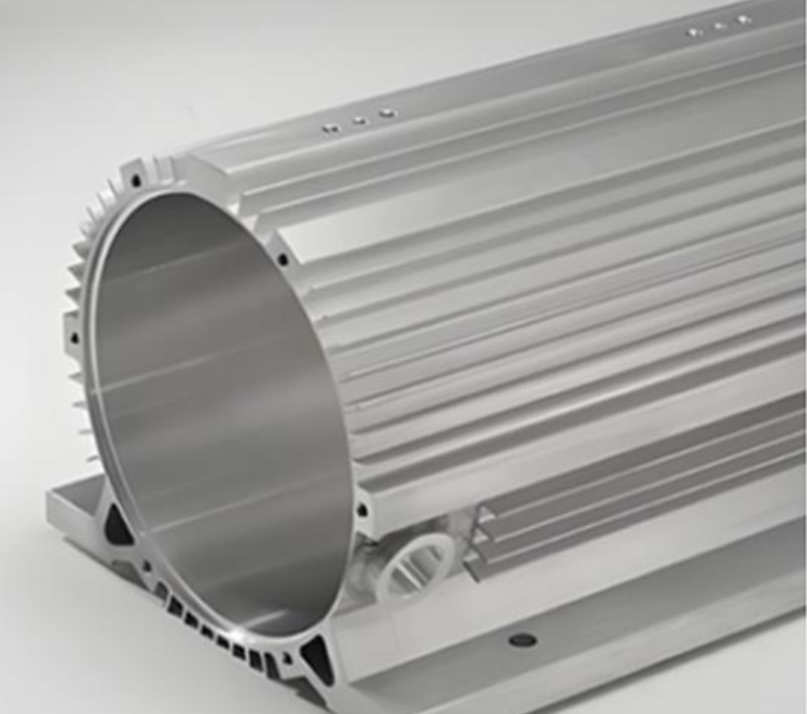
Key Considerations for Alloy Selection
The following factors should be evaluated before selecting an aluminum alloy profile:
- Application industry
- Mechanical properties
- Machining performance (weldability, formability, etc.)
Influence of Alloy Properties on Stamping Quality
Choosing the wrong alloy may negatively affect the following aspects:
- Surface finish
- Component durability
- Formability
- Hardware stamping equipment performance
- Tool wear level
Types of Aluminum Stamping Operations
There are various types of stamping operations:
Aluminum Blanking
As the first step of aluminum stamping, flat sheet metal is formed into the required outline shape.
Aluminum Piercing and Cutting
Piercing: Creating holes on stamped aluminum sheets.
Aluminum Cutting: Making internal notches and cutouts.
Embossing and Texturing Techniques
Coining
High-pressure stamping that leaves precise impressions and markings on sheet metal.
Embossing
Used to create raised or recessed decorative designs on aluminum sheets.
Deep Drawing of Aluminum
In deep drawing, the aluminum sheet is drawn into the die cavity to form complex contoured shapes.
Aluminum Flanging
This process bends the edges of aluminum sheets, producing parts widely used in automotive components.
Professional Aluminum Stamping Technologies
The following specialized aluminum stamping technologies are commonly adopted:
Progressive Die Stamping
Applied for mass production of aluminum stamped parts.
It ensures consistent quality and reduces production costs.
Transfer Die Stamping
A metal stamping process for aluminum, used to manufacture large and complex stamped aluminum sheet components.
Four-Slide Stamping
This aluminum stamping process features the following advantages:
- Ideal for producing small, complex parts with high precision
- Widely used in electronics and medical equipment industries
Fine Blanking for Aluminum Parts
This process is used to produce parts with clean edge quality and tight dimensional tolerances.
Aluminum Stamping and Surface Finishing
The aluminum stamping process alone cannot deliver a superior surface finish. Additional processes are required to achieve the desired surface quality.
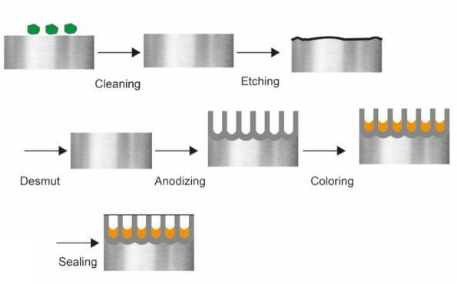
Anodizing for Stamped Aluminum Parts
Anodizing enables stamped aluminum components to resist corrosion even in harsh working environments. It is a coating process that forms a protective oxide layer on the aluminum surface.
Lubrication Technologies for Aluminum Stamping
- Oil-based lubrication: Spraying dip coating; suitable for heavy-duty stamping
- Water-based lubrication: Spraying or wiping; eco-friendly
- Dry film lubrication: Coating / brushing; ideal for high-temperature applications
- Synthetic lubrication: Sprayable or rollable
Preventing Oxide Buildup During Stamping
You can use one of the following methods:
- Anodized aluminum
- Ultrasonic cleaning with dilute hydrochloric acid
- Using wire drawing and locking beads
Zorapid Aluminum Stamped Parts
Zorapid adopts state-of-the-art stamping technology to ensure high precision and tight tolerances for aluminum components.
Aluminum is widely used in critical industries; we deliver precision aluminum machining with advanced equipment.We also provide custom tooling and die design services.All products are delivered with fast lead times at competitive prices.
FAQ
Why is aluminum being increasingly used in automobile manufacturing?
Because it features a high strength-to-weight ratio, excellent corrosion resistance, light weight, and good fatigue strength.
What thickness of aluminum can you stamp?
We can stamp aluminum sheets ranging from 0.2mm to 0.6mm in thickness.
Aluminum Stamping vs Steel Stamping
Aluminum is easier to stamp compared to steel for the following reasons:
- It requires low temperature for forming and deformation.
- Aluminum is softer than steel, resulting in lower pressing force requirements.
- It offers better machinability and weldability.
What are the best lubricants for aluminum stamping?
- Emulsions
- Hot melt lubricants
- FDX 240 A