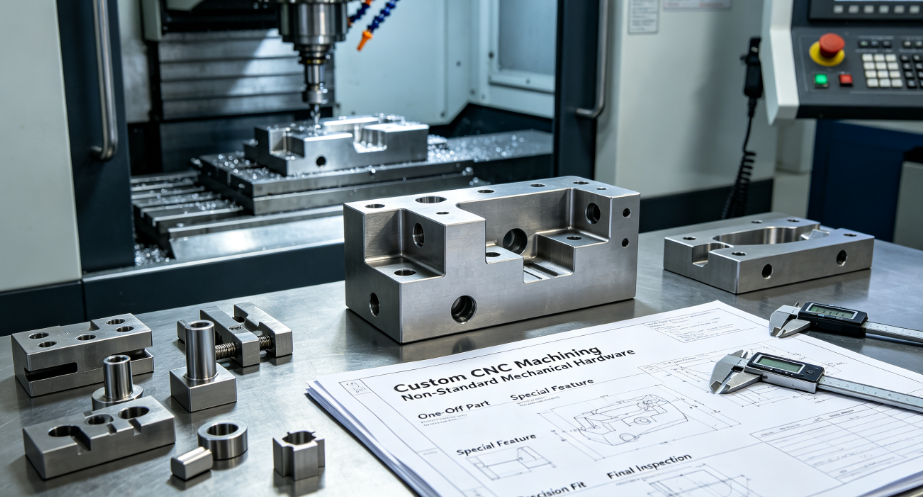
Complex-shaped parts like turbine blades and engine blocks are common across industries. Ever wondered how they’re made? CNC mills produce them using milling cutters. Below we cover cutter types and applications.
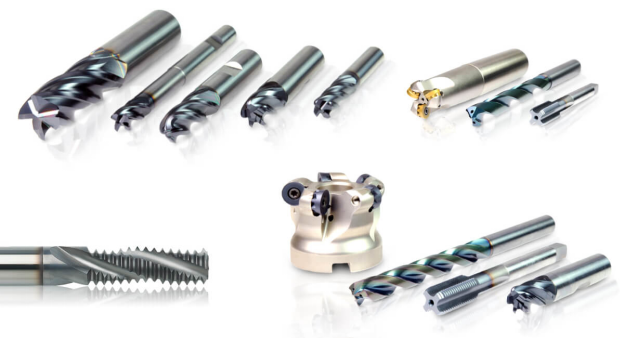
What Are Milling Cutters and How to Use Them?
There is a wide variety of milling cutters on the market, used for machining all kinds of different part features. Their key characteristics and functions help you manufacture components with high quality.
What Is a Milling Cutter?
Milling machines utilize various milling cutters to process parts. A milling cutter is a cutting tool with sharp edges that removes excess material in the form of chips to machine workpieces into the required shapes. Face milling cutters, flat end mills, and drill bits are among the most common types of milling cutters.
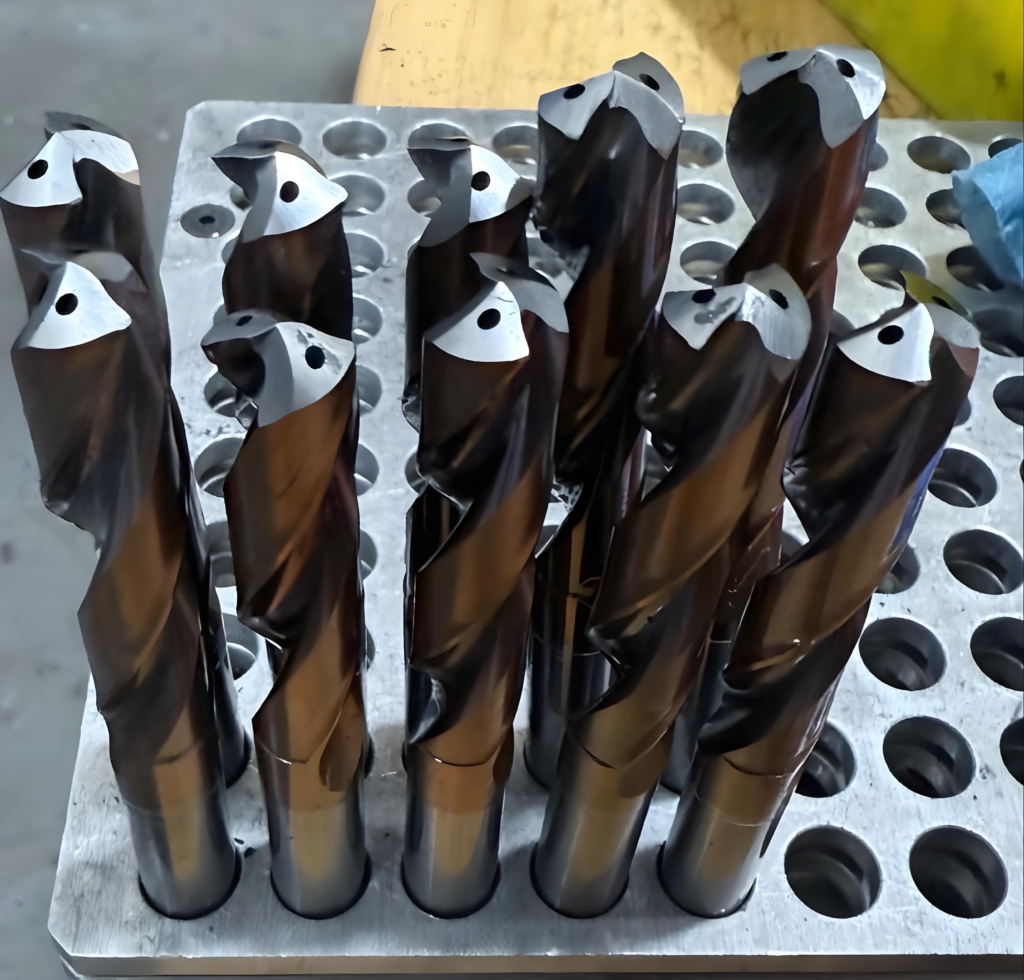
Overview of Milling Machine Cutting Tools
The working mechanism is simple. Just push the cutting tool into the workpiece and move it toward the area where material needs to be removed. An end mill is a type of milling cutter that removes material using its tip instead of its side edges.
13 Different Types of Milling Cutters
Only one type of cutting tool has been mentioned so far. Let’s learn about other milling cutters.
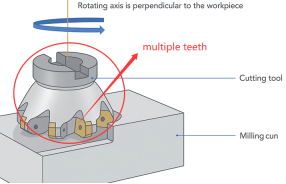
Face Milling Cutter
This type of milling cutter is equipped with multiple cutting teeth.
It delivers high-efficiency surface finishing.
Ideal for large-area machining.
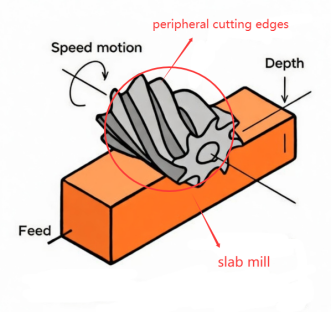
Slab Milling Cutter
It is cylindrical in shape with sharp peripheral cutting edges.
Used for removing large amounts of material.
Specially designed for horizontal milling machines.
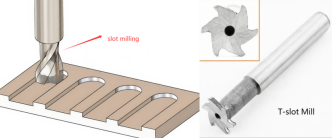
T-Slot Milling Cutter
Used for machining T-shaped grooves.
Widely applied for mounting bolts, fasteners and other hardware components.
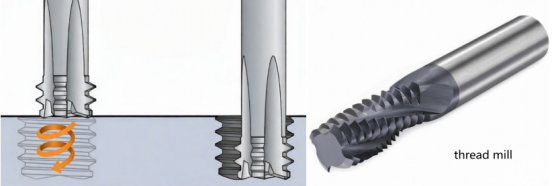
Thread Milling Cutter
Thread Milling Process
- Create internal or external threads
- Machine difficult-to-cut materials
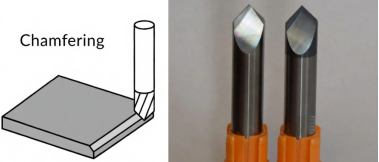
Chamfer Milling Cutter
It helps create beveled edges.
Specially designed for chamfering and deburring workpiece edges.
Improves both functionality and appearance.
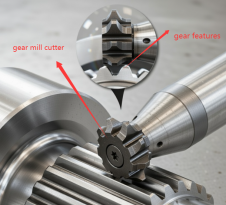
Gear Milling Cutter
A gear cutting tool for gear milling machines.
Efficiently creates complex gear tooth profiles.
Suitable for involute gear profiles.
Radius & Hollow Milling Cutter
Used to create rounded edges.
Best suited for machining hollow profiles.
Ideal for producing aesthetic and functional curves.
Ball Nose Milling Cutter
Also known as a ball end mill.
Features a hemispherical cutting end.
Applied for 3D surface machining, mold making, and complex curve profiling.
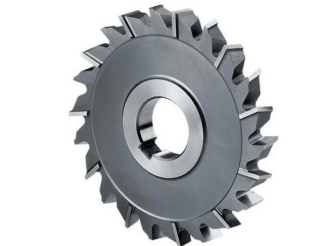
Side Milling Cutter
Cuts the side and surface of the workpiece simultaneously.
Ideal for slotting and surface machining.
Suitable for a wide range of milling applications.
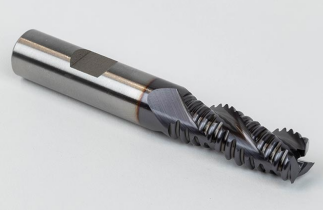
Roughing End Mill
Features serrated cutting edges to boost cutting efficiency.
Specially designed for rough milling operations.
Enables fast material removal.
Semicircular Milling Cutter
It has a flat bottom with a semicircular profile.
Specially used for machining semicircular keyways.
Commonly applied to components such as gears and shafts.
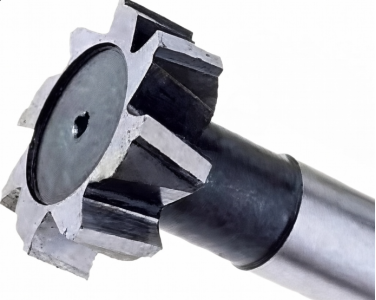
Involute Gear Cutter
Specially designed for manufacturing involute gears.
It produces robust geometric profiles required for power transmission in gear systems.
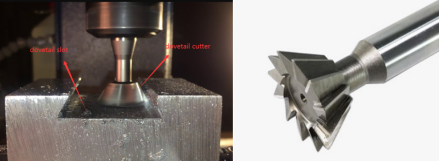
Dovetail Milling Cutter
Used for machining dovetail grooves.
Commonly applied in jigs and fixtures.
Its design enables firm clamping and secure workpiece holding.
Common Types of End Mills and Their Functions
Another essential and widely used cutting tool is the end mill. It enjoys extensive application thanks to its rich variety and flexible cutting capabilities, suitable for slotting, cavity milling, and profile milling.
Roughing End Mill
Roughing end mills are designed for rough machining. Their cutting edges adopt a wave shape or feature chip breakers. These structures allow rapid removal of large volumes of material.
Finishing End Mill
Finishing end mills feature smooth edges and more flutes, ideal for final surface finishing.
Variable Helix End Mill
Variable helix end mills reduce vibration and boost stability, ideal for tough materials like stainless steel and titanium alloy.
High Helix End Mill
High helix end mills feature a helix angle over 35°, delivering fast chip evacuation. They are ideal for machining aluminum and other soft materials.
Low Helix End Mill
This type of end mill offers higher structural strength, making it the perfect choice for hard material machining.
End Mill Types by Tool Shape
From the above introduction, you have gained a clear understanding of end mill classifications. Next, we categorize them by shape: square end, corner radius, and ball nose.
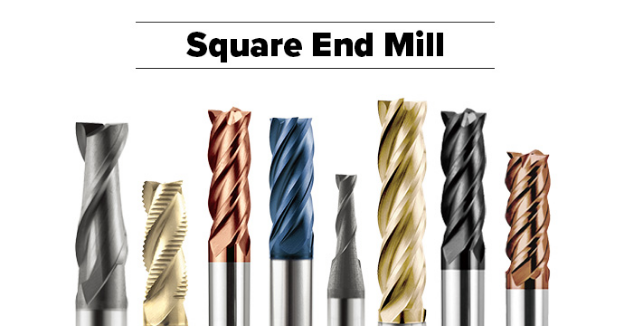
Square End Mill
- Features a flat cutting end
- Improves efficiency for plane and slot machining
- Suitable for deep cutting operations
Corner Radius End Mill
As the name suggests, this cutter comes with rounded corner edges.
It helps machine profiles and complex designs.
It is the preferred choice when applications require rounded edges or superior surface finish.
Ball Nose End Mill
Ball nose end mills easily machine 3D profiles, molds and complex curves.
Equipped with a hemispherical tip, they ensure stable and reliable machining performance.
Cutting Tool Types for Manual Milling Machines
Manual milling tools handle face milling and slotting for simple jobs. Also called knee-type mills, named for its vertical knee structure that adjusts workpiece height.
Common Types of Milling Cutters and Their Functions
All milling cutters are classified according to their design and functions.
Types of End Mills
Common types of end mills.
Ball Nose Milling Cutter
You may have seen mold making that requires curved surfaces. A ball nose milling cutter is used for this purpose.
The hemispherical tip at the end of the tool helps produce rounded shapes efficiently.
Square End Milling Cutter
If you need precise corners and sharp edges on parts, use a square end milling cutter to improve working efficiency.
Corner Radius End Mill
Corner round end mills create rounded edges for aesthetics and functionality, optimized for deep pocketing and reverse-side’s part cutting.
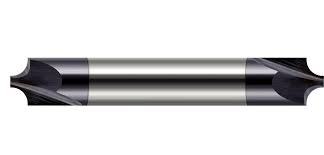
Undercut End Mill
Some areas of a component cannot be machined with standard milling cutters, as regular tools are unable to reach these positions.
With its special angle and geometric design, the undercut end mill can handle such hard-to-reach areas and deliver a high-quality surface finish.
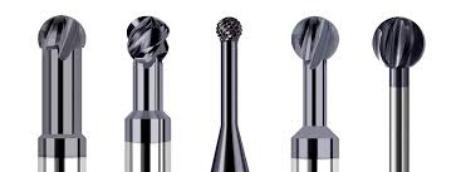
Corner Radius End Mill
If your parts have sharp corners, they pose potential risks with stress concentration points. These spots are prone to crack initiation and will eventually lead to component failure. Sharp edges can be rounded and blunted by using corner radius end mills.
End Milling vs Face Milling
End Milling
Indexable milling cutters machine workpieces with their side cutting edges instead of the tool tip. It is the optimal method for machining grooves and complex parts. Both vertical and horizontal workpieces can be processed with end milling technology.
Face Milling
This machining technique creates flat surfaces perpendicular to the spindle, and it is best suited for finishing operations.
Face Milling Cutter
Wondering which cutter to use for finishing step sides on rectangular workpieces? The answer is a face milling cutter. These cutters excel at removing large amounts of material while maintaining an excellent surface finish.
Slab Milling Cutter
These cutters are used for climb milling, running parallel to the workpiece surface. They enable heavy stock removal quickly and efficiently.
T-Slot & Slotting Milling Cutters
T-Slot Milling Cutter
It removes excess material to machine workpieces into T-shaped profiles. Typical types include HSS T-slot milling cutters and indexable T-slot milling cutters.
Slotting Milling Cutter
Slotting cutters are used to cut grooves and slots on parts. Common varieties include semicircular keyseat cutters and standard slotting cutters.
Form Milling Cutter
Form milling cutters are customized according to application requirements, mainly used for profiling workpiece contours. Common types include convex surface cutters, corner rounding cutters and more.
Fly Cutter
Fly cutters are compatible with both manual milling and CNC milling. They are designed for flat surface machining and can easily process large flat parts. In manual milling, they help achieve superior surface roughness and finish quality.
Milling Tools and Tool Components
Anatomy of a Milling Cutter
The structure of a cutting tool refers to its geometric shape and configuration. Every milling cutter consists of three core parts: flutes, helix angle, and cutting edges.
Flutes
Spiral grooves on the tool surface for chip evacuation.
Helix Angle
The angle between the tangent of the cutting edge and the tool centerline. It affects cutting force, vibration, and heat generation.
Cutting Edge
The edge that cuts or removes material from the workpiece surface.
Milling Cutter Materials
Cutting tools require materials with high hardness and excellent wear resistance.
Types of Milling Cutter Materials
Carbon Tool Steel
This type of tool material is used for machining soft workpieces. Its performance limit is affected by overheating during the milling process.
High-Speed Steel (HSS)
High-speed steel offers good durability, wear resistance, and heat resistance, making it suitable for manufacturing milling cutters.
Carbide Tools
Milling cutters made of tungsten carbide and cobalt are known as carbide tools. This is the optimal material for high-speed and high-temperature machining applications.
Ceramic and Cermet Tools
Cermet refers to a composite of ceramic and metal, combining toughness and hardness in the cutting tool.
Both ceramic and cermet tools are used for high-speed machining.
Stellite Alloys
Cobalt-based alloys with outstanding heat resistance, wear resistance, and corrosion resistance.
Milling Cutter Coatings
Milling cutters are coated with anti-corrosion and anti-oxidation materials such as SiC to resist corrosion and high-temperature oxidation. Coatings extend the overall service life of milling cutters.
Difference Between End Mill and Face Mill
We perform milling with tools that cut from the side of the cutter rather than the tip. Its main applications include slotting, copying profiling, and contour machining. It is suitable for finishing and machining parts with complex shapes, serving as an efficient tool for high-speed machining.
Face mills are used for machining flat surfaces. Their main functions include surface planarizing, leveling and similar operations.
After understanding the difference between end mills and face mills, you can further learn the core distinctions between end milling and face milling, so as to successfully manufacture parts that meet your requirements.
CNC Milling Cutter Selection Guide
Factors to Consider When Selecting Milling Cutters
- Specifications: Size suitable for the tool
- Diameter: The tool diameter should match the diameter of the hole on the workpiece
- Material Compatibility: Different tools are used for hard and soft materials; select accordingly
Common milling cutters feature flat cutting teeth around the tool body.
Milling Machine Cutters
Various types of milling cutters include end mills, face mills, T-slot cutters, etc. These tools differ in design and function.
Tips for Choosing the Right Milling Cutter
Before selecting any milling cutter, consider the following factors:
- Design
- Number of flutes
- Helix angle
- Tool geometry
The number of flutes on the milling cutter affects surface finish, while the helix angle influences chip evacuation. Consider both surface finish and roughness before choosing a milling cutter.
Practical Applications of CNC Milling Cutters
Demonstrate the working principle of milling cutters.
CNC Milling Cutters for Complex Machining
CNC machines operate via programming with minimal manual intervention, which reduces the risk of errors. are adopted for their advanced capabilities. Zorapid provides precision machinery for machining complex parts.
Efficient CNC Milling Strategies
Two optimal techniques for high-efficiency machining are climb milling and conventional milling.
In climb milling, the cutting tool moves in the same direction as the workpiece feed.
In conventional milling, the tool moves against the direction of workpiece feed, helping to improve machining speed and accuracy.
Maintenance of Milling Cutters
Cleaning and Storage of Milling Cutters
Cleaning tools before and after operation helps prevent tool corrosion. Store and arrange cutting tools in a neat and orderly manner.
Resharpening and Replacement of Tools
Milling cutters will become blunt after repeated use. Therefore, inspect the cutting edges before and after every operation. Resharpening is the preferred solution for dull tools; replacing with new cutters in a timely manner is also a wise choice.
Conclusion
We can conclude that milling cutters are essential for all milling operations. They vary in design, number of flutes, geometry and other aspects, all of which directly affect milling performance. Before selecting any cutter, key factors such as diameter, size, and compatibility with workpiece materials should be taken into consideration.
FAQ
How to choose the best cutting tool material?
You can select the optimal cutting tool material by confirming the required size, diameter, and workpiece material compatibility.
What is the ideal milling cutter for machining aluminum?
High helix end mills are suitable for aluminum machining.
How to reduce vibration when using milling cutters?
Adopting the optimal cutting speed and rigidly clamping the workpiece will effectively reduce vibration during milling.