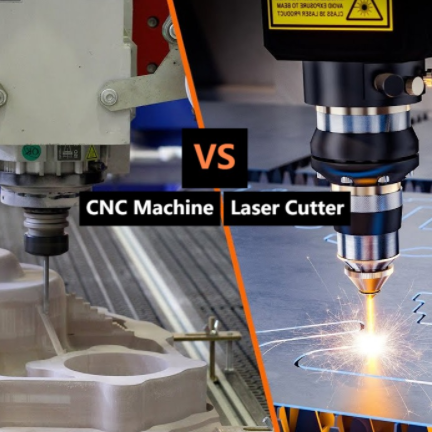
Both CNC machines and laser cutters are widely used cutting equipment in the manufacturing industry. These cutting tools are commonly applied in industries that require high safety standards, including aerospace, medical, automotive, electronics and more. There are many key aspects to compare between the two machines.
What is a CNC Machine?
A CNC machine was invented long before laser machines came into existence.
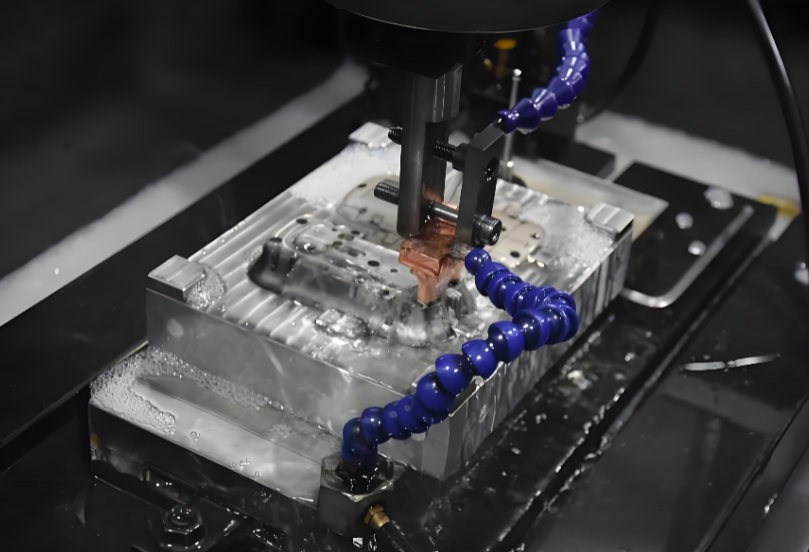
CNC (Computer Numerical Control) machines are material removal cutting equipment that trim excess stock to manufacture components with custom shapes.
It is an automated machine often equipped with an Automatic Tool Change (ATC) function.
First developed in the 1940s, CNC machines were initially used to produce precision parts for the aerospace industry.
Common Applications of CNC Machines
CNC machines are widely used in aerospace, automotive, and woodworking industries. They can manufacture components such as engine blocks, aircraft parts, nuts and bolts.
Materials Compatible with CNC Machines
CNC machines are highly versatile. They can process almost all types of materials, including plastics, metals, and composite materials.
However, machining ceramic materials on CNC equipment is relatively difficult due to their brittleness.
Types of CNC Machines
Common types of CNC machines include:
CNC Milling: Used for cutting and drilling operations.
CNC Turning: Applied to process cylindrical parts.
Milling & Turning: Suitable for complex-shaped components and intricate parts.
What is a Laser Cutter?
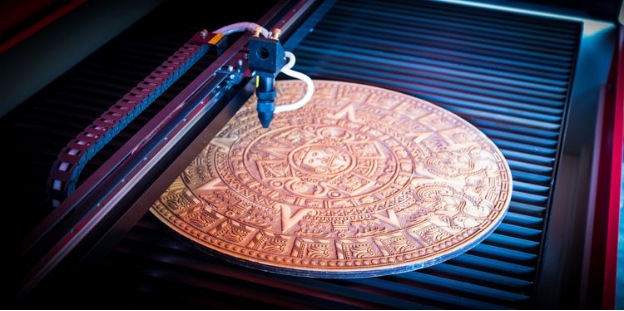
A laser cutter uses a highly ionized laser beam to cut materials. It is a high-speed cutting tool used to produce complex parts with high precision, accuracy, and tight tolerances.
Introduction to Laser Cutting Technology
In laser cutting technology, a laser beam is focused onto the target material to melt or vaporize excess material. This technology features high efficiency and is computer-controlled, resulting in a very low possibility of errors.
Common Applications of Laser Cutters
- Creating intricate designs on materials for custom jewelry, bespoke signage, and electronic components
- Prototyping and small-batch production
Materials Suitable for Laser Cutting
Laser cutting equipment is not as versatile as CNC machines. It is limited to a specific range of materials such as titanium and composites. It can efficiently cut wood, acrylic, and leather, but is not ideal for thick or highly reflective materials.
Types of Laser Cutters
There are various types of laser cutters on the market; the most common ones are as follows:
Crystal Laser
Its composition includes neodymium-doped yttrium vanadate.
It features a shorter beam wavelength and high intensity, making it suitable for thick materials.
CO2 Laser
The most widely used cutting tool.
The laser is generated by CO₂ gas.
It delivers a good balance between power and precision and works well for a wide variety of materials.
Nd:YAG Laser Cutter
A low-power cutting tool.
Also applied in skin treatment procedures.
The newly developed laser cutter is the Direct Diode Laser, which remains a relatively less well-known type of equipment.
Pros and Cons of CNC Machines and Laser Cutters
CNC Machine: Advantages and Disadvantages
Advantages
- It is one of the most efficient cutting tools. With the ATC function, it can run 24 hours a day with minimal supervision.
- Suitable for mass production.
- Cost-effective cutting equipment; compared with traditional machines, it requires much lower long-term operational costs for follow-up CNC machining.
- It needs little manual labor, greatly reducing the risk of human error and workplace injuries.
Disadvantages
- Higher initial installation cost than most other cutting machines.
- Relatively complex maintenance requirements.
- CNC programming has a certain learning curve and takes time to master.
Laser Cutter: Advantages and Disadvantages
Advantages
- Delivers superior cutting precision and surface finish compared with conventional cutting tools.
- Versatile in material processing, capable of cutting even ceramics with high accuracy.
- Non-contact cutting between laser beam and workpiece, resulting in zero or extremely low risk of contamination.
- Narrow kerf width and very low material wastage.
Disadvantages
The main drawbacks of laser cutters are as follows:
- Not suitable for cutting thick materials.
- Laser fumes are harmful to health.
- High energy consumption.
- Exists heat-affected zone (HAZ) after cutting.
Differences Between CNC Machines and Laser Cutters
This article covers the main differences between CNC machines and laser cutters.
Cutting Method
CNC Machine
CNC machines operate via CNC programs. Different procedures are applied for different operations, and G-code is primarily used for milling tasks. These machines adopt an Automatic Tool Change (ATC) mechanism to complete precision machining.
Laser Cutter
Laser cutters use a laser beam to cut materials to achieve the required shape or design of components. The laser generates extremely high heat to melt, vaporize, and remove excess material.
Precision and Accuracy
The two cutting tools serve different application scenarios.
If you need to machine large parts with moderate precision, a CNC machine is the better choice, as it is equipped with cutters that easily handle large workpieces.
For small parts requiring ultra-high precision and intricate details, a laser cutter is more suitable.
Speed: CNC vs Laser Cutting Speed
Cutting speed depends on the thickness of the workpiece.
For thin materials, laser cutters work much faster.
For thick and large workpieces, CNC machines deliver higher cutting efficiency and speed.
Material Compatibility
Both CNC machines and laser cutters are versatile and can process a wide range of materials with ease.
CNC machines are limited when machining brittle materials such as ceramics, while laser cutters struggle with extra-thick workpieces.
Operating Cost
Major costs include installation and maintenance expenses, as well as energy consumption, labor wages, raw material costs, and post-processing fees.
CNC machines have higher overall operating costs due to tool wear. Their post-processing cost is also relatively higher than that of laser cutters, bringing additional expenditure.
For laser cutters, energy consumption and initial investment costs are relatively high.
Learning Curve
CNC machines are technically more complex than laser cutters.
For beginners, operating a laser cutter is simple and easy to learn.
Operating a CNC machine requires professional training and programming knowledge. It is equipped with various cutting tools, making it challenging for new users to select and apply the right tools accurately at the start.
Material Waste
CNC machines work by physical contact with cutting tools, which results in relatively high material waste.
Laser cutters use a high-power laser beam for non-contact cutting. Only the focused area is removed, producing very little material waste, making it a more efficient cutting solution.
Safety Considerations
CNC machines with the ATC function require minimal manual intervention during workpiece cutting, making them a very safe processing equipment.
When using laser cutters, there is a higher risk of skin burns.
Noise Level
CNC machines operate through physical cutting; the contact between cutters and workpieces generates obvious operating noise.
Laser cutters run at a very low noise level during operation.
Post-Processing and Finishing
CNC machines generally require more post-processing depending on the complexity of the cut. Laser cutters, while highly precise, may need less finishing for certain materials. This difference affects both production time and cost, as well as the overall post-processing and finishing expenses for the two machines (CNC machines and laser cutters).
CNC Post-Processing and Finishing
Although CNC machines are used to produce high-precision parts, some post-processing operations are still required to make the parts ready for actual applications. Post-processing operations include polishing, sand blasting, and more. These processes enhance the surface finish of components, which is critical for durability.
Laser Cutting Post-Processing and Finishing
Laser cutters are high-precision cutting tools capable of producing very sharp, clean cuts, which reduces the need for post-processing operations.
CNC Cutting vs Laser Cutting: Which One Should You Choose?
Before selecting the right cutting equipment, you need to consider key factors such as part complexity and material compatibility.
Part Complexity
CNC machines excel at machining parts with complex geometries. If your workpiece is 3D-shaped, a CNC machine can process it with ease.
Laser cutters are only suitable for 2D parts. This serves as an important criterion when choosing between the two for complex components.
CNC vs Laser Cutting for Metals
CNC machines can machine almost all types of metals.
By contrast, laser cutters are only ideal for cutting thin metals with low melting points.
Material Thickness: Which Machine Handles Thicker Materials Better?
CNC machines can efficiently process thick and large workpieces, thanks to their high-performance cutting tools that easily shape raw material into required geometries.
Laser cutters are best suited for thin workpieces only.
Technical Expertise: Which Requires More Professional Knowledge?
CNC machines operate relying on CNC programming via CAD/CAM systems.
Operators must possess solid professional skills to run CNC equipment efficiently.
Factors to Consider Before Choosing CNC or Laser Cutting
In practical applications, you should take the following factors into account before deciding between CNC machines and laser cutters.
Project Scale
Project scales vary widely. Some involve manufacturing small and simple parts, while others produce large components. The choice of cutting equipment depends on your required production volume.
If you need mass production for large or thick parts that demand fast output and strict tolerance control, a CNC machine is the ideal option.
For small, thin parts, a laser cutter is more suitable.
Precision Requirements
If your workpiece is 2D, a laser cutter works best for fine engraving and intricate pattern making.
For 3D parts, choosing a CNC machine is a wise decision.
Budget: How Cost Factors Affect Your Decision
Both types of equipment require a relatively high initial investment. Your budget should match your project type.
For those with a limited budget, a laser cutter is preferable due to lower maintenance costs and more affordable compatible materials.
CNC machines require a much higher overall budget, considering material costs, maintenance expenses, and other overheads.
Cost Analysis: CNC Cutter vs Laser Cutter for Metal Machining
Some heavy metals are difficult to machine due to poor machinability, including high-carbon steel, stainless steel, titanium and its alloys. For metals with poor machinability, CNC machines are more cost-effective than laser cutters, and vice versa.
Choose the Right Machine Based on Metal Machining Requirements
The final decision on which cutting equipment to use depends on the specific application.
Industry-Specific Applications: Automotive, Aerospace, and More
Metals are used across various industries, including aerospace, medical, electronics, and others.
For heavy-duty applications in the aerospace and automotive industries, CNC machines can easily process heavy metals with higher efficiency.
For the electronics and medical industries, laser cutters are used for high-efficiency cutting.
Customization and Versatility: CNC vs. Laser Cutting for Custom Parts
For custom components, CNC machines are the preferred choice.
To create intricate designs, laser cutters should be used for long-lasting results.
Long-Term Use: Which Machine Has a Longer Service Life?
Similarly, long-term performance depends on the type of application and surface finish requirements.
CNC machines deliver durable results, while laser cutters provide long-term dimensional accuracy.
Choose Zorapid for Custom Metal & Plastic Parts
Zorapid is equipped with state-of-the-art CNC machines and laser cutters. If you need high-precision components, we are your reliable partner regardless of production volume. We deliver high-quality results for sophisticated and intricate designs at competitive market prices with faster turnaround time.
FAQ
What is the core difference between CNC machines and laser cutters?
CNC machines use physical cutting tools for milling, turning, drilling and boring to make complex 3D parts. Laser cutters use high-energy laser melting for flat sheet blanking and profile cutting, not for complex 3D machining.
Which has higher precision?
CNC machining delivers far higher precision up to ±0.005mm with controlled GD&T and surface finish. Laser cutting has thermal deformation, typical accuracy around ±0.1mm with burrs and heat-affected edges.
Which is better for lead time and mass production?
Choose laser for high-volume simple flat profiles — fast and no mold cost. Choose CNC for complex structures, tight tolerance and low-volume prototyping.