Published by Zorapid
If you’re running mass production with 500k+, 1M+, even 3–5M shot mold targets, cheap steel and rushed heat treatment kill your bottom line fast. Most standard mold shops pick steel based on stock availability, not your resin’s abrasion, corrosion, or cycle load—and botched heat treatment turns a supposed 1M-cycle tool into a 200k-cycle throwaway.
At Zorapid, we build high-cycle molds with vacuum heat treatment, SLM conformal cooling inserts, and grade-matched steel stacks tailored exactly to your plastic resin, shot volume, and finish specs. Today we break down failure modes, side-by-side steel comparisons, proprietary heat treat workflows competitors can’t replicate, real million-shot case studies, cost timelines, and 2026 industry trends to lock in maximum mold lifespan.
In-Depth Professional Process Technical Analysis
Top 4 High-Cycle Mold Failure Root Causes (Why Tools Die Early)
All premature mold breakdown traces back to 4 core stressors during repeated injection cycling:
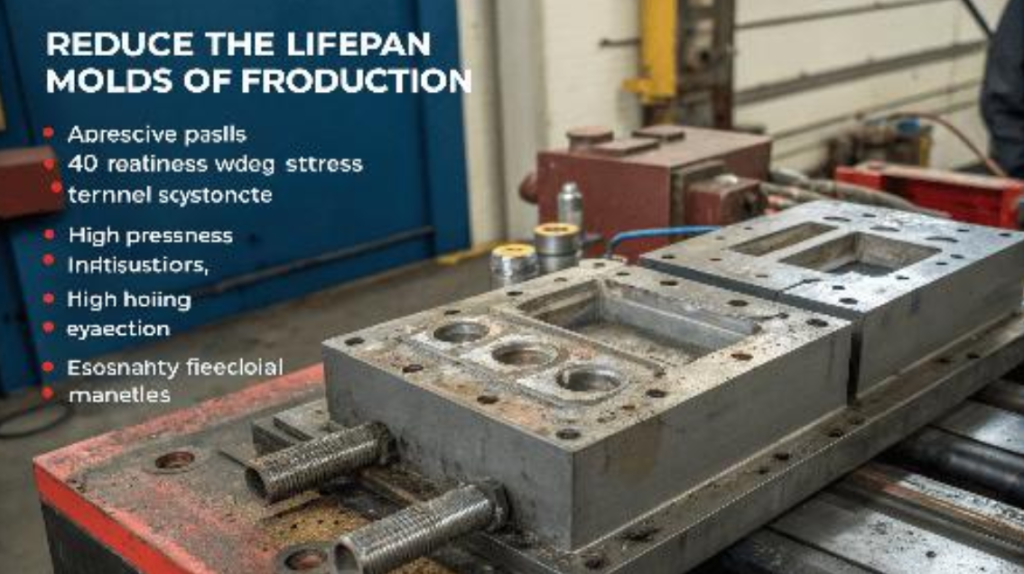
- Abrasive Wear (#1 for GF-filled plastics) Glass/mineral fillers act like sandpaper; gates, runners, thin wall cavities erode, dimensions drift, surface polish fades. Standard unhardened P20 fails fast here.
- Thermal Fatigue Crack Propagation Mold surfaces cycle 25°C ↔ 180–300°C every 3–8 seconds; uneven thermal stress spawns micro-cracks that expand into full splits after hundreds of thousands of shots.
- Chemical Corrosion (PVC, flame-retardant, POM) Heated corrosive resins release acid vapors (HCl, sulfur compounds) that pit non-stainless steel, ruining polish and creating blemished parts.
- Residual Heat Treat Stress Distortion Poor annealing/quenching leaves locked internal stress; molds warp post-test, generate flash, or crack under high clamp/injection pressure.
Full Zorapid High-Cycle Heat Treatment Standard Workflow
We use full vacuum heat treat furnaces (no atmospheric oxidation) — this is where most competitors cut corners to save cost:
1: Pre-Machining Stress Relief Annealing
- For through-hardened steel (H13, S136): 870–900°C hold 2hrs, slow furnace cool to eliminate forging stock stress; cuts machining tool wear 30% and post-heat deformation risk by 50%
- Pre-hardened steel (718H, NAK80): 740°C stress relief, controlled cooling to lock uniform baseline hardness ±1 HRC max tolerance
2: Precision Vacuum Quenching (Critical for High Cycle Life)
- H13: 1020°C vacuum soak, high-pressure gas quench; uniform martensite formation (no soft spots)
- S136 stainless: 1040°C high-temp quench + cryogenic deep freeze (-85°C 4hrs) to stabilize crystal structure, boost corrosion resistance and polish retention Competitors often use cheap oil quenching: uneven hardness, surface decarburization, hidden fatigue weak points that fail at 40–60% of full lifespan.
3: Multi-Stage Tempering (Zorapid Triple-Temper Standard)
One single temper = brittle steel prone to cracking. Our mandatory triple temper for all high-cycle cavities:
- First temper: 580°C (relieve quenching tension)
- Second temper: 550°C (balance hardness + toughness)
- Third temper: 520°C (lock stable long-run microstructure)
- Result: H13 hits stable HRC 50–52 with 3x higher fracture resistance vs single-temper competitor molds.
4: Optional Post-Treat Boosts for Ultra-High Cycles
- PVD TiN/TiCN coating: +40–60% abrasion life for heavy GF-PA66/LCP
- Plasma nitriding: boosts gate wear resistance without distorting finished polished surfaces
- SLM conformal cooling inserts integrated into core: lower thermal swing = less thermal fatigue, 25–35% faster cycle times alongside longer mold life
Competitor Quality & Lifespan Benchmark Table
| Supplier Type | Heat Treat Method | Typical H13 Mold Lifespan (40% GF-PA66) | Key Weakness vs Zorapid |
|---|---|---|---|
| Budget General Mold Shop | Oil quench + single temper | 450,000–650,000 shots | Residual stress, uneven hardness, fast thermal cracking |
| Mid-Tier Precision Molder | Basic vacuum quench + double temper | 800,000–1,100,000 shots | No cryo treatment for S136, no pre-machining full stress relief |
| Zorapid High-Cycle Mold Division | Full vacuum + pre-anneal + triple temper + cryo (S136) | 1,800,000–3,200,000 shots | Closed lab hardness testing, 100% microstructure QC, conformal cooling integration |
Unsolvable High-Cycle Challenges Competitors Cannot Fix — Zorapid Custom Solutions
These ultra-high-volume resin & geometry combinations regularly ruin competitor molds; our steel + heat treat stack delivers proven fixes:
Challenge 1: 3M+ Shot GF-PA66 EV Connector Molds (Severe Abrasion + High Injection Pressure)
Competitor Failure: Standard H13 single-temper molds erode gate areas by 700k shots; full core replacement needed mid-production, 2–3 week downtime, expensive re-polishing.
Zorapid Solution:
- Premium ESR-refined H13 vacuum triple-tempered to HRC 51
- Gate critical inserts PVD TiCN coated post-heat treat
- SLM printed conformal cooling channels to cut thermal cycle swing by 30%
- Real Result: Client ran 2.7M shots with only minor gate touch-up polish, zero full core swaps.
Challenge 2: Corrosive PVC / Flame-Retardant PC Medical Molds Targeting 1M+ Cycles
Competitor Failure: Cheap S136 without cryo treatment pits after 300k shots; discolored medical parts fail FDA visual QA, full cavity remachining required.
Zorapid Fix: S136-ESR full vacuum quench + -85°C cryogenic stabilization, final 12k# mirror polish, sealed passivation layer. No pitting or discoloration through 1.2M medical-grade shots.
Challenge 3: Thin-Wall 0.6–0.8mm High-Speed Food PP Packaging (3.5s ultra-fast cycles, massive thermal fatigue)
Competitor Failure: Thermal shock cracks spread across thin cavity walls after 1M shots; uneven cooling warps parts, reject rate spikes.
Zorapid Fix: H13 optimized temper hardness HRC 49 (slightly softer for maximum toughness, balanced wear), SLM conformal cooling lattice inserts, stress-relieved frame plates to absorb cyclic thermal expansion. Competitors over-harden to HRC 54 for wear, making steel brittle and crack-prone.
Challenge 4: Mixed Multi-Cavity Family Molds (Multiple Resins: ABS + GF-Nylon + PEEK)
Competitor Failure: One steel grade for all cavities leads to one cavity wearing out early, halting full batch production.
Zorapid Fix: Hybrid cavity stack — S136 for corrosive ABS/FR parts, triple-temper H13 for GF-Nylon, specialized high-temp hardened H13 for PEEK high-heat cavities; unified frame plate stress treated to match thermal expansion across all inserts.
Challenge 5: Large Heavy Block Molds (>800kg) Prone to Uneven Heat Treat Hardness
Competitor Failure: Big mold blocks develop hard outer skin, soft inner core; internal cavities wear unevenly, premature dimension shift.
Zorapid Fix: Staged slow ramp vacuum heating (6hrs gradual temperature climb) + segmented gas quenching flow control; hardness variance held under ±1.5 HRC across entire 800kg mold block. Most shops heat large molds fast, creating massive internal hardness gradients.
Applicable Mold Steel Grades + Direct Performance & Lifespan Comparison
Side-by-side matrix for top high-cycle mold steels, matched to resin type, Zorapid treated lifespan, hardness, and core tradeoffs
| Steel Grade | Standard Treated Hardness (Zorapid Spec) | Max Proven High-Cycle Shot Count | Best Resin Match | Key Strengths | Limitations |
|---|---|---|---|---|---|
| P20 Pre-Hard | HRC 30–33 | ≤400,000 | Unfilled PP, ABS, low-volume prototypes | Low cost, easy weld repair | Poor abrasion, zero corrosion resistance, not for 500k+ mass runs |
| 718H Pre-Hard | HRC 35–37 | 500,000–900,000 | Mild GF-PA66, PC/ABS, consumer electronics | Balanced polish & wear, mid-budget | Not for heavy glass fill or corrosive PVC |
| NAK80 Pre-Hard Mirror | HRC 40–42 | 600,000–1,000,000 | PMMA, PC transparent high-gloss parts | 15,000# mirror polish retention | Average abrasion, no corrosion resistance |
| AISI H13 (1.2344 ESR) | HRC 50–52 (triple tempered) | 1.8M–3.5M | GF-Nylon, LCP, PEEK, thin-wall PP, automotive high-volume | Elite thermal fatigue, wear, high-temp stability | No corrosion resistance for acid resins |
| S136 Stainless (420 ESR Cryo) | HRC 50–52 | 1M–2.2M | PVC, FR plastics, medical/food transparent optical | Full corrosion resistance, premium mirror polish | Higher material cost, slower machining vs H13 |
Quick Selection Rule of Thumb:
- 1M shots + glass/mineral fill = H13 ESR triple temper
- 1M shots + corrosive/medical/food = S136 cryo-treated
- 500k–1M glossy un-filled plastic = NAK80 / 718H
- <400k prototype/low batch = P20 (budget only)
Real Customer Case Study
Case 1: German Automotive Tier 1 — EV 40% GF-PA66 Connector Mold
Project Target: 3,000,000 total production shots, 8-cavity high-speed mold, critical pin tolerance ±0.008mm, 6-second cycle time
Previous Vendor Pain Point: First mold built with standard oil-quench H13 single temper; failed at 620,000 shots from gate erosion & thermal cracking, 18-day production halt, $42k rework & downtime cost.
Zorapid Full High-Cycle Build Execution
- Selected ESR-pure H13 steel billet, full pre-machining stress relief anneal
- Vacuum quench + proprietary triple temper to stable HRC 51
- Gate & thin pin inserts coated TiCN PVD for extra abrasion defense
- SLM conformal cooling channels milled into core inserts to cut thermal fluctuation
- Post-build full hardness mapping, SPC dimensional validation before shipment
Measurable Longevity Outcomes
- Total completed shots to date: 2,910,000 (still running, minimal wear)
- Only one minor gate polish touch-up at 1.7M shots; zero core/cavity replacement
- Part dimensional drift held under ±0.003mm across full run
- IATF 16949 full heat treat, steel mill cert, hardness log documentation for audit
Your Production Requirements → Zorapid Tailored Mold Steel & Heat Treat Solutions
Match your exact high-cycle pain points to fixed optimized workflows
Pain 1: Glass-filled resin causing fast gate/cavity abrasion, early mold replacement
Solution: ESR H13 triple vacuum temper + optional PVD hard coating; extend usable lifespan 2.5–3x vs standard H13 builds
Pain 2: Corrosive PVC/FR resins pit steel, ruin medical/food part aesthetics
Solution: Cryo-stabilized S136 stainless steel, passivation post-polish; eliminate acid corrosion entirely for million-shot corrosive runs
Pain 3: Thin-wall fast-cycle molds crack from repeated thermal shock fatigue
Solution: Tuned H13 temper hardness (slightly lower HRC for max toughness), SLM conformal cooling to reduce temperature swing amplitude
Pain 4: Mixed resin multi-cavity molds where one cavity wears out far faster than others
Solution: Hybrid graded steel insert stack (H13 for abrasive fills, S136 for corrosive cavities) matched heat treat per insert grade
Pain 5: Large heavy mold blocks suffer uneven hardness, uneven wear across cavities
Solution: Staged slow vacuum heat ramp + segmented gas quenching; hardness tolerance locked ±1.5 HRC max over full mold block
Pain 6: Unsure which steel/heat treat balances upfront mold cost vs long-run total ROI
Solution: Free Zorapid lifespan cost breakdown — we calculate break-even shot count for H13 / S136 / 718H so you see exact dollar savings from longer tool life
2026 Global Industry Data & Future Trend Analysis
High-Cycle Injection Mold Market Lifespan & Cost Trend Benchmark
| Mold Build Standard | Average Achievable Shot Lifespan | 2026 Global Market Share | Total Cost Per Million Shots (Tool Amortization) |
|---|---|---|---|
| Budget Oil-Quench Single-Temper Steel | 400k–700k | 42% (low-volume consumer goods) | High – frequent repair/replacement overhead |
| Mid-Tier Basic Vacuum Double Temper | 800k–1.2M | 38% (standard automotive/electronics) | Moderate, minor mid-run maintenance |
| Premium Vacuum Triple-Treat (Zorapid Model) | 1.8M–3.5M | 20% (high-end EV, medical, aerospace precision) | Lowest amortized cost; minimal downtime repair |
Key 2026–2030 Future Trends Shaping High-Cycle Mold Building
- ESR Refined Steel Becomes Mandatory for >1M Shot EV Molds: By 2028, 67% of EU/US EV OEMs will reject non-ESR H13/S136 due to higher inclusion defects that cut fatigue life 40%.
- Cryogenic Post-Treatment Standardized for Medical Stainless Molds: FDA traceability rules push cryo stabilization as required process for long-run PVC/FR medical tooling to eliminate hidden corrosion failure risks.
- Conformal Cooling SLM Inserts Merge With High-Cycle Heat Treat Workflow: Standalone CNC mold shops without SLM capacity lose high-volume EV/medical bids; cooling efficiency directly boosts both cycle speed and mold fatigue lifespan.
- Hardness Traceability Audit Requirements Tighten: NADCAP, IATF 16949, ISO13485 now demand full heat treat temperature/time logs + hardness mapping for every high-cycle mold block — unrecorded shop-floor heat treat becomes audit non-conformance.
- Total Cost of Ownership (TCO) Replaces Upfront Mold Price as Buying Metric: Procurement teams shift focus from cheap initial mold cost to amortized cost per shot; Zorapid’s longer-life tools deliver 15–28% lower TCO over multi-million-shot runs vs budget molds.
Core Zorapid High-Cycle Mold Application Scenarios
H13 Triple-Temper Primary Use Cases
- EV GF-PA66 motor housings, charging connectors, battery structural parts (2M–3.5M shot targets)
- Automotive LCP high-temp electronic components, engine sensor housings
- Thin-wall PP food packaging, high-speed disposable container molds
- PEEK aerospace medical high-temperature implant housings
S136 Cryo Stainless Primary Use Cases
- FDA medical PVC, flame-retardant instrument casings, transparent implant sleeves
- Optical PMMA/PC camera lens, automotive headlight lens million-shot molds
- Corrosive POM plumbing fittings, chemical-resistant pump housings
Pre-Hard 718H / NAK80 Mid-High Cycle Use Cases
- Consumer electronics un-filled ABS/PC housings (500k–1M glossy runs)
- Household appliance cosmetic trim, low-abrasion transparent plastic parts
Hybrid Multi-Grade Insert Mold Scenarios
Combined H13 abrasive cavities + S136 corrosive/optical cavities for multi-part product families (medical device kits, EV accessory assemblies)
Delivery Speed Benchmarks + Mold Build Timeline Visual
High-Cycle Mold Full Build Lead Time Comparison (8-Cavity EV Connector Reference Part)
| Supplier Model | Total Build Lead Time | Heat Treat Hold Time Window | Rework Risk Delay Potential |
|---|---|---|---|
| Budget Single-Temper Mold Shop | 22–32 business days | Fast rushed 1–2 day heat treat cycle | 7–14 day delay risk from post-test cracking/wear defects |
| Mid-Tier Double-Temper Vendor | 16–24 business days | 3–4 day vacuum heat treat | 3–6 day minor rework possibility |
| Zorapid Full Triple-Treat High-Cycle Line | 14–21 business days | 5–6 day controlled vacuum pre-anneal + quench + triple temper + cryo | <1 day minor polish touch-up risk; zero full cavity rework |
Standard Zorapid High-Cycle Mold Step Timeline
- DFM steel grade selection + heat treat engineering sign-off: 1 business day
- ESR steel billet rough machining + pre-anneal stress relief: 3 days
- Precision vacuum triple temper / cryo stabilization: 6 days
- Finish CNC, EDM, polishing, conformal cooling SLM insert fit: 4–6 days
- First article molding, hardness mapping, dimensional SPC audit, export certification: 1–2 days
Expedited 10-day fast-track available for urgent OEM launch timelines; heat treat timelines never rushed (we refuse shortcut temper cycles that kill mold lifespan).
Key Benefits of Partnering With Zorapid for Long-Life High-Cycle Molds
- Guaranteed Lifespan Performance Contract: We document minimum shot lifespan per steel grade; if mold fails early from heat treat/steel defects, remachine cavities free of charge
- Full In-House Vacuum Heat Treat Lab: No third-party outsourced tempering (biggest failure point for most mold makers); 100% in-process temperature/hardness logging for audits
- ESR Premium Steel Standard for All 1M+ Shot Tools: Zero low-grade non-ESR billets that carry inclusion fatigue weaknesses
- Integrated SLM Conformal Cooling Capacity: Pair optimized heat treat steel with lattice cooling inserts to simultaneously boost cycle speed and mold fatigue life
- Global Regulatory Certification Stack: IATF 16949 automotive, ISO13485 medical, ISO9001 full traceability for heat treat, steel mill certs, hardness test reports
- English-Speaking Mold Engineering Team: Direct CAD/DFM review pre-build to lock optimal steel-heat treat pairing before cutting any steel
- Long-Term Mold Storage & Maintenance Program: Climate-controlled secure vault storage, free annual hardness inspection, discounted re-polish/coating for repeat production runs
- Clear TCO Cost Modeling Upfront: We share side-by-side amortized cost per million shots so you see exactly how longer Zorapid mold life cuts total production spend
Summary
High-cycle injection mold longevity is not just about picking H13 or S136 steel — proper, unrushed vacuum heat treatment is the make-or-break factor. Budget shops cut corners with oil quenching, single temper, skipped stress relief, and cheap non-ESR billets, saddling you with premature mold failure, costly downtime, and frequent cavity replacements.
Zorapid’s proprietary pre-anneal + vacuum triple temper + cryo stabilization workflow unlocks 2–3x longer usable shot counts for H13 and S136 molds, paired with grade-matched ESR steel, in-house SLM conformal cooling, and full audit-ready quality logs. Whether you need 1.8M shot EV GF-PA66 molds, 1.2M cycle medical PVC stainless tools, or high-speed thin-wall packaging cavities, our steel & heat treat stack eliminates early fatigue, abrasion, and corrosion failure.
If you’re designing a high-volume mold and unsure which steel + heat treat recipe delivers your best TCO, our engineering team provides a free lifespan & cost assessment within 2 business days of receiving your CAD and shot target specs.
FAQ
Is higher HRC hardness always better for longer mold life?
No. Over-hardening (HRC >53 for H13) boosts minor abrasion resistance but drastically drops toughness, leading to thermal crack propagation under fast cycling. We balance hardness and toughness via precise triple temper tuning for your exact resin and cycle speed — toughness beats raw hardness for million-shot fatigue life.
How much extra upfront cost does Zorapid’s full vacuum triple heat treat add vs budget oil-quench builds?
Upfront mold cost is ~9–14% higher, but amortized cost per million shots drops 20–30% due to far fewer repairs, replacements, and production downtime. Our TCO spreadsheet quantifies exact ROI before you approve the build.
Can you apply cryogenic treatment to H13, or only S136 stainless?
Cryo is primary for S136 to maximize corrosion resistance and polish stability. H13 gets optimized triple temper without cryo — cryo offers minimal lifespan gain for hot-work H13 and adds unnecessary cost.
Do pre-hardened steels like NAK80 ever hit 1M+ reliable shots?
Only for low-abrasion, non-corrosive unfilled plastics (PMMA, clear ABS). For glass-filled or high-pressure fast-cycle jobs, pre-hard grades top out reliably at ~900k shots max; H13/S136 through-hardened are mandatory for stable 1M+ runs.
Are PVD coatings mandatory for high-cycle GF-filled molds?
Not mandatory, but TiCN PVD adds 40–60% gate/cavity abrasion life for heavy 30–40% GF resins. We quote coated vs uncoated options so you pick based on your total shot target budget.
Can Zorapid repair and re-heat treat an existing competitor mold that failed early?
We can re-anneal, re-quench, and re-treat used H13/S136 blocks if there is no deep cracking or dimensional loss; we first run a full hardness/microstructure inspection to confirm salvage viability and quote repair lifespan improvement.
What documentation comes with every Zorapid high-cycle mold for EU/US audits?
Full steel mill certificate, vacuum heat treat time/temperature log sheet, post-temper hardness mapping report, SLM cooling print QA records, first article molding SPC dimensional data, material compliance (RoHS, FDA where applicable).