Published by: Zorapid.Ltd
Every R&D team faces the same tough choice early in product development.
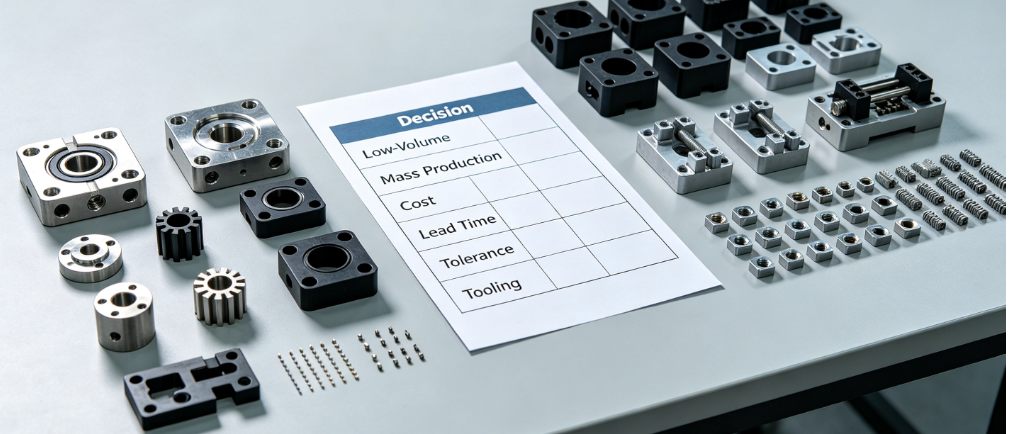
Do you sink tens of thousands into custom molds and hard tooling right away, or validate your design first with small, repeatable batches of real end-use parts?
At Zorapid’s precision manufacturing workshop, we support hundreds of R&D projects from North America and Europe every year. We have seen one mistake repeatedly derail development timelines: jumping straight into high-volume tooling before completing full functional validation.
Low-volume CNC manufacturing fills this critical gap perfectly. It runs small batches from 5 pieces up to 500 units directly from your CAD files, no custom molds required.
This method lets you iterate designs, run real-world bench tests, verify material performance, and lock in your final geometry — all without risky upfront capital investment.
In this guide, we break down the core advantages of low-volume CNC specifically for R&D project validation. We cover cost control, iteration speed, test data reliability, production consistency, and risk reduction. We also share our real workshop case study on how low-volume batches cut R&D cycle time by nearly 40%.
If you are running NPI testing, pilot assembly, pre-compliance trials or bridge production between prototype and mass manufacturing, these low-volume CNC advantages will streamline your entire validation workflow.
What Is Low-Volume CNC for R&D Validation?
First, let’s clarify the scope for engineering teams.
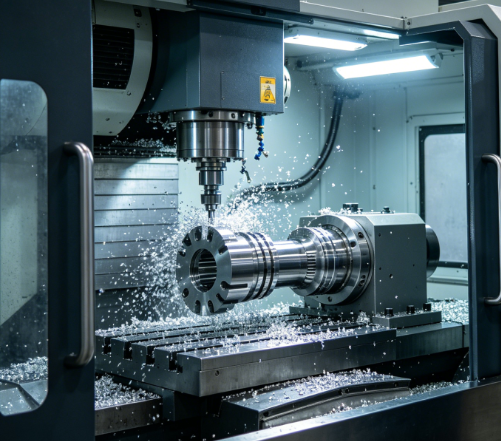
Low-volume CNC manufacturing covers batch sizes of 1 to 500 machined parts, built directly from solid billet stock on 3-axis and 5-axis CNC mills and lathes.
It sits neatly between one-off 3D printed samples and full mass production:
- 3D printing works for form-only fit checks, but printed parts cannot replicate real metal strength, thermal stability or post-finishing results.
- Injection molding demands expensive custom tooling with 4–8 week lead times — terrible if you still need to tweak dimensions after testing.
- Low-volume CNC delivers production-grade machined components, with identical material, tolerance and surface finish as your future mass-produced parts.
This makes it the gold standard for reliable R&D validation: you test the exact part you will eventually put into full production.
Zero Hard Tooling Eliminates Upfront R&D Capital Risk
The biggest pain point in early-stage product development is sunk cost.
Traditional mass-production methods require molds, dies and custom fixtures before you cut a single part. A single set of injection mold tooling can cost $15,000–$35,000. If your test reveals design flaws, that entire tooling investment becomes scrap.
Low-volume CNC machining eliminates this risk entirely:
- No custom molds, no dedicated forming dies, no long tooling lead times. We only generate CNC toolpaths from your STEP file.
- All costs stay limited to programming, machine setup and raw material stock.
- If you revise your CAD model after testing, we simply update the CNC program. No costly tool modification or rework is needed.
For R&D teams working on limited budgets, this cuts upfront spending by 35–55% during the validation phase. You only spend money on physical test parts, not permanent tooling that may never be used.
Zorapid Rule: Never commit to hard tooling until you finish low-volume CNC batch validation.
Fast Iteration Shortens Your Full R&D Timeline
R&D progress moves or stalls based on how quickly you can turn design revisions into physical test pieces.
Here is the typical lead time breakdown:
- Custom mold fabrication: 4–8 weeks lead time before the first part ships
- Low-volume CNC small batches: 3–7 working days for aluminum and steel parts; 7–12 days for titanium and high-performance alloys
When your bench test uncovers fit issues, structural weak points or assembly interference, you can update your model and launch a new small batch within days, not months.
Many of our automation and aerospace customers complete 4–6 design iterations inside one month with low-volume CNC. With mold-based manufacturing, those same revisions would stretch the project out for half a year.
This speed directly compresses your NPI timeline and helps you hit your product launch milestones without unnecessary delays.
Production-Grade Materials Deliver Trustworthy Test Data
R&D validation fails when test parts do not match your final production material.
3D printed aluminum, for example, has layered grain structure and lower tensile strength. Test results from printed samples will not reflect how your machined aluminum component will perform long-term.
Low-volume CNC uses fully certified solid bar and plate stock, exactly the same material you will use in mass production:
- Metals: 6061-T6, 7075-T6, 17-4PH, 316 stainless steel, Ti-6Al-4V, Inconel 718
- Engineering plastics: PEEK, Ultem, Delrin, GF-PA66, PC+ABS
Every low-volume CNC batch retains full material homogeneity, consistent mechanical strength, thermal expansion and corrosion resistance. Your stress tests, vibration trials, environmental cycling and assembly fit tests will generate accurate, actionable data.
You avoid the common engineering trap: passing prototype testing, then failing field trials after switching to production material.
Tight, Repeatable Tolerances for Reliable Batch Testing
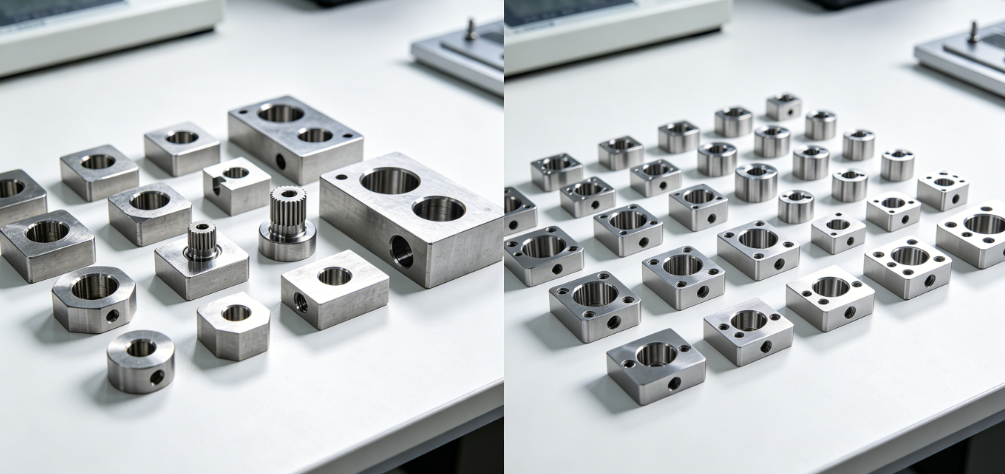
One-off manual prototypes often suffer inconsistent dimensions. When you run 5–20 test units for assembly validation, variation between parts ruins your test results.
Low-volume CNC brings repeatable precision across the entire small batch:
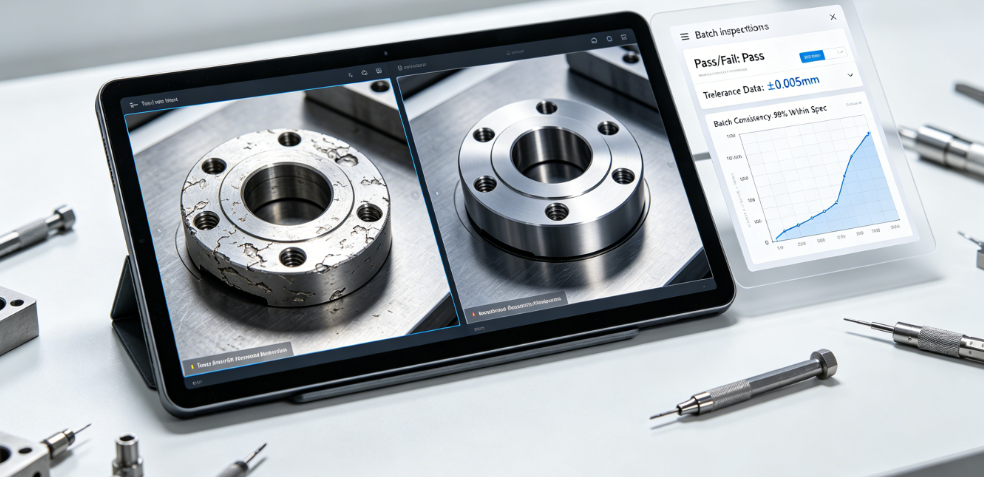
- We consistently hold GD&T tolerances down to ±0.005 mm on critical R&D features
- Every part in the low-volume run follows the same toolpath, cutting speed and fixturing
- Flatness, hole position and bend accuracy stay consistent across all test samples
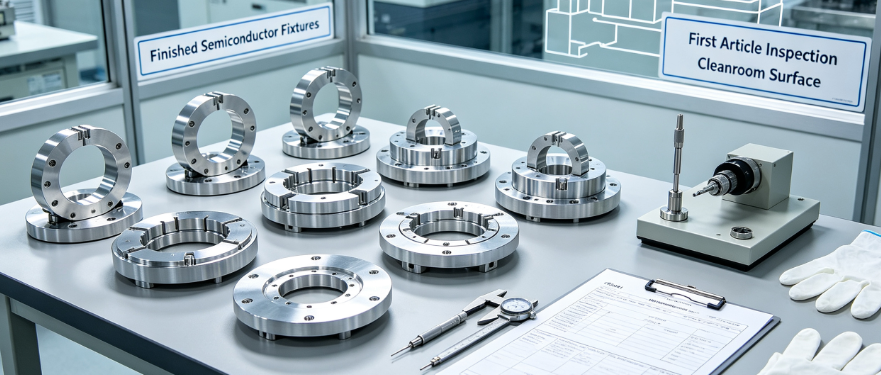
This consistency is critical for pilot assembly, life-cycle durability testing and regulatory pre-qualification. Our team can provide first article inspection (FAI) and full CMM dimensional reports for every batch, so your R&D test documentation meets internal quality and third-party audit requirements.
Flexible Design Revisions Between Batches
R&D validation is never a single-and-done process. You will adjust wall thickness, relocate mounting holes, tweak thread positions and rework complex internal geometry based on test feedback.
Low-volume CNC workflows make design changes nearly friction-free:
- Revise your 3D CAD file and send the updated model over
- Our programmers rewrite the CNC toolpath overnight
- We run the revised small batch with zero extra fixture or tooling cost
We frequently run 3 or 4 variant designs in parallel small batches for comparative testing. You can test multiple geometry options side-by-side without paying for separate tooling sets.
By contrast, every design change to a mold requires costly EDM rework and weeks of downtime, killing your iteration rhythm.
Smooth Transition from R&D Validation to Mass Production
The biggest hidden risk in product development is the “prototype-to-production gap.”
Parts that pass R&D testing often fail after switching manufacturing processes, due to different machining practices, material stock or surface finishing.
Low-volume CNC eliminates this gap completely:
- We use the same machining strategy, tooling, surface finishing and post-processing that we will apply in full-scale production
- Once your low-volume batch passes all validation tests, we can seamlessly ramp up production volume without redeveloping your process
- The part geometry, tolerance stack-up and anodizing/polishing finish remain identical through the whole product launch phase
This makes low-volume CNC the ideal bridge production solution. You can run pre-order small batches for early customer trials while preparing mass-production workflows, with zero variation between test parts and shipped end products.
Minimal Waste & Zero Excess Inventory
When you commit to large mold runs, you are forced to produce hundreds or thousands of parts upfront. If your R&D test uncovers flaws, you are stuck with piles of obsolete inventory.
Low-volume CNC only produces the exact number of test pieces you need.
Run 10 units for bench testing, 25 units for assembly trials, or 50 units for environmental qualification. No overproduction, no wasted material, no leftover obsolete stock tying up warehouse space.
This lean production model keeps your R&D spending focused strictly on validation, not scrapped inventory.
Direct Comparison: Low-Volume CNC vs Other R&D Manufacturing Options
| Manufacturing Method | Upfront Tooling Cost | Lead Time | Material Authenticity | Batch Consistency | Best For R&D Validation |
|---|---|---|---|---|---|
| Low-Volume CNC Machining | $0 hard tooling | 3–7 days | Full production-grade stock | High repeatability | Primary choice for functional testing |
| 3D Printing | No tooling | 1–3 days | Layered, anisotropic material | Medium variation | Only fit-check prototypes |
| Injection Molding | $15k–$35k mold cost | 4–8 weeks | Production material | Excellent consistency | Too risky for unvalidated designs |
| Manual Machine Shop | Custom jigs required | 10–18 days | Solid stock | High part-to-part variation | One-off custom pieces only |
Key takeaway: If you need reliable, actionable R&D test results, low-volume CNC is the only option that balances speed, material accuracy and low financial risk.
Real Zorapid R&D Case Study – Accelerate Validation With Low-Volume CNC
Project Background
Automation semiconductor fixture R&D project, material 7075 aluminum.
Original development plan: Build custom molds right after initial printed prototype testing.
Original Risk
If structural warpage or hole alignment failed environmental testing, the $22,000 mold investment would be written off, pushing the project schedule back 3 months.
Our Low-Volume CNC Validation Plan
- Produce 3 sequential small batches (15 pcs per batch) via 5-axis CNC machining
- Run thermal cycling, vibration and assembly fit testing after each batch
- Implement design revisions based on test data, with each new batch delivered in 5 working days
- Lock the final geometry only after all 3 low-volume batches passed all engineering validation
Final Outcome
- The team identified thin-wall warpage on the second batch and revised the CAD model before committing to tooling
- No sunk cost on obsolete molds
- Total R&D validation phase shortened by 38%
- The final mass-production parts matched the low-volume CNC test samples perfectly, with zero prototype-to-production deviation
4 Common R&D Mistakes That Low-Volume CNC Solves
1: Relying only on 3D printed parts for performance testing
Printed components cannot replicate metal grain, strength or post-anodizing results. Your test data will not translate to real production.
Fix: Run low-volume CNC batches with end-use material for all functional trials.
2: Cutting corners by ordering large mold runs too early
Unvalidated designs lead to massive tooling scrap and project delays.
Fix: Complete low-volume CNC batch validation before releasing mold orders.
Mistake 3: Running just 1–2 test pieces with no batch consistency
Individual hand-made samples cannot rule out part-to-part variation during assembly testing.
Fix: Order small uniform CNC batches of 10–30 units to run statistically meaningful tests.
Mistake 4: Separating prototype work and production machining
Different suppliers create inconsistent part quality between R&D and launch.
Fix: Use the same CNC workshop for low-volume validation and later mass production to keep processes fully consistent.
How Zorapid Supports Your End-to-End R&D Validation Workflow
With 20+ years of precision CNC manufacturing, we serve R&D and NPI teams across aerospace, medical devices, semiconductor equipment, new energy and industrial automation.
Our low-volume CNC service built for product validation includes:
- Free DFM design review before production. We flag thin-wall deformation, hole interference and tolerance risks before you run test batches.
- Fast 3–7 day turnaround for small R&D batches on 3-axis and 5-axis CNC equipment.
- Full material certification, FAI documents and CMM inspection data to support your engineering test records.
- Flexible batch sizes from 1 piece up to 500 units, with support for multiple design variants in parallel runs.
- Seamless bridge production: We ramp your validated low-volume design directly into mid-volume manufacturing without process changes.
We keep your R&D iteration fast, controlled and low-risk, so you move smoothly from design drawing to validated pilot parts.
Conclusion
Low-volume CNC manufacturing is not just small-batch production — it is the most reliable validation backbone for every serious R&D project.
The core advantages boil down to three critical wins for engineering teams:
- No expensive hard tooling means zero sunk cost if you need to revise your design after testing.
- Production-grade material and tight batch repeatability generate trustworthy, actionable test data you can rely on.
- Ultra-fast iteration cuts months off your development timeline and eliminates the prototype-to-production gap.
Never gamble your R&D budget and timeline on premature mold investment. Validate every design iteration first with low-volume CNC machined test parts.
Send your STEP or IGES files to Zorapid today. Our CNC engineering team will quote your low-volume R&D batch within 24 hours and deliver your test parts on schedule.
FAQ
How many low-volume CNC batches do I need for full R&D validation?
Most mechanical projects complete validation in 2–3 small batches. The first batch checks geometry and fit, the second runs environmental and durability testing, and the third locks the final design before mass-production tooling.
Can low-volume CNC parts be used directly for pre-production customer trials?
Yes. Our low-volume CNC parts use identical material, tolerances and surface finishes as mass-produced units. They work perfectly for pilot builds, beta unit assembly and early customer sampling as bridge production parts.
Is low-volume CNC more expensive per part than molding?
The unit cost per piece is higher, but you avoid the $15k–$35k upfront mold cost. For R&D validation with frequent revisions, low-volume CNC delivers far lower total project cost with zero scrap tooling risk.
What material options are available for CNC R&D test batches?
We machine certified aluminum alloys, stainless steel, titanium, 17-4PH, Inconel, plus high-performance plastics including PEEK, Ultem and glass-filled nylon — exactly the same stock used in full production runs.
Can you run multiple design variants in one low-volume order for side-by-side testing?
Absolutely. We program multiple CAD revisions separately and produce small parallel batches so you can compare different geometry options in the same test cycle.