Published by Zorapid
If you’ve ever gotten a mold quote that blew your budget just for polishing, or received molded parts with uneven gloss, foggy mirror surfaces, or random scratch defects—this guide is built exactly for you.
Mold polishing isn’t just a cosmetic afterthought. The finish standard you pick dictates part appearance, ejection performance, scrap rate, mold lifespan, and 10–35% of your total mold manufacturing cost. Most overseas mold buyers waste thousands by over-specifying ultra-high polish grades they don’t actually need, or run into costly rework because they can’t align on global polishing standards with suppliers.
At Zorapid, we’ve delivered 20+ years of precision mold polishing for medical, automotive, consumer electronics, and home appliance OEMs across North America and Europe. We combine SPI/VDI universal polishing standards with lean polishing workflows to lock in consistent surface quality while slashing unnecessary polishing labor and material waste.
Today, we’ll break down every industry polishing standard in plain language, show you exactly what drives polishing costs, and share actionable cost-control tactics our clients use to cut polishing spend by 20–28% without downgrading part quality.
Global Mold Polishing Standards 101
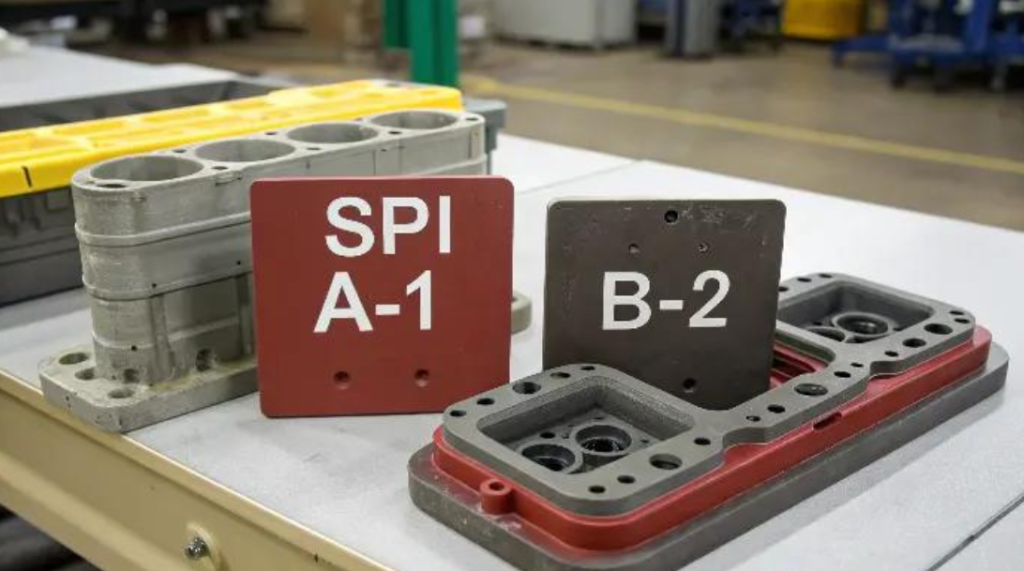
Two standards dominate global mold manufacturing, and miscommunication between these two is the cause of delayed deliveries and unexpected polishing upcharges for US/EU buyers.
SPI (PIA US Standard) – 1 Choice for Glossy Cosmetic Parts
SPI is the most widely requested standard for North American brands, split into 4 core tiers from mirror high-gloss to matte blast texture, with clear Ra roughness values and standardized polishing procedures. All Zorapid mold quotes include explicit SPI grade labeling for full transparency.
VDI 3400 (EU Standard) – Preferred for Satin, Low-Reflection Industrial Parts
European automotive and machinery clients lean on VDI numbers for uniform matte/textured finishes. Unlike SPI, VDI grades focus on micro-texture depth instead of pure gloss, so it’s less ideal for transparent lenses or premium glossy consumer shells.
Quick Rule of Thumb for RFQs:
- US/Canada consumer electronics, cosmetic containers, optical lenses → Specify SPI grade
- EU automotive housings, industrial equipment, non-gloss structural parts → Specify VDI number
- Always attach physical finish samples to your drawing—words alone create costly misalignment.
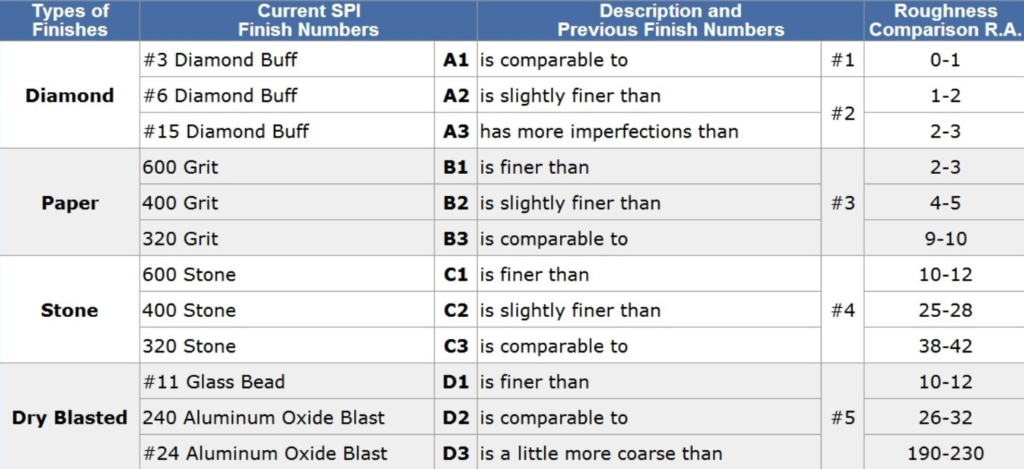
SPI Grade Breakdown: Roughness, Use Cases & Hidden Cost Markers
We simplified the full 12 SPI grades into the 4 tiers you’ll actually order, with clear cost impact notes so you can avoid over-specification.
| SPI Tier | Ra Range | Polishing Process | Typical Applications | Relative Polishing Cost Multiplier |
|---|---|---|---|---|
| A (Mirror High-Gloss) | 0.01–0.3μm | #3/#6/#15 Diamond Buff, multi-step fine polishing | Acrylic lenses, transparent PC covers, high-end beauty device shells | 3.0x (Most expensive) |
| B (Standard Semi-Gloss) | 0.4–10μm | 320–600 grit paper polishing | ABS TV housings, daily plastic enclosures, cosmetic non-transparent parts | 1.5x |
| C (Stone Matte) | 10–42μm | 320–600 stone grinding | Internal structural parts, unseen core surfaces, low-cosmetic housings | 1.0x (Base cost) |
| D (Blast Texture) | 10–90μm | Glass bead/aluminum oxide blasting | Gripping handles, anti-slip parts, low-grade internal components | 0.8x |
Critical Cost Note from Zorapid Engineers
SPI A1 optical mirror polish requires 6–12 extra manual polishing passes, specialized diamond paste, and strict dust-free workshop environments. If your part doesn’t need full light transmission, downgrading from A1 to A3 cuts polishing labor time by 60% with zero visible cosmetic loss for opaque plastics.
Key Factors That Blow Up Your Mold Polishing Budget
Before jumping into cost-saving tactics, let’s cover the 5 biggest cost drivers we see in thousands of client mold projects:
- Over-specified polish grades Engineers default to SPI A2/A1 for all cosmetic surfaces, even when B2 semi-gloss meets visual requirements. This doubles polishing hours instantly.
- Poor pre-polish CNC/EDM surface quality Rough machining marks, deep EDM spark lines, uneven stock removal force polishers to add extra coarse grinding steps, raising labor and abrasive costs by 30%+.
- Complex deep cavities, thin ribs, tiny micro-features Narrow corners, tall ribs, micro-slots require slow manual hand polishing; automated robotic polishing can’t reach these zones, increasing labor time drastically.
- Low-polishability mold steel selection Cheap P20 or unrefined steel with internal impurities develops pits during fine polishing, requiring repeated rework. Premium polish-grade steel (S136, NAK80) cuts polishing rework cost long-term.
- Unclear drawing requirements & missing finish samples Suppliers over-polish to avoid customer complaints, adding unneeded process steps to cover ambiguity.
Zorapid’s 7 Practical Cost Control Strategies (Proven for Mass & Low-Volume Molds)
These are the lean polishing workflows we implement for every client mold, balancing stable surface quality and controlled expenses—no corner cutting on finish consistency.
1. DFM Pre-Polish Optimization (Front-End Cost Cut, Biggest Savings)
Our engineers review your 3D CAD at the NPI stage to optimize draft angles, fillet radii, and cavity depth before CNC machining:
- Add minimum R0.3 fillets on all sharp internal corners to eliminate hard-to-polish dead zones
- Adjust CNC machining feed rates to leave uniform, thin polishing stock (0.02–0.05mm) instead of uneven heavy stock removal
- Remove unnecessary cosmetic polish requirements on hidden internal mold surfaces Result: 22–28% reduction in total polishing hours before polishing even starts.
2. Match Steel Grade to Your Required Finish (Avoid Rework Expense)
Stop picking cheap steel for high-gloss molds:
- SPI A/A mirror polish: S136 / STAVAX (stainless fine grain, zero pitting during fine buffing)
- SPI B semi-gloss: NAK80 / 718H (balanced polishability & cost)
- SPI C/D matte/texture: P20, 420SS (low polish demand, budget steel) Many clients save money long-term by upgrading steel once—they eliminate costly re-polishing caused by steel impurity pits mid-project.
3. Tiered Polishing Process Split (Automation + Manual Hybrid Workflow)
Zorapid runs a mixed automated robotic polishing cell + skilled manual bench team:
- Large flat cavity surfaces: Robotic CNC polishing (fast, consistent, low labor cost)
- Complex ribs, micro corners, deep narrow slots: Skilled manual polishers Fully manual polishing is 2–3x more expensive; fully automated cannot handle intricate geometry. Our hybrid setup balances speed and cost for all mold designs.
4. Strict Minimum Acceptable Finish Validation Before Polishing
We require all clients to sign off on physical SPI finish samples pre-production. This eliminates over-polishing:
- If B2 semi-gloss matches your marketing render, we never upgrade to A3
- For soft plastics (TPU, flexible PVC), we actively recommend lower SPI grades to prevent part sticking during molding—this also trims polishing cost
5. Graded Abrasive Matching to Reduce Consumable Waste
Instead of using expensive diamond paste for every step:
- Coarse grinding: Low-cost stone + 320–600 grit paper (remove machining marks fast)
- Medium fine sanding: Mid-tier abrasive sheets
- Final mirror buff: Premium diamond paste (only last 1–2 passes) This tiered abrasive approach cuts monthly polishing material cost by ~19% for high-volume mold shops.
6. Batch Polishing Scheduling for Multi-Cavity Molds
For multi-cavity family molds, our team polishes all identical cavities in one unified grit sequence instead of processing each cavity separately. Consistent grit setup reduces abrasive switching downtime and shortens total lead time.
7. Post-Polish Inspection Standard to Eliminate Rework Charges
We run 3-stage roughness testing with Ra meters after every polishing tier:
- Coarse grind inspection
- Medium sanding inspection
- Final finish Ra validation Defects like micro-scratches, uneven gloss get fixed immediately, avoiding full rework of finished mirror molds (rework can add 40% extra polishing cost).
Material Matching Rule: Avoid Over-Polishing & Sticking Defects
A huge hidden cost trap: polishing to ultra-high SPI grades for soft plastics causes severe ejection sticking, leading to production scrap and secondary mold cleaning labor. Below is our client reference table for polish grade matching:
| Plastic Material | Recommended SPI Grade | Grade to Avoid | Cost & Production Risk |
|---|---|---|---|
| Acrylic / PC Transparent | A1/A2 | C/D | Must use mirror polish for optical clarity |
| ABS / HIPS Hard Shells | B2/A3 | A1 | A1 over-polish adds cost with no visual gain |
| TPU / Soft PVC Elastomer | B3/C1 | A1/A2 | High gloss surface causes permanent part sticking |
| Nylon / GF-PA66 | B2/B3 | A1 | High polish increases mold release maintenance cost |
| PP Disposable Parts | C1/C2 | A-series | Unnecessary mirror polish doubles tool cost |
Real Zorapid Client Case: Electronics Housing Mold Polishing Cost Optimization
Project Background
US consumer electronics OEM needed 2 sets of 1+1 ABS TV remote housing molds, initially requested SPI A2 full cavity mirror polish on all surfaces. Original polishing quote: $3,820 per mold set, 7-day polishing lead time.
Zorapid Optimization Steps
- DFM review identified 60% of cavity surfaces were non-visible after assembly; proposed downgrade to B2 semi-gloss on hidden areas
- Switched steel from entry-level 420SS to NAK80 to eliminate polishing pitting rework risk
- Deployed robotic polishing for large flat shell surfaces, manual polishing only for thin rib corners
- Confirmed B2 finish samples matched client’s cosmetic standard via physical mail pre-production
Final Outcome
- Polishing cost per mold set reduced to $2,710 (29% cost cut)
- Polishing lead time shortened to 4 days
- Zero sticking defects during mass molding, scrap rate dropped from 3.2% to 0.7%
- Consistent gloss across all molded parts, no customer cosmetic complaints
Common Polishing Mistakes That Cause Rework & Extra Charges
We list these top mistakes we see from buyers new to overseas mold sourcing—each adds unexpected polishing fees:
- Writing “high gloss” on drawings without specifying SPI grade: Suppliers over-polish to avoid liability
- Specifying SPI A1 for opaque plastic parts: Wastes hours of diamond buff labor
- Requesting sharp 0.1mm internal corners without fillets: Slow manual polishing + high scratch risk
- Selecting low-grade P20 steel for mirror polish molds: Pitting defects require full re-polishing
- Skipping physical finish sample approval: Disagreements post-mold delivery trigger costly rework
- Demanding ultra-fast polishing turnaround: Rushed work creates micro-scratches that need rework
Final Quick Checklist for Your Next Mold RFQ
Copy this checklist into your mold drawing RFQ to lock standard alignment and control polishing cost from day one:
- Define clear SPI/VDI grade for every separate mold surface (cosmetic vs internal split)
- Attach physical finish sample for supplier approval
- Specify mold steel grade matched to your polish requirement
- Add minimum fillet radii (≥R0.3) on all internal polishing zones
- Mark all non-cosmetic surfaces to exclude high-grade polishing
- Require final Ra roughness test report before mold shipment
- Confirm hybrid automated + manual polishing workflow in supplier quote
Wrap-Up
Mold polishing doesn’t have to be your biggest budget wildcard. When you align on universal SPI polishing standards upfront, match your finish grade to actual product needs, and partner with a manufacturer like Zorapid that integrates DFM polishing optimization into every project, you lock in stable cosmetic quality while cutting unnecessary polishing labor and rework costs.
If you’re finalizing a new mold RFQ and want a free polishing standard review + cost breakdown estimate, send your 3D CAD file to our NPI engineering team—we’ll flag all over-specified polish areas and share a lean polishing quote within 24 hours.
FAQ
What’s the difference between SPI and VDI polishing standards?
SPI (US) focuses on gloss/roughness for cosmetic glossy parts; VDI 3400 (EU) focuses on uniform matte micro-textures for industrial non-reflective components. Zorapid supports both standards with full reference samples.
Can I get SPI A1 mirror polish without paying triple polishing cost?
Only if your part truly requires optical clarity (lenses, transparent covers). For opaque housings, downgrading to A3/B2 delivers near-identical visual results at 1/3 the polishing labor cost.
Does automated robotic polishing replace manual polishers fully?
No. Robots handle large flat cavities efficiently, but deep ribs, micro slots, and tiny sharp corners still require skilled manual bench polishers for defect-free uniform finish. Zorapid’s hybrid workflow balances speed and cost.
How much can I save by optimizing polishing specs with Zorapid?
Our average client achieves 20–30% polishing cost reduction via DFM polish optimization, grade downgrade validation, and hybrid automation workflows, with zero drop in part cosmetic quality.
Will lower SPI polish grades cause more plastic part ejection issues?
Not when matched to your molding material. For soft elastomers, mid-tier B/C grades actually reduce sticking defects and lower mass production scrap rates long-term.