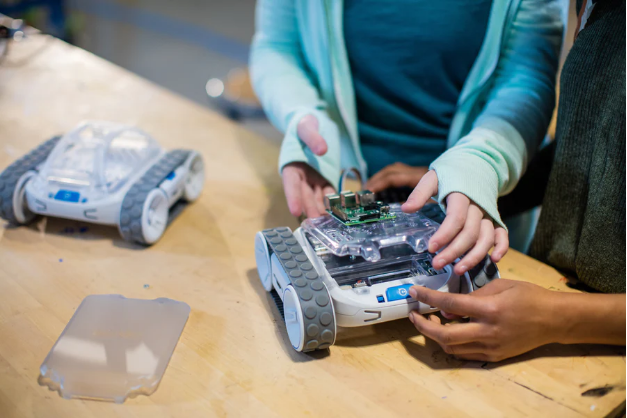
The world is shifting toward robots, which deliver faster speed and higher cost efficiency. Some robots come with fixed pre-programmed instructions; others can only perform welding operations in industrial scenarios. Certain robots leverage artificial intelligence (AI) to learn, adapt to any environment, and make independent decisions. These AI-powered robots represent a more advanced level of technology. With the growing demand for robots across various industries such as hotels and libraries, there is an increasing focus on the optimal materials for robot hardware, especially structural components.
English Translation
Why is the selection of robot materials important?
There are various types of robots on the market, with differing capabilities to perform a wide range of movements. Every robot requires a suitable material to support its intended operations. Robots may need to operate onboard aircraft, which means the materials for their structural components must be lightweight, high-strength, and adaptable to diverse application requirements. Choosing the right materials is critical to maximizing robot performance.
What qualifies as a premium material for robot hardware?
Robot hardware consists of core precision components. Any material that meets performance and application requirements can be regarded as a premium material. The key criterion is whether the material achieves a balanced trade-off among cost, weight, strength and other properties, as well as its suitability for robot hardware fabrication.
Overview list of robot hardware components
The table below lists some essential hardware components of robots:
| Component | Description |
| Frame / Chassis | Structural framework that supports all other components. |
| Motion System | Includes joints and actuators that enable movement. |
| Sensing System | Sensors that allow the robot to perceive its environment. |
| End Effector | Tool or gripper at the end of the robotic arm, often equipped with sensors. |
| Connectors & Fasteners | Fasteners and other small parts that hold the robot assembly together. |
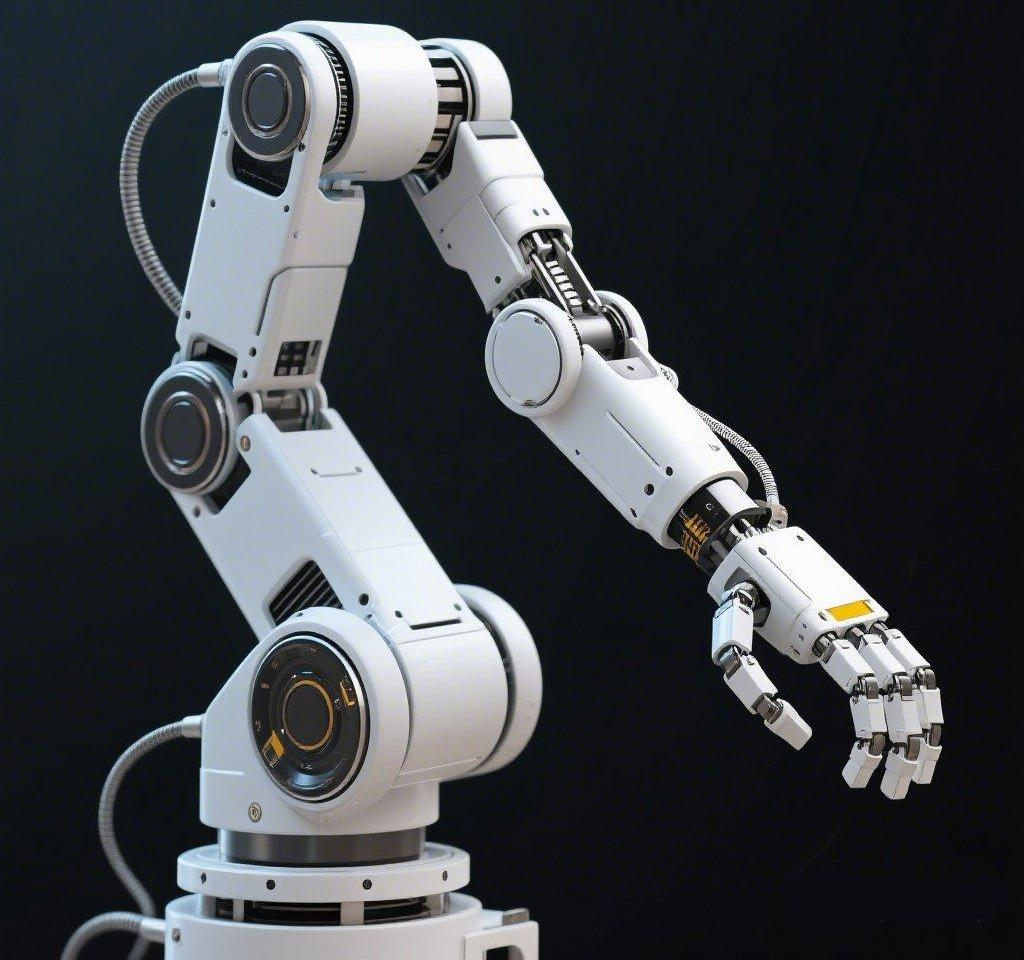
Key characteristics for comparison: Strength, Weight, Cost, Durability
These characteristics serve as the criteria for evaluating material quality for further in-depth comparison.
Strength
High-strength materials require enormous force to break.
Weight
Lightweight materials enable robots to move with ease.
Cost
Cost-effective materials are always the preferred choice.
Durability Verification
Durability refers to resistance to wear, corrosion, and other environmental degradation.
Robot Hardware Metal List
It is difficult to find a single material that satisfies all essential properties simultaneously, including high strength, light weight and cost-effectiveness. A wide range of metals such as steel, aluminum and titanium each possess distinct superior performances. This article provides comprehensive information on these materials for robot hardware and structural components.
Steel vs Aluminum vs Titanium: Which Metal Is Suitable for Your Robot?
Metals are widely used to manufacture robot structural components. This section covers the performance characteristics and practical applications of these metals.
Steel (4140 and 304)
In the steel sector, 4140 and 304 steel alloys are commonly used for structural components. 4140 steel is an alloy steel primarily containing chromium and molybdenum, ideal for robot chassis, while 304 is an austenitic stainless steel.
Properties
Durable and high in strength but heavy; more cost-effective than titanium alloys
Applications
- Chassis/Frame: Steel offers high load capacity and structural integrity, used in welding robotic arms.
- Motion Systems: Steel joints are the top choice for high-stress robotic applications.
Aluminum (6061-T6 and 7075-T6)
6061-T6 and 7075-T6 are widely used in robot hardware, particularly end effectors. 6061-T6 is a silicon-magnesium alloy, while 7075-T6 is aerospace-grade aluminum. The T6 suffix indicates both are heat-treated and artificially aged.
Properties
Corrosion-resistant, lightweight, and high strength-to-weight ratio
Applications
- End Effectors: Aluminum grippers are used where high precision is needed without extra weight.
- Frame/Chassis: Aluminum is used to build frames for high-speed drones.
Titanium (Grade 5 and Grade 2)
Grade 5 and Grade 2 titanium are used in robot hardware such as motion systems and sensing systems. Grade 2 is commercially pure titanium, while Grade 5 is a titanium alloy containing aluminum and vanadium
Properties
Lighter and stronger than steel, with excellent corrosion resistance
Applications
- Sensing Systems: Titanium housings protect sensitive sensors in robot hardware.
- Motion Systems: Titanium actuators reduce weight and boost durability, used in critical robots like surgical robots.
- Medical robots and aerospace applications
Magnesium
Magnesium is used for aerospace robot hardware. Its main alloying elements include aluminum and zinc.
Properties
Ultra-lightweight, high strength but less durable; exceptional strength-to-weight ratio and excellent vibration damping
Applications
- Aerospace Robots: Magnesium is used for satellite frames where lightweight is the primary requirement.
- Wearable Exoskeletons: Used in medical rehabilitation robots to reduce user fatigue.
Copper, Brass, and Bronze
Copper, brass and bronze excel in electrical conductivity. 99.99% pure C101 copper is commonly adopted for robot hardware.
Properties
Extremely high electrical conductivity and good corrosion resistance
Applications
Used in electrical components as connectors
Robot Hardware Plastic List
When it comes to the application of plastics in robot hardware, many people wonder whether plastics can deliver high strength and high temperature resistance. The answer is yes, thanks to advances in materials science. We have optimized the microscopic structure of plastics to make them much stronger. Below are the key plastics widely used in the robot hardware industry.
ABS, Nylon, Polycarbonate: Which Plastic Is Tougher?
Key properties that determine the toughness of different plastic materials are compared below.
ABS
ABS stands for Acrylonitrile-Butadiene-Styrene Copolymer. It is a recyclable thermoplastic polymer, commonly used for robot structural parts and 3D-printed brackets.
Properties
- Amorphous and opaque
- High toughness and impact resistance
- Good stiffness: 0–2.4 GPa
- Easy to mold, machine, and paint
- Cost-effective
Applications
- Structural frames: Easy to process, widely used in low-cost educational robots such as LEGO Mindstorms.
- End effector housings: High impact resistance protects sensors in collaborative robots.
- 3D printing, automotive parts, food processing equipment.
Nylon: Nylon 6/6 vs Nylon 12
Nylon is a synthetic polymer containing amide bonds (CO-NH). composed of hexamethylenediamine and adipic acid; the 6/6 refers to the number of carbon atoms in each monomer. It is an extremely hard, high-rigidity, and high-strength polymer. Nylon 12 contains 12 carbon atoms per monomer.
Nylon 6/6: Gears and Bushings
With excellent wear resistance and high strength, it is ideal for gears and bushings in SCARA robots.
Nylon 12: 3D Printed Flexible Components
Due to its chemical resistance and favorable mechanical properties, it is used for 3D printing flexible parts in pick-and-place robots.
In the Z-axis structure of Delta robots, nylon bushings reduce weight and directly improve acceleration performance.
Polycarbonate
A thermoplastic polymer containing carbonate groups in its chemical structure. It has extremely wide applications, ranging from bulletproof vests to optical discs. Polycarbonate is perfect for scenarios requiring visibility, such as inspection robots.
Properties
Transparent, heat-resistant, durable, and flexible.
Applications
- Sensor domes: Protect vision systems in Autonomous Mobile Robots (AMRs).
- Safety protective covers: Shatterproof windows for industrial robots.
Advanced Plastics: PEEK 450G and ULTEM 1000
Advanced plastics are high-performance polymers, applied in scenarios that demand strict material performance despite cost sensitivity. Typical grades include PEEK 450G and ULTEM 1000.
PEEK 450G
PEEK is short for Polyether Ether Ketone, and 450G indicates its viscosity and molecular weight grade.
Properties
High strength, outstanding heat resistance, chemical resistance, biocompatibility, and good machinability.
Applications
- PCB trays: Resist electrostatic discharge in semiconductor handling robots.
- Flame-retardant enclosures: Compliant with UL94 V-0 standards for battery-powered logistics robots.
ULTEM 1000
ULTEM 1000 is an unfilled amorphous thermoplastic Polyetherimide (PEI) material.
Properties
- High strength and stiffness (lower than PEEK)
- Continuous heat resistance up to 170°C
- Flame retardant
- Easy to machine and fabricate
- Excellent chemical resistance
Applications
Electronic components, plastic robot enclosures.
Best suited for environments with fire hazards, such as collaborative robot workstations.
Composite Materials: Combining the Advantages of Metals and Plastics
As one of the most advanced materials in recent years, composite materials integrate the properties of two different substances. For metal-metal composite materials, the matrix can be any type of metal, while the reinforcing materials can be ceramic particles and other fillers. They combine the characteristics of both base and reinforcing materials, possessing good ductility as well as high strength.
Carbon Fiber, Glass Fiber and Kevlar Fiber
fiber, glass fiber and Kevlar fiber are the most common reinforcing materials used in composites.
Carbon Fiber: Ultra-high Strength and Ultra-light Weight
Carbon fiber features the highest strength and the lightest weight, yet it comes with a high cost. Its outstanding performance makes it widely used in aerospace, as well as Formula 1 disc brake components.
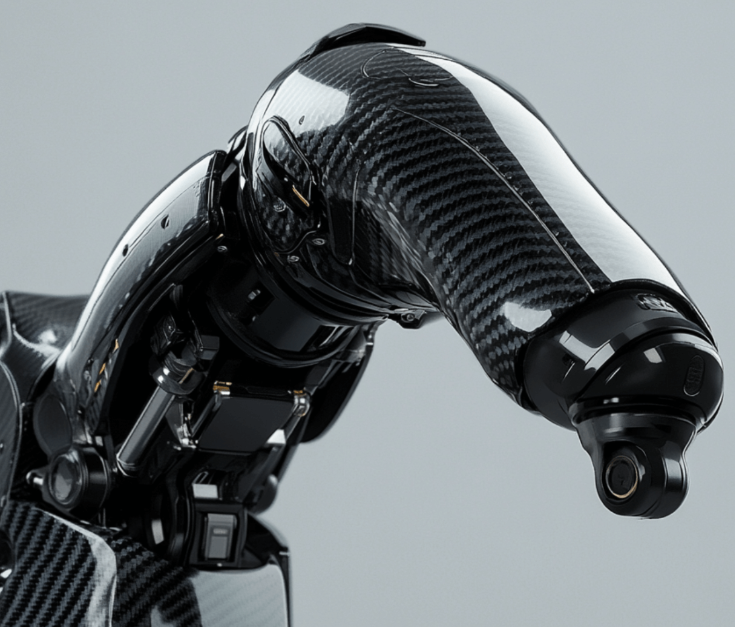
Used for Boston Dynamics Spot robot and NASA Mars rovers.
Glass Fiber: Low cost but heavier
It offers high strength, though lower and heavier than carbon fiber. It delivers excellent cost performance.
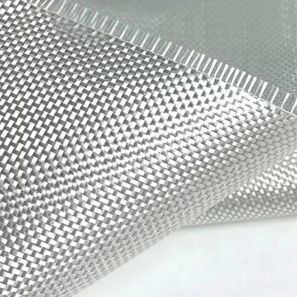
Applications
Drone frames
End effectors: Glass fiber reinforced grippers for abrasive environments
Robot protective panels
Kevlar: Optimal impact resistance protection
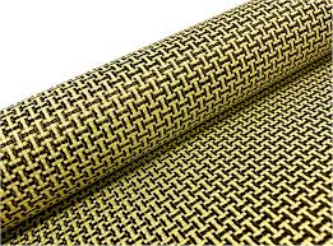
Kevlar fiber is renowned for its exceptional impact resistance. It has inferior mechanical strength compared to carbon fiber, yet remains lightweight.
Applications
- Treads / Wheels: Kevlar-reinforced skin is adopted for robots prone to collisions.
- Protective Equipment: Used as shielding for sensors on demolition robots.
New Materials: Better Than Traditional Materials?
Scientists strive to develop higher-performance, cost-effective new materials. Among these emerging materials, graphene and biodegradable plastics are the most prevalent. They play a vital role in driving the robotics revolution.
Graphene vs Titanium: Can They Revolutionize Robotics?
After analyzing the advantages and disadvantages of new materials, we can evaluate which ones deliver better performance in robotic applications.
Pros
Extremely strong and lightweight, with excellent electrical conductivity.
Cons
Extremely difficult to manufacture, resulting in very high material costs.
Biodegradable Plastics vs Traditional Polymers: The Environmental Trade-off
In recent years, biodegradable plastics have become highly practical, capable of natural decomposition into harmless byproducts such as water. PLA (Polylactic Acid) is one of the most common biodegradable plastics.
Pros
Eco-friendly and low in waste generation.
Cons
Poor mechanical properties and relatively high cost.
Material Comparison: Which Is Best Suited for Your Robot Type?
Metals, plastics, composite materials, and new advanced materials — which material works best for specific types of robots.
Industrial Robots: Steel or Advanced Composites?
For industrial robots performing heavy-load tasks, steel offers excellent durability.
For low energy use and high speed, advanced composites are the ideal choice thanks to their lightweight properties.
Small-Scale Robots: Aluminum vs Carbon Fiber Composites
This category includes drones and other lightweight small robots.
For high performance, carbon fiber composites are the ideal option; for durability and impact resistance, aluminum is the preferred choice.
Medical Robots: Titanium vs PEEK
For medical robots such as the Mako robotic arm, titanium is the top choice for its outstanding strength and load-bearing performance.

CNC Machining vs. 3D Printing: Which Is Faster and Cheaper?
CNC Machining
When you require parts with highest precision and tight tolerances, CNC machines – often 5-axis machining centers – are used. These machines are costly for processing any type of material.
3D Printing
3D printing is a more cost-effective and faster manufacturing technology in robotics, ideal for plastics and prototyping.
Casting vs. Injection Molding: Which Is Better for Metals or Plastics?
Casting is a manufacturing process that melts raw materials and forms them into desired shapes using molds. It is suitable for metals and complex geometries.
For plastic materials, injection molding is the appropriate choice.
Which Materials Are Most Prone to Failure?
Many common factors can eventually lead to material failure.
Steel Rusting and Plastic Cracking
Steel tends to rust when used in harsh environments. Rust weakens structural integrity and ultimately causes steel component failure.
As for plastics, exposure to sunlight or low temperatures makes them brittle and may result in catastrophic damage.
Thermal Damage: Can Composites Perform Better?
It depends on the intensity of heat exposure. Metals perform well under extremely high temperatures. By contrast, composite materials work excellently within the temperature range of 100°C – 180°C.
Summary
This article summarizes the common materials used for robot hardware and structural components. A wide range of materials are available for robot hardware selection, and the optimal option should be determined based on specific application requirements.
Steel is the ideal choice for robot hardware used in heavy-duty industrial operations, while composite materials are a better alternative for small robots and drones.
The selection of manufacturing processes depends on the material type. Injection molding is a more precise manufacturing method for plastic materials. New materials such as biodegradable plastics are entering the market, offering greater sustainability for robot hardware applications.
FAQ
Why are robots made of metal?
Because metals are cost-effective, easy to process, durable, and feature excellent mechanical properties.
What are the five main components of a robot?
- Frame
- Motion system
- Sensing system
- End effector
- Connectors and accessories
What is the best metal for robots?
It depends on the application scenario of the robot, yet steel is the most widely used material for robots.
Can a robot be fully made of plastic?
Yes, it is feasible, but plastics are inferior in durability and structural strength.