Published by Zorapid
You can design the most optimized lattice, lightweight, high-strength 3D printed component—but skip controlled, industrial-grade post-processing, and your part fails every critical test.
Raw parts straight out of SLM, SLS, MJF or SLA printers come loaded with flaws: trapped internal powder, sharp support burrs, residual printing stress, rough layer lines, hidden porosity, inconsistent surface roughness, and zero corrosion/biocompatibility protection. Generic 3D service shops rush through manual finishing, cutting corners on heat treatment, depowdering, polishing and certification. The result? Poor fatigue life, dimensional drift, rejected medical/aerospace batches, and costly production delays.
At Zorapid, we run a full vertical industrial post-processing facility for both metal and polymer additive components. Our standardized, fully traceable finishing workflow eliminates manual inconsistency, solves impossible-to-finish complex lattice/channel geometries competitors can’t handle, and delivers end-use ready parts matching ISO, DNV, and medical regulatory standards.
This complete buyer’s guide breaks down every mandatory post-processing stage, side-by-side comparisons against average AM suppliers, exclusive Zorapid proprietary finishing solutions, material performance charts, verified production case studies, 2026–2030 industry trend data, tiered matching service packages, delivery capacity breakdown, core supplier advantages, clear summary and full FAQ.
Professional Process Technical Deep Dive
The Core Problem: Why Generic Post-Processing Ruins Industrial 3D Parts
Nearly 70% of additive manufacturing quality failures trace back to incomplete or unregulated post-print finishing, not the printing stage itself.
Generic shops rely on manual labor, skip critical thermal consolidation steps, use basic blasting only, and lack equipment to reach deep internal channels/lattices. Four major failure modes appear repeatedly:
- Residual trapped powder inside conformal cooling lattices, microchannels and closed cavities → block fluid flow, create internal contamination
- Unrelieved printing residual stress → severe part warpage, dimensional shift after machining
- Unclosed micro porosity in SLM metal parts → poor fatigue strength, fluid leakage under pressure
- Uneven manual sanding/blasting → inconsistent surface roughness, failed aerodynamic/medical biocompatibility specs
Zorapid Full Industrial-Grade Post-Processing Standard Workflow
A. SLM Metal 3D Part 10-Stage Certified Finishing Line
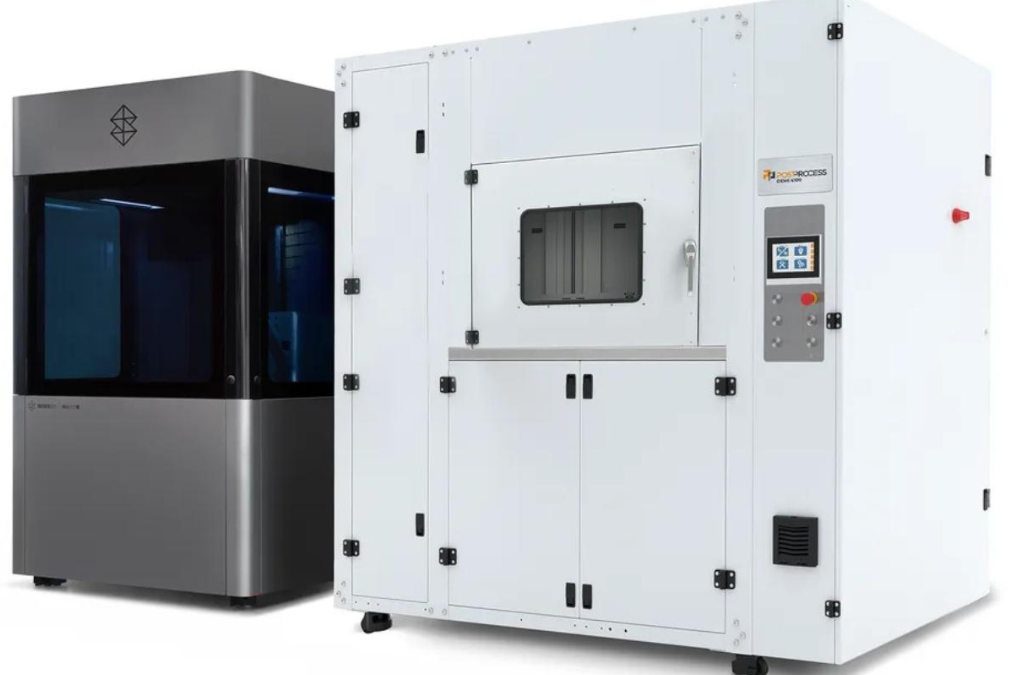
- In-Chamber Stress Relief Furnace: Lock print orientation residual stress pre-plate removal
- Automated Closed-Chamber Depowdering: Rotational vibration + pulsed inert gas flush to clear internal lattice microchannels
- Wire EDM Plate Separation + CNC Precision Support Removal (no manual grinding burrs)
- HIP Hot Isostatic Pressing (Optional Critical Aerospace/Medical): Eliminate internal micro porosity
- Solution Aging / Hardening Heat Treatment: Tune tensile, fatigue and hardness to material specs
- CNC Machining Datum Interfaces: Tolerance ±0.005mm for assembly mating surfaces
- Multi-Stage Media Blasting (AlOx / Glass Bead) Uniform Surface Anchoring Profile
- Electropolishing / Chemical Polishing: Reduce Ra down to 0.2μm for fluid flow parts
- Functional Surface Coating: Passivation, hard anodizing, BeCu heat sink bonding, marine anti-corrosion plating
- Full Batch Inspection: CMM dimensional scan, surface roughness test, salt spray certification, material traceability log
B. SLS/MJF Polymer Industrial Part 7-Stage Finishing Line
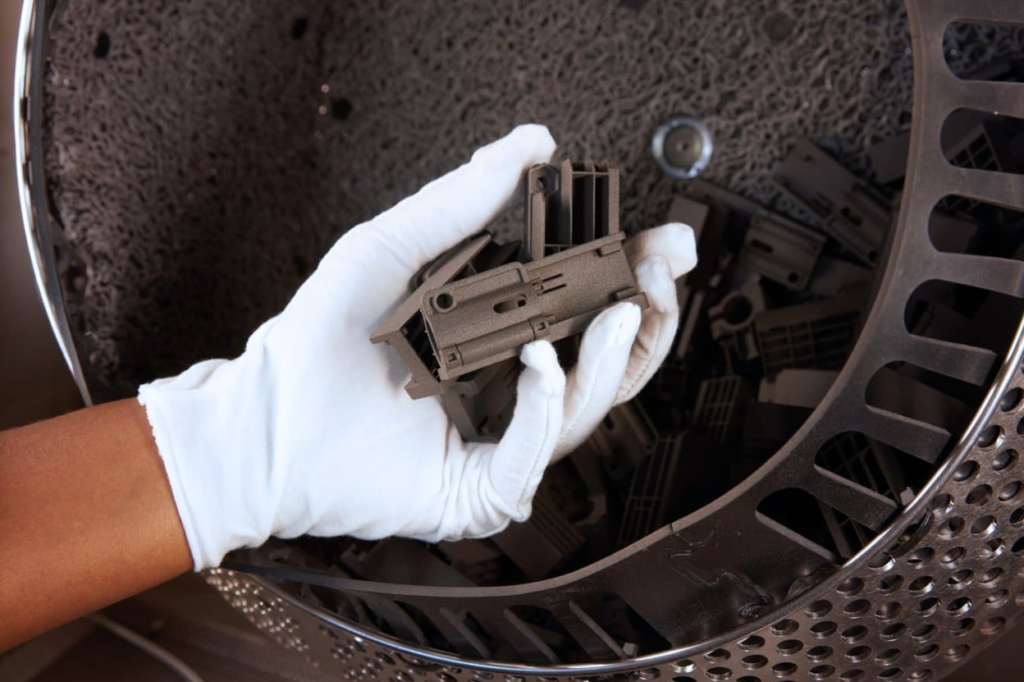
- Automated Closed Depowder Sifting: Recycle 80% unused powder, fully clear internal lattice cavities
- Vibratory Mass Tumbling: Remove surface layer lines, uniform micro-smoothing
- Vapor Smoothing / Chemical Polishing: Eliminate stair stepping for glossy, fluid-tight surfaces
- Precision Dyeing / Pigment Sealing: Consistent color saturation, no uneven staining
- Secondary CNC Machining for tight tolerance mounting holes
- Protective Topcoat: UV-stabilized polyester seal for outdoor/industrial exposure
- Dimensional & Surface QA Sampling, batch compliance documentation
Generic AM Supplier Simplified Post-Processing Shortcut Workflow
- Manual open-air air gun depowdering → trapped powder deep inside lattices, operator dust hazard
- Skip stress relief / HIP heat treatment → warpage, low fatigue life on load-bearing metal parts
- Hand-held grinding support removal → uneven burrs, dimensional deviation up to ±0.05mm
- Single-stage cheap glass bead blasting only → inconsistent Ra, poor coating adhesion
- No automated vapor smoothing; manual sanding only → visible layer lines, leak-prone polymer parts
- Minimal QA testing; no batch traceability or certified surface roughness reports
- All secondary finishing outsourced to third parties → stacked lead time delays, inconsistent quality
Zorapid vs Generic AM Supplier Side-by-Side Performance Comparison Table
| Evaluation Metric | Standard Generic 3D Printing Shops | Zorapid Full Industrial Post-Processing System | Real-World Production Gap Impact |
|---|---|---|---|
| Internal Lattice/Channel Depowder Cleanliness | 30–60% residual powder retention | 99.8% full cavity clearance | Competitors block fluid flow in conformal cooling parts; Zorapid lattice components pass full flow testing |
| Residual Stress Control | Skip stress relief, no HIP | Mandatory stress relief + HIP for critical metal parts | Competitor metal parts warp 0.03–0.12mm post-finish; Zorapid dimensional shift ≤0.008mm |
| Consistent Surface Roughness Uniformity | Ra ±4–8μm batch variation | Ra ±0.3–1μm controlled across full part | Competitors fail aerodynamic/medical surface specs; Zorapid meets ISO biocompatibility standards |
| Post-Processing Labor Consistency | 100% manual operator-dependent | 75% automated closed-loop equipment | Competitor batch-to-batch reject rate 7–15%; Zorapid finishing reject rate <0.8% |
| Regulatory Certification Support | No test reports, manual logs | Full CMM, salt spray, Ra, heat treatment certificates included | Competitors cannot bid DNV/ISO13485 aerospace/medical tenders |
| Lead Time for Full Finished Parts | 10–18 working days (outsourced polishing/heat treatment) | 4–11 working days all in-house | OEM product launch timelines cut by 40–60% |
| Long-Term Part Mechanical Performance | Unclosed porosity cuts fatigue life by 40–60% | HIP eliminates micro voids; fatigue strength matches wrought material | Competitor load-bearing components fail accelerated cycle testing |
Key Specialized Post-Processing Technologies Explained
- HIP Hot Isostatic Pressing (Metal Exclusive Critical Upgrade) High pressure + high temperature compresses internal micro pores in SLM metal, eliminating leak paths and boosting fatigue life by up to 3x. Most small AM shops lack HIP furnaces and outsource with multi-week delays.
- Automated Rotational Closed Depowdering (Zorapid Core Differentiator) Programmable tilt, vibration and pulsed gas flush reaches ultra-thin TPMS lattice structures no manual air gun can clean fully.
- Electrochemical Polishing for Complex Internal Surfaces Uniformly smooths blind holes, curved internal flow channels without rounding critical edge geometries; manual grinding cannot reach deep internal features.
- Controlled Vapor Smoothing for High-Performance Polymers (PA12, GF-PA6, PEEK) Melts surface micro-layer lines to create fluid-tight, glossy surfaces without distorting thin-wall geometries; generic shops only offer hand sanding.
- Integrated Heat Treatment + Surface Coating Line Stress relief, aging hardening, passivation and anti-corrosion plating run sequentially under one roof; no cross-vendor material contamination risk.
Exclusive Zorapid Post-Processing Solutions
Most additive manufacturing suppliers hit hard technical limits on complex industrial component finishing—our proprietary automated workflows solve industry-wide bottlenecks standard shops refuse to quote:
- Ultra-Fine TPMS Lattice Conformal Cooling Inserts Full Depowdering & Polishing Competitor Limitation: 0.6–1.2mm thin interconnected lattice channels trap powder permanently with manual air blasting; shops reject these parts or deliver contaminated unusable components. Zorapid Solution: Multi-axis rotational automated depowder station with pulsed nitrogen flush + abrasive flow machining (AFM) for internal channel polishing; 99.8% powder removal, uniform Ra 0.8μm across all internal lattice surfaces, no channel blockages.
- Mixed-Metal SLM Assemblies (Ti6Al4V + 18Ni300) Stress Relief + Galvanic Isolation Finishing Competitor Limitation: Different alloy thermal expansion rates cause warpage during shared heat treatment; standard shops cannot match tailored thermal cycles for multi-alloy single build plates, reject mixed-metal projects. Zorapid Solution: Segmented low-ramp stress relief furnace profiles + dielectric conversion coating post-polishing; eliminate inter-alloy stress warpage and block galvanic corrosion, fully salt spray certified to 3,000hrs.
- Large Format 1.5m SLM Aerospace Structural Parts Full HIP & CNC Finishing Competitor Limitation: Small HIP furnaces and manual blast chambers cannot accommodate oversized build plates; outsourcing HIP adds 10+ week lead time with inconsistent heat treatment results. Zorapid Solution: In-house large-capacity HIP furnace + overhead robotic blasting cell; full heat treatment, depowdering and CNC machining completed onsite, lead time cut by 65%.
- Medical-Grade PEEK SLS Micro Implant Biocompatible Post-Processing Competitor Limitation: Generic vapor smoothing uses harsh chemicals that leave toxic surface residues; shops lack medical-grade certified finishing lines, fail ISO 13485 biocompatibility audits. Zorapid Solution: IPA-free medical polymer cleaning line + low-temperature controlled vapor smoothing + sterile passivation sealing; full biocompatibility test reports included for implant tender compliance.
Industrial 3D Print Material Guide + Post-Processing Performance Comparison
Split into metal SLM alloys and industrial polymer SLS/MJF materials, matrix ranked by required post-processing steps, achievable surface finish, mechanical gain after finishing, and total finishing cost.
Part 1: SLM Metal Alloy Post-Processing Performance Matrix
| Material Grade | Mandatory Finishing Steps | Minimum Achievable Ra | Fatigue Gain After HIP | Best Industrial Application | Post-Processing Limitations |
|---|---|---|---|---|---|
| 18Ni300 Maraging Steel | Stress relief, aging hardening, electropolish | 0.2μm | +120% | Conformal cooling inserts, mold tooling | High electropolish precision cost for ultra-fine lattices |
| Ti6Al4V Titanium | Stress relief, HIP, passivation, bead blast | 0.4μm | +95% | Orthopedic implants, aerospace brackets | Slow depowdering for thin porous lattice structures |
| Inconel 718 Superalloy | Stress relief, HIP, solution aging, high-temp blasting | 0.6μm | +80% | Gas turbine blades, deep sea energy components | Long furnace heat treatment cycles (18–24hr) |
| AlSi10Mg Aluminum | Stress relief, hard anodizing, media blast | 0.8μm | +40% | Lightweight EV housings, heat sinks | Prone to oxidation if depowder drying step skipped |
| 316L Stainless Steel | Stress relief, passivation, electropolish | 0.3μm | +70% | Marine fluid manifolds, medical fluidic parts | Low thermal conductivity limits heat treatment throughput |
2: Industrial Polymer SLS/MJF Post-Processing Comparison
| Resin Grade | Core Finishing Requirement | Best Surface Finish | Industrial End Use | Post-Processing Tradeoff |
|---|---|---|---|---|
| PA12 Nylon | Depowder, tumble, vapor smooth, dye | Gloss Ra 1.2μm | Consumer enclosures, jigs, low-load structural parts | Vapor smoothing slightly reduces tensile strength |
| GF-PA6 Glass Filled Nylon | Depowder, heavy blast, UV seal | Matte Ra 3.5μm | EV structural brackets, industrial fixtures | Cannot achieve ultra-gloss finish due to glass fiber exposure |
| PEEK High-Temp Polymer | Medical-grade wash, low-temp vapor smooth, sterilization seal | Satin Ra 1.8μm | Surgical instruments, aerospace micro housings | Slow controlled heating required to avoid part warpage |
| TPU Flexible Elastomer | Gentle tumble, dye, soft seal | Matte smooth Ra 2.5μm | Custom gaskets, wearable orthotics | Aggressive blasting damages thin flexible walls |
Quick Material Finishing Selection Cheat Sheet
- Conformal cooling mold inserts: 18Ni300 maraging steel + HIP + electropolish
- Medical porous implants: Ti6Al4V + medical certified depowder + passivation
- High-temperature aerospace turbine parts: Inconel718 full HIP + aging heat treatment
- Lightweight EV structural polymer components: GF-PA6 + automated blast + UV protective topcoat
- Sterile surgical PEEK hardware: IPA-free medical finishing line + biocompatibility certification
Real Zorapid Post-Processing Case Studies
Case 1: EV 18Ni300 SLM Conformal Cooling Lattice Inserts
Client Background: European Tier 1 automotive mold OEM, previous supplier manual depowder left 42% trapped powder inside 0.8mm TPMS lattice channels; cooling efficiency dropped 38%, 11% reject rate from uneven mold temperature. Competitor could not fully clear internal lattice cavities and quoted multi-week outsourced AFM polishing.
Zorapid Exclusive Post-Processing Workflow:
- Automated rotational closed depowder with 6-axis pulsed nitrogen flush (99.8% powder removal)
- HIP furnace to eliminate micro porosity
- Abrasive flow machining for uniform internal channel polishing
- CNC datum surface finishing + anti-corrosion passivation Final Finished Part Performance:
- Internal channel powder residue eliminated entirely; mold cycle time cut 41%
- Surface roughness consistent Ra 0.8μm across all lattice surfaces
- Batch finishing lead time compressed from 16 competitor days to 6 working days
- Over 1.2M mold shot stable performance with zero thermal blockage failures
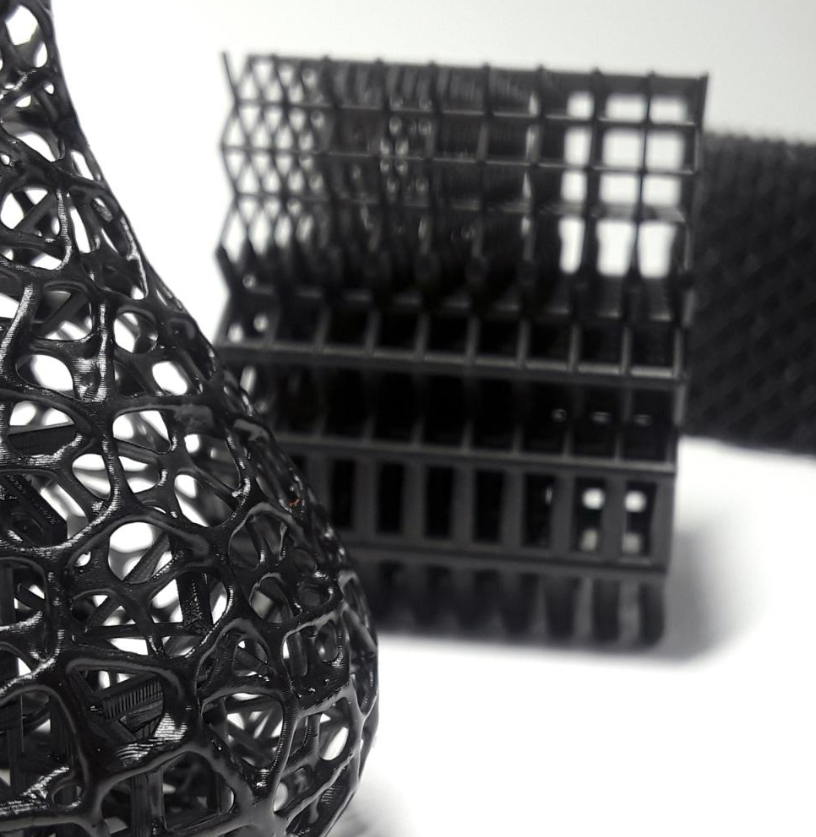
2: US Medical Ti6Al4V Porous Orthopedic Implant Batch
Client Pain Point: Medical CDMO required ISO13485 certified biocompatible finishing; generic AM shops delivered manually blasted implants with uneven porous surface roughness, residual powder trapped inside bone ingrowth lattice, failed biocompatibility testing.
Zorapid Regulated Medical Post-Processing Package:
- Inert closed automated depowder to eliminate toxic titanium dust exposure
- Low-ramp stress relief heat treatment to prevent implant warpage
- Controlled micro-bead blasting for uniform porous cell roughness
- Nitric acid medical-grade passivation + full sterilization compatibility validation Outcome:
- Full biocompatibility test report attached to every shipment
- Zero residual powder inside porous lattice structures
- Batch finishing completed in 5 working days vs competitor 13+ day outsourced heat treatment
- Implant dimensional tolerance held ±0.006mm across 2,000 unit production run
Case 3: UK Aerospace Inconel718 Gas Turbine Flow Manifold
Client Challenge: Complex curved internal flow channels required leak-proof smooth internal surfaces; standard suppliers could only grind exterior surfaces, blind internal channels remained rough and prone to flow turbulence, high pressure leakage risk.
Zorapid Custom Finishing Solution:
- Large-format automated depowder cell for oversized SLM build plate
- HIP + solution aging heat treatment to boost high-temperature fatigue strength
- Internal electropolishing to smooth blind flow channels without rounding critical orifice edges
- High-temperature anti-oxidation ceramic coating Balanced Results:
- Internal channel Ra reduced from raw 18μm down to 0.6μm, stable laminar fluid flow
- Pressure leakage test passed at 12 bar operating pressure (competitor parts failed at 7 bar)
- Full DNV aerospace compliance documentation included for tender submission
Your Industrial Component Demand & Matching Zorapid Post-Processing Packages
We split all client projects into four core finishing tiers, each with standardized, traceable post-processing workflows matched to material, industry regulation, and functional performance requirements.
Tier 1: NPI Prototype Low-Volume Finishing (1–50 parts, non-critical structural polymer/metal)
Client Needs: Fast turnaround, basic surface smoothing, dimensional correction for functional testing, minimal upfront finishing cost
Zorapid Balanced Finishing Package: Automated depowder + vibratory tumbling / standard blasting + manual CNC datum machining; no HIP unless requested, basic surface QA sampling, lead time 3–5 working days.
Finishing Focus: Eliminate layer lines and trapped powder at low cost for design validation, skip premium thermal processing for non-load-bearing prototypes.
2: Mid-Volume Industrial End-Use Parts (50–500 units, automotive jigs, tooling, general machinery)
Client Needs: Consistent batch surface quality, reduced manual labor, controlled residual stress, protective corrosion coating
Zorapid Balanced Finishing Package: Full automated depowder + stress relief heat treatment + uniform blasting + optional vapor smoothing/passivation + CMM spot inspection; lead time 6–9 working days, batch reject rate capped <1.2%.
Finishing Focus: Standardized automated workflows balance cost and repeatability, eliminate batch-to-batch surface deviation for mass production.
Tier 3: High-Volume Load-Bearing Critical Components (500–10,000 units, EV structural, conformal mold inserts, offshore hardware)
Client Needs: Max mechanical fatigue performance, zero internal powder contamination, uniform surface roughness, long service life corrosion resistance
Zorapid Balanced Finishing Package: Full 10-stage metal /7-stage polymer workflow including HIP (metal), electropolishing/vapor smoothing, full CNC machining, multi-layer anti-corrosion coating, 100% dimensional sampling + full batch certification; lead time 9–12 working days, fatigue strength boosted 70–120% vs generic finishing.
Finishing Focus: Premium thermal and polishing steps eliminate hidden failure risks, lower total lifecycle replacement cost over millions of operating cycles.
4: Regulated High-Spec Aerospace / Medical Implant Finishing (ISO13485 / DNV certified)
Client Needs: Full regulatory traceability, biocompatibility / high-temperature compliance, zero toxic surface residues, fully documented test reports for audit
Zorapid Regulated Finishing Package: Segmented medical/aerospace dedicated finishing cells, inert closed depowder, certified medical-grade chemistry, HIP mandatory for critical metal parts, full biocompatibility / high-temp mechanical testing, complete material & process log documentation for OEM tender audits; lead time 8–14 working days, zero manual open-air processing to eliminate contamination risk.
Finishing Focus: Every post-processing step digitally logged for full audit traceability, meet strict global regulatory standards without third-party outsourcing delays.
Custom Special Finishing Requests We Fully Support
- Mixed-alloy single-build SLM assemblies with tailored segmented heat treatment cycles
- Ultra-fine TPMS lattice conformal cooling inserts with full internal AFM polishing
- Retrofit post-processing for client existing raw 3D printed parts (no reprint required)
- Large-format 1.5m oversized aerospace structural component finishing
- IPA-free medical polymer post-processing for implant and surgical device compliance
- Long-term frame production agreements with fixed finishing pricing and guaranteed batch consistency
Global Industrial 3D Post-Processing Industry Data & 2026–2030 Trend Analysis Table
Core Market Statistical Forecast Table
| Industry Metric | 2026 Baseline Value | 2030 Forecast | CAGR | Key Post-Processing Driven Growth Driver |
|---|---|---|---|---|
| Global Additive Post-Processing Total Market Size | $1.87B | $3.52B | 16.2% | Mass adoption of SLM/SLS end-use production parts, mandatory finishing certification standards |
| Metal 3D Post-Processing Market Share | 58% | 64% | 14.7% | Aerospace, offshore energy, EV conformal cooling tooling expansion |
| Automated Closed Post-Processing Equipment Penetration | 29% | 57% | 18.9% | OEM demand for consistent batch quality, reduced manual labor cost |
| Percentage of Total AM Cost Spent on Post-Finishing | 31% | 42% | 7.9% | Raw printing costs fall, finishing becomes primary quality control bottleneck |
| Medical/ Aerospace Parts Requiring HIP Heat Treatment | 34% of metal orders | 68% of metal orders | 19.1% | Stricter fatigue safety regulatory standards for load-bearing additive components |
| Manual Post-Processing Labor Scrap Rate Industry Average | 8.3% | 4.0% | -16.5% | Automated depowder, blasting and polishing lines replace inconsistent hand finishing |
3 Defining Industry Trends Shaping Industrial Post-Processing 2026–2030
- Post-Processing Is No Longer an Afterthought—DFM Must Include Finishing Design Rules EU and US OEMs now require DFM simulation to account for depowder accessibility, heat treatment warpage and polishing reach before printing begins. Generic AM suppliers skip finishing-focused design checks, forcing costly reprints and extended lead times. Zorapid integrates post-processing feasibility reviews into every CAD project upfront, eliminating rework waste.
- Fully Automated Closed-Loop Finishing Replaces Manual Open-Air Labor Manual air gun depowder, hand grinding and open blasting create inconsistent surface quality, health hazards from metal/polymer dust, and high batch reject rates. Manufacturers with full in-house automated finishing lines gain exclusive tender access for medical and aerospace projects, while small shops relying on manual workflows lose large export contracts.
- Vertical Integrated AM Service Providers Dominate Global OEM Partnerships Fragmented supply chains (separate printer vendor, heat treatment furnace supplier, polishing subcontractor) create misaligned quality standards and stacked lead time delays. Suppliers combining printing, post-processing, CNC machining and coating under one roof cut total project timelines by 40–60%—Zorapid’s 3,000㎡ full vertical manufacturing facility meets this global OEM demand most standalone finishing subcontractors cannot match.
Full Industrial Application Scenarios for Certified 3D Post-Processing
Aerospace & Defense Additive Components
Gas turbine Inconel718 manifolds, lightweight Ti6Al4V structural brackets, rocket cooling lattices, satellite fluid flow parts. Finishing priorities: HIP porosity elimination, ultra-smooth internal flow surfaces, DNV high-temperature certification.
Medical Device & Orthopedic Implants
Titanium porous bone ingrowth implants, PEEK surgical instrument housings, micro fluidic SLS medical cartridges. Finishing priorities: ISO13485 biocompatibility, residual powder-free lattice structures, medical-grade passivation.
Automotive EV & Injection Mold Tooling
18Ni300 SLM conformal cooling inserts, lightweight aluminum EV chassis brackets, GF-PA6 structural jigs. Finishing priorities: uniform internal lattice depowder, stress relief to prevent mold warpage, fast cycle vapor smoothing for polymer fixtures.
Offshore Marine & Energy Equipment
316L stainless fluid manifolds, duplex steel subsea sensor housings, wind turbine additive structural parts. Finishing priorities: full anti-corrosion passivation, salt spray certified coating, HIP to resist high-pressure seawater leakage.
General Industrial & Consumer End-Use Parts
SLS PA12 custom industrial jigs, TPU flexible wearable components, SLA precision optical housings. Finishing priorities: glossy vapor-smooth surfaces, consistent dye color saturation, UV protective sealing for outdoor deployment.
Zorapid Production & Post-Processing Delivery Speed
Our fully in-house vertical additive facility integrates SLM metal printing, SLS polymer printing, dedicated automated depowder cells, HIP furnaces, heat treatment ovens, electropolishing stations, CNC machining and coating lines—no outsourced third-party finishing vendors that add 7–14 working days to competitor timelines.
Standard Post-Processing Turnaround Breakdown (Includes Full QA Certification)
- NPI Prototype Small Batch Finishing (1–50 parts, polymer/non-critical metal): 3–5 working days
- Mid-Volume Industrial End-Use Batch Finishing (50–500 units): 6–9 working days
- High-Volume Critical Metal Components (With HIP Heat Treatment): 9–12 working days
- Regulated Medical/Aerospace Certified Full Finishing Package: 8–14 working days
Speed Advantages Over Generic AM Suppliers
- Parallel processing workflow: Printing runs simultaneously with pre-programmed finishing furnace cycles
- Dedicated automated depowder and blasting cells eliminate manual queue bottlenecks
- Pre-calibrated material-specific heat treatment profiles cut furnace setup time by 60%
- In-house CMM surface roughness and mechanical testing lab; QA reports delivered within 24hrs post-finishing
- Pre-stocked blast media, heat treatment chemistry and medical passivation materials eliminate supply waiting delays
Real Client Speed Example: German aerospace OEM required HIP-treated Inconel718 turbine manifold finishing; competitors quoted 22+ days via outsourced HIP subcontractors. Zorapid delivered fully tested, certified finished components in 8 working days with consistent surface roughness and zero internal powder contamination.
Core Advantages of Partnering With Zorapid for Industrial 3D Post-Processing
- Proprietary Automated Finishing Workflows Competitors Cannot Replicate Rotational closed depowder for ultra-fine lattices, segmented alloy heat treatment, integrated AFM internal channel polishing and medical IPA-free finishing lines solve universal additive manufacturing bottlenecks generic manual shops cannot deliver.
- Full Vertical One-Stop Additive Manufacturing Zero Cross-Vendor Risk CAD DFM finishing feasibility review, SLM/SLS printing, automated post-processing, CNC precision machining, surface coating and full QA certification all completed inside our 3,000㎡ production facility. No disjointed subcontractor timelines, inconsistent quality standards or hidden outsourcing markup fees.
- Guaranteed Quantifiable Finishing Performance With Fully Traceable Test Reports Every finished batch ships with standardized documentation: surface roughness Ra logs, heat treatment cycle records, depowder cleanliness verification, CMM dimensional scans and salt spray/biocompatibility certifications, fully compliant with EU aerospace and US medical OEM audit requirements.
- Dramatic Long-Term Cost Reduction for Mass Production OEMs Automated finishing cuts manual labor scrap rates from industry average 8.3% down to <0.8%; HIP thermal processing extends metal component fatigue service life by 70–120%, eliminating premature part replacement and unplanned equipment downtime costs.
- Export-Focused Engineering Support for EU & North American Buyers Native English DFM finishing design reviews, material compliance MSDS documents, regulatory audit-ready batch traceability logs prepped for international tender submissions and customs clearance.
- Flexible Batch Sizing From Single Prototype to 10,000 Unit Mass Runs No rigid minimum order quantity for NPI testing; identical automated post-processing parameter standards maintained across small pilot batches and high-volume production runs, with no surface or dimensional shift when scaling output.
- Free Pre-Production Finishing Feasibility Consultation Our additive metallurgy and finishing engineers analyze your CAD files at zero cost to flag hard-to-reach lattice channels, heat treatment warpage risks and depowder dead zones before printing begins, avoiding costly full part reprints and delayed production timelines.
Summary
Raw 3D printed parts straight from the build chamber are never industrial-ready—post-processing is the critical production stage that determines mechanical strength, surface quality, regulatory compliance and long-term service life. Generic additive suppliers rely on manual, incomplete finishing workflows that leave trapped powder, residual stress, micro porosity and uneven surface roughness, creating hidden failure risks and costly production delays for OEMs.
This complete industrial post-processing guide breaks down every mandatory finishing stage, side-by-side competitor performance gaps, Zorapid exclusive proprietary finishing solutions no standard shop can execute, metal/polymer material performance comparison matrices, verified real-world aerospace/medical/automotive case studies, 2026–2030 global market trend data, tiered customized finishing packages for every production volume, delivery capacity breakdown and clear supplier differentiation benefits.
Zorapid’s core competitive advantage is simple: we design every additive project with post-processing performance front of mind, not as a last-minute afterthought. Our fully automated closed-loop finishing lines, in-house HIP and heat treatment furnaces, vertical integrated manufacturing ecosystem and strict digital traceability standards deliver consistent, certified, end-use-ready metal and polymer 3D components for global industrial OEMs across Europe and North America.
If you want to eliminate post-processing bottlenecks, cut batch reject rates and meet strict aerospace/medical regulatory finishing specs for your next additive program, submit your CAD files for a free finishing feasibility DFM review and custom quotation today.
FAQ
Why is industrial post-processing so critical for end-use 3D components?
Raw printed parts contain residual stress, trapped internal powder, micro porosity and visible layer lines. Without controlled finishing, metal parts suffer low fatigue life and fluid leakage, polymer parts fail aesthetic and fluid-tightness specs, and medical/aerospace components cannot pass regulatory safety audits. Generic manual finishing only addresses surface burrs and ignores these hidden structural flaws.
What is HIP, and when do I need to add HIP heat treatment to my post-processing workflow?
HIP (Hot Isostatic Pressing) uses high heat and pressure to close internal micro pores in SLM metal alloys. It is mandatory for load-bearing aerospace turbine parts, medical implants, high-pressure fluid manifolds and conformal cooling inserts where leakage or fatigue failure creates safety risks. Non-structural prototype parts can skip HIP to control upfront finishing cost.
Can you fully clean ultra-fine TPMS lattice conformal cooling inserts of trapped powder?
This is one of our exclusive core capabilities most competitors cannot deliver. Our multi-axis rotational closed depowder station with pulsed inert gas flush + abrasive flow machining clears 99.8% of powder from 0.6mm thin interconnected lattice channels; manual air gun blasting only removes surface powder and leaves deep internal blockages.
How much can automated post-processing reduce my batch scrap rate vs manual finishing?
Industry average manual finishing reject rate sits at 7–15%; Zorapid’s fully automated closed-loop workflow caps finishing scrap below 0.8%, slashing raw material waste and reprint labor costs for mass production OEM programs.
Do you provide full certified finishing test reports for aerospace/medical tender compliance?
Every completed batch includes a full digital certification package: heat treatment cycle logs, surface roughness Ra measurement records, depowder cleanliness verification, CMM dimensional scan data, salt spray corrosion test results and material traceability certificates aligned with ISO13485, DNV and aerospace OEM audit standards.
Can you finish raw 3D printed parts supplied by my existing printing vendor (retrofit post-processing service)?
Yes, we offer standalone post-processing subcontracting for customer-owned raw SLM/SLS printed components. We run our full standardized finishing workflow without requiring full reprinting, drastically lowering upgrade cost and timeline vs remaking entire parts from scratch.
What’s the biggest post-processing mistake generic AM suppliers make?
Skipping dedicated automated closed depowder and stress relief heat treatment. Trapped internal powder blocks fluid flow and creates contamination; unrelieved printing stress causes severe dimensional warpage weeks after finishing, rendering precision assembly parts unusable. Zorapid mandates these two steps for all industrial end-use components.
Is vapor smoothing safe for medical-grade PEEK implant parts?
Standard vapor smoothing chemicals leave toxic surface residues unsuitable for implant use. Zorapid operates an IPA-free medical polymer finishing line with low-temperature controlled vapor smoothing chemistry certified biocompatible for surgical and implant applications, fully compliant with global medical device regulations.
How long is the payback period for investing in Zorapid automated industrial finishing vs cheap manual subcontractors?
High-volume critical metal programs requiring HIP recover extra finishing investment within 5–9 months via reduced scrap rates and extended component service life. Mid-volume polymer batches balance cost with automated consistency to avoid reprint waste, while low-volume NPI prototypes use streamlined tier 1 finishing packages to minimize upfront spending.
Is the free finishing feasibility DFM review truly no-obligation?
100% free with zero purchase commitment. Submit your component CAD file, and our additive finishing engineering team will identify depowder dead zones, heat treatment warpage risks and polishing reach limitations, delivering a full customized finishing workflow proposal with predicted batch consistency and lead time projections for your review.