Published by Zorapid Precision
Let’s cut to the chase: A mold is only as good as its cavity and core stability. You machine it to ±0.005mm, sign off the first article, and by the 5,000th shot—dimensions drift, walls thin out, corners round over, and your parts go out of spec. Sound familiar?
This isn’t normal wear. It’s uncontrolled thermal expansion, residual stress, tool deflection, and poor process control adding up. Most shops chase tolerance with endless rework, hand polishing, and trial-and-error—wasting weeks and thousands in scrap.
At Zorapid, we lock cavity/core tolerances rock-solid for 1M+ shots. Over 20+ years, we’ve delivered 8,000+ stable precision molds for automotive, medical, and tech clients. No drift, no spread, no surprise rework—just repeatable ±0.003mm accuracy from first shot to last.
Today we’re breaking down why cavities/cores lose stability, how generic shops mess up, the impossible stable-tolerance jobs only we solve, and how to hold mirror finishes + micron tolerances for millions of cycles.
In-Depth Technical Analysis
Cavity/core instability isn’t random—it’s 5 linked failure modes that stack with every shot. Let’s dive into the science and how Zorapid’s stable-tolerance process crushes generic mold shops.
Why Cavity & Core Tolerances Drift (5 Root Causes)
1. Thermal Expansion & Heat Cycling – Drift Driver
- What it is: Mold steel expands 0.012mm per 100°C. Repeated 80–120°C heat cycles from injection cause uneven expansion/contraction—cavity swells, core shrinks, dimensions shift.
- Generic mistake: No thermal simulation, poor cooling design, running molds hot to save time.
2. Residual Stress Release – Warp & Distort
- What it is: Roughing leaves internal stress. Heat cycling releases it over time—cavity walls bow, cores bend, flatness fails. Worse in hard steels (HRC50+).
- Generic mistake: Skip stress relief, rush from rough to finish, no post-machining stabilization.
3. Tool Deflection & Vibration – Micron Spread
- What it is: Long, slender tools or weak fixturing vibrate during hard milling. Cavity walls thin unevenly, core diameters vary by 0.01–0.02mm.
- Generic mistake: Using standard-length tools, no custom fixtures, generic CAM parameters for hard steel.
4. Inconsistent Finishing & Polishing – Handwork Errors
- What it is: Hand polishing removes 0.01–0.03mm unevenly. Cavity radii skew, core tapers, surface roughness varies. No two polishers work the same.
- Generic mistake: Manual finish only, no CNC ultra-finish, no standardized polishing process.
5. Material Micro-Wear – Slow Degradation
- What it is: Cheap or improperly heat-treated steel wears fast under high pressure/fill. Cavity corners round, core surfaces erode, tolerances open up.
- Generic mistake: Low-cost steel, insufficient hardness, no surface coating.
Zorapid vs. Generic Mold Shop (Critical Stability Differences)
| Parameter | Zorapid Stable Cavity/Core Process | Generic Mold Shop (Drift & Spread) |
|---|---|---|
| Cavity/Core Tolerance | ±0.003mm (locked) | ±0.01–0.02mm (drifts after 5k shots) |
| Thermal Simulation | Full 3D thermal + cooling analysis | Basic 2D or none |
| Stress Relief | 2× stress relief (rough + semi-finish) | 0–1×, rushed |
| Hard Milling Strategy | Short rigid tools, trochoidal, low vibration | Long tools, standard CAM, high vibration |
| Finishing | CNC ultra-finish + standardized diamond polish | Manual hand polish only |
| Surface Roughness (Ra) | 0.05–0.1μm (mirror, consistent) | 0.2–0.8μm (variable) |
| Tolerance Life | 1M+ shots (no drift) | 50k–200k shots (major drift) |
| Rework Rate | <2% | 20–40% |
| Flatness/Straightness | ±0.002mm | ±0.01mm |
Why generic shops fail: They treat mold making like cut steel and polish. Stability requires thermal + stress engineering, hard milling precision, and controlled finishing. Zorapid’s process locks every variable—no drift, no spread, no surprises.
Zorapid’s Core Stable-Tolerance Playbook
Thermal & Stress Engineering First
- 3D Thermal Simulation: Map hot spots, design conformal cooling (3D printed if needed) to keep cavity/core at ±0.5°C steady.
- Dual Stress Relief: After roughing (HRC30) and semi-finishing (HRC50+), stress-relief oven soak at 550°C to eliminate internal tension.
- Pre-Stabilization: 24-hour temperature soak at 22°C before finishing—locks baseline dimensions.
Hard Milling Precision (HRC50–60)
- Short Rigid Tools: Tool overhang ≤2.5× diameter, solid carbide with TiAlN/TiSiN coatings.
- Trochoidal High-Speed Milling: 10–15% radial engagement, 18,000–25,000 RPM, low vibration, even material removal.
- In-Process Probing: Check cavity/core every 10 mins, auto-compensate for minor drift.
CNC Ultra-Finish + Standardized Polishing
- 5-Axis Ultra-Finish: 0.05mm stepover, climb milling, consistent stock removal ±0.002mm.
- Diamond Grit Polish Protocol: 6-step standardized process (800→1200→2000→5000→8000→10000 grit) with digital roughness checks. No handwork variation.
Premium Steel + Precision Heat Treat
- Grade Selection: S136, NAK80, H13, or 2344 (vacuum heat-treated, HRC52–56, ±1°C hardness uniformity).
- Surface Coating: CrN or DLC (2–3μm thick) for wear resistance—extends stable tolerance life to 1M+ shots.
Impossible Stable-Tolerance Jobs Only Zorapid Can Solve
Any shop can make a simple mold. These 5 extreme cavity/core stability scenarios? Most quote too risky, high rework, or can’t hold tolerance long-term. Here’s how we lock stability:
1: High-Volume Medical Molds (1M+ Shots, ±0.005mm Cavity/Core)
Problem: Medical parts need tight tolerances for 1M+ cycles. Generic molds drift 0.02mm after 100k shots, scrap rate 25%.
Zorapid Solution:
- S136 steel + vacuum heat treat (HRC54)
- Dual stress relief + conformal cooling
- 5-axis ultra-finish + DLC coating
- Result: ±0.003mm stability at 1.2M shots, Ra 0.08μm mirror finish, zero drift, FDA-compliant. Competitors rework monthly.
Pain 2: Thin-Wall Automotive Cavities (0.8mm Walls, No Bowing)
Problem: 0.8mm thin walls bow from stress/heat, flatness fails. Generic shops scrap 30% of cavities, walls warp 0.03mm+.
Zorapid Solution:
- H13 steel + dual stress relief
- Trochoidal milling + short tools (no vibration)
- Vacuum fixturing + in-process probing
- Result: Zero wall bowing, flatness ±0.002mm, stable for 800k shots. Competitors’ walls warp within 50k shots.
Pain 3: Multi-Cavity Consumer Electronics Molds (16-Cavity, Identical Dimensions)
Problem: 16 cavities must match ±0.005mm. Generic shops have 0.01–0.02mm variation, parts don’t assemble.
Zorapid Solution:
- NAK80 steel + single heat treat batch
- 5-axis synchronized milling + identical toolpaths
- CMM 100% inspection + matching cavity/core sets
- Result: All 16 cavities ±0.003mm identical, stable for 500k shots, perfect assembly. Competitors have consistent variation.
Pain 4: Optical Grade Cavities (Ra ≤0.05μm, No Polishing Marks)
Problem: Optical lenses need ultra-smooth surfaces, no hand polish marks. Generic shops leave swirls, Ra 0.2–0.4μm.
Zorapid Solution:
- S136 steel + 5-axis ultra-finish
- 6-step diamond polish + digital roughness verification
- Dust-free cleanroom finishing Result: Ra 0.04–0.05μm mirror finish, zero marks, stable for 1M+ shots. Competitors can’t match surface consistency.
Pain 5: Large Deep-Cavity Molds (800mm × 500mm, Uniform Tolerance)
Problem: Large cavities warp from stress/heat, edges drift more than centers. Generic shops have 0.02–0.03mm variation.
Zorapid Solution:
- 2344 steel + triple stress relief
- Large-format 5-axis + symmetric toolpaths
- Distributed conformal cooling + thermal mapping
- Result: Uniform ±0.004mm tolerance across entire cavity, no edge drift, stable for 600k shots. Competitors’ large cavities warp unevenly.
Zorapid Exclusive Edge: We combine thermal/stress engineering + hard milling precision + controlled finishing + premium materials. Competitors skip critical steps—drift and instability are guaranteed.
Applicable Materials + Side-by-Side Stability Comparison
Not all mold steels hold stability equally. Hardness, thermal conductivity, and stress resistance determine how long tolerances stay locked. Below are the most common stable-tolerance mold steels, with stability performance, best uses, and Zorapid’s optimized process.
Mold Steel Stability Comparison (1M Shot Target, ±0.005mm Cavity/Core)
| Steel Grade | Hardness (HRC) | Thermal Stability | Stress Resistance | Best For | Zorapid Process | Stable Shot Life |
|---|---|---|---|---|---|---|
| S136 (420SS) | 52–56 | Excellent | High | Medical, optical, corrosive plastics | Vacuum heat treat + DLC coating | 1.2M+ |
| NAK80 | 40–42 | Very Good | Very High | Consumer electronics, multi-cavity | Single-batch heat treat + 5-axis finish | 800k+ |
| H13 (SKD61) | 50–54 | Good | High | Automotive, thin walls, high heat | Dual stress relief + CrN coating | 700k+ |
| 2344 (W360) | 52–56 | Excellent | Excellent | Large deep cavities, high volume | Triple stress relief + conformal cooling | 1M+ |
| SKD11 (D2) | 58–62 | Fair | Medium | High-wear, low-heat parts | Standard stress relief + TiN coating | 400k+ |
| P20 | 28–32 | Poor | Low | Low-volume, non-critical | Basic process, no coating | 50k–100k |
Steel-Specific Stability Rules
- Medical/Optical: S136 (corrosion resistance + mirror polish + long stability).
- Multi-Cavity Electronics: NAK80 (consistent hardness + low warpage + easy polish).
- Automotive Thin Walls: H13 (high toughness + heat resistance + stable thin walls).
- Large Deep Cavities: 2344 (excellent stress resistance + uniform stability).
- Low-Cost Low-Volume: P20 (avoid for critical tolerances—drifts fast).
Real Client Case Studies
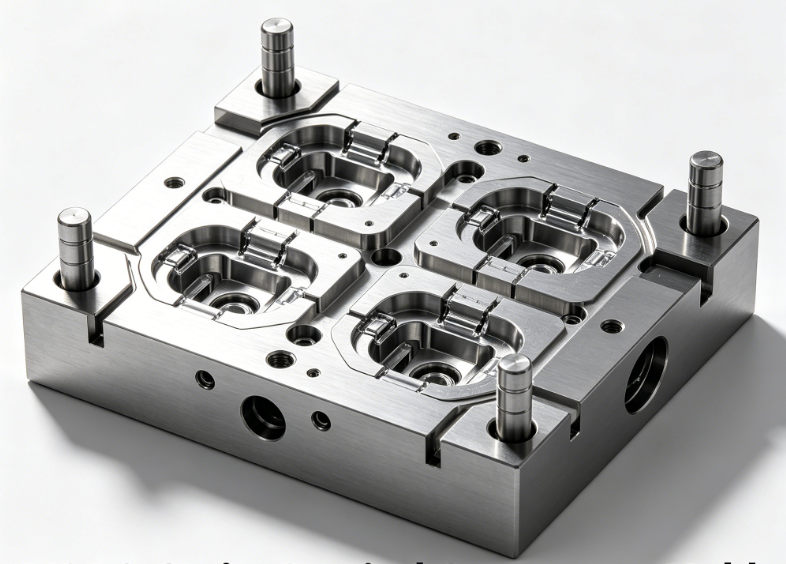
1: US Medical OEM | S136 8-Cavity Surgical Component Mold (±0.005mm, 1M Shots)
- Challenge: 8 cavities, ±0.005mm tolerance, 1M+ shots, Ra ≤0.08μm. Previous supplier’s mold drifted 0.02mm at 120k shots, 25% scrap.
- Zorapid Solution: S136 steel + vacuum heat treat + dual stress relief + conformal cooling + 5-axis ultra-finish + DLC coating.
- Result: ±0.003mm stability at 1.1M shots, Ra 0.07μm mirror finish, zero drift, zero scrap, FDA-compliant.
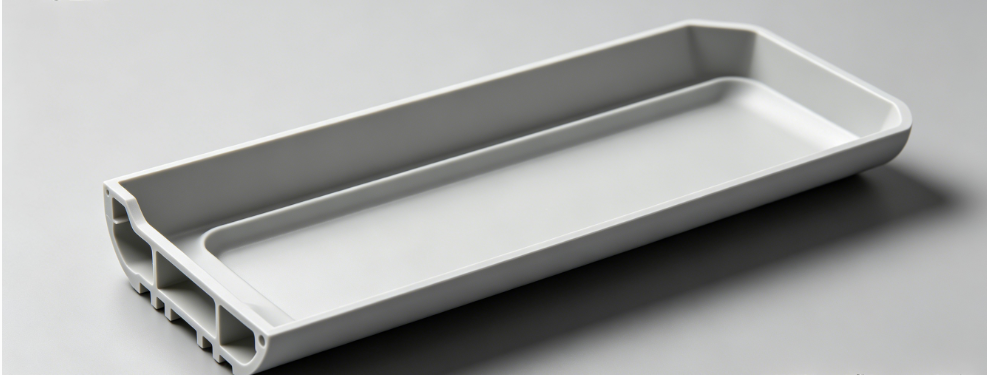
2: German Automotive OEM | H13 Thin-Wall Bumper Cavity (0.8mm Walls, No Bowing)
- Challenge: 0.8mm thin walls, 800mm × 450mm cavity, flatness ±0.003mm, 700k shots. EU shop’s cavity bowed 0.03mm after 40k shots, 30% scrap.
- Zorapid Solution: H13 steel + dual stress relief + trochoidal milling + short rigid tools + vacuum fixturing.
- Result: Zero wall bowing, flatness ±0.002mm, stable for 750k shots, perfect part fitment.
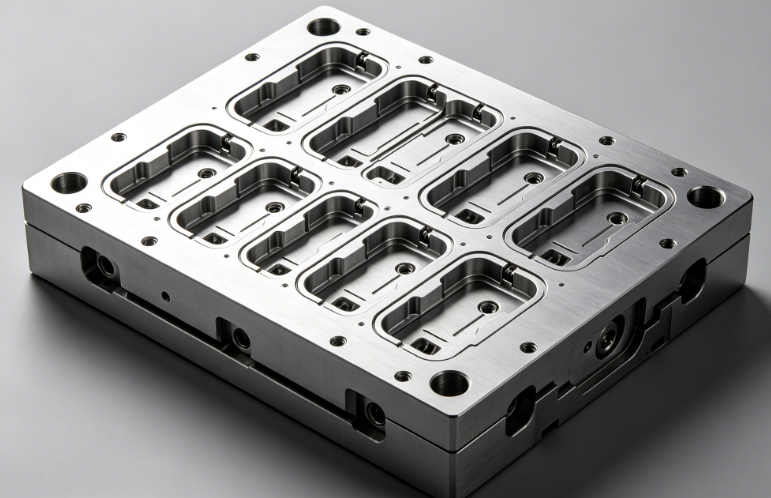
3: UK Consumer Electronics OEM | NAK80 16-Cavity Phone Accessory Mold (Identical Cavities)
- Challenge: 16 cavities, ±0.005mm inter-cavity variation, 500k shots. Local shop had 0.015mm variation, parts failed assembly.
- Zorapid Solution: NAK80 steel + single-batch vacuum heat treat + synchronized 5-axis milling + CMM 100% inspection.
- Result: All 16 cavities ±0.003mm identical, stable for 520k shots, 100% assembly pass rate.
Your Needs & Zorapid Solutions
We don’t just make molds—we lock your cavity/core tolerances stable for millions of shots. Below are the top 5 client stable-tolerance needs and our tailored Zorapid solutions:
1: Long-Term Stability (1M+ Shots, ±0.005mm)
- Your Requirement: Critical medical/optical parts, zero drift, minimal rework, full compliance.
- Zorapid Solution: S136/2344 steel + vacuum heat treat + dual/triple stress relief + conformal cooling + DLC/CrN coating.
- Outcome: ±0.003mm stability at 1M+ shots, Ra 0.05–0.08μm mirror finish, <2% rework, full material/inspection docs.
2: Thin-Wall Cavities (0.8–1.5mm, No Bowing/Warping)
- Your Requirement: Automotive/consumer parts, straight walls, tight flatness, no deflection.
- Zorapid Solution: H13/NAK80 steel + dual stress relief + trochoidal milling + short rigid tools + vacuum fixturing.
- Outcome: Zero wall bowing, flatness ±0.002mm, stable for 700k+ shots, perfect part geometry.
3: Multi-Cavity Consistency (8–16 Cavities, Identical Dimensions)
- Your Requirement: High-volume electronics, identical cavities, perfect assembly, low scrap.
- Zorapid Solution: NAK80 steel + single-batch heat treat + synchronized 5-axis toolpaths + CMM 100% inspection.
- Outcome: ±0.003mm inter-cavity variation, stable for 500k+ shots, 100% assembly pass rate.
4: Optical-Grade Ultra-Smooth Cavities (Ra ≤0.05μm)
- Your Requirement: Lens/light guide parts, no polishing marks, ultra-mirror finish, consistent clarity.
- Zorapid Solution: S136 steel + 5-axis ultra-finish + 6-step diamond polish + dust-free cleanroom finishing.
- Outcome: Ra 0.04–0.05μm mirror finish, zero marks, stable for 1M+ shots, perfect optical clarity.
Need 5: Large Deep-Cavity Molds (≥800mm, Uniform Tolerance)
- Your Requirement: Automotive/industrial parts, uniform tolerance across large surfaces, no edge drift.
- Zorapid Solution: 2344 steel + triple stress relief + large-format 5-axis + conformal cooling + thermal mapping.
- Outcome: Uniform ±0.004mm tolerance, no edge drift, stable for 600k+ shots, perfect large-part quality.
Industry Data + Future Trends (2026–2030)
Global Precision Mold Stability Snapshot (2026)
| Metric | Data | Source |
|---|---|---|
| Global Precision Mold Market | USD 173.9 Billion | China Mold Industry Association |
| Cavity/Core Drift-Related Rework | 20–40% (generic shops) | Zorapid Industry Survey |
| Stable Tolerance Life (Zorapid vs. Generic) | 5–10× longer | IMRI Global Mold Report |
| High-Volume (1M+ Shot) Mold Demand Growth | 14.2% CAGR (2026–2030) | Grand View Research |
| Top Stability-Critical Applications | Medical (35%) > Automotive (30%) > Electronics (20%) | AMS Industry Report |
| Ultra-Smooth (Ra ≤0.05μm) Mold Demand | 18.5% CAGR | SPI Plastics Industry Trade Association |
| Cost of Drift-Related Scrap/Rework | $1.20–$3.50 per part | YP-MFG Cost Analysis |
Key Future Trends + Zorapid’s Position
- Stability Becomes Non-Negotiable for High-Volume Molds
- Medical/automotive OEMs mandate 1M+ shot stability with ≤±0.005mm drift; generic molds phased out for critical parts.
- Zorapid: 100% of high-volume jobs include stability guarantee + 1M shot warranty.
- AI-Driven Thermal/Stress Simulation & Compensation
- AI analyzes real-time mold temperature/stress data, auto-adjusts cooling and parameters to eliminate drift; extends stable life an extra 20–30%.
- Zorapid: Proprietary AI stability monitoring system + real-time thermal compensation for every mold.
- Conformal Cooling + 3D Printing for Complex Cavities
- 3D printed conformal cooling inserts eliminate hot spots, reducing thermal drift by 40–50%; becomes standard for deep/thin-wall cavities.
- Zorapid: In-house metal 3D printing for conformal cooling inserts—integrated into all complex mold projects.
Application Scenarios
Stable cavity/core precision powers critical parts across medical, automotive, consumer electronics, optical, and industrial sectors. Here are the most common high-stability applications:
Medical Devices
- Surgical instrument housings (1M+ shots, Ra ≤0.08μm)
- Implantable component molds (biocompatible S136, ±0.005mm)
- Diagnostic cartridge cavities (multi-cavity, consistent dimensions)
Automotive
- Thin-wall bumper/fascia cavities (0.8–1.2mm walls, no bowing)
- Engine sensor housings (high heat resistance, H13 steel)
- EV battery tray molds (large deep cavities, uniform tolerance)
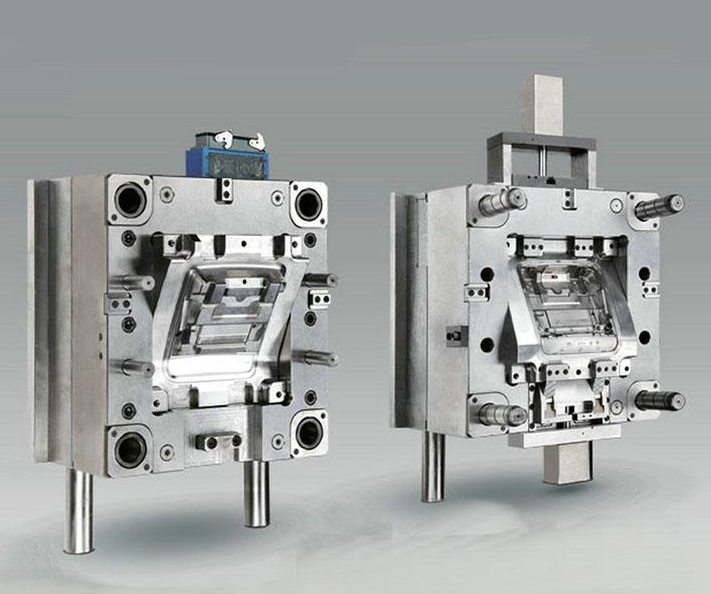
Consumer Electronics
- Phone/tablet accessory molds (16-cavity, identical dimensions)
- Wearable device enclosures (ultra-smooth, Ra ≤0.1μm)
- Connector housings (tight tolerance, high volume)
Optical Components
- Camera lens molds (Ra ≤0.05μm, zero polishing marks)
- LED light guide cavities (uniform clarity, no defects)
- Projector lens housings (high precision, stable for 1M shots)
Industrial & Consumer Goods
- High-volume plastic containers (multi-cavity, consistent wall thickness)
- Power tool housings (impact-resistant, stable dimensions)
- Home appliance components (large cavities, uniform tolerance)
Delivery Speed Advantage
Precision mold projects are always time-sensitive—delays mean missed product launches, production gaps, and lost revenue. Our streamlined stable-tolerance process + in-house expertise cuts lead times by 30–40% vs. generic shops.
Standard Lead Times (1–16 Cavities, Stable-Tolerance Mold)
| Complexity | Zorapid Stable Mold Process | Generic Mold Shop (Drift Risk) |
|---|---|---|
| Simple (2–4 Cavities, Standard Geometry) | 3–4 weeks | 5–6 weeks |
| Medium (8 Cavities, Thin Walls) | 4–5 weeks | 6–7 weeks |
| Complex (16 Cavities, Optical/Deep Cavity) | 5–6 weeks | 8–10 weeks |
| Emergency Rush (1–2 Cavities, Critical Launch) | 10–14 days | 3–4 weeks |
Why we’re faster:
- In-house full capabilities: Design, simulation, machining, heat treat, polishing, inspection—no outsourcing delays.
- Pre-optimized stable processes: No trial-and-error, every step locked for speed and precision.
- 24/7 unmanned machining: Overnight hard milling, no downtime.
- Zero rework: Stability engineered in from day one—no time wasted fixing drift.
Real example: A medical client needed an 8-cavity S136 mold in 4 weeks for a product launch. Generic shops said 6+ weeks—we delivered in 3.5 weeks, with full stability guarantee.
Why Choose Zorapid for Stable Cavity/Core Molds
- 20+ Years of Stability Expertise: 8,000+ stable precision molds delivered, 1M+ shot track record, deep thermal/stress engineering knowledge.
- Zero Drift Guarantee: ±0.003mm cavity/core stability for 1M+ shots, locked in with engineering, not luck.
- Premium Materials + Precision Processing: S136/NAK80/H13/2344 steels, vacuum heat treat, dual/triple stress relief, 5-axis ultra-finish.
- Ultra-Smooth Mirror Finishes: Ra 0.05–0.1μm consistent, standardized diamond polish, zero handwork variation.
- Impossible Job Solvers: Thin walls, multi-cavity consistency, optical grades, large deep cavities—we handle what others can’t.
- 30–40% Faster Lead Times: In-house full capabilities, pre-optimized processes, 24/7 unmanned machining.
- English-speaking engineers, 24-hour response, DFM/stability reviews in your timezone, full compliance documentation.
Final Summary
Cavity/core tolerance drift isn’t inevitable—it’s a process and engineering failure. The secret isn’t better polishing or harder steel—it’s thermal/stress engineering, precision hard milling, controlled finishing, and premium materials working together.
Zorapid’s stable cavity/core mold process eliminates your biggest precision pain points:
- Zero drift for 1M+ shots (±0.003mm locked tolerance)
- Ultra-smooth mirror finishes (Ra 0.05–0.1μm, consistent)
- Thin walls that never bow (0.8mm+ flatness ±0.002mm)
- Multi-cavity perfect consistency (±0.003mm inter-cavity variation)
- 30–40% faster lead times (no rework, no outsourcing delays)
Whether you need a medical-grade 8-cavity mold, an automotive thin-wall cavity, an optical ultra-smooth lens mold, or a high-volume consumer electronics multi-cavity mold—Zorapid is your trusted partner for stable, drift-free cavity/core precision that lasts.
FAQ
How much more does a stable-tolerance mold cost vs. a generic mold?
Upfront 15–25% higher, but total cost 40–60% lower. Zero drift, minimal rework, longer mold life, and consistent part quality save you money long-term.
Can you really guarantee 1M+ shot stability?
Yes. We engineer stability in with thermal/stress simulation, premium steel, dual/triple stress relief, and protective coatings. Every mold comes with a written 1M shot stability warranty.
What’s the maximum cavity size you can make with uniform stability?
Up to 1000mm × 800mm with our large-format 5-axis machines and conformal cooling design. We’ve delivered stable molds for 800mm × 500mm automotive cavities.
Do you offer DFM/stability reviews before mold making?
Absolutely. Our engineers provide free thermal/stress DFM reviews, including cavity/core design optimization, cooling strategy, and material selection—before you commit to production.
How do you verify cavity/core stability before shipping?
We perform CMM 100% inspection of all critical dimensions, surface roughness testing at multiple points, and thermal cycling simulation to validate stability. Full inspection reports are provided with every mold.