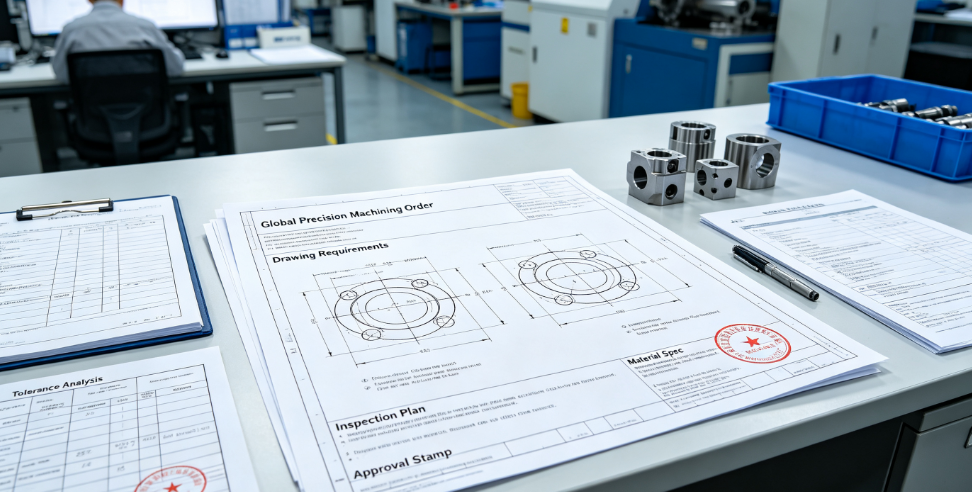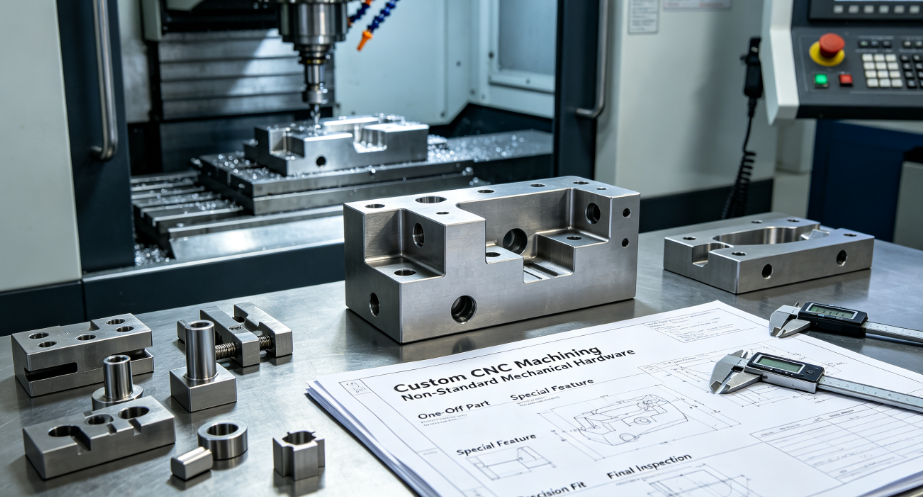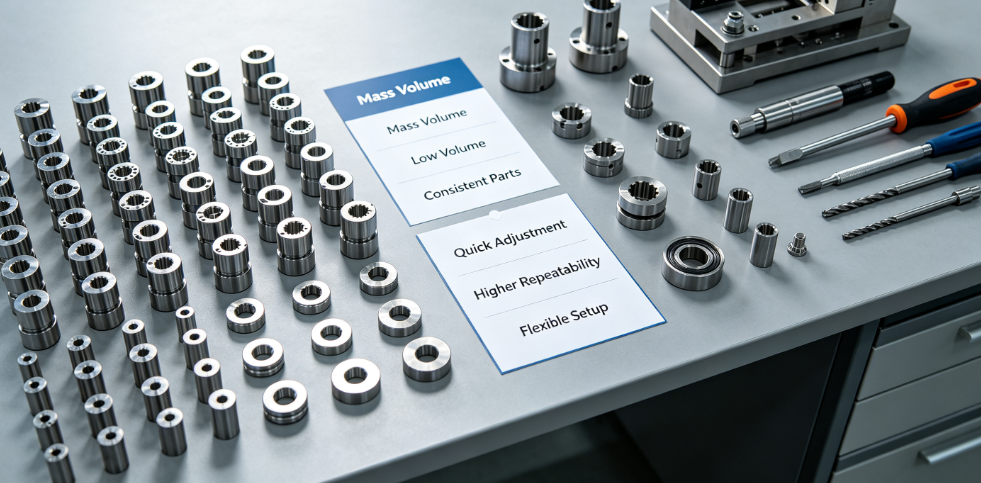
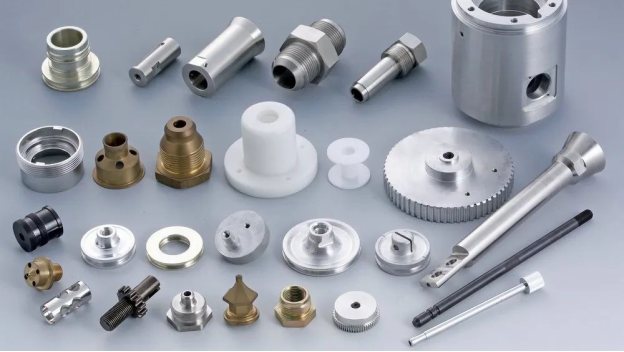
In high-end equipment, aerospace, medical devices and other industries, the manufacturing capability of precision components directly determines the core performance of products.
Zorapid is deeply engaged in precision manufacturing. Supported by a flexible production system, micron-level precision control, and full-process quality management, we break the batch limitations of traditional manufacturing.
We support one-piece prototype development and also undertake mass production at the ten-thousand-piece scale.
We specialize in overcoming high-difficulty, complex, ultra-precision bottleneck parts — what others cannot manufacture, we deliver with professional expertise.
Core Technologies in Precision Manufacturing: All-Dimensional Breakthroughs from Process to Precision
Flexible Production Architecture: Seamless Connection Between Low-Volume and Mass Production
Traditional manufacturing faces the pain point of low volume being uneconomical and high volume being unachievable. Zorapid has built a flexible production system featuring multi-equipment cluster + digital scheduling + modular tooling, which completely solves the problem of batch adaptation.
Equipment Configuration: We integrate 3-axis/4-axis/5-axis CNC machining centers, Swiss-type lathes, slow-feed wire EDM, laser cutting, and SLM metal 3D printing equipment, covering the full production range from 1 piece to 100,000 pieces. High-precision standalone machines are used for rapid prototyping in small batches, while automated production lines are activated for linked mass production, with flexibly adjustable capacity.
Standardized Processes: We have established a proprietary process database. For more than 20 materials including aluminum alloy, titanium alloy, stainless steel, and nickel-based alloy (Inconel 718), we solidify parameters such as cutting speed, feed rate, and spindle speed. Parameters from small-batch prototyping can be directly reused in mass production, with a batch consistency error ≤ 0.01 mm.
Modular Tooling: The combination of universal fixtures and dedicated positioning modules reduces production changeover time to within 30 minutes. Compared with traditional dedicated tooling, small-batch production costs are reduced by 40% and mass production efficiency is increased by 50%.
Micron‑Level Precision Control: Breaking Technical Barriers for High‑Difficulty Components
Precision components are defined by accuracy. Zorapid focuses on solving manufacturing challenges for parts with complex structures, ultra‑thin walls, tight tolerances, and difficult‑to‑machine materials, delivering on the promise: What others cannot make, we can; what others make poorly, we make perfectly.
Precision Standards:
- Standard parts: Tolerance controlled at ±0.02 mm
- Critical precision parts: Tolerance up to ±0.005 mm
- Surface roughness: Ra ≤ 0.8 μm
- Fully compliant with industry certifications including ISO 13485 and AS9102
Breakthroughs in High-Difficulty Processes
Ultra-thin Wall MachiningFor parts with wall thickness ranging from 0.1mm to 0.5mm, we adopt low-speed high-rigidity cutting + constant-temperature machining to control thermal deformation and effectively avoid structural collapse and dimensional distortion.
Complex Cavity / Deep Hole MachiningAdopting 5-axis simultaneous machining technology to complete multi-surface processing in a single clamping. High-frequency vibration chip removal technology is applied to deep hole machining, solving common issues such as hole position deviation and excessive surface roughness.
Difficult-to-Machine Material MachiningFor high-hardness materials including titanium alloy and nickel-based superalloy, we use special coated cutting tools together with a high-pressure cooling system to reduce tool wear, improve machining stability, and resolve the industry pain points of difficult processing and high rejection rates.
Environmental and Equipment Assurance
The production workshop maintains a constant temperature of 22℃±0.5℃, constant humidity and anti-vibration conditions. All equipment is calibrated regularly: spindle precision is inspected daily, and CMM coordinate measuring machines complete annual certification. This eliminates precision errors caused by thermal deformation and equipment drift at the source.
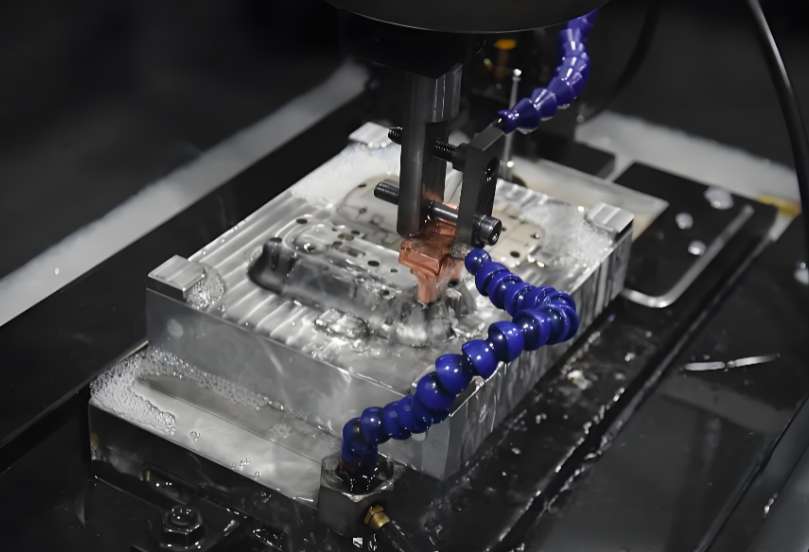
Full-Process Quality Control: Zero-Defect Assurance from Raw Material to Shipment
Quality is the lifeline of precision manufacturing. Zorapid has established a closed-loop quality system of Three-Inspection System + Digital Traceability + Full-Dimension Inspection, ensuring no non-conforming products are delivered.
Incoming Quality Control (IQC): Before raw materials are put into storage, we verify material certificates, hardness and surface quality to prevent inferior raw materials from entering production.
In-Process Quality Control (IPQC): Full-dimensional inspection of the first article with 100% verification against 2D/3D drawings. Key dimensions are sampled every hour during production, supported by SPC statistical process monitoring to provide early warning of dimensional drift.
Final Quality Control (FQC): Full-dimensional inspection is conducted using Coordinate Measuring Machines (CMM), vision measuring instruments, roughness testers and other precision equipment. Inspection reports are issued, and products are only shipped after 100% compliance is confirmed.
Digital Traceability: Each batch of parts is assigned a unique QR code that records raw material batch information, processing equipment, operator data and inspection results. The entire production process is fully traceable, enabling rapid identification of the root cause of any quality issue.
Five Core Advantages of Choosing Zorapid
Unlimited Production Batch
Support orders starting from 1 piece, capable of handling both small-batch and large-batch production.
We break the unspoken industry rule of declining small orders and struggling with mass orders, with no Minimum Order Quantity (MOQ).
We provide rapid prototyping for 1–10 pieces in the R&D phase, flexible production scheduling for 10–100 pieces of small-batch trial production, and stable delivery for mass production ranging from 100 to 10,000 pieces. deliver optimal cost efficiency and maximum productivity across all batch sizes.
echnical Strength: Tackling High-Difficulty Parts That Others Cannot Manufacture
We specialize in solving manufacturing challenges for parts featuring complex structures, ultra-high precision, and difficult-to-machine materials:
Complex Structures
For multi-curved, special-shaped, and interlaced inner-cavity parts, we adopt 5-axis simultaneous machining combined with 3D printing hybrid technology to achieve one-step forming without repeated clamping.
Ultra-High Precision
We deliver micron-level machining capability for precision gears, micro shafts, and medical implants with tolerances down to ≤0.01 mm, fully meeting stringent assembly requirements.
Difficult-to-Machine Materials
For high-hardness materials such as titanium alloy, nickel-based superalloy, and hardened steel, we deploy customized processes and high-end equipment to solve industry pain points including low machining efficiency and high rejection rates.
Fast Delivery: 3–5 Days for Prototyping, 7–15 Days for Mass Production
Equipped with a digital production scheduling system, we dynamically adjust order priorities and cut unnecessary waiting time:
Small-batch prototyping
Delivered in 3–5 days, 30% faster than the industry average.
Mass production
Delivered in 7–15 days. With sufficient production capacity, we support expedited manufacturing for urgent orders.
Full-process transparency
Production progress is updated in real time. Customers can check the machining and inspection status anytime, effectively avoiding delivery delays.
Cost Control: Flexible Production + Process Optimization, Industry-Leading Cost Performance
Small-batch production
Adopting modular tooling and general-purpose equipment eliminates high investment in custom molds, cutting prototyping costs by 40%.
Mass production
Automated production lines and standardized process parameters boost productivity by 50%. Unit cost decreases with larger order volumes, delivering higher cost performance.
No hidden charges
Transparent pricing covers machining, inspection and packaging fees entirely. No extra fees will be charged midway, keeping your costs fully under control.
One-Stop Service: Worry-Free Support from Design Optimization to After-Sales
Design Optimization
Professional DFM manufacturability analysis avoids design flaws in advance, reducing machining difficulty and overall costs.
Full Process Coverage
One-stop services including CNC machining, 3D printing, surface treatment (anodizing, electroplating, sandblasting), and assembly. No need to coordinate with multiple suppliers.
After-Sales Guarantee
We provide long-term quality assurance after delivery. For non-human-induced quality issues, free rework or remanufacturing is offered, with full-cycle professional technical support available at all times.
Practical Cases of Precision Parts Manufacturing
Aerospace – IN718 Nickel-Based Superalloy Rocket Engine Nozzle Housing
Industry: Aerospace / Rocket Engine
Batch: 5 R&D prototypes in the initial stage → 50 pieces for small-batch trial production → Stable medium-batch supply all year round
Material: Inconel 718 (nickel-based superalloy, difficult to machine and prone to deformation)
Precision Requirements:
Irregular outer shape, complex inner cavity, and mounting holes with multiple inclined surfaces.
Overall tolerance: ±0.01 mm; critical hole position tolerance: ±0.005 mm.
High temperature and high pressure resistance; no cracks or deformation on welds and structural surfaces.
Customer Pain Points (What Competitors Cannot Achieve):
Multiple manufacturers declined the order after assessment, citing the material being overly hard, complex structural design, inevitable machining deformation, and a yield rate lower than 30%.
Lacking 5-axis simultaneous machining capability and constant-temperature workshop conditions, they are unable to control thermal deformation effectively.
Zorapid Technical Solution:
Adopt 5-axis simultaneous integral machining to complete all special-shaped surfaces and multi-angle holes in a single clamping setup.
Equipped with a constant-temperature workshop at 22℃±0.5℃, dedicated superalloy cutting tools, and high-pressure internal cooling system.
Adopt step-by-step stress relief: rough machining → stress relief aging → finish machining, controlling deformation within 0.008 mm.
Full-dimensional inspection via CMM coordinate measuring machine, plus ultrasonic flaw detection.
Results:
The first article passed inspection at one time, with a mass production yield rate of 98.5%.
Delivery cycle: 5 days for prototypes, 10 days for batch orders.
We have become the exclusive stable supplier for this model of rocket engine.
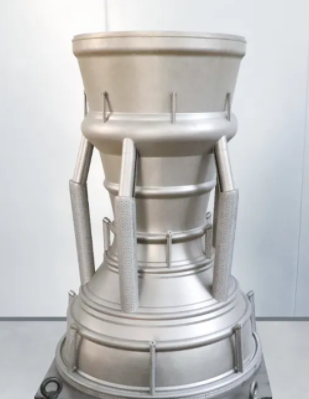
Semiconductor Equipment – 6061-T6 Aluminum Alloy RF Shielding Cavity
Industry: Semiconductor / 5G RF Equipment
Batch: Small batch (30 units) → Mass production (5,000 units monthly)
Material: 6061-T6 aluminum alloy (prone to deformation, multi-hole layout, thin-wall structure)
Precision Requirements
Wall thickness: 0.8 mm; Flatness: 0.02 mm
12 pieces of 4-40 UNC imperial threaded holes with no thread slipping and no deformation
Surface anodizing with controllable conductivity and insulation performance
Customer Pain Points (Unachievable by Peers)
Thin-wall structure with dense holes causes flatness deformation of 0.1–0.2 mm after machining, accompanied by severe thread slipping.
Poor dimensional consistency in mass production fails to meet the assembly standards of semiconductor equipment.
Zorapid Technical Solution
Custom thin-wall tooling + staged machining: Roughing → Stress relief aging → Finishing
Layered thread tapping with low speed and flexible taps to achieve zero thread slipping
Full re-inspection before and after anodizing, keeping flatness steadily within ≤0.015 mm
Results
Mass production yield reaches 99.2% with excellent dimensional consistency.
Zorapid has become the core qualified supplier for this semiconductor equipment manufacturer.
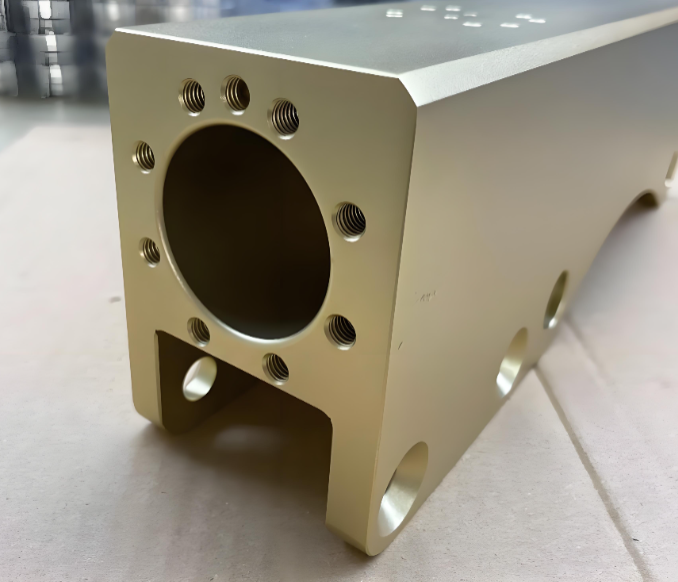
These cases fully reflect Zorapid’s core strengths:
- Materials others cannot process: Inconel, titanium alloy, PEEK, 17-4PH stainless steel
- Structures others cannot manufacture: Thin walls, irregular profiles, deep holes, internal gear teeth, complex curved surfaces
- Precision others cannot reach: Tolerance down to ±0.005 mm, surface roughness Ra ≤ 0.2 μm, and consistent accuracy across batches
- Full batch capability: From 1-piece prototyping to large-scale mass production
- Guaranteed quality & delivery: Yield rate maintained at 95%–99%, with lead times of 3–10 days
Common Problems and Solutions in Precision Parts Manufacturing
1. Dimensional Out-of-Tolerance
(Highly prevalent in the industry, accounting for 60% of all quality issues)
Causes: Thermal deformation, tool wear, clamping errors, and ambient temperature fluctuation.
Zorapid Solution:
Constant-temperature workshop keeps temperature deviation within ≤0.5℃; real-time tool wear monitoring with timely tool replacement; high-precision tooling adopted to complete multi-surface machining in one clamping and minimize clamping errors.
2. Unqualified Surface Roughness
(Excessive Ra value and obvious tool marks)
Causes: Unreasonable cutting parameters, dull cutting tools, and machining vibration.
Zorapid Solution:
Optimize cutting speed and feed rate; adopt high-sharpness coated tools; install anti-vibration pads on equipment and avoid resonant rotating speed to eliminate vibration marks.
3. Poor Batch Consistency
(Prototypes pass inspection, while mass-produced parts go out of tolerance)
Causes: Unstandardized processes, lack of in-process monitoring, and delayed tool replacement.
Zorapid Solution:
Solidify standardized machining parameters and implement full-process SPC monitoring during mass production; perform full inspection on the first article plus periodic sampling inspection, with 100% checking on critical dimensions to guarantee consistent quality across batches.
4. High Rejection Rate of Difficult-to-Machine Materials
(Titanium alloy, nickel-based superalloy, etc.)
Causes: Rapid tool wear, high cutting temperature, and poor chip removal.
Zorapid Solution:
Adopt dedicated carbide tools paired with a high-pressure cooling system to lower cutting temperature; optimize tool paths and apply high-frequency vibration chip removal to reduce tool wear, keeping the rejection rate within 1%.
5. Delivery Delay (Common Industry Pain Point)
Causes: Disordered production scheduling, equipment failure, and rework due to quality issues.
Zorapid Solution:
Deploy a digital scheduling system for dynamic order arrangement; conduct regular equipment maintenance with early fault warning; implement strict in-process quality control to minimize rework and ensure on-time delivery.
Summary
Precision parts manufacturing ultimately competes on technical capability, dimensional accuracy, quality consistency and delivery reliability.
Backed by a flexible production system, micron-level precision control, full-process quality management and ultra-fast delivery services, Zorapid breaks the traditional batch barriers of conventional manufacturing. We support small-batch R&D prototyping, stable large-volume mass production, and excel at tackling high-difficulty parts that most manufacturers cannot produce.
Choosing Zorapid means partnering with a precision manufacturing supplier that delivers solid technical support, reliable quality, on-time delivery and controllable costs. We enable worry-free product development from R&D to mass production, helping you seize market opportunities with a competitive edge.