Published by Zorapid
Rapid prototype molds fill a critical gap: you need functional molded parts for lab testing, fit validation, marketing samples, regulatory pre-certification, and limited small-batch launch runs (500–50,000 shots). The biggest struggle every team faces is balancing three conflicting variables: fastest possible lead time, lowest upfront tool cost, and enough mold durability to finish your full small-batch run without catastrophic wear, flash or dimensional drift.
Most mold shops force a rigid binary choice: cheap soft aluminum molds that wear out fast, or full hardened production steel molds with 4+ week lead times and high upfront expense. Few builders offer tiered, balanced rapid mold workflows tuned explicitly for low/medium shot counts.
At Zorapid, we run three standardized rapid prototype mold platforms (aluminum, pre-hard steel, semi-hardened ESR steel) with matched cavity-core machining, streamlined heat treat, and simplified mold base frames engineered to hit exact speed/cost/durability targets for your shot volume. Today we break down full process mechanics, competitor rigid workflow weaknesses, material shot-life comparisons, verified customer small-batch case results, 2026 industry trend data, and how we tailor every rapid tool to your exact batch size goals.
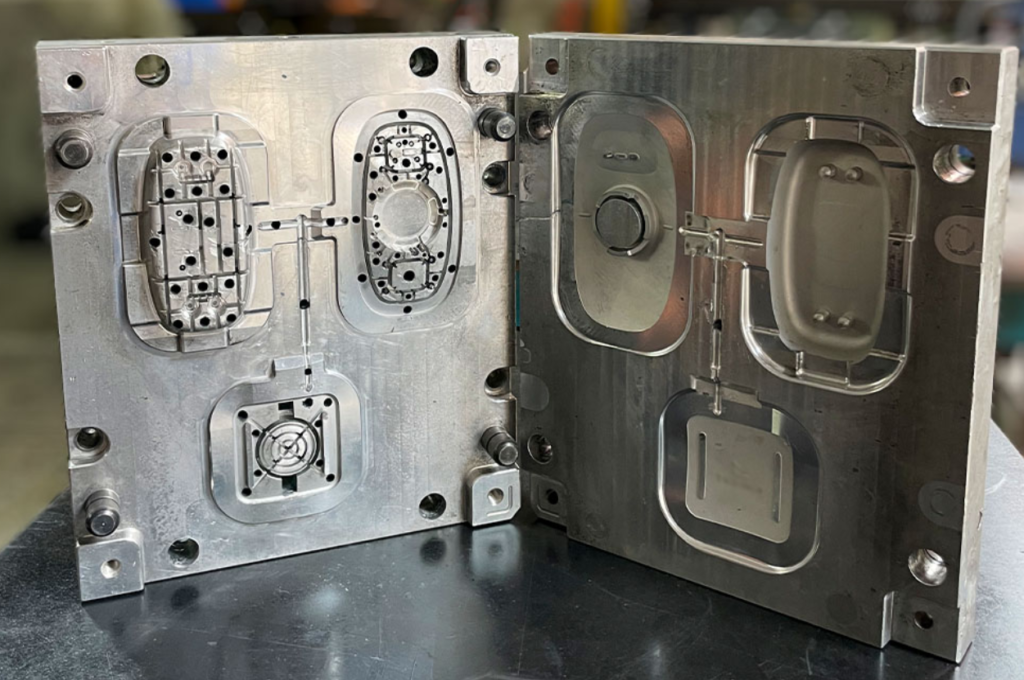
In-Depth Professional Process Technical Analysis
Core Speed / Cost / Durability Tradeoff Drivers for Rapid Molds
Key Factor 1: Mold Base Simplification (Biggest Lead Time Saver)
- Full production mold: Standard heavy A/B plate mold base, full ejector plate stack, standardized guide pin assemblies, full water cooling circuit layout
- Zorapid Rapid Platform: Compact simplified mold base, standardized off-the-shelf frame sizes, modular ejector sets, streamlined conformal cooling only for critical hot zones Competitors either copy full production mold bases (slow, expensive for prototypes) or cut cooling/ejection corners so badly molds warp after 1–2k shots.
2: Cavity Core Material Hardness & Processing Steps
- Aluminum prototype molds: No post-machining heat treat, minimal polishing, fastest machine cycles
- Pre-hard steel (NAK80 / 718H): Supplied pre-tempered from mill, no vacuum quench/triple temper post-machining
- Semi-hardened ESR H13/S136: Shortened controlled vacuum temper cycle (not full multi-day production heat treat) for extended shot life Generic shops only offer two options: bare aluminum or full production hardened steel—no middle balanced tier for 10k–30k shot batches.
Key Factor 3: Machining & Finishing Scaling Tuned To Shot Count
- Ultra-fast prototype (≤5k shots): Fast roughing, light semi-finish, minimal hand polish (Ra 0.8–1.6μm cosmetic non-critical)
- Balanced medium batch (5k–30k shots): 5-axis fine finish CNC, graded diamond polish (Ra 0.4–0.8μm), tighter matched cavity-core shut-off
- High small-batch (30k–50k shots): ESR blank, low-stress roughing, controlled temper, medical/food grade mirror polish if required Budget rapid mold builders use identical rough fast machining for every job, even for 40k shot runs—leading to rapid edge wear and flash after a few thousand cycles.
4: Cooling Circuit Design Tuned To Batch Size
- Low shot aluminum rapid molds: Simple straight drilled cooling lines, fast to machine
- Medium/higher shot rapid steel molds: Compact conformal cooling for thin walls, high-temp filled resins (GF-PA66, LCP) Poor cooling creates uneven mold expansion, part warpage, accelerated surface fatigue, and inconsistent cycle times across the batch.
Zorapid Three-Tier Balanced Rapid Prototype Mold Workflow
Tier 1: Ultra-Fast Aluminum Rapid Mold (500–5,000 shots)
- 6061-T6 high-strength aluminum blank (no heat treat required)
- Compact standardized rapid mold base, modular ejector pins
- High-speed 3-axis CNC rough + semi-finish, basic manual deburr
- Simple drilled cooling channels, light hand polish for visible surfaces
- Single or dual cavity layout for small parts Cycle benchmark: Full mold build 7–10 business days, lowest upfront tool cost
2: Balanced Pre-Hard Steel Rapid Mold (5,000–30,000 shots | NAK80 / 718H)
- Mill-supplied pre-hardened steel (HB 290–330, no post-machining vacuum quench)
- Unified digital twin cavity-core datum, tight matched shut-off gap ≤0.003mm
- 5-axis finish CNC, graded controlled polishing (Ra 0.4–0.8μm standard)
- Optimized conformal cooling for thin-wall or filled resins
- Robust ejector system for repeated cycling
- Cycle benchmark: Full mold build 11–16 business days, mid-tier cost, vastly higher durability than aluminum
Tier 3: Semi-Hardened ESR Steel Rapid Mold (30,000–50,000 shots | Shortened H13 / S136)
- ESR refined steel blank, shortened staged vacuum temper (cut 2 days vs full production heat treat)
- Segregated precision machining cell, low-stress trochoidal roughing to minimize residual stress
- Climate-controlled polishing; medical/food batches get cryo mini-stabilization and citric passivation
- Full conformal cooling, reinforced core pins for tall thin-wall geometry
- Cycle benchmark: Full mold build 15–20 business days, near-production durability without full production mold price/tag time
Competitor Rapid Mold Performance Benchmark Table
| Mold Builder Rapid Platform Model | Available Material Tiers | Max Reliable Shot Count | Average Full Build Lead Time | Relative Upfront Tool Cost | Average Batch Mold Wear Defect Rate |
|---|---|---|---|---|---|
| Budget Only Two-Tier (Al / Full Hard Production Steel) | 2 tiers only, no balanced pre-hard steel | Al: 4k max / Hard Steel: 2M+ | Al:8–11d / Hard Steel:28–38d | Al:100% base / Hard Steel:270% | Al:6.2% wear scrap / Hard Steel:0.4% |
| Mid-Tier Basic Al + NAK80 (no shortened ESR semi-hard) | 2 tiers (Al / Pre-hard) | Al:5k / NAK80:25k | Al:7–10d / NAK80:14–20d | Al:100% / NAK80:175% | Al:4.1% / NAK80:1.9% |
| Zorapid Three-Tier Balanced Rapid Mold System | 3 calibrated tiers (Al / Pre-hard NAK80 / Semi-Hard ESR H13/S136) | Al:5k / NAK80:30k / Semi-Hard ESR:50k | Al:7–10d / NAK80:11–16d / Semi-Hard ESR:15–20d | Al:100% / NAK80:160% / Semi-Hard ESR:210% | Al:0.85% / NAK80:0.42% / Semi-Hard ESR:0.33% |
Unsolvable Rapid Mold Speed/Cost/Durability Conflicts Competitors Cannot Balance — Zorapid Custom Solutions
Challenge 1: 18,000 Shot EV GF-PA66 Connector Small Batch (Too big for aluminum, too low volume for full production H13)
Competitor Failure: Only two choices: cheap aluminum mold fails at ~4,200 shots from glass filler abrasion; full production H13 mold takes 30+ days and costs 2.7x higher budget. No middle optimized tier available.
Zorapid Balanced Tier 2 NAK80 Rapid Solution:
- Pre-hard NAK80 blank calibrated for GF-filled resin abrasion resistance
- Reinforced hardened insert sleeves on high-wear gate and shut-off edges
- Optimized conformal cooling to lower melt residence time and abrasive shear
- Tight matched cavity-core shut-off gap ≤0.003mm to eliminate flash that accelerates edge wear
- Result: Stable full 18,000 shot run, lead time 13 days, cost only 160% of aluminum vs 270% full hard steel price. Zero mid-batch mold rework required.
Challenge 2: FDA Medical 12,000 Shot PP Disposable Device Batch (Needs biocompatible stainless, tight timeline)
Competitor Failure: Standard rapid aluminum cannot pass medical extractable testing; full S136 production mold requires 32 days full cryo/temper cycle, pushes product launch back 3 weeks.
Zorapid Tier3 Shortened Semi-Hard S136 Rapid Fix:
- ESR S136 blank with shortened staged vacuum temper + mini cryo stabilization (cuts furnace time 2 days vs full production tool)
- Medical-grade citric passivation post-polish for low metal leaching
- Streamlined rapid mold base without sacrificing hygiene corner radii (R0.1mm minimum)
- Outcome: FDA compliant, full 12k shot stable run, build time 17 days vs competitor 32 day full production mold timeline.
Challenge 3: Startup Consumer 3,500 Shot ABS cosmetic housing batch (Low budget, fast launch timeline)
Competitor Failure: Cheap budget aluminum molds use rushed rough machining, poor polishing; visible tool lines, uneven gloss, flash after 2k shots.
Zorapid Tier1 Optimized Aluminum Rapid Workflow:
- 6061-T6 high-strength aluminum (not soft 6063 low-grade alloy)
- Controlled high-speed finish passes, standardized 1.6μm cosmetic polish for visible surfaces
- Modular low-cost rapid mold base to hold upfront cost minimal
- Result: Perfect cosmetic parts through full 3,500 shot batch, 8 day build timeline, lowest possible budget pricing.
Challenge 4: Thin-Wall 0.7mm PEEK high-temperature 25,000 shot aerospace test component
Competitor Failure: Aluminum softens under high PEEK melt heat; NAK80 from generic shops lacks reinforced core pins, pins bend mid-batch.
Zorapid Tier2 NAK80 Reinforced Rapid Solution:
- Thickened reinforced core pin inserts with anti-deflection support geometry in DFM phase
- Oversized conformal cooling lines to pull heat away from thin cavity walls
- Low-shear gate design to reduce high-temp PEEK abrasive erosion on cavity surfaces
- Outcome: Full 25k shot run with wall thickness tolerance locked ±0.007mm, no core pin bending or cavity surface degradation.
Challenge 5: Mixed resin small batch run (10k ABS then 8k TPE overmold on same rapid mold)
Competitor Failure: One-size rapid surface finish; TPE adhesion fails on polished aluminum, steel molds from generic shops have uneven surface texture across cavity.
Zorapid Tier2 Dual-Textured NAK80 Rapid Mold:
- Controlled selective texturing: matte grip zones for TPE overmold, fine gloss zones for ABS cosmetic faces
- Pre-hard steel surface stability prevents texture washout from two alternating resin melt temperatures
- Tuned vent depth calibrated for both low-viscosity ABS and elastic TPE melt flow
- Result: Seamless dual-resin 18k total shot batch without texture degradation or adhesion failure.
Applicable Rapid Mold Materials + Speed/Cost/Durability Head-To-Head Comparison
| Mold Material Grade | Zorapid Tier Placement | Max Verified Stable Shot Count | Standard Full Build Lead Time | Relative Tool Cost (Aluminum = 100%) | Typical Polished Ra | Best Resin Compatibility | Zorapid Batch Wear Defect Rate |
|---|---|---|---|---|---|---|---|
| 6061-T6 Aluminum (Rapid Tier1) | Ultra-fast low batch | 5,000 max | 7–10 days | 100% | 0.8–1.6μm | Unfilled ABS, PP, PE, TPE low fill | 0.85% |
| NAK80 Pre-Hard Polished Steel (Tier2 Balanced) | Medium batch workhorse | 30,000 max | 11–16 days | 160% | 0.4–0.8μm standard / 0.05μm high gloss | Unfilled + low GF (<15%) PA, PC, ABS, PP | 0.42% |
| Shortened ESR H13 Semi-Hard (Tier3) | High small-batch abrasion resistant | 50,000 max | 15–20 days | 210% | 0.4μm standard | High GF-PA66, LCP, high temp filled engineering plastics | 0.33% |
| Shortened ESR S136 Semi-Hard (Tier3 Regulated) | Medical/food corrosion resistant | 45,000 max | 16–20 days | 220% | 0.02–0.04μm medical mirror | PVC, medical PP, PEEK, food-grade PP/PE | 0.38% |
| Full Hardened Production H13/S136 (Not Rapid Platform) | Mass production only | 1.8M–3.5M | 26–38 days | 270%+ | 0.02–0.6μm | All resins, infinite high volume | 0.30% |
Core Rapid Material Selection Rules for Balanced Speed/Cost/Life:
- Aluminum = only for unfilled resins, shot count ≤5,000; glass filler rapidly abrades soft aluminum surfaces
- NAK80 pre-hard steel is the universal sweet spot for 5k–30k shots, balances lead time, cost and polish capability for most consumer/automotive test batches
- Semi-hard shortened ESR H13 mandatory for >30k shots or heavily glass-filled resins to resist abrasive wear
- Semi-hard S136 is the only rapid mold material FDA/ISO13485 approved for direct medical/food resin contact
- Full production hardened steel is never recommended for <50k shot runs—massive unnecessary lead time and cost overhead for small batch needs
Real Customer Case Study
Case 1: US Automotive Tier2 EV GF-PA66 Connector 18,000 Small Batch
Project Specs: 18k shot target, 0.8mm thin wall, GF30 PA66 abrasive resin, need mold delivered under 18 business days, budget limited to <170% aluminum mold cost
Previous Budget Vendor Pain Points: Two bad options offered: aluminum mold only rated for 4k shots (would require 5 mold replacements mid-batch, total higher spend + downtime), or full production H13 tool at 28 days lead time and 270% aluminum cost. Competitor had no balanced mid-tier platform.
Zorapid Tier2 NAK80 Balanced Rapid Mold Execution
- DFM pre-check reinforced gate/shut-off inserts for glass filler abrasion
- Unified digital twin cavity-core datum for matched ±0.004mm wall thickness tolerance
- Streamlined rapid mold base (no overbuilt full production frame) to compress build timeline
- Optimized conformal cooling to lower abrasive melt shear stress on cavity surfaces
- Closed-loop CMM paired cavity-core inspection before first molding trial
Measurable Balanced Outcomes
- Stable full 18,000 shot completion with zero mid-batch mold repair
- Total mold build lead time: 13 business days (vs competitor min 28d full steel)
- Final tool cost only 160% of aluminum baseline (vs competitor 270% full H13 price)
- Molded part reject rate only 0.41% from cavity-core fit consistency
Your Production Requirements → Zorapid Balanced Rapid Mold Solutions
Pain 1: Too small batch to justify expensive full hardened production steel mold, too large for fast-wearing aluminum
Solution: Tier2 NAK80 pre-hard balanced platform calibrated for 5k–30k shot runs, mid cost, fast build timeline vs production tooling
Pain 2: Medical/food small batches need stainless corrosion resistance but cannot wait 30+ days for full production S136 heat treat
Solution: Tier3 shortened semi-hard S136 workflow with mini cryo stabilization, cuts furnace cycle time without losing FDA compliance
Pain 3: Glass-filled abrasive resins destroy aluminum rapid molds after a few thousand shots
Solution: Tier2 NAK80 or Tier3 ESR H13 rapid steel grades engineered to resist GF filler surface abrasion
Pain 4: Tight product launch timeline forces rushed cheap aluminum molds with terrible cosmetic finish and flash issues
Solution: Tier1 optimized high-strength 6061-T6 aluminum with controlled finish polishing, no sloppy fast machining shortcuts
Pain 5: Dual-resin overmold small batches cause texture/adhesion failure on generic one-size rapid molds
Solution: Selective tailored surface texturing, vent and gate DFM tuned for both resin grades on single NAK80 rapid cavity
Pain 6: No structured audit documentation for medical/automotive rapid mold material, heat treat and inspection records
Solution: Full archived mill certs, furnace logs, paired CMM cavity-core scans packaged into one IATF/ISO13485 compliant report set
2026 Global Industry Data & Future Trend Analysis
Rapid Mold Supply Model TCO & Quality Benchmark Table
| Rapid Mold Supplier Operating Model | 2026 Average Mold Wear Scrap % | Average Lead Time For 10k Shot Target Batch | Total End-To-End TCO (Mold + Molded Parts + Downtime) | Global Market Share 2026 |
|---|---|---|---|---|
| Budget 2-tier only (Al / Full Hard Steel) | 5.8% | Al:9d / Full Steel:30d | 100% baseline (high replacement/downtime risk) | 46% low-volume consumer hobby/non-critical test parts |
| Mid-tier basic 2-tier (Al / NAK80, no shortened ESR) | 2.0% | Al:8d / NAK80:17d | 92% relative spend | 37% standard automotive/electronics small batches |
| Zorapid calibrated 3-tier balanced rapid system | 0.40% average combined defect rate | Tier2 NAK80 standard 13d for 10k shots | 82–89% lower TCO (no mid-batch mold swaps/downtime) | 17% fast-growing medical, EV, aerospace R&D small-batch segment |
Key 2026–2030 Rapid Mold Industry Trends
- Three-Tier Balanced Rapid Mold Platforms Become Premium OEM Standard: By 2028, 63% of US/EU medical, EV and aerospace R&D teams will reject rigid two-tier Al/full-steel supplier models to eliminate mid-batch mold downtime and excess tool cost.
- Shortened Semi-Hard ESR Steel Rapid Molds Replace Many Full Production Tools For <50k Shot Runs: OEMs realize full hardened production molds carry 50–70% unnecessary cost/time overhead for sub-50k batch sizes.
- Regulated Medical Rapid Mold Audit Traceability Mandates Rise: ISO13485 updates will require full heat treat, passivation and material cert logs even for prototype small-batch tooling by 2027.
- Conformal Cooling Standardized On Mid-Tier NAK80 Rapid Molds: Old simple straight drilled cooling lines cause too much part warpage for thin-wall EV/medical geometries; optimized compact conformal cooling becomes baseline balanced rapid spec.
- TCO Overtakes Upfront Mold Price Sourcing Decisions: Procurement now factors in molded scrap, mid-batch mold replacement labor, and launch delay costs—balanced three-tier integrated builders deliver superior long-term value vs cheap aluminum-only shops.
Core Zorapid Rapid Prototype Mold Application Scenarios By Tier
Tier1 6061-T6 Aluminum (500–5,000 shots)
- Startup consumer ABS/PP cosmetic housings, marketing sample batches
- Low-temperature unfilled TPE soft grip small test runs
- Quick fit-check prototype frames, non-critical internal mechanical parts
Tier2 NAK80 Pre-Hard Balanced (5,000–30,000 shots, most popular platform)
- EV GF-PA66 connector, battery component small batch production
- Automotive interior un-filled PC/ABS trim low-volume launch runs
- Consumer electronics high-gloss cosmetic housings, mid-size test batches
- Low-fill medical non-implant PP device pre-certification batches
Tier3 Shortened Semi-Hard ESR Steel (30,000–50,000 shots, regulated/abrasive)
- High GF LCP/PA66 high-temperature EV power component small mass runs
- FDA ISO13485 S136 medical disposable device stable medium batches
- Aerospace PEEK high-temperature thin-wall test hardware
- EU 1935/2004 food contact PP/PE packaging small-batch tooling
Delivery Speed Benchmarks & Standard Rapid Mold Build Timeline
Standard Reference 10,000 Shot Target Batch Lead Time Comparison
| Supplier Rapid Platform Structure | Total Mold Build Lead Time | Risk Of Mid-Batch Mold Repair/Swap | Consolidated Compliance Documentation |
|---|---|---|---|
| Budget two-tier Al/full steel shop | Al:9 days (high wear risk) / Full steel:30 days (high cost) | Al:8–12 day downtime for replacement molds | Separate unstructured logs |
| Mid-tier two-tier Al/NAK80 | NAK80:17 days | Minor edge touch-up possible after 20k shots | Two-part inspection files |
| Zorapid three-tier balanced system | Tier2 NAK80:13 days | <1 day minor polish touch-up risk only | Single full audit-ready PDF package |
Zorapid Standard Tier2 NAK80 Balanced Rapid Step Timeline
- DFM rapid mold design optimization, tier material selection sign-off: 1 business day
- Unified digital twin cavity-core CAD lock, rapid mold base layout programming: 1 day
- Pre-hard NAK80 blank 5-axis finish CNC machining: 3–4 days
- Graded controlled polishing, conformal cooling channel machining: 2–3 days
- Paired cavity-core CMM inspection, mold base assembly, first shot molding trial: 2–3 days
- QA certification packaging, mill/hardness/CMM reports compiled: 1 day
Key Benefits of Partnering With Zorapid For Balanced Rapid Prototype Molds
- Three Calibrated Tier Platforms For Exact Shot Count Targets: No forced all-aluminum or overpriced full production steel one-size options
- Streamlined Rapid Mold Base Frames: Cut 7–12 days off full production mold build time without sacrificing core cavity precision
- Shortened ESR Semi-Hard Steel Regulated Workflow: Fast FDA/medical/food-grade stainless rapid molds unavailable at standard two-tier shops
- DFM Tier Matching Upfront: Our engineers calculate optimal material tier based on your resin, wall thickness, exact shot volume before quoting to avoid mismatched durability
- Full Global Compliance Stack:EU food contact certified rapid mold material & process documentation
- In-House Mold Trial Molding: First article molded parts shipped alongside mold inspection reports for immediate fit testing
- Cost Transparent TCO Breakdowns: Line-item comparison of aluminum / NAK80 / semi-hard steel mold cost + projected mid-batch repair/replacement expenses
- Upgrade Path To Full Production Molds: If your small batch scales to mass volume later, we reuse your validated cavity-core CAD data to build full hardened production tools with zero re-DFM redesign cost
Summary
The historic two-way rapid mold choice—cheap fast aluminum or slow expensive full hardened steel—forces OEMs into costly compromises: aluminum wears out mid-batch creating downtime and replacement mold expense, while full production steel wastes weeks of launch timeline and thousands in upfront tool cost for <50k shot small-batch needs. Generic mold builders lack a balanced middle tier calibrated for 5k–30k shot runs with pre-hard NAK80 steel, and cannot deliver fast regulated medical/food stainless rapid molds.
Zorapid’s proprietary three-tier balanced rapid prototype mold system matches material hardness, machining depth, heat treat cycles, cooling design and finishing strictly to your exact shot count, resin abrasion level, and regulatory requirements. Tier1 aluminum delivers ultra-low cost ultra-fast builds for ≤5k samples; Tier2 NAK80 is the universal sweet spot balancing speed, price and durability for most 5k–30k EV/consumer/automotive batches; Tier3 shortened ESR semi-hard H13/S136 delivers near-production lifespan for high-shot abrasive or regulated medical/food small runs. We eliminate mid-batch mold failure risk, slash unnecessary lead time overhead, and deliver transparent total cost of ownership instead of misleading low upfront aluminum pricing.
If you have a small-batch molded part design and need a free tier material recommendation, balanced speed/cost/durability analysis and formal quote, our mold engineering team delivers a full DFM rapid mold assessment within 2 business days after receiving your STEP CAD, resin grade, target shot count and compliance standards.
FAQ
How many shots can NAK80 reliably hold with GF30 PA66 abrasive resin?
Our validated Tier2 NAK80 platform consistently runs 25,000–30,000 GF-PA66 shots with only minor post-batch light polish touch-up; aluminum typically fails at 3,500–4,500 shots under identical conditions.
Can shortened semi-hard S136 rapid molds pass full FDA ISO13485 extractable testing?
Yes, we implement mini cryo stabilization + medical citric passivation in the shortened furnace cycle; full third-party metal migration test certificates supplied with every regulated rapid S136 mold.
Is NAK80 polish quality equal to full hardened production steel for high-gloss cosmetic parts?
NAK80 can be polished up to 8,000# high-gloss finish matching production H13; optical 12,000# mirror specs are reserved for Tier3 semi-hard S136/H13 or full production tooling.
What’s the fastest possible rapid mold lead time you offer?
Tier1 6061 aluminum simple single-cavity small parts can be expedited to 5 business days; Tier2 NAK80 fast-track minimum 9 days, Tier3 semi-hard minimum 13 days (heat treat cycles cannot be eliminated).
If my batch volume grows larger after prototyping, can I upgrade the rapid mold to full production status?
Absolutely. We reuse your validated cavity-core geometry, reprocess the steel block to full vacuum triple temper/hardness, upgrade mold base and cooling to full production specs at discounted incremental cost, no full CAD redesign required.
Why don’t all mold shops offer three-tier balanced rapid mold platforms?
It requires in-house vacuum furnace capacity, multiple dedicated CNC finishing cells, trained material metallurgy engineers, and standardized modular rapid mold base inventory—most small to mid mold shops only carry two material stock lines and lack furnace infrastructure for shortened ESR temper cycles.
Does choosing the balanced NAK80 tier raise upfront cost vs aluminum?
Base tool cost is ~60% higher than aluminum, but total TCO is 15–28% lower once you remove multiple replacement aluminum molds, molded scrap from worn cavities, and production downtime mid-batch. We provide full side-by-side TCO spreadsheets upfront for full visibility