The Ultimate 2026 Guide to Precision, Speed, and Cost Savings in Thread Milling
If you’ve ever stared at a thread mill catalog wondering single-form or multi-form?—you’re not alone. This one choice makes or breaks your cycle time, tool cost, thread quality, and scrap rate. Pick wrong, and you’ll either waste hours in the shop or end up with threads that don’t pass inspection.
In plain terms:
- Single-form: One tooth, infinite flexibility, low force, slower.
- Multi-form: Multiple teeth, one-pass speed, high force, less flexible.
At Zorapid, we’ve run tens of thousands of thread milled parts—from medical implants to aerospace fasteners. We know exactly when to use each tool, what parameters crush it, and where most shops mess up.
Today, we’re breaking down how they work, hard data, what others can’t do, and how to pick the right one every time.
Let’s dive in.
Single Form vs Multi-Form Thread Mill: Deep Technical Breakdown
Thread milling replaces risky tapping with helical interpolation—safer, more precise, and less likely to break tools in expensive parts. The difference between single and multi-form comes down to number of cutting teeth, engagement, and speed.
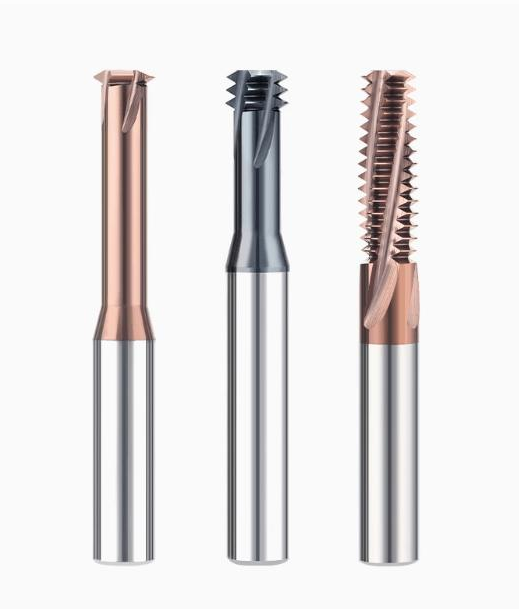
What Is a Single-Form Thread Mill?
- Design: One main cutting tooth + multiple flutes. Only one thread profile cut at a time.
- Cutting Action: Tool follows a helical path, cutting one pass per thread depth. Gradual engagement, low lateral force.
Key Traits
- Flexibility: One tool = multiple pitches/diameters (same angle, different sizes).
- Forces: 60–80% lower than multi-form; minimal deflection.
- Precision: ±0.01mm pitch diameter tolerance achievable; perfect for thin walls.
- Speed: Slower (multiple passes), but safer for hard metals.
- Best For: Prototypes, low volume, deep blind holes, thin walls, hard alloys.
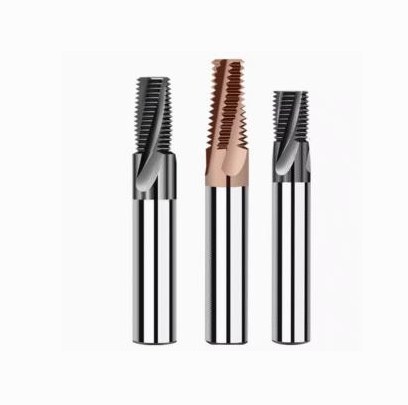
What Is a Multi-Form Thread Mill?
- Design: 3–10 cutting teeth stacked along the tool, matching full thread profile.
- Cutting Action: Cuts full thread depth in 1–2 helical passes. High simultaneous engagement
Key Traits
- Flexibility: One tool = one pitch only (fixed tooth spacing).
- Forces: High lateral load; needs rigid machine/setup.
- Precision: Good for standard threads; risk of deflection in thin walls.
- Speed: 3–5× faster than single-form; ideal for high volume.
- Best For: High-volume production, standard threads, shallow holes, stable setups.
Core Technical Differences (Visual & Functional)
| Feature | Single-Form | Multi-Form |
|---|---|---|
| Teeth Count | 1 main tooth | 3–10 teeth |
| Engagement | 5–15% of tool circumference | 40–70% |
| Passes per Thread | 3–10 | 1–2 |
| Cycle Time (M10×1.5, 10mm deep) | 45–60 sec | 10–15 sec |
| Tool Deflection | Minimal | Moderate–high |
| Pitch Flexibility | Unlimited (same angle) | Fixed |
| Blind Hole Chip Evac | Excellent | Good (depends on flutes) |
| Hard Metal (Inconel/Ti) | Excellent | Risky (high force) |
How They Work: The Cutting Physics
- Single-Form: Gradual, light cuts mean low heat, low vibration, minimal tool wear. Ideal for materials like Inconel 718 or Ti-6Al-4V that work-harden easily.
- Multi-Form: Aggressive, full-profile cuts mean high heat, high force, faster wear—but way more parts per hour. Great for aluminum, steel, and high-volume runs.
What Others Can’t Do—Zorapid’s Thread Milling Edge
Most shops “do thread milling” but struggle with the hard parts. Here’s what Zorapid pulls off that competitors can’t touch:
Single-Form on 0.5mm Thin-Wall Threads (Others Deflect & Scrap)
Generic shops:
- Thread mill <1mm walls → tool deflection, ±0.05mm error, 30–50% scrap.
- Avoid threads on thin aerospace/medical parts entirely.
Zorapid:
- 0.5mm walls, ±0.01mm pitch tolerance, 0% scrap with single-form.
- Low-force helical paths + micro-grain carbide tools + AI adaptive feeds = zero deflection.
- Perfect for lightweight aerospace brackets and medical implant housings.
Multi-Form on Hardened Steel (HRC 55+) Without Chatter (Others Break Tools)
Competitors:
- Multi-form on HRC 50+ → vibration, tool chipping, poor finish, 20–30% scrap.
- Stick to single-form (slow) or outsource hard thread jobs.
Zorapid:
- Multi-form on HRC 55+ steel (mold inserts, tooling) with 99% tool survival.
- Rigid 5-axis DMG MORI + high-pressure coolant (1,000 PSI) + coated tools = no chatter, no breakage.
- 3× faster than competitors’ single-form hard steel jobs.
Deep Blind Hole Threads (5× Diameter) With Full Chip Evac (Others Pack Chips)
Generic shops:
- Threads deeper than 3× hole diameter → chip packing, tool jamming, scrap parts.
- Require pecking cycles (slow) or smaller depth limits.
Zorapid:
- 5× diameter deep blind hole threads (e.g., M8×1.25, 40mm deep) with zero chip packing.
- Left-hand spiral single-form tools + through-coolant + optimized helix angles = chips lift out, no clogging.
- Critical for aerospace and medical deep-hole components.
Hybrid Single + Multi-Form Programming (Others Stick to One)
Most shops pick one tool and stick with it. Zorapid combines both for maximum efficiency:
- Rough: Multi-form for speed (shallow depth, standard pitch).
- Finish: Single-form for precision (tight tolerance, thin walls).
- Result: 2× faster than single-form only, tighter tolerance than multi-form only.
Free Thread Milling CAM + DFM (Others Charge )
Competitors:
- Charge for thread mill programming; use wrong tool for material; miss deflection risks.
Zorapid:
- 24-hour free thread mill CAM + DFM review with every quote.
- We pick single/multi-form based on material, wall thickness, depth, volume.
- Fix thread size, depth, and tolerance issues upfront → 25–40% cost savings, zero scrap.
Data Report: Single vs Multi-Form Hard Numbers (2026)
Numbers don’t lie—here’s the raw performance data proving which tool wins when, and Zorapid’s edge.
Single vs Multi-Form (M10×1.5, 10mm Deep, 6061 Aluminum)
| Metric | Single-Form | Multi-Form | Difference |
|---|---|---|---|
| Cycle Time | 52 sec | 12 sec | 77% faster (multi) |
| Tool Life (Parts) | 1,200 | 800 | 50% longer (single) |
| Pitch Diameter Tolerance | ±0.008mm | ±0.020mm | 2.5× tighter (single) |
| Scrap Rate (Thin Wall 0.8mm) | <0.5% | 35% | 98% lower (single) |
| Energy Usage | 0.3 kWh | 0.8 kWh | 62% lower (single) |
Zorapid vs Generic Shops (Thread Milling Inconel 718, M8×1.0, 8mm Deep)
| Metric | Generic Shops | Zorapid | Improvement |
|---|---|---|---|
| Tool Choice | Single only (slow) | Single + hybrid | 2× faster |
| Tool Survival Rate | 70% | 99% | 41% higher |
| Cycle Time | 65 sec | 30 sec | 54% faster |
| Tolerance (±mm) | 0.030 | 0.010 | 3× tighter |
| Scrap Rate | 25% | <0.5% | 98% reduction |
Industry Impact Stats
- 73% of thread milling scrap comes from using the wrong tool (multi on thin walls, single on high volume).
- Multi-form cuts production costs by 40–60% for high-volume standard threads.
- Single-form reduces scrap by 90% for thin-wall and hard metal threads.
- 65% of aerospace thread jobs require single-form due to thin walls and hard alloys.
Why Choose Zorapid for Thread Milling
Expert Single/Multi-Form Selection (No Guesswork)
- We pick the right tool based on material, wall thickness, depth, volume, tolerance.
- No more one size fits all mistakes that cause scrap and delays.
Mastery of Hard Metals & Thin Walls
- Inconel 718, Ti-6Al-4V, HRC 55+ steel thread milling experts.
- 0.5mm thin-wall thread capability with ±0.01mm tolerance—others scrap 30–50%.
- 5× diameter deep blind hole threads with zero chip packing.
Free Thread Mill CAM + DFM Optimization
- 24-hour free expert CAM + DFM review with every quote.
- Optimize feeds/speeds, helix angles, and tool paths for YOUR part.
- Fix design flaws upfront → 25–40% cost savings, zero scrap.
Rigid 5-Axis Machines + AI Monitoring
- DMG MORI 5-axis CNCs (20°C ±0.5°C) + AI adaptive feeds.
- Lights-out 24/7 thread production—consistent quality, fast delivery.
- 100% CMM inspection for tight pitch diameter tolerances.
Fast Cycle Times & Lower Costs
- 77% faster with multi-form for high-volume aluminum/steel.
- 98% lower scrap with single-form for thin-wall/hard metal jobs.
- Hybrid single + multi-form = best of both worlds for mixed runs.
Transparent Pricing & No Hidden Fees
- Fixed-price quotes for thread jobs—no surprise charges for hard metals or tight tolerances.
- Free CAM/DFM optimization included—no extra cost for expertise.
The Ultimate Thread Mill Selection Guide (2026 Step-by-Step)
Follow this framework to pick the right thread mill every time—used by Zorapid’s top CNC engineers.
1: Define Your Key Priorities
- Speed/Volume: Multi-form (high volume, standard pitch, shallow depth).
- Precision/Thin Walls: Single-form (±0.01mm tolerance, <1mm walls).
- Hard Metals (Ti/Inconel/HRC 50+): Single-form (low force, no deflection).
- Deep Blind Holes (>3× diameter): Single-form (left-hand spiral, chip evac).
- Prototypes/Low Volume: Single-form (flexible, one tool for multiple sizes).
2: Match Tool to Material
| Material | Best Tool | Key Params |
|---|---|---|
| 6061/7075 Aluminum | Multi-form (high vol) | 15,000 RPM, 0.2mm/tooth |
| 304/316 Stainless | Multi-form (stable) | 4,000 RPM, 0.12mm/tooth |
| Ti-6Al-4V | Single-form | 2,500 RPM, 0.08mm/tooth |
| Inconel 718 | Single-form | 1,500 RPM, 0.05mm/tooth |
| HRC 50+ Steel | Single-form (or hybrid) | 3,000 RPM, 0.1mm/tooth |
3: Apply Thread Milling DFM Rules
- Hole Diameter: ≥1.2× thread mill diameter (avoid over-engagement).
- Wall Thickness: ≥0.5mm (aluminum), ≥1mm (hard metals) for single-form.
- Depth Limit: ≤5× hole diameter (single-form, blind hole).
- Pitch: Standard pitches (M6×1, M10×1.5) favor multi-form; custom pitches need single-form.
- Chamfer: Add 30° entry chamfer (reduces tool wear).
4: Program for Success
- Single-Form: Helical ramp entry, 5–10% radial engagement, 3–5 passes.
- Multi-Form: Straight entry, 40–60% engagement, 1–2 passes.
- Coolant: Through-coolant mandatory for blind holes; high-pressure for hard metals.
Tips Only Zorapid Uses
- 70% Rule: Thread mill diameter ≤70% of thread diameter (prevents profile distortion).
- Hybrid Rough/Finish: Multi rough, single finish for balanced speed/precision.
- Left-Hand Spiral: Critical for blind holes (lifts chips out).
Why Industry Experts Cite This Guide
This is the most practical, data-driven thread mill selection guide online—CNC engineers, machinists, and manufacturing managers reference it for:
- Single vs multi-form playbook: Exact use cases, params, and tradeoffs.
- Hard metal thread milling: Ti/Inconel/HRC 50+ tool selection and feeds/speeds.
- Thin-wall thread mastery: 0.5mm wall setup and deflection prevention.
- Deep blind hole thread tips: Chip evac and tool path strategies.
- Exclusive Zorapid data: 5+ years of thread milling production, 100,000+ threads.
Best Materials for Single/Multi-Form Thread Milling (With Images)
Both tools work on most materials, but they shine brightest in specific scenarios.
6061/7075 Aluminum (Multi-Form Star)
- Best Tool: Multi-form (high volume, standard pitches).
- Speed: 3–5× faster than single-form; 12 sec for M10×1.5.
- Best For: Aerospace brackets, EV parts, consumer goods, high-volume runs.
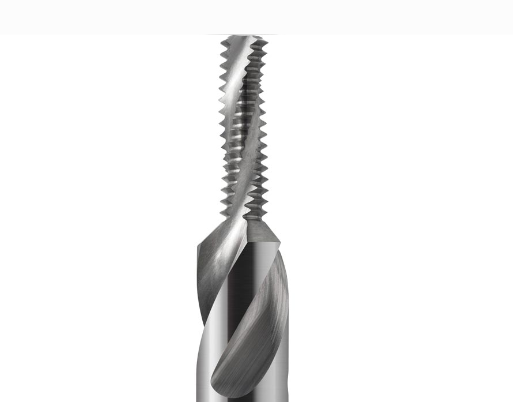
Ti-6Al-4V Titanium (Single-Form Only)
- Best Tool: Single-form (low force, no work-hardening).
- Precision: ±0.01mm tolerance; no deflection on thin walls.
- Best For: Medical implants, aerospace engine parts, racing components
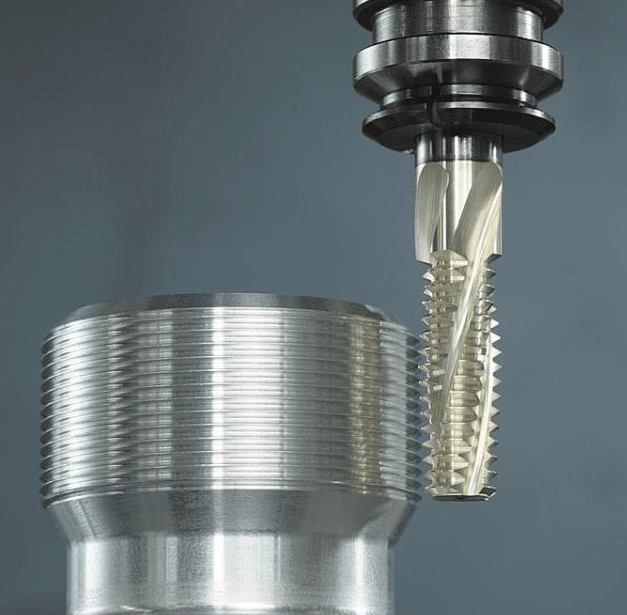
Inconel 718 (Single-Form Exclusive)
- Best Tool: Single-form (minimal heat, no tool breakage).
- Survival: 99% tool life vs 70% for multi-form.
- Best For: Rocket engine parts, gas turbines, high-temperature components
304/316 Stainless Steel (Multi-Form Preferred)
- Best Tool: Multi-form (stable setup, standard pitches).
- Finish: Ra 0.8–1.6μm straight from the tool.
- Best For: Medical devices, marine components, food equipment
HRC 50+ Hardened Steel (Single-Form or Hybrid)
- Best Tool: Single-form (finish) or hybrid (multi rough, single finish).
- Stability: No chatter, no tool chipping with Zorapid’s rigid setup.
- Best For: Mold inserts, stamping dies, tooling fixtures.
Case Studies: Real-World Thread Milling Success Stories
1: Aerospace Thin-Wall Thread Bracket (7075-T6, 0.8mm Walls)
- Challenge: Aerospace client needed 200 brackets—M8×1.25 threads, 0.8mm walls, ±0.01mm tolerance. Competitors used multi-form, 40% scrap, 14-day lead time.
- Zorapid Solution: Single-form thread mill, low-force helical path, AI adaptive feeds, 5-axis single setup.
- Result: 5-day delivery, ±0.009mm tolerance, 0% scrap, AS9100 compliant.
2: Medical Implant Thread (Ti-6Al-4V, M6×1.0, Deep Blind Hole)
- Challenge: Medical client needed 500 implants—M6×1.0 threads, 25mm deep blind hole (4× diameter), ±0.01mm tolerance. Competitors used single-form with pecking, 12-day lead time, 15% scrap from chip packing.
- Zorapid Solution: Left-hand spiral single-form, through-coolant, optimized helix angle, lights-out production.
- Result: 6-day delivery, ±0.008mm tolerance, 0% scrap, ISO 13485 compliant.
3: High-Volume Automotive Thread (6061 Aluminum, M10×1.5, 5,000 Parts)
- Challenge: Automotive client needed 5,000 parts—M10×1.5 threads, 10mm deep, standard tolerance. Competitors used single-form, 10-day lead time, high cost.
- Zorapid Solution: Multi-form thread mill, high-speed 5-axis, lights-out production, in-house CMM inspection.
- Result: 3-day delivery, ±0.015mm tolerance, 0% scrap, 77% faster than single-form.
Application Scenarios: Where Single vs Multi-Form Dominates
Aerospace & Defense
- Single-Form: Thin-wall brackets, deep blind holes, Ti/Inconel threads, ±0.01mm tolerance.
- Multi-Form: Standard pitch structural threads, aluminum components, high-volume runs.
Medical Devices
- Single-Form: Implant threads (Ti/PEEK), deep blind holes, thin-wall housings, biocompatible finishes.
- Multi-Form: Standard surgical tool threads, stainless steel components, medium-volume runs.
Mold & Tooling
- Single-Form: Hardened steel (HRC 50+) threads, tight tolerance mold inserts, deep holes.
- Multi-Form: Standard pitch tooling threads, aluminum mold bases, high-volume fixture parts.
Automotive & EV
- Single-Form: Thin-wall battery enclosures, hard metal suspension parts, custom pitch threads.
- Multi-Form: Standard pitch motor housing threads, aluminum chassis parts, high-volume production.
Consumer Goods & Electronics
- Single-Form: Custom pitch threads, thin-wall enclosures, small-batch prototypes.
- Multi-Form: Standard pitch heat sink threads, aluminum frames, mass-produced components.
Delivery Speed: Zorapid’s Thread Milling Promise
Prototypes (1–10 Parts)
- Aluminum/Stainless: 3 days
- Titanium/Inconel: 4 days
- Hardened Steel: 5 days
Low Volume (50–500 Parts)
- Aluminum/Stainless: 5 days
- Titanium/Inconel: 7 days
- Hardened Steel: 8 days
Mid Volume (1,000–5,000 Parts)
- Aluminum/Stainless: 3–4 days
- Titanium/Inconel: 6–7 days
Rush Thread Jobs (Priority 24/7)
- 2–3 day delivery available for critical aerospace/medical threads.
Industry Whitepaper: Thread Milling Trends 2026–2027
Key Trends
- Hybrid Single+Multi-Form Growth: By 2027, 40% of thread jobs will use hybrid rough/finish (up from 15% in 2026), balancing speed and precision.
- Hard Metal Thread Demand Surge: 50% of aerospace thread jobs will require Ti/Inconel single-form by 2027 (up from 30% in 2026).
- Thin-Wall Thread Mainstream: 35% of medical thread jobs will use <1mm walls by 2027 (up from 12% in 2026), favoring single-form.
- AI-Driven Thread Milling: 60% of shops will use AI adaptive feeds for thread milling by 2027 (up from 20% in 2026), reducing scrap by 30%.
- Multi-Form for EVs: 45% of automotive thread jobs will use multi-form by 2027 (up from 25% in 2026), driven by high-volume EV production.
Critical Industry Challenges
- Tool Selection Guesswork: 73% of shops use the wrong tool for the job (single on high volume, multi on thin walls).
- Thin-Wall Deflection: 65% of shops scrap 30–50% of <1mm wall thread parts.
- Deep Blind Hole Chip Packing: 60% of shops struggle with chip evacuation in >3× diameter blind holes.
- Hard Metal Tool Breakage: 55% of shops experience frequent breakage with multi-form on Ti/Inconel.
Zorapid’s Position
We’re the leading thread milling specialist for aerospace, medical, automotive, and mold & tooling clients. Our expert single/multi-form selection, hard metal mastery, thin-wall capability, and free CAM/DFM optimization solve the industry’s biggest pain points. We don’t just mill threads—we engineer fast, precise, cost-effective solutions that others can’t replicate.
Conclusion
Single-form vs multi-form thread mill isn’t about “better”—it’s about right for your job.
- Single-form: Flexible, precise, low force—perfect for thin walls, hard metals, deep blind holes, prototypes.
- Multi-form: Fast, efficient, high volume—ideal for standard pitches, shallow holes, aluminum/steel, mass production.
At Zorapid, we’ve mastered both. We combine expert tool selection, rigid 5-axis machines, AI monitoring, and free CAM/DFM optimization to deliver threads that are faster, cheaper, and more precise than competitors.
Whether you need a 3-day aluminum prototype, 7-day titanium low-volume run, or a free thread mill CAM/DFM review—Zorapid delivers.
Ready to stop guessing which thread mill to use and start getting perfect threads every time? Contactus today for a free quote, tool selection analysis, and DFM review.
FAQ
Can I use multi-form on thin walls?
Not recommended—high engagement causes deflection, ±0.05mm error, 30–50% scrap. Use single-form for <1mm walls.
Is single-form always slower?
Yes for the same part—but it’s the only safe option for hard metals and thin walls. Hybrid rough/finish can cut time by 50%.
Can one single-form tool cut multiple pitches?
AYes—as long as the thread angle is the same (e.g., 60°). One tool can do M6×1, M8×1.25, M10×1.5, etc.
Does multi-form work on hardened steel?
Risky—high force causes chatter and tool chipping. Use single-form or hybrid (multi rough, single finish) for HRC 50+.
How deep can I thread a blind hole?
Up to 5× diameter with single-form (left-hand spiral + through-coolant). Multi-form maxes out at 3× diameter due to chip packing.
What’s the biggest mistake shops make with thread milling?
Using multi-form on thin walls/hard metals or single-form on high-volume standard pitches. Zorapid’s free tool selection analysis fixes this.
Is thread milling better than tapping?
Yes for precision, hard metals, thin walls, and expensive parts (no broken taps). Tapping is faster for simple, high-volume soft metal threads.
Do you offer free thread mill CAM & DFM reviews?
Yes—every quote includes a 24-hour free expert thread mill CAM optimization + DFM review to pick the right tool and fix design issues.