Publisher: Zorapid.Ltd
If you run complex aerospace, medical or automotive parts, you already know this truth.
5-axis CNC changes everything for hard-to-machine metals. But your success lives or dies by how you match material to your toolpath, fixturing and machine setup.
Most machine shops mess up this simple step.
They run aluminum parameters on titanium, burn through carbide tools on Inconel, and end up with poor surface finish, heavy burrs, blown tolerances and sky-high production costs.
At Zorapid, we run simultaneous 5-axis jobs 24/7 for OEMs across North America, Europe and Australia. We’ve run thousands of batches in Ti-6Al-4V, Inconel 718, 6061 and 7075 aluminum.
Today we break down our real-world shop cases, material quirks, optimized 5-axis strategies and hard-won lessons you can drop straight into your next project.
Why 5-Axis Is Non-Negotiable For These Three Metals
Let’s keep this plain and practical.
3-axis milling forces you to re-clamp parts over and over. Every new setup adds alignment error, scrap and extra lead time.
5-axis solves three huge material-specific pain points:
- You tilt the cutting tool to stay at the perfect entry angle. No more long, wobbly tool extensions that vibrate on tough superalloys.
- You machine every curved surface, deep pocket and undercut in one clamping. Zero repositioning errors for tight ±0.005 mm tolerances.
- You keep a steady chip load even on thin walls and organic geometries. This stops work hardening in titanium and Inconel before it starts.
Aluminum, titanium and Inconel all benefit massively — but each needs its own unique 5-axis workflow.
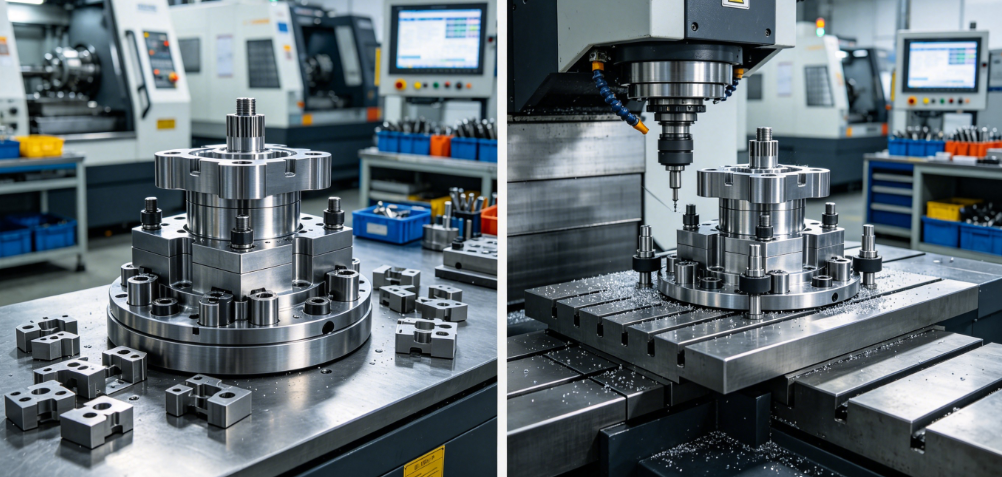
5-Axis Titanium Machining
Core Material Challenge
Titanium does not conduct heat well. All cutting heat stays right at the tool edge. It chemically sticks to carbide cutters, and it work-hardens instantly if the tool dwells even for a split second.
Slow speeds, sharp edges and massive high-pressure coolant are non-negotiable.
Zorapid Real-World Project Case
Project: Custom orthopedic bone implant (Ti-6Al-4V ELI, medical grade)
Geometry: Free-form curved surfaces, thin 0.7 mm walls, zero draft contours
Tolerance: ±0.004 mm, Ra ≤ 0.2 μm finish, no burrs or surface recast layers
Old 3-axis Problem:
- 6 separate re-fixturing steps
- Thin walls warped after each clamping
- Tool galling left smeared surfaces; 28% scrap rate
- Lead time stretched out to 22 days
Our 5-Axis Fix (Shop-Proven Settings)
- Simultaneous 5-axis milling with RTCP tool center point control. We tilted the end mill constantly to maintain a short, rigid tool stick-out. Zero vibration on thin walls.
- We locked SFM between 65–90, no higher. High feed per tooth to keep the tool cutting, not rubbing the hardened surface.
- 1600 PSI high-pressure coolant aimed directly into the cut zone. Heat flushed out with the chips before it could harden the parent material.
- Dynamic roughing + 5-axis swarf finish passes to eliminate secondary hand polishing entirely.
Measurable Results
- Scrap rate dropped below 2%
- All critical dimensions held consistently across 600 parts
- Lead time cut from 22 days down to 7 days
- No post-processing needed for biocompatible medical surfaces
Key Takeaway for Titanium 5-Axis Jobs:
Use short tools, keep cutting speed low, keep feed steady, and flood the cut with high-pressure coolant. Never let the cutter stop moving.
5-Axis Machining for Inconel 718 Superalloy
Core Material Challenge
Inconel 718 is far tougher than titanium. It resists heat, builds a hardened skin if you take light, shallow passes, and eats through cutting edges in minutes if your 5-axis tool path fluctuates chip thickness.
Many shops run too slow on feed, watch the tool rub, and burn up inserts within minutes.
Zorapid Real-World Project Case
Project: Small turbine wheel / impeller for aerospace auxiliary power unit (Inconel 718 wrought bar)
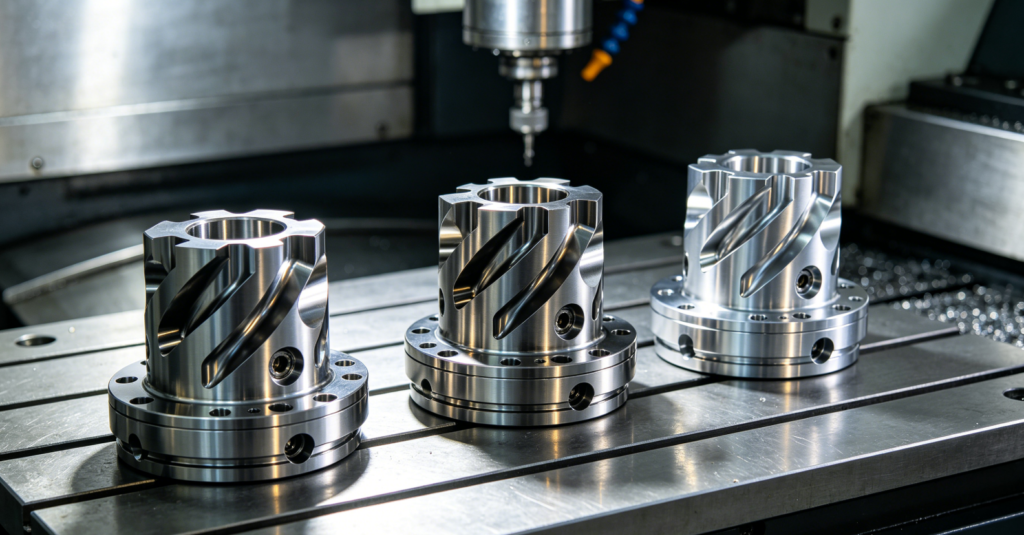
Geometry: Deep twisted blades, tight undercuts, full 5-axis continuous motion
Requirement: No chatter marks, consistent blade thickness across the whole part, zero thermal distortion
Common Shop Mistake We Fixed
Most programmers run inconsistent step-over in 5-axis blade paths. One spot has heavy material removal, the next spot barely touches the metal.
The uneven chip load creates wild heat spikes, rapid work hardening, and catastrophic tool failure.
Our Optimized 5-Axis Workflow
- CAM dynamic 5-axis roughing with a fixed maximum radial depth of cut (no more than 25% of tool diameter). We kept chip thickness identical on every cut segment.
- Strict SFM locked at 70–85 with coated solid carbide end mills. We avoided pushing speed higher — even if the machine could handle it. Extra speed ruins tool life instantly in Inconel.
- Continuous tilt 5-axis finishing. The tool maintained a constant lead angle against every blade surface. Chatter disappeared completely.
- Through-tool high-pressure coolant to blast chips out of deep twisted cavities before they re-weld onto the freshly machined surface.
Measurable Results
- Tool life tripled compared to conventional 5-axis programming
- No blade warpage after full machining cycle
- Surface roughness stayed below Ra 0.8 μm without hand grinding
- Batch consistency held for 120 production impellers
Key Takeaway for Inconel 5-Axis:
Keep chip load 100% consistent on every 5-axis movement. Never let the cutter lightly brush the material. Always take a firm cut to cut through the work-hardened layer.
5-Axis Aluminum
Core Material Challenge
Aluminum machines fast — way faster than superalloys. But aluminum sticks to cutting edges, creates stringy chips, and leaves ragged edge burrs on complex multi-angle features.
Thin aluminum ribs bend easily if 5-axis tool paths create uneven side loading.
Zorapid Real-World Project Case
Project: Aerospace lightweight structural bracket (7075-T6 billet)
Geometry: Deep angled pockets, intersecting holes, cantilever thin ribs, multiple undercut features
Original 3-axis Trouble:
- 4 separate fixture setups introduced stacking tolerance errors
- Long tools vibrated, leaving wavy surfaces on deep pockets
- Heavy secondary deburring added 3–4 extra days of labor on every unit
Our 5-Axis Aluminum Solution
- One single setup for the entire part. We tilted the spindle to reach every pocket, hole and undercut without re-clamping. All cumulative alignment error vanished.
- We cranked up SFM all the way to 1100–1300 for high-speed 5-axis milling. Sharp, polished uncoated carbide cutters stopped aluminum from welding onto the tool edge.
- We used climb milling exclusively on all 5-axis finish passes. Climb cuts produce clean edges and eliminate nearly all burrs on sharp corners.
- We adjusted tool tilt on thin ribs to reduce side pressure. Cantilever walls stayed straight with zero deflection.
Measurable Results
- We cut out all secondary deburring labor entirely
- Dimensional consistency jumped; CMM inspection pass rate hit 100%
- Total cycle time per bracket dropped by 42%
- Lead time reduced from 10 days down to 4 days
Key Takeaway for 5-Axis Aluminum:
Run high surface speeds, use polished sharp cutters, stick strictly to climb milling, and tilt the tool to reduce side load on thin walls. 5-axis turns aluminum’s tricky complex geometry into fast, clean work.
Quick Side-by-Side 5-Axis Material Cheat Sheet
| Material Grade | Target SFM | Tool Type | Coolant Strategy | Biggest 5-Axis Risk |
|---|---|---|---|---|
| Ti-6Al-4V ELI | 65–90 | Sharp solid carbide, fine edge prep | 1500–2000 PSI through-spindle flood | Work hardening + tool galling |
| Inconel 718 | 70–85 | TiAlN coated carbide | High-pressure directed coolant | Uneven chip load causing rapid edge failure |
| Al 7075-T6 / 6061 | 1100–1300 | Polished uncoated carbide | MQL or flood lubrication | Aluminum built-up edge (BUE) + thin wall bending |
Save this table for your next CAM programming session.
The Big Lesson From Our 20+ Years of 5-Axis Production
5-axis machines don’t automatically fix every material problem.
The machine is only as good as your material-specific strategy.
- Titanium fails when you run fast cuts and let heat build up.
- Inconel fails when your 5-axis tool path creates uneven chip thickness.
- Aluminum fails when you use dull cutters and let side force bend thin features.
At Zorapid, we build every 5-axis job around the alloy first, then write the tool path.
We handle one-off prototypes all the way through low-to-medium production batches for aerospace, medical, EV and semiconductor OEMs. Our ISO-certified 5-axis facility runs lights-out precision jobs across titanium, Inconel and aerospace aluminum every single day.
If you’re struggling with inconsistent finishes, long lead times or high scrap on complex multi-axis parts, send us your CAD file for a free DFM review. We’ll map out the optimal 5-axis material process before you cut a single billet.
FAQ
Is 5-axis machining always necessary for Ti-6Al-4V, Inconel 718 and aerospace aluminum parts?
Not always for simple blocks and flat parts. But if your part has undercuts, twisted blades, freeform curved surfaces or thin-walled features, 5-axis single-clamp machining is essential. It eliminates repeated re-fixturing and stacking tolerance errors, cutting scrap and shortening lead times drastically. At Zorapid, we only stick to 3-axis for basic prismatic work.
What is the biggest 5-axis risk when machining thin-wall titanium components?
Heat buildup and tool dwell. Titanium holds all cutting heat right at the cutting edge. If the tool pauses or rubs the material, the surface hardens instantly. We use short rigid tool holders, keep low SFM, maintain constant feed rate, and blast high-pressure coolant directly into the cut zone to avoid galling and wall deformation.
Can we run the same 5-axis CAM parameters for 6061 and 7075 aluminum?
No. 7075-T6 is much stronger and more prone to edge burrs and thin rib deflection. We run slightly lower feed rates on 7075 and strictly use climb milling. Polished uncoated cutters prevent built-up edge, which is the main cause of ragged edges on complex 5-axis aluminum geometries.
Will 5-axis machining lower production costs for small-batch alloy parts?
Yes. Even with higher machine hourly rates, you save money on repeated fixture setup, secondary deburring, CMM rework and rejected parts. Our real projects show total manufacturing cost drops by 35%–45% on complex aerospace and medical parts after switching to one-setup 5-axis processing.