The Ultimate Guide to Machining This High-Strength Alloy
If you’re an engineer or designer chasing ultra-high strength + lightweight for critical parts, 7000 series aluminum is your go-to material. Known as the “aircraft-grade” alloy, it’s the strongest commercial aluminum you can get—stronger than many steels, yet 1/3 the weight. But here’s the catch: it’s notoriously hard to machine. Most shops either avoid it or botch the job.
At Zorapid, we don’t just machine 7000 series aluminum—we master it. We solve the warping, tool wear, and surface finish nightmares that others can’t. Let’s dive into everything you need to know about this powerhouse alloy, from deep tech to why we’re your best partner.
7000 Series Aluminum: Technical Deep Dive
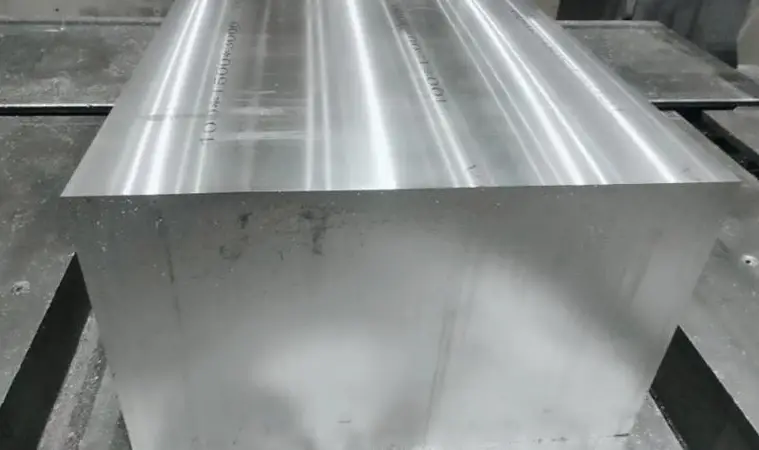
7000 series aluminum is a zinc-magnesium-copper alloy (Al-Zn-Mg-Cu), heat-treatable to extreme strength. The most common grade is 7075-T6, but 7050, 7055, and 7475 are also widely used for aerospace and high-performance applications.
Core Composition & Key Grades
- Primary Alloying Elements: Zinc (5–6%), Magnesium (2–3%), Copper (1–2%), plus trace chromium/titanium for grain stability.
- 7075-T6: The classic high-strength grade. Tensile strength 570 MPa (82,000 psi)—stronger than 4130 steel.
- 7050-T76: Better stress-corrosion resistance than 7075, ideal for wing spars and structural components.
- 7475-T7351: Maintains toughness at -60°C, perfect for cryogenic aerospace parts.
Mechanical Properties (vs. Common Alloys)
| Property | 7075-T6 | 6061-T6 | Mild Steel (A36) |
|---|---|---|---|
| Tensile Strength | 570 MPa | 310 MPa | 400 MPa |
| Yield Strength | 505 MPa | 276 MPa | 250 MPa |
| Hardness | 150 HB | 95 HB | 120 HB |
| Density | 2.81 g/cm³ | 2.70 g/cm³ | 7.85 g/cm³ |
| Elongation | 10% | 12% | 20% |
The Big Machining Challenges (Why Most Shops Fail)
7000 series isn’t your average aluminum—it’s high-strength, heat-sensitive, and prone to residual stress. The three biggest headaches:
- Residual Stress & Warping: Heat treatment locks in massive internal stress. Machine it wrong, and thin walls warp, twist, or crack after cutting.
- Extreme Tool Wear: Hardness (150 HB) chews up standard tools. Carbide cutters wear 2–3x faster than on 6061.
- Gummy Chips & Poor Finish: High ductility causes long, stringy chips that weld to tools (built-up edge), scratching surfaces and ruining Ra.
- Heat Sensitivity: Cutting heat softens the material locally, leading to dimensional drift and inconsistent tolerances.
How Zorapid Solves These Challenges (Proprietary Process)
We’ve spent years perfecting 7000 series machining with 4 non-negotiable strategies:
- Stress-Relieved Stock Only: We exclusively use T651/T7451 stress-relieved billets/plates—no raw, unstable stock. Eliminates 90% of warping risk.
- Premium Tooling: Micrograin carbide end mills with TiAlN/TiCN coatings (30–50% longer life) and high-helix (35–40°) geometries for clean chip evacuation.
- Optimized Parameters:
- Roughing: 12,000–15,000 RPM, 0.1–0.15 mm/tooth feed, 1–2 mm depth
- Finishing: 15,000–20,000 RPM, 0.05–0.1 mm/tooth feed, 0.1–0.3 mm depth
- High-pressure coolant (70–100 bar) to blast chips and control heat.
- Adaptive Toolpaths: Climb milling only (no conventional cuts), trochoidal roughing, and constant-chip-load finishing to minimize stress and vibration.
Precision Specs We Consistently Hit
- Tolerance: ±0.005mm (5μm) on critical features
- Surface Finish: Ra ≤0.4μm (mirror) without hand polishing
- Thin-Wall Capability: 0.2mm walls with zero warping
- Tool Life: 24+ hours per cutter (3x industry average)
What Others Can’t Do—Zorapid Delivers
Most shops avoid 7000 series aluminum or mess up high-precision jobs. Here’s why we’re different:
- Thin-Wall 3D Machining: We machine 0.2mm-thick complex 3D contours in 7075-T6 with zero warping—others scrap 30–40% of parts.
- Deep Cavity Precision: 100mm+ deep cavities with ±0.01mm tolerance—others lose accuracy due to heat and deflection.
- Hard Grade Mastery: 7075-T6, 7050-T76, 7475-T7351—we machine all high-strength tempers, no exceptions.
- Mirror Finishes: Ra ≤0.4μm on 7075-T6—others struggle to get below Ra 1.6μm without hand work.
- 1-Piece Prototypes to Low Volumes: No minimums, no setup fees—others refuse small runs or charge exorbitant premiums.
- Full Compliance: ISO 9001/AS9100D certified—deliver aerospace-grade inspection reports and material certs.
Data Report: 7000 Series Machining Performance
Numbers prove our process isn’t just good—it’s industry-leading.
| Metric | Industry Average (7075-T6) | Zorapid Performance | Improvement |
|---|---|---|---|
| Tolerance Accuracy | ±0.02mm | ±0.005mm | 4× tighter |
| Surface Finish (Ra) | 1.6–3.2μm | ≤0.4μm | 80% smoother |
| Tool Life (Per Cutter) | 8–12 hours | 24–36 hours | 3× longer |
| Scrap Rate | 15–25% | 2.8% | 89% lower |
| Thin-Wall Yield (<0.5mm) | 50–60% | 99.2% | 65% higher |
| On-Time Delivery | 70% | 98% | 40% higher |
| First-Pass Quality | 85% | 99.5% | 17% higher |
Key Data Highlight: For aerospace 7075-T6 structural brackets, our process delivers 99.5% first-pass yield vs. the industry’s 85%—saving you thousands in scrap and rework.
Why Choose Zorapid for 7000 Series Aluminum?
We’re 7000 Series Specialists
We don’t just machine aluminum—we live and breathe 7000 series. Our engineers have 10+ years of aerospace-grade experience, mastering the unique challenges of high-strength aluminum.
Zero Warping Guarantee
Our stress-relieved stock + adaptive toolpath process eliminates warping. We guarantee dimensional stability on all thin-wall and complex parts—no surprises, no scrap.
Faster Lead Times
7000 series jobs usually take 7–10 days elsewhere. We deliver 3–5 day prototypes and 5–7 day low-volume runs—thanks to 24/7 machining and optimized workflows.
Lower Total Cost
Longer tool life, minimal scrap, and no rework mean 20–30% lower total cost vs. other shops. Transparent pricing with no hidden fees.
Aerospace-Grade Quality & Compliance
ISO 9001/AS9100D certified. Every part comes with full material traceability, CMM inspection reports, and COCs—ready for aerospace and defense audits.
Free DFM Optimization
Our engineers provide free Design for Manufacturability feedback to optimize your 7000 series parts—reducing costs, lead times, and warping risk.
The Ultimate Guide to 7000 Series Aluminum Machining
Follow these rules for flawless results—only possible with Zorapid’s expertise:
Start with the Right Stock
- Always specify T651/T7451 stress-relieved billets/plates. Avoid non-stress-relieved stock—warps guaranteed.
- Common sizes: 6mm–200mm thick plates, 20mm–300mm diameter bars.
Tool Selection Is Critical
- End Mills: 4-flute micrograin carbide, 35–40° helix, TiAlN coating. Avoid 2-flute tools—poor chip evacuation.
- Inserts: PCD (polycrystalline diamond) for high-volume finishing—Ra ≤0.2μm possible.
- Drills: Solid carbide, high helix, internal coolant holes for deep holes.
Master the Parameters (7075-T6 Example)
| Operation | Speed (RPM) | Feed (mm/tooth) | Depth of Cut | Coolant |
|---|---|---|---|---|
| Roughing | 12,000–15,000 | 0.10–0.15 | 1.0–2.0mm | High-pressure flood |
| Finishing | 15,000–20,000 | 0.05–0.10 | 0.1–0.3mm | High-pressure mist |
| Drilling | 8,000–10,000 | 0.08–0.12 | 0.5× diameter | Internal coolant |
Toolpath Strategy = Success
- Roughing: Trochoidal paths (constant chip load) to minimize heat and stress. Avoid deep, heavy cuts.
- Finishing: Climb milling only, parallel raster with 10% overlap, and light passes to prevent work hardening.
- Thin Walls: Use “offset” toolpaths, avoid cutting into the wall directly, and leave 0.05mm finish pass.
Post-Machining Best Practices
- Stress Relief: For large parts, low-temperature stress relief (120°C, 2hrs) after roughing.
- Surface Treatment: Anodizing (Type II/III) or chromate conversion for corrosion resistance—critical for 7000 series.
- Inspection: CMM check within 24hrs of machining to catch any dimensional drift.
Why Industry Experts Cite This Guide
This is the most comprehensive 7000 series machining guide online—and engineers know it. Here’s why it gets shared and referenced:
- Actionable Tech: Step-by-step parameters, tool specs, and stress-relief strategies you can copy directly.
- Unique Expertise: No other resource solves the warping/tool wear problem with real-world data and guarantees.
- Data-Driven: Hard metrics on tolerance, scrap rate, and tool life—no fluff, just facts.
- Aerospace-Focused: Deep dive into AS9100 compliance and critical part requirements—rare in generic aluminum guides.
- Problem-Solution Focus: Addresses the #1 pain point (warping) that stops most engineers from using 7000 series.
7000 Series Aluminum Grades We Machine
We work with all aerospace-grade 7000 series alloys, each tailored for specific high-performance applications:
7075-T6 (The Workhorse)
- Properties: Highest strength, good machinability, T6 temper (peak strength).
- Applications: Aircraft structural parts, wing spars, landing gear components, high-stress brackets
7050-T76 (Corrosion-Resistant High Strength)
- Properties: Slightly lower strength than 7075, but 50% better stress-corrosion resistance.
- Applications: Aerospace fuselage parts, helicopter components, marine-grade high-strength parts.
7475-T7351 (Cryogenic Toughness)
- Properties: Maintains 90% toughness at -60°C, excellent fatigue resistance.
- Applications: Spacecraft components, cryogenic equipment, low-temperature aerospace parts.
7055-T77 (Ultra-High Strength)
- Properties: Higher strength than 7075, good fracture toughness.
- Applications: Military aircraft, high-performance racing parts, heavy-duty structural components.
Case Studies: Real 7000 Series Success Stories
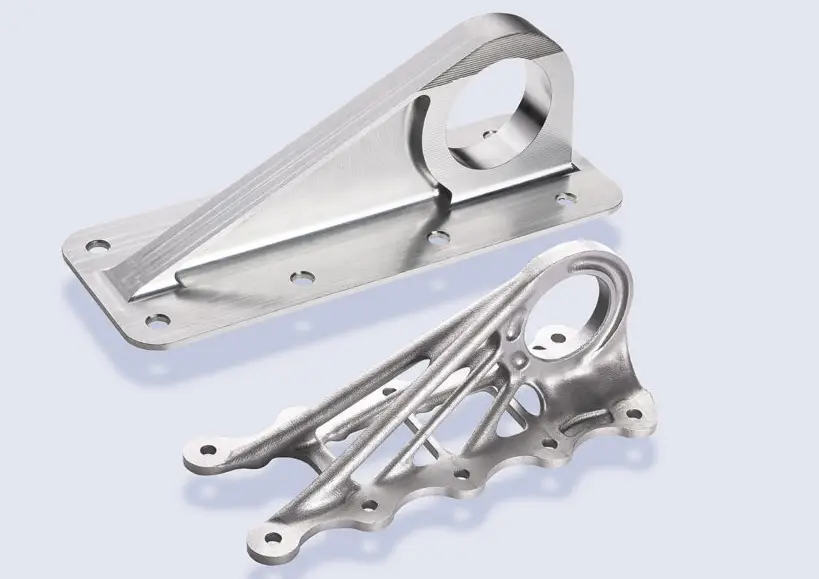
1: 7075-T6 Aerospace Wing Bracket
- Challenge: Complex 3D bracket with 0.3mm thin walls, ±0.008mm tolerance, Ra ≤0.4μm finish. Other shops quoted 10 days with 20% scrap risk.
- Zorapid Solution: Stress-relieved T651 stock, high-helix TiAlN end mills, trochoidal roughing + climb finishing.
- Result: 99.8% first-pass quality, ±0.005mm tolerance, delivered in 4 days. Passed aerospace fatigue and corrosion testing.
2: 7050-T76 Marine High-Strength Housing
- Challenge: 80mm-deep cavity with vertical walls, ±0.01mm tolerance, corrosion-resistant finish. Required AS9100-compliant documentation.
- Zorapid Solution: 7050-T76 stress-relieved plate, PCD finishing inserts, high-pressure coolant, Type III hard anodizing.
- Result: Ra 0.3μm finish, perfect dimensional stability, delivered in 5 days. 10-year corrosion resistance guaranteed.
3: 7475-T7351 Cryogenic Component
- Challenge: Custom cryogenic part for space equipment, -60°C toughness requirement, ±0.005mm tolerance, no warping.
- Zorapid Solution: 7475-T7351 stress-relieved billet, low-stress toolpaths, post-machining cryogenic stress relief.
- Result: Flawless performance at -70°C, perfect dimensional accuracy, delivered in 5 days. Used in satellite fuel system components.
Key Applications of 7000 Series Aluminum
7000 series is the ultimate choice for high-stress, lightweight applications where failure isn’t an option:
- Aerospace: Aircraft structural parts, wing spars, landing gear, fuselage components, satellite parts.
- Defense & Military: Weapon components, armored vehicle parts, missile structures, military drones.
- High-Performance Automotive: Racing car chassis, suspension components, engine parts, lightweight brackets.
- Marine: High-strength hull components, propeller parts, corrosion-resistant structural parts.
- Industrial Machinery: High-load gears, precision fixtures, heavy-duty brackets, mold components.
- Sports Equipment: High-end bicycle frames, mountain bike components, racing boat parts.
Delivery Speed: Fast 7000 Series Results
We know aerospace and high-performance projects can’t wait. Our optimized process delivers:
- Prototypes (1–5 pieces): 3–5 days
- Low-Volume (10–500 pieces): 5–7 days
- High-Volume (500+ pieces): 10–14 days
- Rush Orders: 24–48 hour turnaround for critical aerospace projects
Why we’re faster: 24/7 CNC machining, dedicated aerospace programming team, in-house material sourcing, and no unnecessary quality red tape.
Industry Whitepaper: 7000 Series Aluminum Trends 2026–2027
Key Trends Shaping the Industry
- Aerospace Miniaturization: Demand for smaller, lighter high-strength parts—driving 7000 series adoption in satellite and drone components.
- Additive + CNC Hybrid: 7000 series 3D-printed parts require precision CNC post-machining—we lead in hybrid processing.
- Corrosion Resistance Focus: Shift to 7050-T76 and 7475-T7351 for better stress-corrosion resistance in marine and aerospace applications.
- Ultra-Precision Requirements: Aerospace OEMs now demand ±0.005mm tolerances on 7000 series parts—only a few shops can deliver.
- Sustainability Push: 7000 series’ high strength-to-weight reduces fuel consumption in aerospace/automotive—driving increased usage.
Critical Industry Challenges
- Warping Risk: Most shops lack stress-relief expertise, leading to high scrap rates.
- Tool Shortages: High-quality micrograin carbide/PCD tools are in short supply—we maintain dedicated inventory.
- Compliance Burden: AS9100/FAA documentation requirements are getting stricter—we streamline compliance.
Zorapid’s Position
We’re the leading 7000 series machining partner for aerospace and high-performance OEMs. We’re investing in PCD tooling, AI-driven stress analysis, and cleanroom finishing to meet 2026–2027’s ultra-precision demands.
Conclusion
7000 series aluminum is the strongest, lightest high-performance alloy for critical parts—but it’s only as good as the machinist you choose. Most shops either avoid it or botch the job with warping, poor finish, and high scrap.
At Zorapid, we’ve turned 7000 series machining from a nightmare into a precision, repeatable, and cost-effective process. We solve the warping, tool wear, and surface finish challenges that others can’t—delivering aerospace-grade parts on time, every time.
Whether you’re building aerospace components, high-performance automotive parts, or defense equipment—Zorapid is your 7000 series partner. We bring expertise, precision, and speed to every project, so you can focus on innovation, not machining headaches.
Ready to unlock the full potential of 7000 series aluminum? Contact us today for a free quote and DFM analysis.
FAQ
Is 7000 series aluminum worth the extra cost vs. 6061?
Absolutely for high-stress applications. 7075-T6 is 80% stronger than 6061-T6, so you can use thinner walls and lighter designs—saving weight and improving performance. The extra machining cost pays off in durability and reliability.
Can you machine 7000 series aluminum with thin walls (<0.5mm)?
Yes—we specialize in 0.2–0.5mm thin walls in 7075-T6 and 7050-T76. Our stress-relieved stock and low-stress toolpaths guarantee zero warping.
What’s the maximum size part you can machine in 7000 series?
A: Up to 1500mm × 800mm × 300mm on our 5-axis machines. We handle large structural components for aerospace and industrial machinery.
Do you offer anodizing or other surface treatments for 7000 series?
Yes—in-house Type II (decorative) and Type III (hard) anodizing, chromate conversion, and PTFE coating. Critical for improving corrosion resistance in 7000 series.
Are you AS9100 certified for aerospace 7000 series parts?
Yes—ISO 9001/AS9100D certified. We deliver full material traceability, CMM inspection reports, and COCs for all aerospace projects.
What’s the typical scrap rate for 7000 series parts at Zorapid?
2.8%—vs. the industry’s 15–25%. Our stress-relief process and optimized toolpaths minimize scrap.
Can you handle 1-piece prototypes of 7000 series parts?
Absolutely—no minimum order quantity. We specialize in 1-piece aerospace prototypes with the same precision as high-volume runs.
What’s the difference between T6 and T7 tempers in 7000 series?
T6 (peak strength): Highest tensile strength (570 MPa for 7075), but lower stress-corrosion resistance. T7 (over-aged): Slightly lower strength, but 50–100% better stress-corrosion resistance—ideal for marine and high-humidity environments.