Published:Zorapid.Ltd
If you design or build clinical diagnostic devices—lab analyzers, point-of-care testing machines, blood screening equipment, or imaging diagnostic hardware—you’ve definitely fought the same pain points with internal mechanical parts.
Metal components create MRI/CT imaging artifacts, cheap plastics warp under repeated autoclave sterilization, and complex custom geometries cost a fortune to machine from stainless steel. That’s where medical-grade PEEK changes everything.
Today we’re breaking down the two most reliable production methods for PEEK diagnostic internal parts: precision CNC machining and SLS selective laser sintering 3D printing. We’ll walk through which process fits your prototype, low-batch, or mass production run, cover critical medical compliance rules, and answer every common question medical OEMs ask about PEEK manufacturing.
Whether you need tight ±0.005mm tolerance sensor mounts, intricate lattice fluid manifolds, or lightweight internal frames for portable diagnostic analyzers—this guide will cut through technical jargon and help you pick the right PEEK workflow fast.
Why Medical Diagnostic OEMs Pick Medical-Grade PEEK for Internal Components
Standard engineering plastics (ABS, PC, nylon) fail the strict demands of diagnostic device internals. Medical-grade PEEK checks every box for lab and clinical hardware internal parts:
- 100% biocompatible & compliant: ISO 10993, USP Class VI certified, no toxic leaching into test samples or patient fluids
- Radiolucent: No metal-like streaks on CT/MRI scans—critical for imaging diagnostic machine internal fixtures
- Sterilization resistant: Survives endless autoclave, EtO, gamma sterilization cycles without warping or cracking
- Chemical inert: Resists lab reagents, alcohol, disinfectants, buffer solutions used in diagnostic testing
- High mechanical stability: Rigid, low friction, minimal wear for moving internal gears, slides, valve seats
- Lightweight: 70% lighter than steel, cuts overall device weight for portable point-of-care diagnostic units
- Dielectric insulation: No signal interference for built-in sensors, circuit mounts inside diagnostic equipment
For internal diagnostic parts that touch test liquids, sit near imaging sensors, or go through daily sterilization—PEEK is the only polymer that balances performance, safety, and long service life.
CNC Machined PEEK: Best for Standard, High-Tolerance Diagnostic Internal Parts
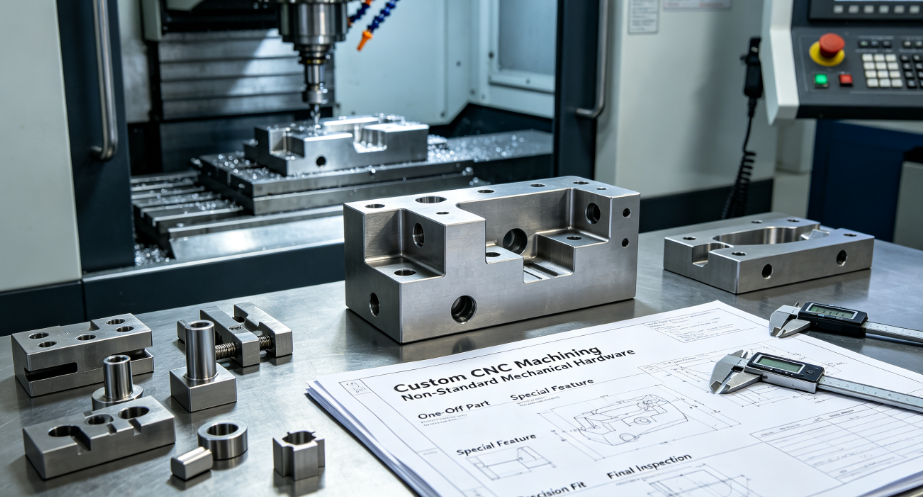
CNC PEEK machining (3-axis & 5-axis milling/turning) is our go-to process for diagnostic internal components with strict dimensional repeatability.
When to choose CNC PEEK for your diagnostic hardware:
- Medium to high volume production runs (50–50,000 units)
- Flat, simple, or moderately complex geometries without hidden lattice/channel structures
- Ultra-tight tolerances (±0.003mm to ±0.01mm) for sensor alignment blocks, optical fixtures
- Smooth surface finishes (Ra 0.4–1.6) for fluid flow channels that prevent sample residue buildup
- Carbon fiber reinforced PEEK (CF30 PEEK) structural supports that need extra stiffness
Key CNC PEEK Diagnostic Internal Parts We Regularly Produce:
- Optical sensor mounting brackets for lab analyzers
- Fluid valve manifolds with precise bore holes
- Gear housings and sliding actuator blocks
- Internal frame supports for portable diagnostic testing machines
- Sterilizable sample tray holders, reagent cartridge inserts
CNC PEEK Manufacturing Advantages for Medical OEMs
- Batch-to-batch identical dimensions, critical for FDA 510(k) device consistency records
- Post-machining annealing eliminates internal stress, stopping long-term warpage inside diagnostic equipment
- Cleanroom machining available for Class 1000 medical-grade PEEK parts with zero contamination risk
- Multiple surface finish options: polished, matte, texturized for internal grip components
SLS 3D Printed PEEK: Perfect for Complex, Low-Volume Diagnostic Insides
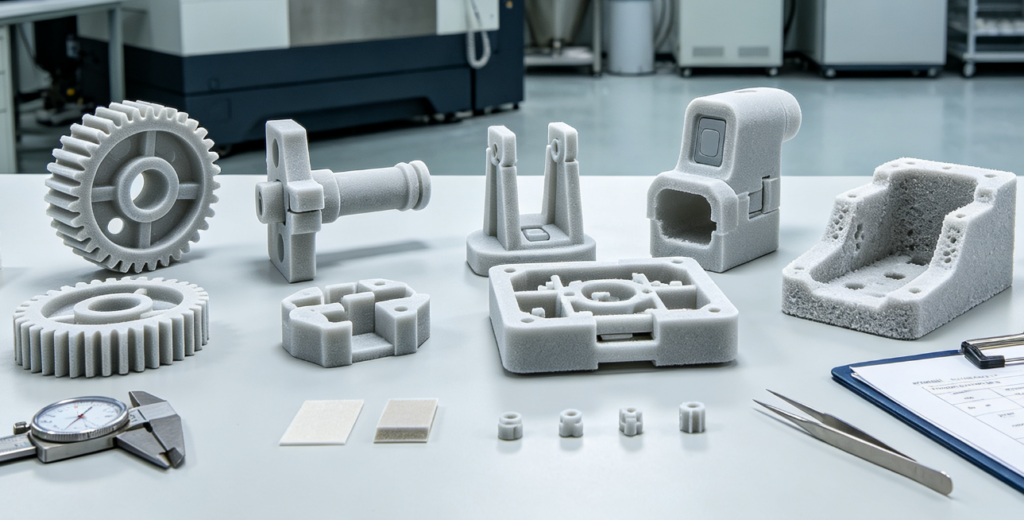
Selective Laser Sintering (SLS) PEEK additive manufacturing melts medical-grade PEEK powder layer by layer, no molds, no cutting tools. This technology unlocks geometries impossible to machine with CNC.
When to choose SLS PEEK for diagnostic internal parts:
- Early-stage prototypes, pre-production validation runs (1–50 units)
- Ultra-complex internal structures: hidden fluid channels, lattice lightweight frames, organic conformal geometries
- Custom one-off diagnostic fixtures for clinical trial testing equipment
- Consolidated multi-part assemblies printed as a single PEEK component (cuts assembly labor)
- Low-volume specialty diagnostic devices with unique internal mechanical layouts
Top SLS PEEK Diagnostic Internal Applications:
- Integrated fluid distribution manifolds with winding internal micro-channels
- Lightweight lattice support frames for compact point-of-care diagnostic devices
- Custom sensor jigs and alignment guides for lab diagnostic testing
- Hollow internal housing structures that reduce overall device weight
- Patient-specific diagnostic accessory internal inserts
SLS PEEK Standout Benefits for Medical Diagnostic OEMs
- Zero tooling cost: Skip expensive CNC fixturing or injection mold charges for small batches
- Rapid turnaround: Functional PEEK prototypes in 3–7 business days for device design iteration
- Compatible with pure PEEK and CF-reinforced medical PEEK powder grades
- No support structures needed during printing—eliminates leftover surface blemishes on internal flow paths
- Fully sterilizable, biocompatible sintered PEEK meets all ISO medical device standards
CNC PEEK vs SLS PEEK for Medical Diagnostic Hardware: Quick Comparison
| Feature | CNC Machined Medical PEEK | SLS 3D Printed Medical PEEK |
|---|---|---|
| Best Volume | Medium/high batch (50+) | Prototypes / low volume (1–50) |
| Geometric Limits | Simple/moderate shapes; no sealed internal channels | Unlimited complex lattices, hidden micro-channels |
| Tolerance Range | ±0.003mm – ±0.01mm ultra-precise | ±0.05mm standard; post-machining tightens tolerance |
| Surface Finish | Mirror polish, ultra-smooth Ra 0.4 | Matte porous as-printed; can bead blast/polish post-print |
| Tooling Cost | CNC fixturing fees for first run | Zero tooling cost |
| Lead Time | 7–15 days for batches | 3–7 days for prototype parts |
| Material Grades | Virgin PEEK, CF30 PEEK, PTFE filled PEEK | Medical PEEK powder, CF reinforced PEEK powder |
| Diagnostic Use Case | Mass-produced sensor brackets, valve blocks | Custom manifolds, prototype internal frames |
Real-World Diagnostic Internal Part Applications We Manufacture
We supply PEEK CNC and SLS components to diagnostic OEMs across clinical lab, point-of-care, and medical imaging verticals:
- Blood chemistry analyzer internal fluid manifolds (CNC PEEK for mass production; SLS for prototype channel testing)
- PCR testing machine thermal block insulation inserts (radiolucent PEEK, autoclave safe)
- Portable rapid antigen test device lightweight internal frames (SLS lattice PEEK for weight reduction)
- MRI-compatible diagnostic sensor mounting fixtures (100% metal-free CNC PEEK)
- Lab centrifuge internal sliding bushings (low-wear CF30 CNC PEEK)
- Microscope diagnostic stage alignment jigs (precision 5-axis CNC PEEK)
- Clinical trial custom diagnostic test fixture one-offs (SLS PEEK fast turnaround)
Critical PEEK Material Standards for Diagnostic Medical Devices
Not all PEEK works for diagnostic internal hardware—only medical-certified grades pass regulatory audits:
- Virgin Medical PEEK (Victrex 450G): Standard for most internal non-load-bearing diagnostic parts, full ISO 10993 compliance
- CF30 Carbon Fiber Reinforced PEEK: For structural internal frames, high-load sliding components, improved rigidity
- USP Class VI certification: Mandatory for any part that contacts clinical test samples or bodily fluids
- Low moisture absorption grade: Prevents dimensional shift inside temperature-controlled diagnostic analyzers
- Gamma/Autoclave stable formulation: No degradation after repeated clinical sterilization cycles
FAQ
Can both CNC and SLS PEEK parts be used inside FDA-regulated diagnostic devices?
Yes, as long as you select medical-grade ISO 10993 certified PEEK stock/powder. Both CNC machined and SLS sintered PEEK components hold up for 510(k) clearance submissions. We provide full material certificates, batch traceability, and sterilization compatibility test reports for all diagnostic parts we ship.
Which process is cheaper for 20 prototype diagnostic internal manifolds?
SLS PEEK printing wins here. CNC requires custom fixturing for complex manifold channels, adding upfront tooling costs. SLS has zero tool fees for small batches of 1–50 prototypes, with faster lead times to boot. Once your design locks in and you need 100+ units, CNC machining becomes far more cost-effective per piece.
Do SLS PEEK internal fluid channels trap lab reagents or cause cross-contamination?
As-printed SLS PEEK has slight surface porosity. For fluid-carrying diagnostic internal parts, we offer post-print polishing or chemical smoothing to seal micro-pores, eliminating residue buildup and cross-contamination risks during testing cycles. CNC PEEK comes smooth straight off the machine for fluid applications.
Is PEEK completely radiolucent for imaging diagnostic machine internals?
Virgin unfilled medical PEEK produces zero CT/MRI artifacts, making it ideal for internal fixtures inside imaging diagnostic hardware. Carbon fiber filled PEEK will create minor light interference, so we only recommend CF-PEEK for non-optical internal structural supports.
What sterilization methods work for CNC and SLS PEEK diagnostic components?
Both handle autoclave steam, EtO ethylene oxide, and gamma irradiation sterilization. Avoid high-temperature plasma sterilization above 280°C—this can slowly degrade PEEK molecular structure over hundreds of cycles.
Can we combine SLS prototypes and CNC mass production for one diagnostic device line?
Absolutely. Most of our diagnostic OEM clients use SLS PEEK to iterate 10–30 design prototypes fast, validate internal mechanical performance, lock the CAD design, then switch to 5-axis CNC PEEK machining for full-scale commercial batches. We support seamless design handoff between both processes.
What CAD file formats do you accept for PEEK CNC and SLS diagnostic parts?
STEP, IGES, SolidWorks, STL, PDF engineering drawings. For CNC machining, we request full dimensioned 2D prints with tolerance callouts. For SLS printing, clean manifold/frame STL files work best for rapid quoting.
What’s the typical tolerance gap between SLS PEEK and CNC PEEK for diagnostic sensor parts?
Standard SLS PEEK hits ±0.05mm tolerance. If you need tighter alignment for optical sensors, we offer secondary CNC post-machining on SLS printed blanks to reach ±0.01mm precision. CNC raw machined PEEK holds consistent ±0.005mm tolerances out of production.
Can PEEK internal parts replace aluminum or stainless steel in diagnostic equipment?
For nearly all non-load-bearing internal diagnostic hardware—yes. PEEK cuts device weight drastically, eliminates imaging artifacts, resists lab chemical corrosion, and costs less long-term than precision metal machining. We only recommend metal for heavy load-bearing external structural housings.
Do you offer cleanroom manufacturing for medical diagnostic PEEK components?
Yes. Our medical production line runs Class 1000 cleanroom CNC machining and SLS printing for diagnostic internal parts that directly contact clinical test samples, with full dust and contamination control for regulatory compliance.
Final Tips to Pick the Right PEEK Manufacturing Process for Your Diagnostic Device
- If you’re still tweaking internal geometry, ordering under 50 units, or need impossible complex channels → SLS PEEK 3D Printing
- If your design is finalized, batches over 50 units, ultra-tight optical tolerances, smooth fluid surfaces → 5-Axis CNC PEEK Machining
- For imaging diagnostic internal fixtures near CT/MRI sensors → Stick to virgin unfilled medical PEEK (avoid carbon fiber grades)
- For load-bearing internal frames inside portable analyzers → CF30 reinforced PEEK via CNC or SLS
- Always request material COAs and sterilization test reports before integrating PEEK parts into your diagnostic device bill of materials
Closing Wrap-Up
Medical-grade PEEK has become the undisputed top material for diagnostic device internal components, and CNC machining + SLS printing cover every production stage from early prototype to mass commercial release.
No more compromising between complex geometry, sterilization safety, imaging compatibility, and tight precision. Whether you’re building compact point-of-care testers, large lab diagnostic analyzers, or MRI-compatible clinical hardware—our dual PEEK CNC and SLS manufacturing workflow delivers compliant, reliable internal parts tailored to your volume and design needs.
If you have CAD drawings for your diagnostic internal PEEK components, send them over for a free, no-obligation quote and DFM design review from our medical manufacturing engineers.