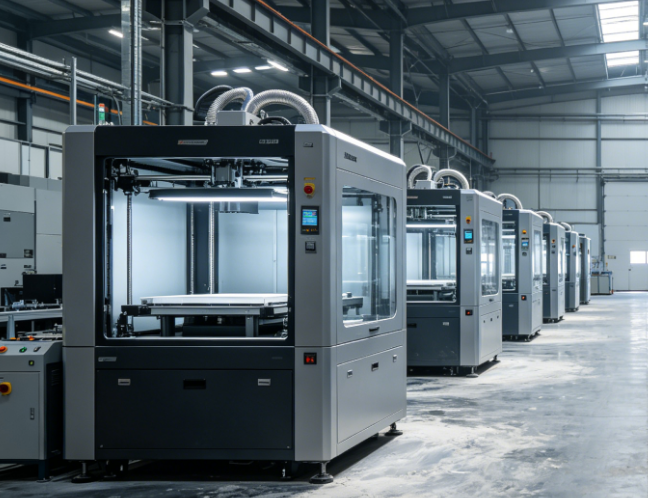
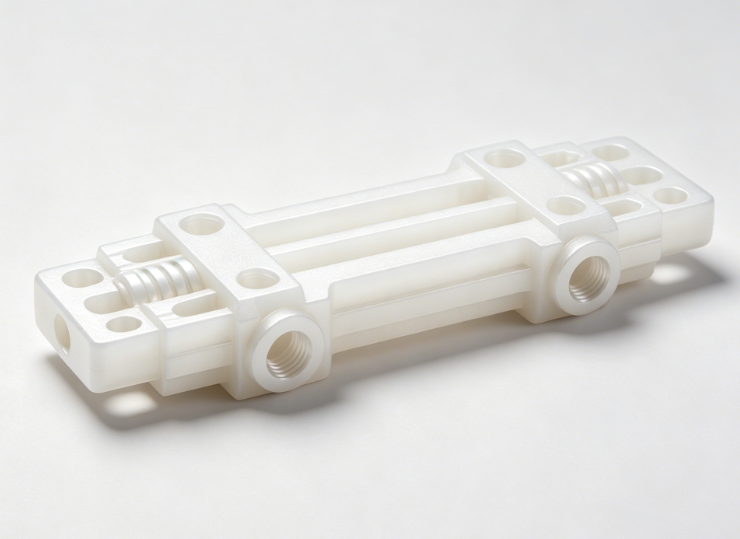
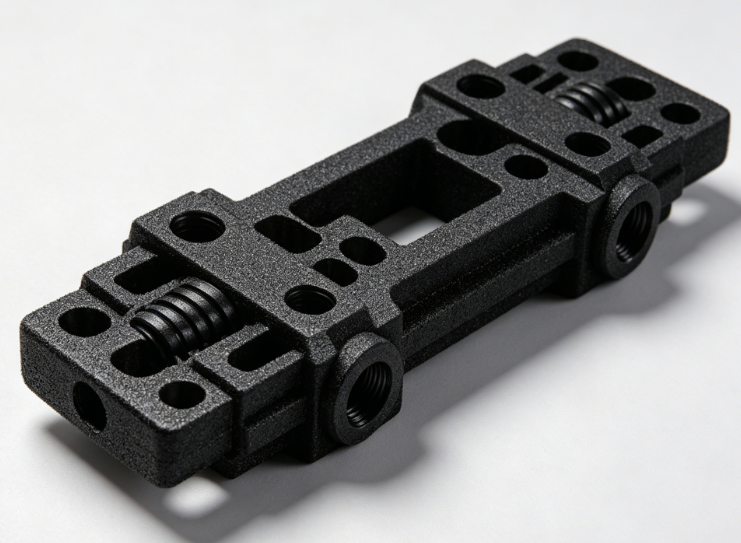
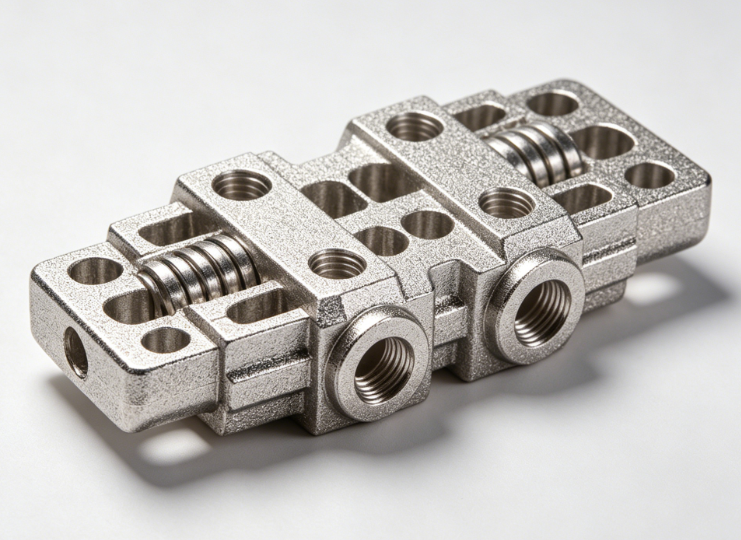
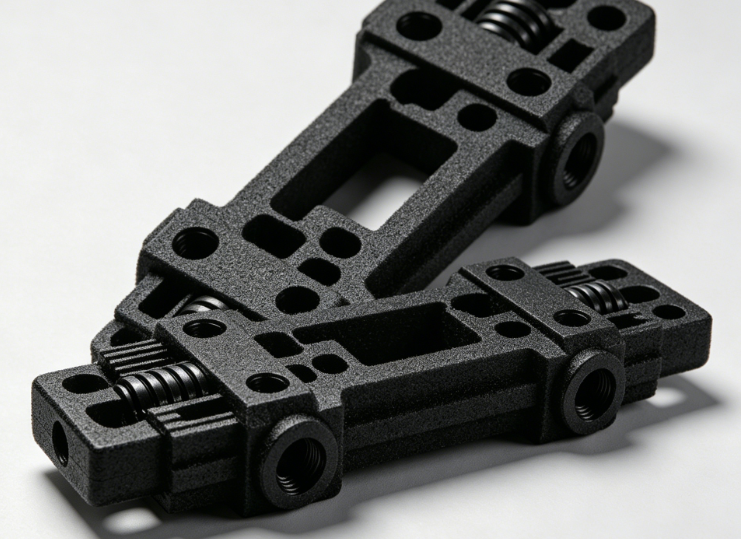
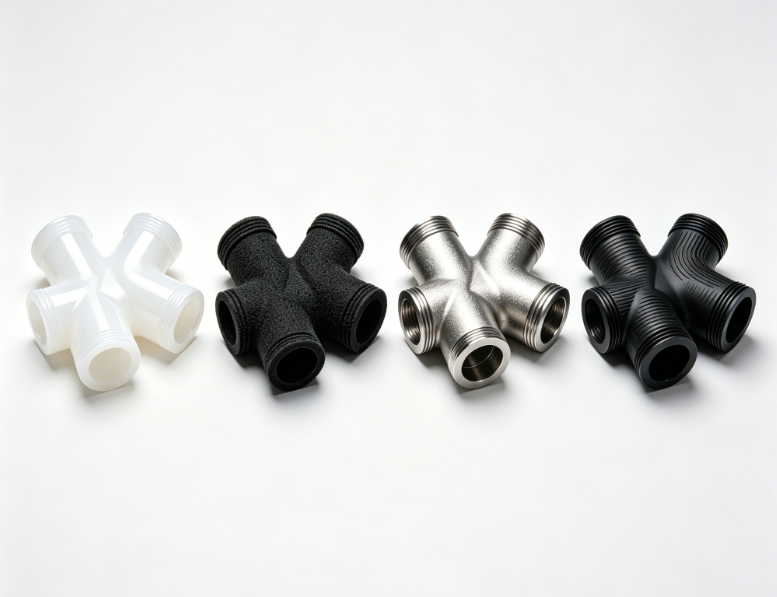
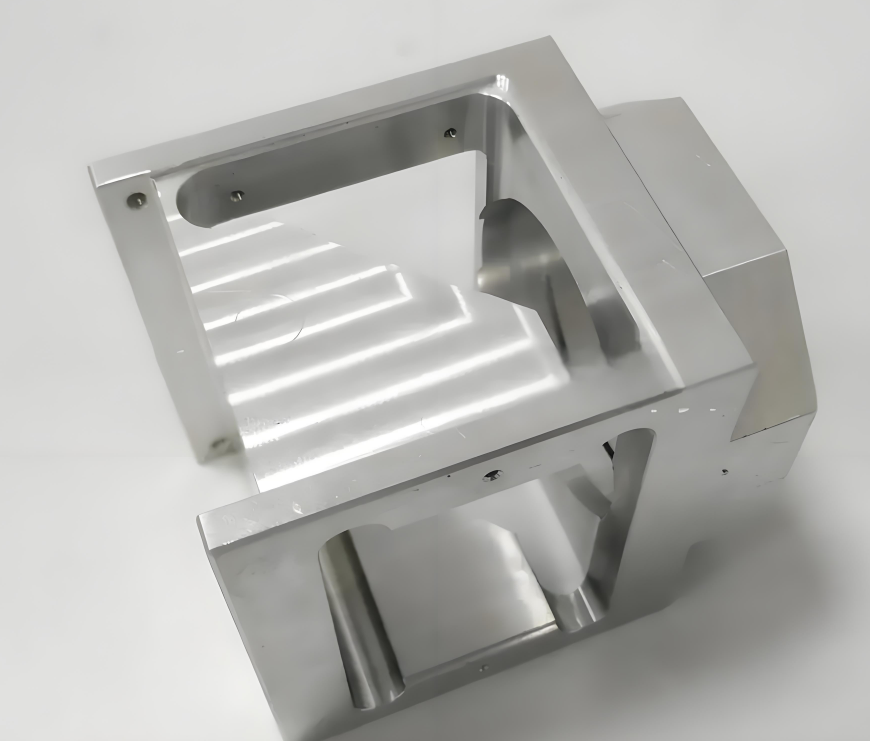
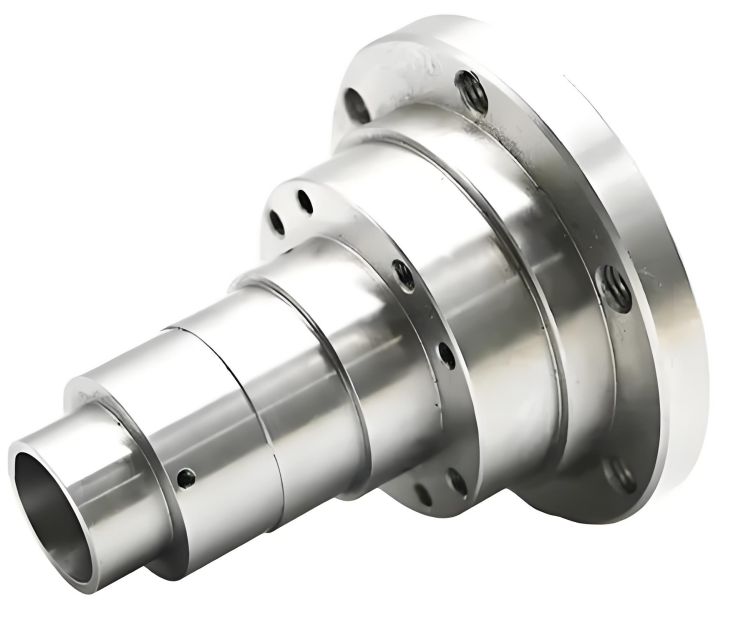
3D printing builds complex parts directly from CAD files without molds, delivering ultra-fast prototypes, intricate lattice structures and one-off custom components at minimal upfront cost for product research and small custom orders.
How Does SLA 3D Printing Work?
SLA, short for Stereolithography, was the first commercial resin 3D printing tech in the 1980s. Cures liquid photopolymer resin layer by layer with UV light to form solid parts.
Core Principle
Liquid photopolymer resin stays fluid under normal lighting. When exposed to focused UV laser beams, the resin undergoes a photochemical reaction and instantly hardens into solid plastic.
How Does SLM 3D Printing Work?
SLM stands for Selective Laser Melting, a metal powder bed additive manufacturing technology for industrial metal components.
Core Principle
A high-energy fiber laser fully melts fine metallic powder particles. Molten metal fuses together and solidifies to form solid metal parts layer by layer. Unlike SLS sintering, SLM achieves complete melting and full metallurgical bonding.
How Does SLS 3D Printing Work?
SLS means Selective Laser Sintering, an industrial powder-bed additive manufacturing technology.
Core Principle
Instead of liquid resin, SLS uses fine polymer or metal powder. A high-power laser sinters (fuses) powder particles together without fully melting them, turning loose powder into solid components layer by layer.
How Does FDM 3D Printing Work?
FDM (Fused Deposition Modeling) is the most widely used desktop 3D printing technology.
Core Principle
Thermoplastic filament is heated until it turns molten. The extruder deposits melted material precisely layer by layer, and the plastic solidifies rapidly to build up the solid object.
Custom 3D Printing Solutions for Precision Manufacturing
Tailored 3D printing solutions for prototyping and low-volume production—top quality, speed, and reliability. Using cutting-edge SLA, FDM, SLS, and SLM, we hit tight tolerances down to ±0.2 mm. Our experienced team turns your designs into precise, functional custom components.
SLA
SLA uses focused UV lasers to cure liquid photopolymer layer by layer, producing accurate, smooth parts with complex geometries. Ideal for high-detail prototypes, display models and small complex components.
SLS
SLS fires industrial lasers to sinter polymer powder into tough, high-performance parts. It makes self-supporting complex structures ideal for functional end-use products.
SLM
SLM uses high-power lasers to melt metal powders layer by layer, creating fully dense precision metal parts. Ideal for aerospace, medical and industrial applications requiring superior structural strength and reliability.
FDM
FDM extrudes melted thermoplastic through a precision nozzle to produce stable, durable parts. Ideal for functional prototypes, tooling and end-use components requiring consistent strength.
How to Select the Best 3D Printing Technology
Choosing the right 3D printing method makes or breaks your production and performance goals. Our AM team provides full consulting, covering design goals, material choices and field application needs.
We prepare CAD files for FDM, SLA, SLS and SLM. Send your models, and we’ll complete DFM analysis and process verification.
We refine part geometry for stronger structure, smoother surfaces and higher accuracy. Team up with us to enjoy additive manufacturing benefits: great precision, solid durability and cost-effective small-batch runs.
Advantages of SLA 3D Printing
High-precision resolution for crisp details and superior surface finish.Supports highly complex, thin-wall, and detailed geometries.Multiple material choices: rigid, tough, flexible, and transparent.Easy post-processing to achieve presentation-grade prototypes.
Applications of SLA 3D Printing
Dental appliances, models, and surgical planning guides
Fine jewelry prototyping and casting master patterns
Complex architectural models with intricate details
Product design verification and aesthetic mockups
Advantages of SLS 3D Printing
Powder bed enables self‑supporting builds without extra supports.Parts exhibit high strength, toughness, and functional reliability.Compatible with industrial‑grade engineering thermoplastics.Streamlined workflow for fast, efficient small‑batch production.
Applications of SLS 3D Printing
Automotive ductwork, housings and underhood components
Industrial robot structural and functional parts
Custom prosthetic devices and wearable technology
Heat-stable components for aerospace systems
Advantages of SLM 3D Printing
High-density metal components with reliable mechanical properties.Excellent heat resistance and structural integrity.Supports the production of complex internal features.Cost-efficient process with minimal material wastage.
Patient-matched medical implants & orthopedic devices
Lightweight high-strength automotive structural parts
Custom industrial tooling, molds & fixtures
Advantages of FDM 3D Printing
Cost-effective & widely accessible industrial technology.Tough, functional thermoplastics for engineering use.Low post-processing for rapid prototype validation.
Multi-material & color compatibility for complex designs.
Applications of FDM 3D Printing
Functional prototypes for mechanical & structural performance testing.Custom manufacturing tooling, jigs & fixtures for production lines.Educational models & hands-on DIY engineering projects.Low-volume end-use parts for industrial & engineering applications
3D Printing Materials
We stock top-grade industrial plastics and metals: ABS, PA nylon, aluminum, stainless steel for cross-industry custom 3D printing. Need specialty materials? Select Other on your quote. We can source hard-to-find custom materials to match your strict performance specs.
Aluminium
Lightweight, strong, and naturally resistant to corrosion, aluminum is ideal for 3D printing in aerospace and automotive applications. Its excellent strength-to-weight ratio makes it perfect for parts that need durability without adding excess weight.
Subtypes: Stainless Steel 316L Silver Grey
Lead Time: About 6 business days
Stainless Steel
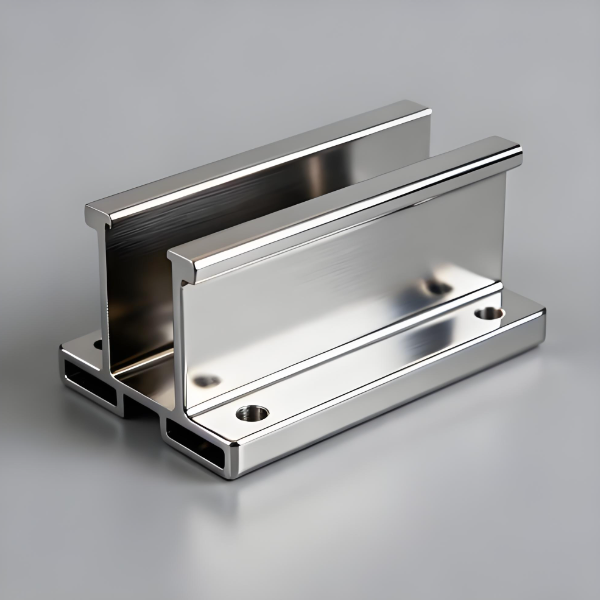
Highly durable, corrosion-resistant, and heat-tolerant, stainless steel is great for both functional parts and intricate, high-strength components. It’s commonly used in industries requiring robustness, such as aerospace, automotive, and medical devices.
Subtypes: Stainless Steel 316L Silver Grey
Lead Time: About 6 business days
ABS
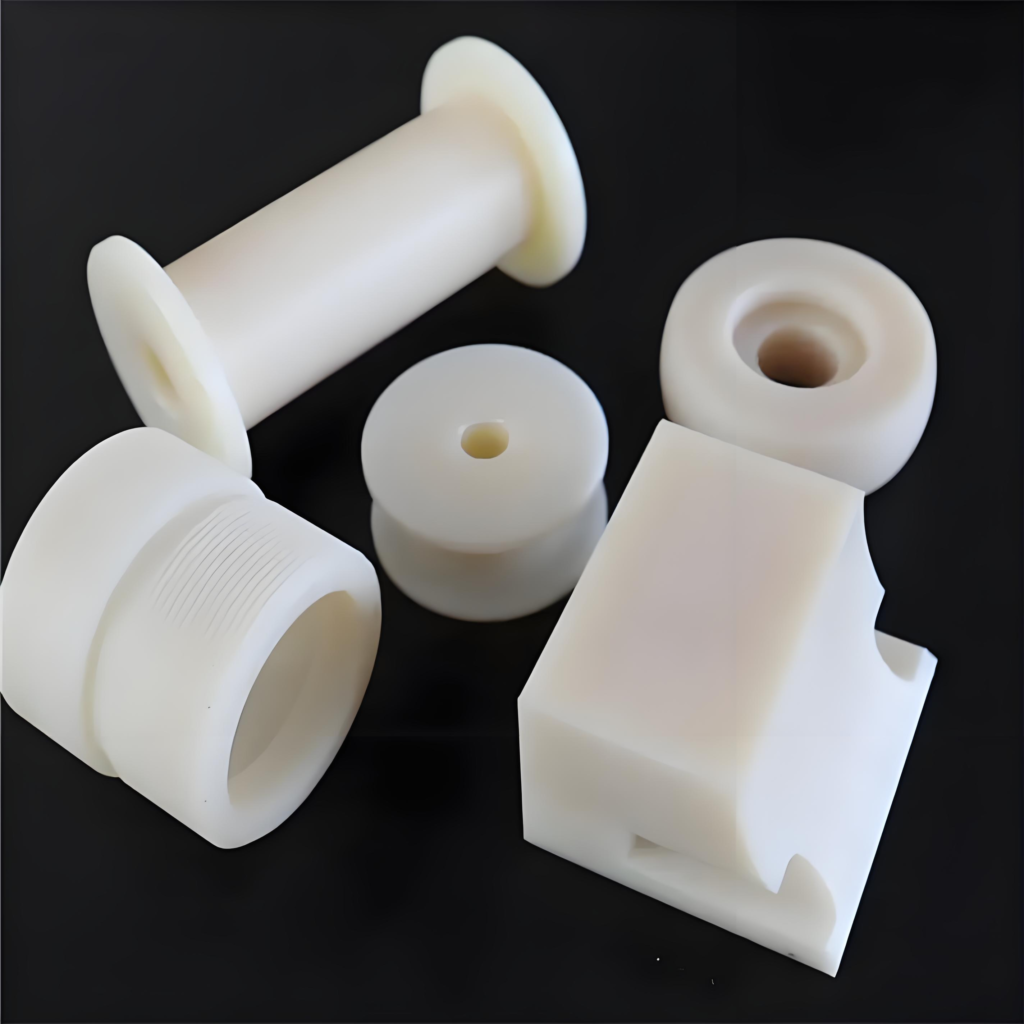
Known for its strength, durability, and resistance to heat and impact, ABS is a popular choice for 3D printing functional prototypes and end-use parts. It’s widely used in automotive, consumer goods, and industrial applications due to its toughness and versatility.
Subtypes: ABS-Like Resin Black ABS-Like Resin Creamy White
Lead Time: About 4 business days
PA (Nylon)
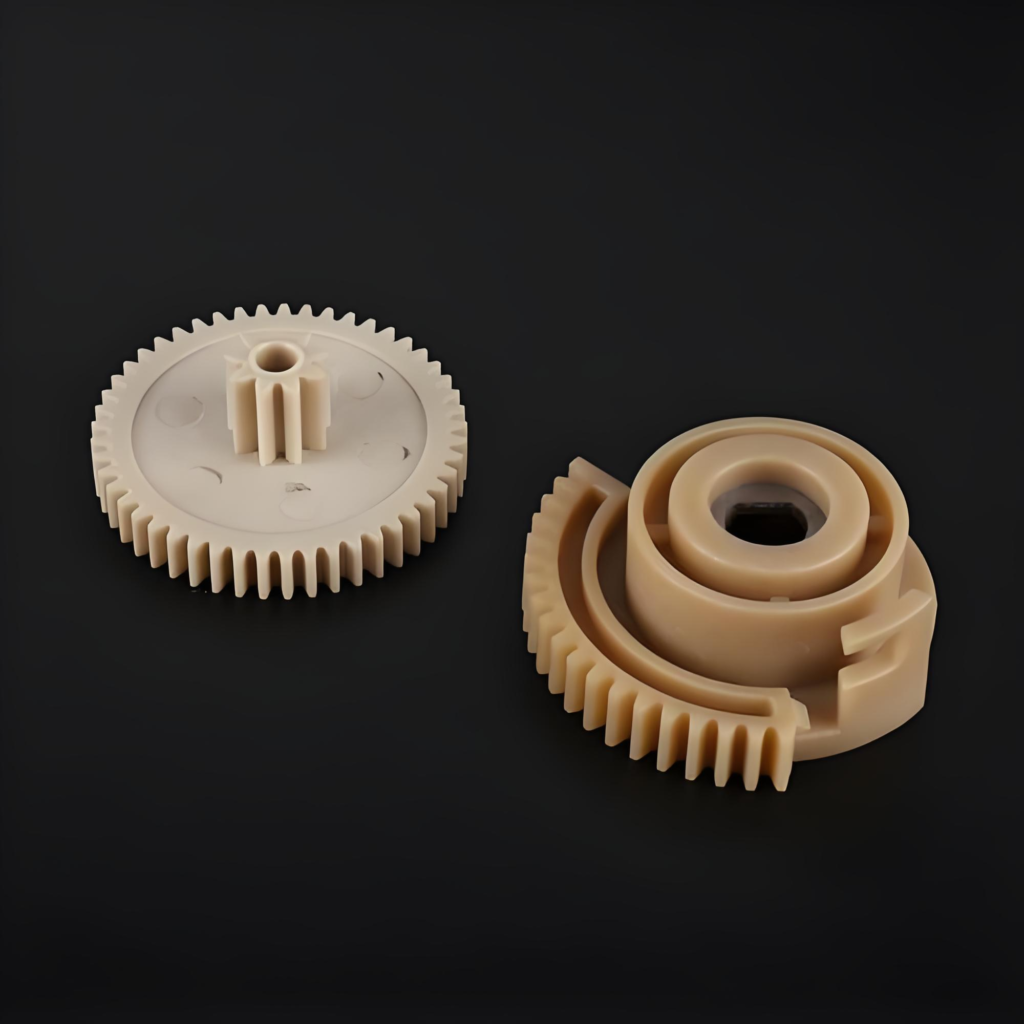
Flexible, tough, and resistant to wear and abrasion, nylon is perfect for parts that need to withstand heavy use. It’s lightweight, has a low friction coefficient, and is often used in industrial applications, gears, and mechanical components.
Subtypes: Nylon Black (High Temperature Resistant 110 ℃) Nylon Black (High Temperature Resistant 140 ℃) Nylon PA12 White Nylon PA12-Black
Lead Time: About 5 business days
3D Print Surface Treatment
Post-processing elevates 3D printed parts in surface finish, appearance, and performance.
Our finishing services work with both plastic and metal components, making them ready for prototypes, functional assemblies, and end-use applications.
As-machined
Precision straight from the machine. Subtle tool marks, maximum cost efficiency. Ideal for functional prototypes and non-critical components with no post-processing required.
Painting
Elevate your parts’ look and longevity. Choose Spray Paint for premium aesthetics, or Powder Coating for tough, corrosion-resistant metal finishes built to last.
Polishing
Mirror finish, precision down to Ra 0.2 µm. Our ultra-smooth polishing elevates luxury goods and optical components with flawless, precision-machined surfaces.
Electroplating
Achieve a bright, corrosion-resistant mirror finish on stainless steel and parts with our electropolishing. Improve performance, extend lifespan, and start small — no MOQ.
FAQ
Is 3D printing cheaper than CNC machining and vacuum casting?
3D printing wins for 1–10 prototype iterations. Vacuum casting is more cost-effective for 20–80 small batches.
CNC machining is better for solid metal high-tolerance end parts.
We will recommend the most cost-efficient process for your quantity.
Do you sign NDA to protect my design files?
All client CAD data is strictly confidential.
We provide formal non-disclosure agreements on request.
Files are permanently deleted after order completion.
No design leakage for your new product development.
Can 3D printing handle small-batch mass production?
Yes. We run 20–200 piece low-volume batches with SLS and SLA.
3D printing avoids expensive injection mold tooling costs.
It works perfectly for pre-production trial runs before mass molding.
We keep consistent quality across the whole batch.
Will you check my 3D model for printing errors before starting?
We run a free DFM analysis on every submitted CAD file.
We catch overhang issues, trapped supports and uneven wall thickness.
Send a revised report to eliminate cracking and deformation early.
No failed prints due to poor design.
Can you remove layer lines and do high-gloss finishing?
SLA parts can be polished to mirror finish without layer marks.
We provide sanding, priming, painting, clear coating and silk printing.
FDM layer lines can be filled and sanded for appearance prototypes.
We match injection-molded cosmetic quality.
How fast can you finish my 3D printed prototype?
Standard SLA / FDM parts ship in 2–3 working days.
SLS nylon and SLM metal jobs take 3–5 working days.
We support rush one-day express production for urgent NPI projects.
Post-polishing and painting will add 1 extra day.
What is your MOQ and how do you calculate 3D printing cost?
Our minimum order is just 1 single prototype part.
Cost is calculated by part volume, material weight and post-processing work.
Batch orders get lower unit pricing for low-volume production runs.
Send CAD files to get an accurate price within 12 hours.
What is the minimum wall thickness for 3D printing?
SLA: 0.2 mm minimum unsupported thin wall.
SLS: 0.3 mm horizontal walls, 0.6 mm vertical walls.
FDM requires a minimum 0.8 mm solid wall to prevent collapse.
We will mark thin-wall risks before production starts.
What dimensional tolerance can you hold on 3D printed parts?
SLA resin parts: ±0.05 mm for small precision features.
SLS nylon parts: ±0.10 mm on most functional structures.
FDM parts: ±0.15 mm with layer lines on vertical surfaces.
SLM metal printing maintains ±0.08 mm consistently.