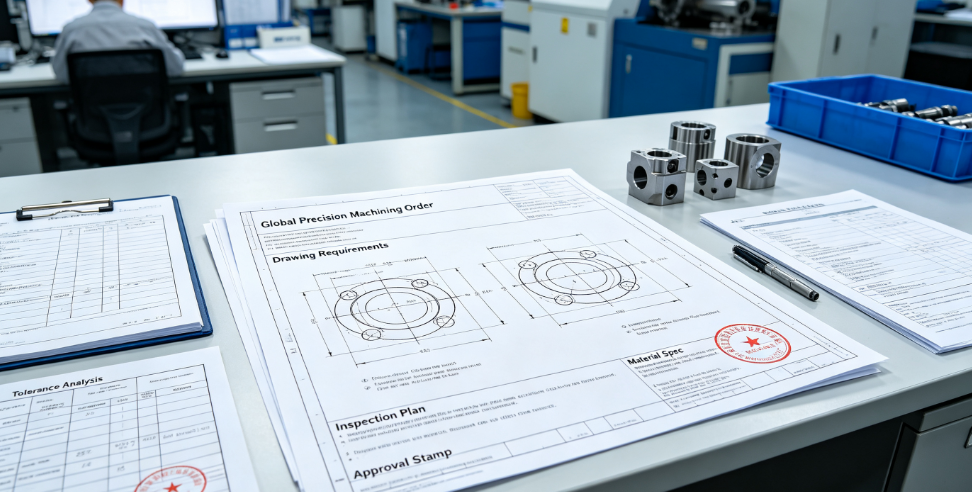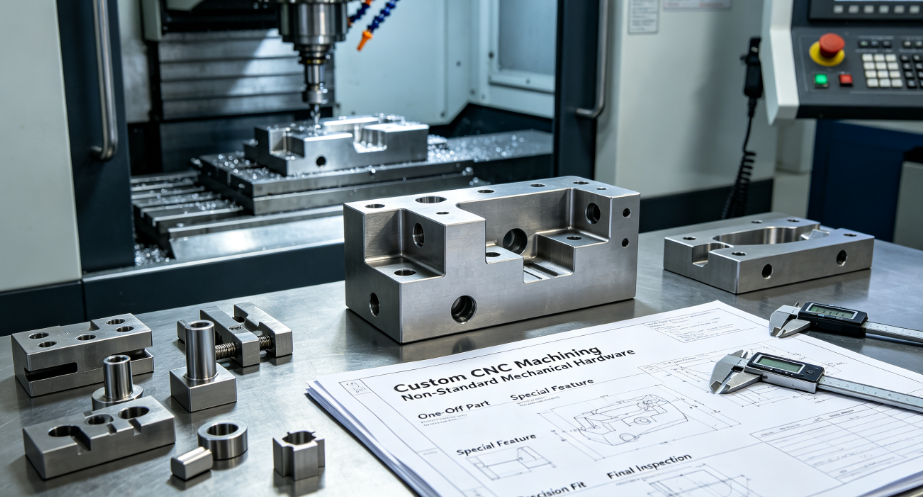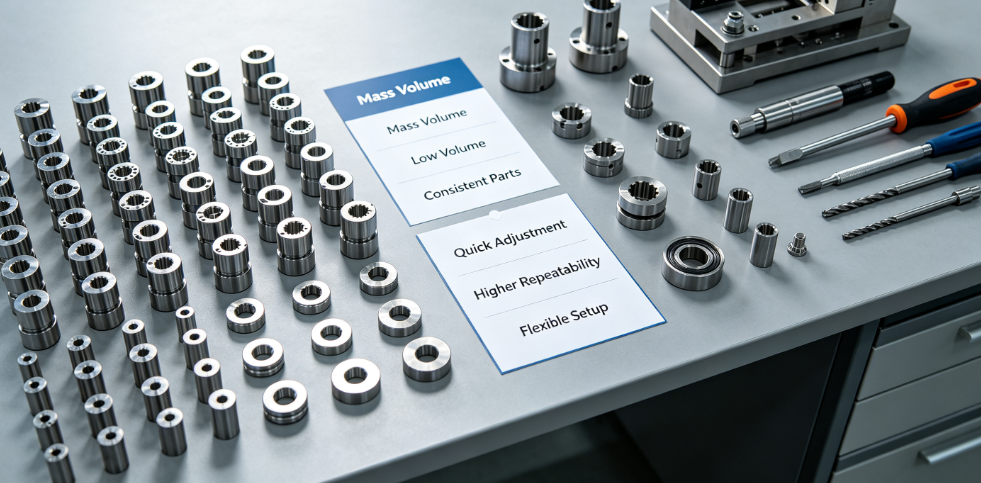
We accept custom non-standard parts starting from 1 piece. What is the sample making process?
Sampling is not as simple as just sending the drawings and waiting for delivery. It involves process review, material preparation, machining, inspection, and possibly surface treatment. Every step takes time, and issues requiring confirmation may arise at each stage.
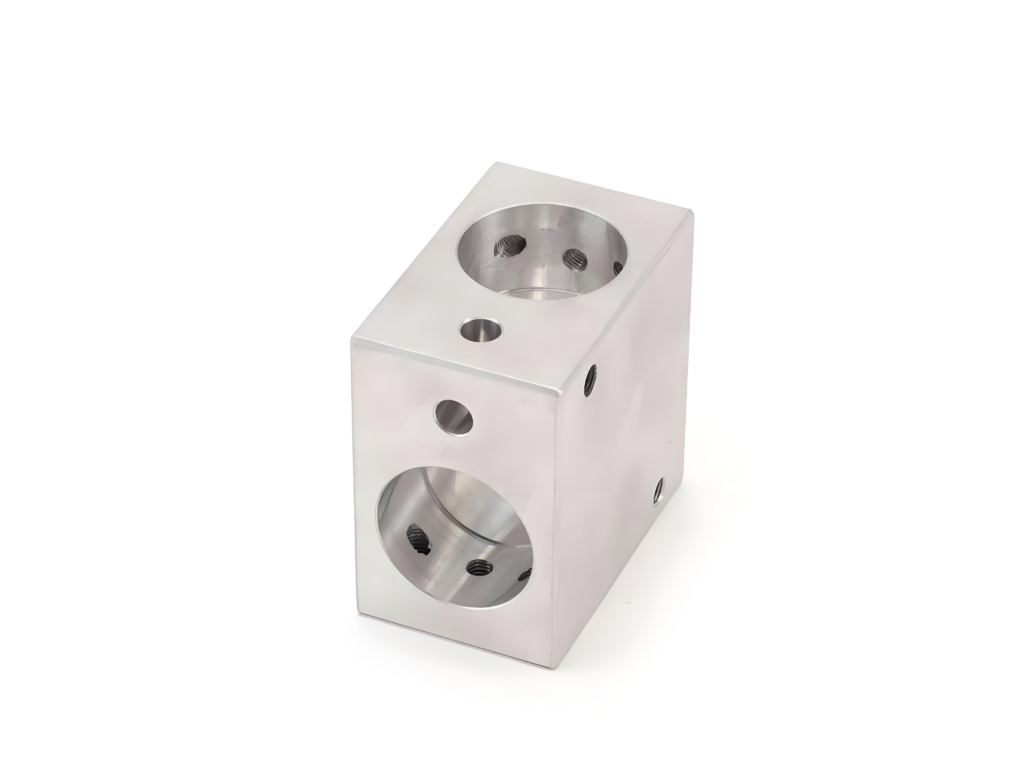
Send drawings and requirement specifications
What needs to be sent?
- Drawing Files: 2D engineering drawing (DWG/PDF format, mandatory) + 3D model (STEP/IGES format, preferred if available)
- Material Requirements: Specify exact material grade (e.g., Aluminum Alloy 6061-T6, Stainless Steel 316L). General terms like simply “aluminum alloy” are not acceptable.
- Quantity: Number of sample pieces
- Surface Treatment: Specify whether anodizing, nickel plating, sandblasting or other finishes are required. If yes, state detailed specifications (film thickness / color).
- Lead Time Requirement: Confirm the exact number of days needed for delivery, with a specific and detailed timeline.
Why we need both 2D and 3D files
Why we need both 2D and 3D files: The 2D drawing serves as the official basis for machining and inspection (all tolerances and dimensions are subject to the 2D drawing). The 3D model helps process engineers understand the 3D structure and avoid ambiguity in view interpretation. Using both together greatly reduces repeated confirmation and back-and-forth communication.
Common bottlenecks
nly sending the 3D model without the 2D drawing — the manufacturer cannot confirm tolerance requirements and can only machine according to IT14 (the loosest tolerance grade). The finished sample will most likely fail to meet precision requirements.
Only marking aluminum alloy for material — no specific grade can be confirmed, resulting in repeated back-and-forth communication for verification.
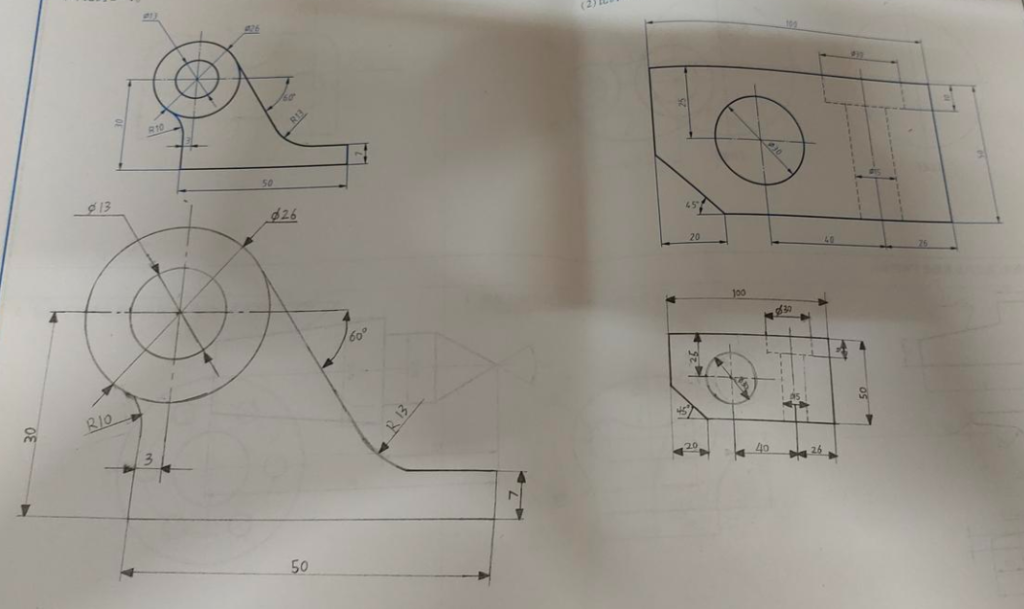
Process Engineer Drawing Review
After receiving the drawings, process engineers start drawing review. Many factories skip this step and quote directly, yet it has a huge impact on the success rate of sample production.
Design for Manufacturability Check
Check whether there are features on the drawing that cannot be achieved by CNC machining, such as closed inner cavities, ultra-small inner fillets with R<0.3mm, and unreasonable depth-to-width ratios of deep cavities.
Tolerance Rationality Verification
Verify if the specified tolerances exceed process capability, or if certain dimensional tolerances are unnecessarily tight — raising costs without functional significance.
Datum Confirmation
Check whether the measuring datums are clearly marked and whether datums for geometric tolerances are well defined.
Surface Treatment Allowance
If anodizing or plating is required, confirm whether sufficient film thickness allowance is reserved for mating dimensions.
Material Validation
Check if the material marked on the drawing is suitable, and evaluate available lower-cost alternative material solutions.
Drawing Review Result:
- With issues: The process engineer will send feedback listing all problem points, pending your confirmation or drawing revision.
- No issues: Proceed directly to quotation and confirmation.
Time Reference:
- Simple parts (regular features, no surface treatment, aluminum alloy): 0.5–1 hour for drawing review.
- Complex parts (multi-sided machining, geometric tolerance required, with surface treatment requirements): 2–4 hours for drawing review.
What engineers need to cooperate with at this stage:
After receiving the process feedback, please reply with confirmation or revise the drawings as soon as possible. Every half-day delay will push the delivery time back by the same length. If there are no issues with the drawings, engineers only need to wait for the quotation without any other operation.
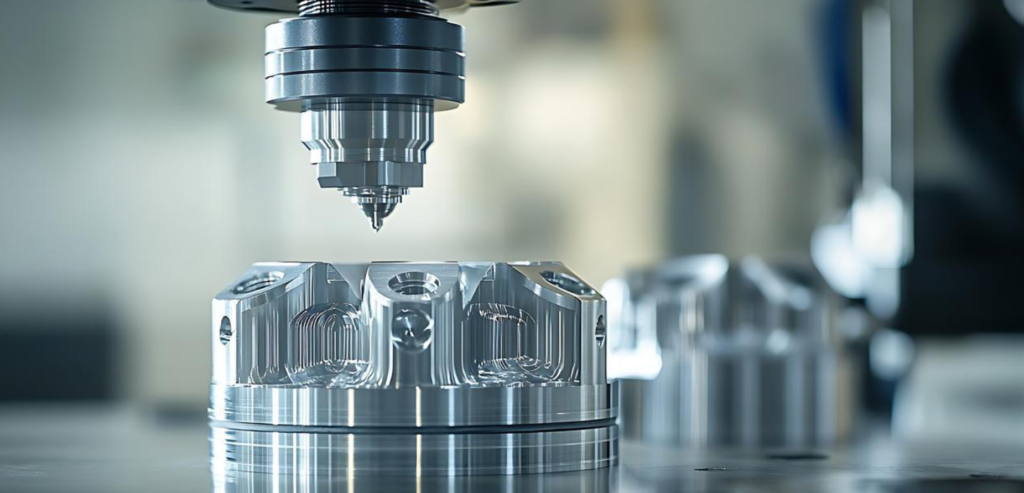
Quotation Confirmation
Quotation shall include the following items:
- Material cost (with specified material grade)
- Machining cost (including programming fee and working hour fee)
- Surface treatment cost (if applicable)
- Inspection cost (clarify full inspection by CMM or sampling inspection)
- Clear lead time (e.g.Parts ready in 3 working day, instead of about 3 days)
- Express delivery fee and packaging fee
Confirmation Items:
Confirm four key items: quotation, material, precision requirements and delivery lead time;
Payment terms: 50% deposit or full payment in advance is normally required for sample production.
Common pain points:
- No lead time stated in the quotation — always require a clear number of working days.
- No itemized breakdown in the quotation — unable to see cost details, making it hard to trace problems afterwards.
- Surface treatment cost not listed separately — easily overlooked, resulting in actual charges inconsistent with expectations.
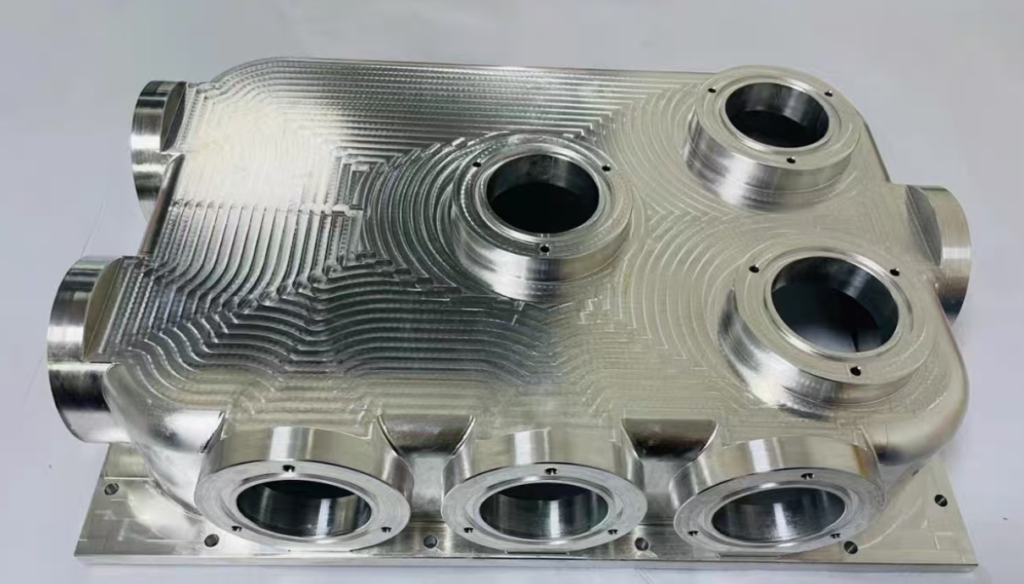
Material preparation, lead time depends on material type.
After order confirmation, the manufacturer starts material preparation.
Standard materials (Start processing on the same day):
Aluminum alloy 6061 bar / plate, stainless steel 304/316L bar, brass C3604. Most precision processing factories keep these in stock, and machining can start on the same day after order placement.
Materials requiring external procurement (add 2–5 working days):
- Aluminum Alloy 7075: In stock at some factories; 1–3 days for procurement if unavailable.
- Titanium Alloy TC4/TA2: Not regularly stocked by most factories, requiring 2–5 days for procurement.
- PEEK rod: Not regularly stocked by most factories, requiring 2–4 days for procurement.
- Ceramics / rare metals: 3–10 days for procurement.
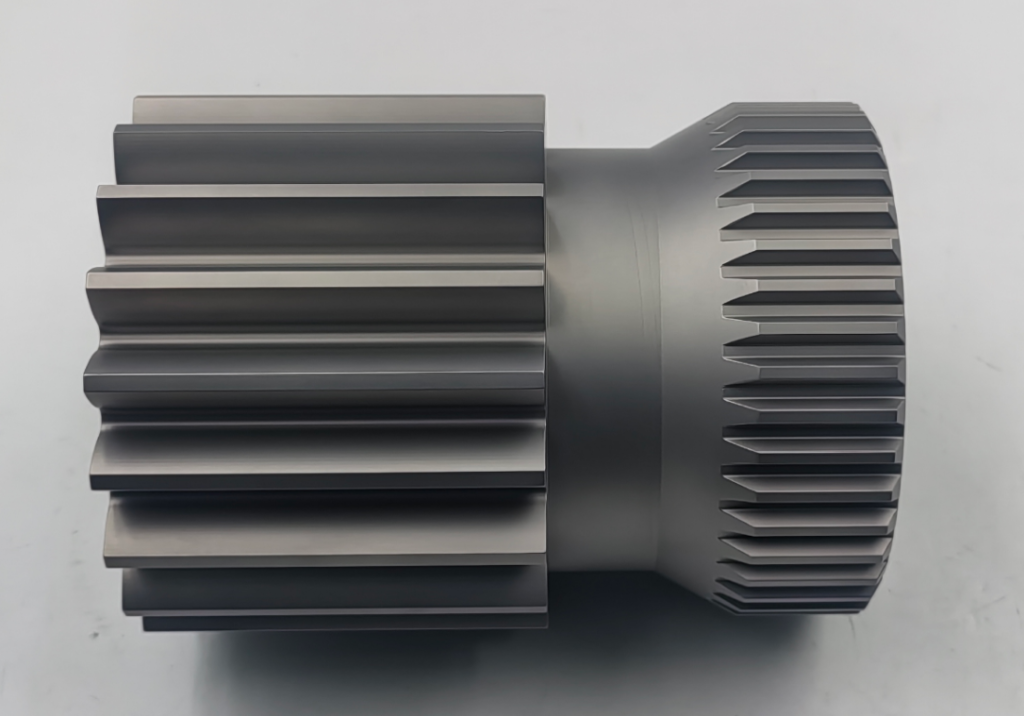
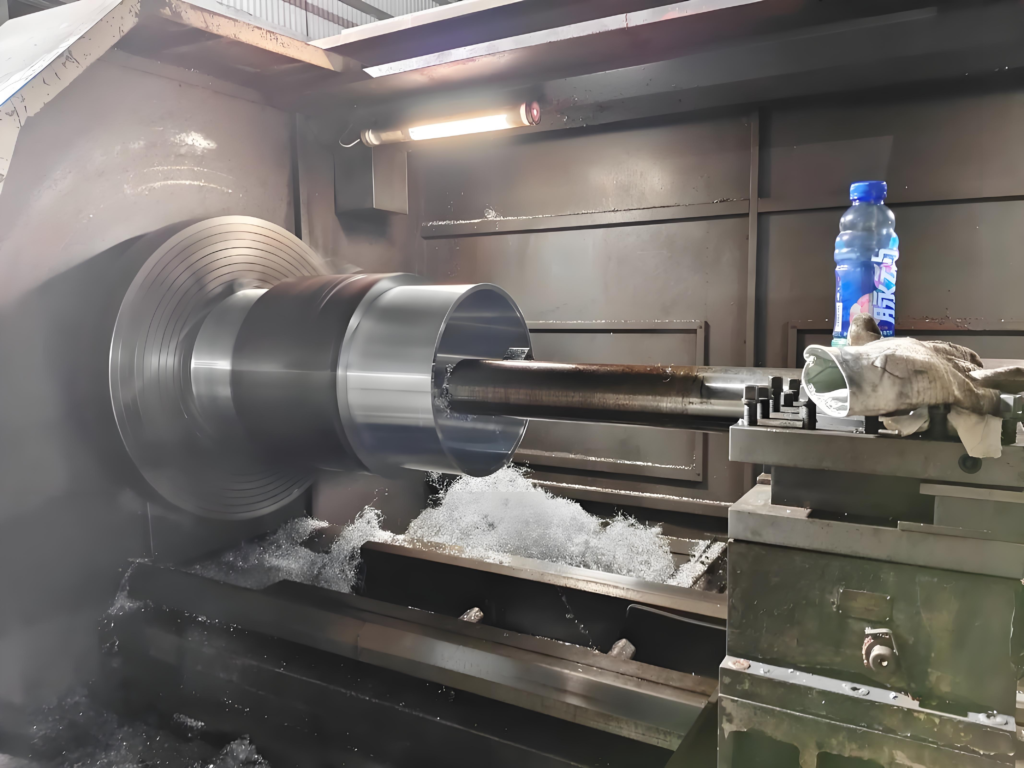
Machining production (1–5 working days, depending on part complexity)
After the materials are in place, process them in accordance with the following procedure:
- Fixture preparation: Select or customize the clamping solution
- General fixtures: Available for direct use, no extra lead time required
- Custom fixtures: Additional half a day to 1 day is needed for fabrication
- Roughing: Remove large amounts of material rapidly to bring the blank close to the final contour.
- Finishing: Precisely machine to the final dimensions per the tolerance requirements on the drawing.
- In-process inspection: Measure critical dimensions with measuring tools before finishing to confirm reasonable allowance distribution.
- Deburring & Cleaning: Remove burrs from all edges and thoroughly clean the parts.
Corresponding time consumption:
Simple aluminum alloy parts (regular holes and grooves, flipping times ≤ 2): Total machining time about 0.5–2 hours; around 1 working day including machine waiting time.
Medium-complexity parts (multi-sided machining, stainless steel, with surface treatment): Total machining time about 2–5 hours; around 2–3 working days.
Complex parts (5-axis multi-sided machining, high precision requirement, thin-wall structure): Total machining time about 4–10 hours; around 3–5 working days.
Detection
After machining is completed, it enters the inspection process.
First Article CMM Measurement:
Each dimension is measured one by one with a CMM, actual values are recorded, and compliance is confirmed by comparing with drawing tolerances.
- Measuring time: Approximately 30 minutes for simple parts, around 1 hour for complex parts.
- Inspection report: Lists the measured values, tolerance ranges, and pass/fail status of every critical dimension.
Visual Inspection:
Perform visual inspection piece by piece to ensure no scratches, no dents, and complete deburring.
Problems found in first article inspection:
- Out-of-tolerance dimensions: Analyze the cause (drawing ambiguity? process parameters? clamping issues?). Rework or remake after confirming the root cause.
- Appearance defects: Rework for improvement (deburring, scratch trimming).
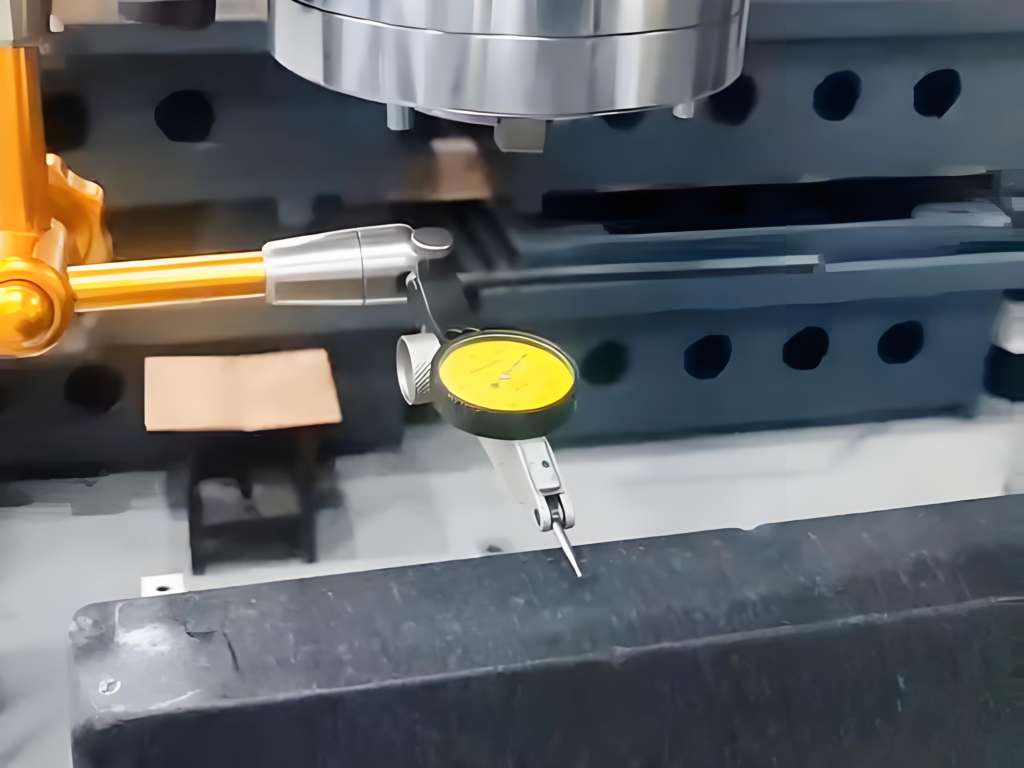
This procedure cannot be skipped. Many factories rush to meet delivery deadlines by skipping full CMM inspection and only conducting visual appearance checks. Out-of-tolerance dimensions are only discovered after shipment — at that point, the cost of rework is far higher than spending an extra half-day on inspection in the first place.
Zorapid follows a complete and standardized inspection process.
Surface Treatment
If the drawing specifies surface treatment requirements, the qualified machined parts will be sent for surface treatment after inspection.
No surface treatment required: Qualified parts will be directly packaged and shipped on the same day or the next working day.
- With external surface treatment required:
- Standard anodizing: +2–3 working days
- Hard anodizing: +3–4 working days
- Electroless nickel plating: +3–5 working days
Packaging
Precision parts are individually wrapped with bubble film and packed in carton boxes on the outer layer to avoid collision during transportation.
Protective sleeves are additionally applied to mating surfaces with precision requirements.
Shipping documents enclosed with each shipment:
- CMM inspection report (including measured actual values)
- Material certificate — provided if required by drawings or specified by engineers
- Express tracking number
After the engineer receives the parts:
First check whether the package is intact, then unpack and inspect the appearance. Finally, verify the critical dimensions with measuring tools and compare them against the inspection report. Contact the factory immediately if any issues are found; do not delay feedback for a long time.