Grinding machines deliver precise clean cuts and achieve fine surface finishes on metal workpieces.
Widely used in manufacturing, especially automotive and aerospace, where premium surface finish is essential.
If you are looking for professional knowledge about grinding machines, you’re in the right place. Zorapid will walk you through the common types and technical specifications of grinding machines.
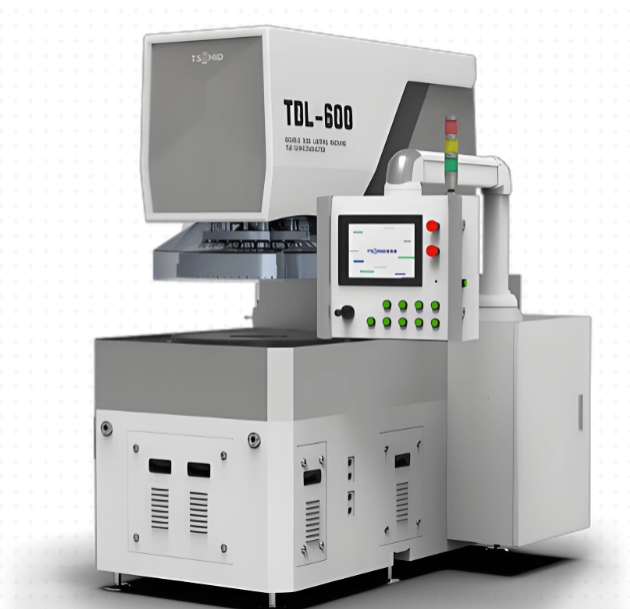
What Is Grinding Machining?
Grinders remove excess material from metal surfaces for smooth finishes. Using a grinding wheel to cut the workpiece, they deliver fine surface quality and custom shapes per application needs.
Key Characteristics of Grinding Machining
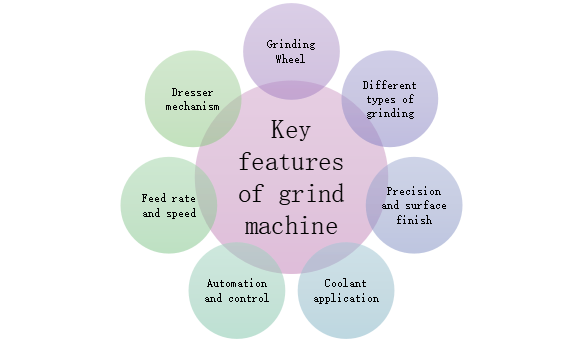
Grinding machines come with many practical features; the most essential ones are listed below:
- Grinding wheel
- Dressing mechanism
- Feed rate and speed
- Automation and control
- Coolant application
- Precision and surface finish
- Various types of grinding
How Does Grinding Work?
This guide explains how the grinding process operates.
Basic Principles of Grinding
The principles follow these key steps:
Grinding wheels vary by material, so selecting the proper wheel is the first step. Next, adjust the feed rate and speed, then mount the workpiece.
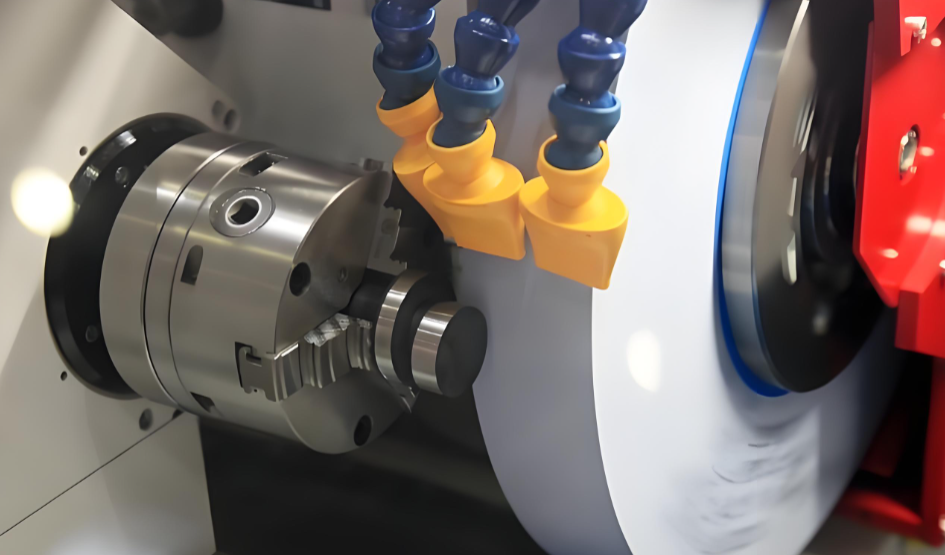
Coolant is constantly applied during operation to control heat and preserve structural integrity.
Key Factors Affecting the Grinding Process
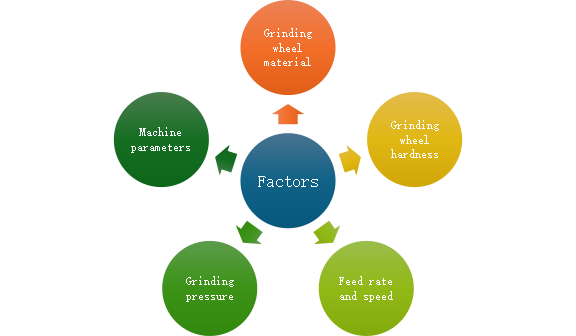
The following factors can influence grinding performance and require close attention for effective operation:
- Grinding wheel
- Dressing mechanism
- Feed rate and speed
- Automation and control
- Coolant application
- Precision and surface finish
- Different types of grinding
Common Grinding Machines
These are widely used grinding machines across various industries, including the following types:
- Belt grinding machine
- Bench grinder
- Cylindrical grinding machine
- Surface grinding machine
- Flexible grinding machine
- Jig grinding machine
- Table grinding machine
Advantages and Disadvantages of Grinding
Discuss the notable advantages and disadvantages of using grinding machines.
Advantages of Grinding in Precision Manufacturing
- Delivers high precision and dimensional accuracy for workpieces.
- Provides an excellent smooth surface finish.
- Machine parameters can be adjusted according to custom requirements.
- Capable of producing complex shapes through grinding.
Disadvantages and Limitations of Grinding
- High operational cost
- Heat dissipation issues
- Excessive noise generation
When to Choose Grinding Over Other Machining Processes
The choice depends entirely on the material type and application requirements. As a general rule, grinding is preferred when a lower material removal rate (MRR) is acceptable. For small workpieces that require a smooth, precise surface finish, grinding machines are the better option over other machining methods.
Applications of Grinding
The main applications of grinding are as follows:
- Performing precise, clean small cuts on complex workpieces.
- Grinding machines play a vital role in the aerospace and medical equipment industries.
- Used for prototyping and manufacturing small-sized products.
Types of Grinding Processes
The following section covers the major process types performed by grinding machines:
Surface Grinding
In this process, the grinding wheel remains in constant contact with the workpiece. The typical operating speed ranges from 28–33 m/s, with a material removal rate (MRR) of 1 in³/s, serving as a key technical characteristic for this type of grinding wheel.
Cylindrical Grinding
Cylindrical parts requiring tight tolerances are processed by cylindrical grinding. For this grinding method, the operating speed is 25 to 33 m/s, with an MRR of 1 cubic inch per second.
Centerless Grinding
In centerless grinding, the work blade supports the workpiece alone during machining. It suits cylindrical parts with no fixed geometry required, running at 23–30 m/s and delivering 1 in³/s MRR.
Internal Grinding
Internal grinding machines bore and finish inner holes and tubular parts, running 33–48 m/s with 0.5–1 in³/s MRR.
Creep Feed Grinding
Creep feed grinding enables the efficient completion of complex machining within a short cycle time. It is well-suited for high-strength alloy components in the aerospace industry, with a typical operating speed of 0.10 m/s.
Profile Grinding
Profile grinding is recommended whenever ultra-high precision is required, as acknowledged by professional operators. Its operating speed ranges from 20–25 m/s, with an MRR of 30 in³ per second.
What Materials Can Be Used in Grinding?
Grinding machines can process a wide range of materials, including steel alloys, aluminum and aluminum alloys, titanium, and more. Ceramic materials are difficult to machine with grinding processes, but this ultimately depends on the specific application.
Grinding Technology
Key technical details of grinding you need to know:
Abrasives in Grinding Wheels
The following are the most common abrasive materials used in grinding wheels:
- Aluminum Oxide
- Silicon Carbide
- Diamond
- Cubic Boron Nitride (CBN)
- White Aluminum Oxide
Speed, Feed and Depth of Cut in Grinding
Speed: Speed refers to the rotational speed of the grinding wheel, measured in RPM (revolutions per minute).
Feed Rate: It indicates the traveling speed of the grinding wheel relative to the workpiece, measured in mm/min and ipm.
Key Considerations for Grinding Tool Steel
When grinding tool steel, the following essential measures must be taken to avoid serious processing issues:
- Select a suitable grinding wheel according to the workpiece material.
- Choose the right coolant to control heat generated during cutting.
- Adopt an appropriate average grain size.
- Apply optimal speed and feed rate parameters.
What Is the Difference Between Milling and Grinding?
Milling uses single or multiple cutting tools. This operation has a higher material removal rate (MRR) but delivers a relatively lower surface finish.
Grinding uses only a single grinding wheel. Although its material removal rate is lower than milling, it provides a superior surface finish compared to milling.
FAQ
What is the working principle of grinding?
Hard abrasive grains on the wheel act as micro cutting edges. They remove tiny material layers at minimal cutting depth, eliminating tool marks and burrs for precise dimensions and mirror-like surface finish.
What are the main types of grinding?
Main types include cylindrical grinding, internal grinding, surface grinding, centerless grinding, tool grinding, form grinding and face grinding, suitable for various part shapes and precision requirements.
What precision and surface specs can grinding achieve?
Dimensional tolerance up to ±0.002mm, surface roughness Ra0.2~Ra0.8. It corrects flatness, perpendicularity, roundness and other geometric errors.