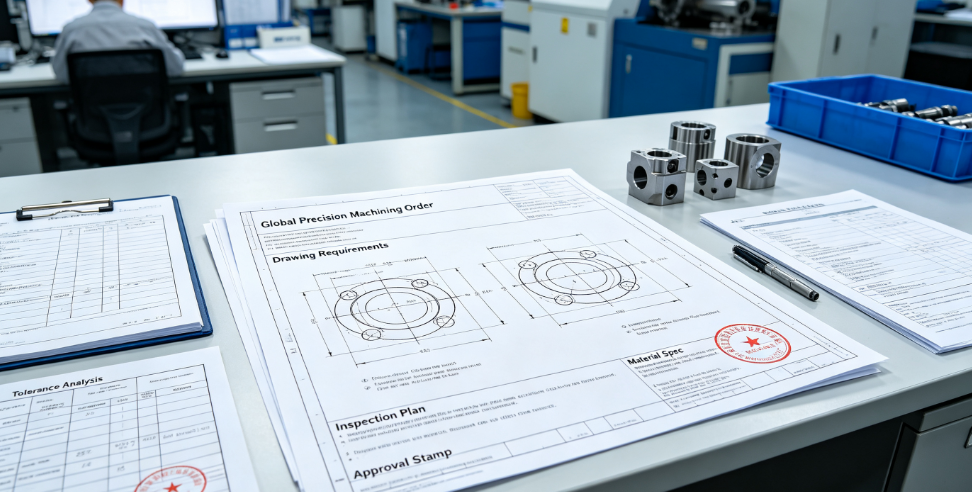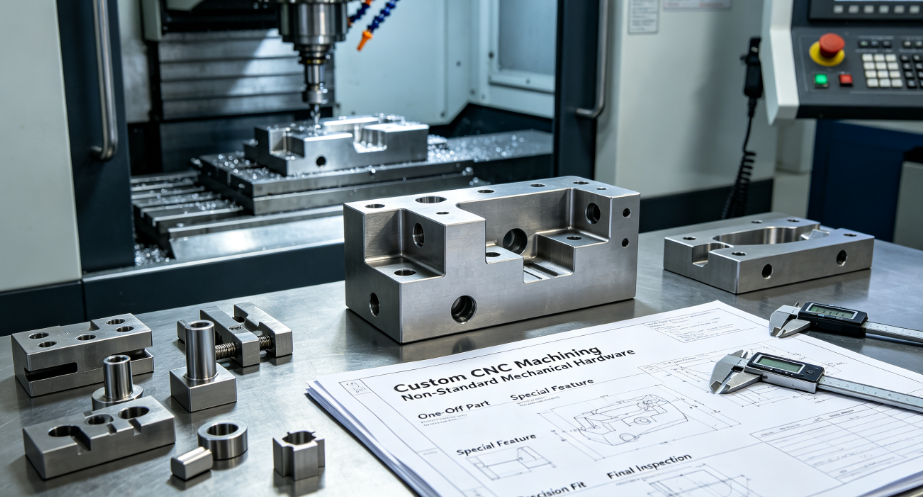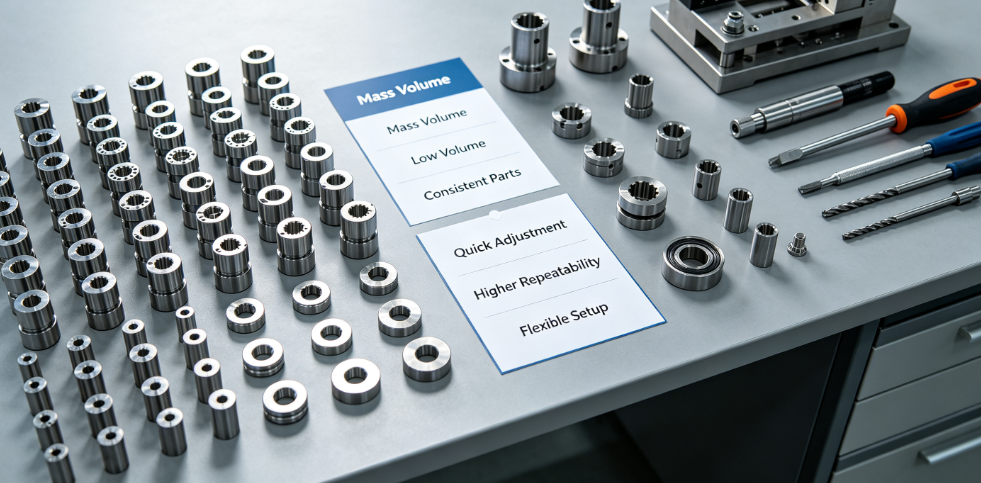
We provide professional mold manufacturing services tailored for the precision manufacturing industry, covering product mold design, precision mold processing, mold trial production, and after-sales maintenance.
Equipped with advanced CNC machining and precision testing equipment, we deliver high-precision, long-service-life molds for automotive, aerospace, medical devices, electronic components and other fields, supporting customized development and mass production demands.
What is Mold Manufacturing?
Mold manufacturing is a production process that creates parts of specified shapes from molten materials by using molds and fixed frames. The molten material is poured into a cavity container made of metal. The liquid material solidifies through chemical reaction or cooling, then sets completely. Finally, the finished part is ejected from the mold in the predefined shape.
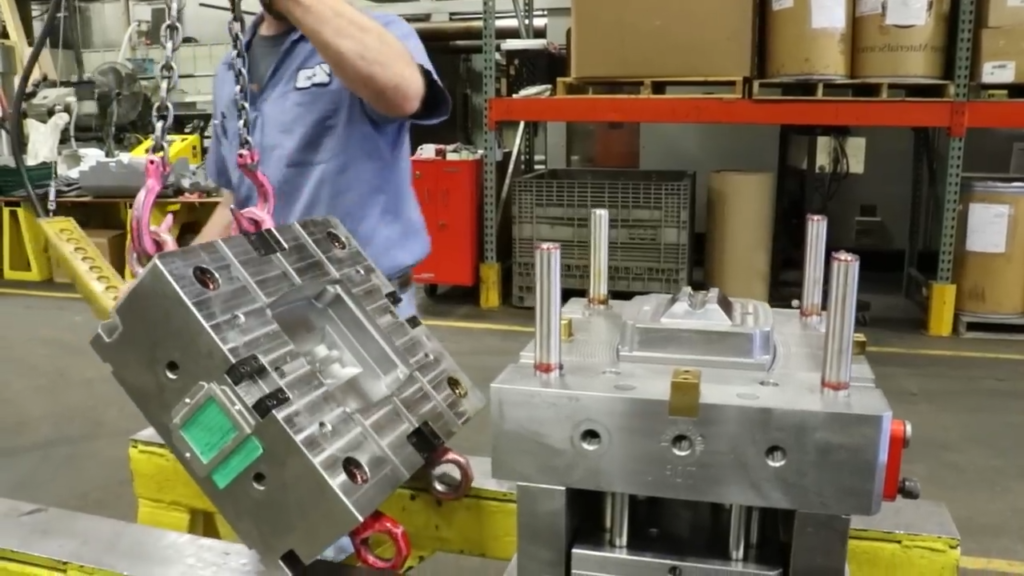
What are the applications of mold manufacturing?
Molds are vital for production, casting uniform parts from liquid materials per design. Common mold materials include metal, plastic, wood, foam and ceramics. After design confirmation, molds are fitted to molding equipment; raw materials are injected or poured in to solidify into finished parts.
What is a mold maker called?
Mold manufacturing professionals are known as molders, casters or core makers. These skilled technicians work in foundries to cast metal parts with molds.
How much does it cost to make a mold?
The cost of mold manufacturing depends on factors such as design complexity, production volume, material type, and production process. A simple 3D printed mold may cost around $100; custom silicone molds range from $600 to $800, while molds for mass production can cost up to $100,000.
Why is mold manufacturing so expensive?
Mold production costs can be high due to multiple factors, including material type and availability, design complexity, initial setup work, production volume requirements, strict quality control, labor costs, and product inspection procedures.
What Type of Mold Should You Choose?
As a global mold manufacturing hub, we deliver cost-effective solutions and strong mass production capacity. The cost of mold design depends on design complexity and the size of molded parts. When selecting a mold, take the following factors into consideration: design and manufacturing, material sourcing, certification, cost, as well as maintenance and technical support.
3D Mold Design Services
Professional customized one-stop 3D mold design, efficiently and accurately adapting to various mold opening and mass production needs.
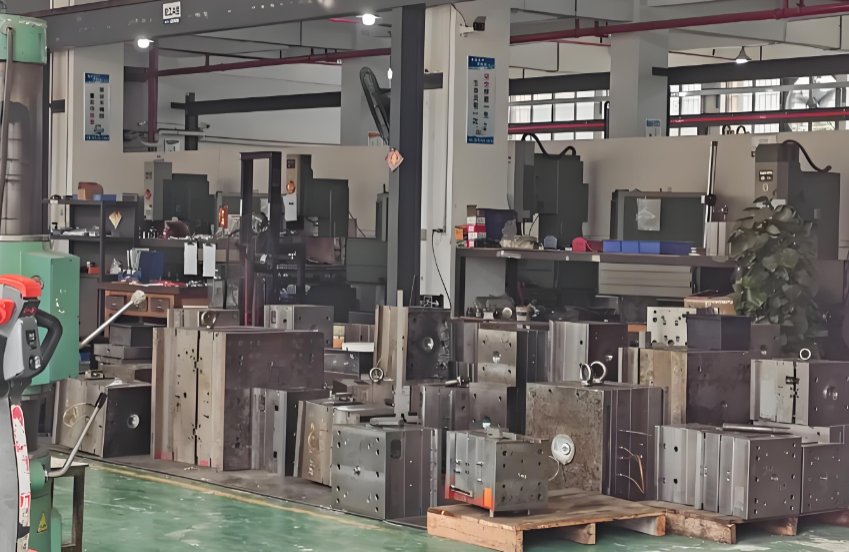
Steps to Create a Mold
Before obtaining services, you must understand the steps followed by the service provider and complete your order with careful inspection.
Start with a Free Quote
The process begins with requesting a quote. If you choose Zorapid, our team will contact you within 6–12 working hours after confirming your quote. All provided quoted information will remain confidential, and we’ll file a disclosure form to safeguard against misuse.
From Design to Testing
Mold design includes design drafting, material selection, cost estimation, machining and assembly, inspection, and quality control.
Rapidly Turn Concepts into Products
CAD/CAM software for design and drafting speeds up prototyping. Custom 3D silicone molds deliver high-quality results. It enables complex prototyping and mass production using materials such as metals and plastics with a variety of surface finishes.
4 Methods of Metal Mold Manufacturing
Common metal mold making methods include sheet metal fabrication, CNC machining, injection molding, and casting.
Sheet Metal Fabrication for Mold Manufacturing
Sheet metal fabrication shapes sheet stock into custom forms via cutting, bending, folding and assembly, producing simple to complex mechanical parts for customized mass production.
CNC Machining for Precision Mold Manufacturing
CNC machining is a widely used production process for manufacturing precision molds. These molds serve industries such as automotive, aerospace, and medical to create complex shapes and mold designs. Molded parts feature tight tolerances and precise mold dimensions. CNC machining technologies used in mold manufacturing include CNC drilling, CNC grinding, CNC milling, and more.
Injection Molding
This is a production process that creates parts by injecting molten materials into a mold. A wide range of materials can be used, including metals, alloys, plastics, and others.
Casting Methods
Metal casting is a 7,000-year-old process that transforms molten metal into solid products with defined shapes. Casting methods include sand casting, die casting, centrifugal casting, investment casting, permanent mold casting, and more.
3D Printing vs. Injection Molding
Both methods are widely used, yet each has its own advantages and limitations. 3D printing offers design freedom, fast turnaround, suitability for small-batch production, greater design complexity, and higher material efficiency. Injection molding is best for large-scale production and late-stage prototyping.
Material Selection for Custom Metal Molds
There are many options for custom metal molds. Some of the most common include:
QC7/QC10 Mold Aluminum
These are mold materials specifically engineered for injection molding. These high-strength aluminum mold plates offer excellent through-hardness and superior thermal conductivity.
Pre-Hardened 4140 Steel
It is a chromium-molybdenum alloy steel with moderate hardness achieved via heat treatment. Widely used in mold manufacturing, it is typically applied to produce heavy-duty rotating components due to its high strength and toughness.
Tool Steel, Aluminum & Copper Alloys
Tool steel is a popular choice for mold making because it requires little maintenance, though it is relatively costly. Aluminum and copper alloys are optimal for cost reduction and offer high thermal conductivity.
Mold Casting Materials
Casting materials for mold making include silicone, plaster, latex rubber, or PU. These materials are durable, flexible, and able to capture fine details on molded parts. Generally, casting rubber is used to manufacture molds.
Types of Molds We Provide
Zorapid offers a full range of mold manufacturing options to ensure high-quality products. These include plastic injection molds, metal injection molds, extrusion molds, and die casting molds:
Injection Molds
In this process, metal molds are used to produce parts from molten plastic. The mold is clamped inside the machine by an injection unit that melts the plastic. Some commonly used plastics are polypropylene (PP), polycarbonate (PC), and thermoplastic polyurethane (TPU).
Metal Injection Molds
This process is identical to plastic injection molding. It is a metalworking technique that forms shapes by melting metal, which then solidifies into complex molded parts to achieve the desired shape and dimensions.
Die Casting & Investment Casting Molds
Die casting molds are permanent, while investment casting molds are disposable. In die casting, the mold is made of steel and consists of two halves mounted on the casting machine. In investment casting, wax is used to create the mold, which is discarded after use. Die casting is ideal for mass production, while investment casting is best for small-batch production.
Extrusion & Sheet Metal Molds
Extrusion is a metalworking process in which a mold is used to shape molten metal. It is commonly used to produce tubes, rods, and bars. Sheet metal fabrication follows a similar forming logic to extrusion. This metalworking process can manufacture products ranging from swords to aircraft components, making it one of the most versatile and valuable production methods available.
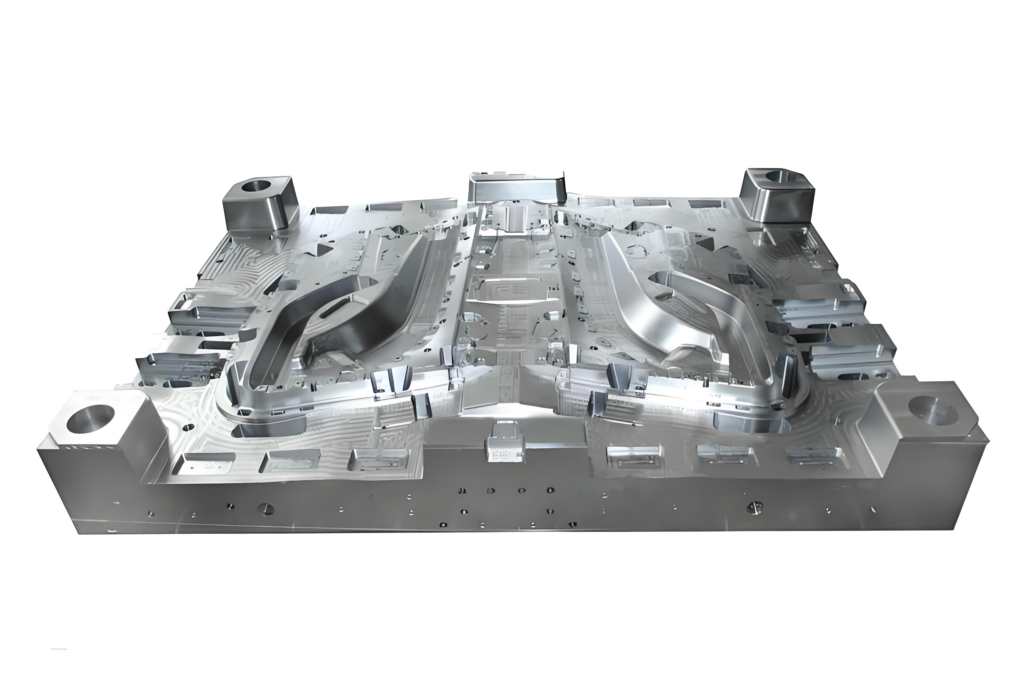
Key Features of Our Mold Manufacturing Services
Zorapid delivers one of the finest mold manufacturing services in the industry. Wondering why you should choose our mold manufacturing solutions? Here are the key reasons!
Fast DFM Report & Rapid Prototyping
We provide prompt DFM analysis reports and efficient rapid prototyping services. If you are unfamiliar with these professional terms, we will explain them clearly for you.
DFM stands for Design for Manufacturability. It is a professional analytical tool used to evaluate product designs and verify whether the design is fully suitable for injection molding production.
If any design defects or manufacturability risks exist, we will clearly point out all production-related issues, ultimately minimizing structural complexity and overall manufacturing costs.
Rapid Prototyping (RP) refers to quickly manufacturing physical models and components based on 3D CAD designs.
We conduct thorough testing and evaluation of mold designs before formal mass production launch.
Versatility of Mold Applications
Zorapid offers a comprehensive range of mold designs suitable for all industries. Our molds can be customized for jewelry making, automotive parts, medical instruments, aerospace components, food processing equipment, and more. Our mold manufacturing services are highly flexible and widely applicable across diverse fields.
Fast Turnaround Time
The turnaround time varies according to design complexity and production volume. Zorapid provides efficient fast turnaround, ensuring on-time order delivery while guaranteeing product quality through rigorous post-production inspection procedures.
Advanced Forming Capabilities for Diverse Industries
Mold manufacturing technology has been evolving continuously since its invention. Amid the Fourth Industrial Revolution, it has become a remarkable achievement for engineers and designers.
Hydraulic and Mechanical Forming Machines
Hydraulic presses are an essential category in injection molding. As core forming equipment, they shape various products from molten plastic. Advanced machinery and technologies such as hybrid injection molding machines combine the advantages of hydraulic and electric injection equipment. Micro-injection molding, gas-assisted injection molding, overmolding machines, along with automated functions and software development, are among the latest technological advancements.
Electric and Pneumatic Machinery
Electric machinery differs from pneumatic machinery in power source and operational mode.
forming machines adopt high-speed servo motors and digitally controlled power systems. They deliver higher speed and efficiency than hydraulic presses, with lower risks of operational accidents and environmental pollution. Pneumatic machines rely on air pressure to generate clamping tonnage.
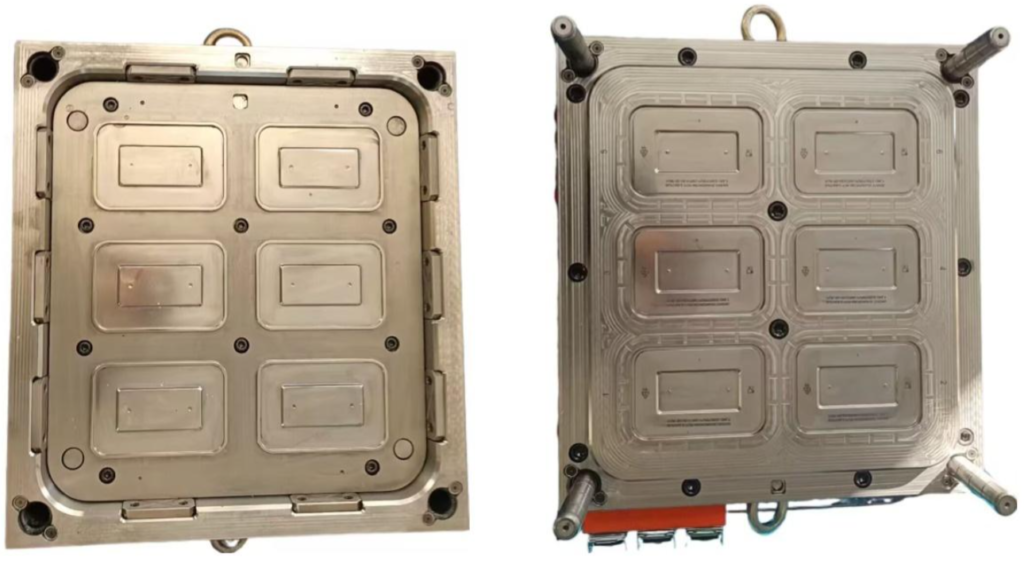
Benefits of Choosing Zorapid Mold Manufacturing Services
Cost-Effective Solutions
Compared with other mold manufacturing services, we are the preferred choice of clients thanks to our cost advantages. We can significantly reduce your production costs by up to 70%. We are always ready to communicate with you and provide tailored solutions to meet your needs.
Reliable Quality Control and Performance Testing
We never compromise on quality control and performance testing. Zorapid conducts thorough quality inspections and performance tests on every product. Our professional and advanced equipment ensures all delivered products are fully functional and operate perfectly.
Flexible material selection and strict quality inspection enable parts to feature highly customized properties that fully meet your expectations and performance standards.
Expertise in Short-Run and Mass Production Molds
Zorapid is fully capable of handling large orders and delivering products within a short lead time. Such high efficiency relies not only on our advanced machinery, but also on our professional engineers, designers, skilled workers and high-quality overall team.
Standout Mold Manufacturing Projects
Automotive Component Molds
Zorapid provides rapid prototyping services for automotive parts with no limitations on design complexity, production volume, or material selection. We ensure your prototype parts deliver superior efficiency and premium quality.
Precision Reflector Core Molds
We supply high-quality reflector core molds. For those unfamiliar with this technology, such molds are used to shape light-reflective materials that deliver high visibility under low-light conditions.
Custom Glass Protection Molds
Zorapid offers custom glass protection molds as fully professional OEM products, suitable for all manufacturing factories. We provide competitive quotations for individual mold design projects and custom mold manufacturing services.
FAQ
When Do You Need a Fully Automatic Mold?
Fully automatic molds are required when you have large production volumes, need ample space for manual loading and unloading of injection molds, or produce highly complex parts.
What Is the Typical Service Life of a Mold?
Mold service life depends on factors such as mold type, material used, mold condition, working environment and maintenance. A standard mold can last up to 500,000 cycles.
Can Molds Be Customized into Any Shape?
Yes, molds can be customized into almost any shape, though there are practical limitations in terms of cost, dimension range and design complexity.