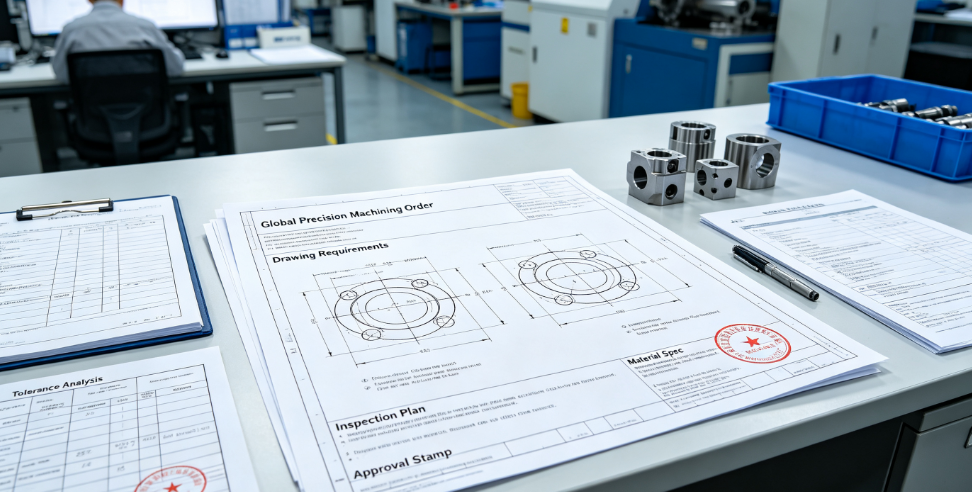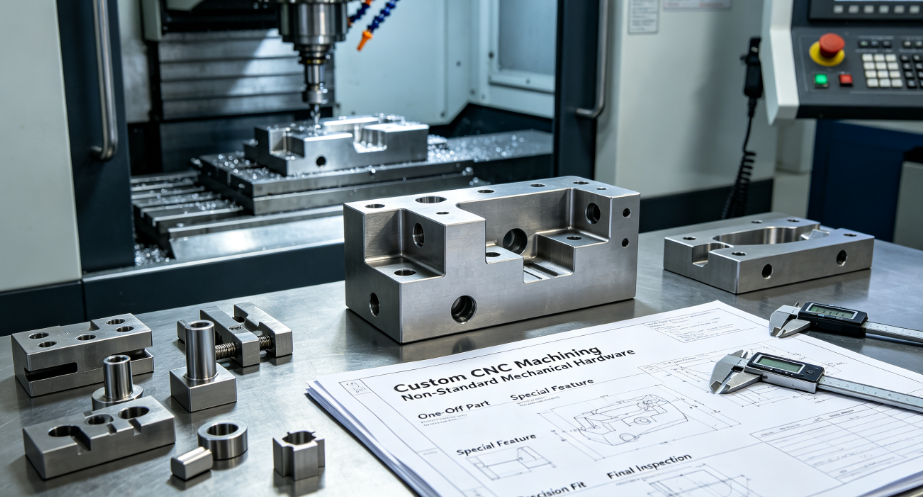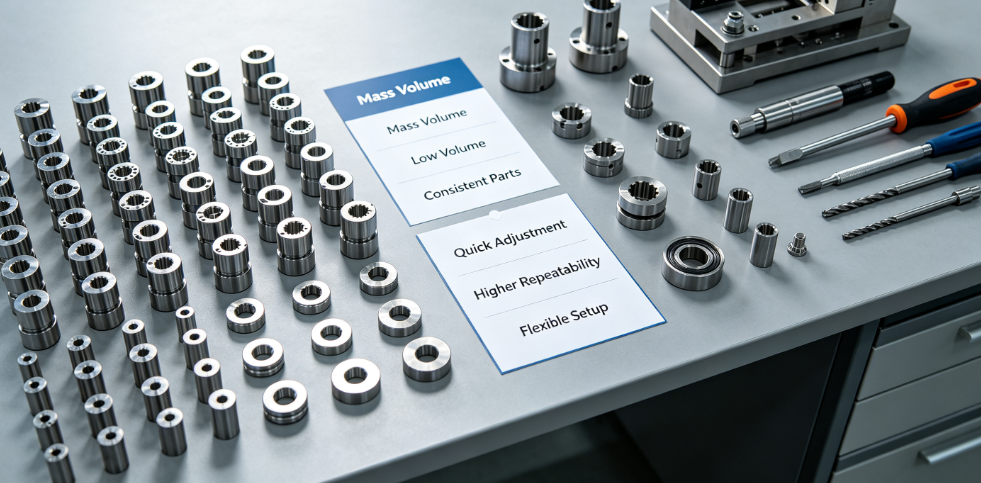
With the title What Are Precision Turned Parts, you will gain a clear understanding.Precision means the parts feature tight tolerances and excellent surface finish.Turned parts refer to components manufactured through the turning process.It represents the dimensional accuracy of parts produced by turning operations.
What Is Precision Machining?
Precision means parts maintain tight tolerances with 99% dimensional consistency to design specs. Precision machining covers surface roughness, finish and dimensional accuracy.
machining includes various processing methods such as milling, drilling, and turning. These processes use multiple cutting tools to shape raw workpieces into the final required form. Advanced equipment like CNC machines is the reason we have aircraft, high-end automobiles, and other sophisticated products in daily life.
Precision Turned Parts vs Standard Turned Parts
Precision and standard turning share the same basic lathe and CNC process, differing only in accuracy and tolerance range.
Key Characteristics of Precision Turned Parts
- Achievable tight tolerances
- Easy machining of complex geometries
- Excellent surface finish quality
- Compatible with a wide range of materials
How Precision Machined Parts Benefit Industries
Perfect dimensional accuracy, fine surface finish and ideal roughness greatly cut equipment failure rates. Lower failures reduce material waste and cost losses, delivering solid economic benefits.
Precision parts feature longer lifespan and higher reliability.
Manufacturing Process of Precision Turned Parts
General precision machining includes processes such as milling and drilling. Special focus will be placed on precision turned parts.
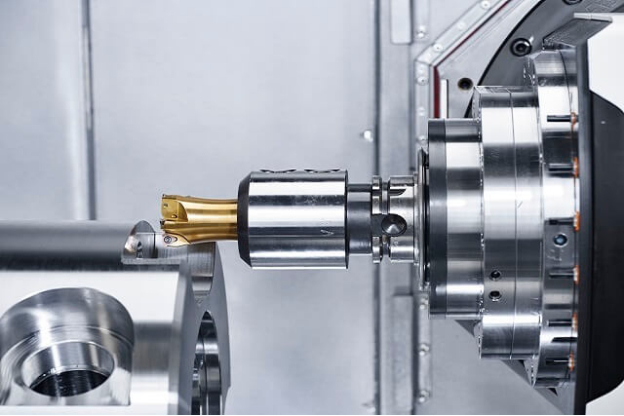
Overview of the Precision Turning Process
The general working mechanism of the precision turning process is that the workpiece rotates relative to a stationary cutting tool. The process involves:
- Mounting the workpiece onto the lathe
- Selecting suitable cutting tools
- Inspecting the workpiece and cutting tools before operation
- Choosing the optimal cutting speed and feed rate
Turning can be performed manually or automatically. For CNC machines, the turning process is well-suited for precision part manufacturing due to its automation.
Swiss machines are ideal for producing small and complex parts.
CNC Turning: A Core Technology for Precision Manufacturing
Application of CNC machines in producing precision turned parts.
CNC stands for Computer Numerical Control. It means the machine is controlled by a computer, specifically through CNC programs. On a CNC machine, the required or optimal speed, feed rate and other parameters are set in advance, and the machine runs automatically without manual operation.
CNC programming plays an essential role in precision machining. With programming, CNC machines automatically follow design parameters throughout the material removal process.
The automation of CNC machines enables the production of high-quality components with complex geometries.
Swiss Screw Machining: High-Precision Turning Process
- Fast production speed
- Minimal tool wear during operation, delivering excellent dimensional accuracy
- Low material waste and high material utilization efficiency
Comparison Between Swiss Machines and CNC Machines for Precision Turned Components
Swiss Machines
- Specially designed for small and complex components
- Fast production speed
- Suitable for mass production of parts
Conventional CNC Machines
- Suitable for medium to large-sized components
- Relatively slower production speed
List of Precision Turned Parts
It provides information about various types of turned parts made from different materials.
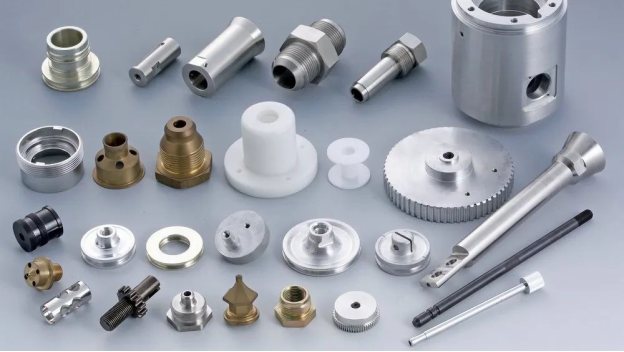
Small Precision Turned Parts
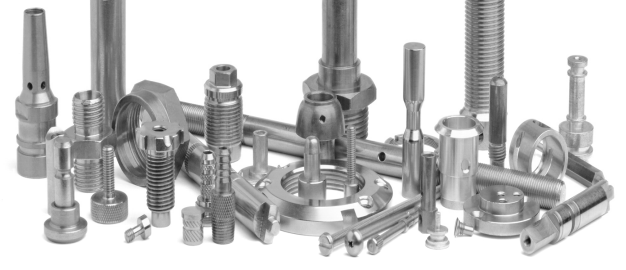
Micro fasteners, small bushings, precision fittings and more are manufactured using Swiss-type machines.
Steel Turned Parts
With high strength properties, steel turned components are widely used in heavy machinery, automotive manufacturing and construction industries.
Aluminum Turned Parts
Aluminum turned parts feature lightweight, high strength, good electrical conductivity and corrosion resistance, making them widely applied in electronics and aerospace industries.
CNC Precision Turned Components
The turning process can be performed manually, while precision turning is carried out on CNC machines. These machines produce parts in accordance with strict standards.
Examples of Precision Turned Components in Various Industries
Automotive Applications: Engine Parts, Pins and Bushings
Key vehicle components include engine valves and bushings. These parts are manufactured using precision turning processes.
Aerospace: Structural Components and Fasteners
- Titanium bolts and screws
- Landing gear pins and bushings
- Actuator shafts
- Gyroscope and sensor housings
Medical Devices: Surgical Instruments and Implants
- Bone drills and taps
- Needle holders
- Retractors
- Bone screws and bone plates
- Dental implants
- Spinal rods
Electronics and Consumer Goods: Fittings and Connectors
- PCB holders and spacers
- Miniature screws and pins
- Fiber optic connectors
- Headphone jacks
- Camera lens mounts
Materials for Turned Parts
Steel, brass, copper and titanium alloys are widely turned for industrial use.
Steel Turned Parts: Durability and Strength
features high durability and load-bearing strength, widely used in electronics and other industries.
Brass and Copper: Ideal for Low-Friction Components
Brass and copper have low friction, ideal for plumbing fittings and electrical connectors.
Titanium and Other High-Performance Alloys
Titanium maintains superior mechanical performance in all environments and loads, ideal for aerospace and medical use.
Aluminum: Lightweight Precision Components
Aluminum is lightweight, an excellent electrical conductor, and highly corrosion-resistant.
Material Selection for High-Volume Precision Turned Parts
You cannot randomly select materials for mass production; the choice depends on the application, mechanical properties, and cost considerations.
Custom Materials for Precision CNC Turned Parts
Alternative materials are available if the required precision turning material is unavailable. Heat treatment can optimize the mechanical properties of the substitute material.
Advantages of Custom Precision Turned Parts
Here are the key benefits of custom precision turned parts:
High Precision and Tight Tolerances
High-tolerance, high-accuracy parts are mostly made via custom turning.
Cost-Effectiveness for Mass Production
Custom manufacturing of precision turned parts boosts productivity and reduces unit costs.
Customization Versatility
You can easily customize components according to your specific requirements.
CNC is advanced equipment that minimizes post-production modifications.
Custom turned parts are applicable to all industries and improve overall product performance.
Fast Turnaround and Efficient Production
Precision turning adopts streamlined processes to accelerate prototyping and shorten production lead times. These optimized workflows enable fast order turnaround and high-efficiency manufacturing.
Durability and Long-Term Performance
In precision turning, parts are meticulously manufactured, reducing surface defects by up to 99%. Components with minimal surface defects deliver excellent durability and long service life.
Challenges in High-Volume Precision Turning
When undertaking high-volume precision turning, you may face the following challenges:
- Maintaining dimensional consistency
- Tool wear management
- Difficulty in meeting strict quality standards
How to Choose the Right Precision Turned Parts Manufacturer
Before selecting a precision turned parts manufacturer, you should consider the following criteria.
Key Factors for Selecting Turned Parts Manufacturer
Two key points before selecting a turned parts manufacturer:
Verify extensive experience in high-volume precision turning.
Check professional certifications and strict CNC quality control capabilities.
Factors for Evaluating a CNC Turned Parts Manufacturer
Beyond certifications and high-volume precision machining experience, also consider:
Check if the manufacturer has proper equipment; CNC machines outperform manual ones for precision work.
Confirm availability of post-turning secondary services like grinding and milling.
Turned Parts Supplier vs Turned Parts Manufacturer
Fully equipped manufacturers ensure better dimensional accuracy and fitting performance of turned parts, while suppliers only act as distributors.
What Makes High-Volume Precision Turned Parts Manufacturers Stand Out?
It is challenging to maintain consistent quality in mass production, yet these manufacturers accomplish it with ease. They boast extensive experience in high-volume production and adopt cost-effective and time-saving manufacturing methods.
Secondary Processing in Precision Turning
Post-turning operations are essential to make parts more durable and reliable.
Secondary Machining of Turned Parts: Added Value Beyond Primary Turning
heat treatment follow precision turning to eliminate surface flaws and boost durability.
Polishing and Finishing of Precision Turned Parts
Polishing post-turning delivers smoother surfaces and better aesthetics.
Coating and Heat Treatment for Enhanced Durability
Heat treatment adjusts grain size and modifies microstructure, ultimately improving mechanical properties and extending part service life.
Coating protects components from oxidation under high-temperature operating conditions.
Value-Added Services Provided by Precision Turned Parts Suppliers
Suppliers of precision turned parts can offer quality inspection and 3D testing, surface treatment and coating, secondary machining, and finishing services.
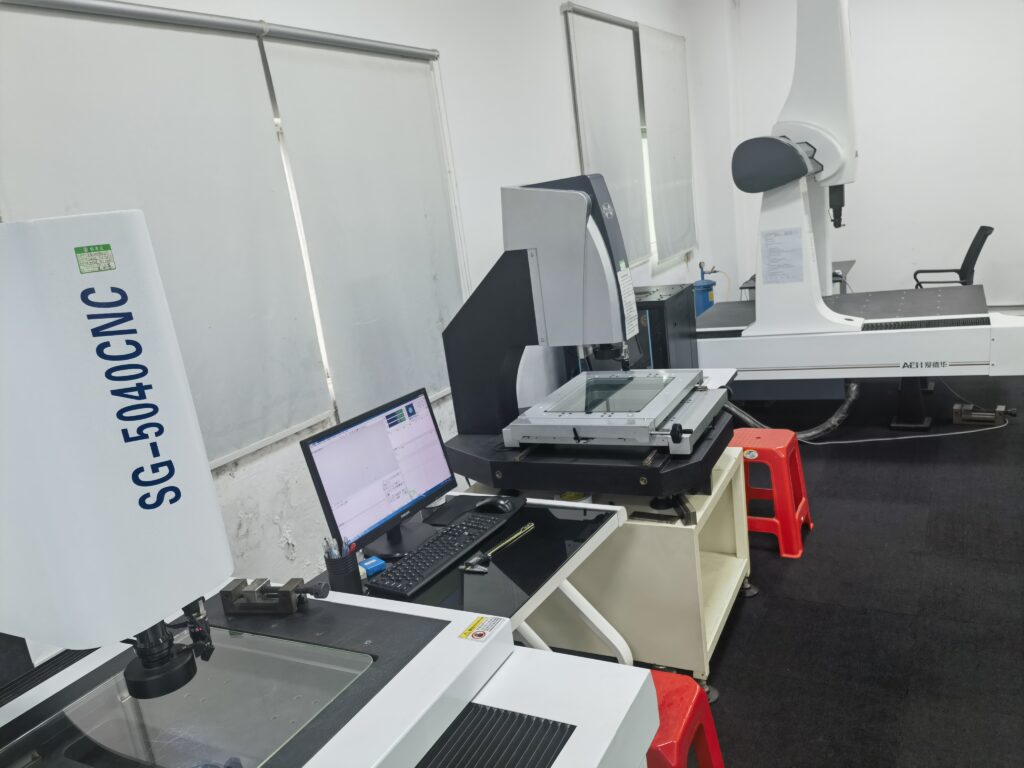
Quality Control and Inspection
Optical scanning, laser scanning, non-destructive testing, hardness and roughness inspection, material certification and traceability testing ensure components meet strict standards.
Custom Precision Turned Parts for Specific Applications
Common examples of custom precision turned parts include precision shafts, surgical implants, fuel injection nozzles, custom bushings, spacers, and more.
How to Verify the Capability of a CNC Turning Parts Manufacturer
- First, evaluate their production equipment
- Check their certifications and compliance qualifications
- Review their past projects and case studies
- Assess their quality control procedures
- Request sample prototypes
How Zorapid Turned Parts Supplier Supports Your Manufacturing Needs
Zorapid features advanced lathes and skilled CNC operators, delivering tight-tolerance parts with fast lead times.
Zorapid delivers high-precision components with consistent quality even in mass production.
FAQ
What common types do precision turned parts include?
Precision shafts, pins, bushings, valve spools, fittings, fasteners, connector terminals, medical micro components, sensor shafts and hydraulic valve parts.
What precision can precision turning achieve?
Standard tolerance ±0.02mm, high precision up to ±0.005mm. Roundness, concentricity and perpendicularity are well controlled with mirror-level surface roughness.
What are the advantages of precision turned parts?
Strong interchangeability, uniform assembly clearance, low operational vibration, long wear life and high batch consistency, ideal for high-end equipment precision fit and long-term reliability.
Can Zorapid customize precision turned parts?
We support conventional CNC turning and Swiss-type turn-mill machining. 1 piece minimum order, no MOQ available, with full GD&T compliance and one-stop surface treatment delivery.